Chris Walsh makes wine in a garage. Not the two-car garage at his grandparents’ house, where he launched End of Nowhere in 2016, but a larger one: his father’s former auto shop.
After years spent working in New York City, first in lighting design and then in the wine world, Walsh returned home to Amador County in the Sierra Foothills, where some of California’s oldest vineyards produce bold Zinfandels. But Walsh wasn’t interested in making the region’s “over-the-top,” extracted reds. Through organic farming and minimal-intervention winemaking, he produces wines that are lively, fresh, and food-friendly.
As the market for California wine “ages out,” Walsh sees big producers as increasingly out of step, while smaller producers are better positioned to adapt. In a recent phone conversation, he spoke about his unconventional path into wine, the terroir of Amador County, and why he sees opportunity in making wines with a sense of place and personality.
Lisa Denning: You were living in New York City and working in lighting design. How did you end up opening a winery in California?
Chris Walsh: It’s a long story. I moved to New York in 2007 and was doing lighting design. Then the Great Recession hit. The last project I was working on for an architectural lighting design company was Bloomingdale’s Dubai, and when that got put on hold, I lost my job.
I needed work, so I eventually became a runner/busser at a wine bar that was just opening called Tangled Vine, up on 81st and Amsterdam. I just needed a job, but I ended up working there and falling in love with wine. Within a few years, I became a certified sommelier, but I realized I didn’t want to work in restaurants or in wine sales forever. At that point, I was working at Corkbuzz down in Union Square, and I got an internship with Donkey and Goat in 2014. I knew I wanted to move out of New York, so I started as an intern there. The internship was supposed to be three months, but wound up being about eight months. Then they helped me get a job at Terre Rouge out here in Amador County, and I started the winery in 2016.
Can you tell me a little about Amador County, where it is, what the terroir is like, and why grapes grow well there?
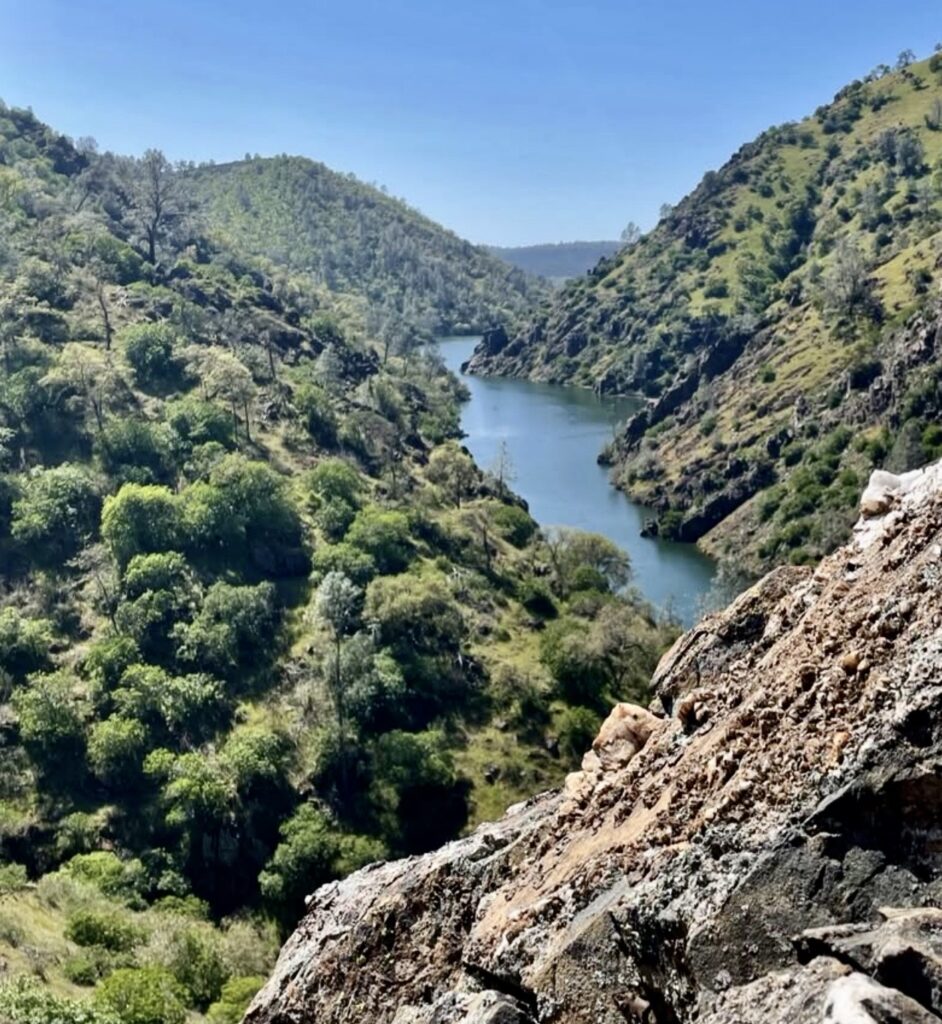
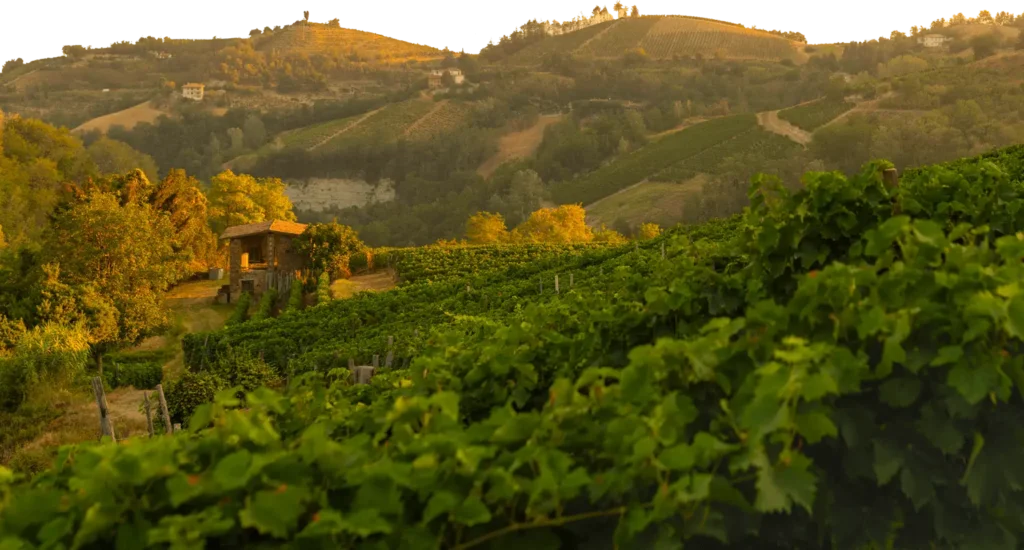
It’s kind of the central Sierra Foothills, east of Sacramento and west of Tahoe. It’s rolling foothills that go up into steep mountains, so on the lower end, you’re almost on the valley floor, and the top reaches 10,000-foot peaks. The grape-growing regions are mostly jumbled-up volcanic soils, though there is some limestone in the county as well. The vineyards are red micavolcanic soil or ash. The county’s borders are rivers, so we get really good breezes, really good winds, and a big diurnal shift—hot in the day, cool at night, breezy. We’re also kind of the ancestral home of Zinfandel in California. A couple of vineyards from the 1860s are still operating out here.
That’s where you grew up, right?
Yep. When I started the winery, I started it in what was my grandparents’ house—a two-car garage. Now it’s in my father’s old auto shop, so I’m still in the garage. It’s just a bigger one.
Can you tell me about your vineyard and the grapes you grow?
My poor little vineyard has had a few hard years. I’m up at 3,300 feet, and we have most of the Rhône varieties planted: Syrah, Grenache, Mourvèdre, a tiny bit of Counoise, Viognier, and a little bit of Roussanne. I also have Picardone, which is kind of rare, and Clairette. Then we have a little smattering of Petit Manseng, Gros Manseng, and Chenin Blanc.
You also source fruit, correct?
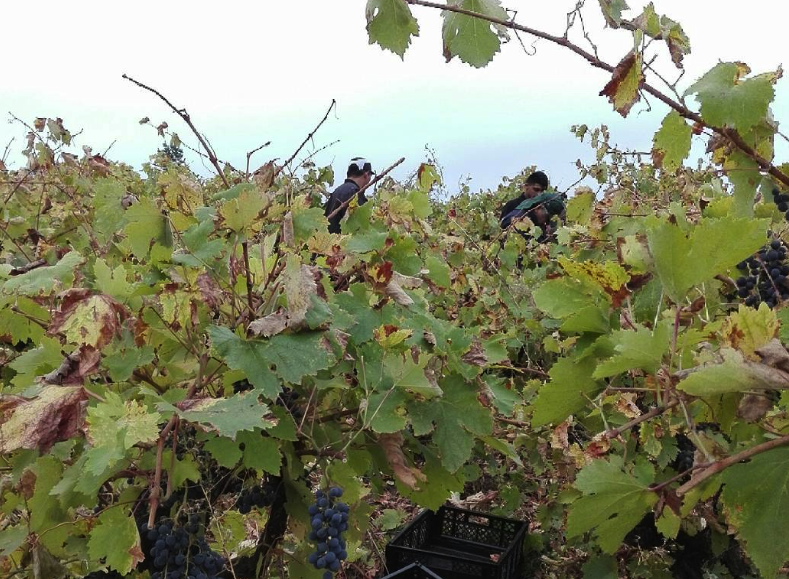
A: Most of what you’re going to try is going to be sourced, just because we’ve had some frosts, and my production from my own vineyard has been really small. But I’ve always been purchasing fruit since the beginning, when my vineyard was just getting planted. Some farmers I’ve been working with since the start, it’s been ten years now. Others have come along the way, but generally, I work with people who have either converted to organic farming or have already been farming organically.
What is your total production?
Right around now, it’s about 1,500 cases, and a large percentage of that goes to New York through Bowler.
End of Nowhere wines are considered natural wines. Can you explain what that means to you, both in the vineyard and in the cellar?
In the vineyard, it’s organic farming, doing the right things at the right time. I don’t work with anybody who sprays pesticides or herbicides. In the cellar, it’s native yeast fermentations, no filtering or fining. I do use sulfur, but pretty minimally, usually around 25 parts per million total, just using it at the right time to make sure things don’t go funky. And neutral French oak. I’m not trying to have it taste like a barrel.
Amador County is known for Zinfandel, but yours is lighter and much more energetic. How have people responded to that?
Generally, really well. Unfortunately, Zinfandel has been pushed into this category where it’s usually big, overextracted, over-the-top, and high alcohol. But it’s a much more versatile grape than that, and it can do a lot more. If you pick it a little earlier than what others do, you don’t have to water it back; it doesn’t smell like port or taste raisinated. I’ve definitely given it to people, and they’re like, “This isn’t Zinfandel.” It’s just not that kind of wine.

Why did you name your winery End of Nowhere?
I’m up in Pioneer, which is about a 50-minute drive from Plymouth and the California Shenandoah Valley AVA, or Fiddletown, where most of the wineries are. A friend came to visit from Napa, and somehow my wife and I forgot to mention that we lived 2.5 miles down a dirt road. His car got really dusty, and when he arrived, we said, “Welcome to the middle of nowhere.” He said, “No, we passed the middle way back there. You’re at the end!” And I thought, the end of nowhere, I’m going to name my winery that. We’re not really near any other winery, so we’re definitely out there.
How would you describe the taste of your wines to someone who’s never tried them?
My winemaking style is fruit-driven, fresh, and generally really bright. Fun wines. We do make some serious wines, but many of them are just wines you can enjoy. You can think about them, but they can also just be there and be fun.
The California wine industry is facing changing consumer habits and economic pressures. As a small independent producer, what challenges and opportunities are you seeing?
It’s really hard times right now, but fortunately, as a small producer, we can operate in a lean way and produce what the market will take. Most of the doom-and-gloom stories—and granted, there are some small producers doing great things who have unfortunately gone out of business—but a lot of what you see in the market is coming from really big businesses that weren’t following what the market wants. Eighty percent of the wine made in California comes from three big companies, and they produce for the big markets, many of which are aging out.
Natural wines, low-intervention wines, whatever you want to call them—people are looking for something made by a person, something different and interesting that celebrates a time and a place. As a small producer, we have the ability to shrink or grow, and we don’t have tank farms full of wine, so that’s not a concern.
Can you tell me about those gorgeous labels? They remind me of drawings of ancient Greek or Italian sculpture.
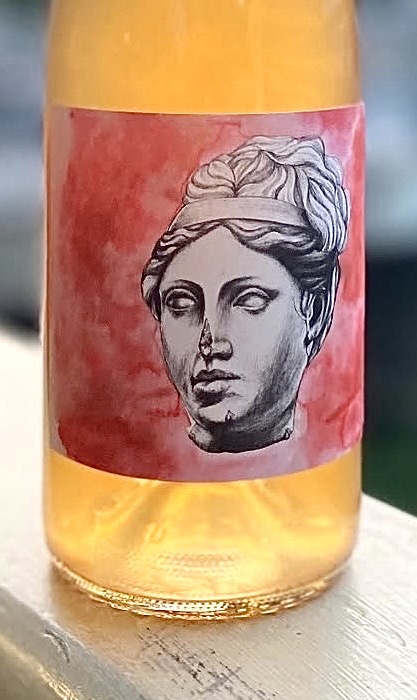
They’re done by a woman named Kendell Cotta. She was a tattoo artist and is very talented with pen and ink. I had done my original labels on my iPhone 5, and we were just getting to the point where we weren’t cool enough for LA to have anyone Instagram us, so it was time for a change. I met her in 2019. She came into the tasting room, I saw some of her art, and thought, “This is exactly what we’re looking for.” I wanted every label to have a different image so that if you got to know them, you could recognize each one, but I also wanted them all done by the same person so there’d be a through line, something recognizable and beautiful on a shelf.
Can you tell me about your tasting room in Amador City, including its great burgers?
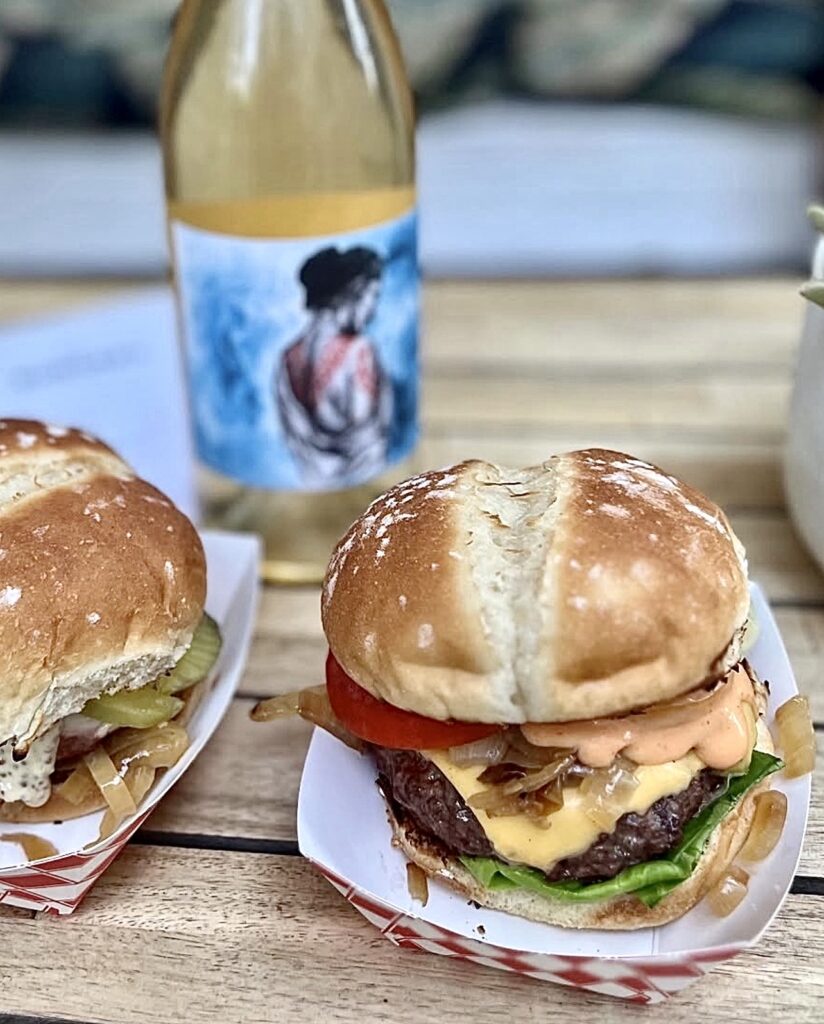
The tasting room opened at the end of 2018. Amador City is a very small town—the smallest city in California, actually. It’s a third of a mile across, so you can drive through and hold your breath and make it. In late February 2020, a neighbor wanted to downsize, so I moved into the spot I’m currently in, which had a licensed kitchen. My intent was never to have food all the time, just for pop-ups or something special. But then the pandemic hit, and at the time, the rule was that if you wanted to serve wine or beer, you had to serve food. A friend’s restaurant had gone out of business, and their chef was available, so he made burgers for a couple of weeks. When he left, I took it over, changed the meat blend, did the whole thing. Now I think we’ve sold around 15,000 burgers off a grill out front. You can find us because I’m at the grill that’s smoking.
Which of your wines would you recommend to our Grape Collective customers?
Bowler usually carries six or seven of our wines. We make about twelve different wines total. Our Little Faith is our orange wine; the current vintage is Orange Muscat, Chenin Blanc, Chardonnay, and Pinot Gris. I like to make orange wines that aren’t full skin contact, more like 50/50 white wine to skin contact, so really fresh but with good texture. That’s one of our flagships. This year they also have my Porcelina, which is Pinot Gris—bright, fresh, really, really nice. And then we do a carbonic Zinfandel called Phantom Limb, which we’ve been making since 2016. That’s one of our signatures. You can chill it, which is what people are looking for, especially in the summer.