Wine has been humanity’s companion through triumph and tragedy, love and war, prosperity and ruin. Behind every bottle lies centuries of drama that would make Hollywood screenwriters weep with envy. From ancient betrayals to modern-day heists worth millions, these 21 moments prove that wine history is far more intoxicating than fiction.
1. The Judgment of Paris: David Slays Goliath (1976)
In a blind tasting that shook the wine world to its core, California wines defeated the finest French vintages on their home turf. British wine merchant Steven Spurrier organized what he thought would be a friendly showcase of American wines in Paris. Instead, he orchestrated the greatest upset in wine history. When Château Montelena Chardonnay and Stag’s Leap Cabernet Sauvignon topped legendary French wines, the judges tried to retrieve their scorecards. The French press initially ignored the results, but this single event launched California’s reputation and changed global wine forever.
2. The Great Dying: Phylloxera’s Apocalypse (1860s-1890s)
A microscopic aphid brought European viticulture to its knees in what became known as the Great French Wine Blight. Phylloxera devastated millions of acres, destroying entire wine regions and driving families into poverty. Desperate vignerons tried everything from flooding vineyards to burying live toads under vines. The salvation came from an unlikely source: grafting European vines onto American rootstock. It was a bitter irony—America, which had unknowingly brought the pest to Europe, also provided the cure.
3. Dom Pérignon’s Divine Vision (1693)
When the blind Benedictine monk first tasted his revolutionary sparkling wine, he allegedly exclaimed, “Come quickly, I am drinking the stars!” His innovative techniques—blending different grapes, using stronger bottles, and cork stoppers—created champagne as we know it. But the real drama lay in the monastery’s wine cellar, where monks secretly perfected their craft while Napoleon’s armies raged outside, protecting their precious bottles like sacred relics.
4. Napoleon’s Wine-Fueled Conquests (1796-1815)
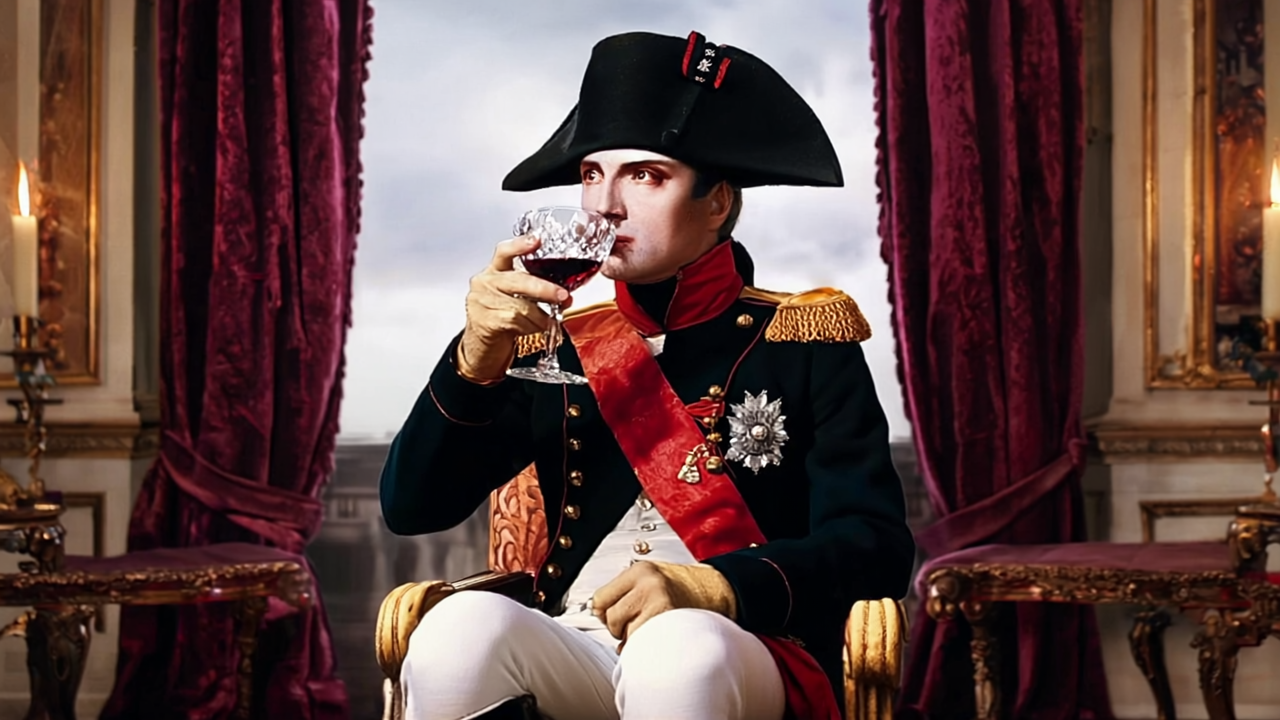
The Emperor’s obsession with wine shaped European history. He carried specific vintages into battle, believing they brought victory. When retreating from Moscow, Napoleon abandoned artillery but saved his wine collection. His exile to Elba was made bearable only by cases of Chambertin, his favorite Burgundy. After Waterloo, the British discovered his wine cellar contained bottles worth more than most estates—a liquid fortune that outlasted his empire.
5. The Jefferson Wine Scandal: America’s First Wine Fraud (1985)
A cache of wine bottles allegedly owned by Thomas Jefferson surfaced at auction, selling for record prices. The most expensive, a 1787 Château Lafite, sold for $156,000. But investigative journalist Benjamin Wallace exposed the elaborate hoax in his book “The Billionaire’s Vinegar.” The scandal revealed a shadowy world of wine forgery, involving German dentist Hardy Rodenstock and a network of wealthy collectors who preferred prestigious provenance to authenticity.
6. Prohibition’s Underground Empire (1920-1933)
While America banned alcohol, wine went underground in spectacular fashion. California’s “grape growers” sold “grape juice concentrate” with winking instructions for fermentation. Home winemaking exploded, creating a generation of basement vintners. Wealthy families hired “wine stewards” who were actually bootleggers. The Mafia built empires on illegal wine, and speakeasies became America’s first wine bars. When Prohibition ended, the wine industry emerged stronger and more innovative than ever.
7. The Titanic’s Final Toast (1912)
The Titanic carried the finest wine collection ever to set sail—45,000 bottles worth millions in today’s money. First-class passengers enjoyed 1900 Perrier-Jouët while the ship sank. Survivors reported that stewards continued serving wine even as the deck tilted. In 1997, divers recovered bottles from the wreck, still drinkable after 85 years on the ocean floor. These bottles now sell for $30,000 each—liquid monuments to human hubris.
8. Rudy Kurniawan: The Mastermind Forger (2006-2012)
Indonesian wine collector Rudy Kurniawan seemed to have access to impossible wines—bottles that shouldn’t exist. He consigned millions of dollars worth of rare vintages to auction, becoming Sotheby’s biggest wine consigner. But FBI agents discovered his Beverly Hills home was a sophisticated wine forgery operation, complete with vintage labels, period-correct bottles, and aged corks. His fake wines fooled the world’s greatest experts, proving that in wine, belief can be more powerful than truth.
9. Hitler’s Wine Obsession: Evil’s Vintage Collection (1933-1945)
The Nazi regime systematically looted Europe’s greatest wine cellars, creating Hitler’s personal collection of over 500,000 bottles, even though he didn’t drink himself. SS officers used detailed maps to locate hidden wine caches, from French châteaux to Austrian monasteries. After the war, Allied forces discovered these underground wine bunkers, including a secret cellar beneath Berlin containing bottles worth billions. Many wines were returned to their rightful owners, but thousands remain missing—a liquid legacy of history’s darkest chapter.
10. The Great Frost: Nature’s Cruel Joke (1956)
The worst freeze in European history struck during harvest season, destroying 75% of France’s wine production in a single night. Temperatures plummeted to -25°F, splitting ancient vines like kindling. Desperate winemakers lit bonfires among their vines, creating apocalyptic landscapes of smoke and ice. The disaster reshaped French wine geography, forcing vintners to abandon traditional regions and seek new terroir. Some estates never recovered, their empty cellars standing as monuments to nature’s power.
11. The Roman Wine Scandal: Ancient Fraud (50 AD)
Emperor Claudius discovered that Roman merchants were selling fake vintage wines, mixing cheap local wine with expensive labels from prestigious regions. The punishment was brutal—fraudulent wine merchants were crucified with their fake bottles hung around their necks. This ancient scandal established wine authentication methods still used today and proved that wine fraud is as old as wine itself.
12. The Antinori Blood Feuds: 600 Years of Drama (1385-Present)
Italy’s Antinori family has produced wine for 26 generations, surviving wars, plagues, and family betrayals. In 1630, family members literally fought duels over vineyard ownership. During WWII, they hid their greatest wines in Tuscan caves while Nazis occupied their estates. The family’s internal conflicts over tradition versus innovation created the modern Super Tuscan movement, proving that the best wines often emerge from the greatest conflicts.
13. The Lost Château: Pétrus and the Missing Harvest (1991)
Château Pétrus, Bordeaux’s most expensive wine, faced disaster when their entire 1991 harvest was stolen. Thieves made off with 12,000 bottles worth $3 million, vanishing without a trace. The heist was so sophisticated that investigators suspected inside knowledge. The stolen wine never surfaced at auction, leading to theories that it was consumed by connoisseurs who knew they could never sell it. The case remains unsolved, making every bottle of 1991 Pétrus potentially evidence.
14. The Champagne Riots: Blood in the Bubbles (1911)
When Champagne authorities restricted which villages could use the prestigious name, violent riots erupted. Angry vignerons burned government buildings and attacked gendarmes with wine bottles. The French Army was called in to restore order, creating the surreal image of soldiers with fixed bayonets protecting champagne cellars. The riots established the first wine appellation system, proving that terroir is worth fighting for.
15. The Cork Wars: Portugal’s Secret Weapon (1703)
Portugal’s alliance with England during the War of Spanish Succession included a wine component. Portuguese cork became essential for storing British wine, while port wine became Britain’s patriotic drink instead of French claret. This “cork diplomacy” shaped global wine trade for centuries and made Portugal rich. When Napoleon tried to invade Portugal, he famously said he was fighting “a nation of wine merchants”—and lost.
16. The Poison Chalice: Wine Assassination Attempts
Throughout history, wine has been the assassin’s weapon of choice. In 1478, the Medici family survived a wine poisoning attempt during Easter mass. Napoleon’s wine taster died saving the Emperor’s life. Even in modern times, wine poisoning remains a favored method—in 1978, Bulgarian dissident Georgi Markov was killed with ricin-laced wine in London. These incidents led to the tradition of wine toasting—originally a way to prove wine wasn’t poisoned.
17. The Monastery Murders: Divine Wine, Deadly Consequences (Medieval Europe)
Medieval monasteries produced Europe’s finest wines, creating both spiritual ecstasy and earthly greed. The Abbey of Cluny’s wine cellar was robbed so frequently that monks hired armed guards. In 1209, Cistercian monks at Pontigny were murdered for their wine-making secrets. These “holy wines” were considered miraculous, leading to a black market in monastery bottles that persisted for centuries.
18. The Vintage Titanic: Wine Investment Bubbles (1988, 2008)
Twice in recent history, wine investment bubbles have burst with spectacular consequences. In 1988, Japanese investors drove fine wine prices to impossible heights before the market crashed, destroying fortunes overnight. The 2008 financial crisis saw similar devastation as wine funds collapsed and collectors defaulted on purchases. Auction houses were left with millions in unpaid wine bills, proving that wine, like stocks, can make and destroy wealth.
19. The Stockholm Syndrome: Sweden’s Wine Revolution (1955)
Sweden’s state monopoly on alcohol created the world’s strangest wine market. Citizens could only buy wine through government stores, leading to a thriving black market. Wine smuggling became so common that Baltic ferries were floating wine shops. The system inadvertently created the world’s most educated wine consumers—Swedes studied wine intensively to make their limited purchases count. Today, Sweden has one of the world’s most sophisticated wine cultures.
20. The Climate Change Catastrophe: Bordeaux’s Burning Future (2003-Present)
The 2003 European heat wave killed 70,000 people and nearly destroyed Bordeaux’s wine industry. Temperatures reached 104°F, literally cooking grapes on the vine. Climate change now threatens traditional wine regions worldwide, forcing vintners to plant at higher altitudes and latitudes. Champagne producers are buying land in England, while Bordeaux châteaux experiment with heat-resistant grapes. The wine map of the world is being redrawn by rising temperatures.
21. The Digital Wine Heist: Cyber Crime Meets Ancient Craft (2019-Present)
Modern wine fraud has gone digital. Hackers target wine investment platforms, stealing millions in virtual wine assets. Blockchain authentication promises to solve wine fraud, but criminals are already finding ways to game the system. Deep fake wine labels and AI-generated tasting notes fool even experts. The battle between technology and tradition continues in cyberspace, where a line of code can be worth more than a century-old vintage.
The Final Pour
These 21 moments reveal wine’s true nature—not just as a beverage, but as a catalyst for human drama. Behind every bottle lies a story of passion, greed, love, betrayal, and redemption. Wine has toppled governments, launched careers, destroyed fortunes, and created legends. It has been humanity’s companion through our greatest triumphs and darkest moments.