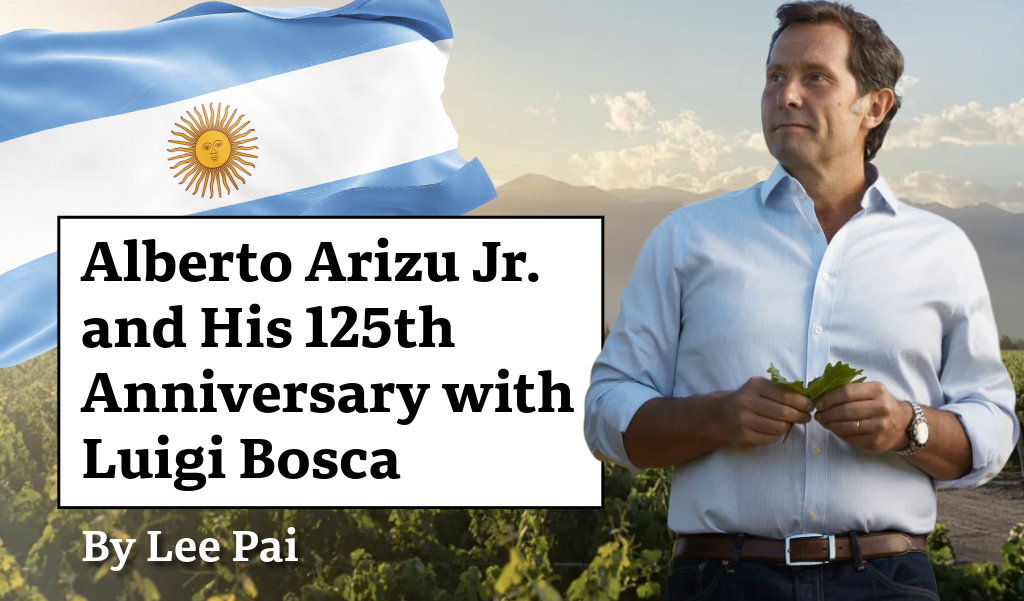
When talking about great wine regions and producers, we often associate them with heritage and legacy, something that can only be built with enough history. When it comes to Mendoza, it can still be mistaken as young and new due to its “New World” designation. But if we take a look back at the story of Mendoza, and of Luigi Bosca, we get a sense that their heritage isn’t quite as short as the label suggests.
Originally, when Mendoza became a Spanish colony in 1562, it was a region where only wine for religious ceremony was produced. The industry quietly grew to become equally as significant as cattle ranching, and ultimately was able to modernize after Argentina achieved independence in 1810. With the support of the local government, French varieties such as Cabernet Sauvignon, Chardonnay, and most importantly, Malbec, were gradually introduced to the region. Then came the wave of Spanish and Italian driven immigration came to Argentina during the late 1800s, bringing with them the tradition of drinking wine, and the knowhow of grape growing and winemaking.
This was where Alberto Arizu Jr.’s family got started with Luigi Bosca.
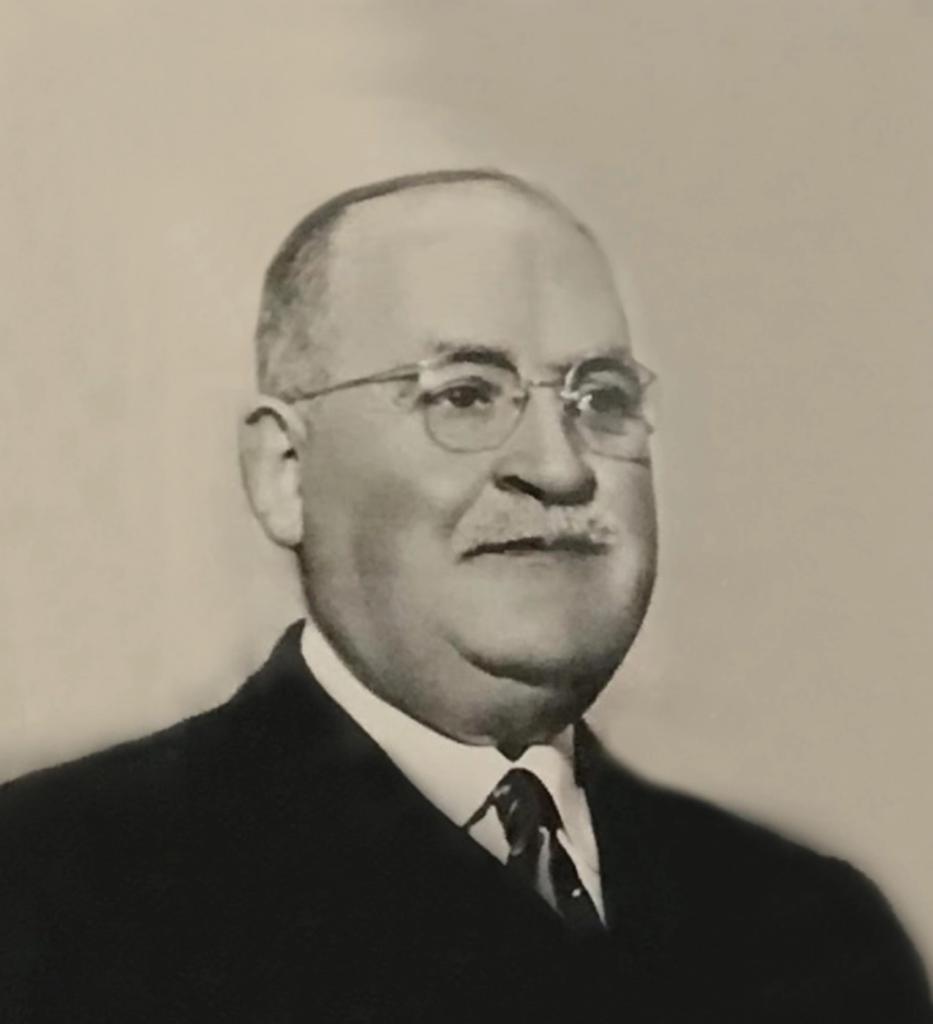
Established in 1901, Luigi Bosca has been owned and operated by Arizu Jr.’s family for 125 years, and was also a key participant in elevating Argentinian wines globally. Known for their premium Malbecs, particularly from the Lujan de Cuyo DOC (one of only two DOC in Argentina) which Arizu Jr.’s family helped form, Luigi Bosca is part of the wave of Argentinian wineries that successfully established an international reputation since the ’90s.
Despite the legacy that they carry, Arizu Jr. and Luigi Bosca continue to look for ways to improve their experience, vineyard, and wines. Their certifications such as the Bodegas de Argentina Sustainability Protocol reflects their sustainability commitments. Their program of supporting small growers around Mendoza highlights their desire to preserve historic vineyards and prevent them from becoming abandoned. They have also renovated their historic home to create a new hospitality center to welcome fans, a sign of adapting to consumers’ desire for more immersive experiences.
Lee Pai of Grape Collective talks to Alberto Arizu Jr. of Luigi Bosca about his family’s commitment to Mendoza, the challenges they face, and their outlook for the future.
Lee Pai: To achieve 125 years of history in Argentina is no small achievement. What does that legacy mean to you and your family?
Alberto Arizu Jr.: It has been a wonderful history, built by many people, beginning with my great-grandfather, who arrived in Mendoza in 1890. He came from Spain, from the Basque Country, and found his partner among a family of renowned growers from northern Italy. Together, they founded the company in 1901 with the goal of producing premium, high-quality wines.
That was a very hard time. Argentina had a strong wine-drinking culture, but not necessarily a culture of quality wine. So for many years, we were a small boutique company fully dedicated to high-end wines, and to Malbec, a grape that was not yet well known.
A hundred years ago, nobody knew much about this mysterious and wonderful grape. Yet Malbec had been among the most noble and important varieties in Europe, particularly in France and in relation to trade with Great Britain. When it came to Argentina, it connected with our soils and climate in a way that no other grape could. The altitudes above 1,000 meters above sea level and the complexity of the soils in the Andes mountains gave the grape the splendor we know today. That has been the most important part of our reputation, and of Argentine wine’s reputation, in the world.
Malbec is essentially the signature grape of Argentina’s wine industry. Over 100-plus years of evolution, how have you seen the style change, and how has Luigi Bosca adapted to evolving styles and consumer palates?
Malbec is a beautiful grape. It offers a wonderful concentration of black and red fruit, spices, and in some places more floral notes, always with very soft tannins. That gives the wine an incredible elegance, something very important to our family’s winemaking philosophy.
In our historic Lujan de Cuyo vineyards, the sandy loam soils with compact clay allow for very consistent ripening. The wines show beautiful expressions of black plum, red fruit, and spice. In more recent years, in response to climate change, we’ve also sought out new sites at higher elevations — around 1,600 meters above sea level — in regions like Gualtallary, where the soils and conditions produce wines with a different character: more black fruit, and floral notes like lavender or blue flowers.
This diversity means you can discover a new expression of Malbec every single day. That’s the most exciting part of the grape, and it gives us the opportunity to continually refine our winemaking while maintaining the finesse and elegance that define our style.
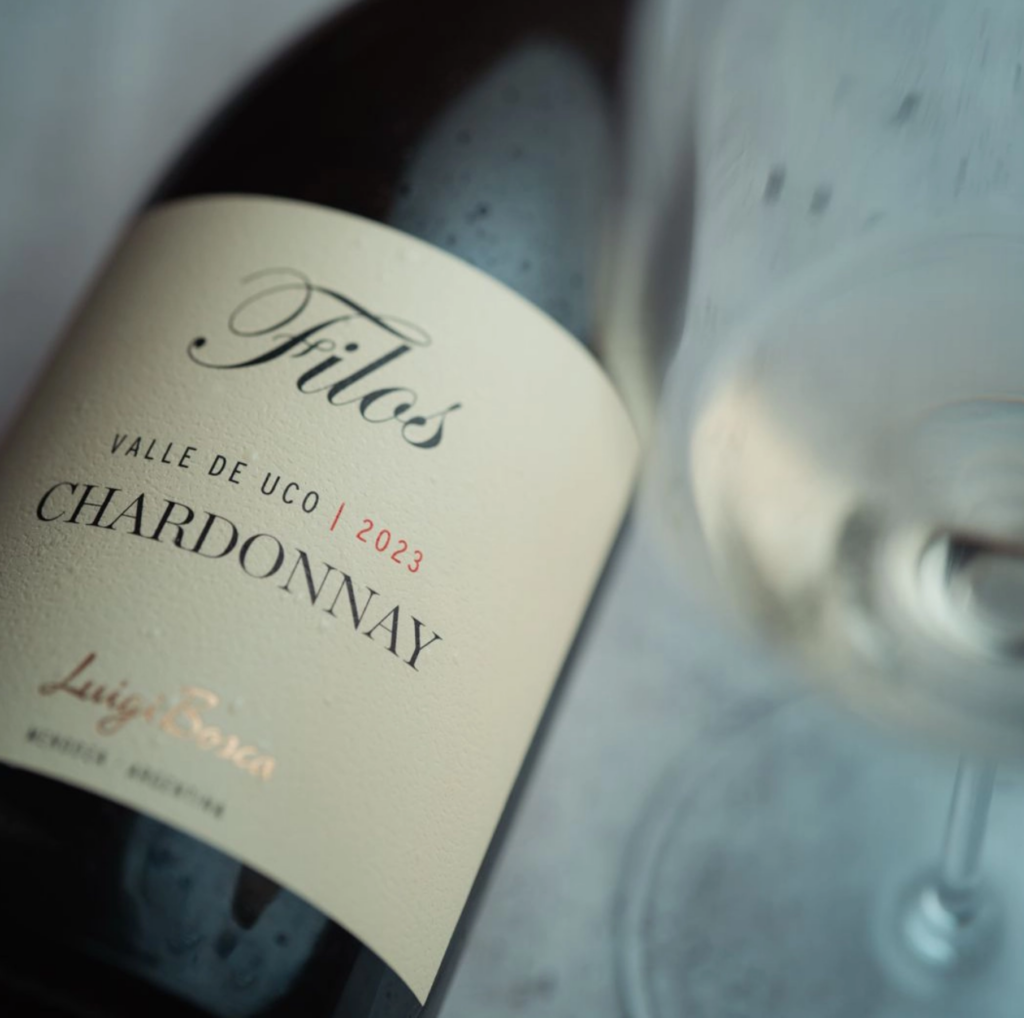
Beyond Malbec, Luigi Bosca also produces wonderful Cabernet Sauvignon and Chardonnay from the Uco Valley. Can you tell us about those?
If you look back 50 or 60 years, we were perhaps better known for our Cabernet Sauvignon than for Malbec. Cabernet was a very important part of the family’s identity. My great-grandfather was a very prominent Cabernet grower in Mendoza, and we have maintained that original genetic material from the beginning. Today we are rediscovering what Cabernet can do for us, a more fine-boned, fruity, elegant style, not heavy or overly tannic. It’s something we are really enjoying right now.
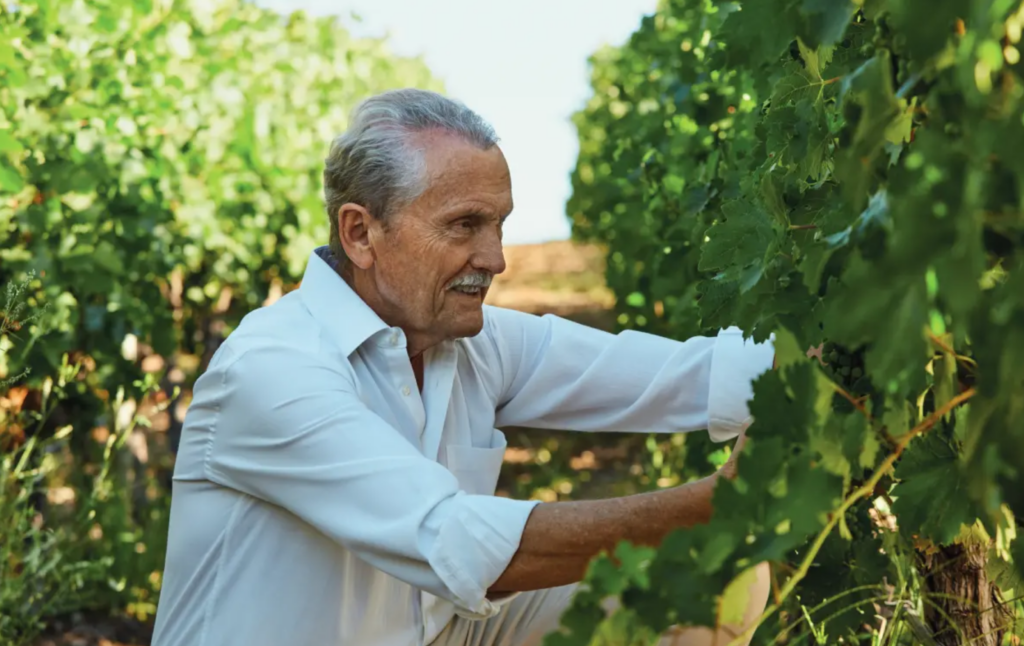
Growing grapes and making wine at high elevations of 1,000 to 2,000 meters is not easy. How do your vineyard and winery practices adapt to such a challenging environment?
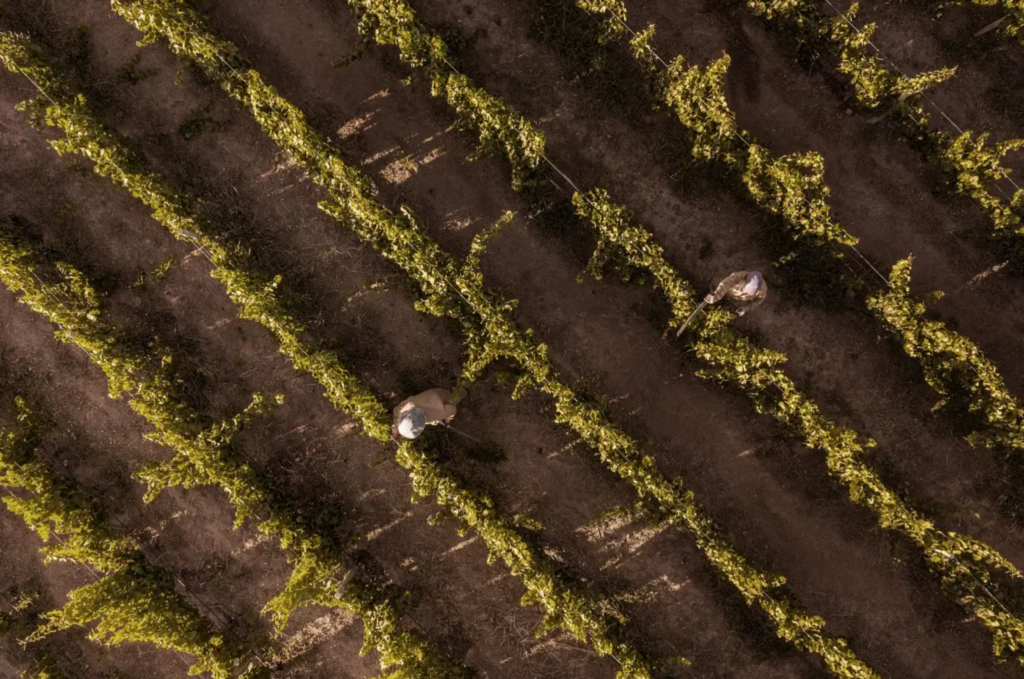
First and foremost, we have a deep commitment to sustainability, because we are not the owners of the land in any permanent sense. We must preserve it for the generations that come after us, in the same or better condition. We have strong sustainability programs to protect our soils and the traditional vines that have been growing there for generations.
Beyond our own estate, we also work with more than a hundred small growers in some of the most remarkable, historically significant locations in Mendoza. Preserving their production for future generations is perhaps the most important part of our sustainability mission; it’s the only way to protect the traditional and historic material we have.
How does the relationship with small growers work?
It’s primarily technical guidance. We have a strong agricultural team that follows these growers closely, guiding their vineyard practices to not maximize quantity, but to preserve the best expression of the grapes in each particular place. We want the grapes to reflect their terroir. We also help them financially, but the technical support is the heart of it. We work with around 20 small growers, and some of our finest wines are made with fruit from their vineyards.
We’ve talked about the challenges of grape growing and winemaking, but Argentina also presents significant business challenges, particularly around currency fluctuations and the broader economic environment. How do you navigate that while maintaining a sustainable business?
Over the past 20 to 25 years, it has been a real challenge to maintain the company and continue supplying exceptional wines to customers around the world under very difficult conditions. But we have never lost our optimism. We are survivors in that sense.
And honestly, I’m not sure there is any place in the world right now with perfect conditions for this kind of business. Wine is inherently a long-cycle industry. You need time, and financing and that is expensive everywhere. What keeps us grounded is our focus on what matters most: the quality of our soils, the quality of our land, and of course, the quality of our wines.
How important is it that Luigi Bosca continues to be run and operated by your family?
Very important. When I look back at my 35-year history with the company, and think about my father’s vision for the wine industry, I feel a great responsibility to carry this company into the next chapter, especially in a market as dynamic as wine is today.
For the first time in our history, we are losing the generation that built the modern wine culture. The baby boomers are being replaced by millennials and younger consumers who drink differently and approach wine in different ways. We have to continue reaching them, teaching them, and helping them discover that wine has been the most important beverage in the history of humanity, central to the Greeks, the Romans, and the Christian world. Protecting that educational legacy for the next generation is something I feel deeply committed to. It’s a heavy duty, but one I take on willingly.
How does your partnership with LVMH relate to your family’s commitment to Luigi Bosca and to the broader Argentine wine industry?
They (L Catterton, affiliated with the Arnault family of LVMH) invested in our company because they found alignment with our philosophy and our commitment to the business. We are a family that has been entirely devoted to this company throughout our lives, and we intend to remain at the heart of its soul. Having an investor of that caliber behind us gives us confidence. They saw something great worth investing in. We have a strong friendship with them, and they are helping us face the next stage of our journey in the wine business.
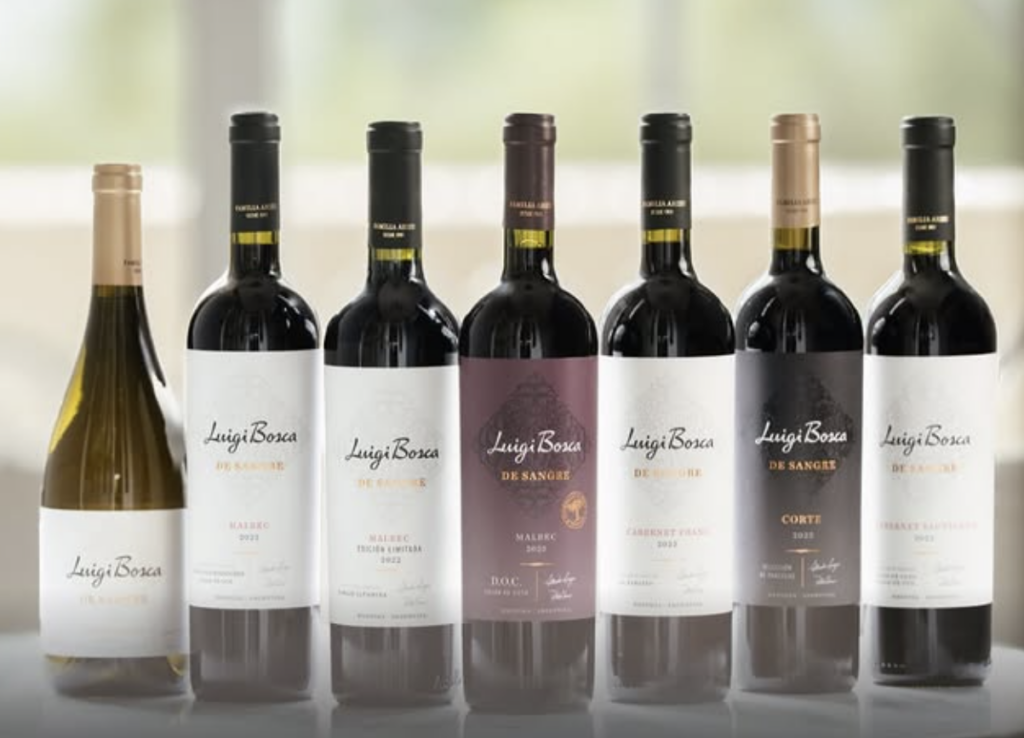
There can still be a perception that Argentine wines, particularly Malbec, belong in the value category. How do you shift the consumer’s perception toward higher quality and price points?
We appreciate that Argentina is associated with great value wines. But in recent years, our experience and knowledge have allowed us to identify extraordinary sites across the incredible diversity of micro-climates and environments we have in Argentina. We have different latitudes, dramatic altitude ranges, and extraordinarily complex soils formed by alluvial sediments from glaciers that melted 12,000 to 15,000 years ago.
That diversity gives us the opportunity to produce not just everyday wines, but also very sophisticated, high-end wines, wines that deliver incredible quality across the full range. The sweet tannins and accessibility of Malbec remain, but the complexity and character vary enormously depending on where the grape is grown. And beyond Malbec, we are producing exceptional Chardonnay from very specific high-altitude sites, and a flagship Cabernet Sauvignon we recently launched in honor of my great-grandfather. Argentina is a very diverse country, and we have the ability to produce many high-quality varieties.
Is this deeper understanding of soils and environment what led you to say recently that Argentina is making some of the best wines in its history?
It’s absolutely true. In recent years, we have been making the best wines in our history. It’s a combination of things: the incredible talent of a new generation of winemakers who are coming in with both passion and knowledge, more than 150 years of collective winemaking experience in Mendoza, and an ongoing commitment to research and understanding our soils and terroirs. That combination is giving us the opportunity to say, with confidence, that today we are making the finest wines we have ever produced.
Were you always destined to be part of the family business, or did circumstances bring you here?
It happened quite early. I was about 26 when I joined. I had been studying in California, and when I came back, my father said: “We need your energy and your attitude. We need you to come with us.” So I began at the very beginning, helping to open markets outside Argentina.
In the mid-1990s, Argentina barely exported wine. After my time in California, I could see what a huge opportunity existed to introduce Argentine wine to the world and build a category from nothing. When I was 27, I was one of the founders of Wines of Argentina, the export association, because I realized it was impossible to talk about Argentine wine when people didn’t even know Argentina made wine. We had to build everything from zero.
I’m very proud when I see how strong the Argentine wine category is today. And Luigi Bosca has been one of the leading wineries in positioning Argentina at the top of consumers’ minds when it comes to high-end wine.
Looking forward, what do you see for the future of Luigi Bosca and Argentinian wine?
It’s a big question. Everyone is talking about the shift in consumer habits, and there is real uncertainty about whether the new generation of drinkers will embrace wine with the same commitment as the baby boomers who sustained the industry for the last 50 years.
But I think the opportunity lies in storytelling and experience. People are looking for authenticity. As winemakers, we have incredible stories to tell: about the land, the history, the philosophy. We need to communicate those stories in a way that connects with younger consumers and shows them how wine can enrich their lives: with food, with friends, with shared experiences.
One of the ways we’ve been doing this in Mendoza is by reinventing our hospitality. We opened our historic family home that was built in 1905 and has been in our family since 1926. We created an immersive experience around the estate, with a chef who deeply understands the flavors of Mendoza, a curated wine and music pairing menu, and events held in the gardens of this beautiful historic property. It’s not about showing people fermentation tanks and oak barrels. It’s about offering the authenticity of the place, the culture, the story. That is what people are really looking for.