This story is perhaps overtold, but to this day, when we talk about Santa Barbara, the first thing that probably comes to people’s mind is the 2004 film Sideways. Yes, thanks to that film, the wines, particularly those made from Pinot Noir and Chardonnay (unfortunately not Merlot), have captured the attention of consumers and collectors. But the setting of the film was made possible by the community of winemakers that believed in Santa Barbara, and their presence was able to pave the way for others that came after them.
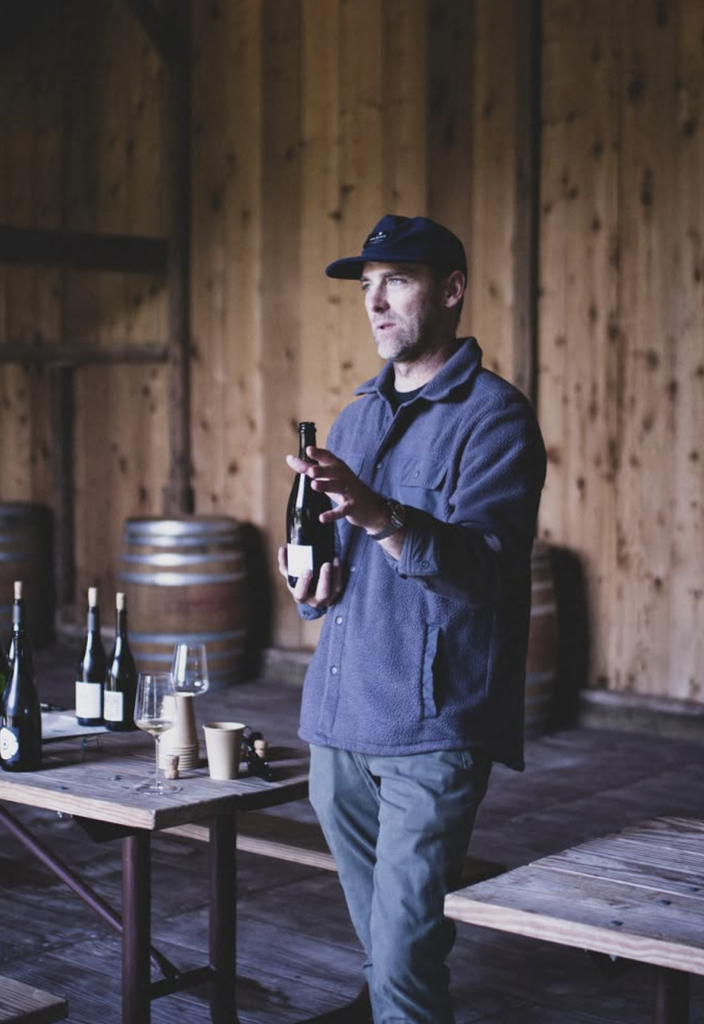
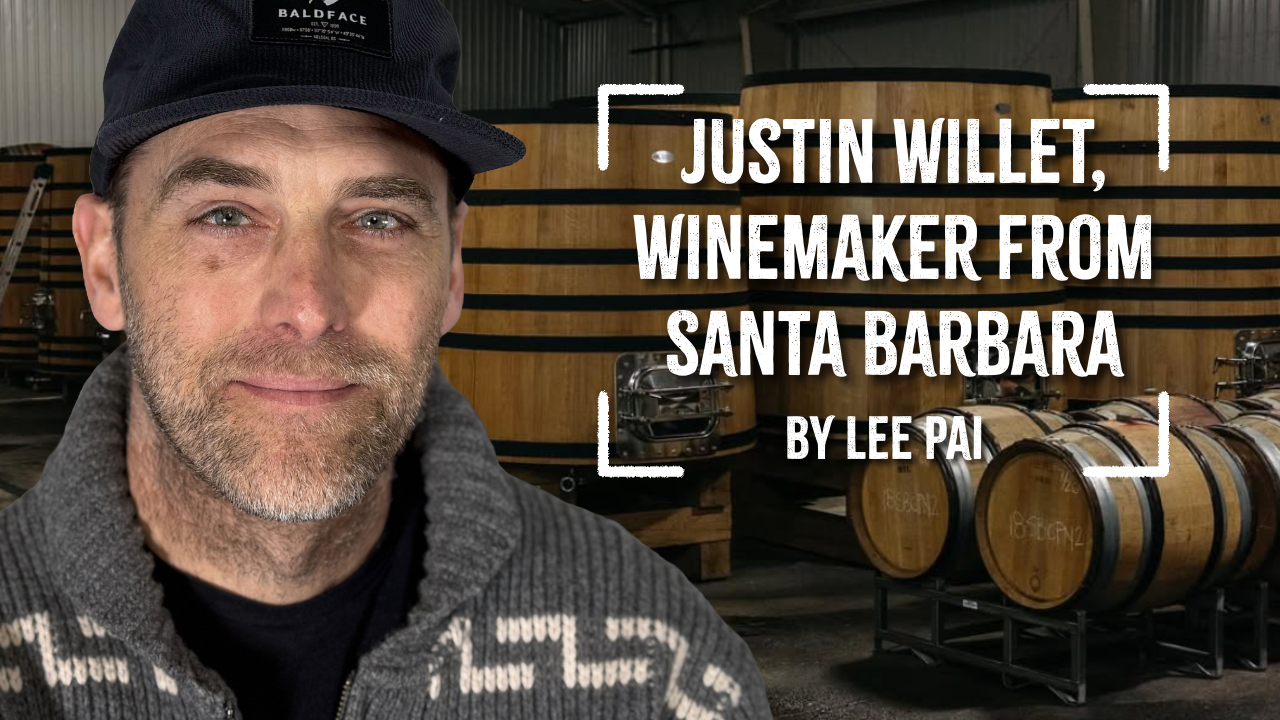
The journey of Justin Willett coincides with this rise of Santa Barbara. Willett is from the area though he did not come from a winemaking family. But after college, he somehow found himself falling into winemaking, and would soon produce his first barrels of wine for his eponymous Tyler Winery in 2005 (while working as an assistant winemaker at Arcadian Winery). Fast-forward to today, Willet has established Tyler’s reputation today for crafting Chardonnay and Pinot Noir that emphasizes balance and elegance over power and structure. But beyond these “traditional” wines that are associated with Santa Barbara (specifically Sta. Rita Hills), Willett has also managed to expand into other wine categories, exploring more of what the region is capable of offering winemakers. There are his traditional method Sparkling wines, his Loire Valley varietal (Chenin Blanc, Sauvignon Blanc, Cabernet Franc, etc.) wines under the label Lieu Dit, and most recently his new Cabernet Sauvignon-focused label Ad Ripa. Also, up until recently, he was also the winemaker at Racines (a collaboration with Étienne de Montille of Domaine De Montille in Burgundy and Rodolph Peters of Pierre Peters in Champagne), and Wenzlau Vineyards.
Willett’s trajectory is part of that community’s commitment towards quality winemaking. There were the forebearers (e.g. Jim Clendenen, Adama Tolmach, etc.) that showed him Santa Barbara’s potential, then there were peers (notably Raj Parr who he was roommates with at one point) that helped each other along the way. Willett’s journey reminds us that the people you meet along the way are just as important as the individual experiences you go through.
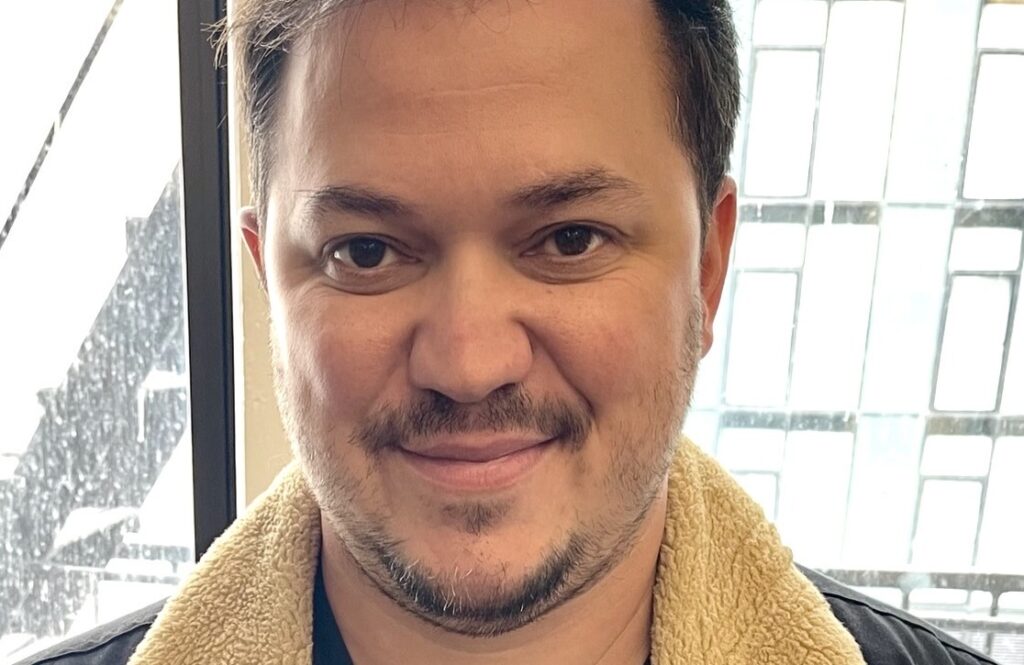
Lee Pai of Grape Collective talks with Justin Willet about his journey with Tyler and what he looks forward to next.
aa
aa
Lee Pai: Welcome to New York. Can you introduce yourself?
Justin Willett: Thanks for having me. My name is Justin Willett. I’m the owner and winemaker of Tyler Winery, and a few other things too (cheeky smirk).
You’re originally from Santa Barbara. So, what drew you to the wine scene there and what’s kept you there all this time?
I moved away after college and really learned the world of wine waiting tables in Los Angeles. I got exposed to a lot of European wines first, and then kind of discovered that you could grow world-class Pinot Noir and Chardonnay just over the hill from where I grew up. That’s what really brought me back to Santa Barbara.
We’re growing in these coastal river valleys that were once ancient marine seabed. It’s this combination of climate and geography: we’re right where the California coastline changes direction, from a more southern-facing coastline along Santa Barbara to a west-facing coastline just above, which is open to the Pacific Ocean. That really allows for a strong coastal onshore flow, producing wines that are a little fresher and a little more mineral.
You have quite a few different projects going on, but let’s start with Tyler. You’re known for working with different vineyards around Santa Ynez County. How did you come into contact with the vineyards you now work with, and what influenced your winemaking style?
Early in my career, I worked with both Santa Maria Valley, which is in the northern part of Santa Barbara, and the Sta. Rita Hills. But as I worked more and more in the Sta. Rita Hills, it became clear to me that that was really the prime place to grow Chardonnay. That’s what I focus on today.
As for what’s influenced my style, it really comes down to the tasting experience I’ve accumulated. I got exposed to a lot of Burgundy early on in my wine journey while working in LA. But it’s really been through the generosity of collectors I’ve met along the way, and the forefathers of Santa Barbara County — Jim Clendenen (Au Bon Climat), Adam Tolmach (Ojai Vineyard), Bob Lindquist (Qupe), Rick Longoria (Longoria Wines), Lane Tanner (Lane Tanner Winery) — who showed me a lot of really special wines. Now, tasting those wines with 20, 30, 40 years on them just proves to me that this is a place where you can grow and produce world-class wine.
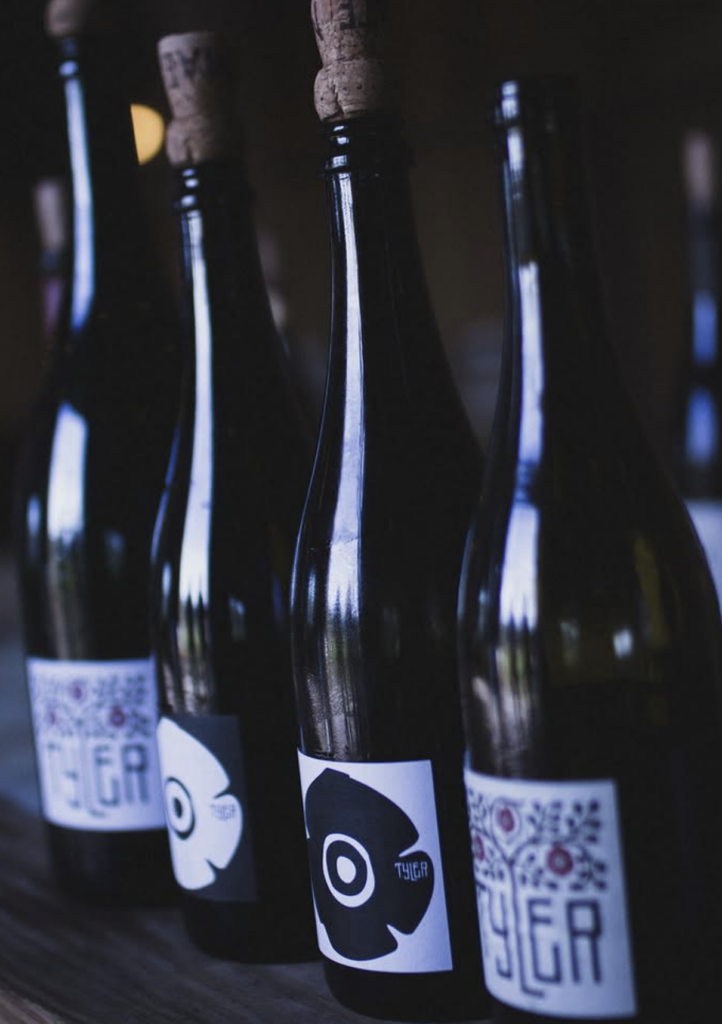
Can you tell us about your approach and philosophy to growing and producing wine?
For me, it’s really a fixation on high-quality farming and keeping my hands off things. I feel that if I farm organic vineyard sites with extreme attention to detail, by the time the fruit gets into the winery, I can kind of get out of the way. Having really high-quality fruit also allows me to rely on the natural flora and fauna all around us to ferment the grapes. That’s how we’re able to add nothing to the wines other than a touch of sulfur. You have to have high-quality fruit if you want to work that way.
How would you define high-quality fruit?
Imagine the best produce at a farmers’ market, it looks perfect. That’s what we’re looking for. It’s quite hard to achieve growing so close to the coast, but with that attention to detail in how we treat the vineyards and the handwork we do, there is an opportunity to bring in fruit that looks exactly like that. And that gives us our best shot at making something really special.
For Tyler, you work with Chardonnay and Pinot Noir. Would you still call your wines California-style wines, or is it something a bit broader than that?
They’re certainly California wines, and I want them to best reflect Santa Barbara, more specifically, the Sta. Rita Hills, and more broadly, California. I just happen to prefer wines that have a little lower alcohol and a little more freshness, by which I mean natural acidity. And I happen to be in a place where you can do that quite well.
Back in my early winemaking days, I would talk to Rajat Parr and ask, “…if I wanted to do this, where should I go?”
He looked at me like it was obvious. He said, “You’re already in the place! Santa Barbara is the best place to grow these varieties.”
So, lucky to be from there.
You work with some outstanding vineyards: Sanford & Benedict, Rinconada, and others. But you also have your own vineyard now, Mae Estate. Can you tell us a little about how that came about?
With wine not being in my family background, I started by just buying a little fruit. I set my sights on a lot of the marquee vineyards in Santa Barbara – Sanford & Benedict and Rincon, as you mentioned, both planted by Richard Sanford, who’s really the godfather of the Sta. Rita Hills. My admiration for him is what led me to really fixate on those sites as a big part of what I do.
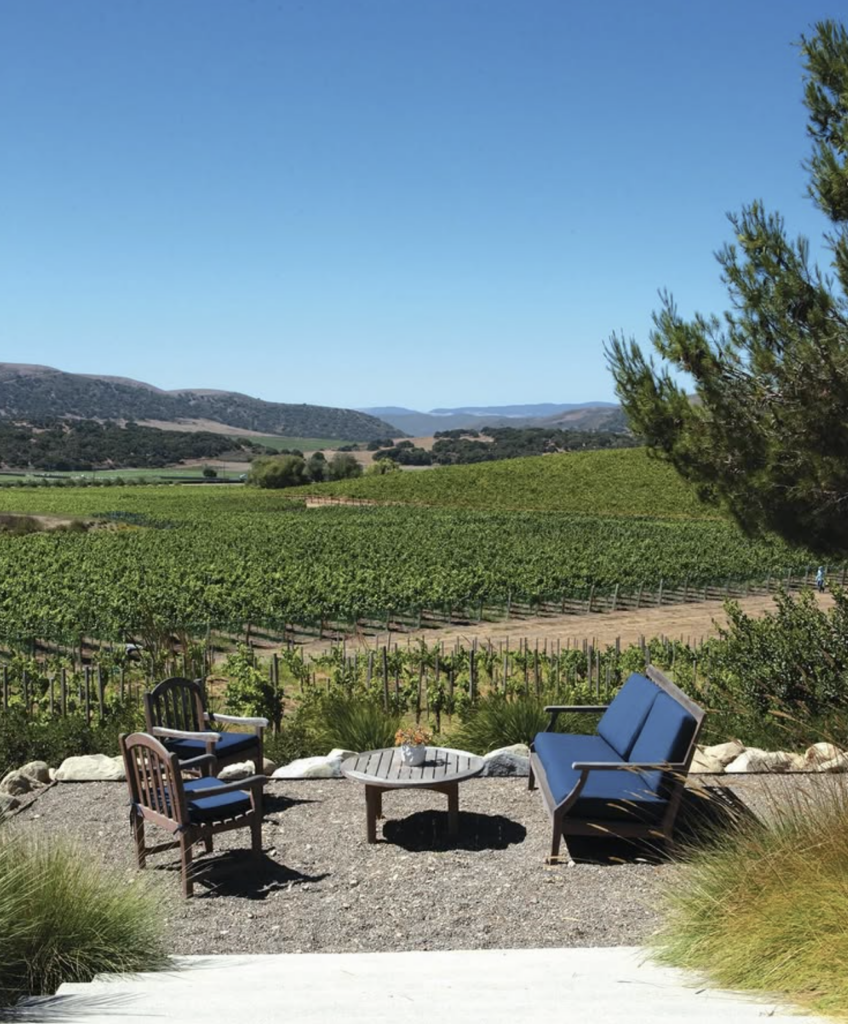
But fast-forward ten years into my winemaking, I had the opportunity to acquire my first parcel. I named it after my wife. It’s about a 45-acre parcel in the northern corridor of the Sta. Rita Hills. We planted about 27 acres out there, fairly evenly split between Pinot Noir and Chardonnay. On that side of the appellation, we’re growing on marine sediments again – lighter soils, more sandy loam, with diatomaceous earth, or roughly chalk, as the subsoil. It’s all organically farmed and the vines are now almost ten years old.
It’s quite rare, in my experience, for a winemaker to be able to work a piece of land from the very beginning: to choose how the vines are planted, which clones you want, what spacing you use. Were these considerations something you had in mind, or was it more of a learning-on-the-fly experience?
A lot of talking with friends, a lot of travel, a lot of time spent in Burgundy and other regions around the world. But at the end of the day, it’s really just a series of best guesses. You take the wisdom of the day – not just what’s trendy, but also looking at what has and hasn’t worked over time. Row direction, planting densities don’t always work everywhere.
We decided to plant Mae at two meters by one meter, which is precisely half the density of Burgundy, because our tractors go between the rows rather than over the top of them. Having that density allows for mechanical cultivation of the soil, so we don’t have to use any pesticides, chemicals, or herbicides. It was really about thinking through how we could farm this vineyard at the highest level, most efficiently.
And you also have another vineyard now, Fiddlesticks?
Yes. I actually started Tyler with a couple of tons from the Fiddlesticks vineyard, which is directly across the street from Sanford & Benedict. Kathy Joseph planted it back in the late ’90s, and it’s a really iconic estate right in the Sta. Rita Hills. It’s quite a privilege to now be the custodian of that vineyard going forward.
It was originally a 100-acre planting, and today there are a few more acres planted. It’s predominantly been Pinot Noir, though we’ve redeveloped part of the vineyard to Chardonnay. What’s been meaningful about that for me is that I built Tyler from a position of not owning land, to now being in a position where I can, with this large vineyard, also support other brands and help them have a really strong source for their projects. That feels like coming full circle.
I want to talk about your other projects. You’re known for Lieu Dit, your Loire varietal focused wine. You also had Racines, which is Burgundian-focused. And most recently, you have the Ad Ripa project. But before we get into those: how do you find time to do all this?
I just don’t sit still very well. Santa Barbara, as a region, benefits from this east-west valley opening to the mouth of the Santa Ynez River, which allows for a really strong onshore push off the ocean. What that allows for is different varietals to grow quite successfully across the region. You’ve got Pinot Noir and Chardonnay out west, and as you move inland, the Rhône varieties do pretty well. Then just east of that, you can grow Loire or Bordeaux varieties really fantastically. Maybe it’s a blessing and a curse that all these things can perform at such a high level, it makes it harder for people to understand what Santa Barbara County or the Santa Ynez Valley stands for. But creatively, it gives us the opportunity to work with all these different varieties, and that’s exciting.
Ad Ripa, your newest Cabernet Sauvignon-focused project out of Happy Canyon, how did that come about?
My wife’s family owns some vineyard land out in Happy Canyon, and I helped them with some winemaking back in 2012 and 2013. It was really eye-opening to me, the quality of what was there. There was already some great wine being made in that zone. Then in 2016, when my dad passed, I decided I’d make a little wine in his honor. He wasn’t a wine guy, but when he did drink wine, Cabernet was what he preferred. So I made a few barrels and put his initials on it — it was a Tyler-branded Cabernet Sauvignon labeled with his initials, S.W., for Steven Willett.
After doing that for four or five years, I decided I really loved these wines and didn’t want Cabernet to be just something Tyler does on the side. I wanted it to have its own voice and platform to really show off what this place can do. So Ad Ripa was born in 2021. The name is a nod to the origin story of my family – my parents moving to California and eventually finding themselves in Santa Barbara.
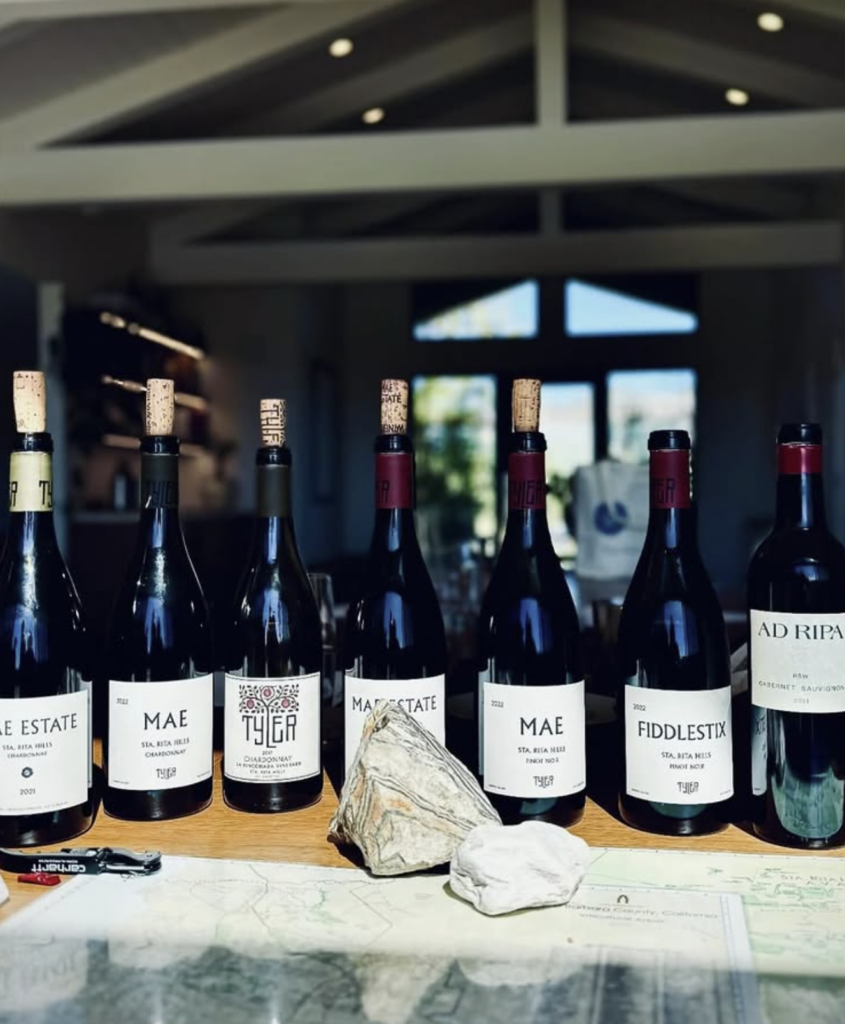
You are, first and foremost, a Chardonnay and Pinot Noir producer. So, where does the style of your Cabernet come from? Did you have a clear vision for what kind of Cabernet you wanted to make, or was it more of a “let’s see what the fruit gives me” approach?
I always wanted to make a classically styled California Cabernet. I joke that these aren’t your dad’s Cabernets, they’re your grandparents’. What I mean by that is I’m not chasing ripeness, and I’m not chasing points. I want to show off what’s authentically there.
I’ve had the opportunity to taste a lot of wines produced in the ’50s, ’60s, ’70s, and ’80s, really when Napa put itself back on the map after Prohibition. Those wines are killer, and you look at them now with 25 years on them and they’re brilliant. So I don’t know why I’d want to wait around another three or four weeks to reach 14.5 or 15% potential alcohol. For my sensibilities as a producer, that balance point lives in the more classical range of 12.5 to 13.5%.
We have three wines. One is what I call the beginning of the range, just titled “Happy Canyon”, which is a blend from a number of different vineyard parcels I work with. And then more specifically, there’s a single-vineyard wine called “China Blue”, and another one labeled with my dad’s initials, S.W. So right now we just released the 2021 single vineyards and the 2022 blend.
And the vineyards you work with for Ad Ripa – did you have a hand in planting and cultivating them as well?
Yes. The main vineyard, China Blue, was planted just over ten years ago, and I had a hand in that. It’s now a monopole, I control the whole vineyard. Then just west of that is the Hopkinson Vineyard, where I work with this old gnarly head-trained, old-clone Cabernet Sauvignon. I didn’t plant that one, and it’s one of the few things I don’t farm myself. It’s managed by a really high-quality vineyard management company in the area.
How do you look after all of these different vineyards across the valley — your own estate vineyards, the sites you source from for Pinot Noir, and now Happy Canyon as well?
It’s not just me, the team is strong. I have a dear friend and now partner, Eric Molina, who is, in my eyes, at the top of the viticulture game in the area. He and I have a farming company together, and we oversee the farming of my home ranches and a series of other vineyards in the Sta. Rita Hills and the greater Santa Ynez Valley.
In each of the vineyards I own, we have a permanent viticultural team that’s a handful of people there year-round, and that team swells dramatically as the growing season picks up. In the cellar, it’s me plus three full-time guys who are really good at what they do.
It would be silly to say it’s just me. It takes a team, and it’s about having quality people around you that you trust and believe in. When people come to work with me, they tend to stick around. And when you don’t have that turnover, you get to a point where I can glance across the cellar and notice something that needs to be done, and I’ll already see one of my guys walking over to address exactly that. It’s a dance.
Is there anything else you’re working on that you’re excited about?
Right now, I’m having a lot of fun making sparkling wine. That’s really where most of my contemplation in winemaking lives. There’s just infinite possibility in making sparkling wine, and I’m spending a lot of creative energy on that. Those wines are starting to hit the market, which has been fantastic.
How did sparkling wine enter the picture?
The Wenzlau brought a producer from Champagne to the winery, a guy named Cédric Bouchard who makes the Roses de Jeanne wines, which are pretty iconic. After Cedric tasted three or four of my Chardonnays, he just looked at me and said, “I can’t believe this, you can make Champagne from this.”
I said, “Do you want to?” And he said yes.
So we started a little collaboration with Wenzlau’s fruit, Cedric’s know-how, and my hands really doing the work. We collaborated for four or five years on that.
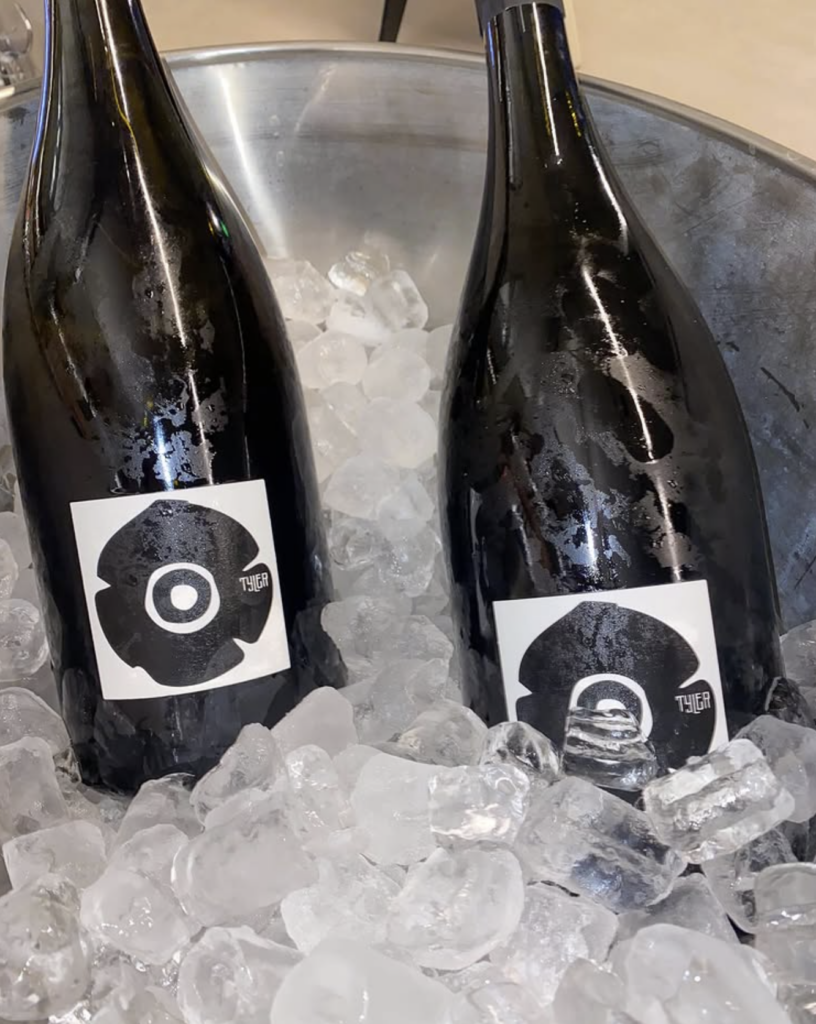
Soon after, I started working with Rodolphe Peters from Champagne Pierre Péters on the Racines project, which was exclusively Chardonnay-based. So Cédric, a Pinot Noir-based winemaker, and then Rodolphe, a Chardonnay specialist. I essentially have two of the most iconic producers in Champagne as mentors to the wines I’m making. Today I have five different cuvées under the Tyler brand, all from my home vineyard.
With regards to where California wine is now, we’ve gone from the lower-alcohol more refreshing style, through what some would call the Parker era chasing ripeness and lushness, and now there’s been a kind of reversion back toward freshness and higher acidity. Where do you see it all settling today?
I think today, style is your own. For me, I’m looking more at the producer and how they are as a craftsperson. I think there has never been more interesting wine being made in California. There are so many different varietal sets and philosophical approaches to both farming and winemaking.
The future is wonderfully bright in California. People are definitely dialing things back a bit, but I think what happened is, you had these richer, riper styles driven in part by the pursuit of critical acclaim, and then there was a reaction to that, a movement In Pursuit of Balance that I was part of from the beginning. That conversation of, “why do we need to make these rich, ripe wines, why don’t we focus on freshness and minerality”, created a lot of backlash within the wine world.
But I think in the end, the riper producers have kind of come back more toward the middle, and those who were really extreme on the lower end have come back to the middle a bit as well. Generally, everyone has found a kind of Goldilocks zone. And I think that’s more in that 12.5 to 13.5% alcohol range, where I think California really shines.
We’re coming up on your 21st anniversary with Tyler later this year. Looking forward, what is the future for Tyler and all of your projects? What are you most looking forward to?
We’ll see. Right now, I really love the size Tyler is at. There’s certainly some desire to potentially acquire a bit more land, there are other vineyards that would be fantastic to bring into the estate. I’m having a lot of fun making sparkling wine. But I’m not sure where things will take me. I had a very different picture in mind 20 years ago than where I actually ended up. Now at 45, with hopefully another 20 or more vintages ahead of me, honestly, I have no idea. And I kind of love that.