Just outside Athens, where the marble columns of the Parthenon catch the Mediterranean sun, lies a wine region that has been quietly and steadily gaining recognition, and can be counted amongst the great values in European wine. Attica, protected by UNESCO for its mineral-rich soils and archaeological significance, is emerging as one of Europe’s most compelling wine destinations—a place where 3,000 years of winemaking history meets modern artisanal production.
This is the land where Plato and Aristotle gathered for symposiums, where democracy was born over cups of wine. The soil that nurtured the philosophical foundations of Western civilization continues to produce grapes today, cultivated by families who trace their winemaking lineage back generations and employ traditional farming methods.
For decades, Attica’s wine reputation was overshadowed by Retsina, the pine-resin flavored wine that became synonymous with Greek tavernas and tourist bottles. While Retsina has its place in Greek culture—and indeed, Attica is its birthplace—the region’s true potential lay dormant, waiting for a new generation of winemakers to unlock what the ancients always knew: that this UNESCO-protected terroir could produce wines of extraordinary character.
Enter families like the Mylonas, third-generation winemakers who represent the vanguard of Attica’s renaissance. Since taking over their family estate in 2000, brothers Stamatis and his siblings Antonis and Tasos have become standard-bearers for a movement that’s capturing international attention. Their mission is both revolutionary and deeply traditional: to prove that Savatiano, the indigenous grape variety that has grown in these limestone-rich, sandy clay soils for millennia, can produce world-class wines that rival any European appellation.
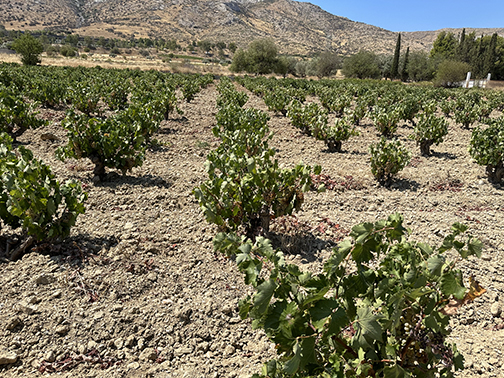
What makes Attica particularly fascinating for international wine lovers is its unique position as both an ancient wine region and a modern discovery. The vines here—many over 55 years old, planted after phylloxera struck in the 1950s—grow without irrigation in soils that have been naturally enriched for thousands of years. The farming practices blend organic and biodynamic principles with techniques literally invented by the ancient Greeks, including pruning by lunar cycles and the use of only sulfur in the vineyards.
When you taste a modern Attica wine, you’re experiencing flavors that connected the greatest minds in human history. The same terroir that produced the wine served at symposiums where democracy, philosophy, and Western thought were born continues to express itself through dedicated artisans who understand they’re custodians of something irreplaceable.
The numbers tell the story of Attica’s emergence: in the past 15 years, the region has seen an explosion of small, quality-focused estates. International recognition has followed, with wine critics and sommeliers beginning to recognize what the Greeks have always known—that this region produces wines with a distinctive mineral complexity and elegance that reflects both its ancient heritage and its modern potential. And the prices for these wines are extremely affordable. Organically cultivated, dry farmed Savatiano bush vines produce incredible wines that retail in the $20 range. Incredible value for the quality of the wines, especially when taking into account the level of care that goes into the farming and the winemaking.
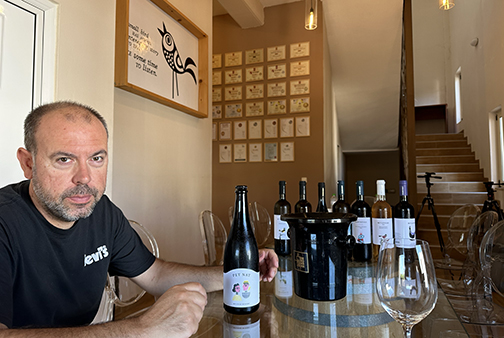
Grape Collective spoke with Stamatis Mylonas about Attica, Socrates and his family’s wine journey.
Tell us about the history of your winery.
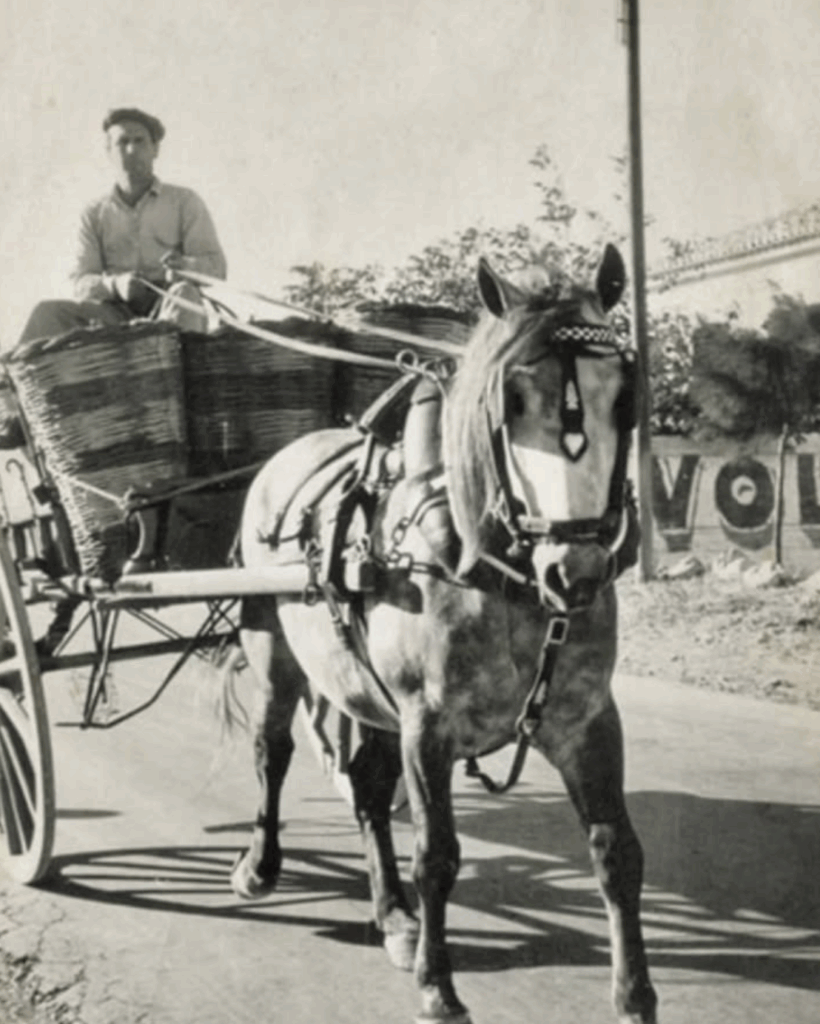
The winery started back in 1917 when my grandfather used to make wines in amphora that were buried in the ground.
Then my father took over in the 1970s. He managed to modernize the winery.
My brothers and I took over in 2000 when we built this new facility and started focusing on higher quality wines, particularly the Savatiano grape variety. We believe the potential of this grape is huge, and we wanted to showcase what it can achieve.
Explain what is unique about the Attica wine region.
Attica has a 3,000-year wine history. Wines were produced here by the ancient Greeks. Imagine that the symposiums with Aristotle and Plato were taking place in Athens, where the wine was pure—it was from this region.
The main grape variety of the region is Savatiano. Phylloxera came here in 1950, and all the new plantings we still work with are from 1955, planted between 1955 to 1960. So nowadays we have old vines—bush vines that are 55-plus years old on average.
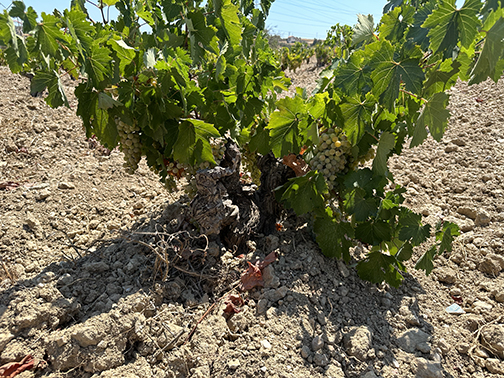
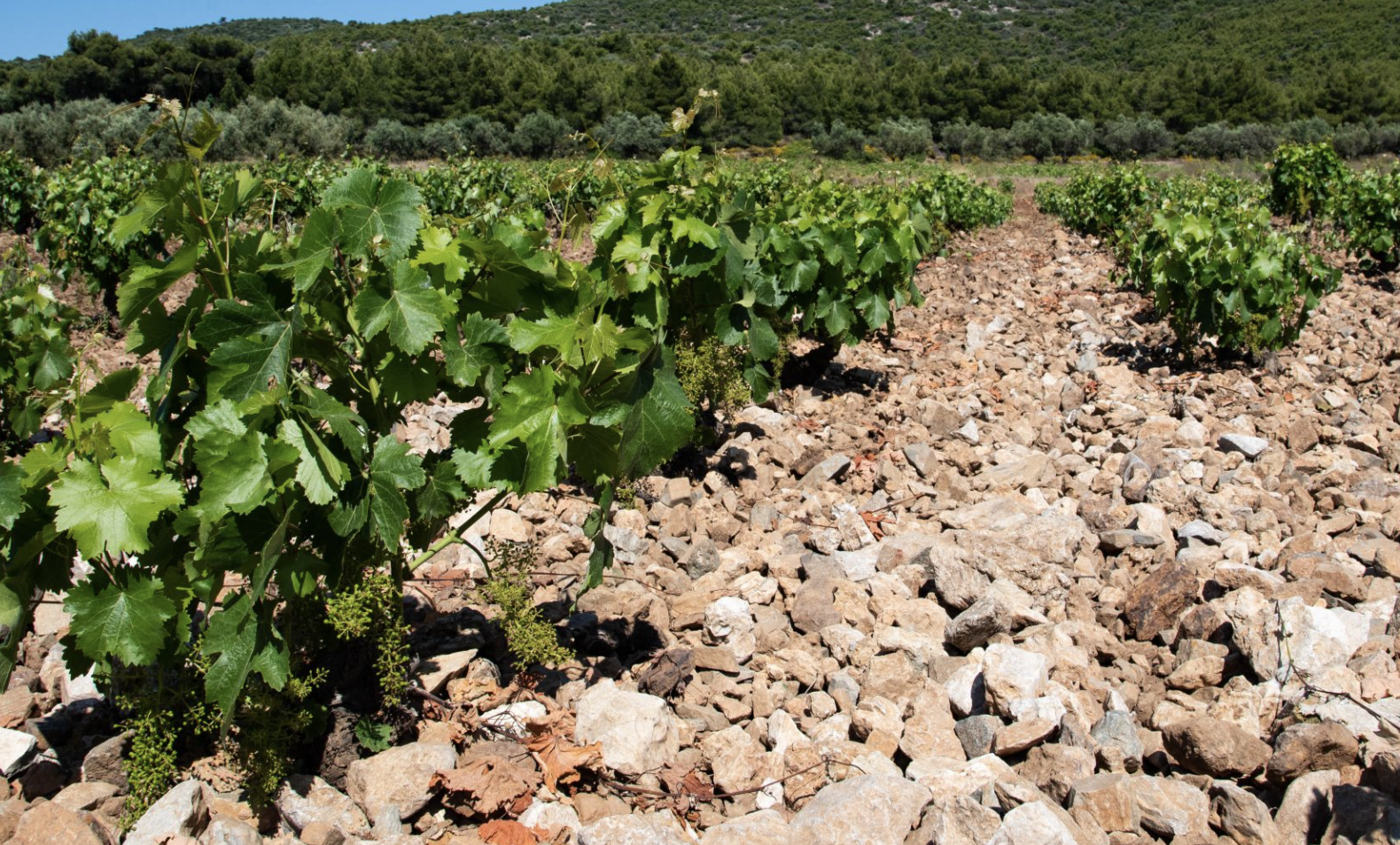
There’s no irrigation at all in our sandy clay and gravel soil over limestone. Something unique about this region is that it’s protected by UNESCO because of the richness of the minerals found in the subsoil.
All the practices—the pruning, how we farm the vineyards—were invented by the ancient Greeks. Something interesting is that we still follow what we call traditional farming of vineyards in this region.
This is actually a blend of organic, biodynamic, and modern practices. But back then they didn’t know about biodynamic or organic farming. For example, they didn’t spray chemicals. They only had sulfur in the vineyards. We’re still using those practices here in Attica, and that’s what we call traditional farming in this region.
For example, the pruning is done by the lunar cycle here—we still do that. This was invented back then, before biodynamic farming, before everything. So elements of the ancient Greek practices were later adopted by people who invented biodynamic and organic farming. But all of that comes from the ancient practices they used to do here in Greece.
What is your philosophy of viticulture and agriculture?
Here at our estate, we follow traditional farming, which is a blend of biodynamic and organic farming that our grandfather used to do. We make wines with very low intervention, trying to focus on the terroir. What we focus on most is the Savatiano grape variety because we believe strongly in this grape.
Because this grape has a bad reputation due to Retsina, it’s a challenge for us to place it back in the market and convince consumers that Savatiano can make great wines.
Retsina is the Greek traditional wine made from Savatiano grape and produced in Attica. Actually, here is the birthplace of Retsina. It’s made by adding a small amount of pine resin from Aleppo pine trees to the tank during fermentation. So pine resin aromas and flavors get into the wine and add complexity to the final wine’s aroma and flavor profile.

What are your hopes for the future of wine in Attica and how has Greece’s winemaking past inspired its future?
I believe there’s a huge future for wines from Attica because what we’ve managed in the last 15 years is that nowadays many producers in Attica are making high-quality wines. Because Attica wasn’t considered a high-quality wine region in Greece, people say it’s the secret of Greek wines, and interest is increasing every year. We believe there’s a huge future for the Savatiano grape and for Retsina.
Wine was very important in the everyday life of the ancient Greeks. That’s why there was the great god Dionysus, who was the god of vines and wine. They had Zeus, Hera, Poseidon, and Dionysus was one of them. That shows how important the vine, the vineyard, and wine were to their everyday life.
This explains the importance of ancient Greece, where symposiums were taking place and people were discussing democracy and philosophy. Always, especially after the symposium, they used to drink wine. Actually, back then they used to add water to the wine because pure wine was supposed to be drunk only by gods. Humans had to add some water.
After all the symposiums, all the philosophy, the ideas they developed about democracy and culture were exported to the rest of the world. In those symposiums, the wine they were drinking was wine from this region—it was wine from Savatiano grapes. It’s fascinating to imagine that.
The ancient Greeks were—I’m not sure if they were the first ones, because many places around the Mediterranean cultivated vines to make wine—but they were among the first humans to cultivate vines and make wine from them. And we’re happy with what they invented.
Wine was so important back then that we find references in Homer’s writings. They had the god Dionysus, as we said, because wine was very important to them. That’s why you find it everywhere in ancient Greek writings.
Wine was so important that we even find references in Homer’s Iliad and Odyssey writings. We find references about wine in ancient Greek texts. That shows the importance of wine.
It’s very interesting that when the Greeks exported democracy, they also exported all their culture. That included all the wine culture—how to farm vines, how to make wines. That was a whole package that was exported to the rest of the world from Greece.
What we always say is that we didn’t just export democracy. It’s not just that—it’s everything, the whole package, including wine.
Even France and Italy owe their knowledge about wine and winemaking and vineyards to Greece. They learned it from us.
When the Ottoman Empire took over and ruled us for 400 years, because they didn’t drink wine, it was very difficult for Greeks to continue what they used to do. So winemaking decreased a lot during this period. That’s one of the reasons why we stayed behind France and Italy—those 400 years kept us behind the evolution that other countries had during this time.
The Greeks started coming back in 1890 and after, with huge wineries like Cambas, then Kourtakis, Boutaris. They started making wine again and exporting wine. But the huge revolution came no more than 40 years ago, maybe less—30 years—when the last generation took over. They started using enology and modern farming, came back to Greece, and started making high-quality wines. Many small estate wineries were established from 1980 and later.
We saw a huge increase in quality in Greek wine in the last 30-35 years due to the latest generation of winemakers and farmers.
How did the economic collapse that began in 2009 impact the wine industry in Greece?
The economic collapse had a huge effect on the wine industry, of course. It was difficult for everything, for all jobs, and that included wineries too.
But that also helped us a lot because until then, many wineries just sold their wine in the Greek market. Many wineries started exporting wines, and exports increased.
I think that due to the economic collapse, people abroad started talking about Greek wine because we sent much more Greek wine abroad. Greek wine has been gaining interest worldwide in the last 10 years because we started focusing on exporting wines—we couldn’t sell here, so we had to look abroad.
More on Greek Wine:
Sparta vs. Athens: The Cultural Divide Over Wine and Its Impact on Greek History
In the Vineyards of Skouras: Dimitris Skouras on Greek Wine’s Global Elevation
Leon Karatsalos of Gaia Winery on the Influence of Ancient Greece on the Modern Greek Wine Revival
Thymiopoulos Vineyards: X(inomavro) Marks the Spot