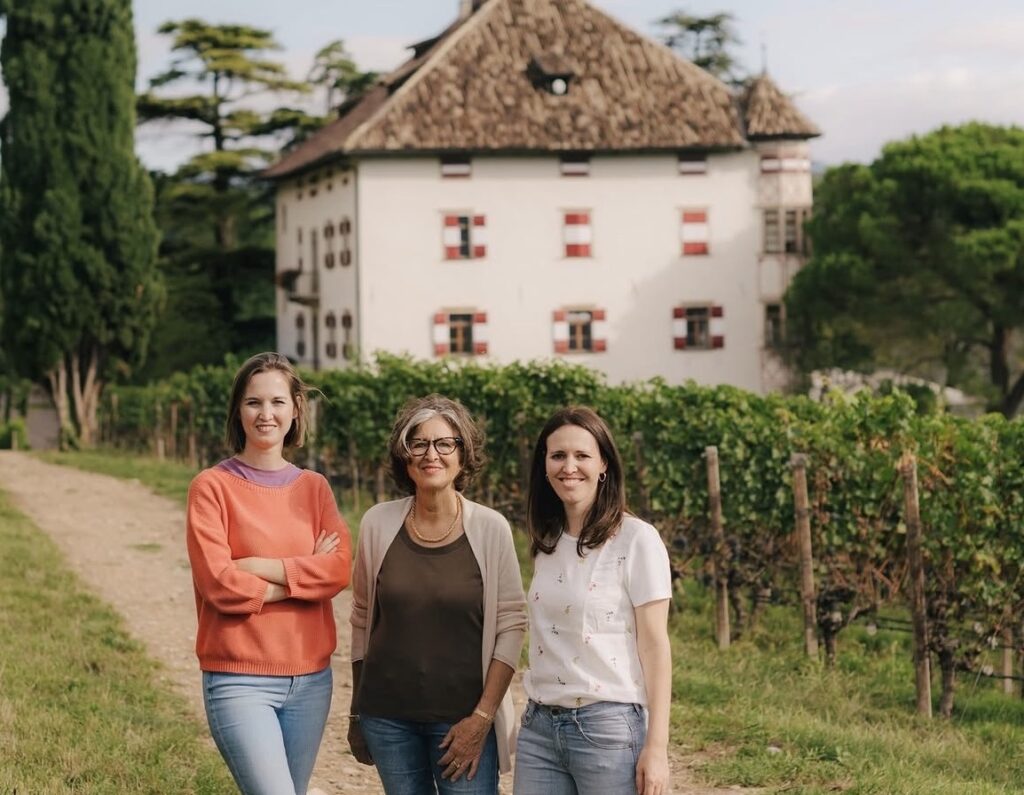
We’re partial to people who have the courage to depart from the mainstream. In the wine world, many match that description. Our interest in probing minds led us to say yes when we were offered two unusual wines from Bending Branch Winery in Comfort, Texas, a winery founded in 2009 by Dr. Robert Young, a retired family and preventive medicine physician, and his wife, Brenda, and daughter, Allison. Dr. Bob, as he is known, got his wine training at U.C.-Davis. He also wears the titles of CEO and Executive Winemaker.

We’ve had wines from Bending Branch before, but these were different. The 2020 Tannat Reserve and the 2021 Texas Cowboy Cuvée Reserve, a blend of Cabernet Sauvignon, Merlot, Petite Sirah and Malbec, were aged with blocks of Texas white oak, a first use of the local wood and a huge leap for sustainability, Dr. Bob said. The winery also made a third wine aged with Texas white oak, a 2020 Petit Verdot, that we did not have a chance to taste. All three won awards at the 2025 San Francisco Chronicle Wine Competition.
After tasting the Tannat and the Cowboy Cuvée, we understood why they found favor with the judges. Both had impressive structure, round, purple berry, spicy flavors and surprising elegance for such big wines. John preferred the Cuvée (15% alcohol) and Dottie the Tannat (15.5%), a specialty of the winery and a grape that has long been used in southwest France and Uruguay. Tannat can be astringent and overly herbal, but John agreed that this was one of the best Tannats he has had and its complexity could make a believer of people who say “Not Tannat.”
We wondered: Why Texas white oak? So we called Dr. Bob, who told us that the process of getting to these releases with white oak took six years. The winery makes a range of wines and depending on the vintage produces 12,000 to 15,000 cases a year for its label and a similar number for other wineries in the state, he said. This interview has been edited for space.
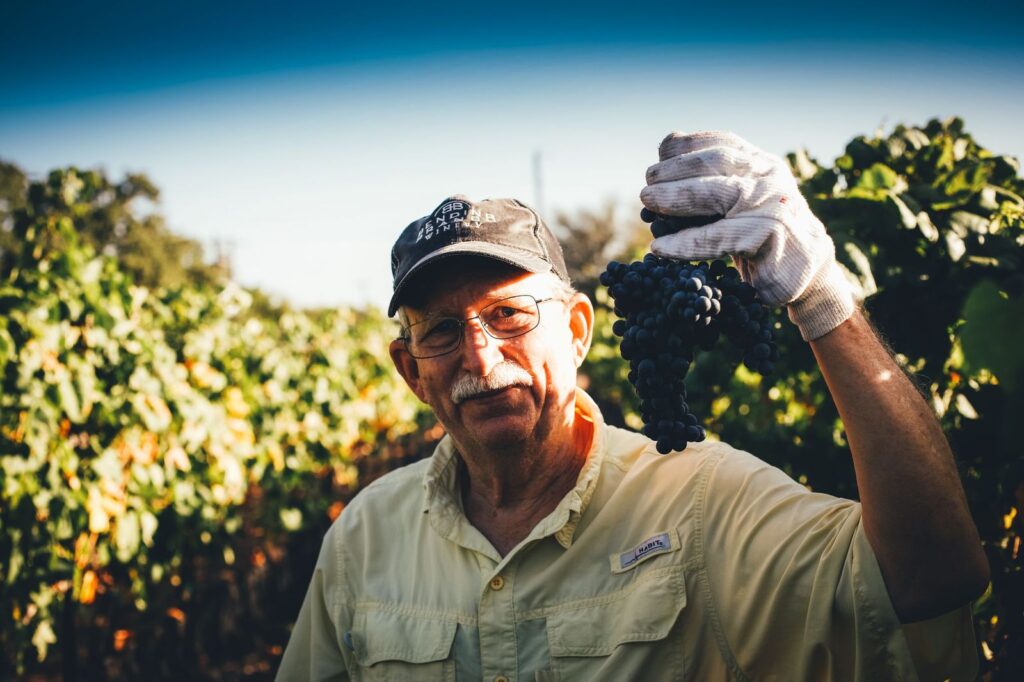
Grape Collective: How did you decide to age some of your wine in Texas white oak?
Dr. Bob: I like bold reds and wood plays such an important role in bold reds in particular, aging in barrels and different types of oak and so forth. And it just hit me at one point: We’re growing all of these grapes in our Texas terroir, but we’re not using any local wood. Why are we not doing that? So I just started researching a little bit, and the predominant wood in the United States that’s used for wine or whiskey or bourbon is Quercus alba or white oak. And so then I checked out where does white oak grow? Well, it grows all over the eastern part of the country and to the Midwest, and there’s white oak that grows in East Texas, Deep East Texas it’s called. Okay, we’ve got it here. So I reached out to Stephen F. Austin University and they led me to talk with the Texas Forestry Association. And finally I got connected with Russell Elder, and he had a multi-generation family logging and lumber mill and hardwood company. He had some white oak [commonly used for flooring and furniture] that had been aging a couple of years outside of his sawmill in Jasper County. And so I bought those and I brought them out here and I aged them another year or so out in the weather [to mellow harsh flavors so they wouldn’t transfer into the wine]. And then I went researching for somebody who could process them for me. Initially I was going to try to get a couple of barrels made, but most of the coopers just didn’t want to fool with it. One that did was going to charge me so much money, so I decided to go with oak alternatives. That’s the first phase of the experiment. You’re familiar with those, right?
Yes, Chains. [Chains are essentially pieces of wood that can be added to neutral barrels to add various oak components to a wine. They are less expensive than new oak barrels.]
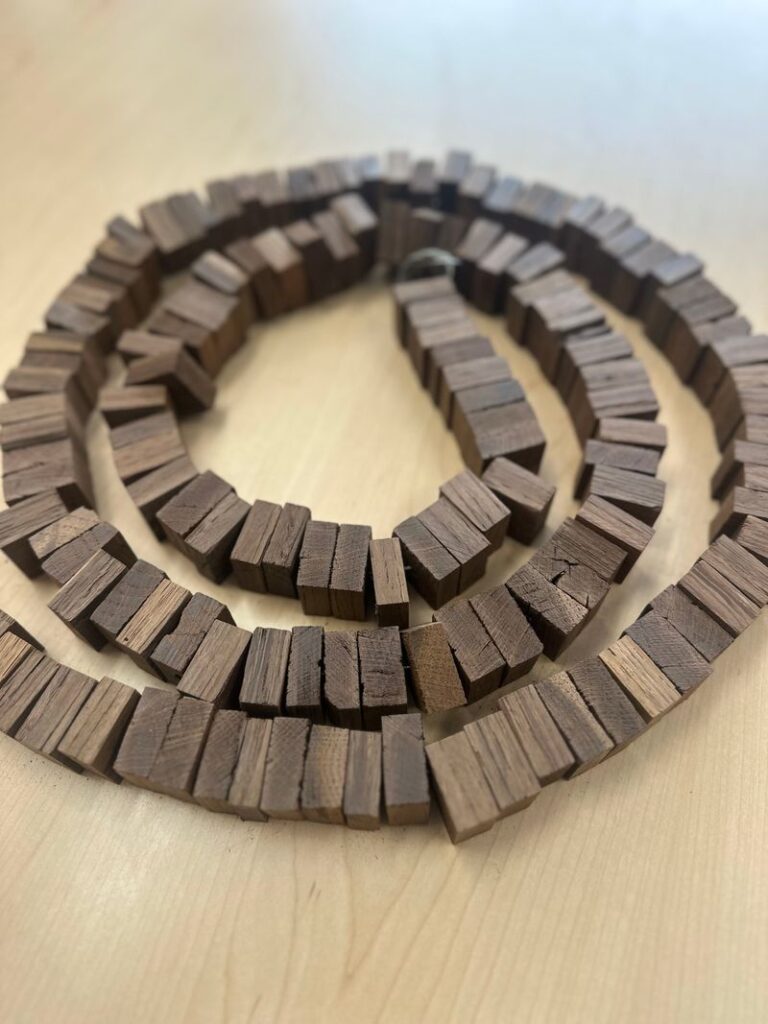
Yeah, chains. They come in different formats depending on the companies that make them. But the California company we worked with, Innerstave, now owned by a larger company, Oak Solutions in Napa, made these chains and they’re like one- inch square pieces of oak that are toasted on all sides. We had them toasted two different ways, medium plus and medium plus plus. And then we started experimenting with it with our wines. We did bench trials just to get a direction on it, and it led us towards these initial three wines. We bottled them late last year and released them this year. We also sent them out to the San Francisco Chronicle, and the Cowboy Cuvée got a Double Gold!
All three won awards. That’s amazing for a first!
I know. It was like, well, okay, I think we hit a home run with a wooden bat. If you go back historically, folks in Europe, particularly in France and some places in Italy, and I’m sure other places as well, they would grow local grapes and they would source wood from nearby forests to make their barrels out of, and so why not do that in Texas? So that kind of was the driving force. By bringing our own oak into play, it was another way to elevate Texas terroir.
What is distinctive about Texas white oak? Is it fine grained?
No, no, it’s totally the opposite. So the weather, the climate, is a huge impactor on the grain size. The cooler the climate is, the slower the trees grow and they have tighter grains. The warmer and wetter the climate is, the faster they grow, and they have wider grains. This oak is very wide-grained, but it’s close enough that it can make a barrel. That gives it a different taste profile than tighter, fine-grain oak. That’s the whole essence of terroir, right? The different soils and the humidity and rainfall, the temperature and all that has an impact on wood as well as it does grapes. So it’s going to be different.
Have other wineries followed you in using Texas white oak?
I actually have been keeping a list of people who are interested in it. And another amazing part of this story is a guy by the name of Greg Standard who is interested in sustainability and organics and winemaking. We do custom crush and we’ve been making wine for him for a couple of years and he came to me early on in the process and asked, “what else can I do, Doc, to help the Texas wine industry?” And I said, well, Greg, we don’t have a cooperage here. You can start a cooperage. And I didn’t think too much of it at the time. And then six or eight months later, he called back and he says, “Hey, I’m going to do it.”
Whoa.
So he bought an operating cooperage in Georgia, dismantled it and brought it to Blanco, Texas, and also brought the coopers along with him from Georgia, and he built the building, and he’s going to be producing barrels and chains soon under the name Standard Cooperage. So we’re going to get the first barrels off the line, but I can tell you that lots of wineries have contacted him and me about using the oak for wine, but the Texas whiskey industry is very interested in it as well.
We bet. That’s a natural.
Yeah. And we actually do bourbon now here, too. You probably didn’t know that.
Your daughter, Allison, does that, right?
Yeah, Allison does that. And so we’ve actually got some bourbon that’s been aging in Texas white oak and we will be releasing that soon.
There’s going to be a growing demand for Texas white oak it sounds like.
Yeah. I think it’s really going to take off probably in five to 10 years from now and you’re going to see a huge amount of Texas grown white oak used in wines, bourbons and whiskeys.
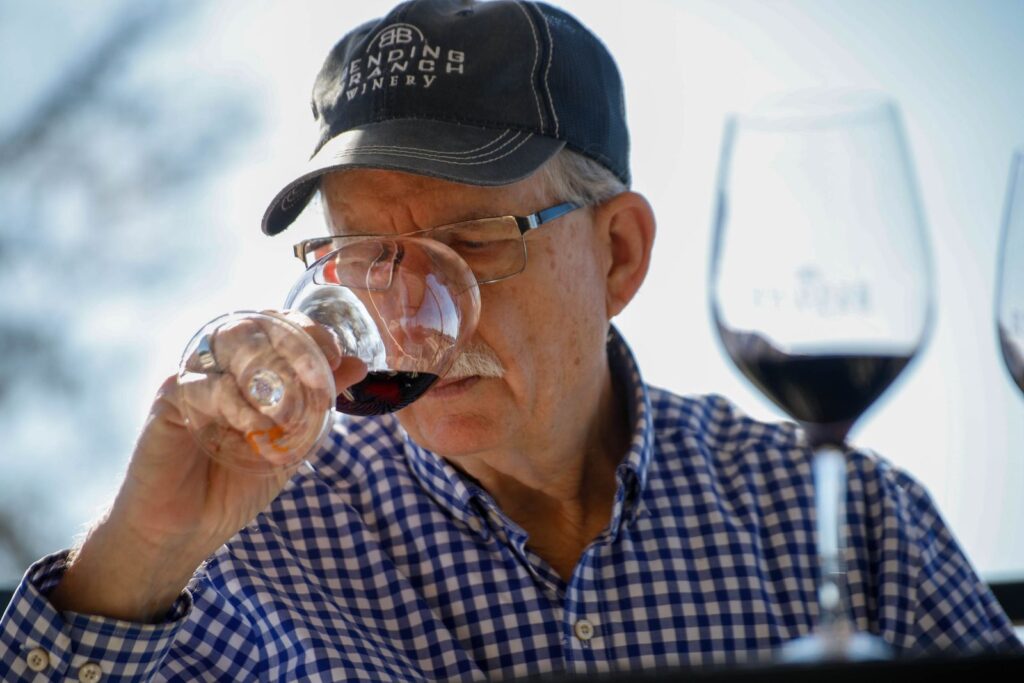
What types of oak had you been using before?
Oh, we use all kinds. We use American, and I like the ones from Missouri. It’s kind of a preference of mine. But we also used it from Minnesota and I think occasionally from the Pennsylvania area. And they all have a different profile, a different taste. And of course, we use French Oak and we use Hungarian Oak as well. So we use all those different things depending on what the wine is. But I’m a little bit partial to American Oak.
Why is that?
I just like the flavor profile. It’s like a sweeter profile. It’s a smoother profile. It’s got those, they call them whiskey lactones [think richly scented maple syrup] in them, and a fair amount of vanilla. It comes through. They’re softer and they’re not as spicy as French oak is, as an example.
And a lot more affordable, right?
Well, yeah. Now that we can get it from Texas it makes it even more sustainable because it’s grown here, it’s harvested here, it’s aged here, it’s now coopered here, and you can have it delivered in two hours to your winery rather than having it shipped from France or Hungary or even California. And using the chains is also a big part of sustainability. You use a lot less of the oak, but you get similar impact, flavor-profile wise, using the chains compared to using brand new barrels.
And so one of the next steps is that we’re going to experiment with some other Texas oaks, too. In Italy, I know that some people use chestnut, as an example.
Your mind is just so fertile.
I just really enjoy it. It just really stimulates me. And part of my thing with wine is why do we try to mimic what everybody else does or what’s been done for a hundred years in Europe or wherever? Let’s seek our own path. I enjoy the learning part of it and the experimenting part of it, and it annoys my staff from time to time, these experiments. I got four experiments we’re setting up today.
Really?
Not with oak, but with something else. I can’t really talk about it.
Dorothy J. Gaiter and John Brecher conceived and wrote The Wall Street Journal’s wine column, “Tastings,” from 1998 to 2010. Dorothy and John have been tasting and studying wine since 1973. In 2020, the University of California at Davis added their papers to the Warren Winiarski Wine Writers Collection in its library, which also includes the work of Hugh Johnson and Jancis Robinson. Dottie has had a distinguished career in journalism as a reporter, editor, columnist and editorial writer at The Miami Herald, The New York Times, and at The Journal. John was Page One Editor of The Journal, City Editor of The Miami Herald and a senior editor at Bloomberg News. They are well-known from their books and many television appearances, especially on Martha Stewart’s show, and as the creators of the annual, international “Open That Bottle Night” celebration of wine and friendship. The first bottle they shared was André Cold Duck. They have two daughters.