“Napa forgot Merlot. I didn’t.”
That is Jeff Cole’s statement from his Instagram bio. His handle, @themerlotmovement, is just as defining. This is Jeff’s mission: to revive Rutherford’s (and in extension, Napa’s) reputation for producing world class Merlot.
To us looking in from the outside, however, this seemed odd at first.
Jeff is the winemaker at Sullivan Rutherford Estate, which is located in the prestigious Rutherford AVA, an appellation full of storied wineries that have made Cabernet Sauvignon synonymous with the region. The legendary Napa winemaker Andre Tchelistcheff even named its supposedly unique tannin texture after it, calling the “Rutherford Dust”.
Founded in 1972 by graphics designer Jim Sullivan, Sullivan Rutherford was established before the meteoric rise of Napa’s status in the wine world. The estate began more or less as a garage project for Jim (a 26-acre garage, advised by none other than Andre Tschelistcheff), who enjoyed making the wines himself. While over the years the scale and sophistication of Sullivan Rutherford developed as it rode the growth of interest on Napa, it was the entrance of new ownership led by Juan Pablo Torres Padilla in 2018 that kick-started the recent transformation.
Under Juan Pablo (JP), Sullivan Rutherford retained Jeff as the winemaker, expanded the vineyard management and estate operations team, broke ground on a new winemaking facility, bought new vineyard sites, and even did the unthinkable – they pulled out around eight acres of Cabernet Sauvignon vines and replanted it with Merlot.
Merlot has always been part of Sullivan Rutherford, both as a blending partner for their Cabernet Sauvignon focused bottles, and as a (almost) single varietal for their Founder’s Reserve Merlot bottle. But Cabernet was still the main focus, as was the rest of the region. This newfound confidence in Merlot came from JP, who has spent considerable time in Bordeaux and Burgundy before coming to Napa. He tasted the potential of Merlot from Sullivan Rutherford before deciding to acquire the estate. As Jeff cheekily puts it, “…I’d like to think my wine had something to do with it.”
It is up to Jeff, now in his 13th vintage for Sullivan Rutherford, to carry forward that vision. He has studied the soils and growing conditions of their vineyards, has a vision for the style of wine he wants to achieve, and has the confidence to produce Merlots comparable to top producers around the world.
Lee Pai of Grape Collective talks to Jeff Cole about the ambitions of Sullivan Rutherford and Merlot.
Lee Pai: Hi, Jeff. Welcome to New York. Can you please introduce yourself and Sullivan Rutherford?
Jeff Cole: My name is Jeff Cole and I’m the winemaker at Sullivan Rutherford Estate in the Napa Valley.
Sullivan Rutherford has been around for a little over 50 years now. The brand was started in 1972, but the estate where we currently make wine and grow grapes was established in 1978 by a gentleman named James O’Neill Sullivan (Jim). Jim was from Los Angeles and worked as a graphic designer for Disney and also did album covers, most notably for the Monkees. So he was mainly in the graphics and creative scene, but he also enjoyed wine and cooking; his wife was a chef. In fact, one of his first wedding gifts was a grapevine that he planted in his backyard and trained and cultivated. I think that goes to show that deep down, he had a passion for wine and everything about it.
At the end of the ’60s and early ’70s, he started hearing about Napa that was starting to produce some pretty phenomenal wines, and ultimately purchased a four-acre property just south of where the estate is now, all while he was living in Los Angeles. He would travel back and forth, sell some fruit, take some back, make a little bit of wine, and ultimately decided that was the direction he wanted to go.
During this time, he also became friends with André Tchelistcheff, who was at the time the director of winemaking at Beaulieu Vineyards, just down the street from us, and helped Jim locate the estate we’re on today. André is considered the father of modern-day winemaking in the Napa Valley. He was Russian, started his career in Bordeaux, then came to Napa. André shaped how winemakers today make wine in Napa, going against the grain in the early days, embracing Napa’s ripeness, texture, and viscosity in the wines, whereas everybody else deferred to the Bordeaux style (low alcohol, high acid, lots of tannin, really age-worthy) because that’s what Bordeaux gives you from its location and weather.
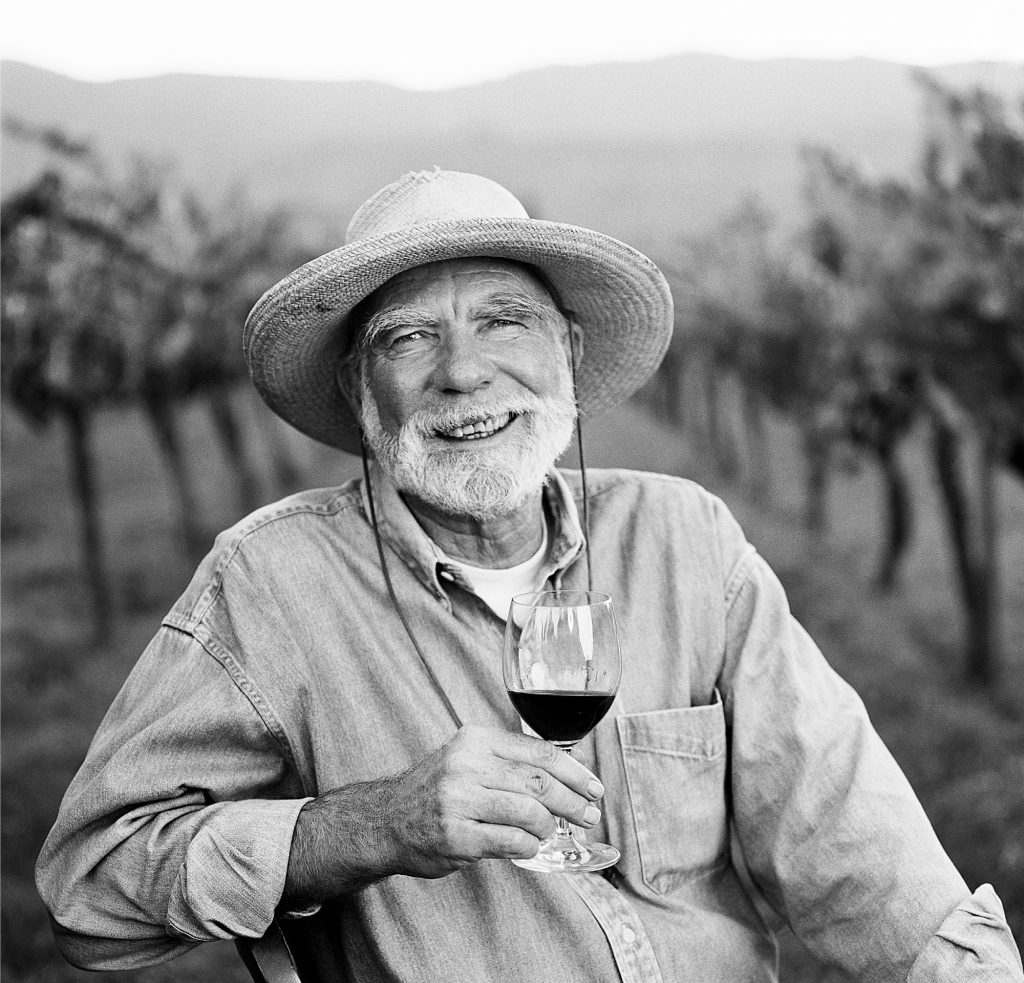
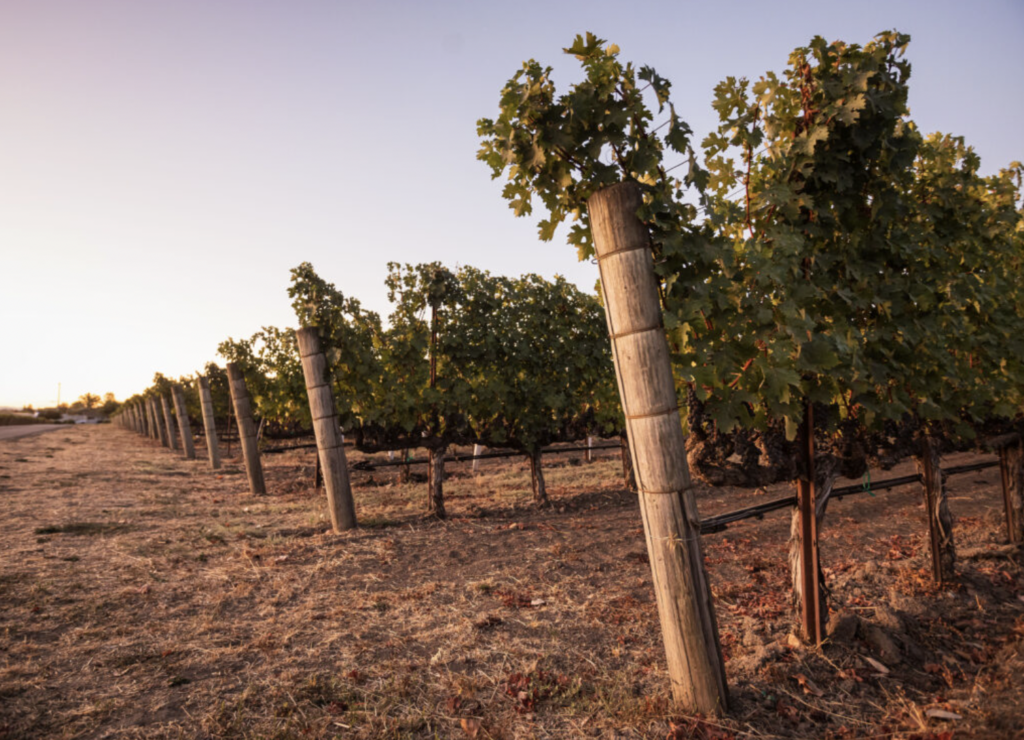
Our estate is 26 acres right at the northern tip of the Rutherford appellation on the valley floor. What’s unique about where we’re located is that when you think of the Napa Valley floor, you might think of more commodity-driven soil profiles with more fertility, which is great if you’re growing apples or pears. But for wine, you want the vines to struggle, you want low vigor. And that’s exactly what they found: 26 acres in Rutherford with a high concentration of gravel and sand that naturally produces lower yields. This allows me as a winemaker to extract and build structure, tannin, depth, and viscosity in the wine.
Jim really identified a parcel that would allow him to do that. In fact, if you go back and look at some of the older vintages, on the cork it says “1-800-Big Red” as the phone number. I think that’s indicative of Jim and what he was trying to achieve.
Back then, when people were still figuring things out, there was a mix of everything planted – Cabernet, Cabernet Franc, Chenin Blanc, Zinfandel, Chardonnay, a hodgepodge. As time went on, Merlot and Cabernet really stood out. In fact, Jim’s ’89 Merlot made the Wine Spectator’s Top 100, the first time a Napa Valley Merlot had made that list. That really put Sullivan on the map as a producer.
Rutherford neighbors with a lot of prestigious names and is probably one of the most important AVAs within Napa Valley. What makes Sullivan Rutherford stand out?
I think it starts with the site. If you don’t have a site, I can be the best winemaker in the world, but if I don’t have high-quality fruit, there’s only so much I can do. The quality is truly in the grape. What sets us apart is the fact that we have this unique site that has a lot of gravel and sand, is very well-drained, and has low vigor. It forces the vines to really struggle and produce low yields.
Low yields mean the berries are smaller, and smaller berries means you have a higher skin-to-juice ratio. Everything that makes red wine great comes from the skins. As a winemaker, when I’m fermenting and extracting in the cellar, I’m able to pull more from a smaller amount of juice, therefore concentrating it. The site allows me to do that and allows the wines to be what they are. I think that is a unique or competitive advantage relative to some of my neighbors, who all do a great job. But Sullivan is unique in that we get naturally low yields from the site that allows me to produce wines that are structured and age-worthy.
What’s also cool is that Rutherford is known for having more of that earthy, dusty minerality character. The estate at Sullivan brings that out in spades. My goal is to make the most Rutherford Cabernet and the most Rutherford Merlot in Rutherford.
What wines do Sullivan Rutherford produce?
Obviously, we’re in Napa, so we produce Cabernet Sauvignon, and they’re great. But Merlot is a close second in terms of overall planting and overall attention. Everything we’re trying to do as a company now is shifting from Cabernet into the Merlot realm. We’re really focused on elevating not only the Cabernet that we make, but Merlot in Napa as a whole, and really trying to get it on the global stage to compete with some of the best regions in the world. Those are really the two most widely planted varieties that we have. We do have a little bit of Cabernet Franc, a small amount of Chardonnay, and a little bit of Petit Verdot, but really, it’s Merlot and Cabernet Sauvignon.
Sullivan Rutherford was acquired by JP in 2018. Can you tell us about some of the changes since then?
In 2018, the Sullivans decided to sell to a small family group out of Mexico City, led by our managing general partner JP. JP has the vision. He’s originally from Mexico City. He tells a story of his grandfather who may or may not have exposed him to wine at an early age. Just like with the Sullivans, I think that’s why there’s so much synergy and why it was a good fit for the Sullivans to sell to JP and his family.
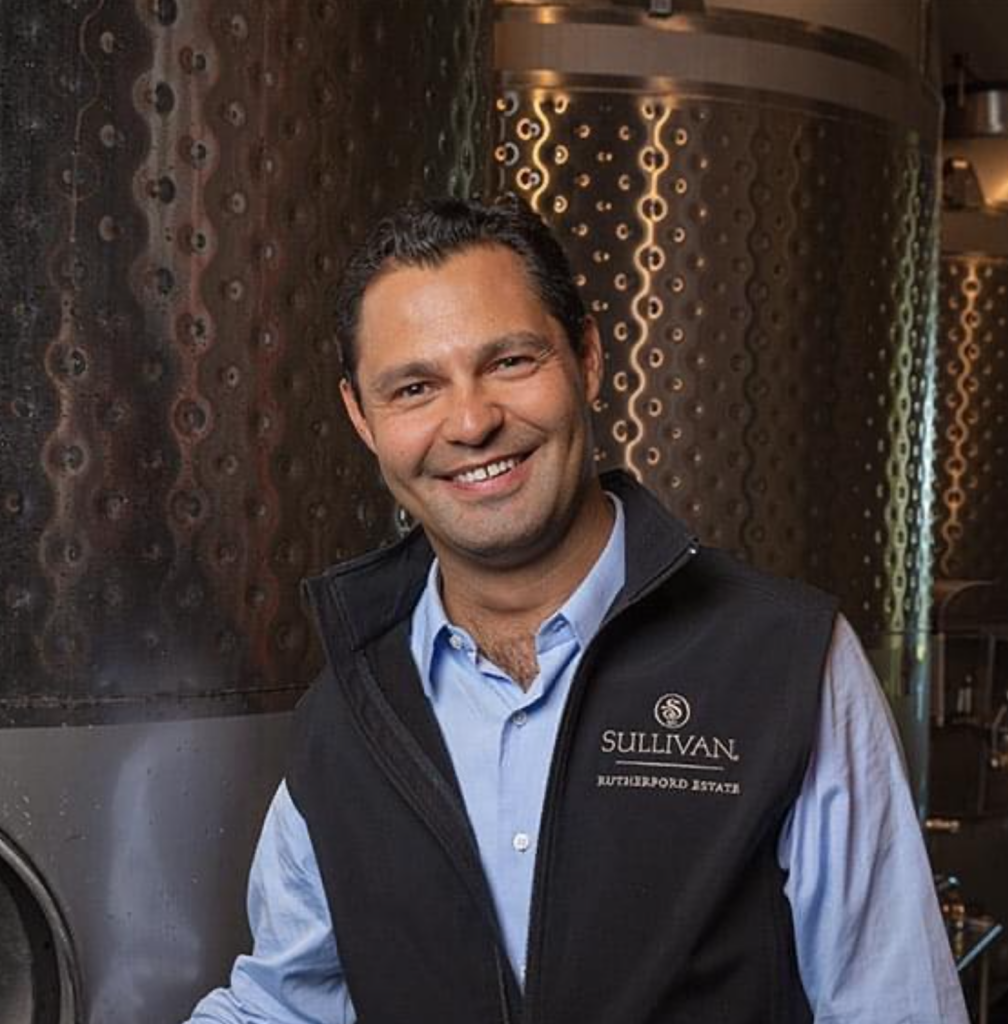
JP spent half of his life in Paris before he moved to Napa, and spent a lot of time in Bordeaux and Burgundy. His uncle, who’s his business partner, would often fly out and they would meet and travel around and taste and do all the things you do in wine country. That is where they came up with the inspiration to start a venture like this. They originally focused on Bordeaux, but there was a lot of red tape and it was difficult to enter that market, so they shifted to Napa.
What I think appealed to them was that Napa is relatively young, so there’s a lot of new ideas, energy, and people wanting to do great things. But winemaking is thousands of years old, so there’s tradition to winemaking and how things are done. For JP, Napa was a blend of both new and old world, and he really liked that. When he came to Napa and was searching, he ultimately landed on Sullivan. There’s a rich history, so there’s a lot to draw from. He knew this was a hidden jewel that just needed a little bit more attention, an opportunity to really flourish.
How does he take what the Sullivans did and take it to the next level? Well, it starts with the team. I had started in 2013 and worked for the Sullivans for five years. When they sold to JP and his family, I’d like to think that my wine had something to do with it. JP kept me on board as the full-time winemaker. Then he went out and hired Joshua Lowell as our general manager. Joshua spent time with Peter Michael, with Futo in Oakville, and with Mark Aubert at Aubert Wines up in Calistoga, all were premium brands that he was able to elevate and become almost cult-like. He’s very knowledgeable about vineyards, winemaking, the business, and was just the right fit in terms of being the person to help JP take Sullivan to the next level.
He hired Erin Callahan, who’s our director of customer acquisition and sales. She brings a wealth of knowledge from the industry, working at Artesa and a couple places over in Sonoma. She understands that human relationship and cultivating that connection with the consumer. There are so many options out there, if you don’t have that connection with the consumer, it’s hard to sell wine. She’s very good at those touchpoints and keeping people involved and really bringing that high level of hospitality.
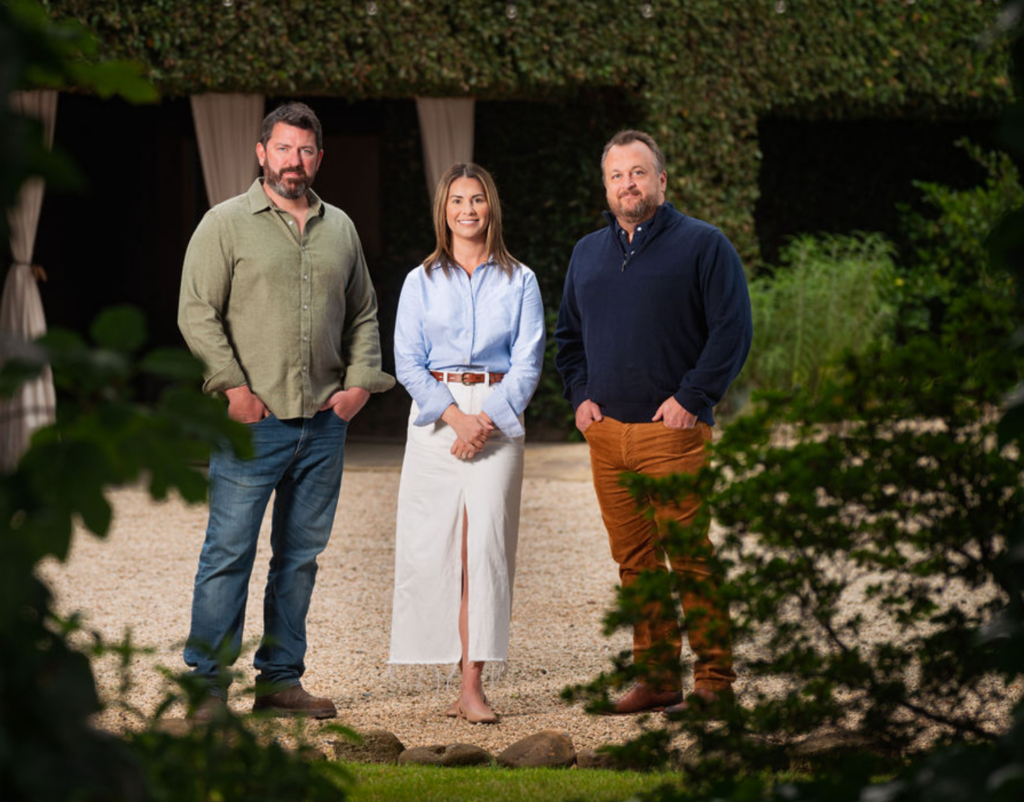
We hired Michael Wolf, who was one of the bigger names in viticulture and vineyard management in Napa. He’s now retired and sold his company to Domenick Bianco whom we work with, but Mike spent time in the ’80s with Mayacamas, cut his teeth there, and then branched off on his own in the ’90s and really managed some of the most prominent vineyards in the Napa Valley. We felt fortunate that he was willing to work with us as much as we wanted him to. He just brought a level of knowledge and understanding about the vineyard and really ensured that year in and year out, we had the highest quality.
It’s really about bringing the team together. And then it was the vineyards themselves. The 26 acres that we have in Rutherford had some older plantings that needed to be freshened up, so we went through and replanted, pulling out Cabernet Sauvignon to plant Merlot to push that forward. We bought a property just on the outskirts of Yountville, which is southeast of Rutherford, kind of at the base of Atlas Peak. It’s a little bit cooler but still warm enough to ripen, with a different soil profile (more white volcanic ash). You get a little bit more minerality and you get acidity and freshness from that site, which is absolutely perfect for Merlot. We literally bought it to plant Merlot.
Then we bought a property up in St. Helena that was an established Cabernet Sauvignon vineyard. I know I’m talking about Merlot a lot, but this vineyard is absolutely phenomenal. This type of acquisition doesn’t come around maybe once in a career, so we had to buy it. It’s some of the best Cabernet Sauvignon I make.
So we’ve got the people, we’ve got the land. Now we need a place to do it. Historically, when I first came on board, I was making wine in the old setup that the Sullivans were doing, which was not really set up to be consistent year in and year out. That put a lot of weight on my shoulders to be consistent and work with what I had. JP recognized that and said, “Jeff, you need a facility, a space that you can own, that you can control, that’s set up to produce the highest quality possible year in and year out.”
So, we are in the process of building a brand-new winery on the Rutherford property, eight years in the making with COVID and some back and forth in terms of design. We ultimately landed on what we’re building today. We broke ground last November, and our goal is to be in the new production facility by harvest 2026. Really, it’s JP coming in with the passion, with the vision, setting the goals and standards high, and putting the team in place to achieve it.
You point out Merlot. Everyone thinks of Napa Valley and thinks of Cabernet Sauvignon. To even consider replanting acreages from Cabernet Sauvignon to Merlot, what was the reason behind that?
When JP first visited Sullivan, I think he saw everything that Jim saw. He tasted the wines and thought they were amazing and reminded him of Bordeaux. What really stood out to him was the Merlot. You have to remember, in Napa in 2018, Cab is king, everybody was planting Cabernet or ripping stuff out to plant more Cabernet. JP really saw the historical value that Jim had set up and wanted to take the Merlot to the next level.
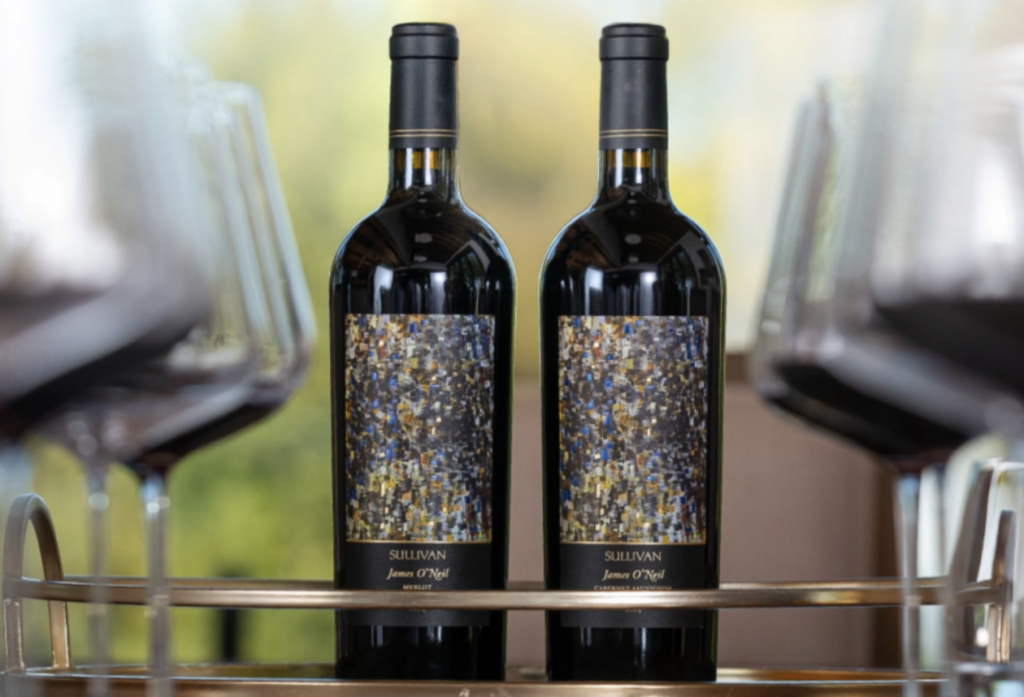
As a team, we’ve been redeveloping the vineyards in Rutherford to support more Merlot. We’ve bought other vineyard sites that we’ve planted specifically for Merlot. We are really trying to make our estate and our Merlot, the James O’Neill Sullivan Founders Reserve Merlot specifically, synonymous with world-class Merlot. That is where we’re at today.
From a business perspective today, it’s a gutsy move for sure. I think obviously Cabernet does very well in Napa, that’s why everybody plants it. But so do other grape varieties. Unfortunately, because Cabernet does so well, that’s what people planted on their best sites. Unfortunately, everything else, including Merlot, got planted on sites maybe that are less conducive to structure and density and all the things that we like in great Cabernet.
I think 40 years ago when Cabernet really started becoming popular, Merlot took a backseat. The great thing about Merlot is it can be planted almost anywhere and will almost always ripen because it’s an earlier-ripening variety. It also tends to have less tannin, so it’s softer. I think many people felt that while they focus on Cabernet, sometimes it can get too extracted and big, so Merlot can calm things down and make a lower price point entry level wine, something that can be consumed younger.
But the reality is, in the world of wine, Merlot is some of the most expensive and most sought-after wines around the world. If given the right opportunity, the right land to be planted on, the right soil, the right vineyard management and farming practices, the right winemaking, you can produce phenomenal wine.
I think JP saw an opportunity. There is a rich history of Merlot already established at Sullivan, and he thought we could take it to the next level. He’s invested time, energy, and resources to achieve that. We can say that we’re the best or we’re trying to be the best, producing world-class Merlot. But if you’re not doing things that show people that you’re actually serious about it, then it doesn’t really matter. Investing in vineyards, investing in our vineyard management team, investing in a new winery to cultivate the best Merlot in Napa, and ultimately Merlot that equals or rivals some of the best in the world, that is our ultimate goal. We’re doing all the things to ensure that we can achieve that goal.
That’s definitely a really lofty goal. So then: to you, what does it mean to be a world-class wine? How do you define it?
I think obviously it starts with the quality. The quality has to be there. There has to be maybe a sense of winemaking, and ultimately a sense of place. I think we have benchmarks from around the world that are considered the best. If we can achieve those benchmarks and then exceed them in a place where it’s maybe less expected. People don’t think you can grow great Merlot in Napa. They think it has to be grown in cooler sites with heavy clay soils.
But Pomerol, for instance, is probably the most world-renowned area producing Merlot today and probably ever. Yes, there is a little bit of clay there, but underneath that clay is a lot of gravel and sand and very well-drained soils, which kind of get skipped and overlooked. Our philosophy is we’re going to plant Merlot as if we’re planting our best Cabernet Sauvignon. We’re going to give it all the attention that it needs in order to succeed. We feel that if we do all those things correctly, we will produce a wine that rivals any other wine in the world.
We talk a lot about farming and winemaking practices such as biodynamic, regenerative, organic, low intervention, double zero, all these designations. What is your approach?
I think ultimately with all the different ways of farming, it’s very respectful of the environment, of the creatures within the environment, and so forth. There’s an opportunity for that, and we practice very sustainable farming. Wherever we can intervene minimalistically, we’re going to do that. What’s great about our current vineyard management team (originally Mike Wolf and now Domenick Bianco), we’re now in our third vintage with Domenick, and he is absolutely phenomenal. He is very cognizant of the chemicals and products that they use out in the vineyard. It’s always sustainability first, and we’re going to go that route 100% of the time if we can.
Now, in a year where there’s rain or high mildew pressures, sometimes we have to get in there and be a little bit more heavy-handed. But again, it’s all products that are relatively sustainable. We’re a small producer (5,000 cases a year), all of our eggs are essentially in one basket. We need to ensure quality year in and year out. We’re going to be as sustainable as possible to ensure the highest quality.
I want to talk about your journey to wine. A lot of winemakers in Napa Valley come from elsewhere. But you’re local, you’re from Yountville.
Yes, I grew up just below Yountville. My family wasn’t in the wine industry, but I always say growing up in Yountville, whether you’re in the wine industry or not, you’re in the wine industry. Literally, vineyards surrounded my house. I had friends whose parents were vineyard managers and winemakers, so it was just around me. Maybe early on that planted a little seed in the back of my mind that one day maybe I’m going to do this.
I went to college in San Luis Obispo at Cal Poly. Although I wasn’t there for wine, they had some wine classes as a minor. I picked up a few of the classes for fun, and kept taking the classes. Eventually, when the school announced the wine minor could become a major, I decided to go for it and I spent two extra years to get that degree.
I worked for a couple of wineries on the Central Coast. First was a winery in Nipomo, just south of San Luis Obispo, a sparkling producer as well as Pinot Noir and Chardonnay. Then after that, I worked for a small Pinot Noir producer in Paso Robles called Windward Vineyards. Ultimately, being from Napa, at least at that time in the early 2000s, I felt the highest quality and the best talent was in Napa. I was maybe a little bit biased, but I decided I needed to move back.
So I left Windward and took a job at Schramsberg Vineyards in Calistoga, a sparkling producer as well as they have an estate Cabernet program. I literally took an entry-level cellar position, and was the low man on the totem pole. But that was by design. I wanted to get in. I wanted to learn winemaking, the nuts and bolts. Theory, reading textbooks, taking tests doesn’t teach you how to handle putting a hose on a pump or how to rack properly, or how to stack barrels, or how to clean barrels and what chemicals to use, and just all the things that are required to make wine.
I was at Schramsberg for almost seven years, the last three of which I was the assistant winemaker there. Then I got a call from a friend who was actually working at Sullivan, and they were looking for a winemaker. The rest is history after that. In 2013, I returned to Rutherford to become the full-time winemaker at Sullivan.
How much has changed in terms of the winemaking at Sullivan, and how have you changed?
The beautiful thing about being in charge of the wine program is I get to be creative. I can think of kind of wacky ideas and concepts and really try to push the boundaries. It’s great to have that leeway and that trust from ownership. At this level of winemaking, this level of quality, you’re not going to do anything that’s going to dramatically increase quality. You’re already at a high quality. So what can you do to get a 1% or a half a percent increase in quality here or there? That’s really where we’re working.
I’ll give you an example. When I was at Schramsberg for the J. Davies red wine program, I approached the head winemaker and red winemaker at the time and asked if we can seal the barrels after the wines are in, never opening them. I thought, because of the evaporation of alcohol and water through the barrel, you’re concentrating the phenolics. And in theory, I thought at least it would make a denser, richer, more structured wine. But I couldn’t do it, I’m not in charge.
Fast forward to when I got to Sullivan, now that I’m in charge, in 2016 I took one barrel of my best Cabernet and sealed it with a wooden bung, hammered it in kind of whiskey-style aging, rotated it to swell, made sure it was hermetically sealed and not seeping in oxygen outside of the micro-oxygenation that you get from the exchange through the wood itself. My goal was to leave it for a year and then come back to it and see what happened. I couldn’t wait that long, and 11 months I cracked that baby open. From a pure textural standpoint, it was phenomenal. A little reduced, but that’s to be expected having a wine sealed in a barrel for almost a year.
The next year, in 2017, I took my entire lot of Cabernet Sauvignon that makes up our top wine the James O’Neill Sullivan Founders Reserve Cabernet, sealed them, and started experimenting with the time and what I call “hard months.” I tried various months, and ultimately found six months was the right amount of time where you don’t get a reduced wine but you get the concentration.
From 2018 onwards, all of my wine goes through that process. I seal the barrels every six months. And at the six months mark, I open them, and use a barrel to top off other barrels because you get a little loss from evaporation, and then we seal them again. That happens three cycles and then I blend and go to bottle at that point.
Again, the quality was always there. This is just a way to make small incremental improvements to try to make the best wine that I possibly can. From a winemaking perspective and what’s changed over time, it’s my ability to experiment, to learn, to work with some of the best grape and grape growers in Napa, to have a team around me to support and help sell that and share the message, to give me a space where I can make the best wine. Just over time, dialing in my craft, my philosophies, how I do things, and really working well with the team is what has allowed me to get to this point.
Looking forward for Sullivan Rutherford, what is the vision for the estate, for the wines, and for yourself as well?
The last eight years has been a great opportunity to grow the team, to grow our holdings, to get all the infrastructure in place to be successful. We’re literally at the end of that rainbow, if you will. By next year, everything’s in place for us to be absolutely successful.
For me, it is getting Merlot into a space that is recognized within Napa, showcasing Napa, because I think Napa is not just Cabernet. There are a lot of things that can grow very well here. There are different soil types and microclimates. The ultimate goal is to get to the point where people can see these other grape varieties excel not only in Napa from a quality perspective, but beyond Napa on the world stage and be taken seriously.
And for myself, to continue to evolve and grow. Don’t get stuck in the old ways. Be open to new ideas and try to learn as much as I can and evolve while I do that and just keep cranking out delicious wine. That’s my personal goal.
While still staying at 5,000 cases a year?
We don’t want to produce a huge amount, because when you start producing larger quantities, it gets harder to maintain that level of quality. It’s almost impossible at scale. By keeping it small, we’ve got control over everything. We know what’s happening in every block, with every vine, at all times of the year. We’re able to really control quality at that point. When you start getting into the 10,000 and 20,000 cases and beyond, it’s just hard to maintain that control.
Quality is paramount. We want to be a top producer in North America. We want to be recognized as a top producer in the world. If we start making hundreds of thousands of cases, we just won’t be able to do that.
Last question. As a winemaker, which do you prefer: a vintage that’s perfect, everything was easy, rain when you need it, no rain when you shouldn’t have it? Or the vintage where everything went wrong and somehow you still made wine from it?
I’ll still make wine from anything, so that’s going to happen regardless. But putting my skills to the test is always fun. I’ll give an example. This year everything was shaping up to be a phenomenal year, it wasn’t hot, it wasn’t cold, it was perfect, even ripening. I thought it was going to last until mid-October, push into November, have great hang time, the sugars all ripen in a good spot. Then all of a sudden it got cold, the rain started coming in. When you think it’s going great, it probably isn’t. Something’s going to pop up, that’s just what harvest is. You have to be able to adapt and adjust and apply your knowledge and skill and really try to create the best possible wine you can given the circumstance. It’s stressful and fun at the same time.
Obviously with a perfect vintage, everybody wants a perfect vintage because you don’t have to work very hard and it’s going to be great. The wines are going to be received well and they’re going to taste great.
So it’s a mix. Sometimes during a great vintage, you’re not having to work that hard, and it doesn’t feel like you’re working at all. You’re not learning at that point. When you’re put in adverse situations, it makes you think, it makes you have to fall back on previous times where things didn’t work well, and it allows me to grow as a winemaker. Every time that happens, I become more capable. If it happens again, I’m less stressed out about it. That’s probably more fun looking back on it, whereas in real time, the perfect vintage probably wins out.
Either one, I’ll take both. It’s just fun.