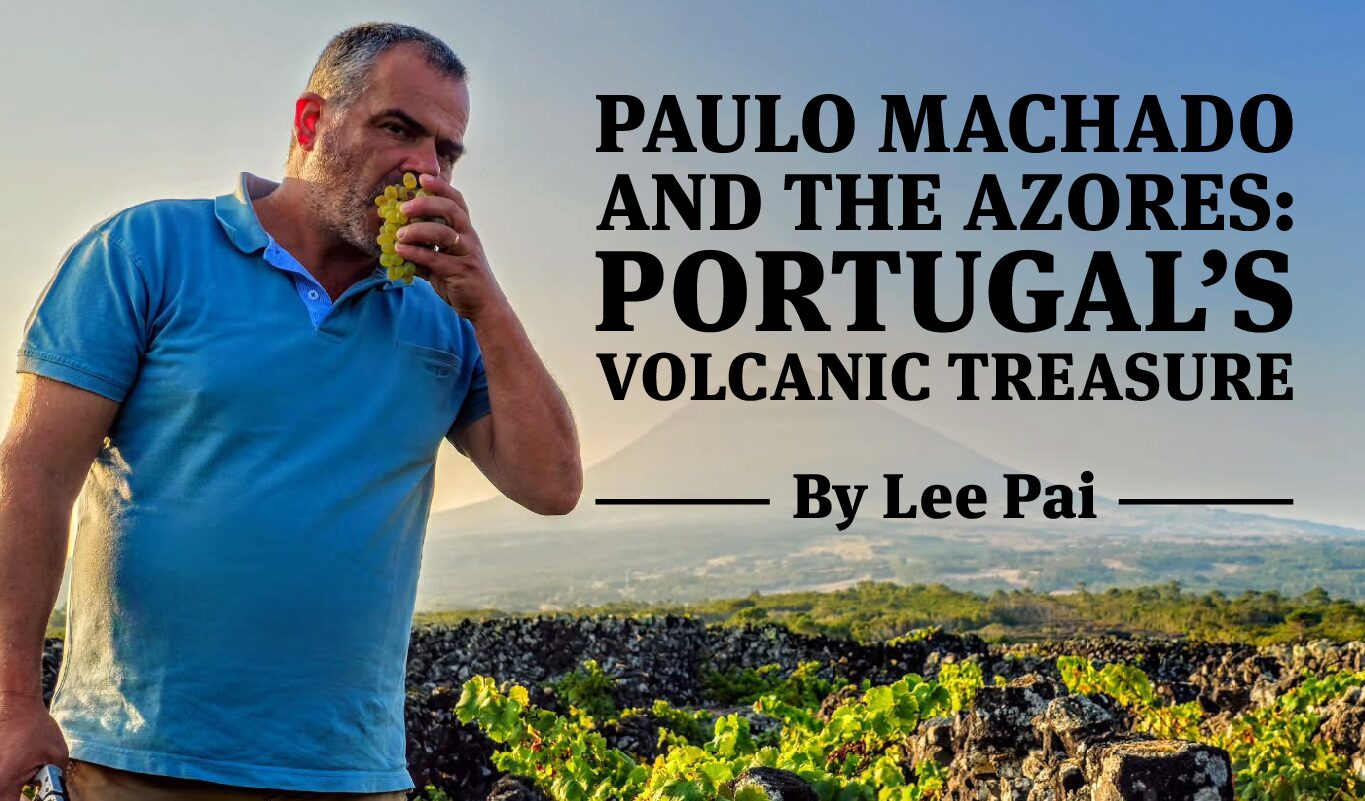
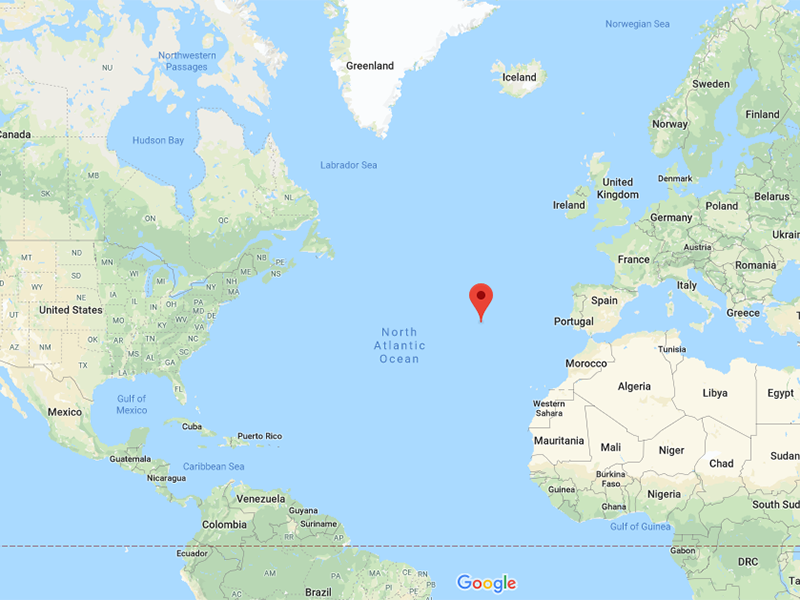
Looking at the Azores archipelago on Google Maps brings to mind the island where Tom Hanks’ character in the 2000 film Cast Away was stranded on for four years. Sitting in the middle of the Atlantic Ocean, the Azores seems to be hidden within the vast ocean. But instead of looking for Wilson, we are seeking the wines from Paulo Machado and his Insula Vinus project on Pico Island.
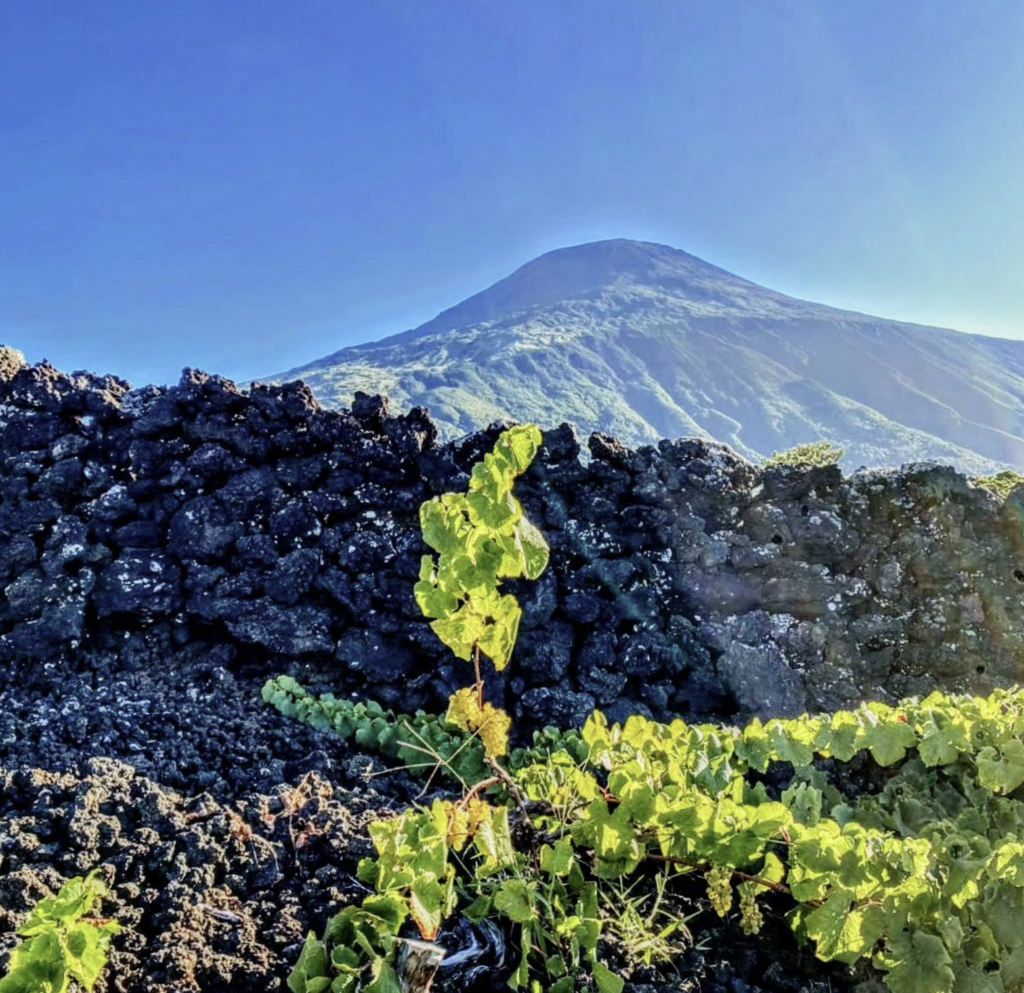
Pico Island is the second largest and most important wine producing island of the nine islands that compose the Azores archipelago. It is also unique, since there are no sandy beaches or lush shrubberies. It is covered in dark basaltic biscoitos (“biscuits”) and lajidos (“slabs”) formed by the last eruption from its volcano, Mount Pico, approx. 300 years ago. So, unlike other wine regions where vines are cultivated on soft top soils and rolling hills, in Pico the vines are planted within the seams of volcanic rocks, guarded by currais (stone walls) to protect against the island’s intense winds.
This raw and brutalist landscape (classified as a UNESCO World Heritage Site in 2004) is where Machado’s vineyards survive. After co-founding the Azores Wine Company in 2014 (a key player in the Azores getting international recognition for its wines) Machado began focusing on cultivating and producing wine from his family’s vineyards under the Insula Vinus brand. Along the way, his experience and relationship with growers across the island allowed him to lease additional vineyards and be able to produce wines at a meaningful scale (~40,000 bottles).
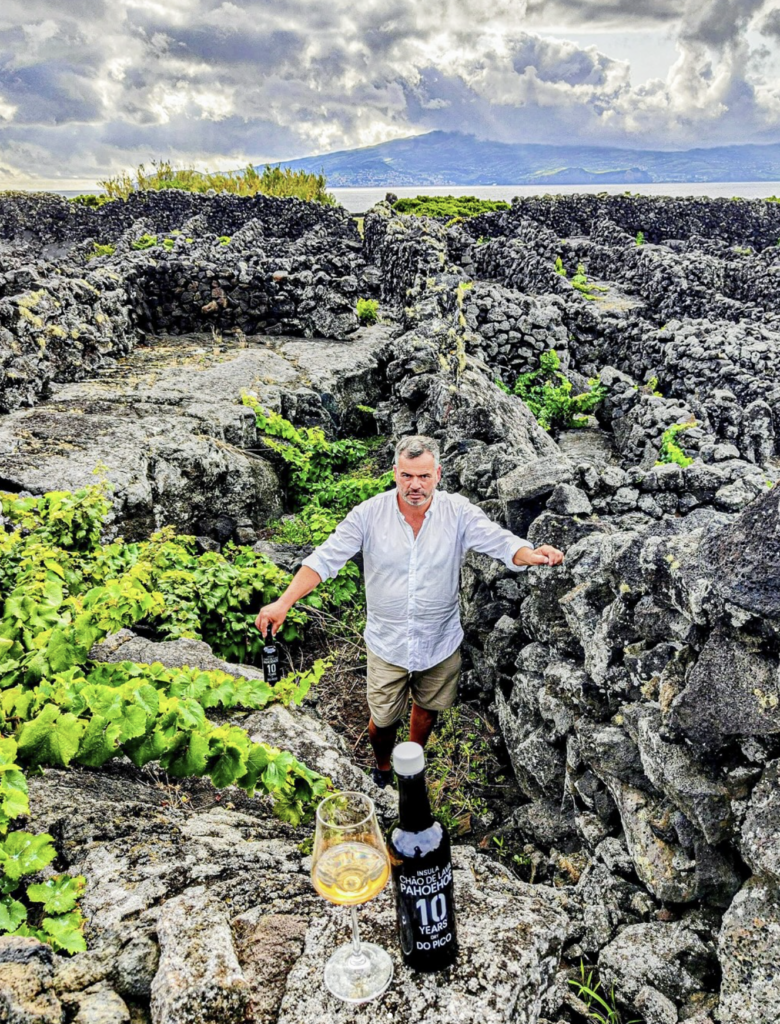
Despite the scale, Machado is focused and committed to expressing the identity of the unique varieties. Verdelho, long thought to have originated from the island of Madeira, is now proven to have likely originated from the Azores. Arinto dos Acores and Terrantez do Pico, two other important white varieties of the island, are also descendants of Verdelho. Machado believes that the wines from these varieties to be the pinnacle of Portuguese white wines.
Lee Pai of Grape Collective talks to Paulo Machado about the identity of Azores wines and Insula Vinus.
ccc
Lee Pai: Can you please introduce yourself and tell us about Insula Vinus?
Paulo Machado: I come from Pico Island in the Azores, a group of islands in the middle of the Atlantic, belonging to Portugal. Since I was a young child, I was surrounded by vineyards and wineries, so I have always had a deep connection to the world of wine.
After studying viticulture and winemaking, I returned to my island and began transforming the family vineyards and producing wine under my own label. I established Insula Vinus in 2006, and the evolution of the company mirrors my own development as a winemaker — each wine reflects what I have learned, year after year. Today we are a small boutique winery with a capacity of around 40,000 bottles, and we also offer wine tastings, lodging, and a wine shop. The goal is to show the world what style of wines is possible to produce here.
For people who are not familiar with the Azores Islands, can you talk a little bit about what the Azores wine region is like, and how it differs from other wine regions around the world?
The Azores are very different from anywhere else because they are unpredictable. We are in the middle of the Atlantic, and the storms can be very strong. Some years we lose all or part of the production because of storms or disease pressure from the rains.
You need a great passion for this to work here. Wine has a very old history on the islands. I estimate we once had around 8,000 hectares under vine, but the industry was nearly destroyed by powdery mildew. Today we are trying to recover those abandoned vineyards, and we now have around 1,000 hectares replanted.
Pico is the second largest island in the Azores, but it is also geologically very young. We don’t really have soil in the traditional sense, just lava rock and stone. The vineyards are planted directly in that lava, and they must be close to the ocean, because that coastal zone provides the conditions needed for the grapes to ripen. Further up the mountain or deeper inland, you have more rain, more humidity, more problems, and less direct sunlight.
Because the vineyards are coastal, they need protection from the salt-laden winds coming off the Atlantic. Over generations, farmers built rectangular stone walls, called ‘currais’, to shield the vines. So all of our vineyards sit within these enclosures, creating a landscape so unique that it has been classified as a UNESCO World Heritage Site. Those walls make mechanization impossible. As a result, Pico is one of the wine regions in the world with the highest level of human involvement with every operation in the vineyard done by hand.
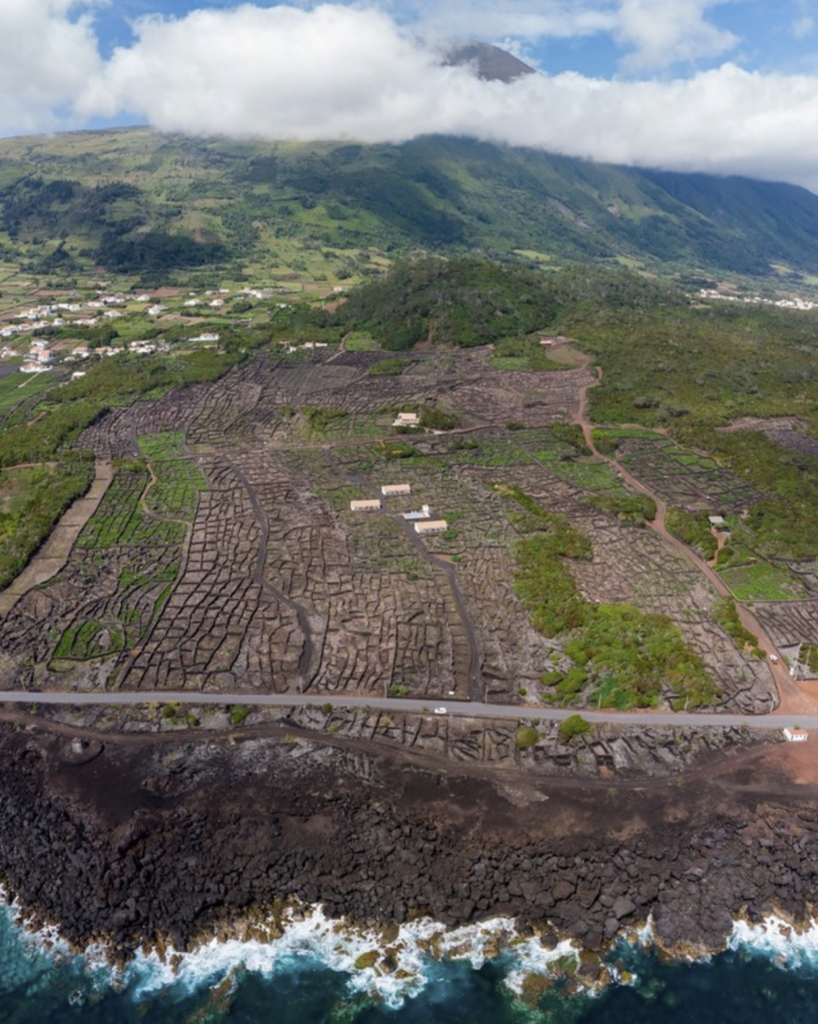
The wines reflect all of these factors: the cool Atlantic weather, the proximity to the ocean, the native white grape varieties, and the constant human presence in the vineyards. Our wines are fresh, with high acidity, strong minerality from the young volcanic soils, and a natural salinity from the vines growing so close to the sea.
You have a mix of indigenous varieties, but also varieties introduced from elsewhere, like Merlot and Syrah. Is that right?
Our Verdelho is distinct from any other Verdelho in the world. It is different from the Verdelho of Spain, different from those of Italy, and different from the ones in the north of Portugal. We now know that our Verdelho, after leaving the Azores, traveled to Madeira, then on to Australia and mainland Portugal. But its place of origin was here, in the Azores Islands.
The other two important white grapes, Arinto dos Acores and Terrantez do Pico, are descended from that original Verdelho. You cannot find them anywhere else in the world, only on these islands. There is a grape on the Portuguese mainland called Arinto, but it is not the same; DNA testing has never found a match between our Arinto dos Acores and the mainland Arinto. Ours is a native, autochthonous grape from the islands. The same is true of Terrantez do Pico, it is not the Terrantez from the south of Portugal, nor the one from the north. It was born on Pico Island, and it belongs here.
Merlot and Syrah are relatively recent introductions from about 20 years ago. At the time, it was an experiment to produce some red wine, but I think it was ultimately the wrong choice, and I believe the future here lies with the red grapes I found surviving in the old vineyards, varieties that have proven resistant to powdery mildew, have a short growing cycle, and need fewer hours of sun. They are well adapted to our conditions. (Can we name them)
You started Insula Vinus in 2006 with family vineyards, and have since added some leased vineyard land as well. What was the motivation to start the project?
Growing up surrounded by vines, I always believed in the potential of Pico wines. I knew that in the past, the Azores had been an important wine-producing region. But when I started Insula Vinus, it was not considered important at all. There were some wines being made, but almost no one outside the islands knew about them. Most people in Portugal didn’t even know we produced wine here.
I always believed we could do more, that we could return to those earlier times and rebuild the industry. That was my motivation. And I also wanted to experiment, to test different pruning methods, different varieties, different approaches to winemaking, and ultimately to put the region on the map.
You farm around 12 hectares of your own vineyard. Is that considered large for Pico Island?
It is on the larger side. The average vineyard holding on the island is about half a hectare, so 12 hectares is significantly larger by local standards.
We have around 300 individual growers on the island, and only about 10 to 12 wine producers. The vast majority of growers are very small-scale grape producers who sell to the larger producers. Only a handful of us have properties large enough to be largely self-sufficient.
You were also a co-founder of another wine company on the island before focusing on Insula Vinus. Did that help put Pico Island wine on the map?
Yes. In 2014, I was one of the co-founders of Azores Wine Company, and it was a real turning point for the island. We had new partners, fantastic winemaker partners, and we formed an exceptional team. Together, we changed the way people thought about Pico wines. We raised the price growers could earn for their grapes, which made it viable again for people on the island to believe in viticulture. And we began exporting, which showed the world what Pico wines could be. It was a significant transformation.
At the time, wine producers on the island had largely moved away from fortified wines and were producing only still whites, but almost entirely for local consumption, with very little export. At Azores Wine Company, our focus was to show the world our native varieties. We were the first to simultaneously produce three single-variety wines from the three most important white grapes of the islands. I think that was the engine that drove the transformation.
You grew up with the family’s viticultural tradition, but you also trained elsewhere in the Azores and studied winemaking on the Portuguese mainland. How has that shaped your approach in the vineyard and winery?
Knowledge is the foundation of everything. But I try to stay close to the viticultural practices I learned from my grandfathers. When I have made changes, I’ve often found, seven or eight years later, that the old way was the better way. On Pico, tradition is usually right.
An example: About 25 years ago, when I was planting one of my largest vineyards, I decided to remove the old stone walls that previous generations had built, in order to allow for some mechanization. I had a forest around the vineyard which provided natural protection. But when I later bought more land and cleared that forest, the Atlantic winds began destroying the crop year after year. Eventually I decided to replant and train the vines lower to the ground, closer to the earth, to reduce wind exposure. I didn’t rebuild the stone walls, it’s too expensive, but I planted trees to act as windbreaks. It took years to understand what those walls had been doing for the vines all along. The old people knew.
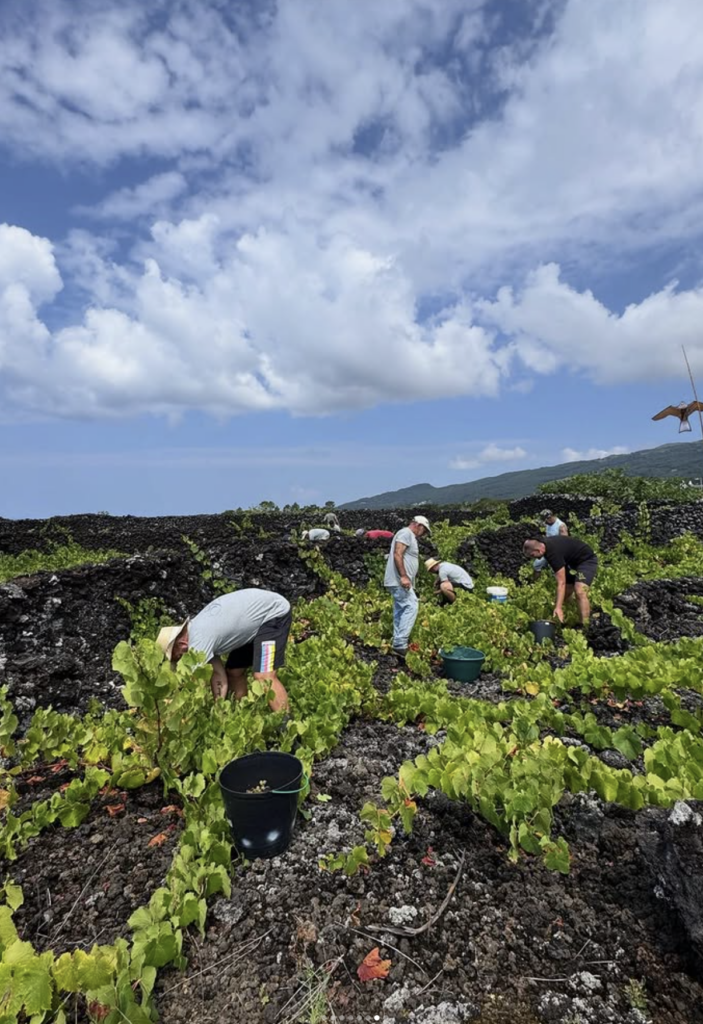
In the winery, my philosophy is minimal intervention. I believe that clean, healthy grapes produce pure and authentic wines, so my real effort goes into the vineyard, working daily to bring in the finest possible fruit, so that I have to intervene less during winemaking. That said, studying other regions, visiting other winemakers, and staying open to different styles and techniques has been essential. The wines I make today are very different from those I made 20 years ago, because inside every bottle is the sum of all those years of learning.
If you were to make a generalization about the wines of Pico Island, how would you describe them?
Pico wines are a fascinating case study, because they run counter to many of the global trends in wine right now. While the broader market often favors bigger, richer wines, Pico wines offer freshness, minerality, and salinity, and they are made from unique grapes that exist nowhere else on earth. So it is genuinely impossible to compare our wines to those of any other region.
Other places may have freshness, or saltiness, or volcanic minerality in isolation, but the combination of all three, along with our native varieties, is something you can only find here. To replicate that combination would be very difficult.
How would you compare Pico Island wines to the still wines coming out of the rest of Portugal?
It’s a tough question, but in my opinion, the top white wines from Pico are at the very pinnacle of Portuguese white wine. I’m speaking specifically of whites, because that is what we do (around 95% of our production is white wine).
What gives me confidence in that claim is how much Portuguese white wine has evolved in the last decade. Ten years ago, it was rare to find a truly exciting Portuguese white wine outside of a few regions. Today, the mentality of winemakers across the country has shifted, and it is much easier to find excellent whites that can stand alongside Pico wines. But I believe the reviews from international wine writers and critics about Azores wines (and about Pico wines in particular) confirm that we are at or near the top of that conversation.
Pico Island and the Azores as a whole are receiving increasing attention and a growing following. What is your hope for the future for your wines and for the island’s wine industry?
My hope is that all the producers here maintain a commitment to the highest levels of quality. We need to stay focused on what makes this island distinctive. We don’t need producers chasing high volumes at low quality, that would be damaging to the reputation we have built.
I also hope we continue learning, continue exporting, and keep showing the world what our native grapes are capable of. These varieties are still largely unknown globally, and that is both the challenge and the opportunity.