During our first trip to California Wine Country, back in the early 1970s, we visited Sebastiani Winery in Sonoma and had our first taste of Gewürztraminer. We had never heard of that grape variety and its name stopped us as we were raising our glasses to have a look at it. Is that one word or two, we asked the patient tasting room server who appreciated that we, along with most Americans in that era, were newbies to wine. Well, it turns out that, as wine grape names go, Gewürztraminer is probably not the head-scratching stunner that Melon de Bourgogne is.
Melon wine? Daniel Gehrs, the legendary winemaker who was known for Syrah and Chardonnay from his now long-shuttered eponymous Los Olivos, Calif., winery, made a zesty, minerally zinger with pear and apple notes that he labeled Muscadet. After a few years, he stopped making it, explaining to us that the Feds had allowed him to use the name Muscadet for three vintages, but after that, it enforced its policy forbidding American winemakers from using place-specific names from other countries. This has been reinforced by trade agreements. Champagne is from the Champagne region of France, though some U.S. bubblies that used the word were grandfathered. As the French reminded Americans in a cheeky ad campaign years ago about the importance of geographical nomenclature, Idaho potatoes are grown in Idaho; Champagne is made in France.
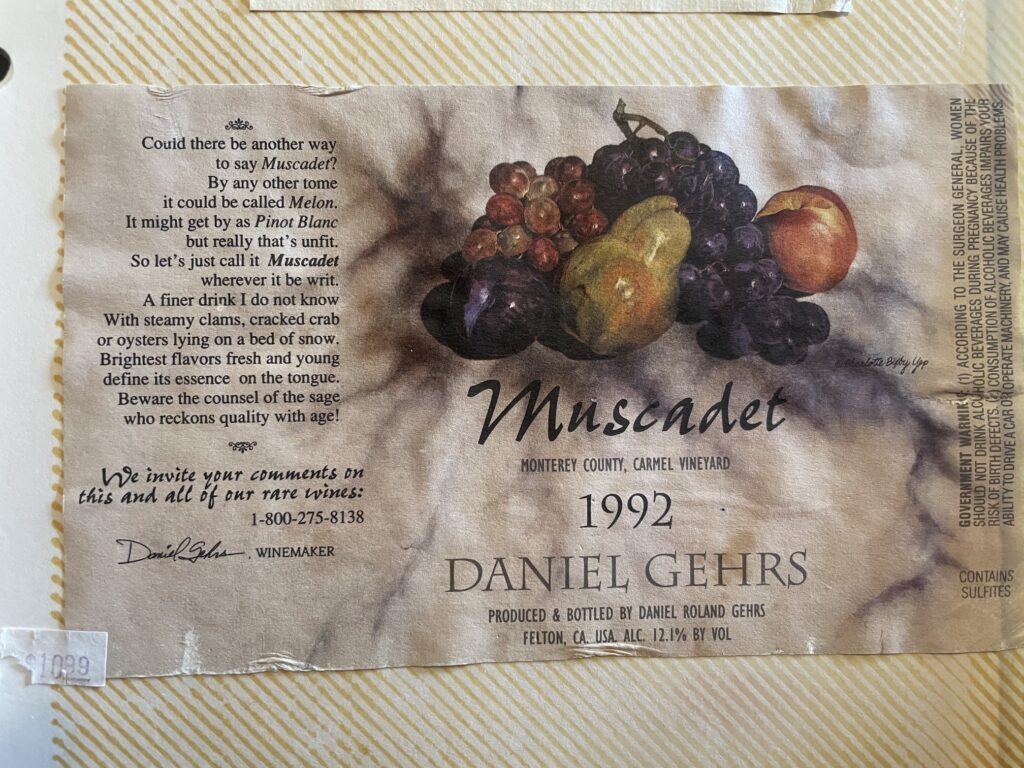
Muscadet is a famous wine region in the Loire Valley of France. It has been a go-to white for us for a very long time because it’s reliable, food-friendly and affordable.
So according to federal regulations, Gehrs would have to use the prime name of the grape, Melon de Bourgogne, or the approved synonym for domestic wines, Melon. Rather than call his wine either of those — he was sure he’d have to explain that, no, it’s not made from melons — Gehrs shelved it. “I didn’t want to call it Melon. Who would buy melon wine? I decided I didn’t want to fight that battle,” he told us back then. Few American winemakers have waded into the market with either of those names, but that is changing, fortunately. Oregon seems to be a bit a bit of a hotspot for some small producers. It’s pronounced Meh-LOHN by the way.
Fast-forward to a few years ago, when two wine producers on the North Fork of Long Island decided to plant Melon de Bourgogne. Bedell Cellars in Cutchogue, which is well-known for its Merlot, made in 2020 what it hailed as the first Melon de Bourgogne on the East Coast. The winery will produce about 200 cases of the 2025 that it hopes to release in the next few weeks. We look forward to trying it, since previous vintages were sold out. We asked the winemaker, Marin Brennan, why Bedell decided to make Melon de Bourgogne.
“We originally decided to plant this variety because it performed well at the Cornell Extension vineyard and because it shares its roots with another Loire Valley grape that has thrived here on the North Fork: Cabernet Franc,” she wrote. “Given our success growing Loire Valley varieties in our maritime climate, Melon de Bourgogne felt like a natural fit for our vineyard. In addition, Melon de Bourgogne has a naturally saline character that aligns beautifully with our terroir. That sense of minerality and salinity is something we often see expressed in our wines, influenced by our proximity to the Long Island Sound and Peconic Bay.”
And about that name? “While Melon de Bourgogne isn’t a grape that many consumers recognize by name, most are familiar with it once they learn it’s the grape used to make Muscadet,” she said.
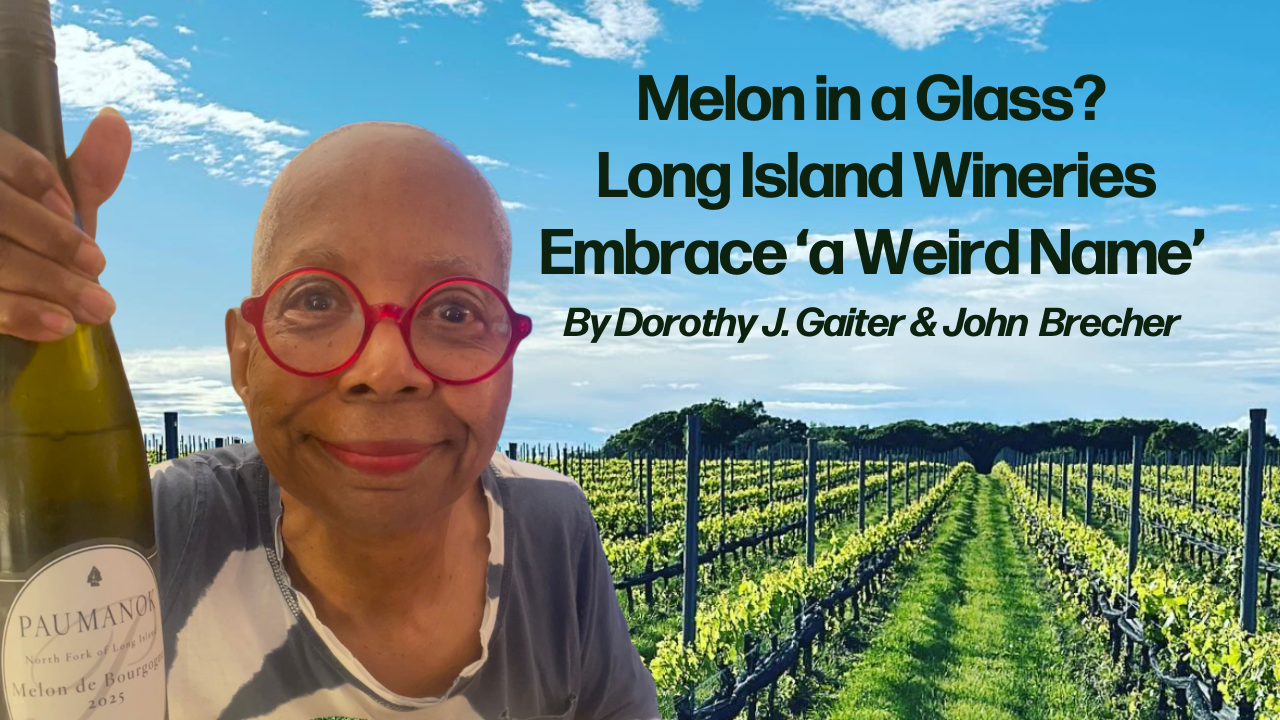
Paumanok Vineyards in Aquebogue had planned to get its vines in the ground in 2019, Kareem Massoud, the winemaker and a son of the founders, Charles and Ursula Massoud, replied after we reached out about his inaugural 2025 Melon de Bourgogne ($28). He made 217 cases.
We had seen online that Paumanok had made a Melon de Bourgogne and immediately ordered six bottles. We had our first a few weeks ago and it was flinty and mouth-watering, with a dash of salinity and lemons, green apples, and zingy acidity that immediately made Dottie crave oysters. It’s also a refreshing 12% alcohol.
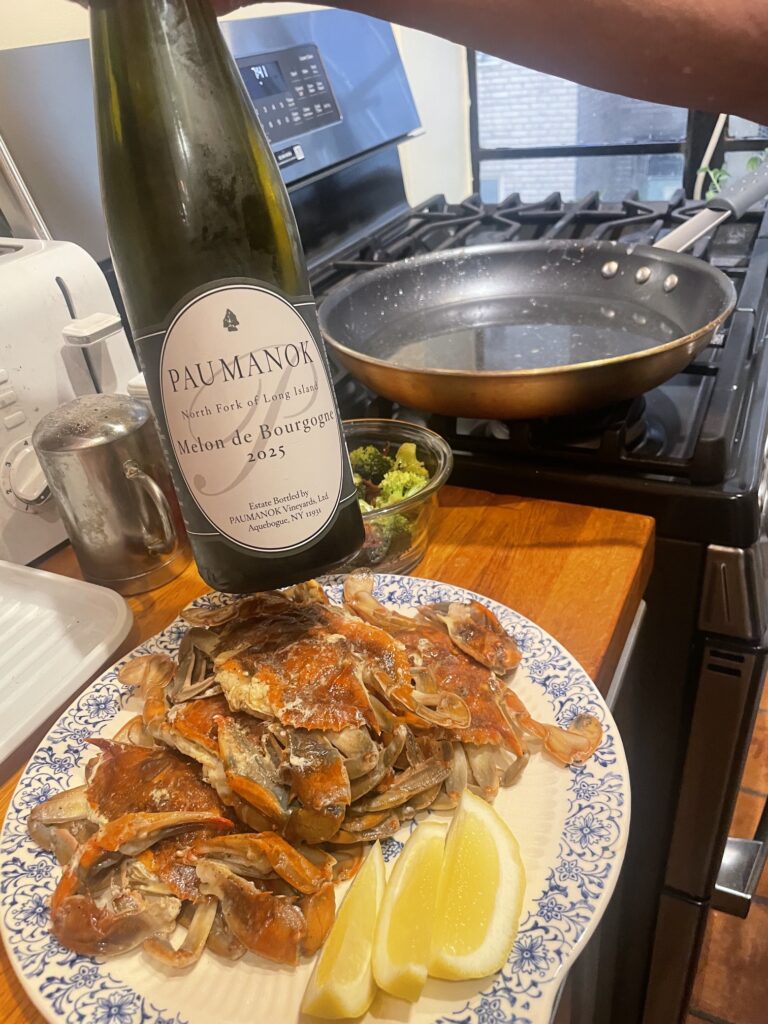
We’ve known the Massouds for many years, from before we wrote about wine. We’ve recounted in columns and books how Ursula defended the Chenin Blanc vines when Charles thought maybe they should be pulled out, decades ago. In short, we’ve watched the family enterprise grow in interesting ways, so we reached out to Kareem Massoud to ask about this latest entry in the Paumanok line. It turns out that the story has more twists and turns than we would have guessed. This has been edited.
Grape Collective: How did Paumanok come to make a Melon de Bourgogne?
Kareem Massoud: For many years, we have seen Loire varieties perform very well on Long Island. I believe that for a long time we were the sole New York vineyard growing three Loire varieties: Chenin, Sauvignon Blanc and Cabernet Franc. Of course, if you were to draw a comparison between the Loire and Long Island, the most analogous district in the Loire in relation to Long Island would be Muscadet owing to its proximity to the Atlantic, and of course it famously pairs well with oysters. We know our Chenin does, as well, and what grows together goes together.
GC: Was the name, Melon de Bourgogne, an issue?
Massoud: The only reason we did not plant it sooner was due to name recognition. Many wine lovers know Muscadet, but few are familiar with the variety, Melon de Bourgogne. We decided we should experiment with one acre. We had a high level of confidence it would make a nice wine and that we could sell it to our Wine Club, wine geeks and the public. With the Melon, I believe we are now the only vineyard in New York growing four Loire varieties.
GC: Tell us more.
Massoud: We originally ordered the vines for delivery in 2019. Unfortunately, the nursery does a heat treatment (standard practice) to knock out bacteria and viruses, but they overheated the vines to the point that they lost them, so we had to wait another year. In the meantime, by sheer coincidence, Bedell Cellars beat us to it and planted Melon in 2019. It took several years to get that block we planted to produce as that is one of our only sites (on our home farm) with no deer fence and we saw deer pressure, dry weather (no permanent irrigation in place) and frost in 2024. These factors delayed vineyard establishment. We finally had our first crop in 2025.
GC: How is the wine selling?
Massoud: We just released it over Memorial Day and so far it is selling well. We even have some retailers and restaurants who have been quick to order. I wasn’t sure how well-received it would be by the trade, but so far so good. I’m sure you have heard my father say, “We make island wines.” I love that expression. For me it immediately evokes seafood. Of course, this wine is perfect with seafood and there are so many restaurants near us that feature seafood and I think the Melon will fit right in. We were quite concerned about the name, but in the end, we stayed true to our core belief: to let the wine speak for itself and trust that our customers will be open to tasting a new variety even if it has a weird name.
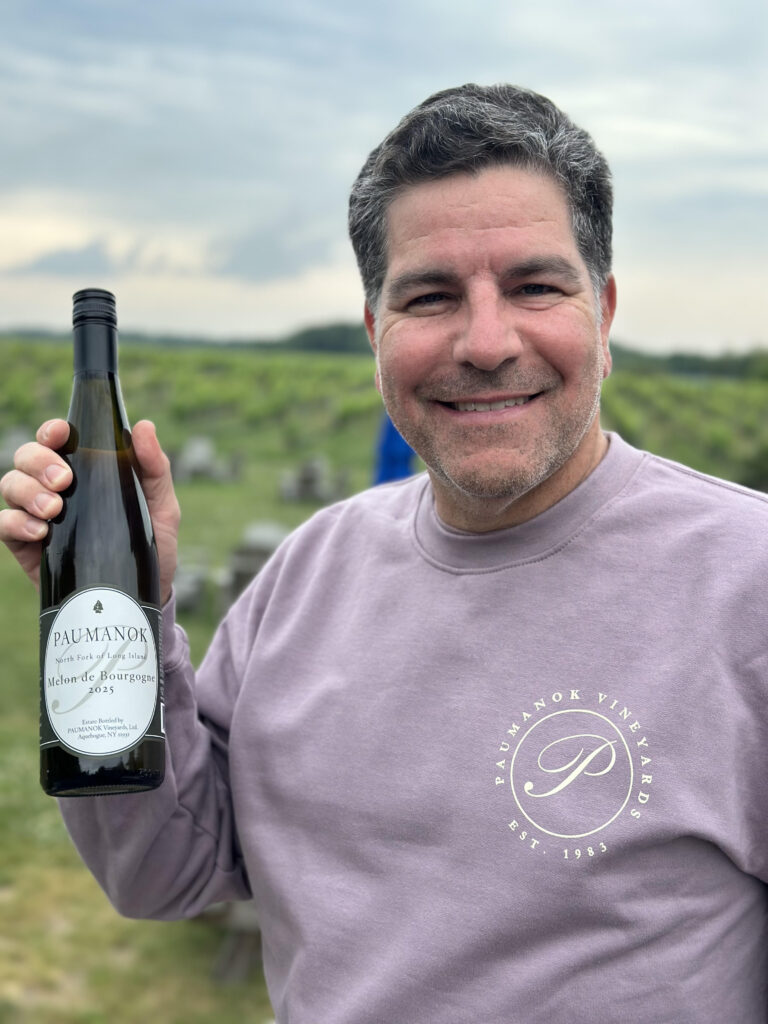
GC: How would you describe it to someone who had never had Muscadet or a wine labeled Melon de Bourgogne?
Massoud: Especially for summer sipping and seafood-centric meals, Muscadet and Melon belong in your cellar. It is delicious, refreshing and well-balanced. Never over the top, and always palate-cleansing and food friendly. Budget friendly, too.
GC: Going forward, what are your plans for it?
Massoud: For the first vintage it was fermented in a stainless steel tank. Going forward I may try to ferment it in steel barrels as we do with our Minimalist Chenin Blanc. Or possibly in oak puncheons.
Dorothy J. Gaiter and John Brecher conceived and wrote The Wall Street Journal’s wine column, “Tastings,” from 1998 to 2010. Dorothy and John have been tasting and studying wine since 1973. In 2020, the University of California at Davis added their papers to the Warren Winiarski Wine Writers Collection in its library, which also includes the work of Hugh Johnson and Jancis Robinson. Dottie has had a distinguished career in journalism as a reporter, editor, columnist and editorial writer at The Miami Herald, The New York Times, and at The Journal. John was Page One Editor of The Journal, City Editor of The Miami Herald and a senior editor at Bloomberg News. They are well-known from their books and many television appearances, especially on Martha Stewart’s show, and as the creators of the annual, international “Open That Bottle Night” celebration of wine and friendship. The first bottle they shared was André Cold Duck. They have two daughters.