The global wine map is being redrawn in ways that would have seemed impossible just a generation ago. While traditional Mediterranean powerhouses grapple with extreme heat and drought, unlikely newcomers are emerging from the world’s most unexpected corners—places where grapes were never meant to grow, now producing award-winning bottles that challenge everything we thought we knew about terroir.
The Nordic Revolution: When Viking Land Becomes Wine Country
In 2018, the EU awarded the DONS wine region an appellation, making Skærsøgaard Europe’s northernmost official wine region. This Danish milestone represents more than bureaucratic recognition—it signals a fundamental shift in what constitutes viable wine country.
Denmark now boasts around 90 certified vineyards, while Sweden has emerged as an unlikely force with approximately 40 commercial operations. These aren’t hobby projects anymore. Denmark has around 90 certified vineyards. Since 2018, it’s even had its own appellation; in other words, an official stamp of quality. Sweden’s industry is still considerably smaller; it only has 50 commercial vineyards across its 450,295 km2. But experts think that this is just the beginning of a Nordic wine revolution: it is projected that Scandinavian wine will become a billion-euro industry within a few years.
The transformation has been remarkably rapid. While 15 years ago, there were just two commercial vineyards in Sweden, today there are nearer 40. Meanwhile Danish Wine Association, Dansk Vin, lists around 90 commercial vineyards, up from just eight in 2000. What’s driving this explosive growth? Alongside longer and warmer summers that have extended the Nordic growing season into September, winters have been milder by almost 2°C, according to Sweden’s Rossby Centre for climate research.
The quality improvements have been equally dramatic. Danish sparkling wines have earned international recognition, with Dons Cuvée capturing silver at the prestigious Effervescents du Monde competition. Swedish whites are making surprising inroads globally, while Nordic producers continue pushing boundaries with innovative grape varieties specifically bred for challenging climates.
England’s Sparkling Renaissance: From Ales to Award-Winners
Perhaps no transformation has been more stunning than England’s emergence as a serious sparkling wine producer. English sparkling wines are winning gold medals in blind tastings and routinely competing with (and occasionally besting) wines from the fabled champagne houses in France.
The numbers tell the story of explosive growth. A generation ago, Britain had no discernible wine industry. Today the growth is explosive. There are now more than 1,000 vineyards and 400 winemakers in the south of England. The transformation has been so complete that traditional stereotypes about British wine have been shattered. “Thirty years ago, nobody had ever heard of English sparkling wine,” Eric Asimov wrote in the Times, “But as the climate has warmed, a world-class sparkling wine industry has developed.”
The secret lies in geology as much as climate. Southern England shares the same fast-draining, chalky soil found in France’s Champagne region, making it ideal for the three classic sparkling wine grapes: chardonnay, pinot noir, and pinot meunier. “You couldn’t even imagine growing these grapes in England before,” said Tommy Grimshaw, head winemaker at Langham Wine Estate in Dorset.
Climate data reveals the dramatic shift enabling this success. Since the 1990s, the average temperature in Britain has risen by 1 degree Celsius, or 1.8 degrees Fahrenheit. All 10 of the warmest years in the United Kingdom have occurred since 2003—with 2022 the hottest year on record.
Tasmania’s Cool-Climate Advantage: Australia’s Secret Weapon
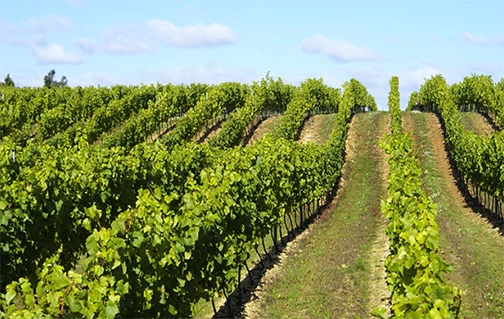
While mainland Australia faces increasing heat stress, the island state of Tasmania has positioned itself as a climate change winner. Of all Australian wine regions, Tasmania perhaps has the most to gain from climate change. The island’s naturally cool climate, once considered a limitation, has become its greatest asset.
Tasmania has the lowest mean January temperature of Australia’s wine regions – 15.6℃. This cooling effect produces wines with distinctly different characteristics from their mainland counterparts. Most of the wines are obviously the produce of a cool climate, with their naturally high acidity, relatively subtle flavours and, often, good balance of clean fruit flavour – a build more German than New Zealand.
The strategic shift is already underway. Australian producers Brown Brothers were early to the game. A decade ago they shifted their main vineyards to the island of Tasmania — the coldest part of the country which is less susceptible to bushfires. It’s a much better place for extra-delicate grapes like pinot noir.
International recognition has followed quickly. Tasmania is yet another place where Pinot Noir seems set to flourish (as in New Zealand, Oregon, California, Chile, etc). Over the years there has been considerable input from foreign, notably Swiss, investors but the island’s Chardonnay and Pinot Noir fruit has attracted attention from champagne producers. Major French houses including Louis Roederer and Moët’s Domaine Chandon have established operations or partnerships to access Tasmania’s premium fruit.
The Altitude Solution: Vertical Migration Across Continents
As traditional regions become too hot, an innovative solution is emerging: moving up instead of north. Producers worldwide are pioneering high-altitude viticulture, seeking cooler microclimates in mountainous terrain. It’s amazing, but true: Some wineries are just straight-up moving their crops to higher altitudes.
This vertical migration is happening on multiple continents. now planting vineyards 4,000 feet high in the hills of the Pyrenees mountains between Spain and France. The strategy represents a fundamental reimagining of terroir, as producers seek elevation to replicate the temperature conditions their grapes require.
However, altitude comes with trade-offs. But higher altitudes come with their own problems. Water is much harder to come by, the wineries are more difficult to manage, and soil quality is often worse. Despite these challenges, many producers view vertical migration as essential for long-term survival.
The scope for altitude-based adaptation varies dramatically by region. Research indicates that 90% of the traditional wine regions situated in the lowlands and coastal regions of Spain, Italy and Greece could be at risk of disappearing by the end of the century; and only a minor portion of this loss (less than 20%) could theoretically be compensated for by shifting vineyards towards mountainous areas (elevations of up to 1,000 m).
Unexpected Beneficiaries: New Frontiers Opening Up
Climate change isn’t just creating challenges—it’s opening entirely new frontiers. Other regions set to become increasingly prosperous for wine include Washington State and Oregon in the US, Tasmania in Australia, and northern parts of France. It could also see southward movement into Argentinian Patagonia, or exploration of high altitudes in the Ecuadorian and Colombian Andes.
Even more surprising developments are emerging in traditionally impossible locations. Vineyards are cropping up in other places that are ordinarily too frigid to host wine grapes, like the colder countries in Europe: Norway, Sweden, Belgium, and Denmark. The local economies in these countries are getting a boon, and the world market is getting new products, like a new Riesling from Norway.
The geographic scope of this transformation is staggering. As climate change affects rainfall and temperatures continue to rise, experts predict that regions as far north as Yorkshire in the UK could become premier wine producers by the end of the century. According to a recent Fine Wines and Restaurants Market Monitor report, Hull could be known for its cabernet sauvignon as soon as 2100, as climate change batters Bordeaux and transforms northern England into a hotspot for production.
The Science Behind the Shift: Understanding the Numbers
The transformation isn’t happening gradually—it’s accelerating rapidly. A major global study led by UBC researchers reveals that temperatures during the growing season have increased globally across the major wine regions. On average, regions have warmed by the equivalent of almost 100 extra growing degree days (GDD)—a measure of the cumulative heat that vines are exposed to, influencing their growth and ripening.
Europe is experiencing the most dramatic changes. “Europe is feeling the biggest impact, with parts of the continent heating up by as much as 2.5°C since 1980. That kind of change can affect harvest times, grape ripening, and thus the taste of the wine,” said Dr. Elizabeth Wolkovich, senior author of the study and an associate professor at UBC’s faculty of forestry.
The implications are stark for traditional regions. About 90% of traditional wine regions in coastal and lowland regions of Spain, Italy, Greece and southern California could be at risk of disappearing by the end of the century because of excessive drought and more frequent heatwaves with climate change.
However, the global picture reveals both winners and losers. Overall, depending on the degree of global warming, up to 65% of the traditional Australian vineyards might become climatically unsuitable, whereas wine-producing regions in New Zealand have the potential to expand by 15–60% by the end of the century.
Innovation Through Necessity: Adapting to New Realities
Climate change is forcing fundamental changes in centuries-old practices. As a result of changing temperatures, wine makers are being forced to alter centuries-old planting methods. Grapes used to be planted on Southern facing land in the Northern Hemisphere and Northern-facing land in the Southern Hemisphere, but the upsurge in sunlight is forcing wine makers to switch things up for the first time.
Even the most tradition-bound regions are adapting. Bordeaux, for example, is a region so strict about wine that only seven grapes are allowed to grow there. But as a result of changing climate, Bordeaux’s vineyards have now proposed introducing seven new grapes to that list.
The challenges extend beyond temperature. “Wine regions will have to learn how to deal regularly with once-rare devastations,” Asimov wrote. Drought, forest fires, and storms have always been a consideration of agriculture. The increasing frequency of these unpredictable events is changing wine production in some unexpected ways.
Looking Forward: A New Wine World
The transformation of global wine geography represents more than agricultural adaptation—it signals a fundamental reimagining of what defines quality and authenticity in wine. As climate change chips away at vineyards in countries like France and Spain, it also strips away at the parts of those countries’ identities that are forged around wine; the storytelling about generations, pride, tradition, quality of life, emotion.
Yet from this disruption emerges opportunity. New regions are writing their own stories, unencumbered by centuries of tradition and regulation. They’re experimenting with innovative grape varieties, sustainable practices, and fresh approaches to expressing place through wine.
The wine industry’s response to climate change showcases both the fragility and resilience of human agricultural systems. While traditional powerhouses face existential challenges, the emergence of unexpected wine regions from Norway to Tasmania demonstrates nature’s remarkable adaptability—and human ingenuity in harnessing it.
As we look toward 2050 and beyond, the wine map will likely be unrecognizable from today’s geography. The fine wines of the future may come from places that today seem impossible, produced by communities just beginning to understand their potential. In this transformation, every bottle tells a story not just of place, but of a planet in transition—and humanity’s capacity to adapt, innovate, and thrive amid change.