Be open to new adventures and your wine journey will always have wondrous detours.
We have been drinking and studying wine for more than 50 years and we still get surprised. We’re lucky that, as wine writers, we get to taste hundreds of wines every year, many of them sent to us by wineries. But so many of our most memorable experiences are available to anyone with an open mind and curiosity. Here are four real-life experiences that happened to us recently.
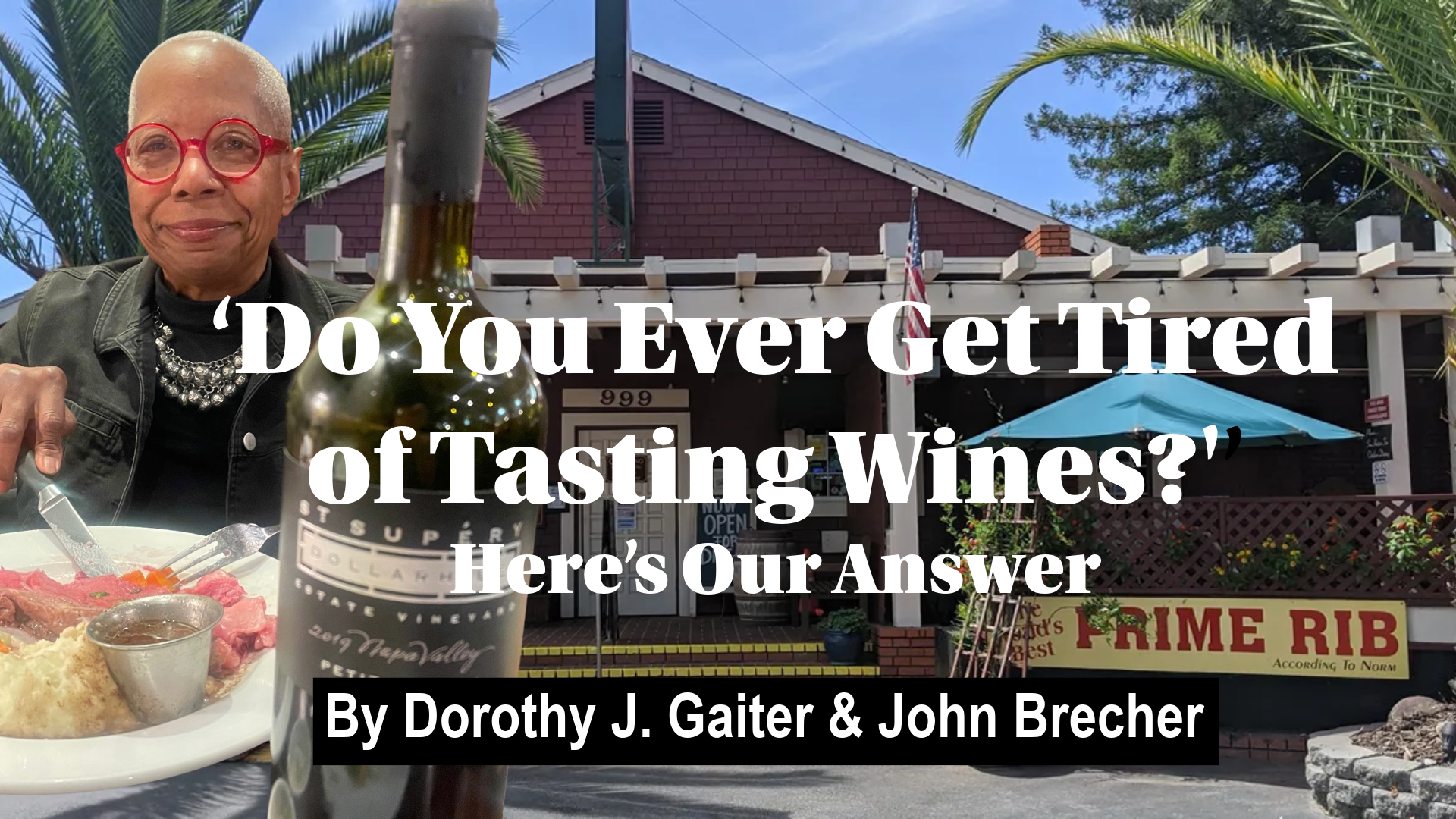
–We were in Napa in February to speak at the Wine Writers Symposium at Meadowood Napa Valley. Our travel was challenging and when we checked into the Hilton Garden Inn a couple days ahead of the symposium, we saw that a representative from St. Supéry winery was pouring wine for free in the lobby as a promotion. Just what we needed!
The young man from the winery did not know we were wine writers, but he could read a room and appreciated our interest. We’ve been drinking St. Supéry for many years and these, straight from the winery up the road, were especially fresh and delicious. When he mentioned the red had some Petit Verdot, we asked if the winery made a varietal Petit Verdot, which is pretty rare since that grape is so full-bodied that it is usually used as a blending grape, adding color, dark fruit flavors, and tannin. He said it did.
If you go to Napa, here’s a pro tip: Find Trancas Steakhouse. It’s a low-key neighborhood place with outstanding prime rib that it’s willing to serve very, very rare for Dottie (this grosses out John). It also has a reasonable corkage fee, $25 per regular-size bottle. We had made reservations to go there, but we didn’t know what wine we would take. Now we knew. The next day, we drove just a few miles north to St. Supéry and bought a bottle of the Petit Verdot for $70. We weren’t sure if it would work with the prime rib – at 14.5% alcohol it could easily be too heavy and aggressive — but we had to try it.
It was an awesome combination. The winery says it made 660 cases of the 2019 “Dollarhide” Estate and it was 100% Petit Verdot. We would have guessed it had some other grapes blended in, like Cabernet Sauvignon, because it was so beautifully balanced and complete. It was spicy but held tightly in check, which gave it a nice tension. Dottie said it was perfect with the sweet, melt-in-your-mouth prime rib (John would not know).
Even for us, this was a risky choice, especially for $70 with a dish Dottie looks forward to every year. But we won’t forget it.
–We always need a few drinkables. We do have plenty of wine in the house — some sent as samples, others from our own dwindling collection — but we never have enough inexpensive, easy-drinking wines that we can just pop open or unscrew and enjoy without thinking about them too much. John bought a mixed case online recently with a $20-per-bottle limit. With a case discount, he averaged $17 (and free delivery).
He didn’t pay much attention to what he picked up as long as it looked interesting and different. One was a Greek white wine from the Malagousia grape made by the Nerantzi winery in Macedonia. It was $14.39. When we looked this up –this was only the second one we’d ever had — we saw that we were about to drink history: Malagousia is an indigenous grape that was nearly extinct until recently and has made a dramatic comeback.
Given that background, we were bound to find the wine interesting, but we didn’t know we’d love it. It had a richness to it that was well-balanced by acidity and, at 13.5% alcohol, the wine let the tropical fruit flavors do the talking. At some point, we said it had the stately presence of a white Burgundy, which is awesome praise for a wine at that price.
Greece, Portugal, Spain — wines from “other” regions can often be the best bargains and most fascinating wines on the shelf. They will keep your wine journey interesting.
–We avoid wines by the glass at most restaurants. We find that they are not well-chosen; not fairly priced; and not well-kept, which is a bad trifecta. However, we recently went to the popular Hillstone in New York City. It has a welcoming BYOB policy so we took a special wine. When we do that, we feel it shows good faith if we also order a glass of wine to start (this also gives the wine we have brought time to open up if it needs some air). This time, we saw a wine by the glass on the list from a winery that was new to us: Pali “Huntington” Pinot Noir from Santa Barbara, for $17.
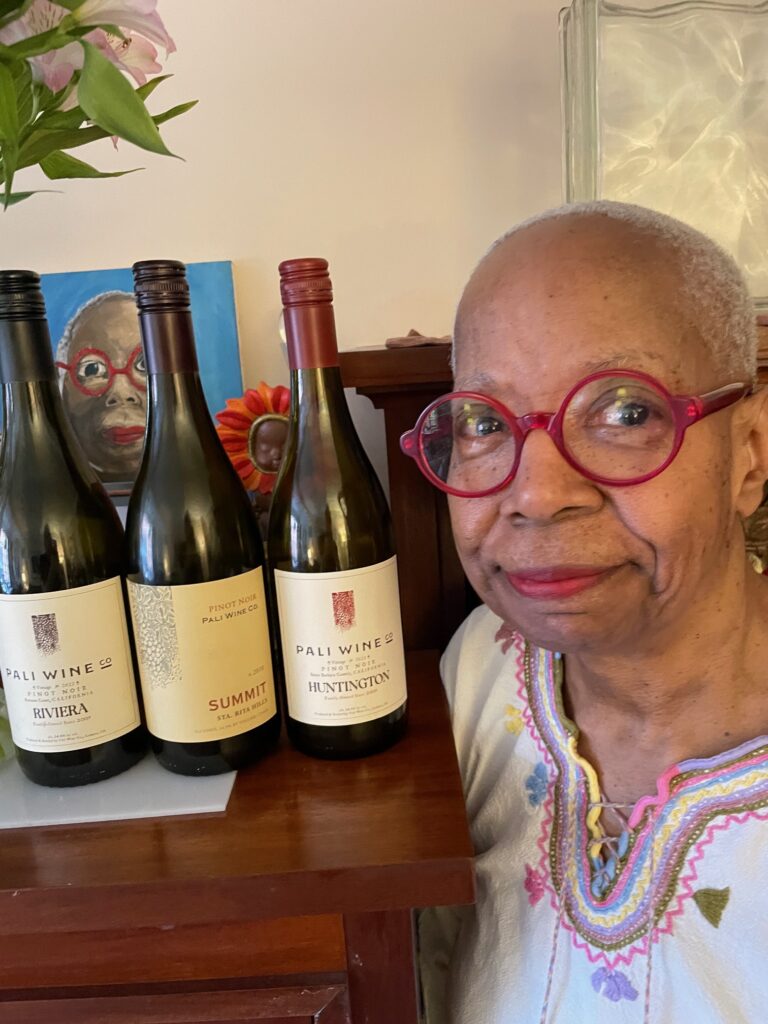
When it arrived, we took a sniff and were impressed. It smelled like a fine Pinot Noir, with a kind of relaxed elegance supporting a raft of violets, raspberries and rich earth. The taste was the same. Even with that one glass, the wine opened and changed subtly, so we kept talking about it. It was so impressive that, when we got home, we looked up Pali, which has an interesting story, and then looked for the wine and found it on wine.com, which not only had the Huntington Santa Barbara 2022 for $27.97, but two other Pinots from Pali, Riviera Sonoma Coast 2022 ($26.97) and Summit Sta. Rita Hills 2018 ($21.97). We figured it would be fun to have our own little tasting.
We opened them on successive nights. We had the Summit first and Dottie loved it. She found it rich and earthy with dried herbs and perfect acidity. The age, to her, added to its tilt toward good Burgundy’s swoon-worthiness. John liked it, but found it heavier than he would prefer in a Pinot Noir (he also felt the age did not help). He preferred the other two, which he found lighter on their feet and charming. Once again, we very much liked the Huntington.
Through it all, Dottie still preferred the Summit. But the bottom line is that we had three nights of thoroughly enjoyable wine tasting because we took a chance on a wine by the glass that we’d never heard of.
–Which takes us back to Napa. On June 27, 2024, when we were in Napa for a private memorial service for Warren Winiarski, whose Stag’s Leap Cabernet Sauvignon won the red competition in the Judgment of Paris in 1976 and who later became our friend, we went to a little restaurant called Il Posto Trattoria. We know the date because the wine-centric vibe and Frank Sinatra album covers on the walls seemed like a fitting way to end the day after Warren’s service, and the Biden-Trump debate was on television behind the bar. Despite the political distraction, we had such a good time that we decided to return during this trip. The place was packed, but they sweetly said that we could wait for a table at the bar. While we did, Dottie looked quickly at the wine list and said, “Whoa. What are these?” There were several wines we had never seen before.
We are not usually glass-of-Chardonnay-at-the-bar kind of people—hey, no judgment–but we had never seen Burtech Family “Julie Reserve” 2023 ($17 per glass), so we ordered it first. If anyone wonders what all the fuss is about with Sonoma Coast wines, here it is. This Chardonnay had a focus and intensity that had us passing the glass back and forth and geeking out over the way it seemed to explode in our mouths. Chardonnay? We were surprised, too, and impressed.
We were still at the bar so we figured Pinot Noir was a good next step. We went with Argus 2022 from Napa Valley-Carneros ($15), one of the labels in the portfolio of winemaker and industry veteran Chris Dearden, whose flagship is the Sleeping Giant Winery range. The Argus Pinot was soft and lovely and we were glad we’d had it before dinner because it was a quiet wine that lingered. It was funny how a wine could seem to slow down a very busy room, but this one did.
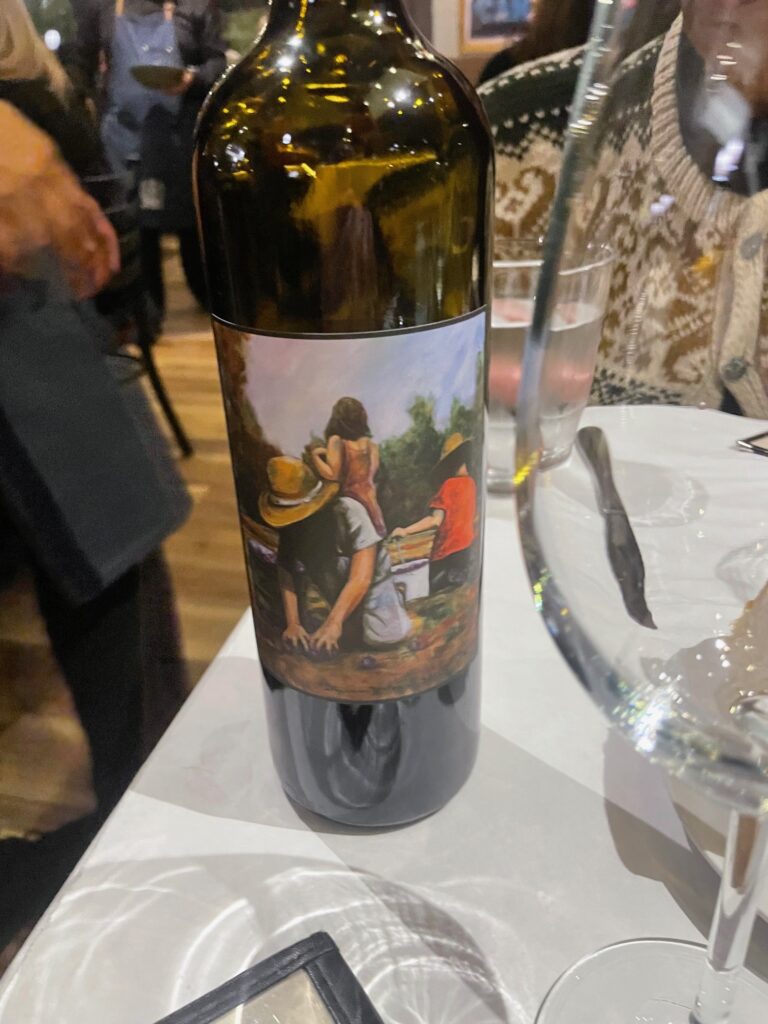
Our table was ready and we took our glasses with us. There, the waiter told us that if we enjoyed tasting different wines, we should have a glass of Trahan Cellars Merlot “a mi familia” Napa Valley 2018 ($17). He showed us the lovely label and told us the moving creation story of the winery. He said little of this was made (10 barrels) so we did indeed have to try it. It was smooth and velvety, the way Merlot can be when it’s right.
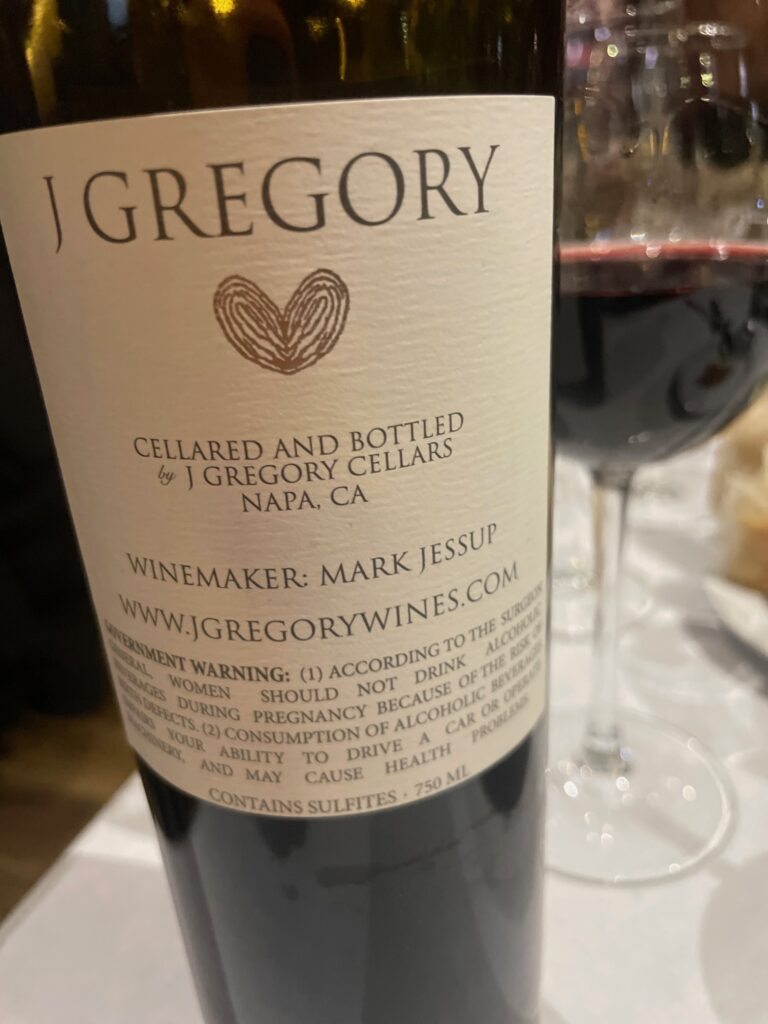
Our little table now was filled with wine glasses, but our knowledgeable waiter said there was one more we had to try: J. Gregory “Willey’s Reserve” 2019 Napa Valley Cabernet Sauvignon ($18). He explained that production was very small and the restaurant only had some because the owners came in from time to time since the winery was almost literally across the street, although it was basically just an office and the owners were usually not there. This was definitely the wine for our Italian dinner, with the kind of structure and complexity to stand up to rigatoni with tomato sauce and radiatore with shrimp and pesto.
And this wine also took us somewhere, literally: The next day, we went across the street and knocked on the door of J. Gregory to see if we could buy a bottle, but no one was there. Maybe next time.
If you let wine take you someplace, it will.
Dorothy J. Gaiter and John Brecher conceived and wrote The Wall Street Journal’s wine column, “Tastings,” from 1998 to 2010. Dorothy and John have been tasting and studying wine since 1973. In 2020, the University of California at Davis added their papers to the Warren Winiarski Wine Writers Collection in its library, which also includes the work of Hugh Johnson and Jancis Robinson. Dottie has had a distinguished career in journalism as a reporter, editor, columnist and editorial writer at The Miami Herald, The New York Times, and at The Journal. John was Page One Editor of The Journal, City Editor of The Miami Herald and a senior editor at Bloomberg News. They are well-known from their books and many television appearances, especially on Martha Stewart’s show, and as the creators of the annual, international “Open That Bottle Night” celebration of wine and friendship. The first bottle they shared was André Cold Duck. They have two daughters.