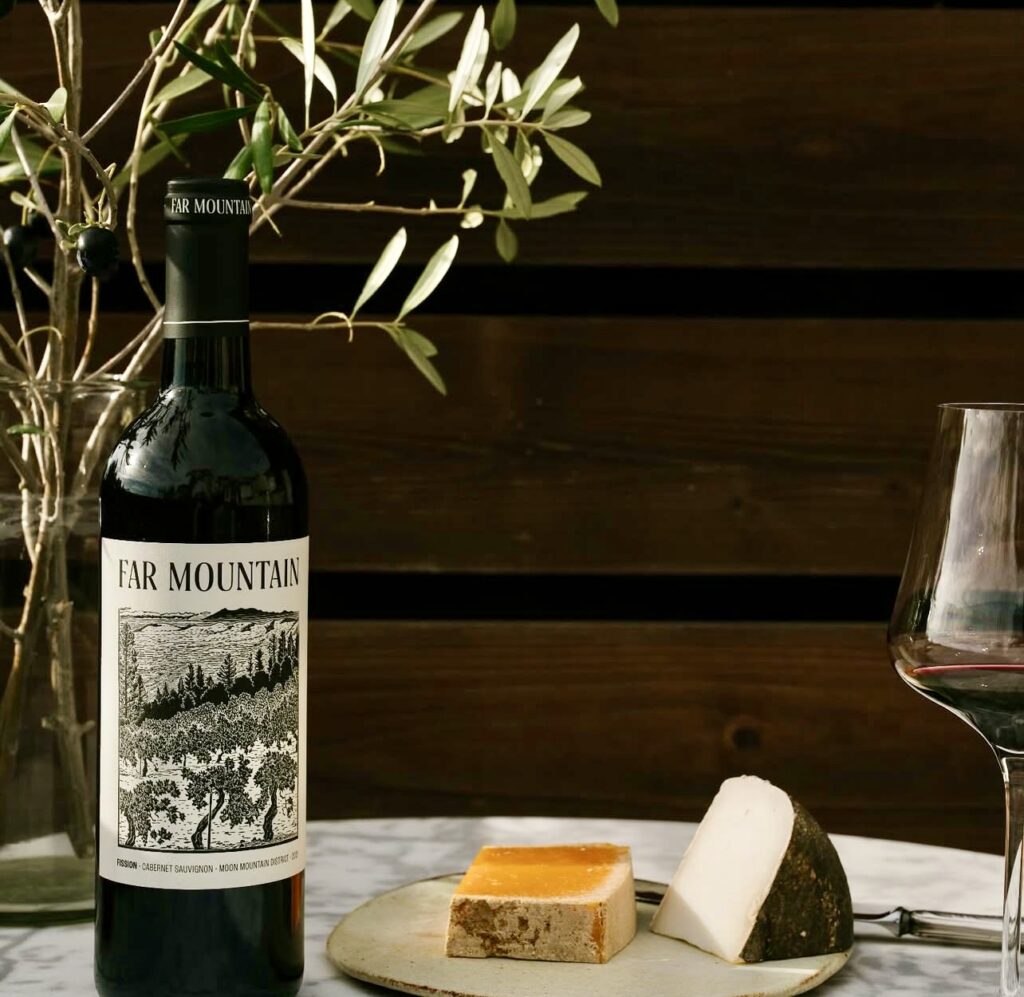
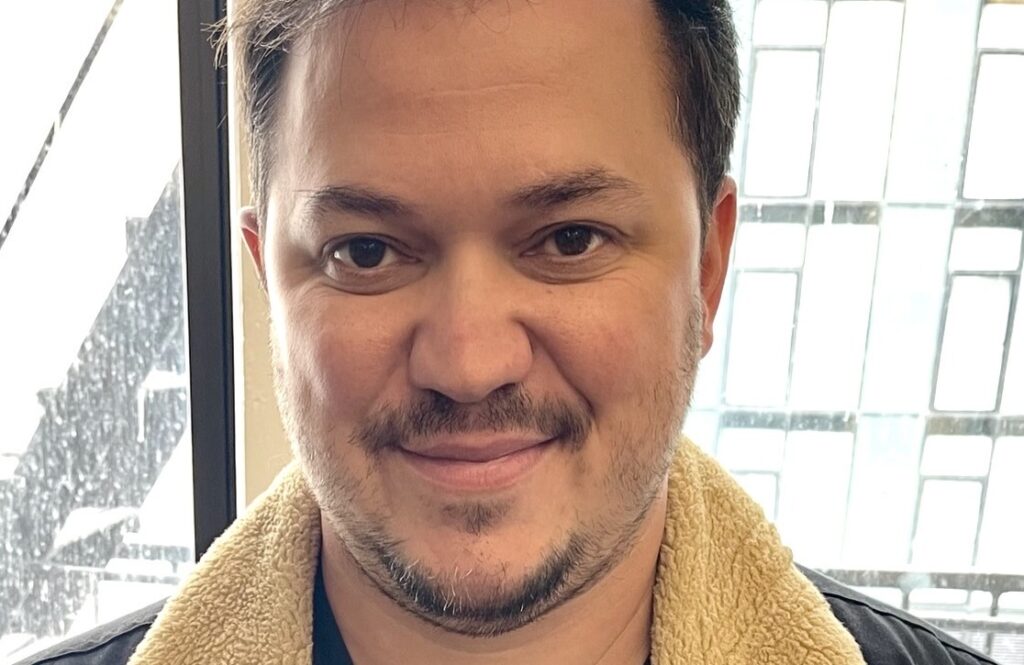
High up in Sonoma’s Moon Mountain District, where rocky soils and steep slopes shape the vines, winemaker Rodrigo Soto has found what he calls a perfect balance between nature and intention. After years making wine in both Chile and California, Soto and his wife, Mai Errazuriz, launched Far Mountain in 2018, a project rooted in old vines, volcanic soils, and a belief in working with, not against, nature. Far Mountain focuses on Cabernet Sauvignon from the rugged terrain of Moon Mountain and Chardonnay from high-elevation vineyards in Sonoma Valley, many of which were planted in the 1970s and remain dry-farmed
Soto’s path to organic and biodynamic farming began somewhat by accident. Assigned a thesis on organics during his university years in Chile, he soon became hooked. That early spark led him to California, where he met biodynamic consultant Alan York, the visionary who had guided the Benziger family on their path to biodynamics. Soto would eventually join the team at Benziger, putting those early lessons into practice alongside like-minded mentors.
Veteran Sonoma viticulturist Phil Coturri, a pioneer of biodynamic farming in California, has followed Soto’s path since his Benziger days. Coturri, who owns Sixteen 600 in the Moon Mountain District, is one of the region’s most respected voices and sees Soto’s work at Far Mountain as a natural extension of the region’s minimal intervention farming tradition.
“What Rodrigo is doing at Far Mountain is really unique,” says Coturri. “He’s sourcing from different sites across the Moon Mountain AVA, and when you taste through his wines, you’re essentially tasting a cross-section of the entire appellation. He brings out the character of each site, and is one of the few winemakers who really lets the vineyard speak.”
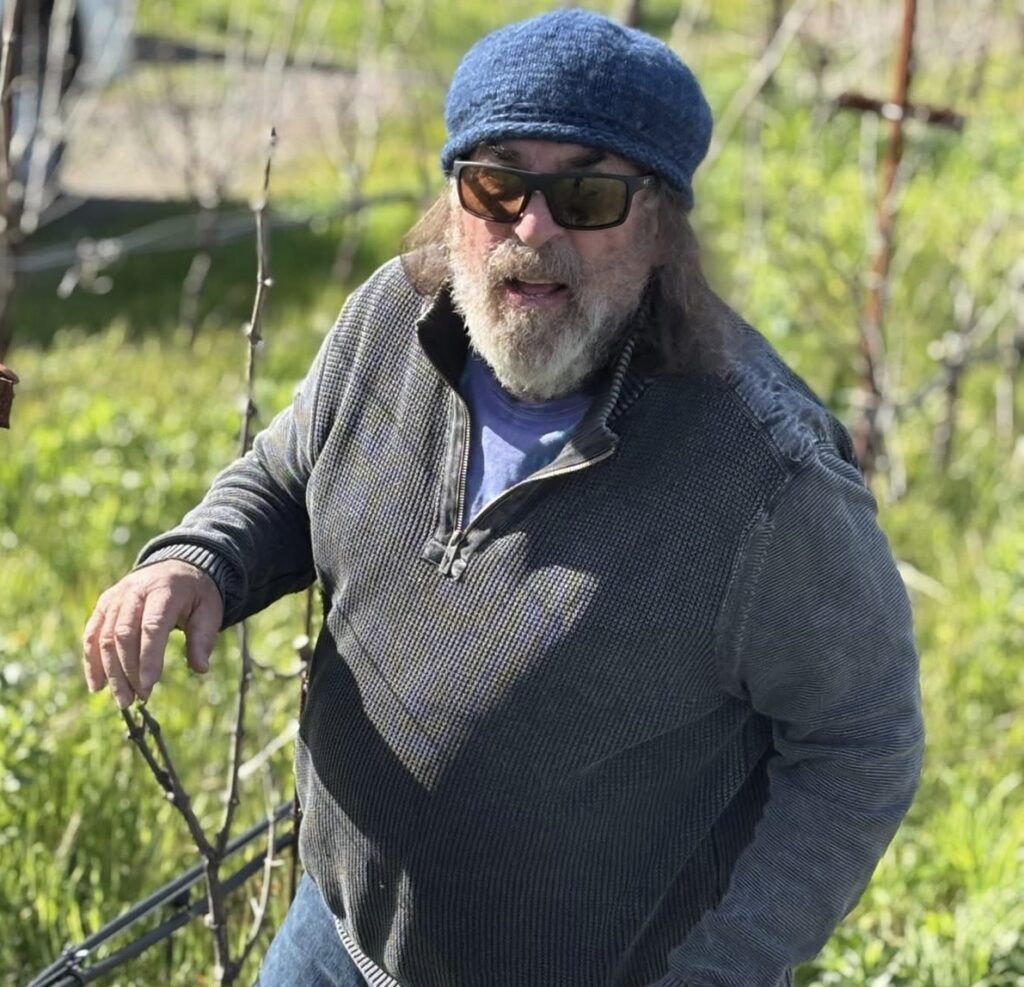
Soto stopped by Grape Collective to talk about his journey, his mountain vineyards, and why he’s chasing what he calls the “old flavors of Cabernet,” wines with brightness, depth, and a true sense of place.
Lisa Denning: Can you tell me about your background and how you got into winemaking?
Rodrigo Soto: It’s been a while. My background started as a young adult. Even before that, in my teenage years, I was working as a waiter in a friend’s restaurant in a vacation town during my summer breaks in Chile. I was often asked for wine recommendations, but at the time, wine wasn’t common in restaurants, and there weren’t many to recommend. But I found myself buying my first wine guide to know what to recommend to customers. That’s how I started connecting with wine in a more professional way.
Wine was always on the table at my house, so I was always familiar with it. That, together with my interest in being outdoors and not seeing myself confined in an office for my future as a professional, is how I chose agronomy for my studies at Universidad Católica in Chile. Through that process of studying agronomy, I realized there was an opportunity, and one of the paths was to be a winemaker and viticulturist. But what really triggered my interest was the possibility of traveling abroad.
For my thesis—and I was not a very good student in terms of grades—the thesis was assigned based on your prior grades. Since my grades were poor, I got a leftover thesis subject, and it was on organic farming. At the time, this was not preferred by other students and my classmates. I started reading and researching, and I had my first career conflict at that moment because I realized that what I had studied was not going to work for me. I was way more interested in working with nature rather than against nature.
I did my research on the only two acres that were farmed organically at the time in the country at a winery named Carmen, whose winemaker was Alvaro Espinoza. It happened that Carmen, at the time, was imported to the US by Brown-Forman, which used to own Fetzer. Fetzer was a pioneer in organics at the time. Through those connections, Alvaro put me in contact with Paul Dolan, and Paul was very kind in accepting my internship for eight months, allowing me to learn about organic farming.
When I was at Fetzer in the late ’90s, I met somebody who was key in my career: Alan York. Alan was the biodynamic consultant for Fetzer and a few others at the time. We connected really well and became friends, and that’s how I started finding my path. Then I went to New Zealand, which was a phenomenal experience where I met a lot of great people. Then I came back to work with Jim Fetzer where Alan was a permanent consultant and Alvaro Espinoza was a winemaker consultant. All of that together is how I started getting interested in a combination of winemaking and farming. For me, the farming became way more relevant than the winemaking techniques very early in my career.
And now you and your wife, Mai, have started your own project called Far Mountain. Can you tell us how that came about?
After many years of working together in the industry, we remained curious. We’ve been back and forth between Chile and California multiple times. What we always admired about the California industry in Napa and Sonoma is that everybody we met had their little side project. They always had that entrepreneurial aspect. We thought, why not?
When we got an incredible opportunity to come back and start working in Napa, we immediately thought this was the time we should do our own little project. We started doing it on weekends and after hours, but as you know, every little project like that starts giving you tremendous satisfaction. It wasn’t a distraction—it just gave me more energy to do more things. But I realized that at a certain point, I had to commit to my own project. That was part of my destiny.
So you work with growers in two different Sonoma AVAs, correct? Can you tell us about those AVAs and what makes them unique?
When I worked in California before, I worked for an incredible family, the Benzigers, who were pioneers in biodynamic farming as well. At the time, Mai was working for the Huneeus family for their Chilean project. We lived in Napa, and my commute was through the Mayacamas every day along Trinity Road. I was always looking at these vineyards in the mountain thinking, “Who’s farming here? This is incredible.” It was kind of a meditative phase because it’s a very windy road that makes you a little dizzy if you’re driving at the right speed.
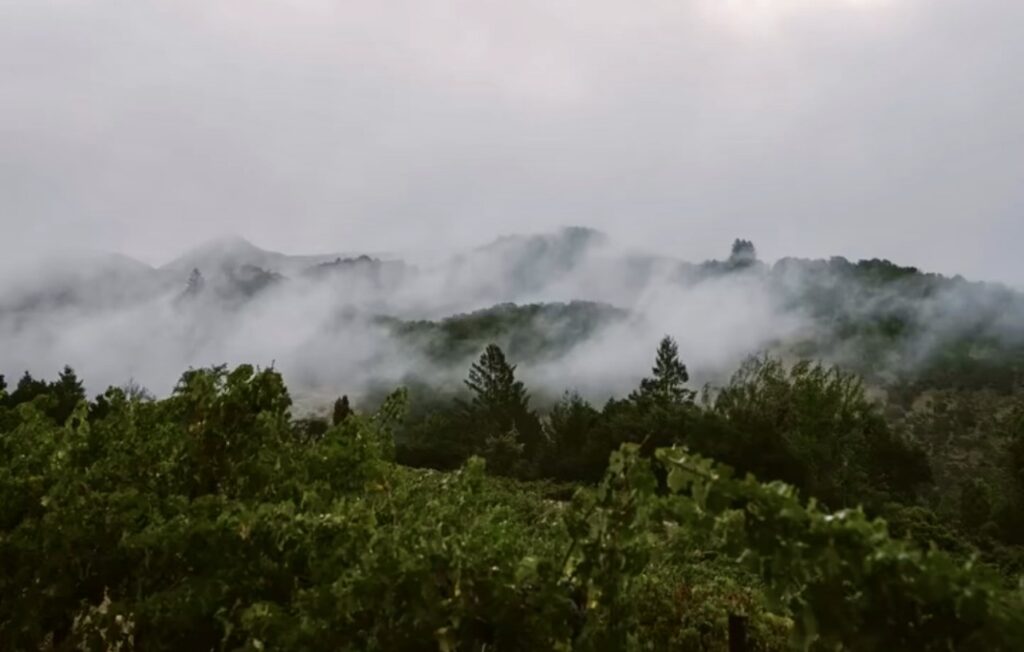
When I thought about an appellation and a place, I connected a couple of things: those brilliant memories from my drives through Trinity Road, together with what I believe is very important: the rock component in wines. I think rocks give you electricity, verticality, vitality—elements like that in wine that are so important in the world of plush wines. Tension and acidity are crucial, in my opinion, and I think that’s what you find in mountains.
I work with the Moon Mountain District, which is a new appellation established in 2013. I reconnected with a lot of growers I had met before. Knocking on doors, I got the chance to reconnect with them and work with incredible fruit. Most of them were planted in the ’70s, in many cases dry-farmed, and vineyards that are older than I, which is a very special and respectful approach.
How does your experience and knowledge of organic and biodynamics inform what you’re doing today?
That’s a great question because the farming aspect in the mountains is very challenging. Personally, I believe that organics and biodynamics are the farming of the future. I have no doubt in my mind about that. But I also realized I have to be respectful with tradition, and sometimes those aren’t the aspects that come with the tradition of the place.
I’m working very closely with growers who are not believers in order to help them transition to this new phase, which is organics. I’m also very lucky to work with people like Phil Coturri, who are established organic and biodynamic growers. So it’s a combination of sources, but definitely my contribution is that I’m going to be transforming those vineyards with time. It would be easier for me to go and only source what’s already done, but I think the beauty of this process and growing with the region has helped them convert as well.
Do you find that high-elevation, mountainous areas have as many issues with climate change as the lower valley?
I think we’re all seeing that. It’s a term that, for whatever reason, we are slowly adapting to. I think it’s very important to understand that with the extremes we’re seeing in weather, you have to be very proactive in your actions, but it also becomes much more relevant to help vines adapt. How do you do that? By making them sensitive to the environment where they live.
There’s a beautiful saying in biodynamic farming: since the plant kingdom doesn’t have the capacity to move around, they’re committed to the place where they live, so what they do is mirror their environment. When you think about it, plants can read the signals before we do. When you respect them and let them age with grace, just like us, you can react to situations in a very different way. I think it’s we who need to help them through changes. Our farming needs to be adapted to the climate change situation. Our winemaking needs to be adapted as well. For whatever reason, we tend to look at those two separately.
Tell me about the grapes that you grow and the wines that you make.
We focus on only two very traditional grapes. Cabernet Sauvignon was introduced to the region, believe it or not, in the late 1800s by the first settlers who arrived in Glen Ellen between 1860 and 1870. They brought some Bordeaux varieties, specifically Cabernet Sauvignon, and probably with that rusticity that Cabernet can have and its adaptability, it was planted in the hillsides.
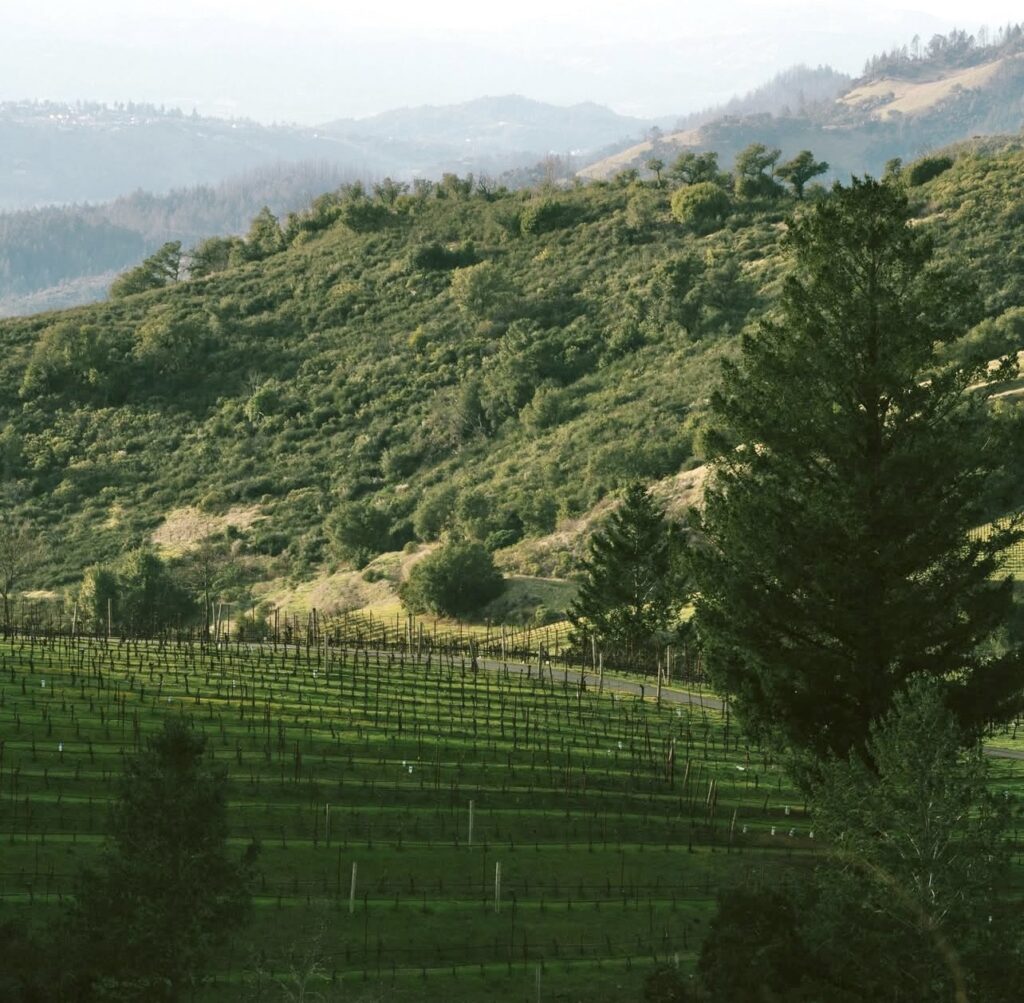
I love that, because when you make and taste the wines we make, it’s like going back in time. You taste the old flavors of Cabernet—a little bit of rough edges here and there, but bright acidity that makes them feel fresh and at the same time versatile.
The other variety we work with is high-elevation Chardonnay from a very specific vineyard that we feel incredibly lucky about because it’s a dry-farmed Chardonnay that lives at 1,800 feet. I’ve never worked with anything like that before. It’s very exciting, bringing elements like salinity that make it quite special and different from what we’ve worked with before in any other region.
How would you describe the taste of your wines to someone who’s never had them before?
I think they are very classic wines, but what does classic mean? I think verticality is something I consider important. What does that mean? Tannins that you can feel on your tongue—tannins that remind me in some cases of Piedmont, for example, where you get a little bit of a scratch on your tongue, but in a gentle way that feels harmonic, and at the same time, with fruit.
But I always say in the land of fruit, meaning Napa and Sonoma, no matter what you do, you get a lot of fruit. Spices and earthiness are scarce. When you get it, you try to capture it. Old vines give you a lot of that, so I feel very comfortable with that style of wine.
Tell me about the name “Far Mountain.” How does that have meaning for you?
It has a lot of meaning because it definitely has some nostalgia from where we come from. We’re far from our roots, being from Chile, my wife and I. But we also have this connection with the mountains from early on. We lived at 1,200 or 1,400 feet in Santiago, where we grew up.
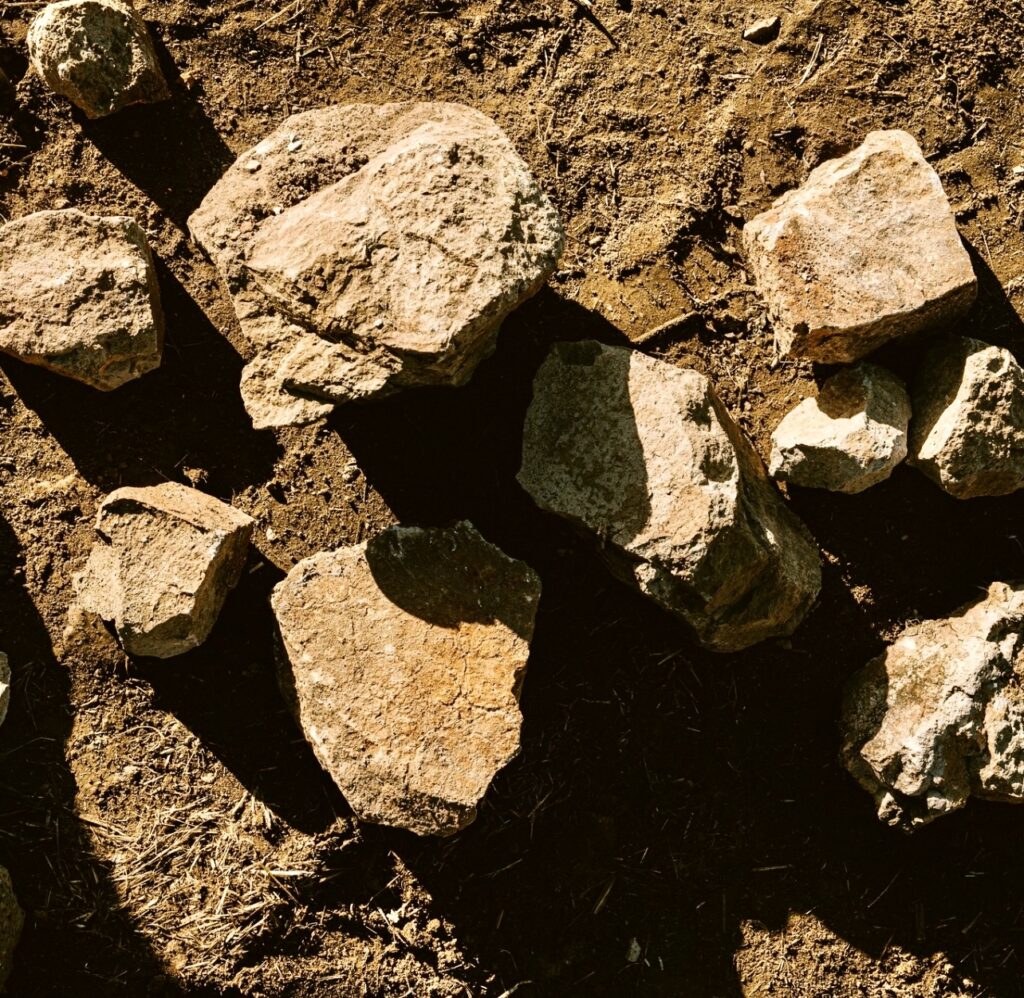
The connection with the mountain feels like a leitmotif in our lives in the sense of connecting with the rocks and the underground. Working with people like Pedro Parra in the past taught me to focus on where the rocks are because that’s where you get the interesting flavors. That’s where you get the acidity. That’s where you get the matchstick in the Chardonnay. That’s where you get the flint notes. At the same time, you get the chalkiness. We don’t have calcareous soils—it’s all volcanic—but you get our version of the rocks in the wines when you feel that little bite on the tongue that awakens the senses. That’s what we’re trying to capture.
What is your approach in the cellar?
It’s very minimal. With winemaking, of course, you need to learn your techniques and know them very well, but it’s a process. For me, the key is in the sources, in the places. There’s a tendency to give way more importance to the winemaking rather than the farming. For me, it’s the opposite. I think the farming is key, and the place, the location, and the interpretation.
Tell me about the evolution of California wines. Are they still big, opulent, high-alcohol wines or has the style changed?
I think there are different trends today, but it always starts with the farming when you work with young vines and you’re trying to farm them in a way that is perceived as high quality. When everything is very straight, very organized, and very engineered, and when you’re in an area that has plenty of sun and maximum sun exposure, my question is: is that the right way of thinking about it?
There’s a component that is very crucial to try to tune down the metabolism of the vines, which is age. You need to let plants age in order to let them calm down and be comfortable with themselves, so we, as farmers, are less interventionist and way more observant of situations. When we’re intervening all the time, we’re altering the metabolism of the plants. We’re making ripening curves longer because we believe we need extra time for flavors to develop.
What the plant needs is age rather than extra time in a season. When you push ripeness, there’s always a trade-off: you accumulate sugars, you lose acids. You can add acid in the winery, but in my opinion, you lose the balance. At the end, it’s about creating the right balance. I think we need to mature as farmers in order to allow vines to age.
Now, there are other pressures in the region, like disease pressure or virus pressure, that are forcing people to replant very often. That’s a bigger problem. The idea of replanting often, or the age of the region not passing 17 or 18 years old before replanting—that’s a very serious issue regarding making wines with less alcohol and more balance.
The other problem is cultural. Sometimes we like to talk about certain things, but we’re not necessarily walking the talk. I think that needs to happen as well.
Do you find it is happening?
Slowly but surely, it’s happening. It’s not for everybody. I think the style is very much defined, and people, many times, believe they are known for something, so there’s a lot of resistance to change. I think time will tell. But obviously, there’s a new generation of winemakers who are trying to make the changes. I think it’s eventually happening, and it’s going to be more diverse. I’m not saying everybody will go that direction, but I think it’s creating a lot more diversity.