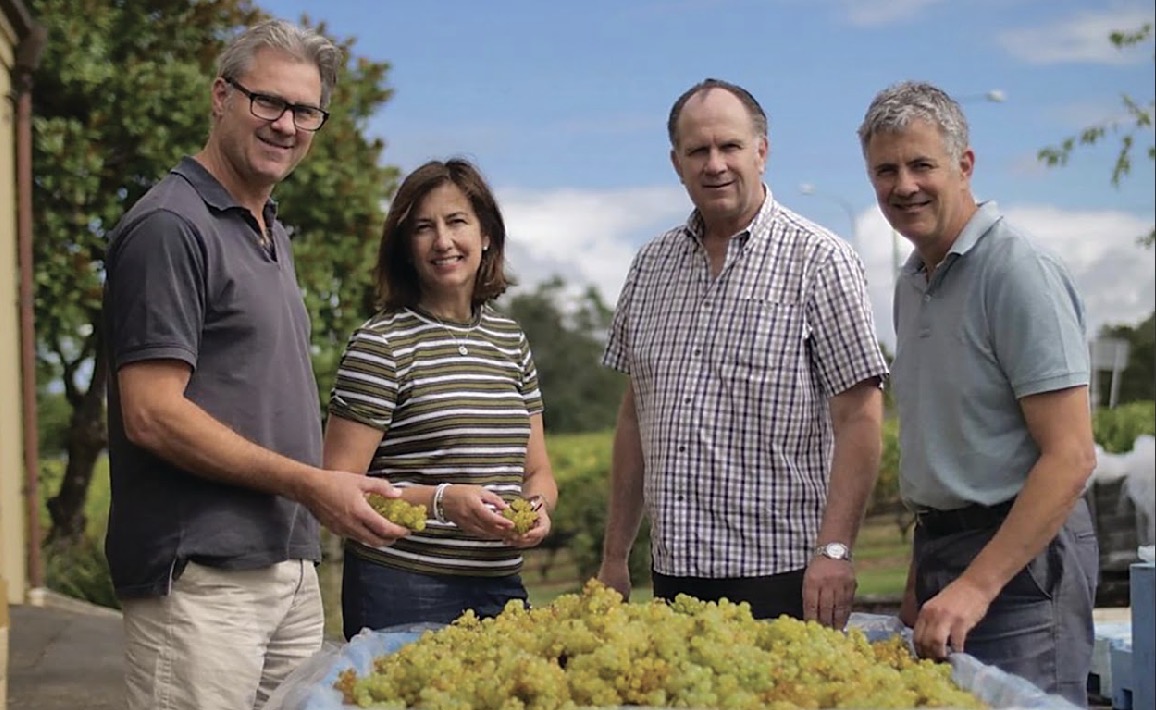
New Zealand is known worldwide for its Sauvignon Blanc. One whiff of this pungently herbaceous wine and you know what you’re in for. But here’s something you may not know: until 2002, Chardonnay was the most widely planted grape in New Zealand. It overtook Müller-Thurgau and held the top spot until Sauvignon Blanc surged ahead.
Today, Chardonnay makes up only about 6% of New Zealand’s total wine production, most of it from Hawke’s Bay, Gisborne, and Marlborough. However, some of the most refined examples come from the Auckland area, particularly West Auckland and Waiheke Island, and most notably from the Kumeu region.
New World Meets Old
Kumeu River is an 80-year-old family estate owned and run by the Brajkovich family. Their Chardonnays have the elegance and bright acidity associated with Burgundy’s whites, so much so that in a blind tasting, they could easily be mistaken. Yet they reflect their own place: Auckland’s warmer, humid maritime climate and clay-rich soils produce riper, slightly fruitier wines than Burgundy. Still, Kumeu River crafts Chardonnay with the vibrancy, structure, and complexity to rival the great Burgundies.
To test that point, in 2015, London-based fine wine merchant Farr Vintners organized a blind tasting with leading critics and writers. Kumeu River Chardonnays were set against top white Burgundies from Meursault and Puligny-Montrachet. In all but one flight, Kumeu came out on top; in the remaining flight, Kumeu’s Maté’s Vineyard tied for first place with Bouchard Père et Fils Meursault Perrières.
A Family Story
The Brajkovich winemaking story begins in 1944, when Paul’s grandparents, who came from Croatia, bought a small property west of Auckland. Like many immigrant families, they pieced together an income from whatever the land allowed: strawberries, pumpkins, cattle, and eventually a bit of wine. Paul’s father, Maté, worked weekdays at Selaks, a nearby winery, to earn extra money, biking there at the start of each week and home again for the weekend.
By 1948, Maté, desiring to sell his family’s wine, built a simple four-walled cellar. Due to his warmth and humor, people would drive past other wineries to buy his wines. When he ran out of stock, he’d buy finished wine from Selaks and sell it under his own name—something that still makes Paul shake his head and laugh.
“When old man Selak caught on,” says Paul, “he said to Dad, ‘I can’t understand it. People from Auckland drive right past me to go see you and pay more money to buy my wine.’”
Maté and his wife raised four children—Michael, Marijana, Milan, and Paul—and they all chose to return to work at the winery after pursuing other interests. Michael studied enology and became New Zealand’s first Master of Wine in 1989. Since 1981, he has been responsible for Kumeu River’s wine production. Milan, an engineer who briefly worked in the dairy industry, took over viticulture. Paul, who obtained a business degree, handles sales and marketing, and Marijana shifted from hotel sales at the Regent hotel chain to take over finance and marketing.
“All four of us have our own separate areas and work together very well, and hopefully we’ll have another 40 years,” says Paul. Meanwhile, the next generation is stepping in, with Marijana’s son Scott completing harvests in Burgundy and at home.
Three Vineyards, Three Personalities
At a recent 80-year Kumeu River anniversary dinner held in New York City, a group of media tasted through more than two decades of the winery’s Chardonnay with Paul Brajkovich, a member of the third generation. The vintages spanned from 2024 back to 2002. What stood out, no matter the year’s weather, was the wines’ retention of a vibrant, energetic palate.
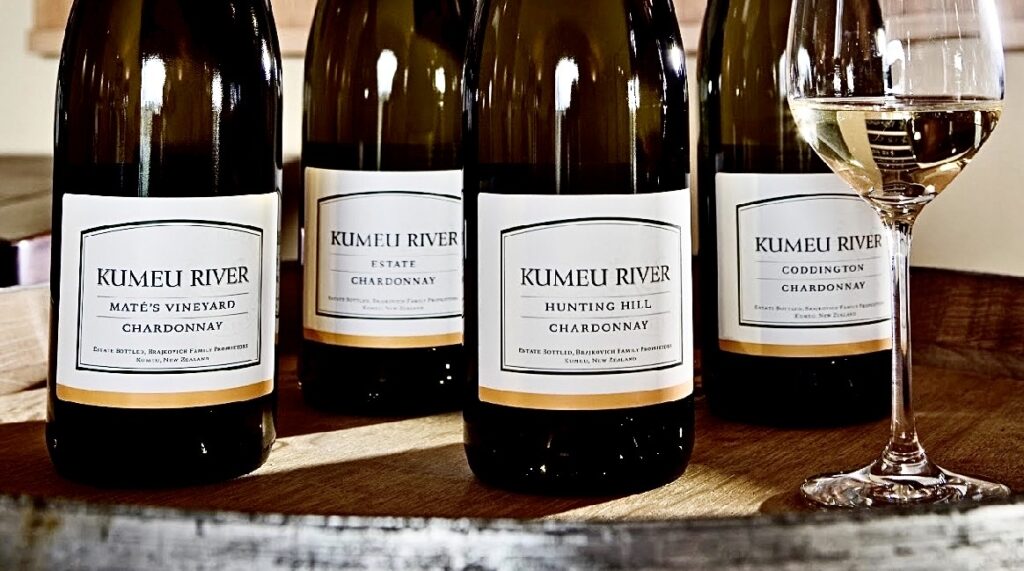
We began with the Kumeu River Estate Chardonnay, a blend from six vineyards in Kumeu. “In the best years,” Paul noted, “the Estate Chardonnay comes close in quality to the single-vineyard wines.”
From there, the tasting moved to the single-vineyard bottlings. “Though the sites lie only a few kilometers apart, the single vineyards have those absolutely distinct characteristics,” Paul noted.
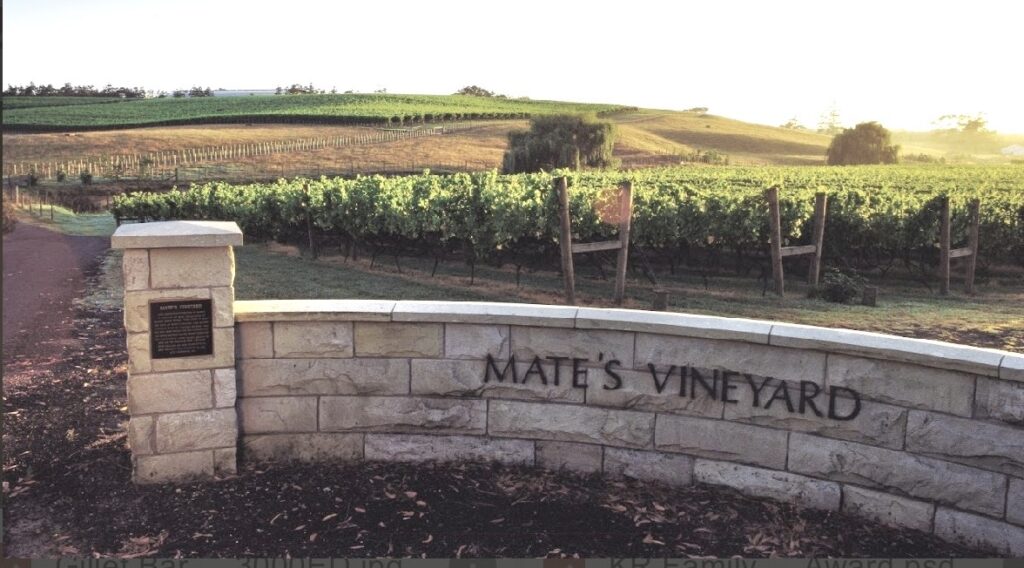
Maté’s Vineyard, planted in 1990 and named for Paul’s father, was never meant to stand alone. But from its first vintage, it showed a profile the family couldn’t ignore. The Mendoza clone delivers a mix of tiny and large berries, which means firmer pressing in the cellar, yielding naturally concentrated juice. “Over the years,” says Paul, “as the vineyard has gotten older, we’re getting more density, more concentration. Because you’re pressing a bit harder, there’s a tannic element as well, sort of a grippy texture.”
The Coddington single vineyard is owned by movie producer Tim Coddington and his wife Angela, and was planted with guidance from the Brajkovich family. Heavy clay and a warm, north-facing slope create a ripe, generous style supported by toasty Cadus barrels (premium French oak) that add shape without overwhelming the wine. “It’s from a vineyard site that’s quite heavy in clay, and it’s a real north-facing sun trap, and it gives us a very peachy, very luscious style,” says Paul. “With 2024, I think the oak is relatively subdued, which is due to the quality of really intense fruit that year.”
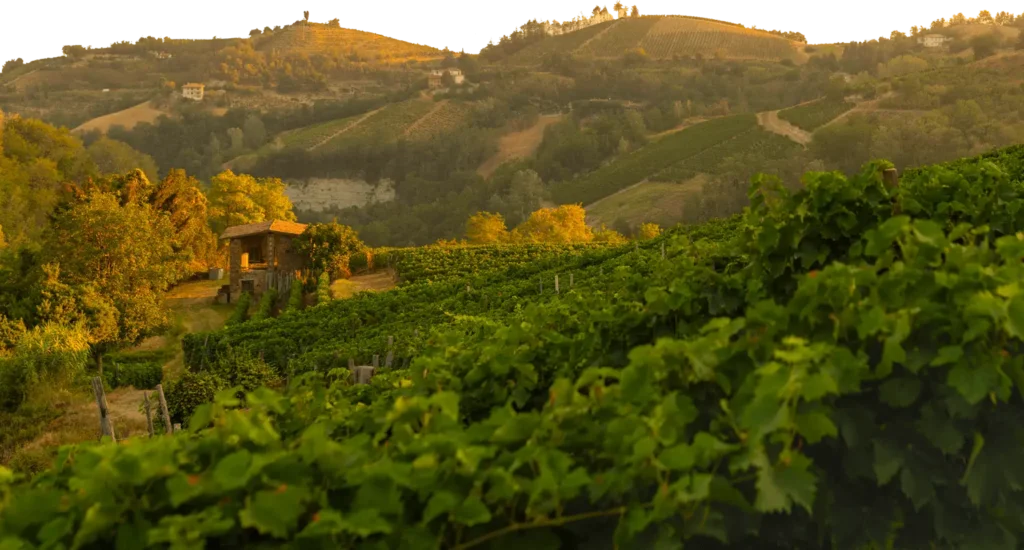
Hunting Hill sits across from the winery on a southwest-facing slope that catches cool coastal winds. On breezy days, Paul says you can smell the sea from the vines, and that influence shows in the glass. “With Hunting Hill, we get this very fragrant Chardonnay,” says Paul. “It’s very much lemon-lime blossom on the nose and on the palate. This is a very linear, very tight, very long, and persistent Chardonnay. On the finish, you get this lovely lemon drop character, which is distinctive of Hunting Hill.”
The cellar work is identical for all three wines: hand-harvesting, whole-bunch pressing, wild fermentations in French oak, full malolactic fermentation, and a year on the lees. Despite that uniform approach, the wines emerge with clearly different personalities, shaped by site rather than cellar technique.
The only variation in the cellar is barrel use, as Paul noted: “The Estate sees about 20% new oak. Coddington and Hunting Hill, 25% new oak. And Matty’s Vineyard, 30% new oak. And then there are three or four different coopers that we buy from.”
A Clean Break From Cork
Since 2001, every bottle of Kumeu River has been sealed with a screwcap, a decision born from frustration with cork taint. In 2000, the family tested 62 batches of corks and rejected 42 of them for cork taint (TCA).
“We never found a completely clean batch,” Paul said. The worst incident came with the 1999 Maté’s Vineyard. They isolated 200 cases, opened every bottle to check for taint, and threw away 30% of the wine. Even the good bottles showed troubling variation, with one in 20 tasting noticeably better than the rest.
“You’re thinking, well, they should all taste like that,” Paul recalled. “When we switched to screwcaps, it basically eliminated all that,” he said. Now, when he sends samples, he only needs one bottle per wine because he knows it’ll be consistent. With cork, he used to send three and hope one was good.
Vintage Variation
Paul walked us through the vintages with the ease of someone who has watched them evolve over decades. “Somewhere between seven and 10 years of bottle age is when these Chardonnays hit their stride,” he stated. The 2017s proved his point. From a cooler vintage, they’ve just reached that sweet spot where the wines become more interesting. “Particularly on the palate,” he says, “you get a more satiny texture and suppleness, yet more citrusy than peachy notes—still ripe, but with a different aromatic profile than warmer years.”
The 2024s told a different story. Frost during flowering cut yields by more than half, but a mild, even summer—“the hottest day was 27 degrees Celsius (80 degrees Fahrenheit),” Paul noted—produced nicely concentrated and textured wines.
The standout of the night was the 2010 Hunting Hill. It was a frost year with reduced yields, but the summer was “just delightful,” and the wines came up beautifully. Because of the low crop, they skipped new oak and used one and two-year-old barrels instead. Paul called it “the best Chardonnay we’d made, period.”
Even the oldest wines in the lineup, 2002 and 2004, now over 20 years old, held their energy. “These are fully mature,” says Paul. “They’re in that tertiary phase with secondary aromas, rather than any luscious fruity characteristics, and they’re holding up very, very well.”
Certain patterns emerged. Warmer, dry years without extremes, such as 2014, 2019, 2020, and 2024, consistently deliver top wines. “In years like those, it’s easy,” Paul said. However, Kumeu River is a perfect example of how important it is to be a good producer, as even the tougher vintages yield excellent wines.
For Chardonnay drinkers who appreciate precision, freshness, and wines that evolve over time, Kumeu River is a name to know. And for anyone who assumes New Zealand begins and ends with Sauvignon Blanc, the Brajkovich family offers a different story: one with eighty years of turning out world-class Chardonnay.