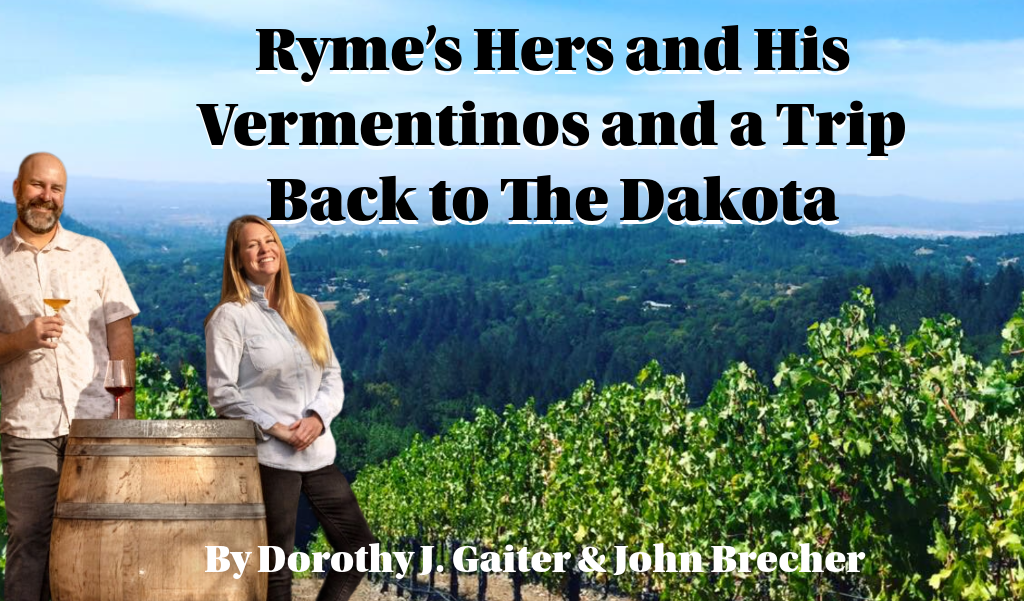
Wine can be romantic. The people who make it and drink it certainly can attest to its capacity to inspire. Love stories abound in the wine world. That’s why we’ve written our Valentine’s series. But even we were surprised and charmed to find that one couple had such different visions of a wine that they bottle “His” and “Hers” versions.
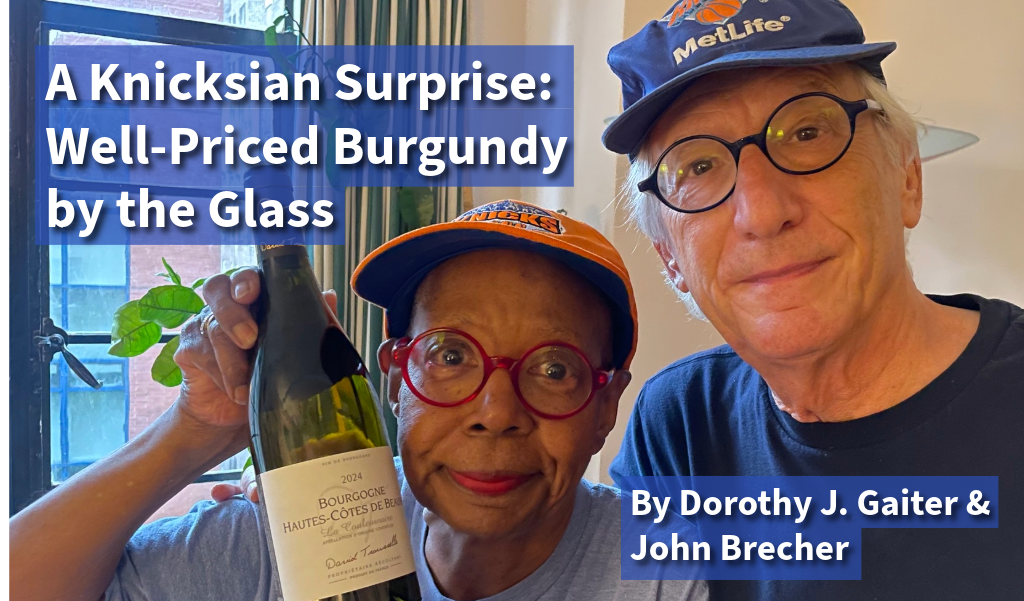
This goes back to our own creation story, in a way. Back in the 1980s, the very first home we owned was an apartment on West 72nd Street in Manhattan, which was quite trendy at the time. Our kitchen window peeked into apartments at The Dakota, where one of its residents had actually converted a room into a basketball court. Our living room and patio looked out onto a seafood restaurant called Sidewalkers, where we had spiced Maryland blue crabs from the Chesapeake Bay, sweet potato fries, coleslaw and frosty pitchers of beer. That space now is occupied by a restaurant called The Ribbon and we decided we should hop a bus there for old time’s sake.
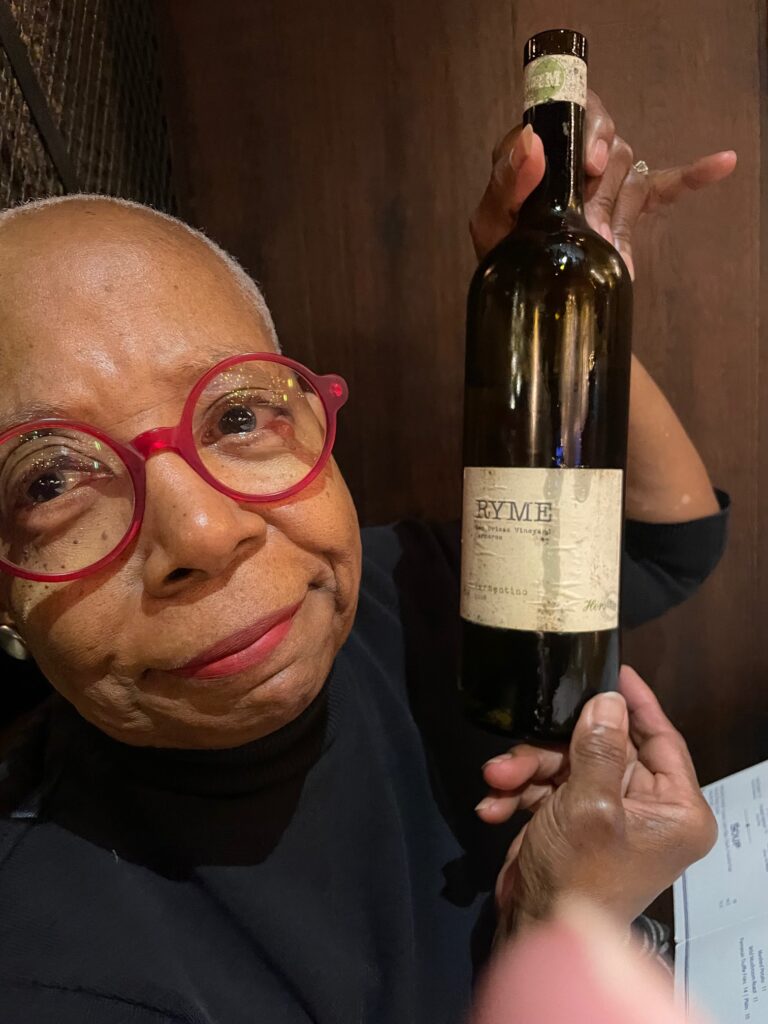
The well-priced wine list was long and interesting, and one bottle leaped out at John right away. He exclaimed to Dottie, “They have ‘Hers’!” and she knew just what he was talking about — we have been together a very long time. In Elaine Chukan Brown’s outstanding new book “The Wines of California,” Brown has high praise for Ryan and Megan Glaab’s Ryme Cellars in Forestville and adds: “The His and Hers Vermentinos, two different wines each made in the style preferred by either Ryan or Megan, is the only example, they tell us, of them disagreeing in wine. The His includes skin contact and a little more aging. The Hers is straight to press and sells a lot more wine.” We loved reading about this, but we had never seen the wines, until that night.
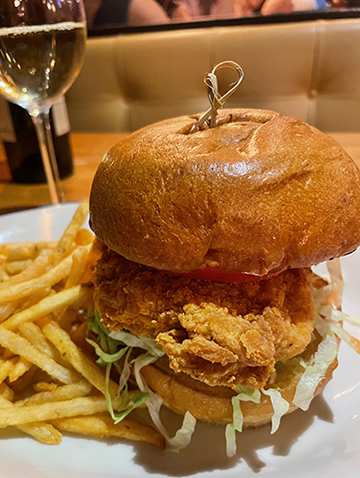
The Ribbon did not have the His — good thing, since we might have been tempted to have a very expensive little tasting — but it had the 2018 Hers “Las Brisas Vineyard Carneros” for $58 (the 2023 is $29 at the winery). We ordered it, of course — along with John’s fried chicken sandwich, a house specialty, and Dottie’s crab cake, her nod to Sidewalkers. The wine was flat-out excellent, with bright citrus, green apple and peach-like juicy fruit, a leavening foundation of minerals, and still lively and fresh.
When we got home, we immediately searched for the two wines so we could taste them, in younger vintages, at home. We found the 2023 Hers ($31.99) and His ($39.99). The Hers was very crisp, with a nicely acidic, lemon-peach taste and a mineral backbone. The His was richer looking, somewhat golden, with a weightier-seeming nose. There was more stone fruit and pear, with fine texture. What a great tasting!
We have been fans of Vermentino for a long time, especially from its home of Italy, but we’ve also had good examples from some U.S. wineries such as Tablas Creek. So, naturally, we were eager to contact Ryan and Megan to ask a few questions, though we knew harvest was quickly approaching. Ryme, by the way, is a sweet mash-up of their names. Ryan wrote back.
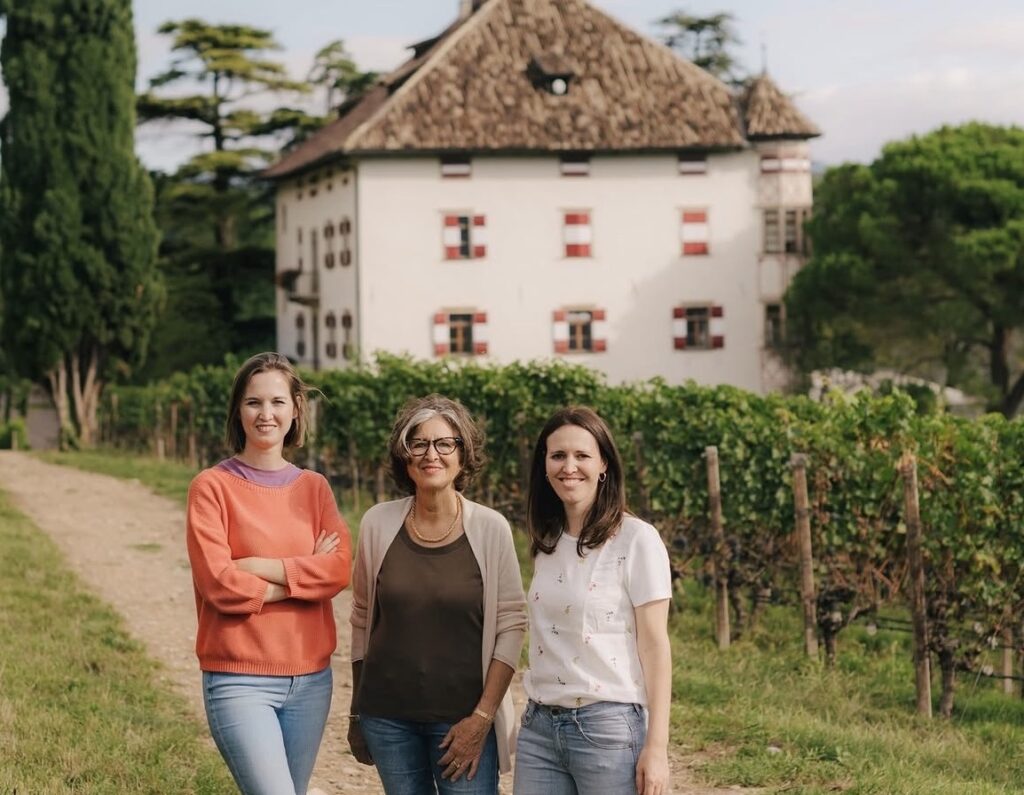
Grape Collective: Just to make sure we have the chronology right, you and Megan are both from California, met as winemakers in Australia, fell in love and moved back to California, where you both worked at various wineries and started Ryme in Forestville in 2007. Is that right?
Ryan: Yes! That is correct. We met working as harvest interns at Torbreck in 2005, started Ryme and got married in the same year in 2007!
How many cases does Ryme make now?
We average around 4,000 cases per year
We read about His and Hers in Brown’s book, but had never actually seen either until we just went to a restaurant in our neighborhood called The Ribbon and there was Hers. It was lovely. Why Vermentino and why Carneros?
I am so happy to hear you enjoyed the wine! The 2018 was one of my favorite vintages but I haven’t had it in a few years. Megan and I love Vermentino. It’s delicate and vibrant and so easy to get people excited about. We have always sought to explore California terroir through Mediterranean grape varieties.
Vermentino really excels in our climate. But the real inspiration for it was from the skin-macerated Vermentino from Massa Vecchia in Tuscany. We were already making an orange Ribolla Gialla and I wanted to make Vermentino as a counter-point to that. The conversation back then about orange wines was always that the maceration obscured any terroir or varietal character. That’s certainly not true for red wines and I wanted to demonstrate the same with those two orange wines.
The Las Brisas vineyard is on the far western Sonoma County side of Carneros and the windy convergence of the San Pablo Bay and Petaluma wind gap. Because our nights are so cold, it’s one of the cooler areas in the world growing Vermentino. The wines are filled with freshness and energy.
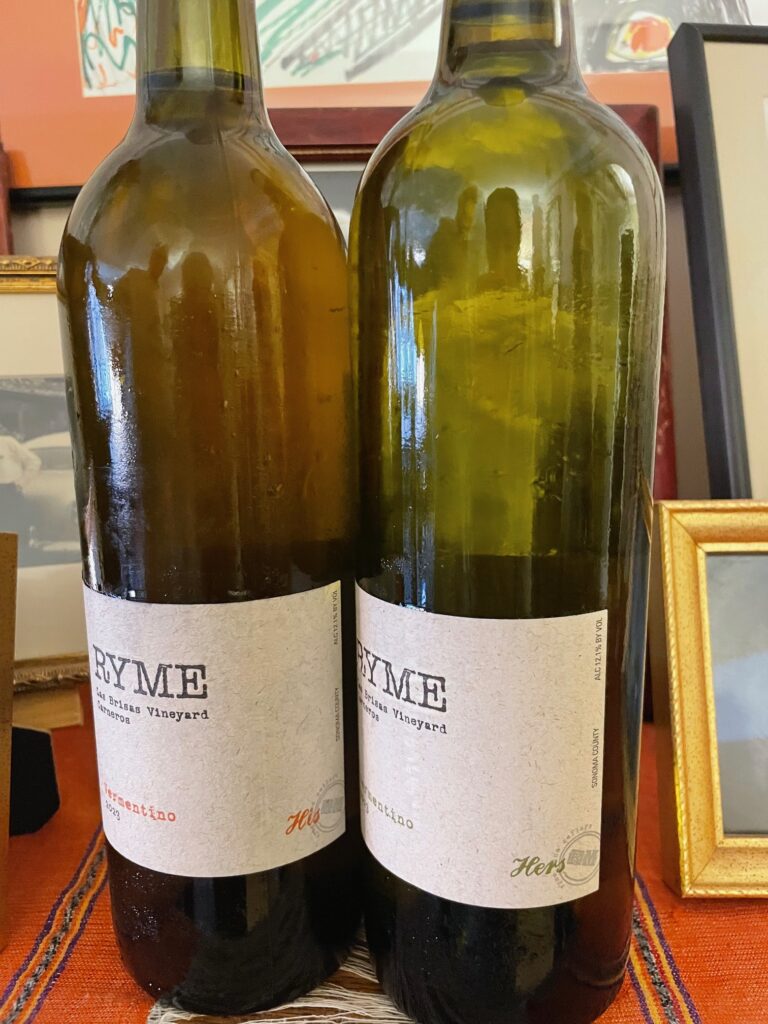
It appears that the current vintages are 2024 (Hers) and 2023 (His). Is that right?
Correct! The Hers is released 6 months after harvest. The His is released in the fall.
Of all of the wines you make, why do you think Vermentino is the one you disagree about so much? When did you start His and Hers?
We started the His and Hers in 2010, which was our first vintage working with Vermentino. From the beginning, we each had such distinct visions for the Vermentino that there was no compromise. I wouldn’t say we disagree so much — rather we embrace the contrast and love what the wines as a pair demonstrate about the variety. What began as a creative disagreement has turned into one of our favorite ongoing projects.
(Here, Dottie nods and says, “Spoken like a man who has been married for a while.”)
The Hers is pressed right away and ferments in a combination of stainless steel and neutral barrels. It is bottled after a short elevage to capture all the fresh energy. His is crushed and ferments on the skins and stems for about two weeks and typically spends around ten months aging in neutral barrels.
How much of each of His and Hers do you make?
We typically make between 500-600 cases of His and 1,100-1,200 cases of Hers.
We see you also make bag in box wines, which is cool. But you make the Hers Vermentino in a box, not His in a box? Why is that? How are consumers accepting the boxes, in general?
For the box format, we make a wine in a similar style to His, called Orange Sunshine. It’s a blend of skin-fermented Vermentino and Malvasia. It’s bright, juicy, and meant to be enjoyed right away. His Vermentino has great aging potential, and since we don’t typically design our boxed wines for long-term cellaring, we wanted something more in the “drink now” style. The bag-in-box wines are a big hit with our guests in the tasting room. The shelf stability after opening and ease of use is a big appeal. And getting very high-quality wine in a box is a fun surprise for our guests. We also are very conveniently located near the Russian River and what is better than a box of wine for your river vacation?
Finally, how is harvest going?
As of right now (August 29th), we are just getting started! We have our Sangiovese coming in tomorrow and we are very excited to get started with 2025.
Dorothy J. Gaiter and John Brecher conceived and wrote The Wall Street Journal’s wine column, “Tastings,” from 1998 to 2010. Dorothy and John have been tasting and studying wine since 1973. In 2020, the University of California at Davis added their papers to the Warren Winiarski Wine Writers Collection in its library, which also includes the work of Hugh Johnson and Jancis Robinson. Dottie has had a distinguished career in journalism as a reporter, editor, columnist and editorial writer at The Miami Herald, The New York Times, and at The Journal. John was Page One Editor of The Journal, City Editor of The Miami Herald and a senior editor at Bloomberg News. They are well-known from their books and many television appearances, especially on Martha Stewart’s show, and as the creators of the annual, international “Open That Bottle Night” celebration of wine and friendship. The first bottle they shared was André Cold Duck. They have two daughters.