A few weeks ago, we asked some wine store owners two questions: What would they like to see customers do more and what would they like to see them do less? Their responses reminded us of why we think your journey in wine can be immeasurably enriched if you have a wine merchant who is not only knowledgeable but also patient and a good listener. Our journey, which began in 1973 and is informed and refreshed nightly sip by sip, has been aided by a lot of wine people who were generous with their time and sharing their passion. So for this column, we asked some thoughtful winemakers who have a long view of things one question:
“What one thing would you like to see changed in the wine world and how could that change be achieved?” Here, edited for space, is how they responded in emails.
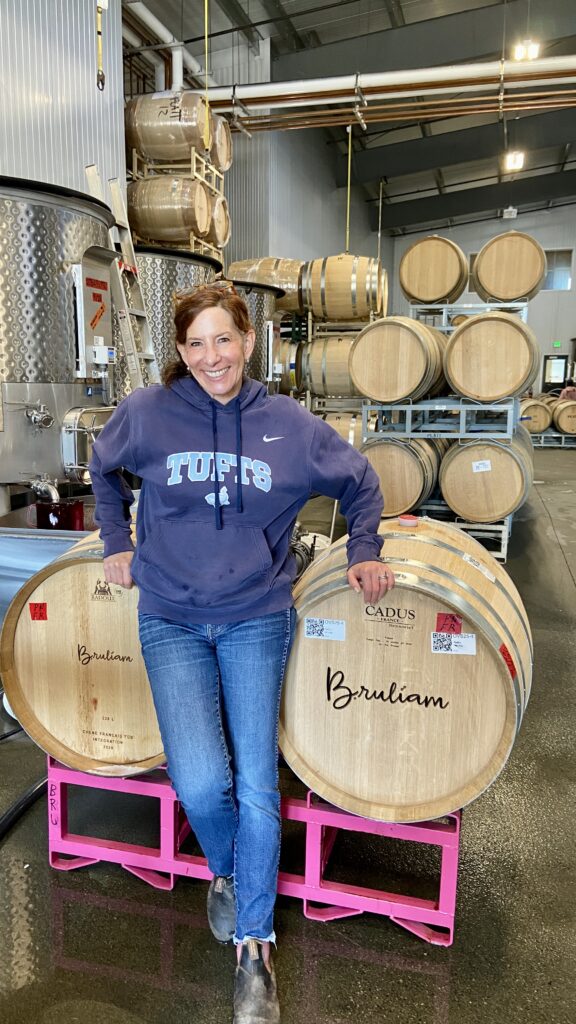
Kerith Overstreet, winemaker-owner of Bruliam Wines, a Pinot Noir specialist in Sonoma since 2008: “Expanding our big wine tent is mission critical. We need to make wine relevant, fun, dynamic, inviting, and accessible to everyone, especially the wine curious and the wine newbies. And in doing so, we need to meet those potential wine lovers exactly where they are. By that I don’t mean in terms of their palate or knowledge, although that’s important, too. I mean literally where they ARE, like where their eyeballs are scanning, the places they scour for knowledge, ideas, and inspiration. Only then can the wine industry compete for a slice of the attention grab. We (the wine industry) are not doing a great job of showing younger wine lovers — or potential wine lovers — how enjoying wine, in moderation, with friends and food and in community, intersects with their world. I’m an old dinosaur, but I imagine that looks like a quadruple whammy of exploiting social media/social media influencers/celebrities they admire, and podcast hosts, and digital media, and novel online outlets to promote an inclusive, relevant story of wine. Wine needs to spark a cultural zeitgeist.”
John and Tracey Skupny, founded Lang & Reed in Napa, known for Cabernet Franc, in 1993: “We’d like to see a cultural shift to enjoy wine as something nurturing, enriching, to be shared with family and friends. To move away from it being viewed as something precious, or something to covet or as a competitive sport. How can this be achieved? To change the dialog away from winners and losers and shift to the understanding that there is a perfect time and place for all wines. To lift the regulatory burdens, across our country, that thwart access to all wines and the financial impact on the costs of wine due to archaic alcoholic beverage law. You know, ‘Vigneron’s Sans Frontières.’”
Rolando Herrera, who founded Mi Sueño Winery in Napa with his wife, Lorena in 1997: “We would like to see greater support for small and independent wine producers. We need help competing against massive conglomerates. We need to be more aggressive in continuing to educate the public about the history of wine and the beauty and health benefits of having a glass of wine with food. Also, we should educate them about the importance of purchasing wine directly from small family wineries. Restaurants and retailers should feature small producers more frequently. We need help from our government in reducing the regulatory burden.”

Chris Howell, winemaker of Cain Vineyard & Winery in Napa since 1991: “End the Three Tier System.” [The post-Prohibition system mandates three layers of alcohol distribution — producers, distributors and retailers — making it costly and harder for small wineries.] Added Katie Lazar, director of sales and marketing for Cain and Howell’s spouse: “Get rid of points & scores.Wouldn’t it be wonderful if folks could understand wine in the same way that they understand food when they go to a farmers’ market? Then we could get away from brands and think about vineyards.”
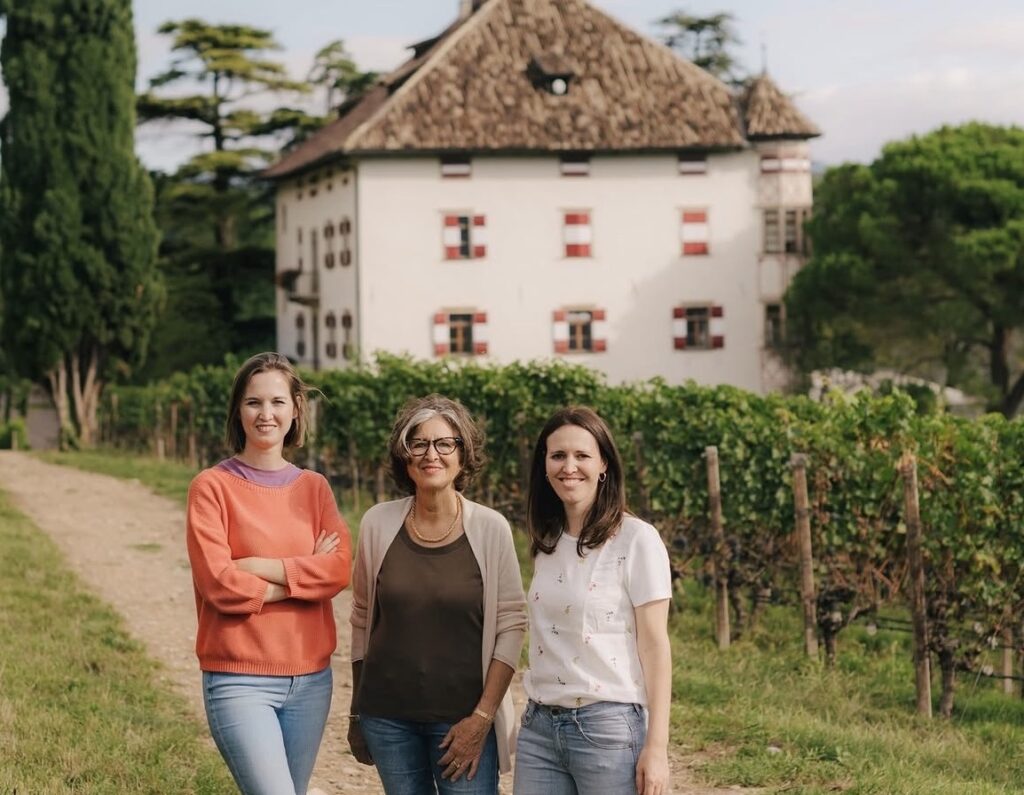
Cathy Corison winemaker and co-founder in 1987 with husband, William Martin, of Corison Winery in Napa, wrote of her daughters: “I’m so grateful to have Grace and Rose ready and waiting to take Corison into the next generation. The world loses small, family wineries at an alarming rate these days.
“For me, one of the magical things about wine is that it can speak of time and place and, if it is age-worthy, go forward into time speaking of that time and place. To the extent that winemakers remain farmers, that can happen, with attention to letting the land and weather of the season speak. Fine wine is a very long-range endeavor, measured in decades, and cannot be made by quarterly statement. Wine as a commodity does have an important place in the world, providing a beverage that is good at washing down our food, but wine that pulls us together historically and culturally and gives us something to think about can be so much more.”
Theodora Lee, in 2003 founded Theopolis Vineyards, a Petite Sirah specialist, in the Yorkville Highlands of Mendocino County: “The wine industry is undergoing significant transformations, driven by shifting customer preferences, health concerns and economic pressures. To adapt and thrive in this evolving landscape, the wine industry must become more creative, embrace diversity, develop innovative ways to engage the consumer base, and make more data driven decisions.”
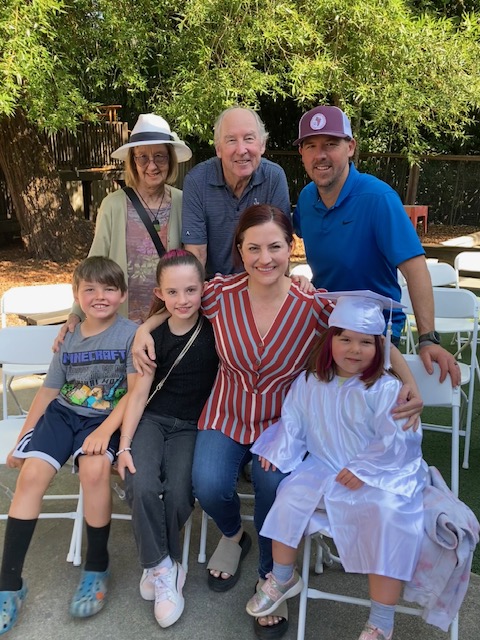
Doug and Lee Nalle, founders in 1984 of Nalle Vineyards in Sonoma’s Dry Creek Valley, shared our question with their son Andrew, now the winemaker. He is a big San Francisco Giants fan, which led to us sharing our recent column about pairing Beaujolais with hot dogs. Andrew wrote back: “Nalle Zin is in the inaugural SF Giants wine club release. On top of that my new dream is to make a 7% Alc white, Sauv Blanc-based (pairs with a hot dog w mustard and sauerkraut) and a 7% Alc red, Zin-based (pairs with a hot dog w yes- ketchup! and pickle relish) for the Giants.
“To your question, wine needs to be more approachable and therefore not pretentious; hence the answer is make hot dog wines for starters. This will get younger folks and the diverse sports fans normally drinking beer. An introduction to fun wines, on the sweeter side, but they can be nicely balanced with acidity like a Riesling. And low alcohol, 7-8.5%. So folks can more easily try a white and red at the parks and go about rooting on their teams.”
Doug Nalle added: “I would like to see quality wines return to more moderate levels of alcohol. Moderate levels were de rigueur during the renaissance of quality in the 1960s, 70s, and 80s. Just as technology in the vineyard and winery led to increased alcohol, it can also bring levels down. If wine critics/press buy in to the advantages of moderate-alcohol wines (the return of site-specific terroir, improved vineyard and human dietary health, to name three) and give those wines favorable ratings, their increased production will follow.”
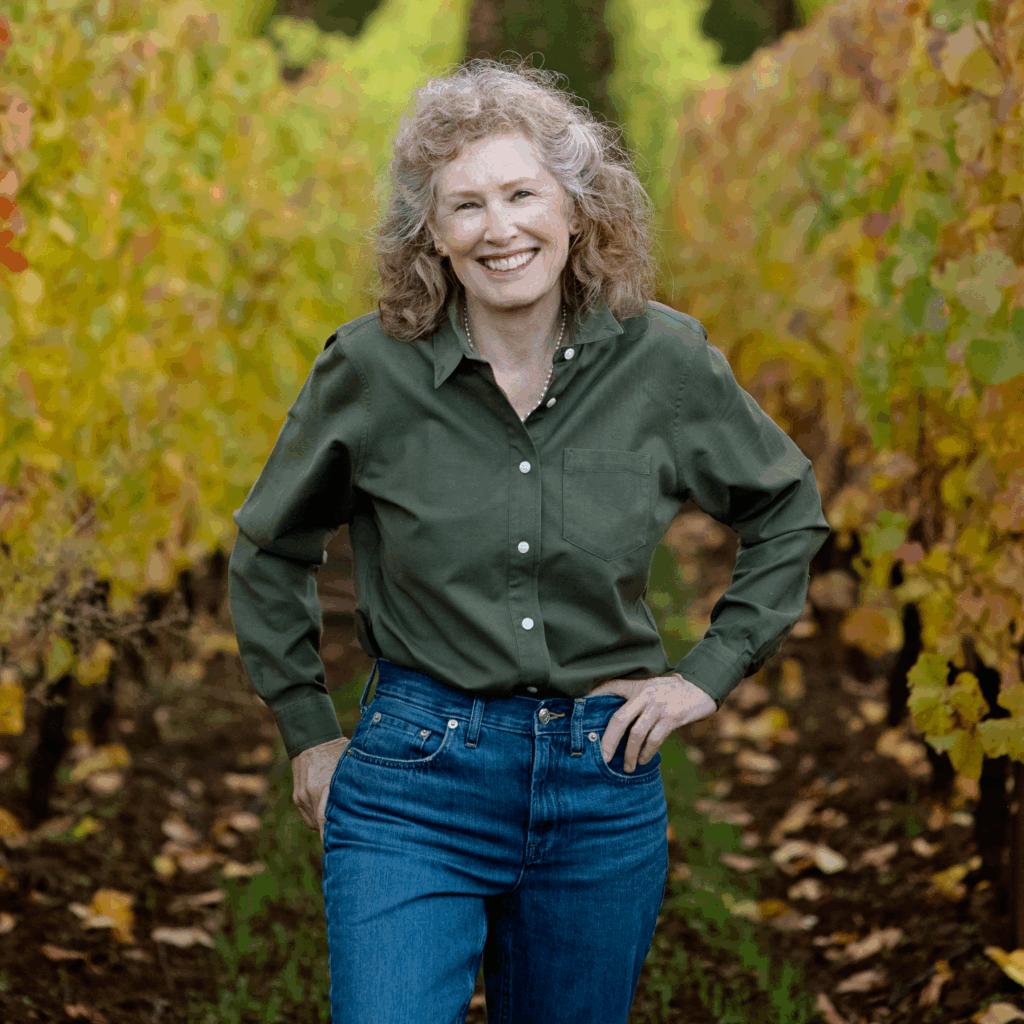
Eugenia Keegan, general manager and vice president of Oregon Winery Operations and Business Development for Jackson Family Wines: “I think that the greatest threat to wine as we know it may be the ‘culture’ of wine itself. To me this is the ultimate existential question of the moment. Of course, I am concerned about climate change and how it affects our work. BUT we can do several things including moving ‘up the hill’ planting north slopes in places like Oregon, and shifting varieties. And indeed, we older persons have recognized regional typicity for wines, but a new taster has no organoleptic [sensory] knowledge of wines from the past. They meet the wine as it is and a shift in the wine style due to climate change is not recognizable to them. We may be trying to solve for an issue that might not exist.
“With this in mind, my action suggestion would be to go back to generic wine marketing. In the 70’s we had a marketing mandate in California but after a couple years of generic California marketing, the regional associations realized that to sell more wine at higher prices it would be more useful to highlight regions. Quickly the direction of marketing shifted to emphasize the regional differences rather than wine as something unto itself. Here we are almost 50 years later, and we have marketed our regional selves to death. Currently, we are simply stealing market share from each other. This is not sustainable.
“There is some really good, smart marketing going on trying to woo the younger drinker. It is, however, brand specific. It may be time to rethink brand and regional marketing and start sharing with the world the absolute joys of growing, making, tasting, sharing wine.
“I envision the marketing with the label saying ‘wine’ and probably with other words that reflect our values. The label, with lots of visuals, could say:
Wine
Relaxation
Wine
Friends
Wine
Sunday Football
Wine
Family Farms
This could be taken in a million directions!”
Dorothy J. Gaiter and John Brecher conceived and wrote The Wall Street Journal’s wine column, “Tastings,” from 1998 to 2010. Dorothy and John have been tasting and studying wine since 1973. In 2020, the University of California at Davis added their papers to the Warren Winiarski Wine Writers Collection in its library, which also includes the work of Hugh Johnson and Jancis Robinson. Dottie has had a distinguished career in journalism as a reporter, editor, columnist and editorial writer at The Miami Herald, The New York Times, and at The Journal. John was Page One Editor of The Journal, City Editor of The Miami Herald and a senior editor at Bloomberg News. They are well-known from their books and many television appearances, especially on Martha Stewart’s show, and as the creators of the annual, international “Open That Bottle Night” celebration of wine and friendship. The first bottle they shared was André Cold Duck. They have two daughters.