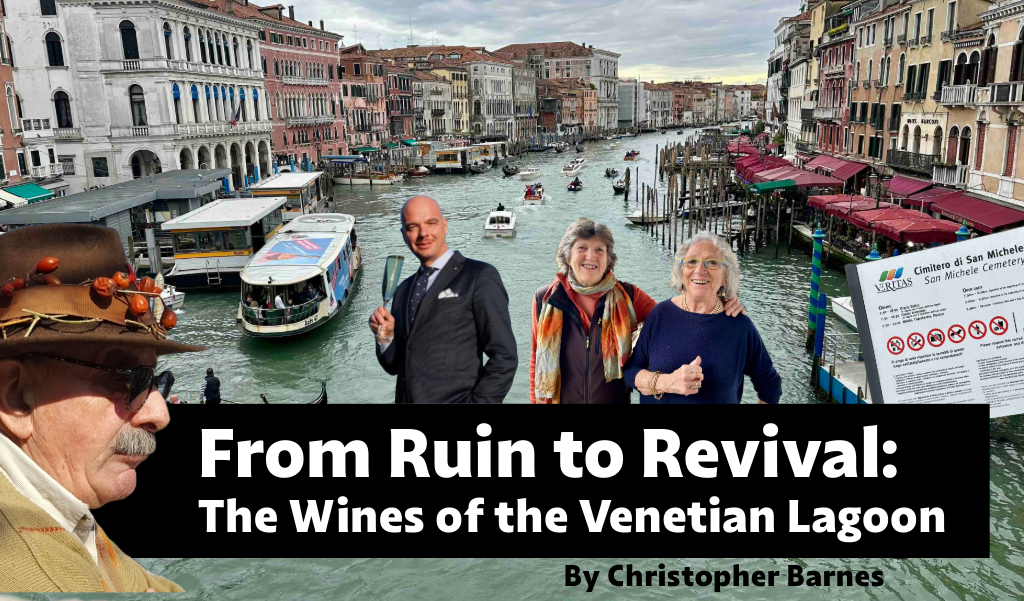
Venice is a city built on water, where canals serve as streets and boats as transportation. But there’s another liquid that has been just as important to the city’s story: wine. For over a thousand years, wine has shaped Venice’s history, culture, and identity. Like the city itself, Venice’s wine story is one of great success, devastating loss, and remarkable comeback.
Ancient Roots: From Roman Cultivation to Byzantine Trade
Wine cultivation in the Venetian region began long before Venice existed. Roman settlers discovered the area’s perfect conditions for growing grapes, where the Adriatic Sea meets the Alpine foothills. They established the first organized vineyards, and ancient texts confirm these regions produced some of Rome’s finest wines. Pliny the Elder noted that northeastern Italian vineyards were among the Empire’s “first-growth” regions, particularly those producing Rhaeticum wine near the Po River.
When the Western Roman Empire fell in the 5th century, refugees from mainland cities fled to the protective lagoon islands, bringing their agricultural knowledge with them. As these island communities became the unified city of Venice in the 7th century, wine was already central to both religious and daily life.
Venice’s strategic location made it a natural trading hub between East and West. By the 9th century, Venetian merchants were exchanging Italian wine and grain with the Byzantine Empire for Eastern luxury goods. Wine became one of the first commodities to establish Venice’s commercial reputation, with historical records documenting extensive Byzantine-Venetian trade including “salt, wood, iron, and slaves, as well luxury products from the East.”
The Golden Age: Medieval Venice as Europe’s Wine Marketplace
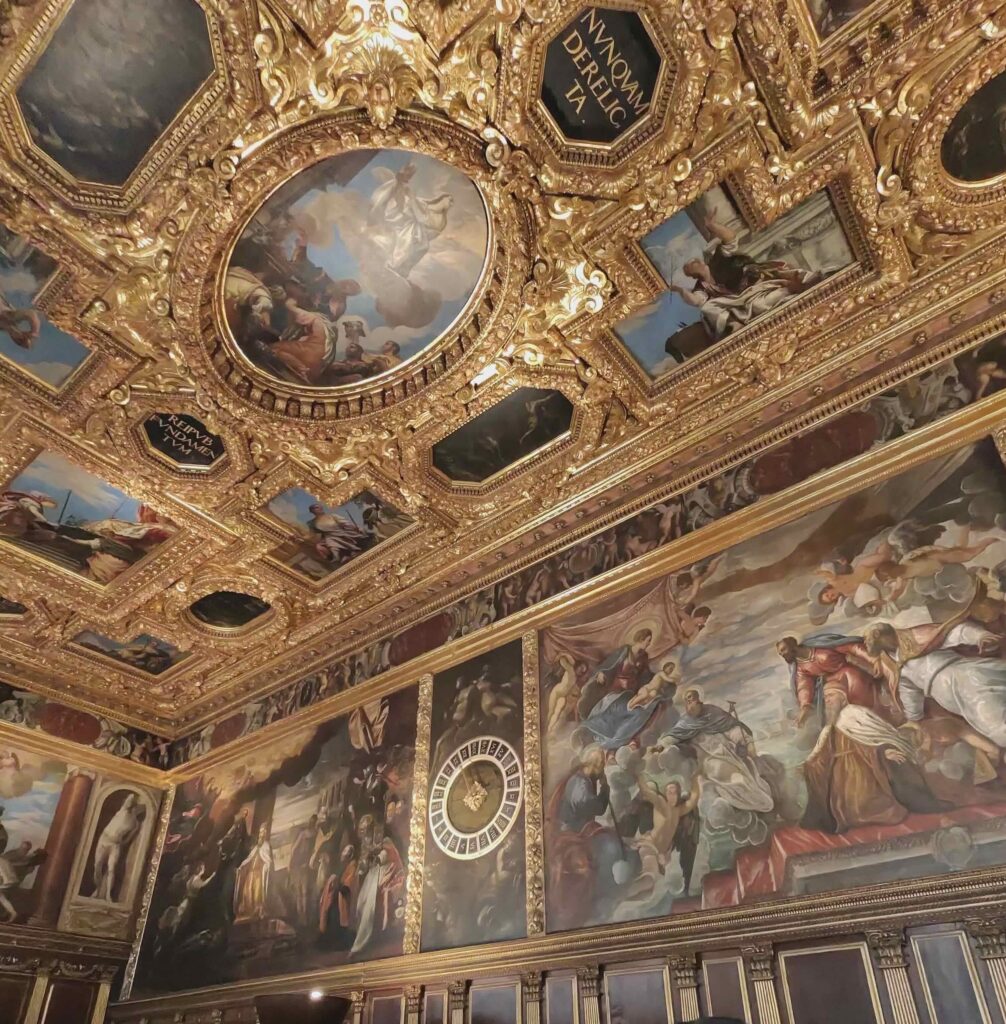
Venice’s wine culture flourished during the Middle Ages as the city became the Mediterranean’s dominant maritime power. The Crusades expanded Venice’s commercial reach, and in 1082, the Byzantine emperor granted Venice unrestricted trade throughout his empire with no customs dues—extraordinary privileges that positioned Venice as Europe’s premier wine marketplace. The Fourth Crusade in 1204 further cemented this dominance, giving Venetian merchants access to wines from across the known world: Greek wines from Crete and Cyprus, Malvasia from the Peloponnese, and robust reds from Puglia and Sicily.
The Rialto market became the center of this thriving international wine trade, where merchants gathered to buy and sell wines from every corner of the Mediterranean. Venice’s wine trade was so important that the republic created some of history’s first wine regulations, establishing the “Giustizia Vecchia” magistrate in 1173 and even dedicated wine police to prevent adulteration and ensure proper taxation.
Wine became deeply embedded in Venetian culture and language. The term “ombra” (shade), still used today for a small glass of wine, originated from vendors in St. Mark’s Square who moved their carts with the campanile’s shadow to keep wines cool. Place names throughout Venice—”Calle della Malvasia,” “Riva del Vin,” and “Le Vignole” island—all testify to wine’s central role in the city’s history.
Noble Grapes: Malvasia and Dorona
Among the many grape varieties that passed through Venice’s markets, two in particular became closely associated with the city’s wine tradition: Malvasia and Dorona.
Malvasia has deep ties to Venice’s trading history. The name “Malvasia” is so common that according to Wine Grapes: A Complete Guide by Jancis Robinson, Julia Harding & Jose Vouillamoz over 70 different grape varieties use it in their names. The specific type found in Venice is primarily Malvasia Istriana, named after the Istrian peninsula (now part of Croatia) where it’s the main white grape variety. It is believed that Venetian traders brought this variety from Greece to Venice around the 14th century, when Istria was part of the Republic.
Even more distinctive to Venice is Dorona, sometimes called “the gold of the Doges” for its golden-hued grapes. This rare white wine grape is native to the Venetian lagoon and particularly well-suited to the unusual growing conditions there. The name itself reflects its appearance—”Oro” is Italian for gold, and indicates “the golden-green color of Dorona grapes as they approach ripeness.” Long thought to be identical to Garganega, DNA profiling has revealed that Dorona is actually a crossing of Garganega with Bermestia Bianca.
For centuries, Dorona vines thrived in the unusual environment of Venice’s lagoon islands, where they adapted to periodic flooding with saltwater. The resulting wines were known for their distinctive salinity and mineral character—a liquid expression of Venice’s unique terroir. However, the great flood of 1966 devastated many of the lagoon’s vineyards, and Dorona nearly disappeared entirely.
Vineyards in a Floating City: The Monastic Tradition
While Venice itself—built on mudflats and wooden pilings—had limited space for agriculture, vineyards were nonetheless present throughout the city’s history. In the early Middle Ages, the area that would become St. Mark’s Square contained vineyards, and many of the smaller islands in the lagoon were extensively cultivated with vines.
The religious orders that established themselves in Venice played a crucial role in maintaining the city’s viticultural traditions. Monasteries and convents, with their enclosed gardens, were ideal locations for urban vineyards.
Throughout the medieval and Renaissance periods, monastic orders throughout Venice maintained vineyards not only for sacramental wine but also for commercial production. The Camaldolese monks on San Michele, the Carmelites near the train station, the Franciscans at San Francesco della Vigna, and the nuns of the Zitelle convent on Giudecca all produced wines from their urban vineyards, each with distinctive characteristics reflecting their particular location within the lagoon.
Decline and Revival: Venice’s Modern Wine Renaissance
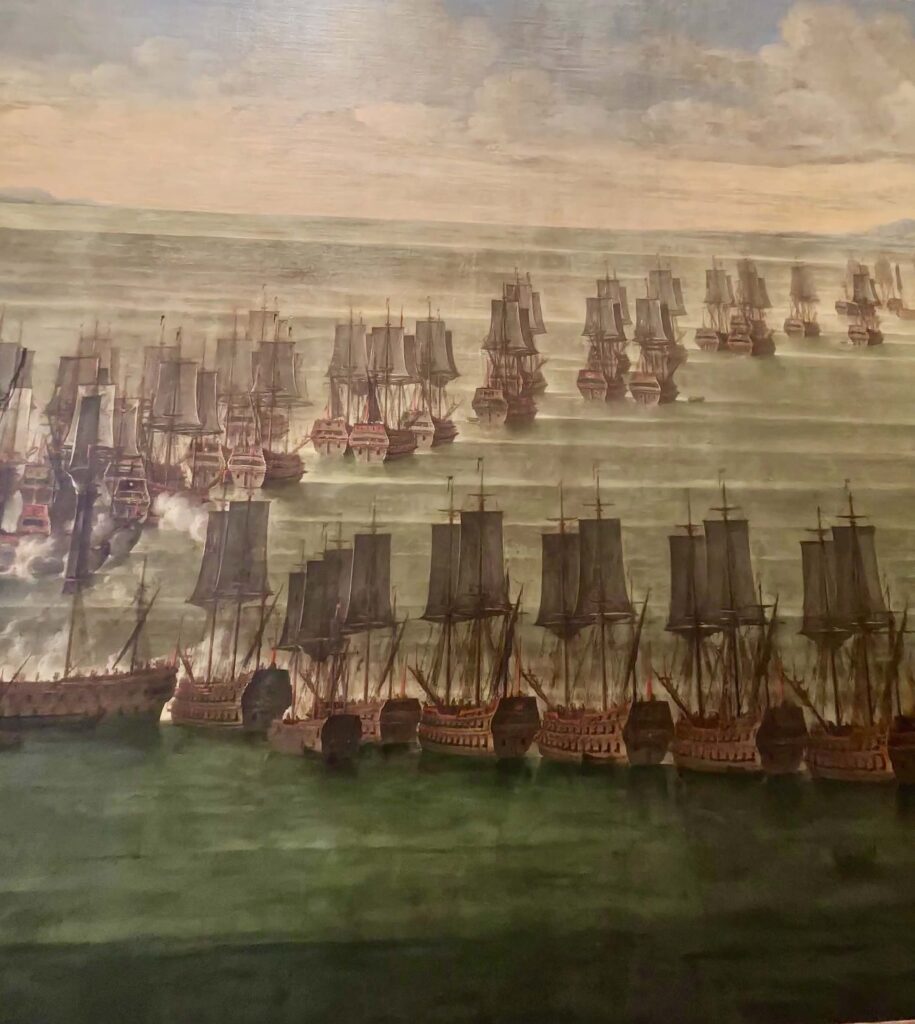
The 19th century brought profound challenges to Venice’s wine traditions. After Napoleon Bonaparte ended the Republic’s independence in 1797, political upheaval disrupted centuries-old trade networks. Later, the phylloxera epidemic that devastated European vineyards in the late 19th century destroyed many ancient vines.
The 1966 flood proved particularly catastrophic for Venice’s remaining vineyards. Rising waters more than six feet above normal inundated the lagoon islands, killing most of the surviving vines, including many ancient Dorona plants. With the great flood of 1966, the great viticultural history of Venice was lost.
For decades afterward, Venice’s indigenous wine culture seemed all but extinct. While the surrounding Veneto region reinvented itself as one of Italy’s most important wine producing areas—with Prosecco, Soave, and Valpolicella achieving international recognition—the city and its lagoon islands appeared to have lost their viticultural heritage forever.
However, the early 21st century has witnessed a remarkable revival of Venice’s wine traditions, spearheaded by passionate individuals and organizations determined to reconnect the city with its viticultural past.
Laguna nel Bicchiere: Reclaiming Venice’s Viticultural Heritage
Perhaps the most remarkable chapter in Venice’s contemporary wine story is that of Laguna nel Bicchiere (“Lagoon in a Glass”), a non-profit cultural association founded with the mission to recover abandoned vineyards throughout Venice’s lagoon while preserving traditional winemaking knowledge for future generations.
The organization’s story began in 1993, when professor Flavio Franceschet discovered the forgotten vineyard garden of San Francesco della Vigna on the island of Sant’Elena. What started as an educational project with his middle school students evolved into something far more ambitious. Recognizing the urgent need to preserve Venice’s disappearing agricultural heritage, Franceschet transformed his classroom initiative into a formal non-profit association with a comprehensive statute and municipal registration, allowing the organization to secure partnerships with public and private entities to manage historic vineyard sites.
At its core, Laguna nel Bicchiere operates as both a preservation society and an educational institution. The association, which had formally became a non-profit by 2008, has three primary goals: to recover and maintain abandoned vineyards scattered across the lagoon islands, to safeguard centuries-old viticultural traditions that were nearly lost, and to reveal the hidden relationship between Venice’s urban environment and its agricultural past. This mission extends far beyond wine production—it represents a form of cultural archaeology, uncovering and reviving practices that connect modern Venice to its pre-industrial roots.
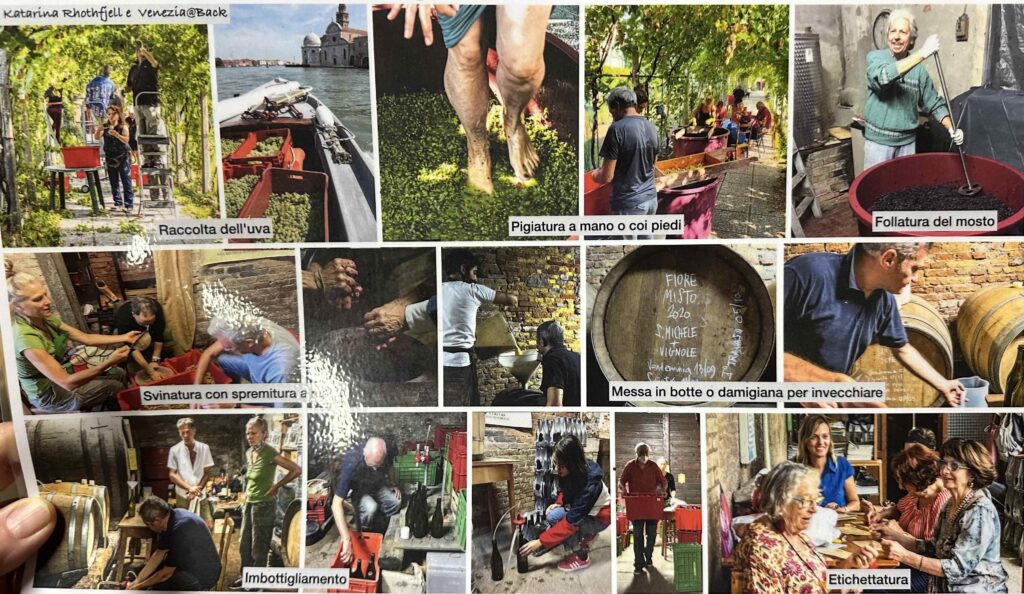
The educational component remains central to the organization’s identity. Each year, hundreds of local schoolchildren participate in hands-on learning experiences that span the entire winemaking cycle. Students engage in grape harvesting, traditional foot-pressing of grapes, bottling, and even olive cultivation on various lagoon islands. These programs serve multiple purposes: they provide authentic environmental education, create lasting connections between young Venetians and their lagoon heritage, and ensure that traditional knowledge passes to new generations.
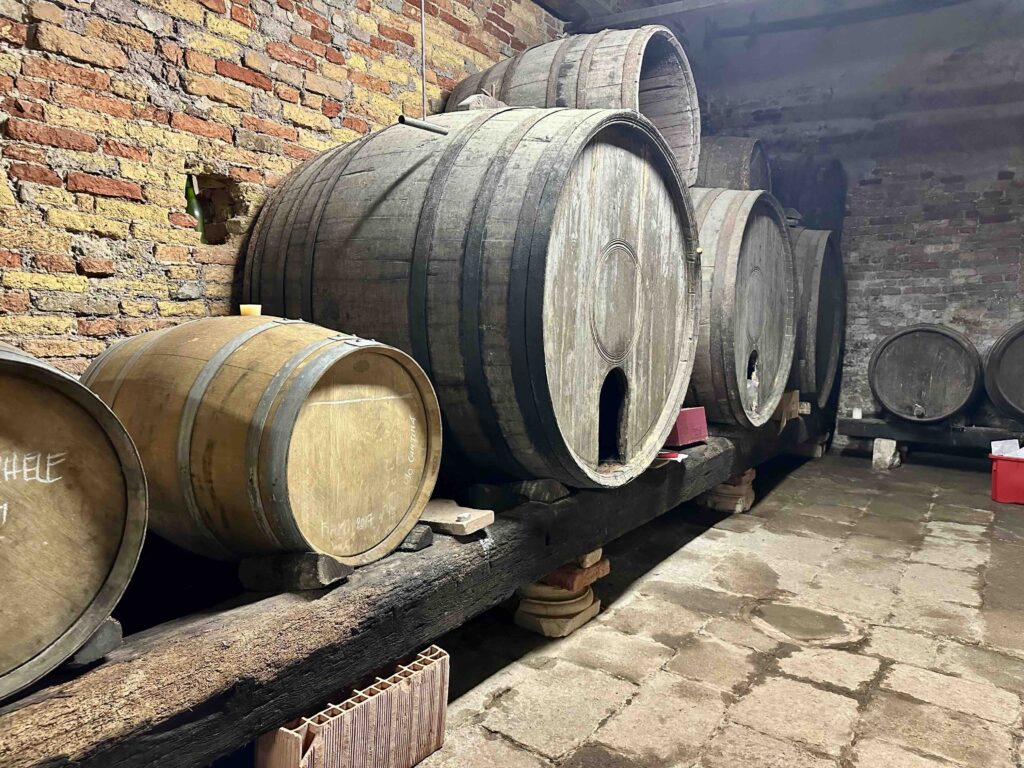
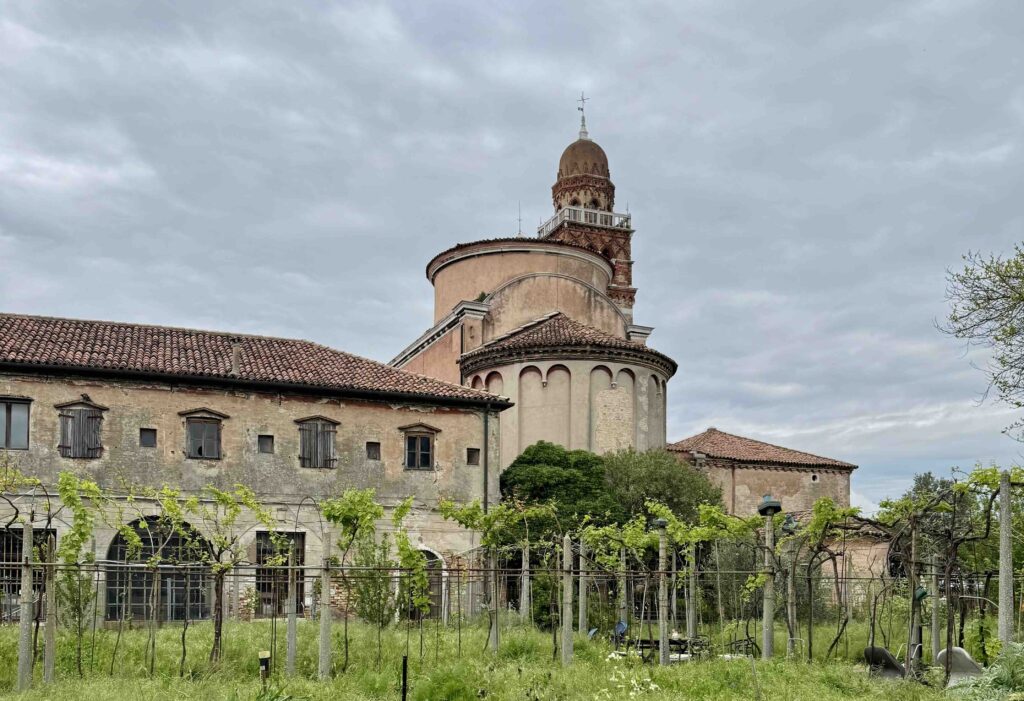
Today, the volunteers of Laguna nel Bicchiere cultivate vineyards at several historic locations throughout the lagoon, each with its own story and character. Grape Collective was given a tour of their primary site, the former Camaldolese convent on San Michele Island, adjacent to Venice’s cemetery, where they maintain both the vineyard and the ancient cellar once used by Franciscan monks. The monastery was founded in 1212 with the monks occupying the site for nearly six centuries, creating a thriving religious community that included not only spiritual activities but also practical enterprises like winemaking and textile production. The monastery complex includes ancient cloisters, the former dormitory of the Camaldolese monks, and the Renaissance church of San Michele in Isola, designed by Mauro Codussi and completed in 1469, considered one of the first examples of Renaissance architecture in Venice.
After Napoleon’s conquest of Venice in 1797, San Michele Island underwent a dramatic transformation that fundamentally changed its character from a religious center to a burial ground. The cemetery opened in 1813 and consisted of walled fields with a small octagonal chapel and neo-Egyptian portals. In 1829 following Napoleon’s defeat, Franciscan Friars took possession of the monastery buildings, restoring them and continuing the tradition of study and meditation until the last two monks left the monastery in 2007.
The volunteers of Laguna nel Bicchiere also tend the historic vineyard near the church of Sant’Elena and maintain plots on Giudecca Island. Each location produces wines that reflect their distinct island terroirs, with evocative names that connect directly to their geographic and cultural origins.
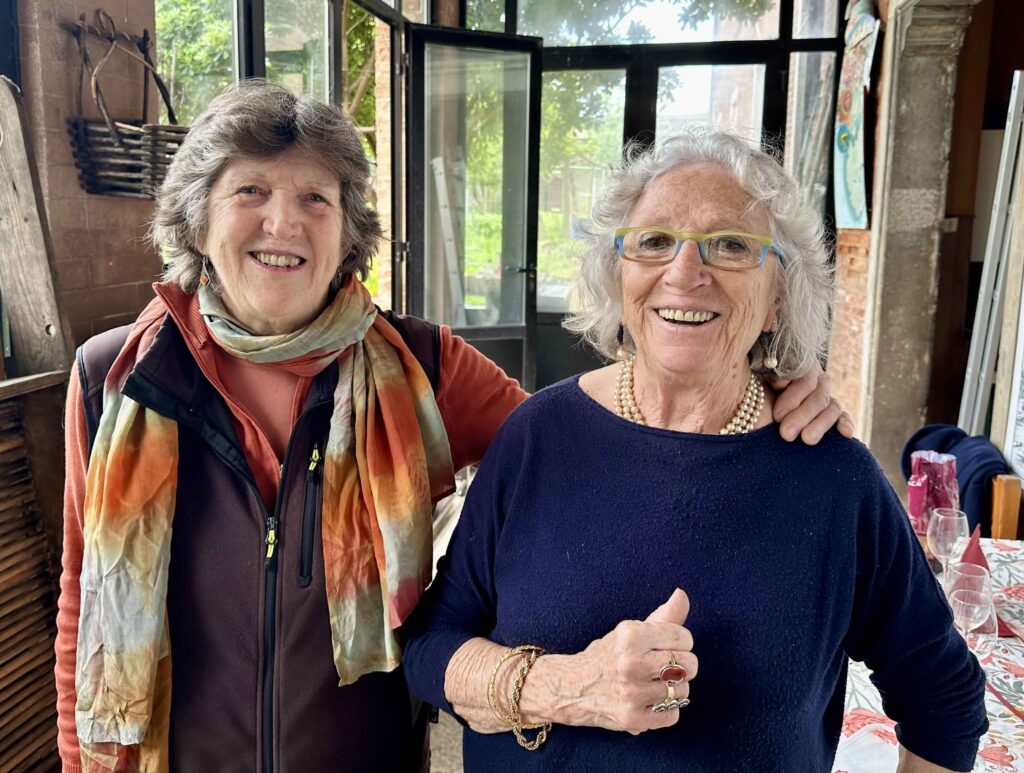
According to Vanna Purisel, one of Laguna nel Bicchiere’s dedicated volunteers and vice president of the organization, they currently work primarily with four white grape varieties: Malvasia, Dorona, Bianchetta, and Glera. For red wines, they cultivate Merlot, Cabernet, Carmenère, Lambrusco, and Raboso. This diverse selection represents both indigenous lagoon varieties and traditional Venetian plantings, producing between 900 and 1,600 bottles annually.
What makes Laguna nel Bicchiere’s work particularly significant is its holistic approach to cultural preservation. The organization views each bottle of wine as a liquid archive, containing not just fermented grapes but centuries of accumulated knowledge. Their winemaking process follows completely organic and traditional methods, relying on hand-processing, traditional foot-pressing techniques, and spontaneous fermentation. This approach produces wines with the distinctive saline character that speaks directly to their unique lagoon terroir.
Through their combination of education, preservation, and production, Laguna nel Bicchiere represents more than a wine project; it embodies a vision of how communities can actively maintain connections to their cultural and environmental heritage while adapting to contemporary challenges. In a city facing threats from climate change, mass tourism, and population decline, their work offers a model for sustainable cultural preservation that engages multiple generations in hands-on stewardship of place.
The Dorona Renaissance: Venissa and the Gold of the Doges
Another significant contributor to Venice’s wine revival is the Venissa project, initiated by the renowned Prosecco producer Gianluca Bisol. As Matteo Bisol, who now leads the project, explained via email: “The Bisol family discovered the nearly extinct Dorona grape in the early 2000s on the island of Torcello in the Venetian Lagoon. Intrigued by its deep roots in Venetian history and its unique characteristics, we decided to recover and replant it on the island of Mazzorbo. That’s how the Venissa project began — as a way to revive this native varietal and preserve a piece of Venice’s agricultural heritage.”
Bisol located more Dorona vines scattered throughout the lagoon and, in collaboration with local farmer Gastone Vio—known locally as the “King of native grapes” and the only vintner whose plants had survived the 1966 flood—began a project to save the variety. Vio is remarkable for having 100-plus-year-old pre-phylloxera vines in his vineyards on Sant’Erasmo island, an extraordinary living link to Venice’s pre-industrial wine heritage.
In 2006, Bisol secured a long-term lease on an abandoned vineyard and winery on the island of Mazzorbo that had produced wine for nearly a century before the ’66 flood. Here, they planted a vineyard of 4,000 Dorona vines propagated from the surviving plants. The challenges of working in this unique environment are considerable, as Matteo Bisol notes: “Viticulture in the lagoon is shaped by constant challenges mostly related to saltwater intrusion. Farming on an island also means limited space, manual labor for most operations, and a deep sensitivity to climate change. Yet, these difficulties contribute to the uniqueness of the wine — it’s a product of resilience and place.”
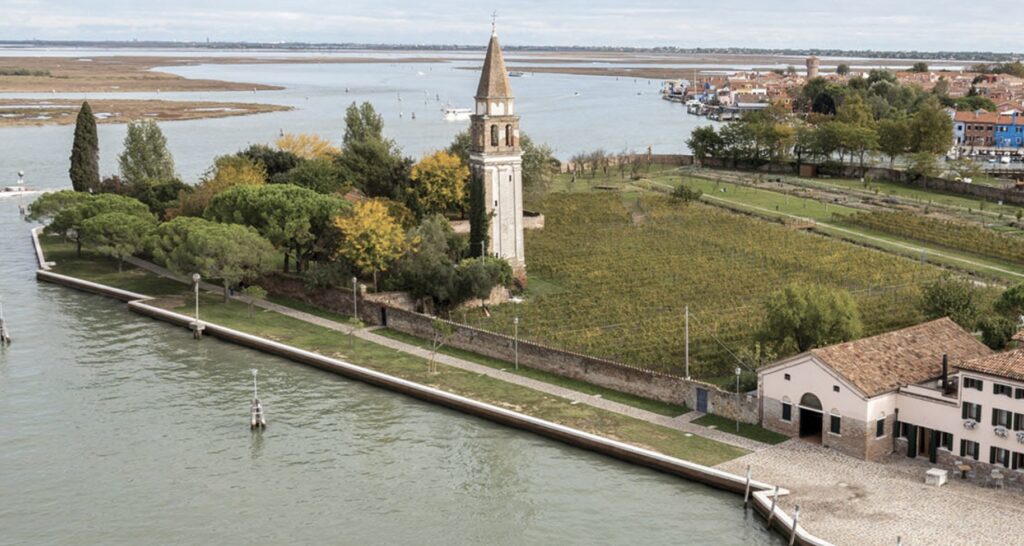
To counteract the challenges of saltwater intrusion, a freshwater well was dug more than 600 feet deep, not for traditional irrigation but to help flush away salt after periodic flooding. The first Venissa vintage was produced in 2010, with just 3,000 half-liter bottles. Following historical precedent, the wine is made using extended skin contact, producing very unique, full bodied, golden white wines.
What makes these wines so distinctive is their direct connection to their environment. As Matteo Bisol describes: “Dorona wines are unique for their golden color, saline minerality, and complex structure. The grape naturally produces wines with great aging potential. But what truly sets them apart is their strong sense of place — the influence of the lagoon’s salty air and terroir, and tidal rhythms gives the wines a distinct Venetian identity that can’t be replicated elsewhere.”
Each bottle is a work of art in itself—hand-blown by master glass artisans from nearby Murano and featuring a gold leaf label crafted by a traditional goldbeater from Venice’s Cannaregio district.
Other Venetian Wine Projects: A Growing Movement
The success of pioneers like Laguna nel Bicchiere and Venissa has inspired other ventures throughout the lagoon. On Sant’Erasmo, often called “Venice’s vegetable garden,” Michel Thoulouze established Orto di Venezia in the 1990s. A Frenchman with a background in television production, Thoulouze fell in love with the lagoon and planted Malvasia Istriana and Vermentino—varieties well-suited to the island’s conditions.
More recently, in 2022, a group of local entrepreneurs established Azienda Agricola Biniola on Isola delle Vignole. Their project, “Ua D’Oro” (Venetian dialect for “golden grape”), focuses on organic cultivation of Dorona on 1.6 hectares surrounded by saltwater canals.
Another noteworthy project is Caneva Cannaregio, which has revived the production of Malvasia in the heart of Venice. This operation connects the city with one of its most historic wine traditions, producing a contemporary expression of a wine that once defined Venetian taste.
Together, these initiatives represent not merely isolated wine projects but a coherent movement to reclaim Venice’s viticultural identity. By cultivating indigenous varieties like Dorona and Malvasia in their native environment, these modern vintners are helping to preserve living pieces of Venetian heritage while creating wines that offer a truly unique expression of place.
The Unique Character of Lagoon Wines
What makes the wines of Venice’s lagoon so distinctive? The answer lies in the unique environment in which they’re grown. Surrounded by saltwater, the vines of islands like Mazzorbo, Sant’Erasmo, and Giudecca experience conditions unlike those of any other wine region in the world.
The periodic flooding of the lagoon, which can bring saltwater into contact with the vines, creates stressed growing conditions. Vines under moderate stress often produce fewer but more concentrated grapes, potentially leading to wines of greater complexity and character. The salt air and mineral-rich soils of the lagoon islands further contribute to the distinctive profile of these wines.
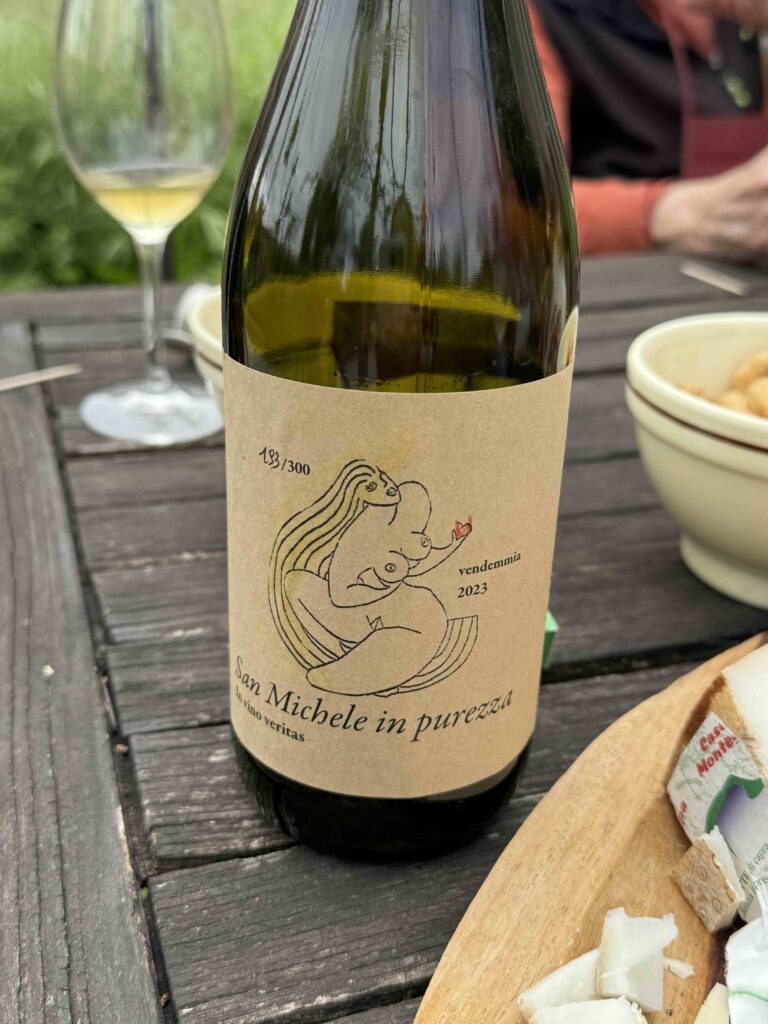
Dorona wines, with their golden color and distinctive salinity, perhaps best exemplify this terroir. Typically full-bodied for white wines, they offer notes of ripe pear, hazelnuts, and herbs, along with a pronounced minerality and subtle saltiness that speaks directly to their lagoon origins. Malvasia wines from the lagoon similarly show a bright aromatic character with herbal notes and a mineral backbone that distinguishes them from Malvasia produced elsewhere.
The winemaking approach at projects like Laguna nel Bicchiere and Venissa emphasizes this connection to place. Traditional methods like foot-pressing grapes, extended skin contact, and minimal intervention allow the distinctive character of the terroir to shine through. The result is wines that could not be produced anywhere else—embodiments of Venice’s unique position between land and sea.
Bacari and Restaurants: Where Wine Culture Lives Today
Venice’s wine culture thrives in its bacari—traditional wine bars where locals gather for ombra (small glasses of wine) and cicchetti (Venetian tapas). These establishments, many with histories stretching back centuries, maintain the social traditions that have always surrounded wine consumption in Venice. The giro d’ombra—making the rounds from bacaro to bacaro, enjoying different wines and cicchetti at each—remains a quintessential Venetian experience.
What distinguishes the best bacari is their authenticity and connection to local traditions. Rather than catering to tourists with generic offerings, they maintain a focus on quality and regional specificity. For the wine enthusiast visiting Venice, exploring these bacari offers not just the pleasure of discovery but a window into the city’s living culture.
A Liquid Heritage Preserved
The story of wine in Venice is, in many ways, the story of Venice itself—a tale of adaptation, innovation, and resilience in the face of changing conditions. From Roman origins through Byzantine trade, from the height of commercial empire to decline and near-extinction, and finally to contemporary revival, Venice’s wine traditions mirror the city’s own remarkable journey through history.
Projects like Laguna nel Bicchiere represent something more profound than mere wine production; they embody a living connection to Venice’s past and a sustainable vision for its future. By reclaiming abandoned vineyards, preserving indigenous varieties, and introducing new generations to traditional practices, these initiatives help ensure that Venice’s viticultural heritage will endure for centuries to come.
In a city threatened by rising waters, mass tourism (Venice receives 3 million tourists a year which three times the amount that visit Rome), and population decline, the revival of wine production represents a form of cultural resistance—a determination to maintain authentic connections to Venice’s past while creating sustainable pathways for its future. Each bottle of Dorona or Malvasia produced in the lagoon today stands as a testament to this spirit.
—–
You can join the association of Laguna nel Bicchiere, as an Ordinary Member or as a Supporting Member and support their work. (Ordinary: 20 Euro; Supporter: 100 Euro)
Watch the excellent award winning film about Laguna nel Bicchiere by Andrea Mignolo A Year in Venice