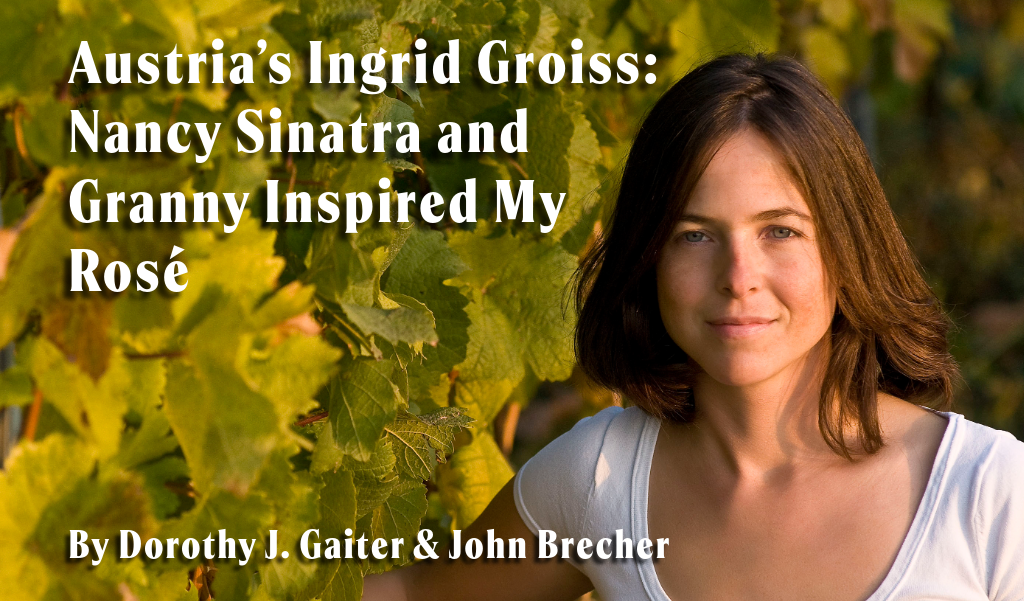
This is a story about how Nancy Sinatra helped inspire an Austrian winemaker to create our favorite rosé this year.
We have spent the last couple of months tasting many rosés, including samples sent to us. Almost all of them were OK. Some tended toward light watermelon juice with little character and others had a Kool-Aid sweetness. Oh, yeah! A few stood out.
Year after year, we like the Dianthus rosé from Tablas Creek in Paso Robles ($40) and the 2024 vintage was no exception. It’s a blend of several Rhône varieties. We called it “a red wine lover’s rosé, with a perfect balance of fruit and acid.” We felt it could be a white or a red because it had the fresh acidity of a white and the texture of a red.
We were also taken with a 2023 rosé from Provence called Hecht & Bannier. It’s a blend of Grenache, Cinsault and Rolle (Vermentino). It’s light and almost ephemeral, but surprised us with its herbal and lime zest qualities that gave it an added dimension. The suggested price is $19.99, but it appears to be available for about $17, a great deal.
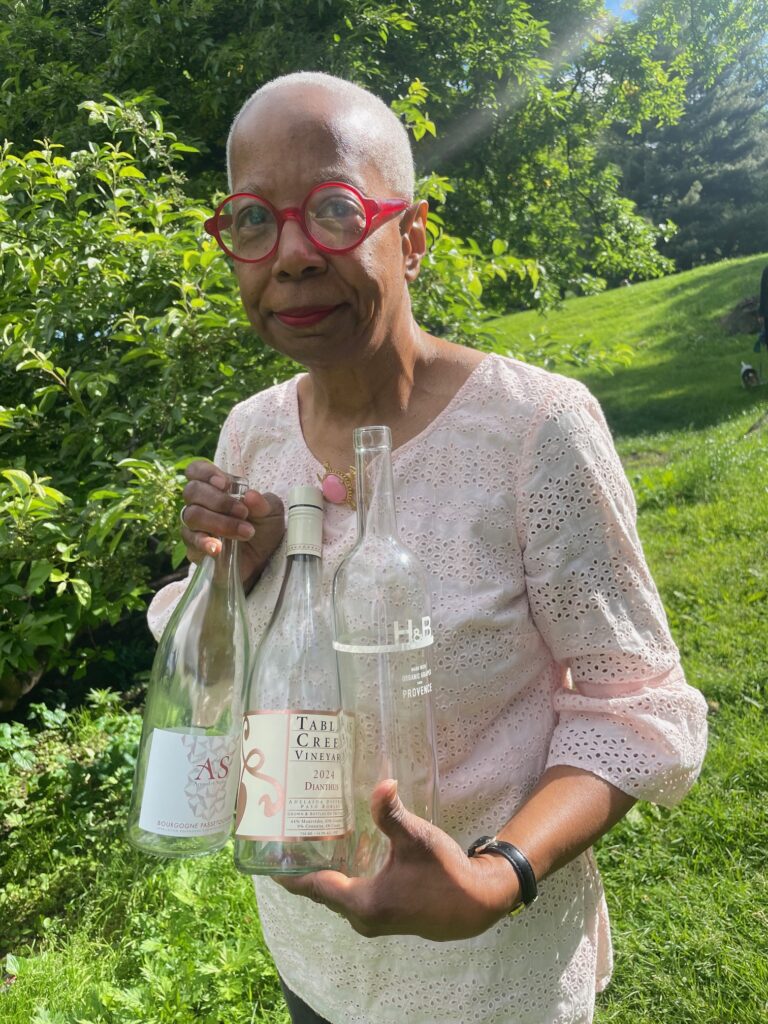
We had never heard of Passetoutgrain until we happened upon a country inn in Burgundy many years ago and ordered the chef’s surprise for lunch. It came with a bottle of Passetoutgrain, which was a delightful red blend of Pinot Noir and Gamay. Passetoutgrain means what it sounds like: “Pass all the grapes” or “toss it all in,” denoting a wine that is a co-fermented field blend of mostly Pinot Noir and Gamay, but other varieties can be tossed in, too. (Decades ago, Bourgogne Passe-Tout-Grains became an AOC.) In any case, we rarely see it and we had never seen a rosé version, so when we found a bottle at a local store for $29.99, we grabbed two. It’s 2023 from Arnaud et Sophie in Vosne-Romanée and it’s quite an experience, not a simple, summer gulper but a wine to savor, sip by the sip. It reminded us of a spinach salad with strawberries, that combination of savory herbs and sweet fruit.
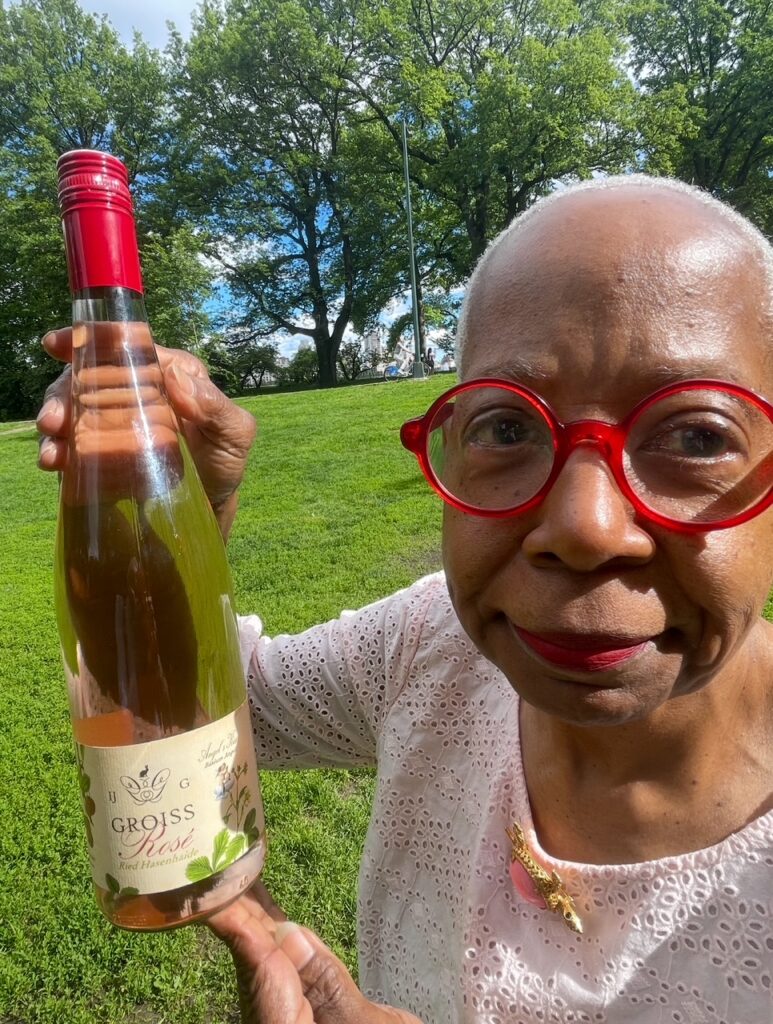
Our most memorable rosé of this season’s tasting was Ingrid Groiss “Ried Hasenhaide,” a blend of Pinot Noir and Zweigelt from Austria. Good wines tend to spark good memories and this did. In the ’70s, when we were very young and working for the Miami Herald, John took Dottie to a field to pick her own strawberries, which she loves. He walked the whole field to find the reddest, biggest berries he could find. It took her a while to explain that, while they looked great, they were too ripe. They had lost their acidity and balance. The Groiss took us back to that field. It was lovely and light, dry and shy, more like standing in a strawberry field than eating one. “It’s like the essence of strawberries,” Dottie said. “Like I can taste the smell.” It was mouth-watering and delicious with perfect-pitch acidity and just $22. We were so taken with the 2024, which was sent by importer, Vineyard Brands, that we found the 2023 online and bought more, for $19.97. (The 2024 has not yet been released to the public.)
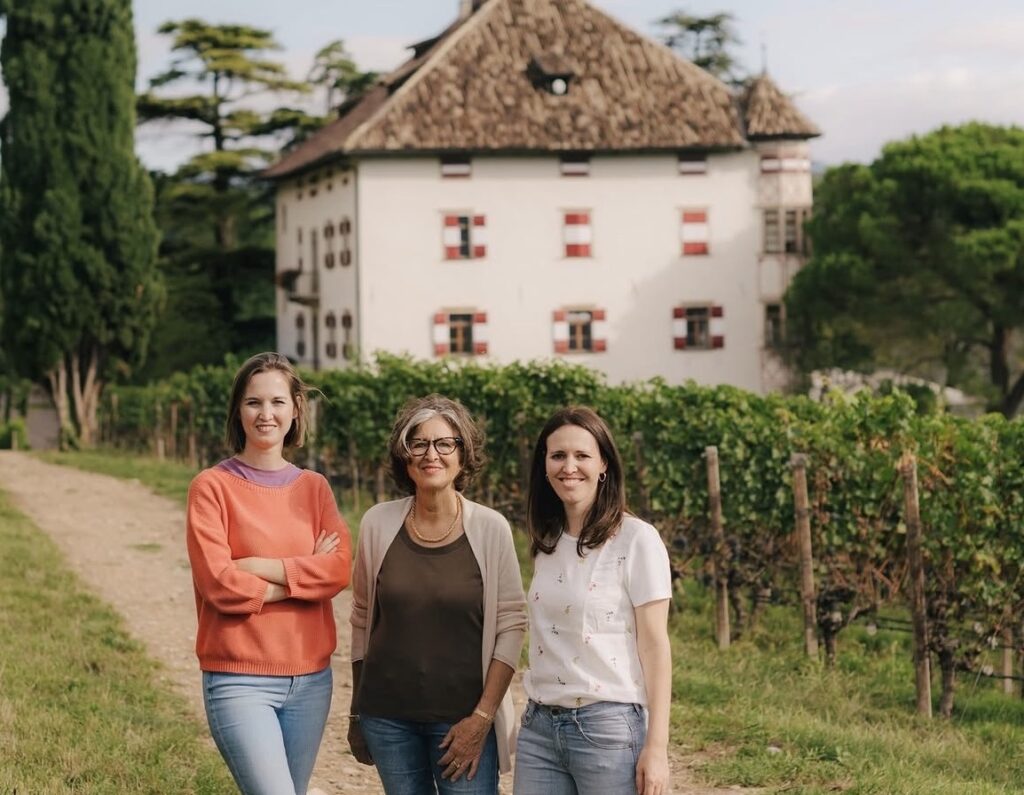
We were eager to ask the winemaker and owner, Ingrid Groiss, some questions so we reached out to her. Her family has grown grapes and been involved in winemaking in the Austrian region of Niederösterreich, specifically Weinviertel, for more than two centuries. However, her journey was more complex than we imagined – and, since we just became grandparents ourselves, we were delighted to hear that her grandmother was a key figure. Groiss’s emailed responses have been edited for length.
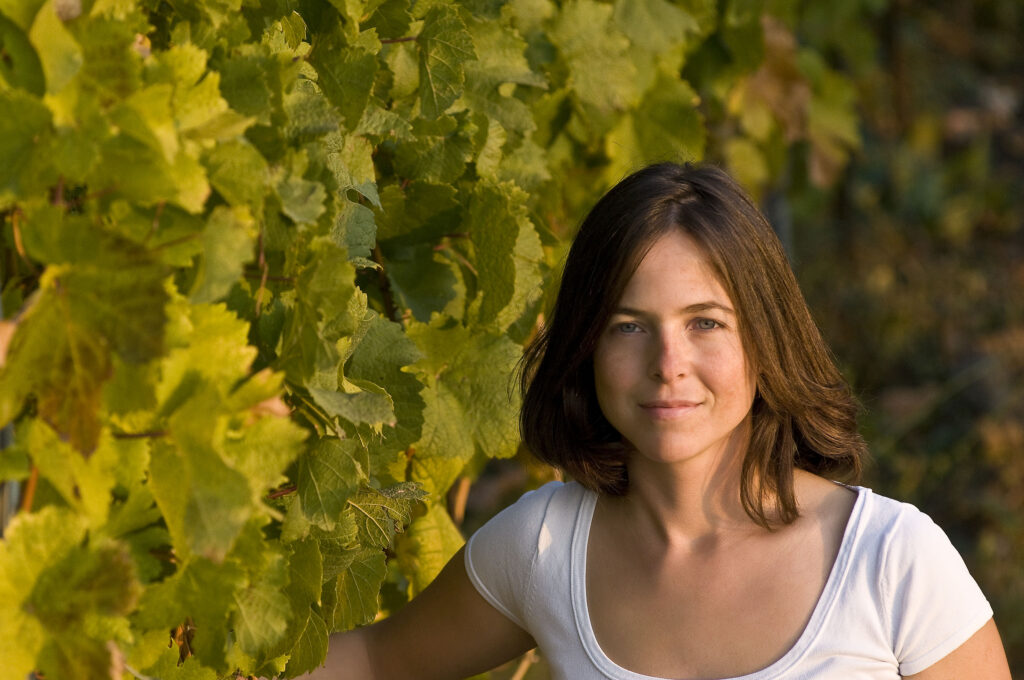
Grape Collective: Tell us your path to owning a winery.
Groiss: My family was always making wine and of course I grew up with it. I live in a very small village and if you decide to become a winemaker and take over the parents’ winery it’s not just a commitment to making wine, it’s also a commitment to the village/place where you have the vineyards. When I was younger I felt living in such a small village 24/7 would be too “small” and boring for me. I had the feeling that I had to explore the world.
And the other thing: Austria is still quite traditional concerning winemaking. People still think a woman cannot do it and still they don’t take female winemakers seriously (most of them think there must be a man behind who is doing the hard work in the cellar and the vineyards, but it’s becoming better with time). So at the beginning I didn´t want to continue the family business and I studied business administration in order to have many chances to explore the world. After I graduated I was working some years abroad [with Coca-Cola and Anheuser-Busch] but deep inside my heart I was not happy, even though I had wonderful career opportunities. It didn´t satisfy and touch my heart. So I decided to quit and go back to university and started studying winemaking.
At the beginning, I was sure that I wanted to become a winemaker but I still didn’t want to take over my family business. My plan was to go to some wineries abroad – “New World,” where female winemakers are much more accepted if they do a good job. Of course, I needed a reference to show that I could make wine and I tried to make wine with my father at our winery – it didn’t work out because also my father didn’t have faith in a “woman.” So I was talking to my granny (who also had her own vineyards – my grandfather passed quite young and so she continued it by herself). My granny said “of course I believe in you” and she gave me one of her vineyards, where I started to make my own wine in my style [in 2010]. It worked out really well and then also my father was convinced that I could do it (even without a husband) and I took over my family’s vineyards. I realized that I don´t need a big city and all the things like bars, clubs and restaurants to be happy. Now I see it as a privilege to live in my small village with all the wonderful nature surrounding, where “foxes and hares say good night to each other” with all the silence and peace around me.
Now, we work 18 hectares [45 acres] of vineyards. I’m the winemaker and owner of the winery but I’m very lucky that my parents support me in the most amazing way.
GC: What changes did you make to the vineyard and winery?
Groiss: We changed a lot – I said I just want to focus on wines and varieties that fit to my region, to my soils and appellations. So the focus is on Grüner Veltliner, Gemischter Satz [a wine that can be made from as many as 20 varieties grown and pressed together] and Riesling – and of course on our Rosé. We also changed many things out in the vineyards. We converted to organic production.
This is also the reason why you find on each bottle a hare (except for rosé – this has a different label). The hare was always a symbol that we have to treat nature and our vineyards with respect and be as careful as possible. We have many, many hares in our vineyards (I guess this might be the reason for the name of the appellation “Ried Hasenhaide,” where my rosé comes from) and the hare was always a symbol for me that we really have to care for nature and to rethink how we work and what we do in the vineyards. It’s the “living room” of the hare. And not just the hares, we also have deer, mice, birds, butterflies, insects and so on living in our vineyard. We are intruders to their home and so we have to work with respect and responsibility. Not just for now but also for upcoming generations.
GC: What is the percentage of Pinot Noir and Zweigelt and what does each grape bring to the blend?
Groiss: It’s around 70% Pinot and 30% Zweigelt. Pinot Noir for me brings the beautiful, elegant minerality on the palate, so that it’s also a good partner for food but not heavy or boring. And Zweigelt brings this lovely berry flavor in the nose and on the palate that makes the rosé quite inviting.
GC: Why do you make rosé?
Groiss: We always had red wine vineyards in my family – the soil of Ried Hasenhaide is perfect for Pinot Noir and also Zweigelt – very chalky (seashell rock) that gives the wine an amazing elegance and minerality. I like red wine, but I´m not a red wine maker in my heart and I always said I just want to produce wines that I personally really, really love. I was in the south of France when I was much younger and I was really impressed about the lifestyle. They start drinking rosé wine before lunch, then with lunch, then in the afternoon, before dinner and with dinner… actually around the clock. I had the feeling that I wanted to produce such a rosé wine – a rosé wine that makes me happy around the day and night, that I really enjoy no matter if it’s on the summer terrace or with some nice food.
So we dedicated our red wine vineyards just for rosé production. We treat our red wine vineyards like they would be whites. It starts with pruning, canopy work and harvest, so that we get a rosé wine that is really shiny and crystal clear and super dry so it is really refreshing and not too high in alcohol, so that you can enjoy a bottle without having a bad feeling. And if you are in a good mood you still can enjoy a second bottle.
n
I was inspired by the song of Nancy Sinatra and Lee Hazelwood “Summer Wine.” For me the moral of this song is enjoy life, enjoy wine, don’t think too much about what can happen or about what’s happening tomorrow. Enjoy the moment and enjoy a beautiful wine — and if you liked it, enjoy another bottle. This is how my rosé should be: a wine that is animating, refreshing and shiny, a wine where after the first sip you want to enjoy the whole bottle, a wine that will not make you tired or bored, a wine that enhances your mood and life spirits and makes you happy.
Dorothy J. Gaiter and John Brecher conceived and wrote The Wall Street Journal’s wine column, “Tastings,” from 1998 to 2010. Dorothy and John have been tasting and studying wine since 1973. In 2020, the University of California at Davis added their papers to the Warren Winiarski Wine Writers Collection in its library, which also includes the work of Hugh Johnson and Jancis Robinson. Dottie has had a distinguished career in journalism as a reporter, editor, columnist and editorial writer at The Miami Herald, The New York Times, and at The Journal. John was Page One Editor of The Journal, City Editor of The Miami Herald and a senior editor at Bloomberg News. They are well-known from their books and many television appearances, especially on Martha Stewart’s show, and as the creators of the annual, international “Open That Bottle Night” celebration of wine and friendship. The first bottle they shared was André Cold Duck. They have two daughters.