In these terrifying times, with wars, deportations, protests, all manner of disruptions and disturbances, wine can seem like an irrelevant, frivolous thing. However, the fact that humans have been enjoying it for millennia –through wars, deportations, protests, all manner of disruptions and disturbances — underscores its place in civilizations as an elixir that helps those who share it bond, creating community, even if it’s a community of two. It can be a bulwark against social divisiveness and isolation.
We’ve been talking to Dan Petroski, the founder-winemaker of Massican wine, the only all-white wine winery in red-saturated Napa, since 2014. That’s when Bill Plante, the late CBS newsman and our friend, raved about Petroski’s mineral-driven Chardonnay from fabled Hyde Vineyard in the cool-climate Carneros region of Napa Valley. Petroski’s whites are Mediterranean in style — the grapes are mostly Italian in origin — and meant to inspire the emotions felt when one is embraced by the breezes off the coast, any coast. Founded in 2009 with 500 cases, the Brooklyn-born Petroski now makes five wines: Annia, a blend named for his Italian mother; Gemina, which for a time was all-Hyde Chardonnay but is now a blend; a Hyde, 100% Chardonnay; a 100% Sauvignon Blanc; and most recently, a Pinot Grigio, with 19% Cortese.
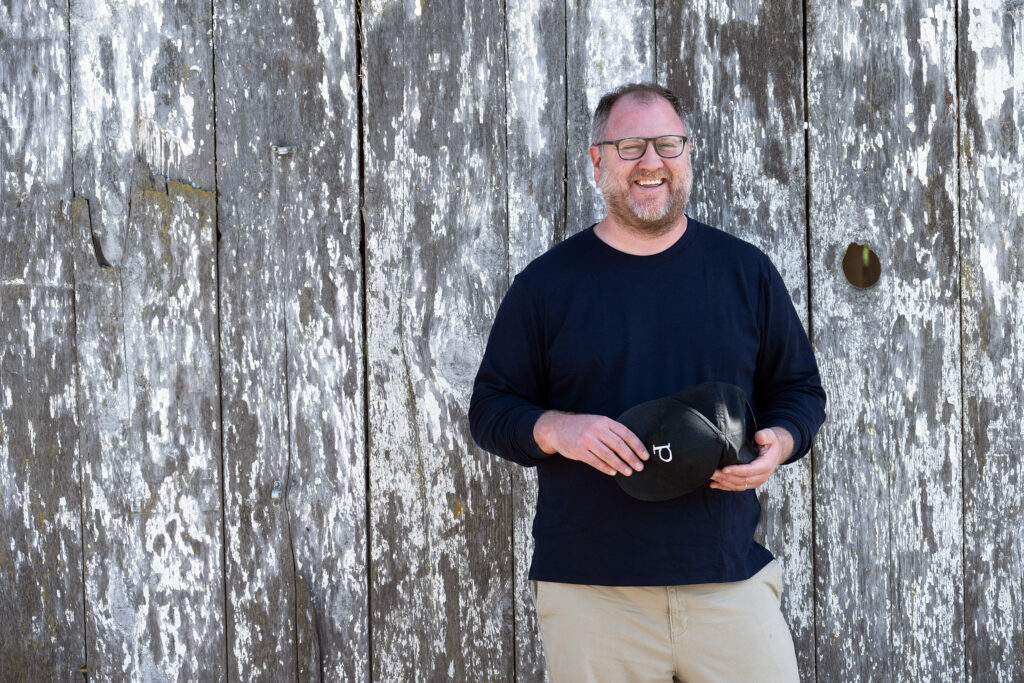
Over the years, we’ve found Petroski, who came to winemaking from publishing, to be a deeply thoughtful observer of the wine community and refreshingly unfiltered. Because he has always talked of the constraints of being a solo entrepreneur (solopreneur in his parlance), we weren’t that surprised when he sold Massican in 2023 to Gallo for an undisclosed price because it provided him a long-desired chance to get more of his wines out there. Gallo bought his brand and inventory; he owned no vineyards or winery. He still controls winemaking, now with teams, and sourcing to stay on point, he told us when we called recently. In April 2023, when we talked to Petroski about his collaborative project with six winemakers, he had said, “This gives me the opportunity to grow,” adding that in 2022 he made 6,500 cases. With his current line-up of five wines, his 2024 production has grown to 12,762 cases. He sent us the newest releases and our favorites, as usual, were the Annia, the Gemina and the Hyde, each in their own distinctive way lively, expressively floral wines with perfect-pitch acidity.
This interview has been condensed.
Grape Collective: So what do you figure is the most pressing challenge right now with the wine community?
Petroski: I think the most pressing challenge, honestly, is for us to stop complaining. Look, I don’t want to sound terrible when I say that out loud. I just want us to actually take a step back, do the math. I want us to understand the current environment in which the wine industry had success in the last 25 years, 30 years. Everyone historically from our generation knows that we self-medicate with alcohol. And now we’re dealing with the generational shift of a group of young adults who have been self-medicating with professional prescriptions of different types of drugs, different types of therapy and social media.
The generation of folks like yourselves and my generation, we used alcohol as a social lubricant and as a medication device. We used it in so many ways because there weren’t a lot of options for us. And now we’re like, oh my God. But we are the ones who actually raised these children who take all these drugs, socialize in specialty schools, and do all the things, and now we’re complaining that they’re not drinking. So can we just really just take a breath? Look at the last 25 years. We are now a mature business. And as a mature business, we have competition on all sides, including now with the Ready-to-Drink products. Wine has been here for thousands of years, and it’s going to shake out.
GC: Won’t that shaking out cause disruption?
Petroski: Unfortunately, it’s going to shake some of the underperforming, not-stable businesses out, but it’s going to continue to capture a third of the market share. I don’t want to see any of my peers lose their business. I don’t want to see anyone struggle, to go bankrupt. I just want them to understand that the last 25 years were unprecedented for every stage of the economy, from tech to fashion. The music industry got hit with streaming. Hollywood got hit with streaming and Netflix. I don’t hear spirits complaining like this. I don’t hear beer companies complaining like this. I just hear the wine industry complain like, woe is me, this has only happened to us.
GC: Why do we think we’re different?
Petroski: I think because there’s, honestly, from a pure SKU perspective, those industries were probably a lot more consolidated earlier than we were. We’re going through this massive phase of consolidation where that industry has been consolidated for years. And I do think beer was culturally what America was built on post-World War II.
GC: The last time we were at UC-Davis, a student asked why should I buy a bottle of wine and not know if it’s going to be good when I can get a six-pack and know exactly what I’m going to get?
Petroski: That begs the question that we all have to figure out in our lives: Is there too much wine in the world? When you have that many identities, how do you know which one you like? The preciousness and the beauty of wine is that diversity. But it doesn’t mean that there’s a market for all of it. And that’s the fork in the road that we are reaching right now. Is there a market for this, the beauty of the maximalist wine world, which is all about diversity and place and uniqueness? So there’s a very small percentage of the world that has this ability to be curious and wants to explore. But the majority of people are just really happy drinking Kim Crawford and Vintner’s Reserve [from Kendall-Jackson].
GC: How about the labor issues that are happening, with immigration and ICE? Are people behaving differently because of the fear of raids, arrests?
Petroski: I’m not sure. This is very scary to all of us across the country. I love and support the community here. I think everything we do is for the betterment of our social community. We are nervous. The fine wine industry of Napa and Sonoma is definitely built on the backs of hand farming and labor. And we do not know if there’s going to be some sort of finger pointed at us because of being a luxurious wine growing community, and then therefore we are deemed a certain political brand or status, therefore, we’re going to come after you guys. I don’t know. Roughly 60 or 70% of Napa Valley is farmed by vineyard management companies. And they go through all of the legal steps in order to bring the men and women into the fields to do the work that we ask for.
GC: How about the tariffs?
Petroski: I’m a wine lover first and a winemaker second. I don’t want to see my favorite wines from Italy rise in price. That’s not the goal of healthy competition and free trade that actually created this current economy of wine and food. So I’m really hopeful that we do see a pause in all of this.

GC: And the health guidelines? Reuters reports that the proposed dietary guidelines will drop the one or two-drink limit and instead recommend moderate or limited consumption per day and the industry sees that as a win.
Petroski: I’m where I say, I know it’s bad for me at the level of one drink or one cocktail or one cigarette, but I am going to do a risk assessment on what I want to eat and drink and inhale every day. I think that’s just a human personality trait that certain things that you do are dangerous, but you take the risk assessment and say, okay, I’m going to do this. I’m not full of data when it comes to this information, but I can’t imagine that people are consuming alcohol based on government guidelines. They’re not consuming fucking hamburgers that way. They’re not consuming potato chips that way. They’re not consuming Coca-Cola and Pepsi that way. But, again, the wine industry just likes to create a kind of echo chamber that talks to each other and wants to make us feel bad.
GC: How has your business changed since Gallo? What’s the biggest change?
Petroski: Access. They’ve made the wines affordable, accessible. They have the capital to help me grow, and then they have the means to distribute the wines to more markets. And now more people are drinking Massican today than ever before. We’re growing every year. We are putting the wines in places from fancy Michelin star restaurants to Whole Foods. So really, it’s been all about this amazing opportunity to see someone support an idea that is slightly esoteric, Italian white grape varieties planted in California, in a way that makes it accessible. And the first thing with accessibility is always going to be price. Once you hit a price point, you have to say to yourself whether or not you’re accessible.
I hate to say that the wines are inexpensive because in the grand scheme of the world, drinking $10.99 and $14.99 Chardonnay, Massican is very expensive. In the grand scheme of Napa and Sonoma, Massican is inexpensive. But I don’t like the idea of being a Napa and Sonoma inexpensive brand. I want to be an exceptional, affordable brand of California wine. And that’s what the relationship has been built on. Joe Gallo and I know that these wines are premium, they’re luxurious, but at the same time, we know that they are punching above their weight, a really good value. Nationwide, you’ll see the Pinot Grigio between $25 and $30. You’ll see the Sauvignon Blanc around $27-$30, the Annia, around $30 and the Hyde, $50-$60. What I’m most excited about for the next three to five years is we’re converting all of our vineyards to organic. We’re working with the farmers, paying them more to do the heavy lifting of return on long-term investment. So all these things Gallo has given me. Everything I’ve wanted to accomplish with Massican, Gallo has given me the opportunity to continue to kind of expand on it. And so I’m having fun.
Gallo didn’t take prices up. They took them down a little bit from a wholesale perspective in the restaurants. The prices are cheaper in restaurants today than they’ve ever been for almost 15 years. So that has been an incredible development for us because Gallo knows that turning wine over and exposing people to more wines by the glass, it’s a really good way to create scale. And they’re not greedy. They’re not sitting there going, “oh, shit, we should have raised Massican pricing.” They’re like,“No. Let’s put Massican in our model, and our model is affordability and accessibility, and then maybe we can make more Massican and then still be happy.” It’s a beautiful thing. It really truly is.
Dorothy J. Gaiter and John Brecher conceived and wrote The Wall Street Journal’s wine column, “Tastings,” from 1998 to 2010. Dorothy and John have been tasting and studying wine since 1973. In 2020, the University of California at Davis added their papers to the Warren Winiarski Wine Writers Collection in its library, which also includes the work of Hugh Johnson and Jancis Robinson. Dottie has had a distinguished career in journalism as a reporter, editor, columnist and editorial writer at The Miami Herald, The New York Times, and at The Journal. John was Page One Editor of The Journal, City Editor of The Miami Herald and a senior editor at Bloomberg News. They are well-known from their books and many television appearances, especially on Martha Stewart’s show, and as the creators of the annual, international “Open That Bottle Night” celebration of wine and friendship. The first bottle they shared was André Cold Duck. They have two daughters.