The History of Brandy
Brandy, derived from the Dutch word “brandewijn” meaning “burnt wine,” represents one of humanity’s oldest distilled spirits. The commercial development began in medieval Europe, where Dutch traders discovered that distilling wine into concentrated spirit solved preservation problems during long voyages while dramatically reducing shipping volume. The Dutch were instrumental in establishing brandy as a commercial enterprise, introducing distillation equipment throughout Europe and laying the foundation for what would become the world’s great brandy regions.
In France’s Charente region, Dutch merchants established distilleries and taught local vignerons double distillation using copper pot stills, creating the foundation for Cognac. The development of Cognac began in the 16th century when the region’s chalky soil and maritime climate proved ideal for producing wines suitable for distillation. Local producers refined the double distillation process and discovered the transformative effect of oak aging, elevating brandy from mere preservation method to luxury product. The 17th and 18th centuries marked brandy’s golden age, with European courts embracing it as a symbol of sophistication and the establishment of famous Cognac houses including Martell, Rémy Martin, and Hennessy.
However, the late 19th century brought catastrophe with phylloxera, a tiny aphid that devastated European vineyards between 1860 and 1890, decimating brandy production and allowing whiskey to fill the market void. The modern brandy industry emerged slowly after World War II, focusing on quality over quantity. The late 20th century witnessed brandy’s renaissance, particularly in Asia, where Cognac became a status symbol, while craft production methods and terroir expression elevated brandy to new heights of sophistication.
Brandy in the United States
Brandy’s American story begins with the earliest European colonists, who brought both grape vines and distillation knowledge to the New World. The Dutch settlers in New Amsterdam (later New York) brought their distillation expertise to the Hudson Valley, establishing some of America’s first commercial distilleries in the 1640s. These early operations primarily distilled wine made from native grape
varieties and cider made from apples not suitable for eating, creating distinctly American brandies that differed significantly from European products. Colonial America’s brandy industry expanded rapidly during the 18th century, with American distillers experimenting with various fruits beyond grapes, continuing to develop apple brandy (applejack) as a particularly American contribution to the brandy world.
The early 19th century marked brandy’s peak influence in American drinking culture. Before the rise of whiskey, brandy was America’s preferred spirit, consumed by all social classes and integrated into daily life. The famous Mint Julep was originally a brandy cocktail, and many classic American drinks trace their origins to brandy-based recipes. New Orleans, with its French heritage and cosmopolitan culture, became America’s brandy capital, importing vast quantities of Cognac while developing local brandy production. The Gold Rush era of the 1850s saw massive population influx to California create enormous demand for alcoholic beverages, with European immigrants establishing vineyards and distilleries throughout Northern California.
jjjjjj
hhhh
The late 19th century brought significant challenges to American brandy production. The phylloxera epidemic that devastated European vineyards also struck California, forcing costly replanting programs. Simultaneously, the temperance movement gained political power, creating an increasingly hostile environment for all alcohol production. Prohibition (1920-1933) devastated American brandy production more completely than any other category of spirits, as brandy required extensive vineyard infrastructure and aging facilities that were impossible to hide from federal agents. Most commercial brandy operations ceased entirely, with vineyards converted to table grape production or abandoned.
The repeal of Prohibition found American brandy production in ruins. Vineyards required years to replant and mature, distillation equipment had been destroyed or converted to other uses, and consumer preferences had shifted toward whiskey and gin. Post-war recovery was slow and uneven, with California producers focusing on volume production using continuous stills and industrial methods, creating inexpensive brandies for mixing rather than sipping. Quality suffered as producers prioritized efficiency over craftsmanship, leading to brandy’s reputation as a lower-tier spirit compared to imported Cognac or domestic whiskey.
The craft distilling movement of the late 20th and early 21st centuries brought renewed attention to American brandy production. Small producers throughout the country began experimenting with traditional methods, local fruit varieties, and innovative aging techniques. States like New York, Oregon, and Michigan developed thriving craft brandy scenes, often focusing on apple brandies and other fruit-based spirits that reflected local agricultural traditions.
Modern American brandy production encompasses everything from large-scale industrial operations in California’s Central Valley to tiny artisanal distilleries in rural communities. California remains the dominant producer by volume, with companies like E&J Gallo producing millions of cases annually. However, the most exciting developments are occurring among small producers who emphasize terroir expression, sustainable agriculture, and traditional production methods. The contemporary American brandy renaissance reflects broader trends in craft beverage production, with consumers increasingly valuing provenance, craftsmanship, and unique flavor profiles over mass-market consistency.
Klocke Estate: A Modern Brandy Renaissance
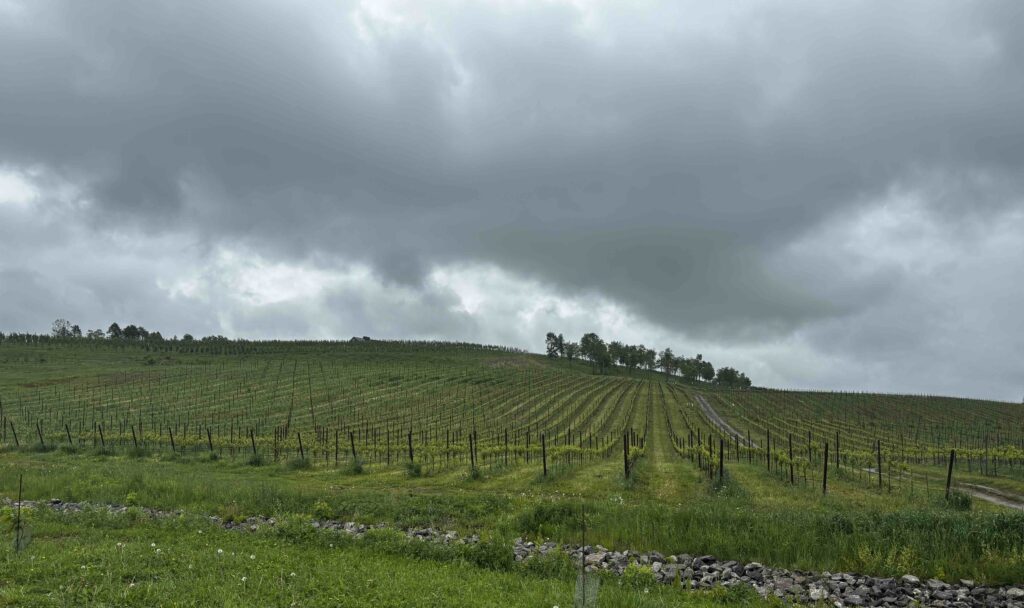
Klocke Estate represents a $21 million investment in reviving the American brandy tradition, opening to the public in July 2024 after more than six years of land preparation, planting, construction and development. Set on 160 acres of farmland in Claverack, New York — five miles from Hudson — the estate uses sustainable and organic agricultural methods to cultivate sixty acres of vineyards and apple orchards specifically chosen for brandy production.
The Vision and Development
John Frishkopf and Brett Mattingly purchased the property in January 2018 as fallow farmland with endless potential. Construction began in 2019 and continued through the pandemic. The project fulfills Frishkopf’s vision that began more than 30 years ago, inspired by his decade living in Europe, where he learned traditional brandy-making methods.
Design and Architecture
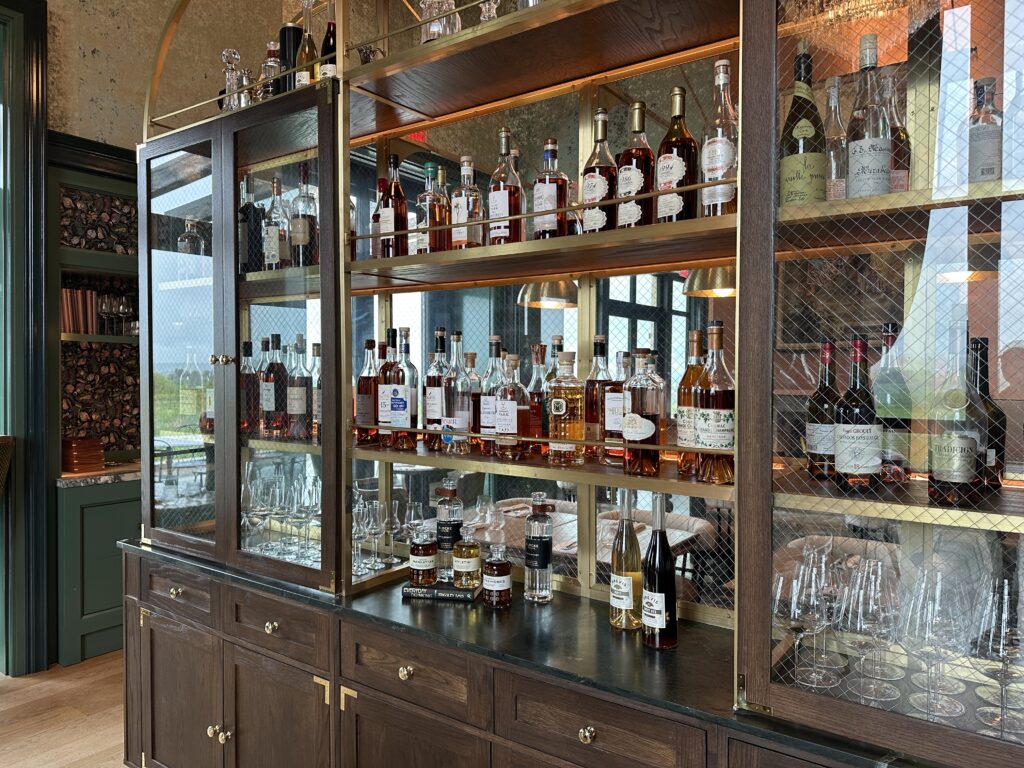
Designed by the architecture firm Barlis Wedlick, interior designer Ken Fulk, and landscape architect Wagner Hodgson, the estate features a 12,000-square-foot distillery and hospitality venue. The exterior was designed as modern vernacular and the interiors with an approach of juxtaposing rustic with luxury. The space includes muraled entryways with hand-painted coffered ceilings, an elegantly designed bar with a marble top and copper accents, and large windows overlooking the Catskills. The dining room is furnished with locally made pieces and distinctive nods to the decorative traditions of the late-19th and early-20th century.
Production Facilities and Methods
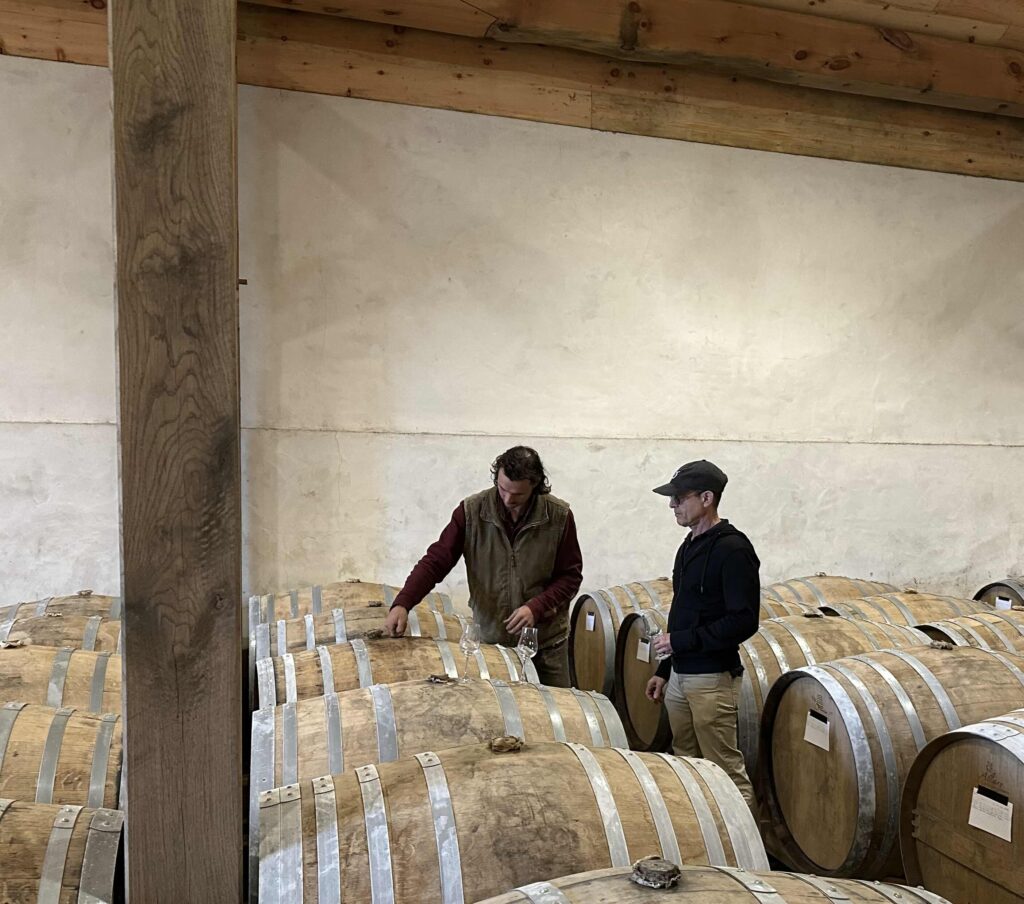
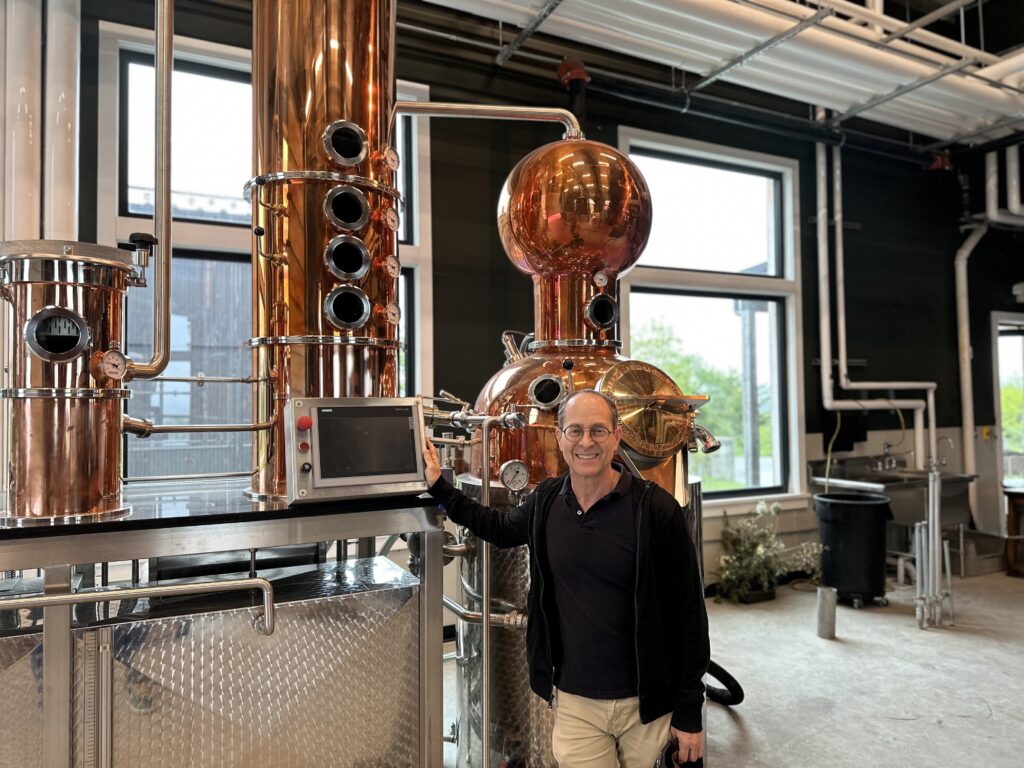
Frishkopf imported a traditional cognac still from the Cognac region of France. The still took three weeks to construct with multiple teams and requires 48 hours for a full batch to be distilled as three first distillations and one second distillation, before transfer to French oak barrels. The minimum aging period is two years or longer as needed in order to achieve the right profile, but some will continue to age for ten to forty years. The on-site barrel house was designed in the same fashion as those built 200 to 300 years ago in Europe: sunken into the ground, insulated with straw, and with a dirt floor to maintain ideal temperatures and humidity.
Klocke Estate focuses on a sustainable and organic approach to the land, with 60 of the 160 acres carefully cultivated using regenerative farming methods. The estate promotes biodiversity by planting beneficial species that provide pollinator habitats and create a balanced ecosystem.
Product Development and Innovation
The estate offers limited releases of unoaked brandy, but primarily matures its product in French Limousin oak barrels, planning to bottle and release the brandy as it develops over time. Klocke has also developed red and white vermouths for its launch — the team sampled over 120 different vermouths prior to creating their own.
Ready-to-Drink Cocktail Innovation
In December 2024, Klocke Estate launched its ready-to-drink cocktail line called Flyback, debuting with three signature offerings: the Appletini, Brandy Manhattan, and Old-Fashioned. The name Flyback name Flyback references a watch chronograph mechanism, but also honors the historical significance of Claverack, where in 1806 the term cocktail was first defined as a stimulating liquor composed of spirits, sugar, water, and bitters.
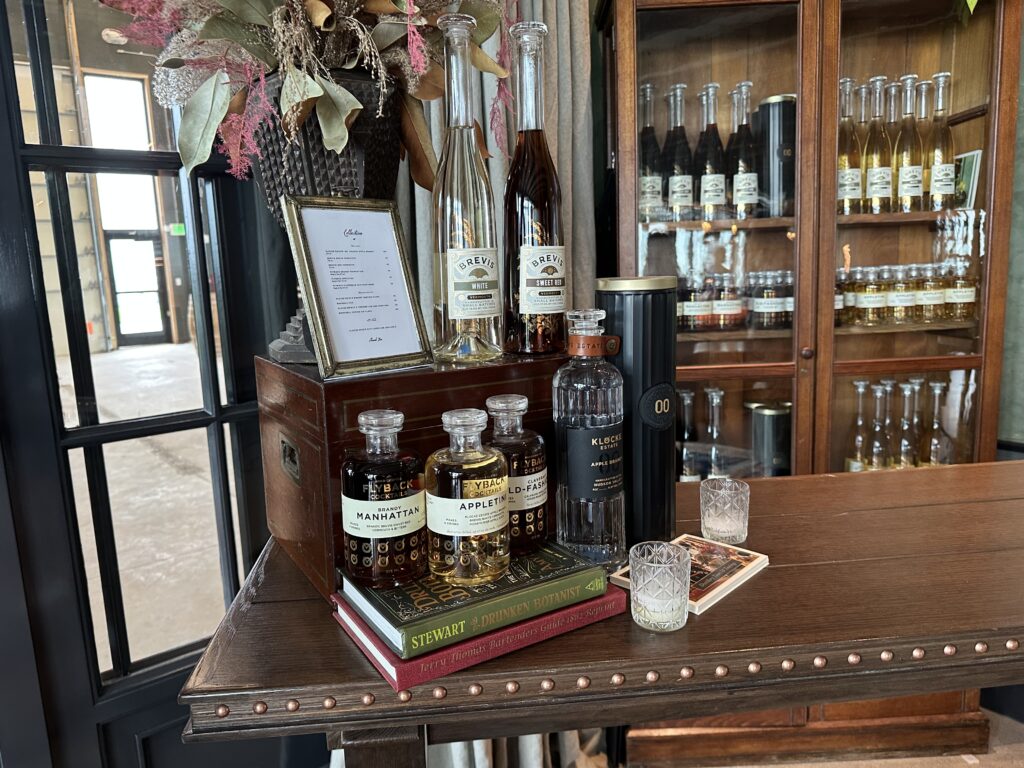
The Flyback Appletini is made with Klocke Estate Apple Brandy, Brevis White Vermouth, and Honeycrisp apple juice, while the Flyback Brandy Manhattan features aged French brandy, Brevis Red Vermouth, and Klocke Estate Bitters.
Grape Collective talks to John Frishkopf and head distiller Caleb Gregg about Klocke Estate’s goal of defining a new category of American brandy in the Hudson Valley, creating an experiential destination, and building a legacy of excellence to transcend generations.
Christopher Barnes: How did you develop your love for brandy?
John Frishkopf: I’ve been fascinated with wine and brandy since college. I made wine, I made beer, and then, when I spent ten years in Europe, I learned to make brandy. That was in the ’90s. I was living in Prague, and my landlord made apricot brandy from the extra apricots from his orchard in the countryside. When I came back to the States, I always wanted to get into the business and decided that brandy was the one to focus on, because there are so few great brandy producers in the U.S. I felt there really should be a world-class American brandy, and that the Hudson Valley was the place to make it — not just because there’s amazing fruit and great terroir, but also because there’s a culture here that embraces farm-to-table and slow food. It’s really the ideal place for this project.
Why did you decide to develop brandy as a business?
In the U.S., there’s almost no truly great brandy, and there seemed to be a huge gap in the market — and a huge opportunity to do something impactful: to create a new category of spirit. We wanted to make a Hudson Valley brandy that not only looks forward but also harkens back to the history of the region and of brandy itself. The climate here is ideal — both for apples and grapes — to make a truly world-class brandy. We felt that by using the best practices and techniques from Europe, combined with fruit that reflects the Hudson Valley’s terroir, we could achieve that.
This is a very long-term project. Our motto is “patience, passion, and heritage” because it will take decades to craft a truly world-class brandy. We can make a beautiful one now, but it will take time to create something truly extraordinary.
Can you talk about the terroir of the Hudson Valley?
The terroir of the Hudson Valley is one that’s actually not that different from Calvados. So it’s a cooler climate. There’s a lot of clay in the soil here. There’s a tempering influence in our case from the river, from the Hudson River, which is just four miles away. We can grow beautiful apples. And as far as the grapes go, there’s certain parts of Cognac which also have a similar terroir – a more clay rich soil. And of course, the Hudson River is also a tidal river like the Charente in Cognac. So it has that similar impact. And the fruit that we grow here, for example, the grapes tend to be low in sugar, which means lower in alcohol, high in acid, which is exactly what you want for a grape brandy.
What does Klocke mean? Can you talk about the meaning of the name?
Klocke is Middle Dutch for “clock.” Our theme is time, because this project requires a lot of patience. It takes a long time to create a great brandy, so time flows through everything we do. The region was settled by the Dutch, who brought the first stills here in the early 1600s. In fact, the Dutch essentially invented Cognac — they commercialized it. They introduced stills to transform what was then considered second-rate wine into a beautiful distilled spirit. So the Dutch are deeply integrated into the history of brandy and of the Hudson Valley.
Why are you focused on estate brandy?
We’re creating an estate brandy because we want it to reflect the terroir of the Hudson Valley. So to do that, we want to grow our fruit right here. We also want to have control over how it’s grown. Growing fruit for brandy is very different than growing for wine or for the table. It’s a very specific approach, especially for the grapes, but also for apples. And it allows us to have complete control over the quality from the ground to the glass.
You’re also doing vermouth. Can you talk about that?
We also make vermouth because it’s a natural outgrowth of brandy production. To make vermouth, we first make a neutral wine. Then we macerate botanicals in that wine, for three weeks, filter, add sugar, and boost the alcohol content with high proof brandy. It’s a very logical extension since it’s made from the Vidal Blanc grape, our largest planting, and one of the same grapes as our brandy. Vermouth is also ready much sooner; while brandy takes several years to mature, the vermouth is ready
almost immediately.
We felt there was a major movement not just toward lower-alcohol drinks, but also toward aperitifs — a more fun, easy-drinking category that’s been very popular in Spain, Italy, and southern France. We believe the time is right for that trend to take hold here in the U.S. as well.
Can you talk about the style of brandy that you’re aiming for?
The style of brandy we’re aiming for is influenced by Calvados and Cognac, but it’s truly of the Hudson Valley. We use many of the same techniques as in Cognac and Calvados, but, of course, we use fruit from here and aren’t constrained by the strict production regulations they have in France. This allows us to make changes and tweaks where we think it makes sense. For example, in France, you can’t distill Cognac after March — a rule established long ago, before the advent of good cold storage and argon gas. There’s no reason for us to be bound by such restrictions.
Can you talk about brandy as a beverage and some of the history of brandy making?
The history of brandy making is closely tied to both France and the Dutch. The commercialization of brandy began when the Dutch brought their stills to the Cognac region of France to better preserve and transport the products of the surrounding area. They discovered that the distilled spirit was truly exceptional — more powerful and complex than the regional wine. Over time, this gave rise to an entire gastronomy and style centered around brandy, which developed over the centuries.
In the mid-1800s, brandy was probably the preeminent spirit. For example, the mint julep was originally a brandy cocktail, and the first Old Fashioned was likely made with brandy as well. It was only with phylloxera — a grub that devastated European vineyards in the late 1800s — that the brandy market was essentially crushed, allowing whiskey to take over as the dominant spirit. Then, of course, Prohibition dealt a second major blow, causing further damage to brandy’s popularity.
Can you talk about the American brandy environment and other people making brandy here?
The American brandy market is quite fragmented and stratified. There’s a large segment of very low-end, high-volume brandies produced industrially, and then a handful of very small, high-luxury producers. Germain-Robin was one such producer, now owned by Gallo, but still bottling exceptional spirits. Osocalis, made by Dan Farber in the Santa Cruz Hills, is another extraordinary brandy that remains a farm product. There are a few others, all with very small production runs. Over the years, there have been a couple of waves attempting to revive brandy’s popularity, and I believe we’re now part of the latest wave.
This is more than a distillery – you have a beautiful restaurant and bar. Can you talk about the overall concept at Klocke?
The concept we have at Klocke is to create a whole experience around brandy and vermouth, because they’re relatively unknown in the U.S. market, especially at the level we’re doing it. So we said, okay, how do we do that? We do that by attracting people to come and experience brandy and by giving them an extraordinary experience here. So you can come here for a tour and a tasting. You can come here for a phenomenal dinner. The views are spectacular, but the idea is to educate guests around brandy and vermouth and get them engaged. We know this is going to be a long process, but we think that this is a great attraction.
Talk about Calvados.
Calvados is a type of brandy that is made from apples. It’s made in the Calvados region of France. To be a Calvados, you have to be made in Normandy in specific regions. There’s different styles. With Calvados, we’re making one in the style of the Pays d’Auge, which means we’re using a cognac still. We’re using all apples. No pears, at least for now. And we’re using double distillation. Calvados is an extraordinary brandy. It’s actually very popular among certain groups in the U.S. We think actually there’s a large market for a truly world-class American apple brandy in the style of Calvados.
Caleb Gregg on Agriculture and Distillation
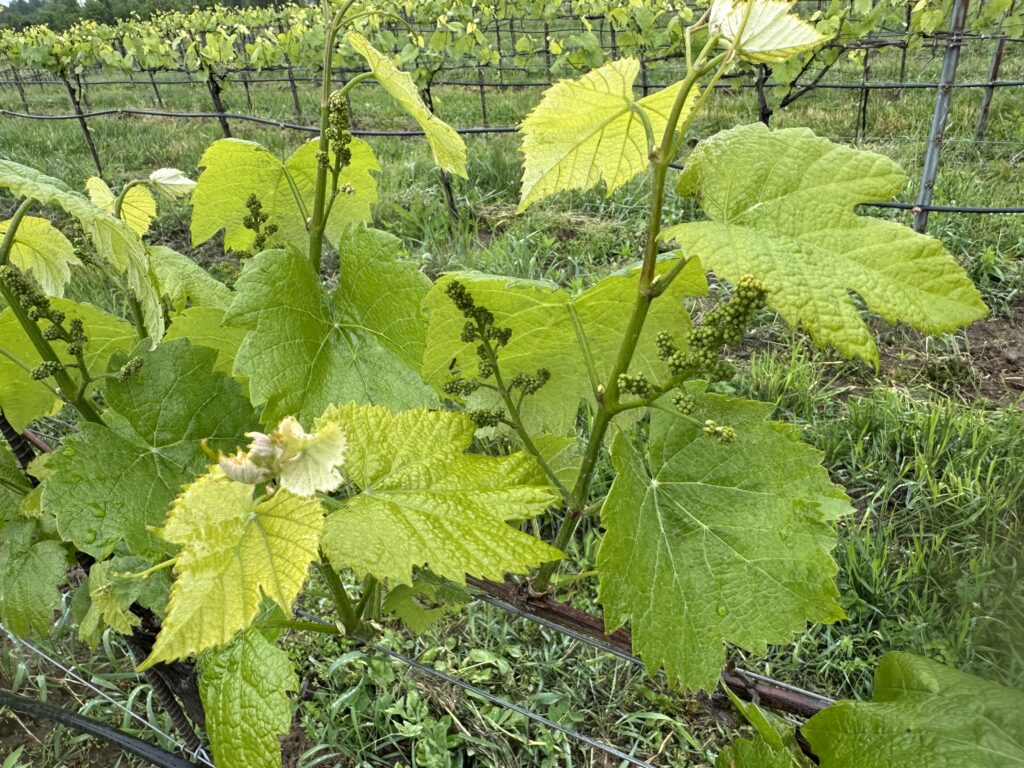
What is your approach to agriculture here at Klocke?
Caleb Gregg: Our approach to agriculture is really quite unique and a little bit different than you would normally see in a commercial setting. Because we’re growing our apples and our grapes for brandy production, we want to cultivate and grow fruit that is the most truly expressive as possible and true to themselves. So what we’d like to do is to have a sort of hands-off approach and let the vines and the trees dictate and tell us what we need to do.
We want to treat them gently when they’re in their young years and sort of force them and stress them in the right way and let them get their roots and their feet established so that they are longer lasting, that they can produce good yields in the long term. So we’re growing 100% organically. We don’t use any synthetic fertilizers or herbicides. And we really try to work with the land promoting soil fertility and health. And we try to treat the estate as a whole ecosystem rather than growing just a monoculture, which can become very neutral and muted and will not lead to very expressive fruit.
What are you growing currently?
On the apple side, the majority of what we’re growing are mainly bittersweet and bittersharp, mostly French and English varieties. But we do grow many of the heritage apples, like Newtown Pippin and Golden Russet that used to be in production throughout the Hudson Valley. Over a long period of time, they sort of fell out of style with newer and more fruitful varieties. But we use them not as single varietals, but more in the blend that brings a specific note to a cider.
On the grape side, we’re working mostly with hybrids and a few vinifera varieties specifically suited for Cognac production. Our main grape here is Vidal Blanc, which was originally developed for Cognac. Although it eventually fell out of use and is no longer allowed in Cognac production, it works extremely well in the Hudson Valley — producing great yields and resulting in a beautiful brandy. We also grow Ugni Blanc, the main grape of Cognac, Baco Blanc an important grape in Armagnac, and Riesling.
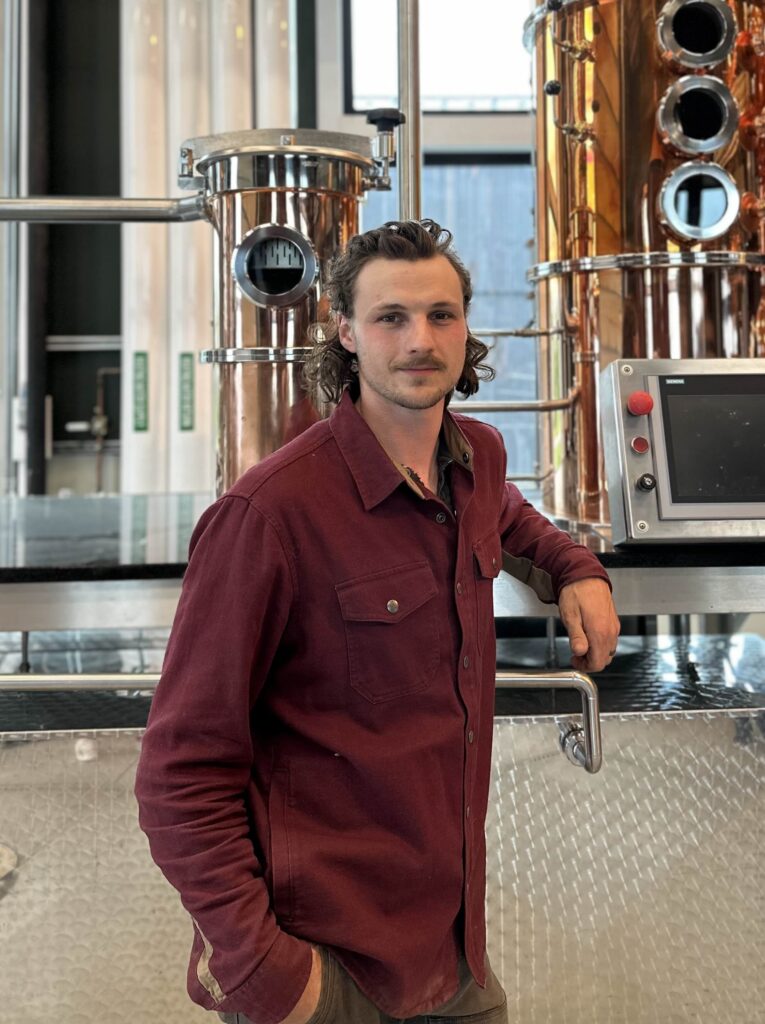
Can you talk about the stills that you’re working with?
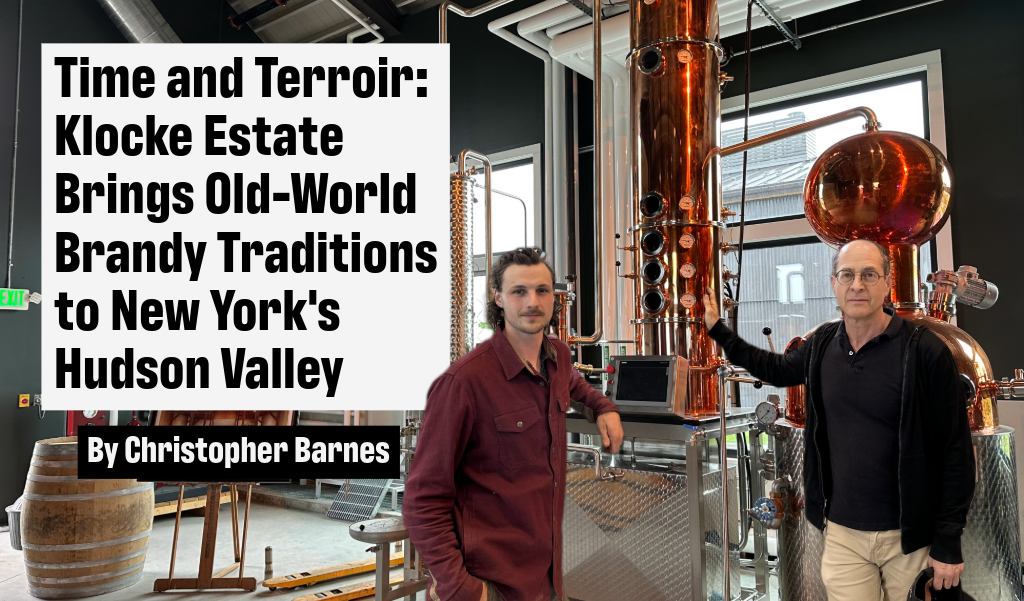
For our main brandy production, we use an alembic Charentais still made by Chaudronnerie in Cognac— the traditional still used for all Cognac production as well as Pays d’Auge Calvados. It’s a double-distillation method: we do a long first distillation to produce the brouillis, and then, in the second distillation, the brouillis is re-distilled to produce our eau de vie.
Behind me here is our hybrid pot still. This is where we do all of our eau de vie distillation. So we work with beautiful stone fruit – sour cherries, apricots, plums. We do native fermentations with whole fruit. We distill these on this still, and the reason that we use this specific type of still is it’s able to capture the essence of the summer’s bounty of the fruit quite beautifully to produce something very lovely.