The other day, we had a contractor over to talk about what he could do to fix this and that in our apartment. We purchased it from a couple, so we had it renovated to be more suitable for a family of four. But that was more than three decades ago. Over the years, we’ve repainted, cared for the hardwood floors and replaced appliances and furniture, but it needs touching up.
As we showed the guy around, we eventually got to a spot that’s central to our daily lives. No, it wasn’t the bedroom, though that certainly qualifies. It was the window in our living room where we sit many evenings looking north and savoring a bottle of wine and each other. There are rings from wine glasses on the marble shelf. Could he do something about them?
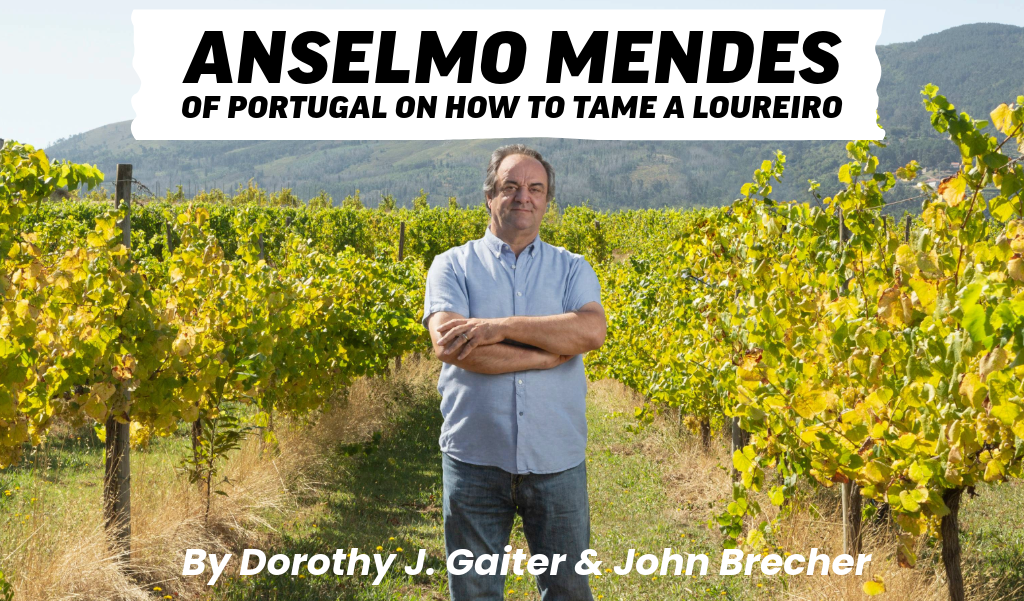
The night before he came, as we sat there, we had had a bottle of 2024 Contacto Loureiro from Mendes & Symington, a partnership since 2023 of the formidable Symington Family Estates, renowned makers of Port since 1882, and Anselmo Mendes, the visionary Vinho Verde winemaker and owner of Anselmo Mendes Wines. The Symingtons, long admirers and distributors of Mendes’ Alvarinhos, partnered with him to a produce a skin-contact Alvarinho, so they called the brand Contacto. We each had a glass of the Loureiro ($22) and then decided we should save the rest for the chicken Dottie had roasted for dinner.
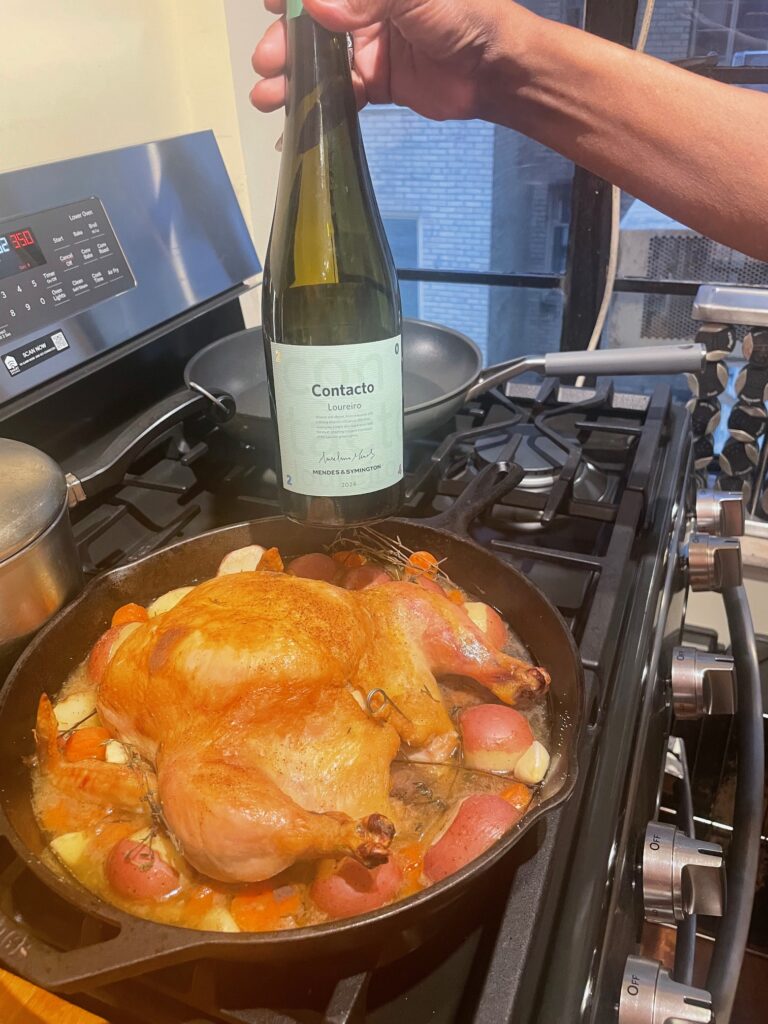
It’s a real compliment when we do that. And we were glad we had because the fresh, citrus, minerality and salinity of the dry white wine was perfect with the crisp-skinned, garlicky sweet flesh of the chicken. And the Loureiro’s nose reminded us of orange blossoms we used to smell while driving through Florida. We switched to the 2023 Contacto Alvarinho ($22), a much more familiar grape and in this skin-contact iteration earthier than the spritely ones that used to be our house wines. Both were sent by the winery’s representative, Calhoun & Co. They were both easy on the alcohol level: 12% for the Loureiro and 13% for the Alvarinho.
We had planned to write an Instagram post about the Loureiro from the Lima Valley, south of Monção and Melgaço, a subregion of Vinho Verde, when a funny thing happened. We couldn’t stop thinking about it and talking about it. We had met Rupert Symington, chairman of the company that’s been producing Port for five generations, in 2018 at a tasting featuring the launch of the recently declared 2016 Vintage Ports from 10 leading Port houses. Our colleague, Lisa Denning, wrote a terrific profile of him. While the family is known for its Graham’s, Cockburn’s, Dow’s and Warre’s Port brands, it has been producing still wines since 1999 in the Alentejo, Duro, and Vinho Verde regions of Portugal. It was the first wine company in Portugal to be B-Corp. Certified, embracing practices that are good for the environment and the company’s employees.
We had not met Mendes, who was born in Monção, so we reached out to him by email with some questions about his Loureiro. This has been edited.
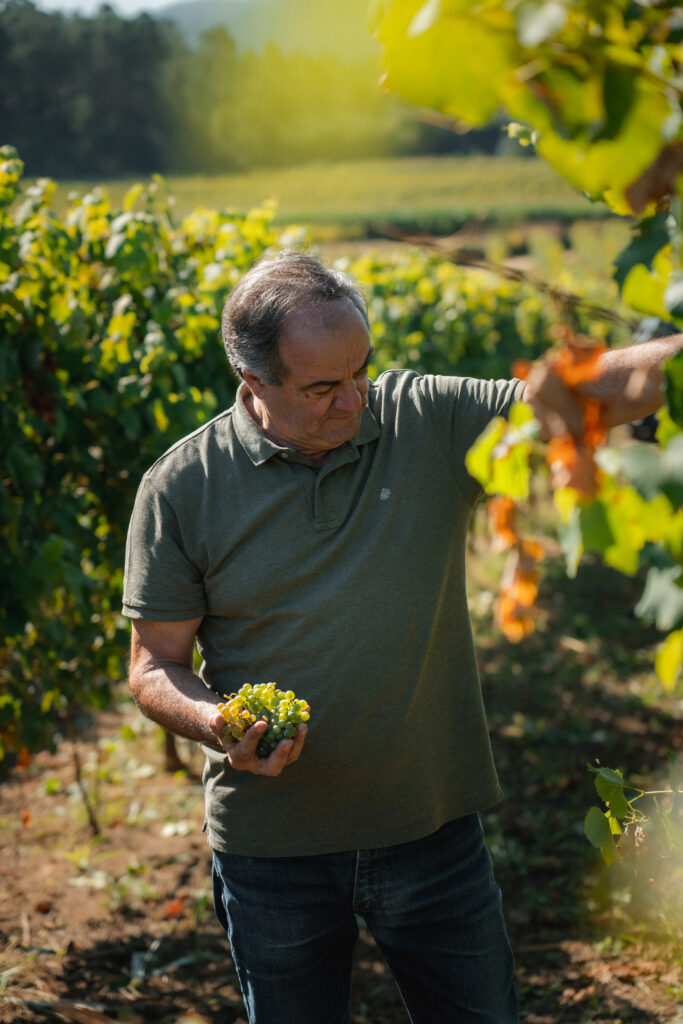
Grape Collective: Many references to the Loureiro grape call it noble. Why is that?
Mendes: The “noble” associations with the Loureiro variety come mainly from its name being derived from the Bay Leaf (in Portuguese “Louro”) fragrance of Laurus nobilis tree. As the Minhotos (people from the Minho region, where Loureiro is planted) always found similarities in the aromatic profile of the grape variety and the bay leaf, they named the variety after the Bay Leaf and its tree.
You are widely celebrated for your Alvarinho. What led you to start working with Loureiro?
I began working with the Loureiro grape variety in 1997, as the winemaker of Quinta do Ameal – still the most famous Loureiro brand in the country. I kept being the winemaker for Quinta do Ameal until 2019, when the estate/winery was bought by Esporão (the big winery in Alentejo).
Loureiro is the most widely planted grape variety in Vinho Verde. In Minho (Vinho Verde land), everybody used to have some Loureiro planted in their backyard. The main reason is because it has high yields, and the focus was always on quantity, not on quality. What I began to realize by the end of the last century and in my subsequent studies was that, properly worked in its best terroir (Lima Valley), the grape variety has as much potential (aging potential and quality/complexity potential) as Alvarinho, although with a completely different profile.
We saw on your website Loureiro Private, Pássaros Loureiro and Muros Antigos Loureiro. Are they available in the U.S.?
Unfortunately, Loureiro Private (a single vineyard Loureiro), for now, is not available in the US. What is available are Pássaros Loureiro, Muros Antigos Loureiro and Contacto Loureiro.
Why were the vineyards in the Lima Valley replanted with Loureiro?
The six vineyards where our grapes come from were completely restructured from 2004 until 2016. The main reason is that, in my opinion, it’s not enough to plant Loureiro in its proper terroir: we must work with the right clones. At least to make wines with the dry, sharp character I like the most, we must choose the Loureiro clones that give less yields and are less aromatically exuberant, otherwise you get excessive yields (the main plague of Loureiro) and an extreme floral character that will ruin its balance. Properly worked, though, it delivers unique wines, slightly floral on the nose, white petals and jasmine perfume, citric in the mouth (lemon, lime, salty – it is planted very close to the Atlantic Ocean), with an amazing backbone acidity (Loureiro is the highest acidity grape we work with), a grape variety really perfect to pair with shellfish, for instance.
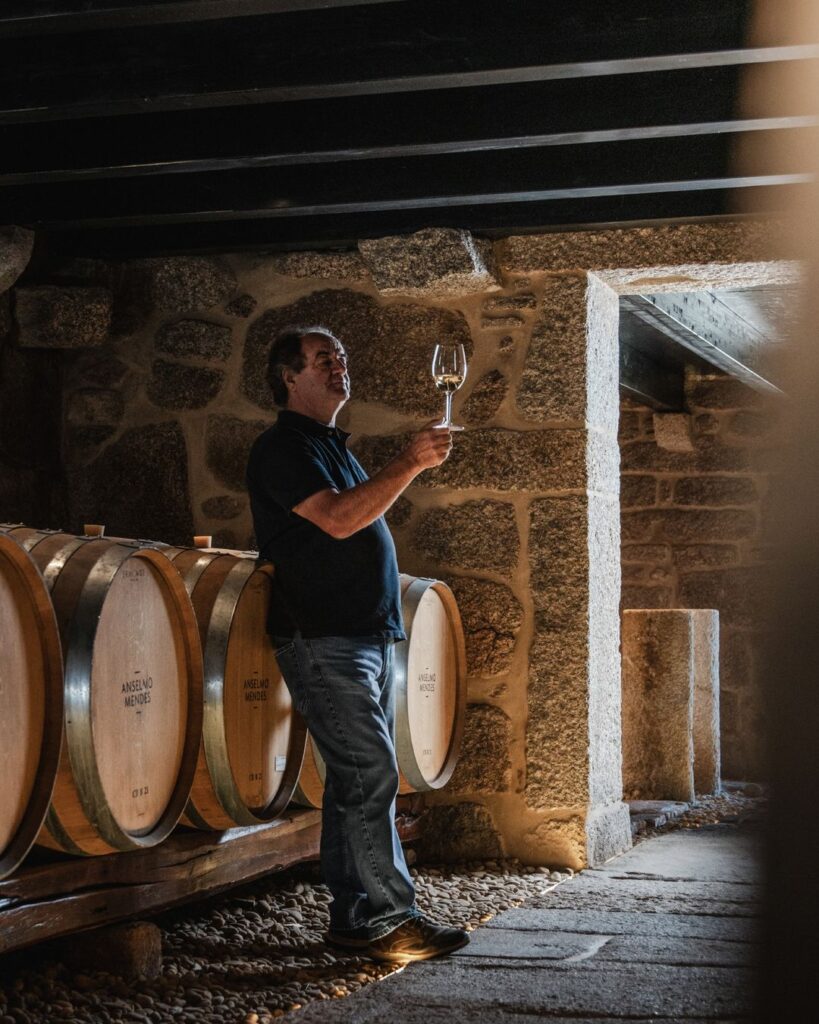
When was the first release of the Contacto Loureiro?
Contacto Loureiro was first made last year (vintage 2024), after we in Mendes & Symington decided to make a Loureiro following a vinification process similar to the way we make Contacto Alvarinho: with skin contact during maceration, and 3 months on fine lees. It worked quite well, in my opinion!
Your timeline notes that you started studying and experimenting with skin-contact in 1999. Why?
Experimentation. Curiosity. That was what always drove and still drives my winemaking career. I wanted to pick the autochthonous [indigenous] grape varieties of the region where I was born and work them in every possible way, only settling when I found something really satisfying.
How many cases of both Contacto wines are produced annually? How many of those are Loureiro? How many cases of Loureiro are exported to the U.S.?
We produced (vintage 2024) 37,500 cases (of 12) of Contacto Alvarinho and 2,160 cases (of 12) of Contacto Loureiro. 350 cases of Contacto Loureiro 2024 were exported to the U.S. market, so far.
Dorothy J. Gaiter and John Brecher conceived and wrote The Wall Street Journal’s wine column, “Tastings,” from 1998 to 2010. Dorothy and John have been tasting and studying wine since 1973. In 2020, the University of California at Davis added their papers to the Warren Winiarski Wine Writers Collection in its library, which also includes the work of Hugh Johnson and Jancis Robinson. Dottie has had a distinguished career in journalism as a reporter, editor, columnist and editorial writer at The Miami Herald, The New York Times, and at The Journal. John was Page One Editor of The Journal, City Editor of The Miami Herald and a senior editor at Bloomberg News. They are well-known from their books and many television appearances, especially on Martha Stewart’s show, and as the creators of the annual, international “Open That Bottle Night” celebration of wine and friendship. The first bottle they shared was André Cold Duck. They have two daughters.