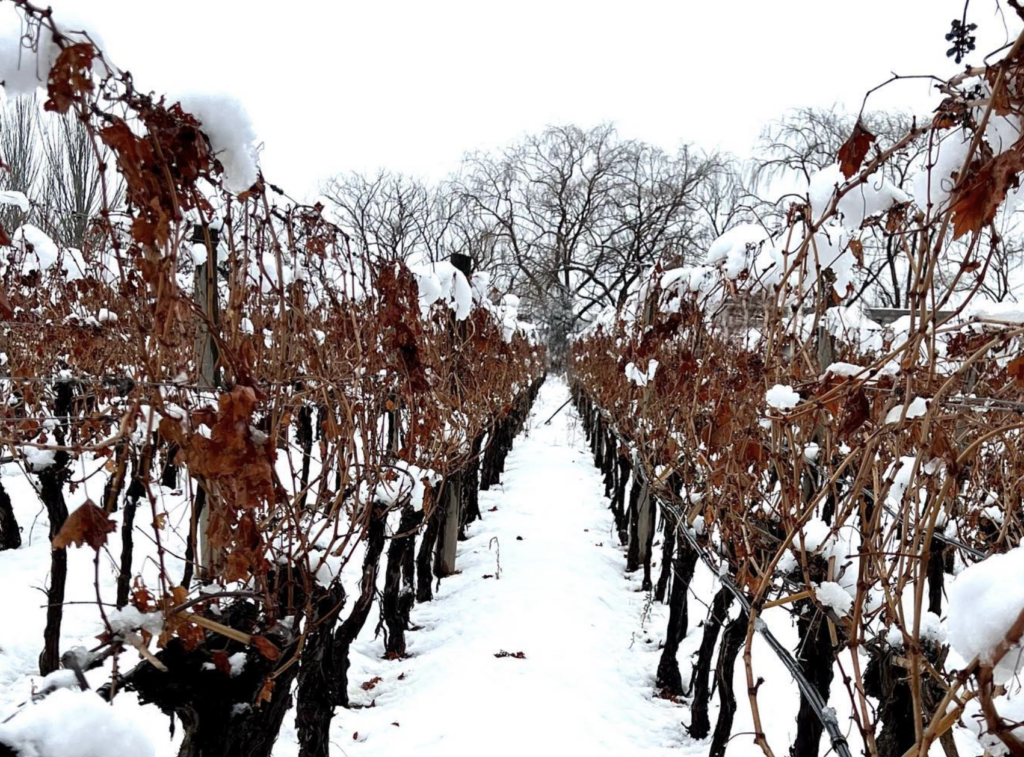
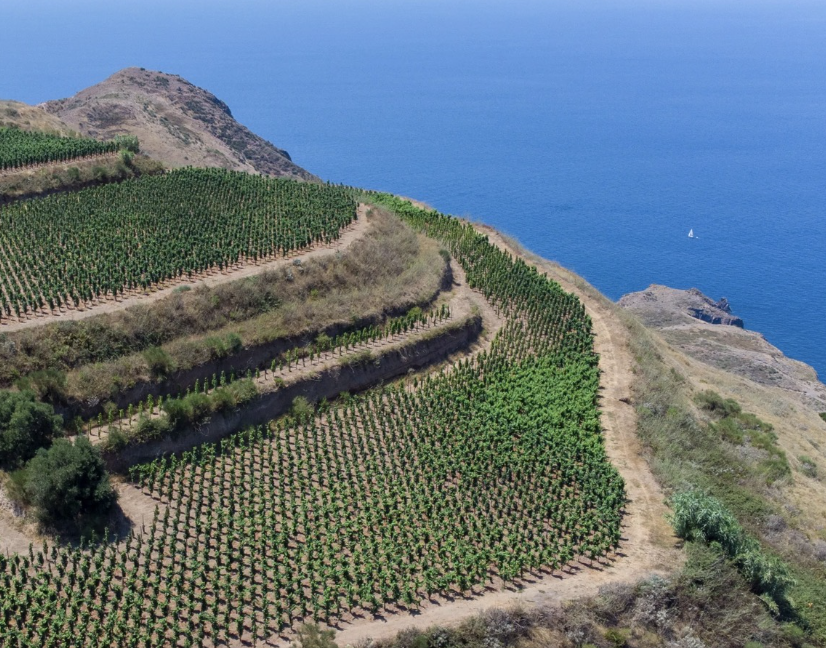
Central Otago’s story is one of extremes. Tucked into the far south of New Zealand’s South Island, this mountainous, glacially carved landscape was once thought too cold and rugged for serious winegrowing. Yet, in just a few decades, it has become one of the world’s most highly regarded cool-climate regions, defined above all by Pinot Noir, with pioneering estates like Felton Road showing the depth and character Pinot Noir can achieve here.
New Zealand has no shortage of excellent Pinot Noir, from the silkier, earth-driven wines of Martinborough to the bright, fruit-forward styles of Marlborough and the structured, age-worthy examples from North Canterbury. Each region has its own expression, shaped by soils and climate. Still, Central Otago holds a unique place in the country’s Pinot Noir landscape, thanks to its dramatic alpine setting and its ability to produce wines of both purity and power.
But Pinot Noir is only part of the picture. Chardonnay, Pinot Gris, and Riesling have also established a presence in Central Otago, adding layers of diversity to the region’s identity. Together, these varieties tell a different part of Central Otago’s story, united by the precision and purity that define cool-climate wines.
Today, Felton Road is a central part of the region’s identity. Nigel Greening took over the estate in 2000, joining forces with winemaker Blair Walter. Under their stewardship, Felton Road has embraced biodynamic farming practices, meticulous vineyard care, and a restrained approach in the cellar. The result is wines that clearly speak of place, particularly Pinot Noir, but also Chardonnay and Riesling.
Blair Walter stopped by Grape Collective to discuss how New Zealand’s winemaking has evolved, why biodynamics aids organic farming, and what it means to produce wine in a dramatic landscape like Central Otago.
Can you tell me a little bit about your background and how you ended up at Felton Road in Central Otago?
I grew up on a farm in rural Waikato in New Zealand’s North Island and went to university to study horticultural science at Lincoln, just outside Christchurch. I spent my third year on an exchange program at Oregon State University, where I became interested in viticulture and wine science. When I returned to complete my studies, Lincoln had just started a postgraduate diploma in viticulture and enology, so I took those classes.
Tell me about the beginning of your time at Felton Road and what it was like starting a winery.
I was very lucky. At school, one of my classmates was a mature student, the oldest in the class, and I was the youngest. They paired us up as wine chemistry lab partners. He showed me photos of the vineyard he was developing at Bannockburn in Central Otago. I was about to go make wine in Napa Valley, and Stuart said he might be looking for a winemaker in a couple of years, and to stay in touch. We corresponded by letter, as you did in those days, and the letters got more serious as I was designing a winery for him. Then he offered me a position to start this new project, Felton Road. We met in 1990, and I started there in 1996, building the winery ready for the 1997 vintage.
Can you speak to the evolution of viticulture and winemaking in New Zealand and what role Sauvignon Blanc has played in that?
New Zealand had viticulture from the early part of the last century, but it wasn’t really until the 1980s that we started producing fine wine in any serious volume. Sauvignon Blanc was first planted in Marlborough in the 1970s, and those wines started appearing on shelves. When I was still a student in 1990, Müller-Thurgau was still the most planted variety, and it wasn’t until 1995 that Sauvignon Blanc plantings eclipsed Müller-Thurgau. That really highlights how far we’ve come.
Back then, we only had 6,000 hectares of grapevines in total, and now there are over 42,000. A lot of that growth happened through the 1990s and early 2000s, with Sauvignon Blanc playing a large part. But there were also small pockets of Pinot Noir and Chardonnay in particular regions outside of Marlborough, with Central Otago being one of those.
Do you think New Zealand is redefining its premium wine identity beyond Sauvignon Blanc?
Definitely. We’ve been producing Pinot Noir and Chardonnay at Felton Road since 1997, and right from the beginning, we’ve been an export-led wine brand with our wines available in over 40 countries around the world. I would say Felton Road is a strong part of the movement to showcase premium Pinot Noir and Chardonnay alongside the larger volumes of Sauvignon Blanc that are grown, produced, and exported from New Zealand.
Can you tell me about Central Otago and what makes it so unique for viticulture?
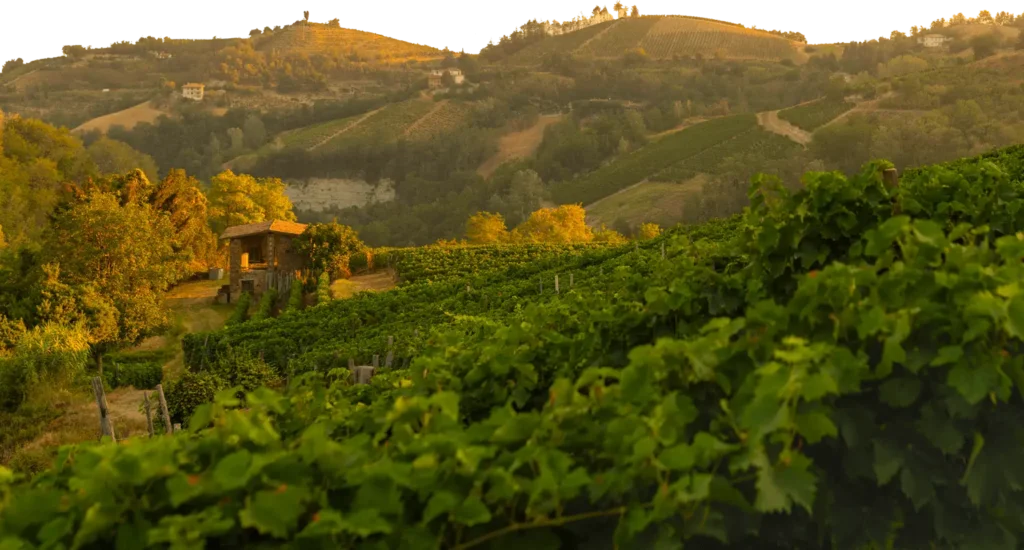
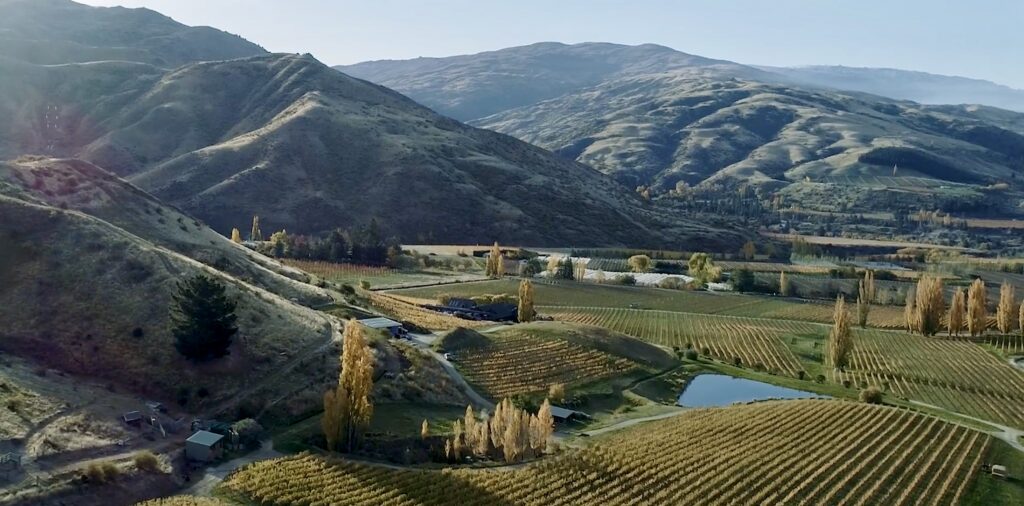
Central Otago is unique for New Zealand. The other regions are all maritime-influenced and located on the coast, getting their cool climate influence from ocean sea breezes. We describe Central Otago as semi-continental. We’re inland, tucked up against the Southern Alps to our west. We experience very cold winters but warm summertime temperatures because we don’t have ocean sea breezes. It’s also a very dry climate in the rain shadow of the Southern Alps, so low rainfall accompanied by cool nighttime temperatures is absolutely ideal for varieties like Riesling, Chardonnay, and Pinot Noir.
The soils are quite varied. You can have schist gravel soils with a lot of quartz, but they’re relatively free-draining soils of glacial origin. It depends on where you are on a particular slope as to what combination of silts and clays you might have relative to the alluvial or glacial-derived soils.
What is your philosophy of viticulture and winemaking?
We’re definitely focused on terroir. In New Zealand, we use the Māori term “tūrangawaewae,” which means “our standing place,” and it’s our version of terroir. We really want to make wines that speak of the place they’re grown, so we practice very intensive viticulture, which led us into organics and biodynamics. We focus on allowing the wines to express their sense of place through hands-off winemaking: indigenous yeast, indigenous malolactic fermentation, minimal use of new oak, no fining, no filtration. These are the hallmarks of our winemaking process.
Can you tell me more about your approach to biodynamics and why you decided to head down that road?
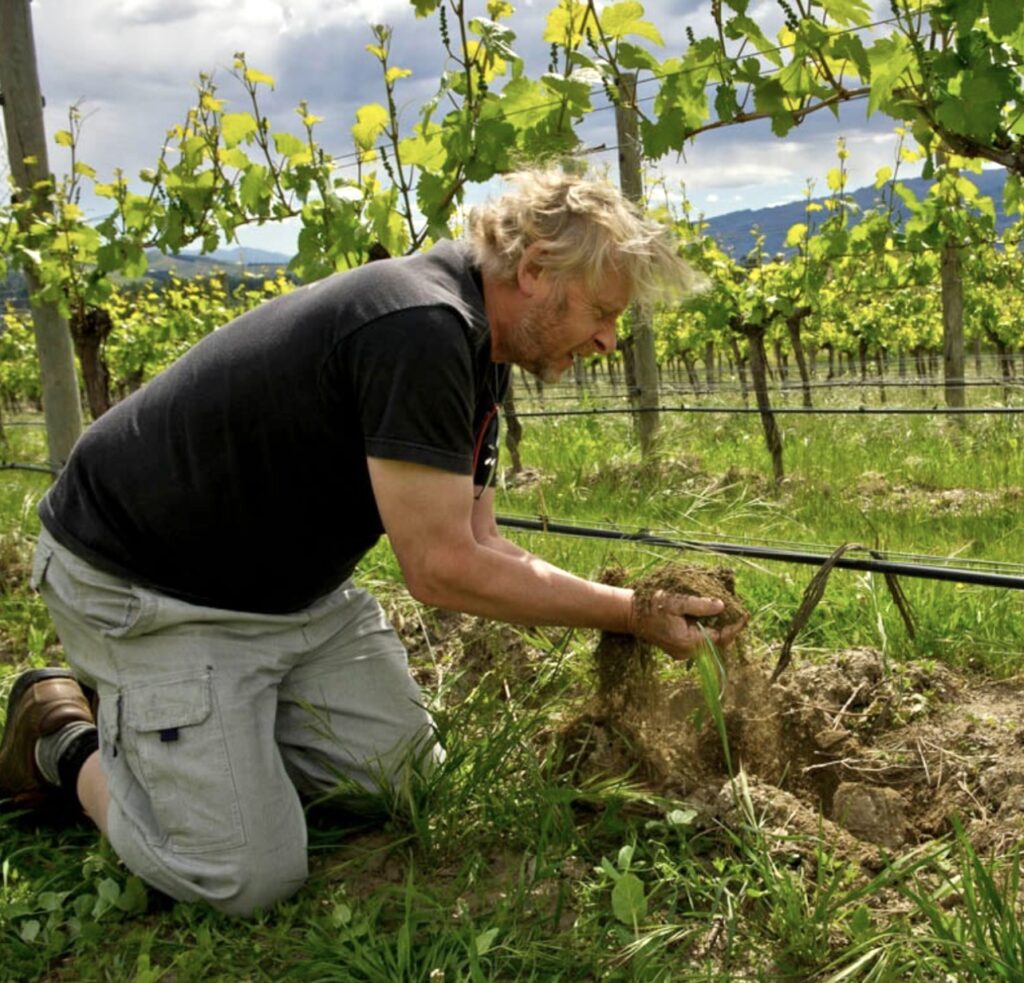
We started with organics in 2002 and introduced biodynamics the following year, in 2003. We had an influential organic wine grower in New Zealand practicing biodynamics—James Milton of Milton Vineyards in the North Island—who was very helpful to not only ourselves but many other organic viticulturists in New Zealand. I was also exposed to organics and biodynamics during my time in Burgundy in 1996, visiting Anne-Claude Leflaive at Domaine Leflaive, where I first encountered biodynamics.
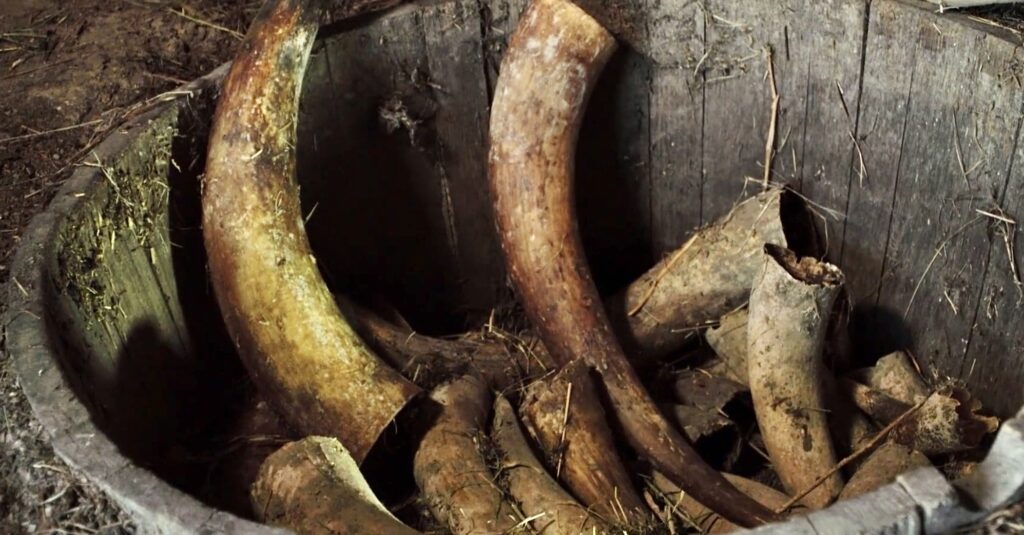
We see biodynamics as a tool that really assists with organic viticulture. A lot of it can be a bit wacky—Steiner was definitely out there—so some techniques we struggle to understand, but we definitely see it working as a tool that makes organics work.
What do you mean when you say you see it working?
It’s the balance and harmony you see in the vineyards. The vines are more resilient to extreme weather events. But a really important aspect of biodynamics that we enjoy is the team culture it brings to the property. When you see the vineyard team stirring preparations and applying preparation 500 or 501 to the vineyard, they might arrive in the early hours to begin stirring and dynamizing the 501, then sprinkling it out to capture the sun’s rays falling on the property. When I arrive, they’re all sitting there having breakfast with eggs they collected from the chickens over the previous few days. The team building and camaraderie that it brings is really tangible and something we appreciate.
We have no shortage of applicants wanting to work with us, lots of young Europeans, but also people from the USA, Canada, and Australia. Recent graduates or people from winemaking families who want to experience viticulture and winemaking at a leading estate in the Southern Hemisphere.
How would you describe the style of your Pinot Noir? Is it more New World fruity compared to Burgundy?
There’s no denying it’s going to be New World, but I think even Burgundy is changing drastically with climate change and warming temperatures. I think there’s less difference between Old World and New World regions now. There’s one world, and that’s how we’re starting to see wines. Particularly as our vines get older and their roots go deeper, we’re getting more experience that shows there’s less difference. We’re all on this planet together.
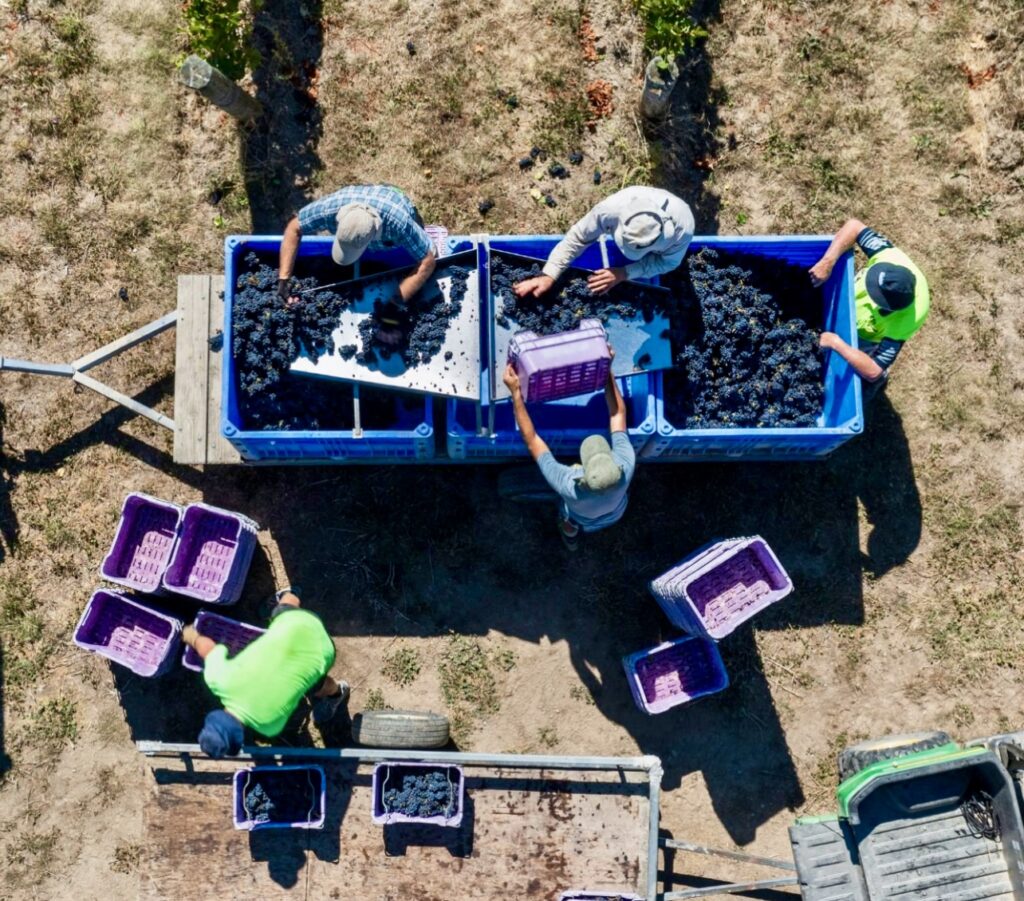
Speaking of climate change, are you making different choices in the vineyards or cellar now?
We’re fortunate in New Zealand, being small islands in a cold ocean—the Southern Ocean and Southern Pacific are very cold bodies of water—so we’re not seeing the dramatic temperature increases that continental land masses are experiencing. We’re still extremely conscious of climate change’s effects on the planet, so we’ve signed up to IWCA (International Wineries for Climate Action), which is committed to zero emissions by 2050.
You make several single-block Pinot Noirs. Can you tell us about the differences between those vineyards and how they’re expressed in the glass?
We have four vineyards, all in the Bannockburn sub-region of Central Otago. Starting with the Elms Vineyard, where the winery is located, and where we first started planting in 1992. It’s a complex site in a north-facing valley with 13 different parcels planted to Pinot Noir, Chardonnay, and Riesling. Less than a kilometer away, we have our Macmuir and Calvert vineyards planted to Pinot Noir and a small amount of Chardonnay at Calvert. Then it’s five kilometers further east to our Cornish Point vineyard.
We make a Bannockburn blend that’s a composition of those four vineyards. We also bottle single-vineyard bottlings from Cornish Point, Calvert, Macmuir, and within the Elms Vineyard, we have several designated bottlings. This really captures the essence of each site through very transparent, consistent winemaking between all parcels, allowing the vineyard character to express itself.
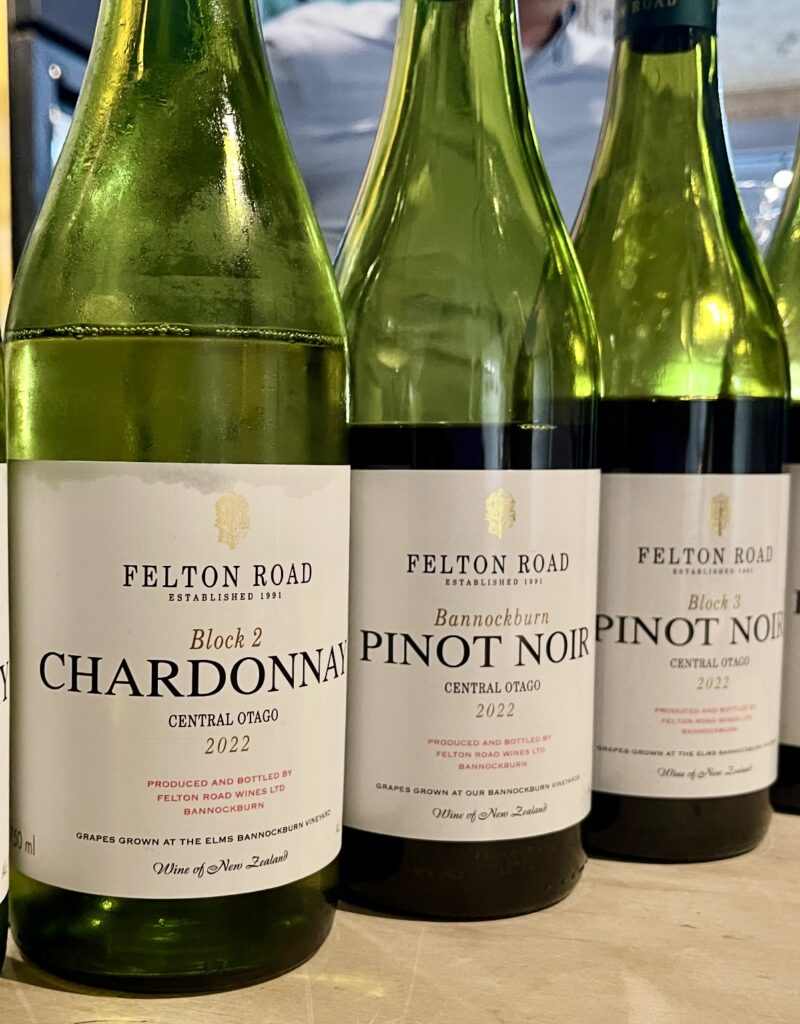
You also grow Chardonnay and Riesling. Can you tell me about those?
With Pinot Noir doing so well in Central Otago, it’s natural that we should grow Chardonnay as well. We’ve planted Chardonnay on the freer-draining gravel soils, whereas we prefer to plant Pinot on the heavier silt and clay soils with more glacial loess and clay loam textures. The Chardonnay on lighter, gravelly soils tends to be a very fine-boned style that’s not significantly weighty or heavy. As a result, we have to be careful with winemaking—it’s very transparent with minimal use of new oak.
It’s a more ethereal, lighter, fine-boned expression. Because we have a lovely cool climate with cold nighttime temperatures, acidity is always going to be a feature. It’s a finer, racier, more mineral-infused style of Chardonnay.
Riesling might seem left field after talking about Pinot Noir and Chardonnay, but Riesling has always grown very well on New Zealand’s South Island across different regions. It’s such a unique variety, allowing us to make both dry and off-dry sweeter styles, which we’ve always championed because of the high acidity and lovely gravel soils that give mineral tones to our Riesling.