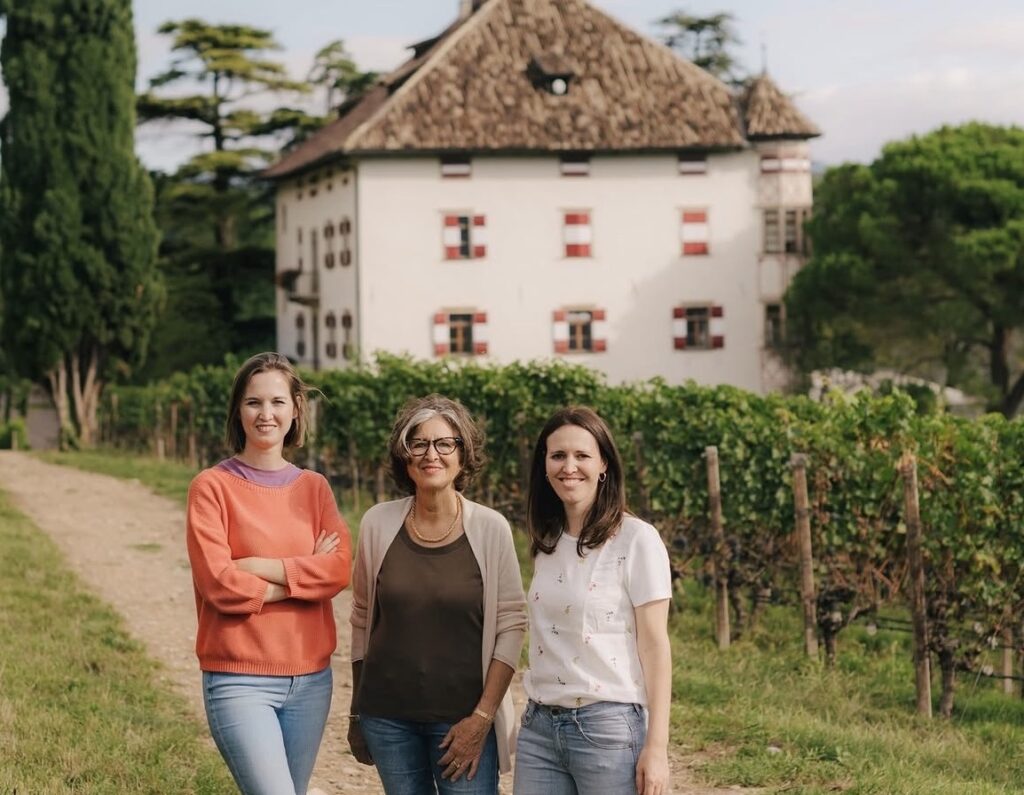
When Julia Springeth travels the world as sales manager for Cantina Terlano, she always starts with the same disclaimer: “Please don’t run away when I mention the fact that we’re a cooperative winery.” She is referring to how “cooperative” is often shorthand for bulk production, average quality, and supermarket shelf-fillers.
However, in the Italian region of Alto Adige, home to Cantina Terlano since 1893, cooperatives tell a completely different story, one that challenges everything you might expect from collective winemaking.
Situated in northeastern Italy, Alto Adige (or Südtirol, as locals call it) borders Austria and Switzerland. It is known for its mountainous landscape, including a large portion of the Dolomites. This picturesque area bears a strong Germanic influence, from its architecture to its language and traditions.
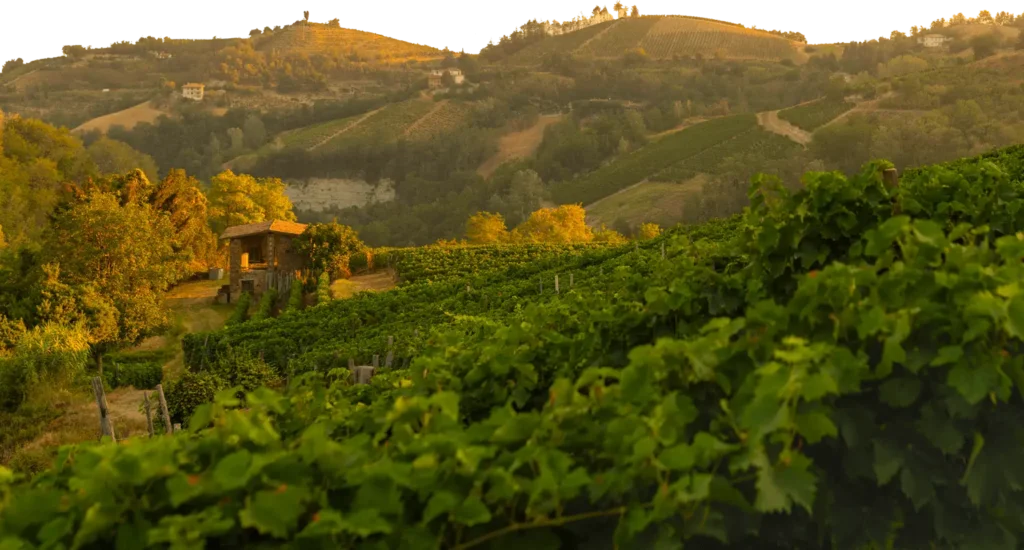
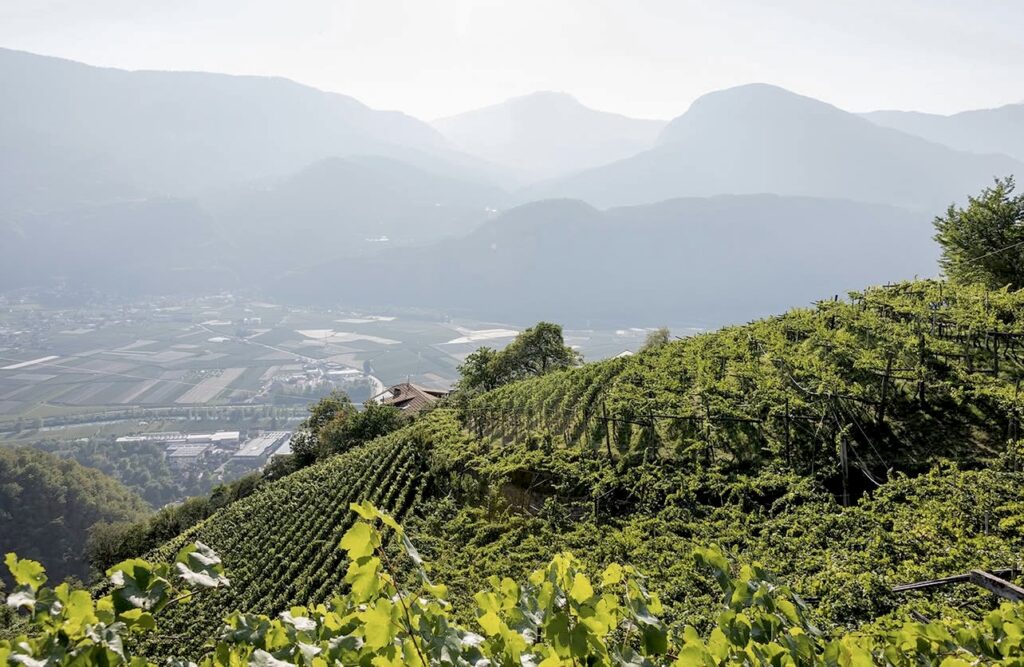
Vineyards cling to steep hillsides, and families have farmed here for generations. The soils are mineral-rich, ranging from volcanic ash to limestone and dolomitic rock, with vines growing from 700 to 3,000 feet, giving each site a distinct character. The region’s alpine climate delivers dramatic day-to-night temperature swings, keeping the wines crisp and aromatic.
Strength in Unity
Against this backdrop, a unique winemaking model emerged: the cooperative winery, which brings together local grape growers to pool their fruit and resources rather than bottling and selling their wines individually. Unlike co-ops in many winegrowing regions, which were formed to cut costs and boost volume, in Alto Adige the approach is more quality-driven. While the region accounts for less than 1% of Italy’s vineyard area, its wines are considered among the best in the country.
“Our co-ops produce 70 to 75% of our wine,” says Oscar Lorandi, president of Cantina Girlan. “You can’t really compare Alto Adige’s system with others in Italy or worldwide. It’s a special thing here.”
Alto Adige’s 12 wine collectives function as shared-ownership systems: growers are co-owners who vote on major decisions, from hiring winemakers to investing in new equipment. Payment is tied not simply to quantity but to fruit quality, a structure that rewards thoughtful vineyard work and long-term stewardship over quick fixes. And with everyone pooling resources, even the smallest growers have access to equipment that they couldn’t afford on their own, such as temperature-controlled fermenters.
Understanding how this system took hold requires looking back. For generations, the region adhered to Realteilung, a Napoleonic-era inheritance law prevalent in German-speaking areas, under which land was divided equally among heirs. A five-hectare farm with five children became five one-hectare holdings. With each generation, vineyards splintered into smaller and smaller plots, many too small to support a family on their own.
By the late 1800s, the region’s growers were struggling. Tiny parcels scattered across steep slopes made independent farming nearly impossible.
“If you look back more than 100 years,” says Wolfgang Klotz, Marketing Director of Cantina Tramin, another of the region’s leading cooperatives, “there were only a few large wineries buying grapes, and nearly 5,000 small growers who sold grapes to them without any bargaining power.”
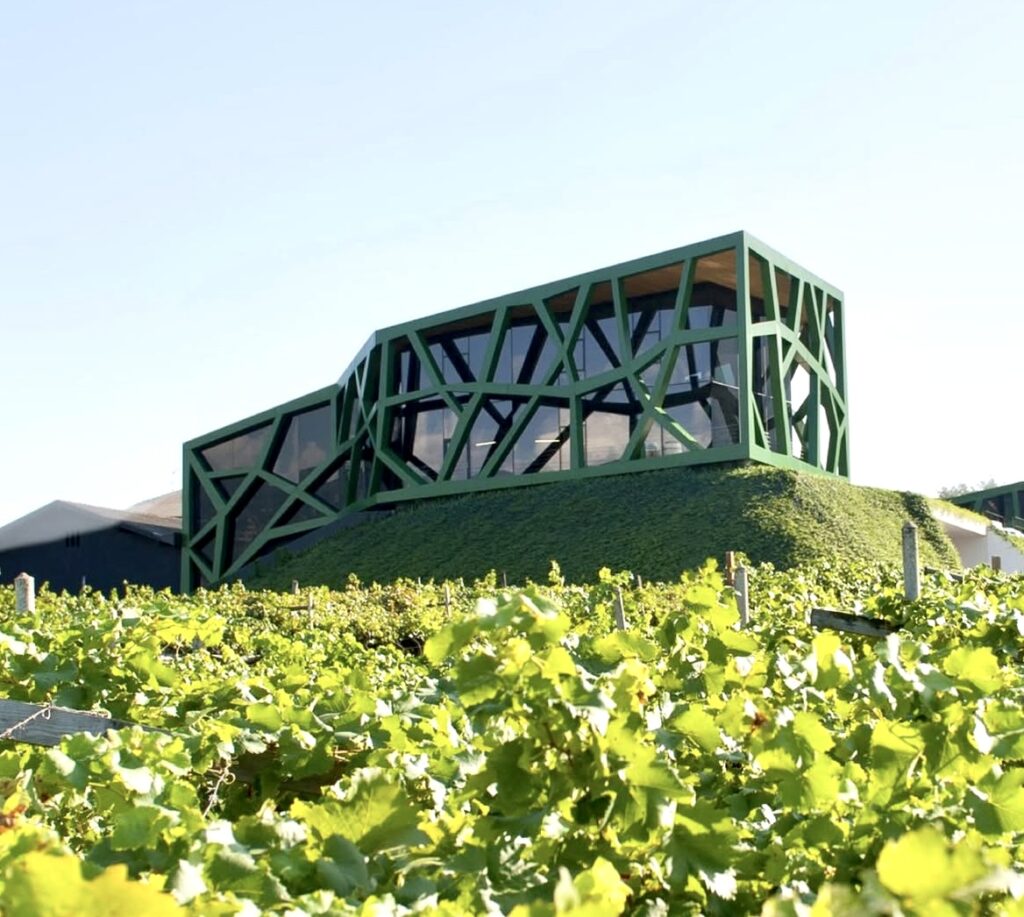
Faced with that imbalance, growers needed a new path. “Small growers had two choices,” Lorandi explains. “Either sell their land to the larger landowners, or join forces as cooperatives.” Most chose the latter, an act that reshaped the region.
Klotz points out the economic stability that the co-ops provide for growers: “Our members are smallholders who have been connected to their vineyards for generations,” he states. “The cooperatives give them security and fair remuneration.”
However, the co-ops quickly became more than economic lifelines; they evolved into pillars of the community, centered around the local village.
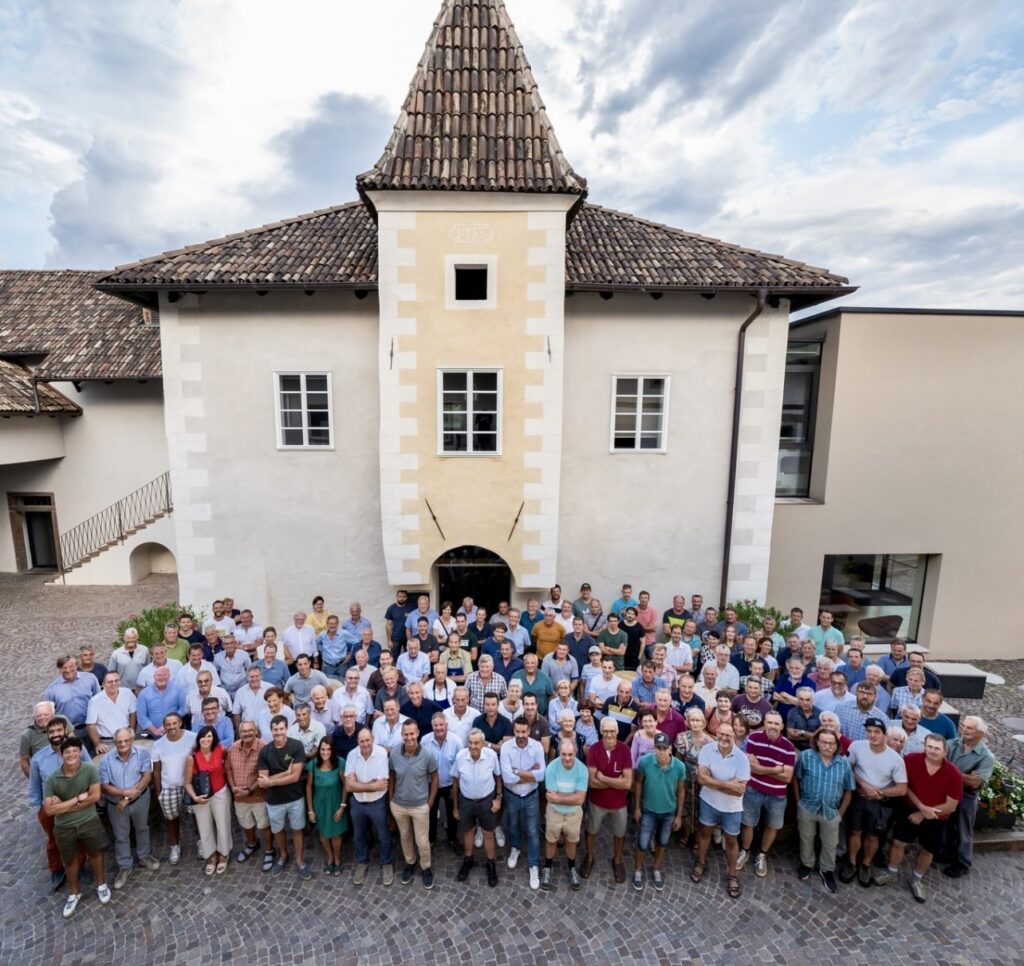
“The whole town is really involved in what we do,” says Harald Cronst, Marketing Director of Cantina Kurtatsch, a winery founded in 1900. Of their 190 grower families, 160 are from the village of Kurtatsch itself.
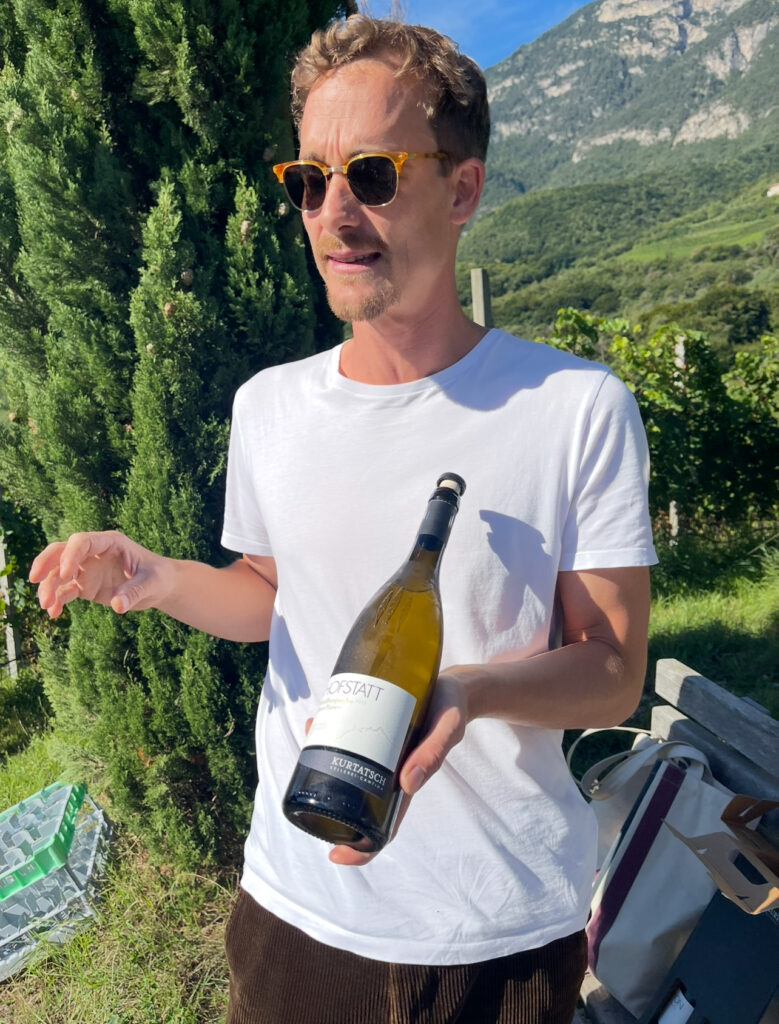
The remaining quarter of wine production comes from private estates, many run by families who’ve farmed the same plots for generations. That same family-first approach shapes the cooperatives, where growers work together while carrying the same sense of inheritance and care. As Lorandi puts it, “I always say we are like a big family made out of many small families.”
Raising the Bar
Unlike large Italian regions like Sicily or Veneto, Alto Adige never had the space for big-volume production. For a long time, wineries mostly stuck with what they’d always planted—historically reds—aiming to get the most from each site. Over the past five decades, though, growers and winemakers have taken a more intentional approach.
“A new generation of winemakers began reducing yields, studying each vineyard carefully, and matching the right grape varieties to the right altitudes,” says Matthias Messner, Marketing Director of Cantina Bolzano. “Alto Adige is tiny, and most vineyards are on steep hillsides, so everything has to be done by hand. That makes it a difficult and expensive place to farm. Competing on volume has never been an option; the only path forward is to focus on doing things as well as possible and making the very best from what we have.”
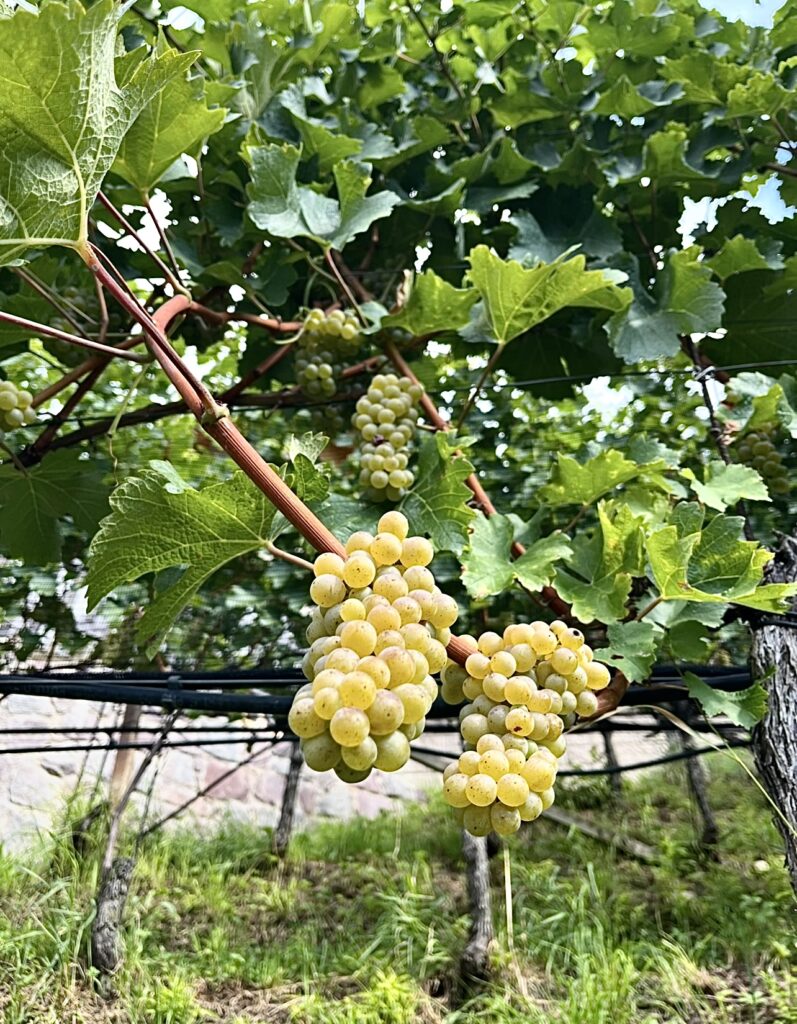
Today, that commitment shows clearly in not only what they grow, but where they grow it. The region’s alpine climate and high elevations favor white varieties—Pinot Bianco, Gewürztraminer, and Sauvignon Blanc flourish in the cool conditions—while reds like Schiava and Lagrein thrive on the warmer, lower slopes, and Pinot Nero excels a bit higher up.
Restraint and Accountability
This focus on high standards has meant drawing clear boundaries. Cantina Terlano, for instance, has capped its membership at 145 families.
“Most of the small growers from Terlan are already part of the winery, and we don’t have any intention to grow outside this area,” says Springeth. “We aren’t chasing trends either. We’re not going to take Sauvignon Blanc from other places just because it’s selling well right now. We have enough here, and that’s fine for us.”
The attention to detail in the day-to-day is another factor keeping standards intact. Plots are closely monitored, with the grapes rigorously evaluated.
“Not only do I work at a co-op, but I’m the daughter of one of the growers,” says Springeth. “I’ve seen how the vineyards and the grapes are checked again and again. Unlike co-ops elsewhere, where growers often do whatever they want and deliver substandard grapes, ours involves a constant process of accountability and improvement.”
The results are wines of precision and focus. “Thirty years ago, the challenge was convincing growers to keep yields low and bring only healthy grapes,” says Klotz. “Now, those standards are second nature.”
Cantina Tramin pays growers based on their vineyard practices, site characteristics, and grape health. “The higher the quality of the grapes, the higher the payout,” says Klotz. “If we sell wines at higher prices, the increase goes straight back to them.”
The Heimat Effect
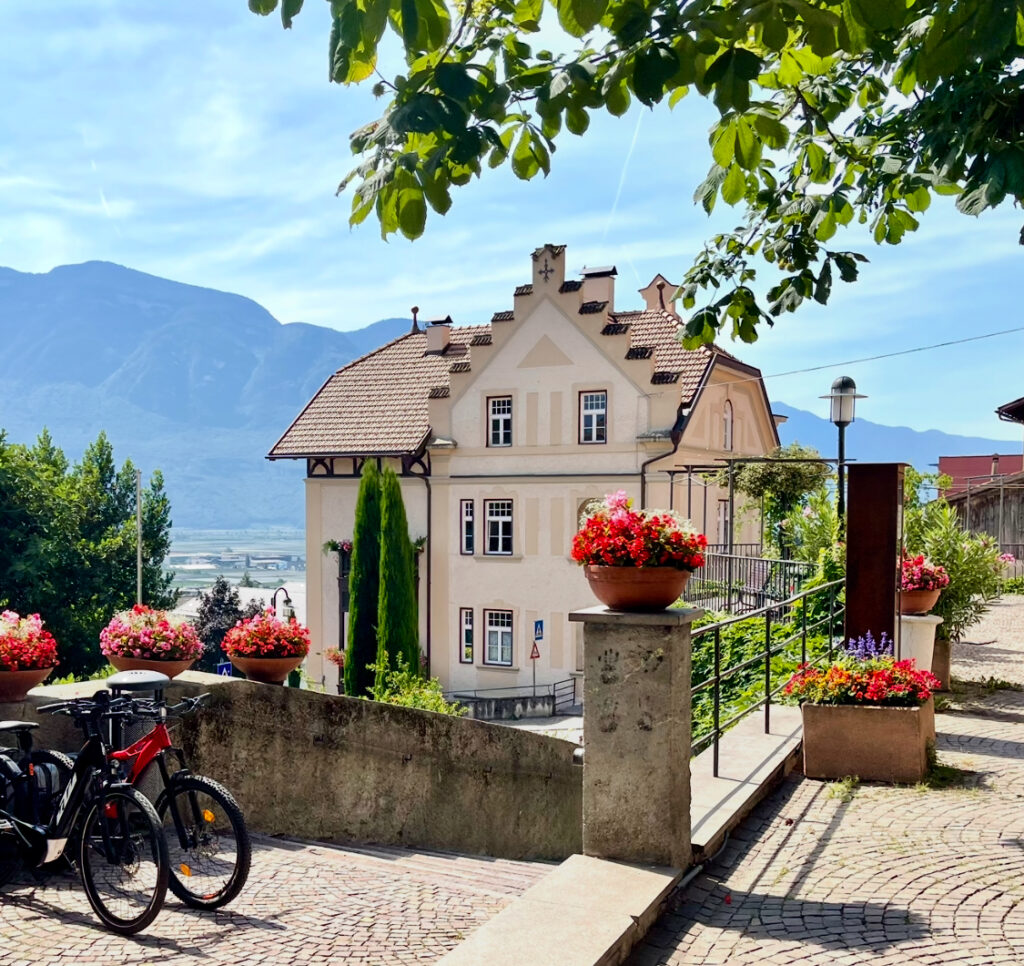
Underlying the success of these co-ops is a cultural concept locals call Heimat, which means a deep sense of belonging to land and community. In villages across Alto Adige, neat farms and carefully tended gardens reflect the people’s Germanic temperament, where nothing is left to chance and nothing feels out of place.
Most wine growers live among their vines, raising families there, and every family understands that their grapes contribute to something larger: the success of the entire village.
“Heimat is something that belongs to the territory. It’s something that you grow up with and carry on,” says Lorandi. “If you go through our villages, you see everything is well done. It’s not just that we have a good municipality system, it’s because every single property owner has this heimat feeling, so everyone is taking care of the land and each other.”
On Identity
Alto Adige’s cooperatives are now grappling with a challenge familiar to any wine producer: how to build a distinctive identity in a crowded global marketplace.
“I think the future of the cooperatives should be that everyone has their own proper identity,” says Lorandi. “It’s quite difficult for a single winery to build up an identity if you grow several varieties, and make 45 labels.”
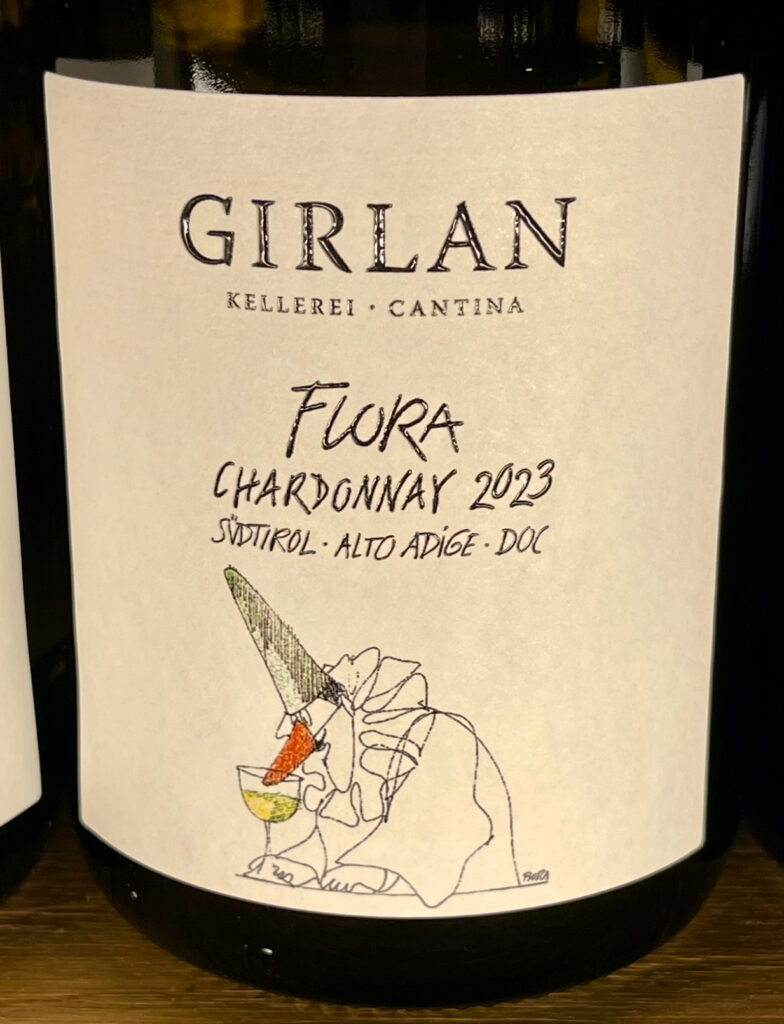
Girlan has addressed this by focusing on Pinot Noir and Chardonnay for its export markets. “Domestically, we are well known for our different varieties, but when we start to export to the United States, we can’t go there with thirty labels,” he notes. “You have to have six labels maximum.”
Lorandi wants each cooperative to stake out its own identity: “I’d like all of them to be honest and say, ‘This is what our area does best.’”
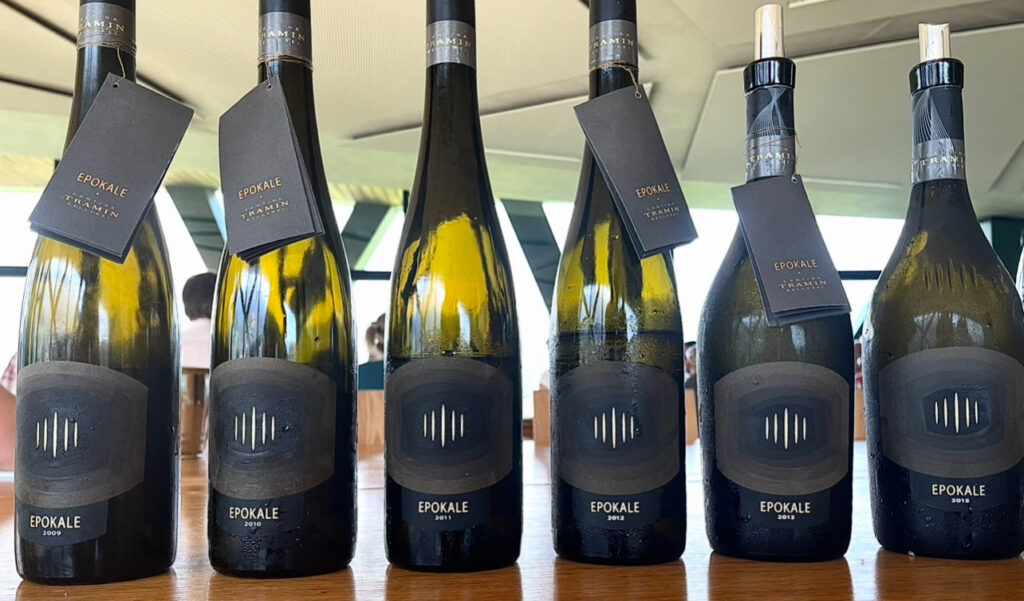
Some co-ops are already well down that path. Cantina Tramin, for instance, has been tackling its identity head-on, investing heavily in two key grape varieties: Gewürztraminer and Chardonnay.
“Tramin is known worldwide for its Gewürztraminer, the grape that gave the town its name,” says Klotz. “We’ve dedicated great passion to developing it and giving it a new identity that now enjoys international recognition.”
Nussbaumer is their benchmark dry version, bright and aromatic, while the sweet and luscious Epokale, aged in total darkness in a former silver mine, shows the grape’s depth and concentration. Both wines are a joy to drink, driven by notes of tropical fruits like lychee and mango.
“We have also devoted special attention to Chardonnay for many years,” states Klotz, “finding it develops remarkable complexity when grown at higher altitudes, a rarity on the international stage.”
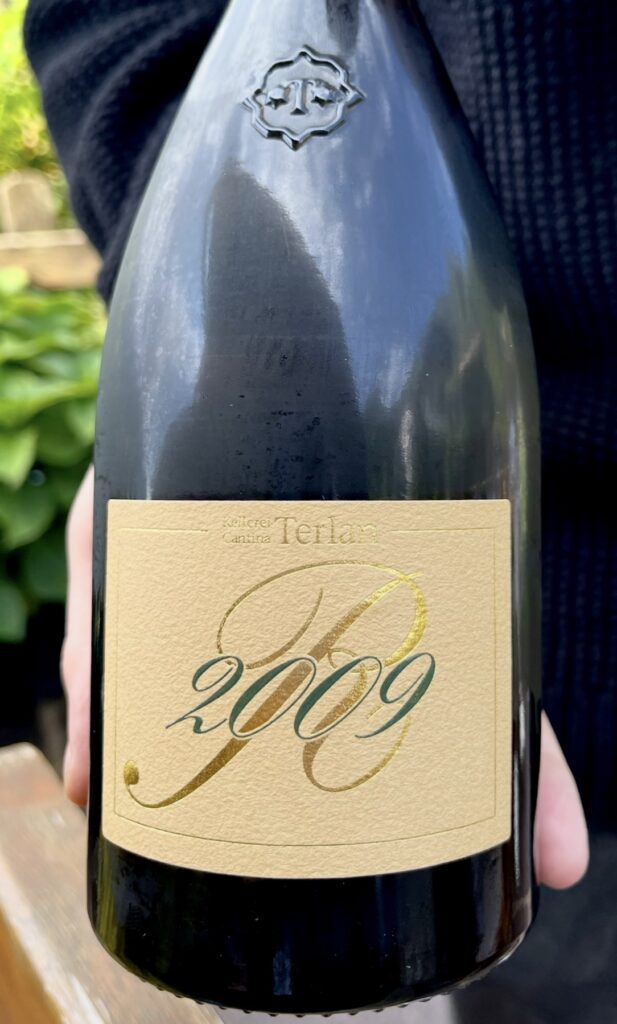
Cantina Terlano takes a different tack, centering its identity on precision whites, especially age-worthy Pinot Bianco. Their “Rarity,” bottled after a decade or more on the lees, has become an icon not just for the region but for all of Italy.
Case in point: Peruse the menu at Manhattan’s Michelin-starred The Modern and you’ll spot a bottle of Rarity Pinot Bianco for $500, showing how highly valued these wines are well beyond Alto Adige.
Kurtatsch takes yet another approach, grounding its identity almost entirely on place. The winery bottles its top sites under the Terroir Line, labeling wines by vineyard name and elevation.
“Our philosophy is to show the origin of the wine in the glass,” says Cronst. “That’s why our top wines carry the name of their site. It’s more work for a cooperative, but it’s the only way to show who we are.”
Kurtatasch’s vineyards span extreme shifts in altitude, from warm, red-soiled terraces suited to Cabernet and Merlot to high, limestone-rich slopes ideal for Sauvignon Blanc, and their portfolio is like a geological map of the surrounding valley.
These strategies show the next step for Alto Adige’s cooperatives. Once just about survival, they’ve shown they can consistently produce impressive wines. Now they’re staking out their own identities, shaped by place, history, and the grapes they know best.
As Lorandi notes, there’s also a practical advantage: “Compared to other famous wine regions, we’re often ten times cheaper. The value is extraordinary, but only if we focus on the wines that truly express who we are.”
Elsewhere, people might run when they hear “cooperative,” but in Alto Adige, it’s the word behind some of Italy’s most extraordinary wines.
Many thanks to the Alto Adige Wine Consortium and Colangelo & Partners for hosting my visit to Alto Adige Wine Summit 2025.
Read more from the author on Alto Adige:
Rising Above Climate Change: Alto Adige’s High Altitude Advantage
The Diversity of Alto Adige – Interview With Alois Clemens Lageder
Treasures in a Mine: Cantina Tramin’s Epokale Gewürztraminer