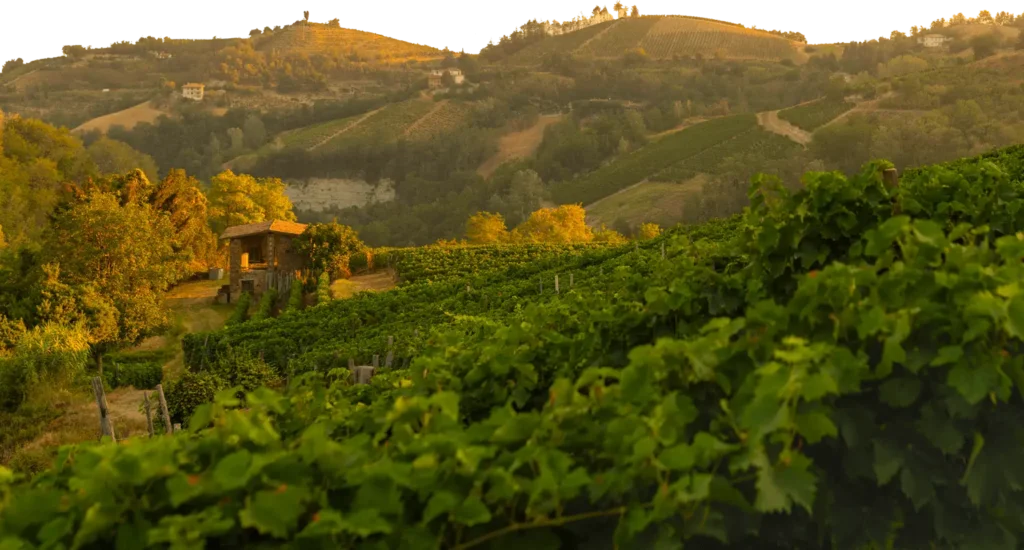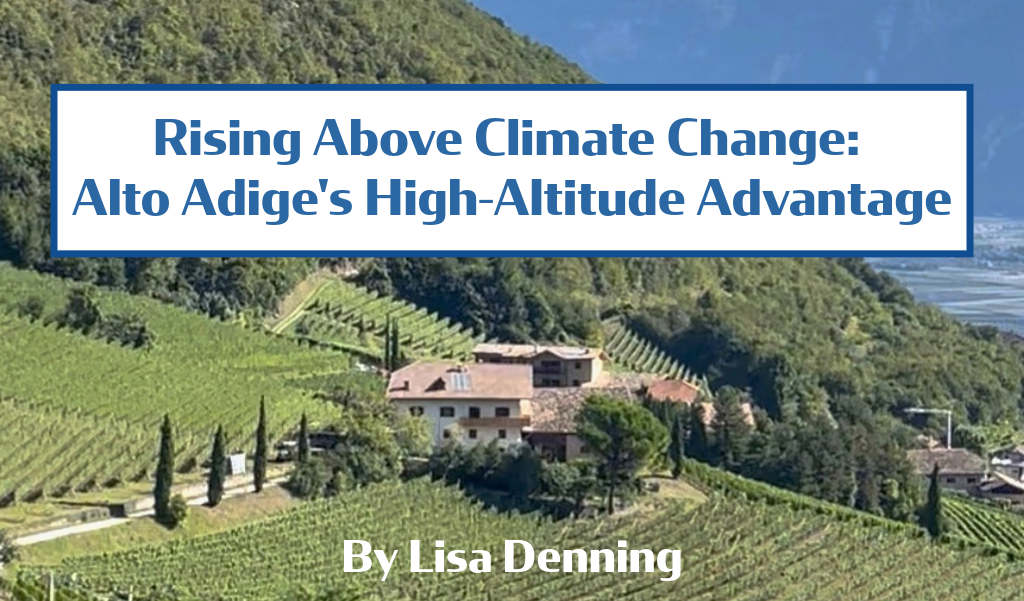
Framed by the striking limestone peaks of the Dolomites, Alto Adige may be one of Italy’s smallest wine regions, with less than 1% of the country’s vineyard area, but it’s also among its most multifaceted.
The region, also known as South Tyrol (or Südtirol), occupies a unique geographic and cultural position in Italy’s wine landscape. Located in the country’s far north, Alto Adige was part of Austria until 1919, when it became officially Italian. However, it remains unmistakably Germanic in character. You’ll notice the Germanic influence in the wines, with their precision and freshness, but it also shows itself in the region’s Alpine architecture, hearty cuisine, and everyday customs.
Few wine regions pack so much into so little space. Across just 15,000 acres, twenty different grape varieties grow, on elevations ranging from 700 to 3,000 feet. The land is protected from overly harsh and cold conditions by the mountains to the north, while Mediterranean breezes from the south bring warmth to ripen grapes. Due to Alto Adige’s unique geography and altitude range, many different microclimates exist—a real lifesaver as the planet continues to heat up.
Shaped by Slopes, Guided by Climate
“Altitude is one of the most important things about Alto Adige,” says Harald Cronst, Export and Marketing Director at Cantina Kurtatsch. “There is no other place in Europe, probably in the world, that has such differences in altitude. And because of that, we can plant each grape variety in its ideal environment, where it can perform best.”
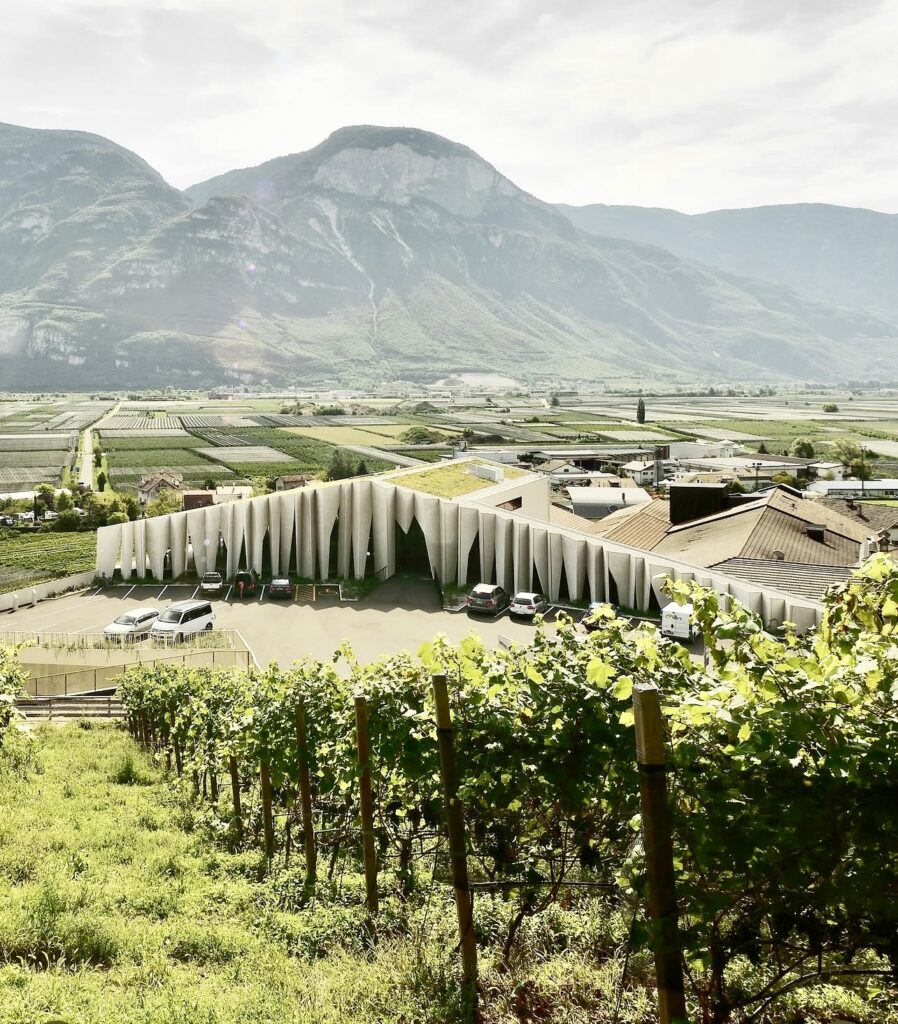
Cristof Tiefenbrunner, fifth-generation member at Weingut Tiefenbrunner, agrees. He says matching grapes to elevation is crucial.
“Cabernet Sauvignon ripens well only up to around 350 meters [1,200 feet)],” he explains. “Higher than that, it doesn’t mature properly. Move a little higher, though, and you’re in perfect territory for Sauvignon Blanc or Pinot Blanc. Higher still, Pinot Noir thrives up to 850 meters [2,800 feet], even in cooler years.”
The advantage, Tiefenbrunner adds, is flexibility. In hot years, fruit from high-altitude plots ripens later, bringing freshness and balance; in cooler years, the lower vineyards ensure concentration and ripeness. “Other regions in Italy don’t have this possibility,” he says. “If the variety no longer works in the climate, they have a problem. Here, we can adjust.”
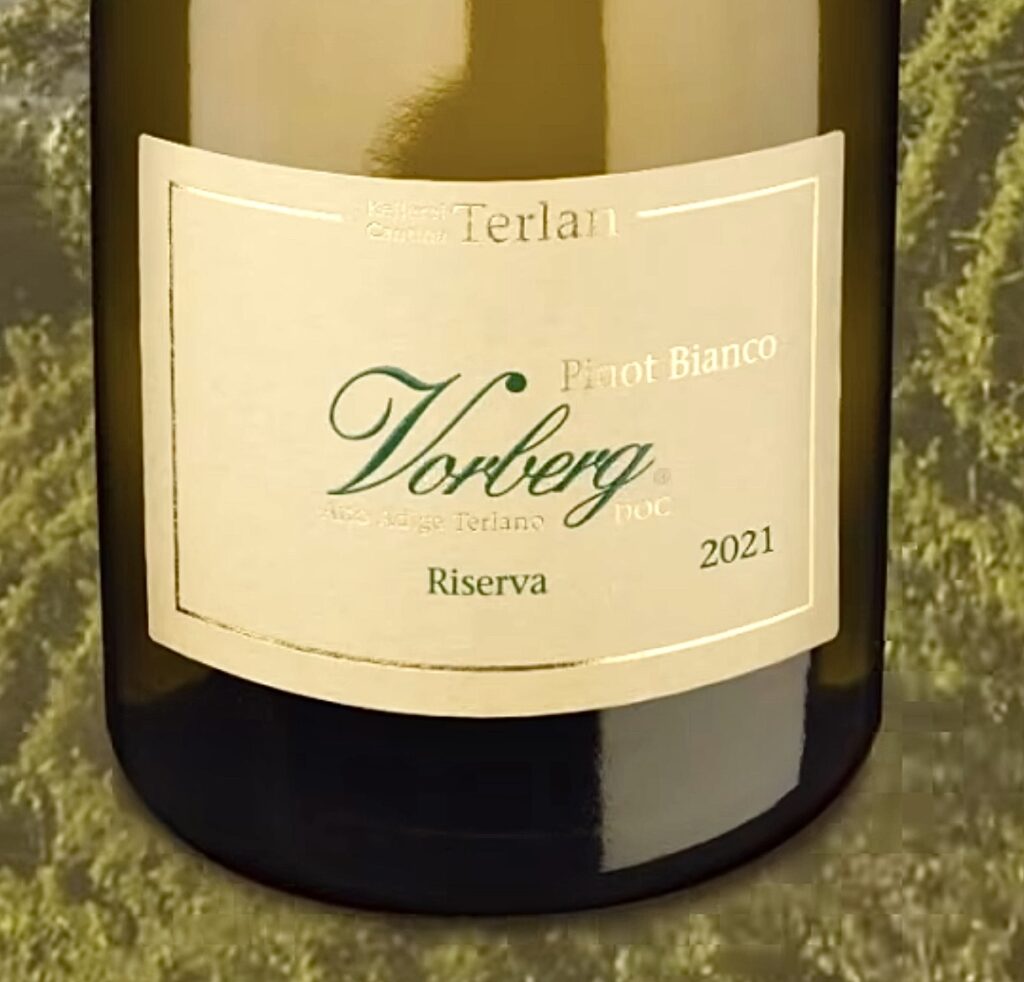
At Cantina Terlano, Pinot Blanc is the calling card, and Sales Director Julia Springeth attributes its success to altitude. The Vorberg vineyard, located between 1,500 and 2,000 feet, is often referred to as the winery’s “Grand Cru,” she says, but some of their oldest Pinot Blanc vineyards are situated close to 3,000 feet. These sites combine well-draining volcanic soils with a pronounced diurnal shift. During the day, temperatures can easily reach 95°F or higher, while at night, they typically drop into the low 50s, a perfect recipe for producing wines with fresh acidity and vibrant aromatics.
“It’s like a pizza oven by day, then the temperature crashes as soon as the sun sets,” Springeth explains. “Yet, no matter how hot or cold the vintage is, we always get physiologically ripe grapes with nice acidity.”
Hillside Heaven
As far back as the Austro-Hungarian Empire, planting on the valley floor was prohibited. “The low sites were considered too swampy and second-rate for quality wine,” explains Cronst. “Even place names reflect the elevation. The word Kurtatsch comes from the Latin Curtis ad Atesim, or “farmstead on a higher elevation.”
The advantages become clear as you climb from the lower sites to the higher ones. Temperatures drop by about 33°F for every 300 feet of elevation, yet sunlight, especially UV radiation, becomes more intense. Cool winds drain into valleys, leaving slopes better ventilated, less prone to frost, and naturally healthier. Higher vineyards require far fewer fungicide sprays, offering a sustainability edge over lowland plots where mildew and pests are constant threats.
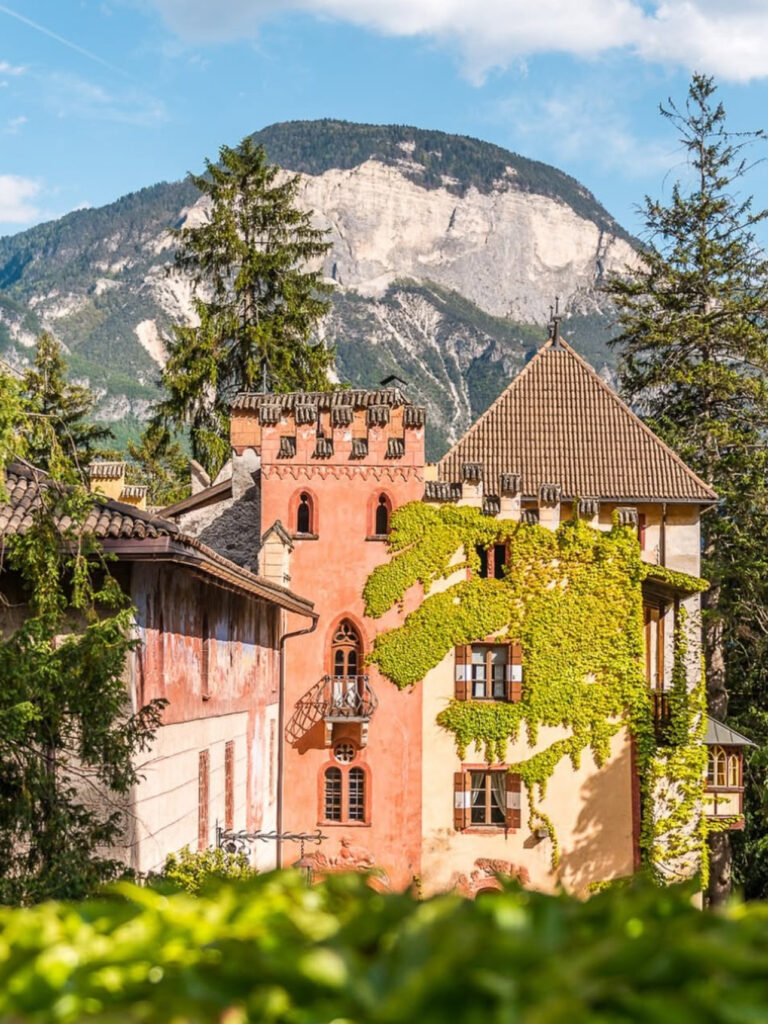
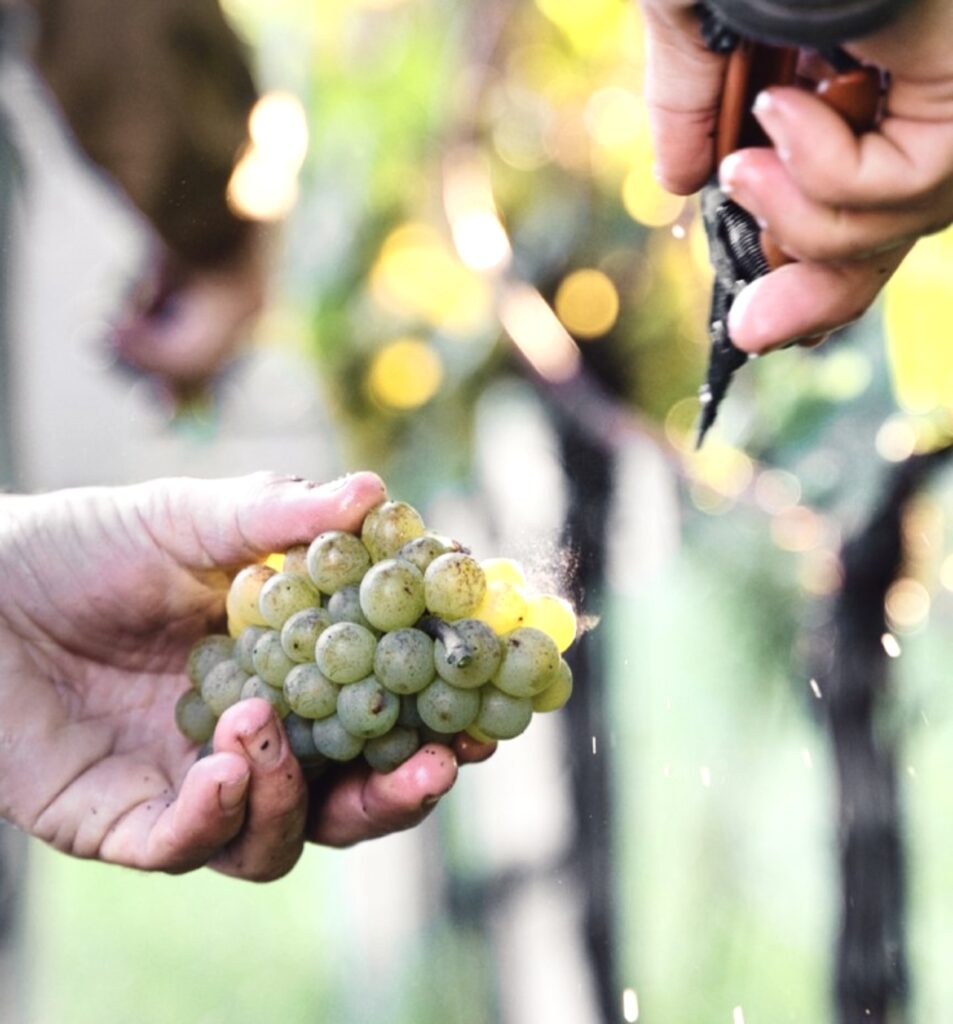
These same factors also shape which grapes thrive where, influencing the region’s evolving wine profile. Not long ago, red varieties dominated Alto Adige’s vineyards. Today, the picture looks very different, as the region has adapted to the changing climate, and 65% of the vineyard area is planted to white grapes. Cooler hillside plots suit grapes like Pinot Blanc, Gewurztraminer, and Sauvignon Blanc, which retain freshness even as summers heat up. Reds continue to perform well on the warmer, lower slopes, although they now account for only 35% of production.
Sustainable Climbing
But higher isn’t always better. Converting forests or pastures into vineyards can disrupt mountain ecosystems. To keep expansion in check, DOC regulations cap new plantings at 3,000 feet. Eduard Bernhart, Director of the Consorzio Alto Adige Wines admits these rules can be frustrating, but he also recognizes their importance: “Otherwise, people might plant where it’s not worth planting.”
The balance between climate adaptation and land protection is evident in vineyard decisions. Florian Brigl, owner of Weingut Kornell, a winery with 700 years of history, has shifted much of his production higher to counter increasingly frequent “tropical nights,” he says, when temperatures in the lower areas stay above 20°C (68°F).
However, that doesn’t mean carving vineyards out of forests or pastures. For Brigl, it’s about leaning more heavily on the higher parcels his estate has cultivated for generations. “The consequences of staying too low are immediate and tangible, especially for the white varieties. “The warmth can quickly erode acidity in the grapes,” Brigl explains. Especially at the lower elevations, this makes timing critical. “The window for harvest is smaller,” he says, “and if you miss it, it’s a different, less vibrant wine.”
The Long View
This northernmost part of Italy has been producing wine since before the Romans arrived, weathering ice ages, world wars, and political upheaval. Climate change is the latest challenge, but the response remains familiar: careful adaptation in the vineyards.
Bernhart points to the region’s remarkable longevity. “If a region has been cultivating wines in the same place for more than 2,000 years, like ours has,” he says, “it really is something sustainable.”
In Alto Adige, altitude has shaped viticulture for centuries and is now proving indispensable. Small as the region is, its ability to adapt while preserving quality makes it a model for winegrowers everywhere.
Many thanks to Alto Adige Wine Consortium and Colangelo & Partners for hosting my visit to Alto Adige Wine Summit 2025.