We had our first Chimney Rock wine in the late ’80s when a member of our little wine group in Miami brought its elegant Cabernet Sauvignon. From then on, we’d buy it as a classic splurge. The winery was founded in 1981 when a Pepsi executive, Hack Wilson, and his wife, Stella, purchased 180 acres along the Silverado Trail in the Stags Leap District that included an 18-hole golf course. They made the first nine holes into a vineyard growing Cabernet Sauvignon and released the first Chimney Rock wine in 1984. The white Cape-Dutch style winery comes from Hack’s time in Africa, opening the continent and other places to Pepsi. Hack and Stella forged a partnership in 2000 with another family-owned wine business, the Terlatos. In 2001, the partnership elevated the winemaker there, the much revered Doug Fletcher, to oversee wine production and grape growing in all of Terlato’s California properties. The Terlatos became full owners in 2004.
With Fletcher’s promotion, Elizabeth Vianna, who had been a harvest intern there in 1999, became Chimney Rock’s assistant winemaker in 2002 and in 2005, winemaker. In 2011, the Terlatos added the title General Manager to her title, an impressive act of trust and logic. Who better to optimize any business than the talented leader in charge of the quality of the product?
We really grew even more impressed with Chimney Rock when in 2014 Dottie first interviewed Vianna for this column on product placement. We’d seen the wine numerous times on House of Cards. Vianna met John at Premiere Napa Valley in 2019, when we were in Napa for the Wine Writers Symposium. And during lockdown in 2020, we finally opened a 2010 white Chimney Rock miracle called Elevage Blanc that is a combination of Sauvignon Blanc and Sauvignon Gris and is built to last. It was a takes-your-breath-away wine.
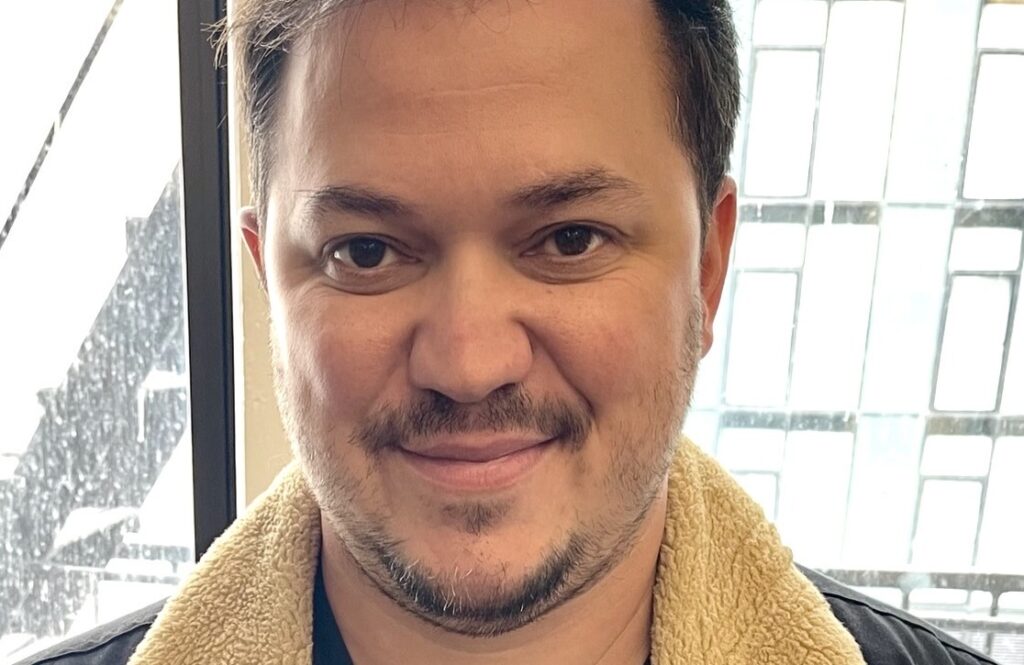
Here’s a short version of who Vianna is: She’s from Brazil and speaks three languages. She first envisioned a career as a pianist, then at Vassar as a pre-med student she thought about becoming a pediatric oncologist and interned at Mount Sinai during summer break and upon graduation got a job at Cornell Medical School Hospital in New York City, doing developmental neurobiology research. During that time, she started expanding her knowledge of wine, courtesy of a friend’s father’s collection, and had her aha moment at a Christie’s pre-auction event when she sipped a 1985 Sociando-Mallet while Christian Moueix (Chateau Petrus, Dominus Estate in Napa Valley) praised the UC Davis Enology program. While a student there, she worked as a harvest intern at Chimney Rock in 1999 and after graduation became Lab Director at Napa Wine Company, was soon promoted to Winemaker and got to work with icons like Heidi Barrett.
Since Vianna meets wine lovers all over, we asked her what were the top questions consumers ask her and how she responds.

I want to learn more about wine – what do you recommend? Which wine books do you recommend?
I recommend trying different wines, different regions to get started. Get to know your local retailer and be adventurous – ask for recommendations. Many retailers host tastings of different regions or producers. Starting a tasting group is also a great way to enjoy and learn about wine in your community if you have friends who share this interest. A trip to a wine region is the best way to learn about wine! What is better than combining travel and education, and seeing it up close? As for books –Karen MacNeil’s Wine Bible and Hugh Johnson & Jancis Robinson’s World Atlas of Wine are two great ones to start. Aldo Sohm’s Wine Simple is also fun.
How does one become a winemaker?
There are many paths to becoming a winemaker. You can study enology and viticulture as an undergraduate or if you have a science undergraduate you could do a master’s program in viticulture and enology. That was my path. I also know winemakers who just learned doing the work – started out in a cellar position and gradually moved up. I fell in love with wine as a consumer living in New York City, on the path to medical school. I became so interested in wine I ended up changing career routes and decided to pursue it professionally.
What is the day in the life of a winemaker like?
That is the best part of being a winemaker! No day is the same. It all depends on the time of the season. Harvest is go time so most of my time is spent in the vineyards and the cellar. I spend time in the vineyards year-round following the growing season. Sometimes we travel to host winemaker dinner and meet consumers and trade. In the summer I usually work on blending and bottling our wines.
What is your favorite thing about making wine?
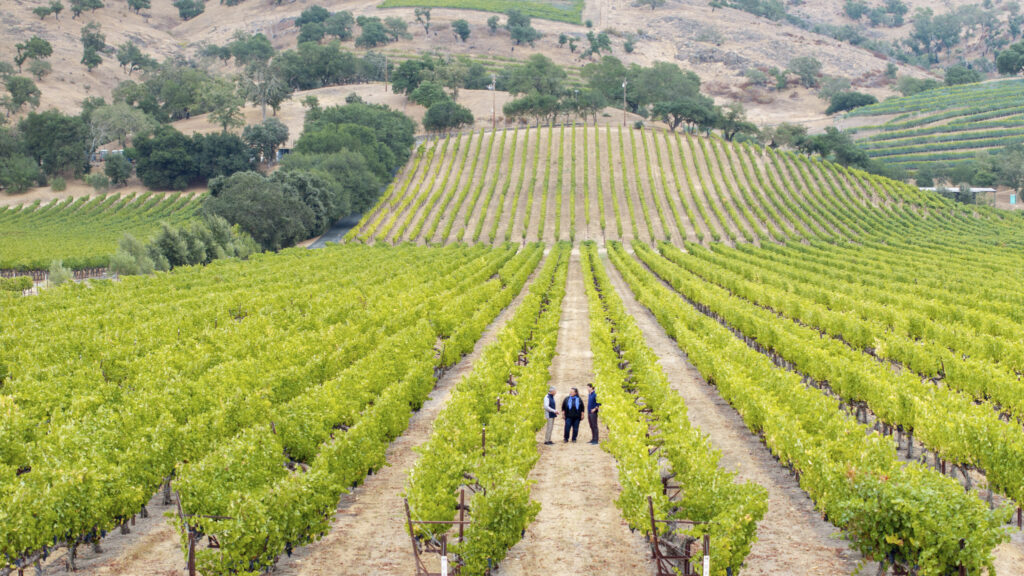
My favorite thing about making wine is continuing to learn the relationship between the vineyards on our Estate and the wines and how they change seasonally. I also love blending – the creative aspect of wine. I think this answer has changed over time for me. When I started it was all about the winemaking part of the process. As you realize that wine is truly made in the vineyard, the vineyard side has become much more important to me and I continue to learn and challenge myself to continue to make improvements in how we grow grapes from a quality and sustainability standpoint.
Where does Chimney Rock fall in the area of sustainability?
We are certified under the Napa Green Program, which is one of the most rigorous sustainability programs in the country for both the winery and the vineyard. A great way to hear more about our regenerative agricultural practices is to come visit and experience our Vineyard Odyssey Tour & Tasting – you’ll hear all about our quest for better soil health, biodiversity, biological pest controls and some of the interesting technology that we are using to track our progress.
What do you love the most about working in the wine industry?
The people and the camaraderie that exists in the wine industry is unparalleled. It is a business of passion and attracts people that are passionate about great wine, food and travel. That is my happy space!
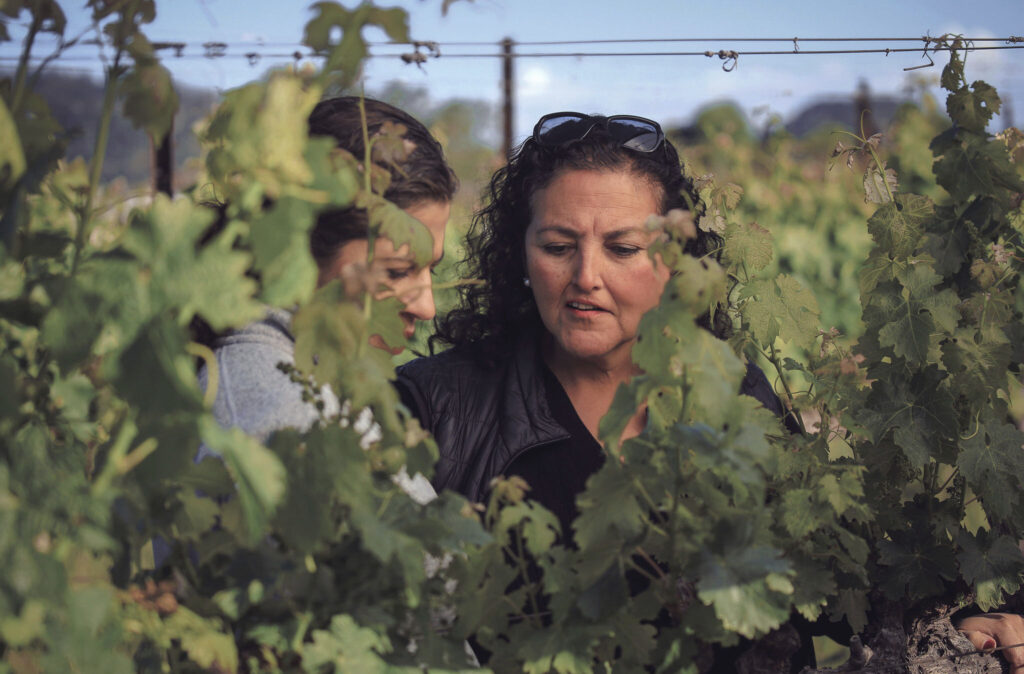
What is your favorite wine region and why?
Napa Valley! Because this is where I get to make wine. I love the community of winemakers in Napa. It is very supportive, collaborative, and welcoming.
If you didn’t make Cabernet in Napa Valley and could make wine anywhere in the world, what would you make and where?
I would love to work in Champagne and make some bubbly!
What do you drink when you aren’t drinking your own wines?
As a winemaker it is important to constantly try new things and drink wines from around the world to learn and to be inspired. I recently tried the Le Petit Cheval, (Cheval Blanc’s white blend) and it was fascinating to see the stylistic similarities to our own Elevage Blanc, which is inspired by the white wines of Bordeaux.
How long do you recommend aging your Cabernets?
My recommendation is always to try your favorite Cabernet at different ages and find out what your personal preference is. Some people prefer wines at the height of their youth and power, while other prefer the nuance and subtlety of aged Cabernet. Our wines can age up to 30 years if you have the patience to do so. Ultimately it is personal preference that should drive how long you age your wines.
Dorothy J. Gaiter and John Brecher conceived and wrote The Wall Street Journal’s wine column, “Tastings,” from 1998 to 2010. Dorothy and John have been tasting and studying wine since 1973. In 2020, the University of California at Davis added their papers to the Warren Winiarski Wine Writers Collection in its library, which also includes the work of Hugh Johnson and Jancis Robinson. Dottie has had a distinguished career in journalism as a reporter, editor, columnist and editorial writer at The Miami Herald, The New York Times, and at The Journal. John was Page One Editor of The Journal, City Editor of The Miami Herald and a senior editor at Bloomberg News. They are well-known from their books and many television appearances, especially on Martha Stewart’s show, and as the creators of the annual, international “Open That Bottle Night” celebration of wine and friendship. The first bottle they shared was André Cold Duck. They have two daughters.