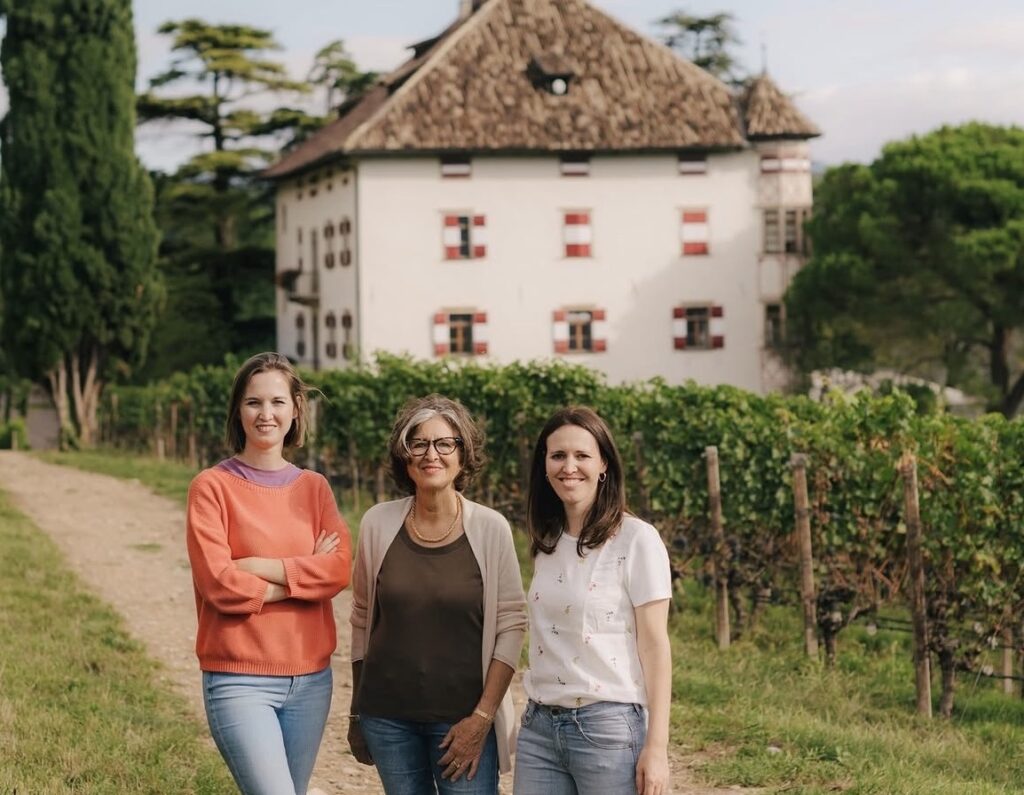
Nestled in Virginia’s winemaking center, Charlottesville, the story of Barboursville Vineyards is not merely a tale of winemaking, but a narrative woven through centuries of American history. The land itself was named for Thomas Barbour and once was home to a mansion designed for Governor James Barbour by his friend and neighbor, Thomas Jefferson. It was Jefferson who first envisioned these slopes cradling vineyards, part of his fervent but unfulfilled ambition to see fine wine flourish in Virginia.
For nearly 200 years, that vision lay dormant, until the 1970s, when the Zonin family of Italy——looked across the Atlantic. They saw not just potential in the terroir, but a chance to complete a historical promise. In 1976, they established Barboursville Vineyards.
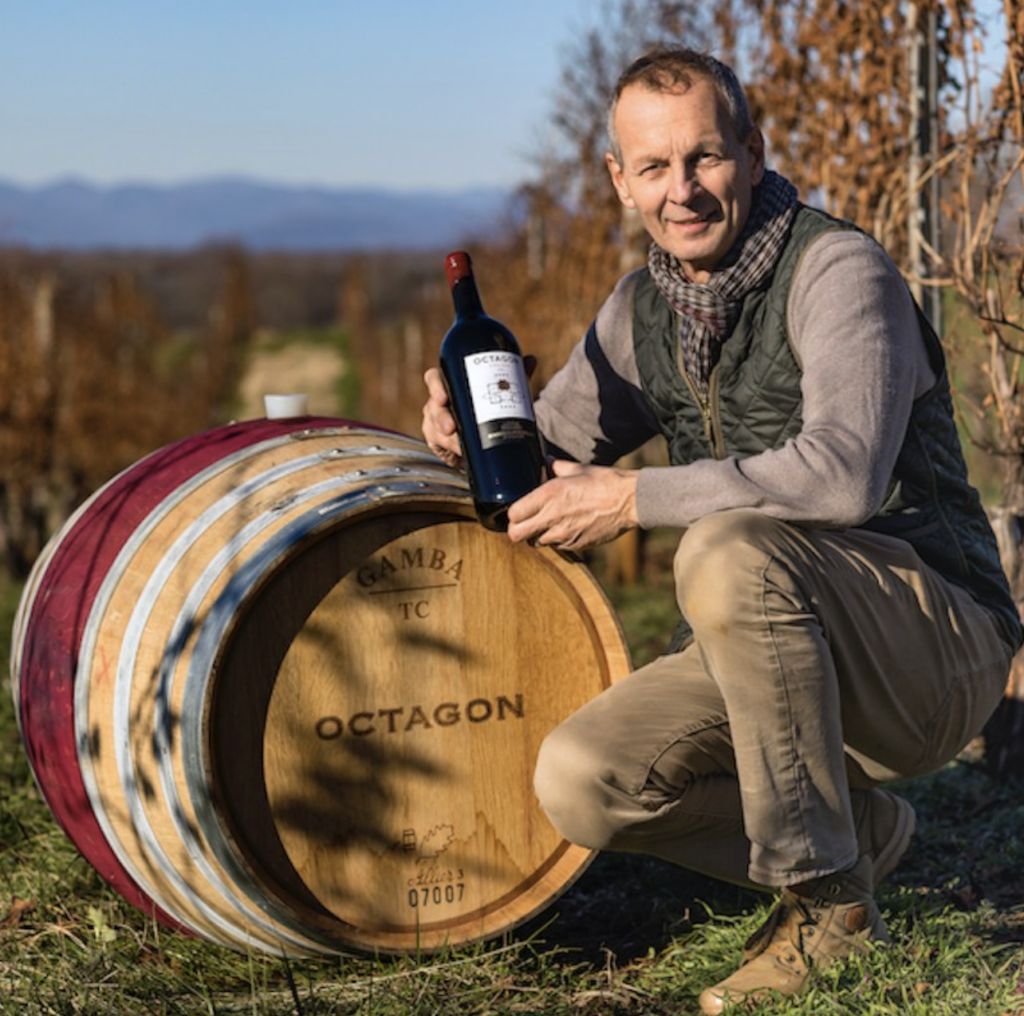
For over three decades, Piedmont native Luca Paschina has served as winemaker. Under his care, Barboursville has risen to become a benchmark for the East Coast, celebrated for elegant, complex wines like the iconic Octagon. This interview took place at Barboursville Vineyards in 2014.
Grape Collective: Tell us a little bit about your background as a winemaker.
Luca Paschina (Barboursville Vineyards): Yes. My name is Luca Paschina, and I was born in the northwest of Italy, in Turin. My father was a winemaker, as was my uncle and my grandfather, so it was very natural for me to pursue winemaking as well. I did—and I’ve had a lot of fun doing it.
And how did you end up in Virginia?
I worked for a company in Italy for about ten years, and during that time I had the opportunity to travel abroad through special programs designed to expand my knowledge. In 1990, I was approached by an Italian company and offered the chance to come to Virginia. I had been in America before, and I thought, why not?
I quickly realized that Virginia was a very underestimated region. Like the owner, I saw that it had great potential, and I felt it was a meaningful challenge.
Tell us about this estate—Barboursville.
Barboursville is quite an old estate. Its agricultural history goes back to the late 1700s. For nearly 200 years it was primarily a sheep farm, and only in the past 35 years has it been converted into vineyards. Today we have close to 200 acres planted.
We also have a restaurant and an inn—it’s really a destination, much like you’d find in some of the best parts of Europe. At the core of everything is the land itself and the climate, which sustain the quality we’re able to achieve.
And the history of the estate?
The name Barboursville comes from James Barbour, who was governor of Virginia in the early 1800s. His family, of Scottish origin, settled here in the mid-1700s. The property remained in the Barbour family until the 1930s. Grapes had never been grown here before.
One important feature of the estate is an historic landmark known as “the Ruins”—a home designed by Thomas Jefferson for Governor Barbour. Unfortunately, the house burned down on Christmas Day in 1884 and was never rebuilt. Today it stands as a beautiful shell and has become the emblem of our winery.
Virginia wine has really come into its own. How do you see that evolution?
Virginia has now been recognized by many as a clearly defined wine region. That happened through careful observation, patience, and respect for what the land and climate can offer. This is how every wine region in the world has been established.
Winemaking style today is very international. What truly matters is identifying which grapes perform well in each specific place. Even within Virginia, the diversity is enormous—different soils, elevations, and microclimates. For example, here Cabernet Franc thrives, while not far from here other areas succeed with Cabernet Sauvignon.
Tell us about the wines you make here.
We grow 18 different grape varieties here at Barboursville, although six form the core of our production and occupy most of the acreage. Our overall approach is to produce white wines that are very fragrant and refreshing. We avoid oak entirely for whites—since 1979 we’ve made Chardonnay strictly in stainless steel.
With red wines, I prefer wines that are vivid and structured, with some natural astringency. We do use oak barrels, but very sparingly and rarely new oak. I stay away from producing reds that are overly polished, soft, or rounded. Those wines may be pleasant for sipping, but I feel they often lack something at the table. When I think wine, I think food.
Are you experimenting with different varietals?
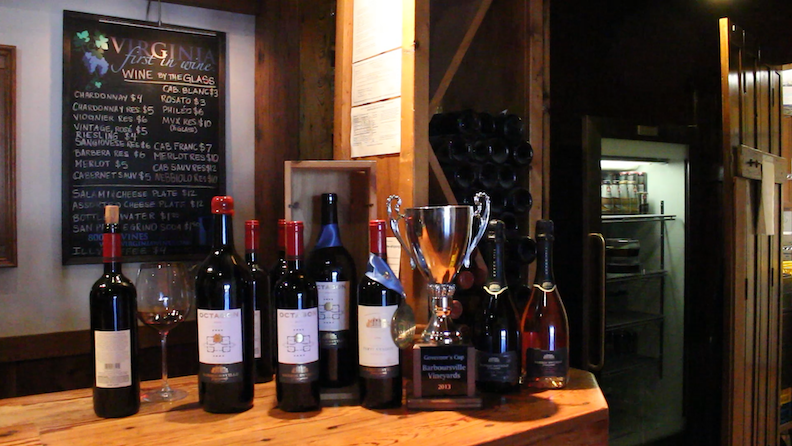
Yes. Cabernet Franc is very well established here, and Nebbiolo has proven itself over nearly 20 vintages, aging beautifully and holding its own in blind tastings alongside great Italian examples. We are also seeing excellent results with Vermentino, and we’re introducing Fiano as well.
Virginia is still a relatively young wine region, and we continue to explore alternatives, especially grapes that adapt well to what I consider a generally warm climate.
How would you describe terroir here?
Terroir is not something that simply exists on its own—it is created. It’s the result of the interaction between soil, climate, grape variety, human decisions, and winemaking. It evolves over time.
For certain wines, like our flagship red Octagon, we’ve developed a very specific expression that has its own identity and environment. It’s complex to achieve, but once established, it becomes a natural process.
What about soils?
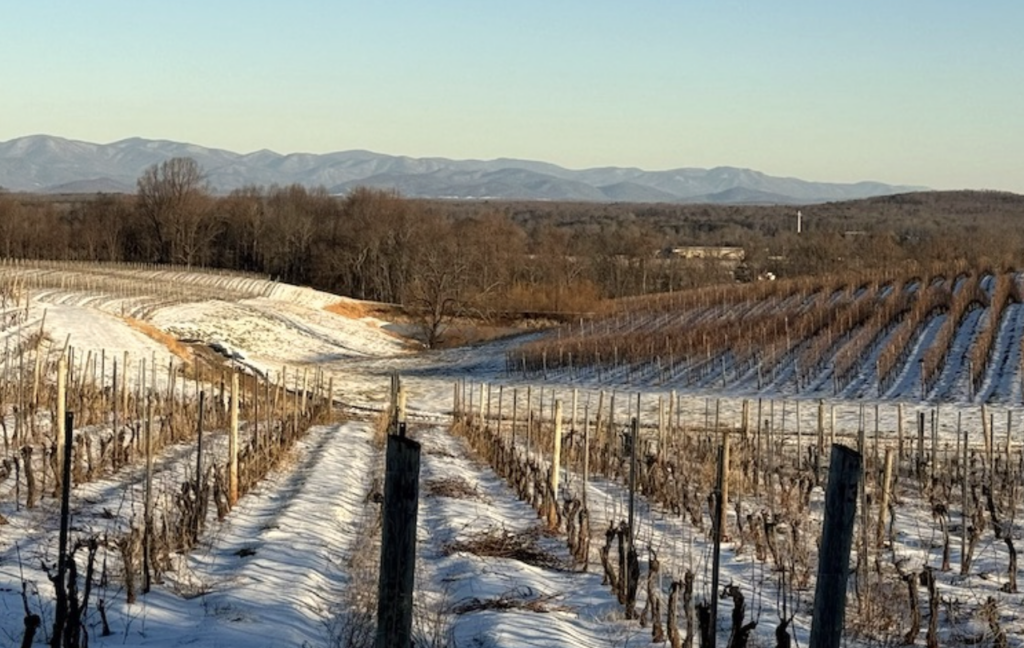
The soils here are predominantly red clay, originating from the slow breakdown of the Blue Ridge Mountains—among the oldest mountain ranges in America and of volcanic origin. Cabernet Franc thrives in these soils, while Cabernet Sauvignon is more variable in quality.
Do your experiences elsewhere influence how you make wine here?
Absolutely. My approach is shaped by experience gained in different regions—Italy, California, upstate New York, and most extensively, Virginia. Techniques change from vintage to vintage. We may go from a very dry year to a very wet one, and the approach in both vineyard and cellar must adapt.
There is no single recipe. The only good technique is the one built from experience and adjusted each year according to conditions.
What makes Virginia particularly challenging or unique?
Virginia is extremely diverse. Vineyards range from the Eastern Shore, influenced by the Chesapeake Bay, to elevations approaching 2,000 feet in the Shenandoah Valley. Most vineyards are in the Piedmont region, which is warmer, but the range of soils and elevations creates many variables.
Success comes from finding the right land and listening to it, rather than trying to force what the market demands.
Is there anything unique about your vineyard practices?
There is nothing radically unique in terms of vineyard techniques, but what distinguishes Barboursville is our willingness to grow grapes that many believed would not succeed here—like Nebbiolo and Vermentino.
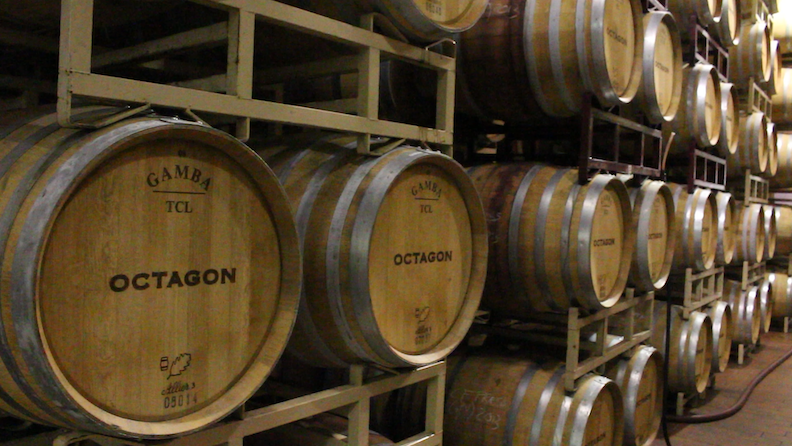
Another defining element is our use of oak. Since 1998, we have worked with a single cooper from northwest Italy who sources exclusively French oak. Consistency matters to me—I want the oak to have a signature, not variability.
I don’t know exactly where Virginia wine will go, but I know we are moving in the right direction.