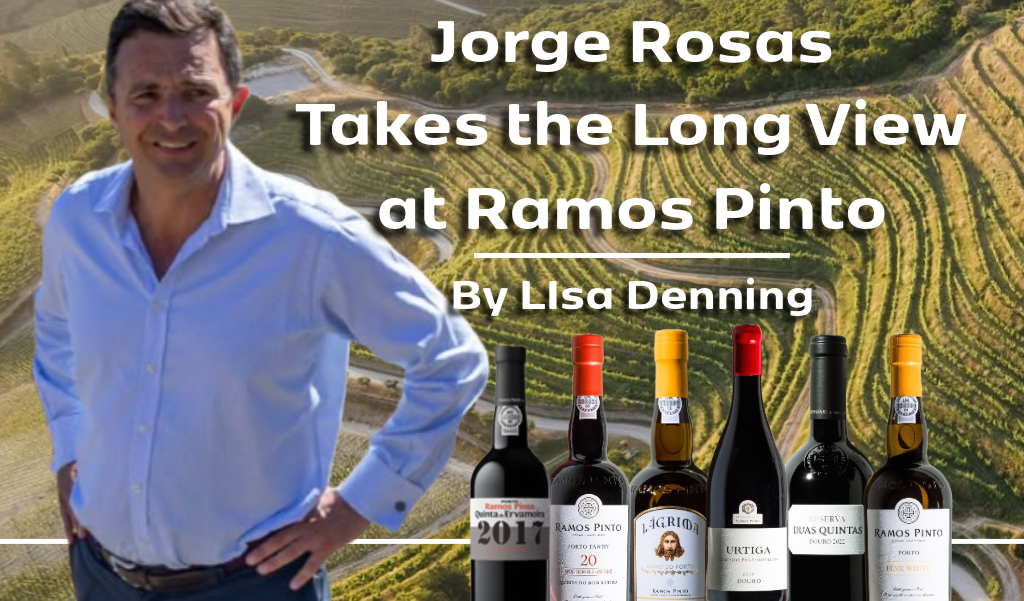
Jorge Rosas keeps a bottle of 1815 Port in his office. Just one. Nobody touches it. “When do you open a 210-year-old Port?” he asks as we begin tasting his wines. “That’s the million-dollar question.”
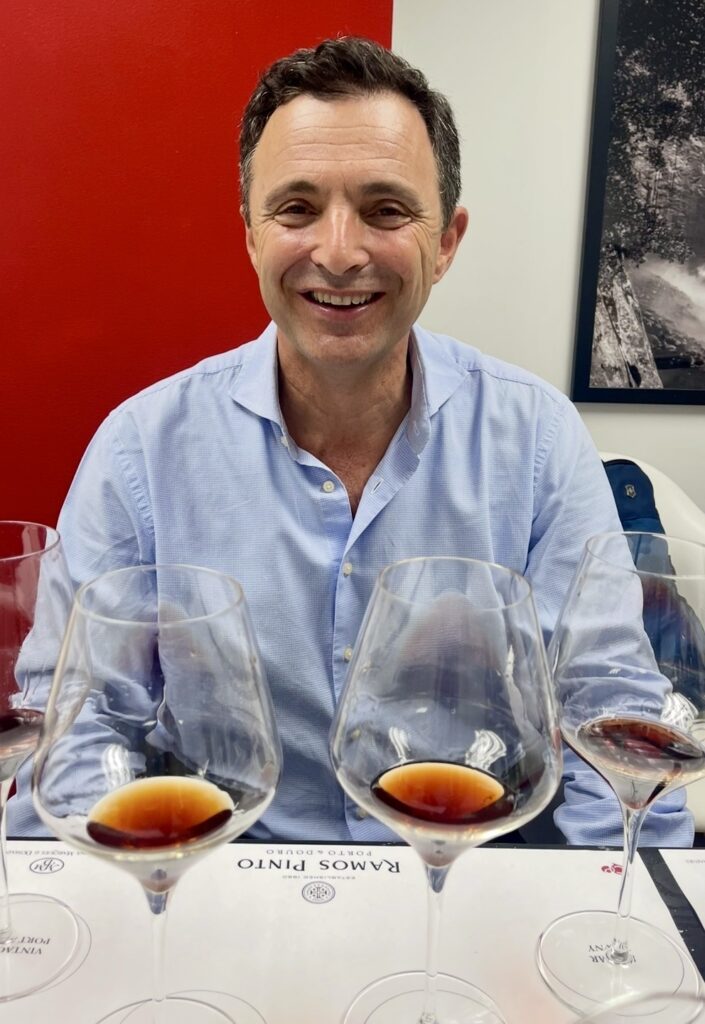
The wine, called “Waterloo Port,” was made in the year Napoleon lost at Waterloo, and the 1815 vintage is considered one of the best of the 19th century. The oldest Port Rosas ever tasted was an 1847 Port, still vibrant at more than 170 years old. “It was the most extraordinary wine I’ve ever had,” he said. “Port can outlive us humans.”
Rosas is the great-grandson of Adriano Ramos Pinto, who in 1880, at age 21, founded the Port house Ramos Pinto with his brother António. At a time when Port was typically shipped in bulk, the brothers insisted on bottling their wine, sourcing German glass, Dutch capsules, and French-printed labels.
By the 1960s, the Rosas family was applying the same care to how the Douro Valley was planted and studied. “My father began studying our grape varieties in the 1960s,” Rosas says. “Before then, Douro wines were field blends, with hundreds of varieties mixed together. We were the first to plant large single-variety blocks and vinify them separately.”
That work ultimately led Ramos Pinto to identify five key varieties: Touriga Nacional, Touriga Franca, Tinta Roriz, Tinta Barroca, and Tinto Cão. Today, Douro’s wine industry focuses on these primary grapes (of 80-plus permitted), chosen for their resilience, color, and flavor profiles.
The Fisherman’s Disguise
Perhaps nothing better illustrates the family’s long-term vision than the story of Quinta de Ervamoira, one of Ramos Pinto’s crown jewels.
“I remember as a child, my father would spend evenings poring over military maps with a magnifying glass, looking for flat land, which is nearly impossible to find in the Douro,” says Rosas. “Every Friday, we’d drive out to the valley to scout locations. After years of searching, he finally found it, in the heart of Douro’s Côa Valley. He saw the landscape and said, ‘I’ve finally found my lost paradise behind the mountains.'”
The 150-hectare (370-acre) estate near the Spanish border wasn’t for sale, and the family that owned it refused to sell. So Rosas’s father would visit, disguised as a fisherman, careful not to reveal how badly he wanted it.
“Years later, after the 1974 revolution in Portugal, when many properties were being nationalized, he returned and asked again,” says Rosas. “This time, they said yes. My cousins thought he was crazy to buy such a remote piece of land, but now we see his vision.”
The land had no vineyards, just cereal crops. “My father used to joke that he was a ‘serial killer,'” Rosas says, “because he tore out the cereals and planted vines.”
Then, in the 1990s, the government planned to build Europe’s largest dam, which would have flooded the estate. Archaeologists discovered prehistoric rock engravings nearby. Some accused the family of faking them to save the vineyard. International experts eventually confirmed the engravings were real. The dam was canceled, and the Côa Valley became a UNESCO World Heritage Site. Ervamoira is now the only vineyard in the world located entirely within a UNESCO-protected archaeological site.
The story captures everything: this family, this valley, and what it takes to make wine here.
A Winemaker’s Paradise
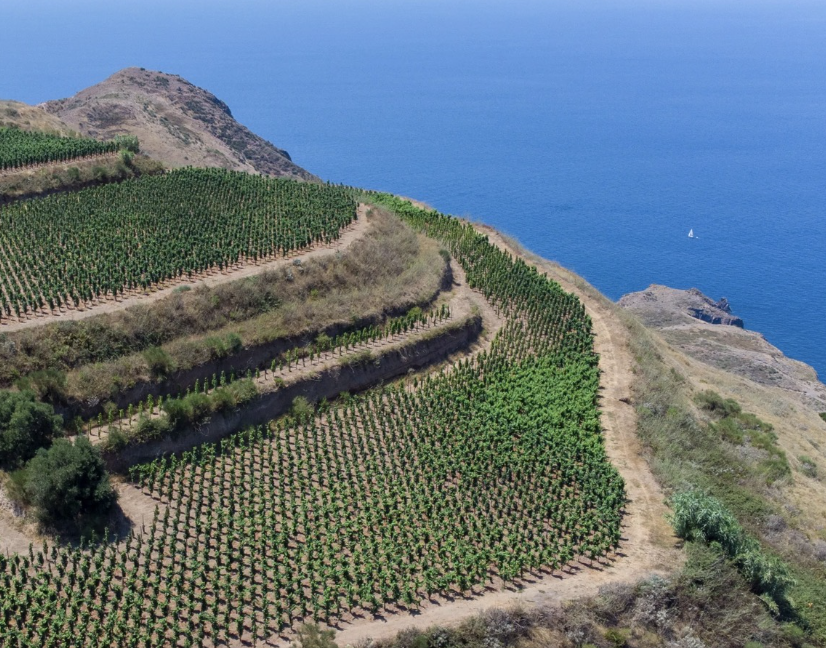
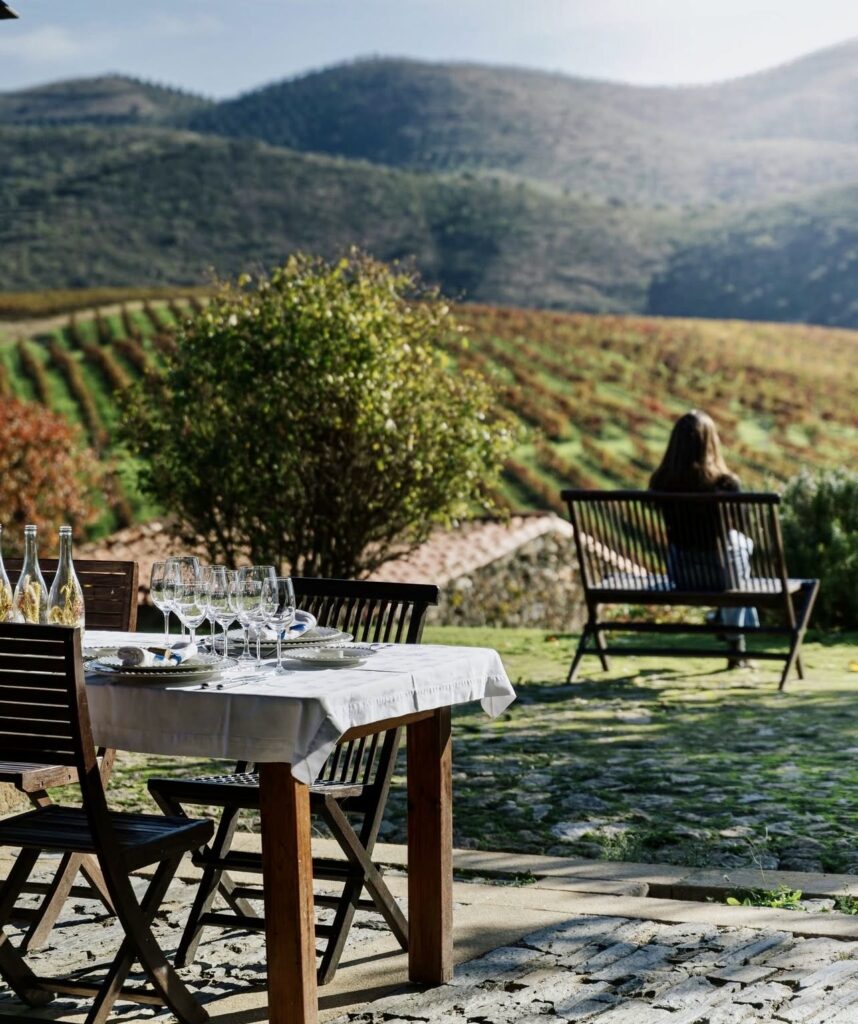
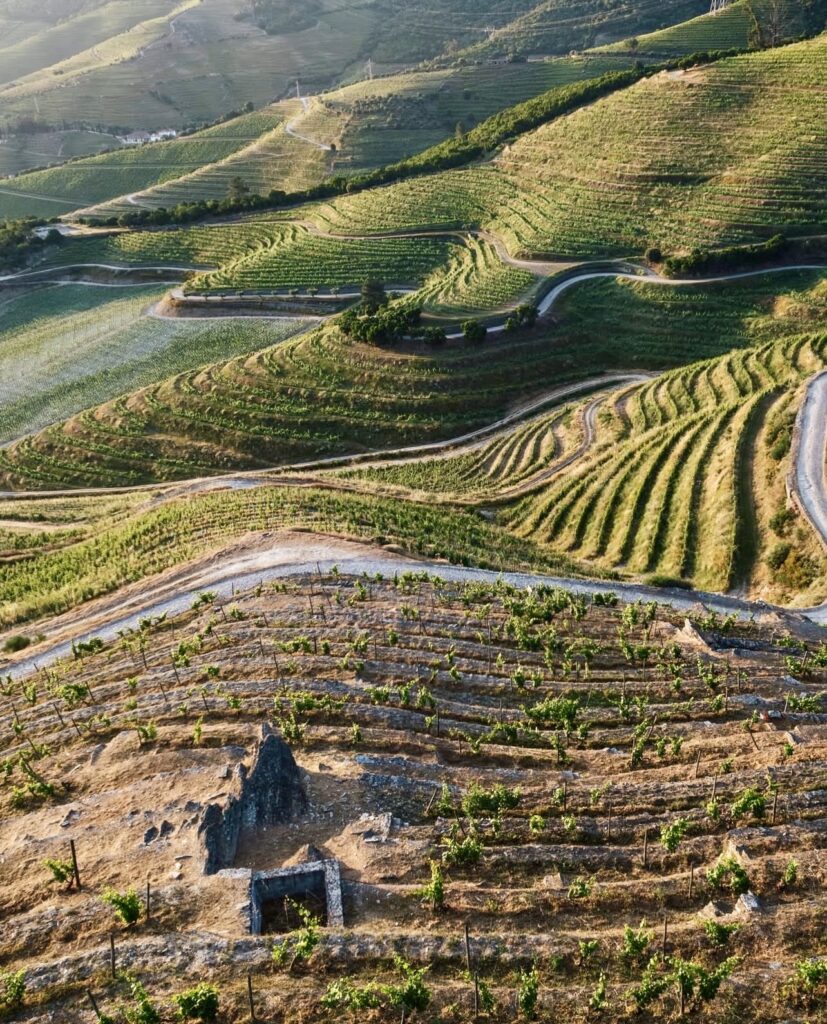
The Douro is a study in extremes. Established in 1756, it is the world’s oldest demarcated wine region, yet the landscape of steeply terraced vineyards make it among the most difficult places on earth to cultivate vines. The soils are mostly schist, a metamorphic rock that forms vertical layers. “There’s almost no dust or dirt,” Rosas explains. “To plant a vineyard, you have to break through one to two meters of rock.”
Despite the difficulties, the region’s wine production is quite versatile. “You can make white and red still wines, sparkling wines, late harvest wines, white Ports (both sweet and dry), vintage Ports, tawnies, rubies, everything,” Rosas says.
Part of that flexibility comes from the region’s dramatic geography. In a single estate, vineyards might face north and south, ranging from 100 to 400 meters in elevation. Add more than 80 grape varieties and a 300-kilometer (186-mile) stretch from the Atlantic to Spain—from one of Europe’s rainiest spots to one of its driest—and the possibilities become nearly limitless.
Climate change is reshaping the Douro, but Rosas isn’t panicking. “We’re seeing more frequent droughts and weeks of strong heat,” he says. “But we’ve always had extreme weather, so our native varieties are already adapted.” The main strategy is planting at higher, cooler altitudes. However, the Port classification system, dating to the 1930s, penalizes altitude because cooler vineyards were once considered disadvantaged for ripening. “That system needs to change,” Rosas says.
The estate is also investing in sustainability: 25 hectares are certified organic, and 3.4 hectares are farmed biodynamically. One biodynamic parcel has 100-year-old vines with 63 different varieties. “The soil is so alive—you can feel the energy there,” he says.
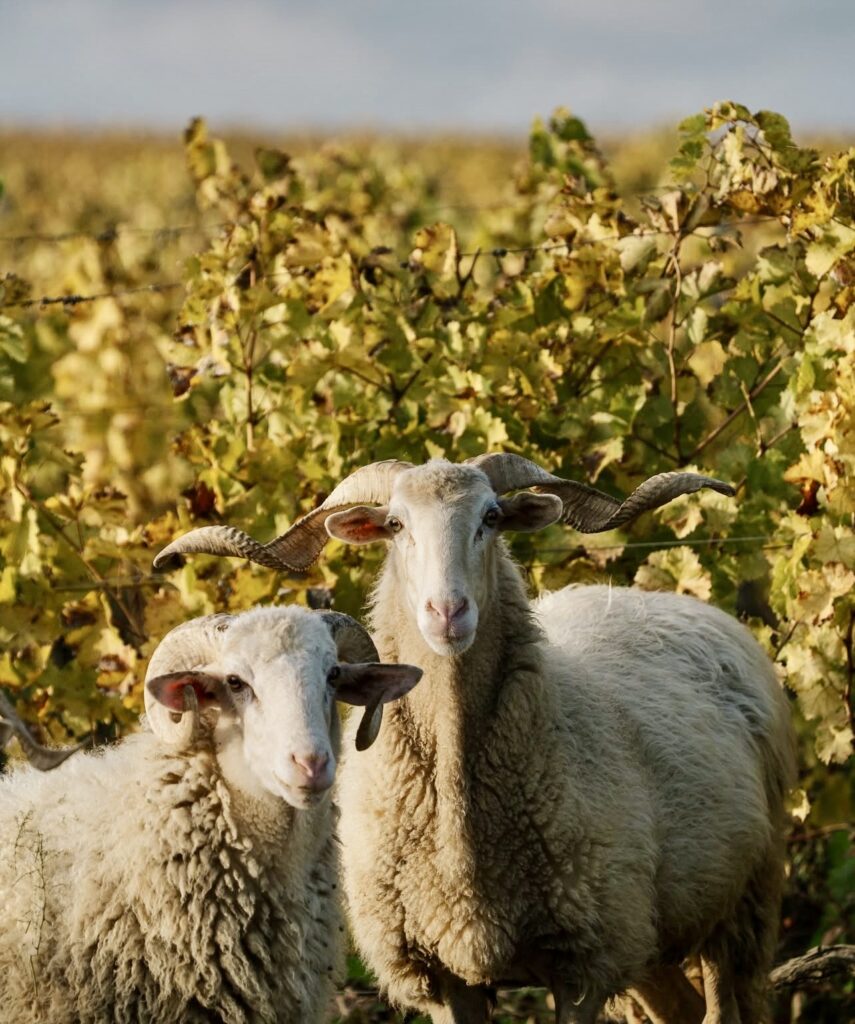
The estate maintains forests with roughly 12,000 trees, is expanding solar energy, has reduced the weight of bottles, and is transitioning to electric vehicles. In the vineyards, sheep do the work that herbicides once did, grazing to control weeds while enriching the soil and fostering biodiversity. The company eliminated herbicides entirely in 2010. “Step by step,” Rosas says, “we’re doing what we believe is right.”
The Long View
In 1990, the French Champagne house Roederer purchased Ramos Pinto, adding it to the Rouzaud family’s collection of luxury wine estates. But the arrangement is unusual: the founding family still runs the company. “I don’t know any other company that was bought 35 years ago and is still managed by the founding family,” Rosas says. The Rouzauds prioritize quality over quarterly returns. “They say, ‘Make extraordinary wines,'” Rosas explains. “‘If you do that, everything else will follow.'”
The family brings that same philosophy to their dry table wines, working to elevate the Douro’s reputation beyond Port. “Look where we are today,” says Rosas. “You see Douro wines everywhere. I’m very proud to be part of the generation that helped make that happen. It’ll take time, but the quality is there.”
But Port remains central to Ramos Pinto’s identity. When people say they don’t like sweet wines, Rosas just smiles. “Everyone loves sweetness. It’s human nature,” he says. “The sweetness in Port comes naturally from the grape itself, so what you’re tasting is the grape’s own sugar, not something added or artificial.
Rosas often uses a simple comparison: “If someone says, ‘I don’t drink Port because it’s sweet,’ I say, ‘Then don’t eat peaches or grapes either. It’s the same sugar!’”
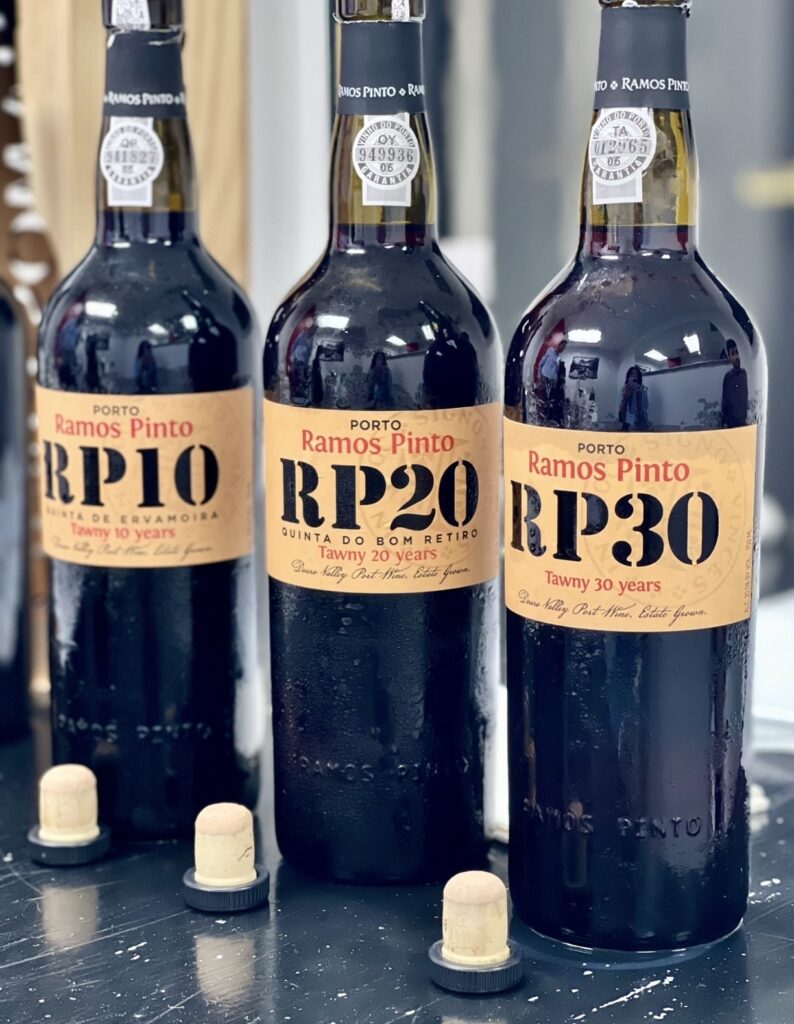
For Rosas, wine is ultimately about connection. “Wine brings people together,” he says. “It’s about joy, friendship, and conversation.” He’s wary of absolutist thinking about alcohol. “People read studies saying alcohol is bad, but those studies don’t distinguish between someone who drinks a glass of wine with dinner and someone who drinks vodka for breakfast. It’s not the same thing.”
As for opening that 1815 bottle, when the right moment arrives, he’ll know. Until then, like his father searching for Ervamoira, and like those ancient vines pushing through schist, he waits. Some things, after all, are worth the patience.