We think we might have a glimmer of good news.
We understand that you are here to read about wine, not about wine writing, but they are bound. Consumers want guidance, whether it’s from numbers on shelf talkers or exhaustive coffee-table books. When we started our wine journey in 1973, most wine writers were old white British men. Not that there’s anything wrong with old white British men, but most of the wine writing seemed to focus on Bordeaux and Port, both types of wine that have been trying for a while now to freshen, update and widen their appeal.
The California wine industry was changed by the famous Judgment of Paris in 1976 — not only by the astonishing results themselves, but also by the fact that a Time magazine reporter happened to be there and wrote about it. What if George Taber had not told the world that two California wines had trounced some of France’s best? His four-paragraph article, which shook the wine world, buoyed the efforts of visionary writers who were writing seriously about California wine. We remember how exciting we found “The Connoisseur’s Guide to California Wine,” which was first published in 1974. An American writer-critic, Robert Parker, changed the world of wine with his palate, his point of view and his points.
Along with the rest of journalism, the past decade has not been kind to wine writing. Few newspapers have regular wine columnists now. Dave McIntyre left the Washington Post more than a year ago and Lettie Teague left The Wall Street Journal recently.
However…
Since 2019, we have been speaking at the Wine Writers Symposium at Meadowood Napa Valley. This used to be called the Symposium for Professional Wine Writers, but the organizers changed the name to keep up with the times. It is sponsored by the luxurious Meadowood resort and the industry advocate Napa Valley Vintners. Dottie served on the board of the symposium from 2021 until this month. Through 2019, the symposium, which began in 2005, chose a highly select group of about 25 wine and wine-adjacent communicators (called fellows) to attend in-person sessions with some of the world’s top wine writers. Since the pandemic, it is been held virtually one year (and open to anyone who registers) and then in-person with 25 fellows the next year. This year’s symposium was at Meadowood in February, with the theme, “If wine were only art or only science, what would be lost?”
It’s a four-day event that features famous winemakers and many great wines. This year, there was an emphasis on multigenerational winemaking families of Napa Valley, a reminder that more than 90 per cent of the valley’s wineries are family-owned, most of them small. In his opening address, host Bill Harlan, founder of Harlan Estate, the spectacular cult wine and founding partner of Meadowood, talked about a crucial lunch he had with Robert Mondavi many years ago and then, the very next night at a dinner hosted by the newly renovated Louis Martini Winery, we sat across from Robert Mondavi’s granddaughter, Carissa, and the next day spent time with her father, Tim Mondavi, at their Continuum Estate high above St. Helena on Pritchard Hill.
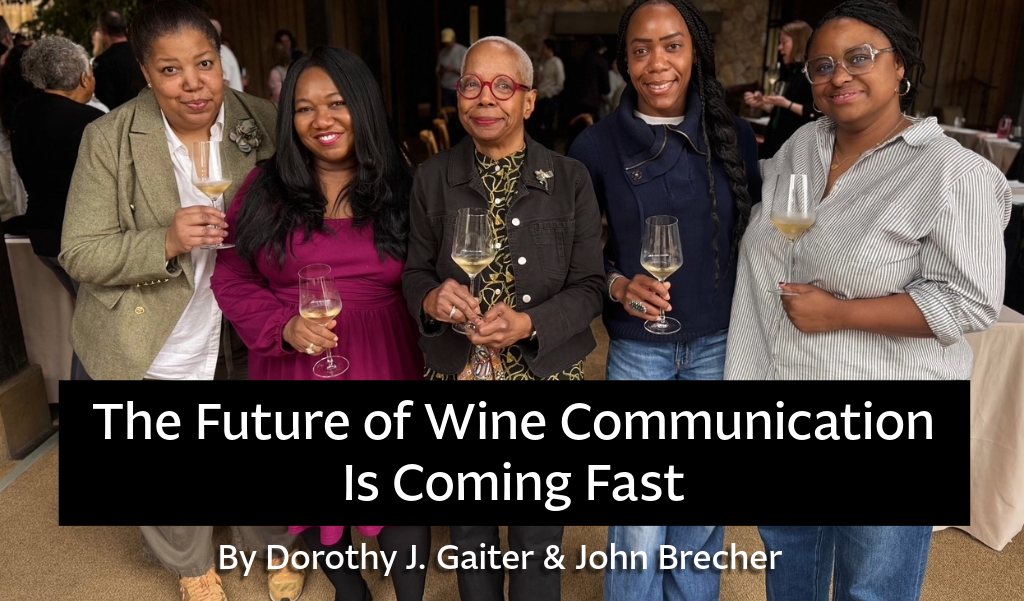
More than ever, when we were in sessions at Meadowood this year, we felt we were in the presence of the present and future of wine communication — and it has changed. Among the speakers was Jane Anson, a British woman who has written the book on Bordeaux, where she lives, and has a subscriber-supported site, janeanson.com. She was a symposium fellow back in 2016. Another speaker was board member Elaine Chukan Brown, who proudly discusses their Indigenous roots in what is now Alaska and has become one of the most sought-after wine speakers in the world. Brown’s new book, The Wines of California, tells the genuine story of this industry with an honesty and a grip that is unique. Alder Yarrow, who in 2004 founded one of the first wine blogs, Vinography, and manages the Old Vine Registry website, which catalogues old vine vineyards around the world, spoke, too. Also among the speakers: Wanda Mann, a Black woman who seems to be everywhere, from SOMM Journal to the board of the Society of Wine Educators.
Mann also has a Substack, Wine With Wanda, which takes us to the future. Not so long ago — say, when we were writing our Wall Street Journal column from 1998 to 2010 — wine communication was found nearly exclusively in newspapers, magazines and books. (For a brief time at the Journal, we also had a website). Then, about a decade ago, those traditional print wine writing platforms shrank in number as commentaries on Twitter, Facebook and TikTok (or, for people who were really into wine, various discussion sites, blogs and podcasts) emerged, all with quality as variable as wine writing in traditional media but reaching new audiences.
Now, Substack has exploded with wine content. Dave McIntyre has one and so does Lettie Teague. Legendary food writer Ruth Reichl, who was a speaker for the 2022 virtual symposium, has a popular Substack called La Briffe, We don’t know how many of the wine Substacks make money or are worth reading, but we do know that this gives consumers more choices than ever to decide whose work they want to read and who is credible.
All that said, we were even more inspired about the future by the fellows themselves. They were not there to learn how to communicate about wine. They already do that. They were there to learn how to communicate about wine better and their perspectives were exciting and extremely broad
Shawn Zylberberg, for instance, is a former actor and sommelier in Miami who, among other wine pursuits, hosts a podcast called Zonda Wine, where he interviews some of the world’s top wine experts.
Martha Cisneros Paja, known as WineDivaa, is a technology engineer who was born in Mexico and has become an expert on Mexican wines and written a book about them. Based in New York, she specifically targets Latinas as a consumer group that is looking for more information about wine. She has established thousands of followers.
Jamie Knee has developed her Petite Wine Traveler into a far-flung brand, with a large following. Later this year, she will host a PBS series.
Ana Carolina Quintela is a Brazilian-born certified sommelier who is Sonoma County Correspondent for Decanter. Davon Hatchett, a wine and intellectual property attorney and event planner based in Texas, has created a space for herself in the world of Champagne and sparkling wine as @thebubbleista.
The group included a playwright, LaShea Delaney; a copy writer for Berry Bros. & Rudd, Charlie Geoghegan; and among others, Ani Duzdabanyan, a prize-winning Armenian-American investigative reporter, a truly fascinating class.
But it wasn’t just their diversity of backgrounds that made us optimistic. It was how they are making this work, at least to a point. At previous symposiums, many fellows were focused on how to get work at a publication, or how to get a book contract. This, of course, was true again this year, with attention paid, among other things, to how to pitch ideas, tell stories, and cultivate and maintain strong relationships with colleagues and collaborators. But the world of wine communication has been disrupted. Now, more communicators realize they are on their own — that they need to bet on themselves and make a mark with all of the new tools of communication, from Instagram to Substack to podcasts, and the rest will follow.
These days, after all, think of all of the talented people who get contracts, record deals or Fallon appearances because they are “an online sensation.” This might have been slow coming to wine, but it’s picking up steam. Our guess is that the world of wine communication will look very different in just a couple of years, more sustainable, and that’s a good thing.
Dorothy J. Gaiter and John Brecher conceived and wrote The Wall Street Journal’s wine column, “Tastings,” from 1998 to 2010. Dorothy and John have been tasting and studying wine since 1973. In 2020, the University of California at Davis added their papers to the Warren Winiarski Wine Writers Collection in its library, which also includes the work of Hugh Johnson and Jancis Robinson. Dottie has had a distinguished career in journalism as a reporter, editor, columnist and editorial writer at The Miami Herald, The New York Times, and at The Journal. John was Page One Editor of The Journal, City Editor of The Miami Herald and a senior editor at Bloomberg News. They are well-known from their books and many television appearances, especially on Martha Stewart’s show, and as the creators of the annual, international “Open That Bottle Night” celebration of wine and friendship. The first bottle they shared was André Cold Duck. They have two daughters.