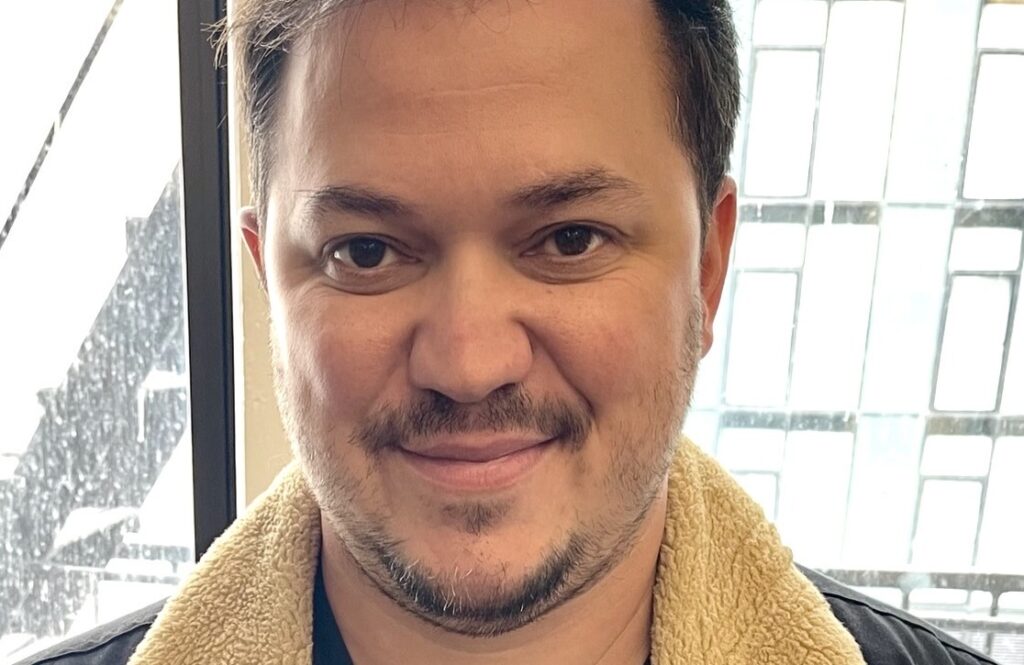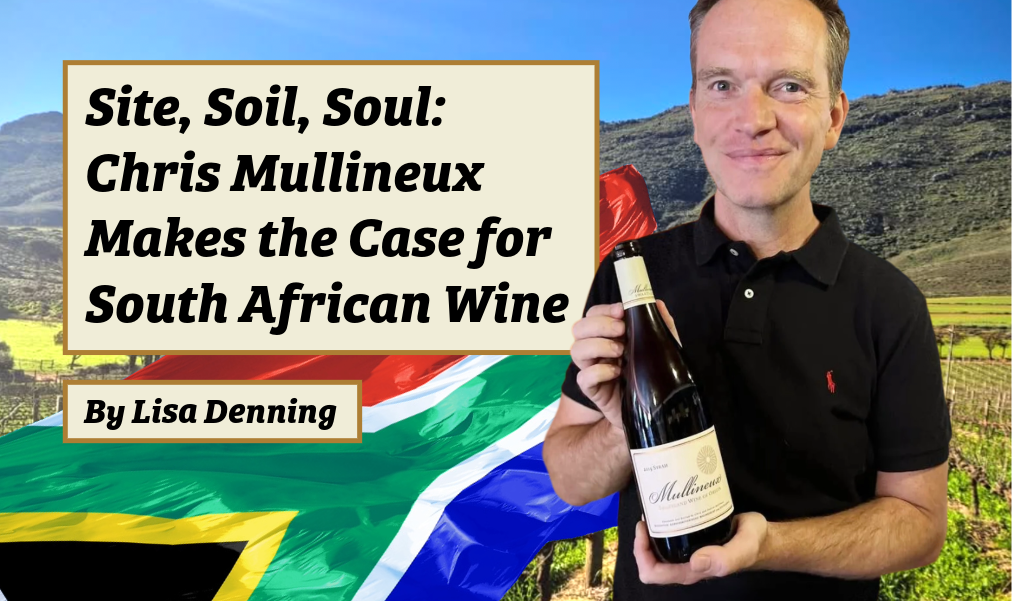
Few modern South African producers have helped redefine the country’s wine narrative quite like Chris Mullineux and his wife, Andrea, founders of Mullineux & Leeu Family Wines. From humble, first-generation beginnings to becoming leading voices of the Swartland, their work centers on low-intervention winemaking and site-expressive wines from old vines.
Based at Roundstone Farm on the slopes of the Kasteelberg mountain, they’ve helped establish Swartland as one of South Africa’s most dynamic fine wine regions. The area’s ancient soils, dry-farmed bush vines, and experimental spirit have driven its transformation from bulk producer to one of the world’s most exciting wine regions.
Since partnering on Leeu Estates in Franschhoek, the project has expanded to include the Leeu Passant range, exploring the country’s historic vineyards and classic varieties of Chardonnay, Cabernet Sauvignon, and Cinsault. We caught up with Mullineux at Grape Collective to talk about the winery’s origins, South Africa’s evolution, and how regenerative farming is helping them navigate increasingly extreme conditions while staying true to their philosophy.
Lisa Denning: Can you tell me the history of your winery?
Chris Mullineux: I’m South African. My wife, Andrea, is Californian. We’re both first-generation winemakers. We both studied winemaking at university, obviously in different countries. I studied at Stellenbosch in South Africa; Andrea studied at UC Davis in California. I worked a handful of vintages in South Africa, and she worked a handful in Napa. As young winemakers, you tend to travel around the world and gain experience everywhere. In 2004, we both happened to be working in the south of France, pretty close to each other. We met one day on a train going to visit a mutual friend in Champagne, had a fantastic time that weekend, and because we were working nearby, we kept connecting and spent a lot of time together during that vintage. Andrea had already been to South Africa for a vintage, so it was easy to convince her to come back and spend more time there.
She ended up working with me at the winery where I was working in South Africa for a few years, and one thing led to another, and we got engaged. We decided that before we got married, we should look at starting a winery ourselves.
Being first-generation winemakers, we hadn’t come from a history of wine or a family legacy, but we knew we wanted to do our own thing. We chose to settle in what was, at that time, a very unknown region called the Swartland, a beautiful region with lots of old vines just north of Cape Town. It was dominated by huge cooperative wineries, but there were hundreds of growers who had planted vineyards and were delivering their grapes to the co-op. Some of the vineyards were average, but some of the sites were just incredible. These farmers had planted the right grape variety in the right place, and all that was happening was these amazing parcels were being delivered to the cooperatives, blended with some average sites, and making pretty average wine.
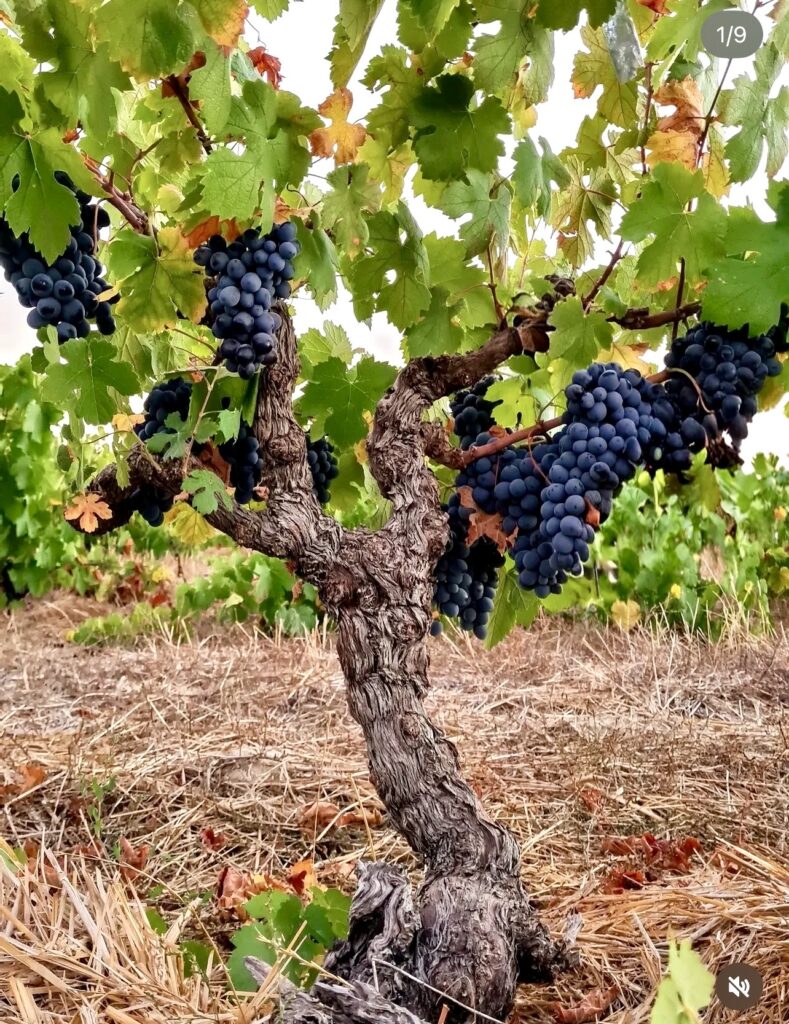
We were able to identify the special sites and approach the growers: “Do you mind if we lease or purchase grapes from those really special parcels and make wines from them?” We got off to a flying start. That was back in 2007. It allowed us to get going without a lot of capital investment and start making amazing wines from the very first vintage. The rest is history.
With the two of you coming from such different backgrounds, how does that play out in the winery? How do you divide your responsibilities?
The secret is that we worked together before we started our winery, and we saw how well we worked together. We have very similar tastes in wine—we love wines with finesse, wines that have a true expression of site, wines with some power but also balance. If we liked different styles, it would be more difficult to work together. But we’ve always had a similar palate and a shared understanding of how to get there.
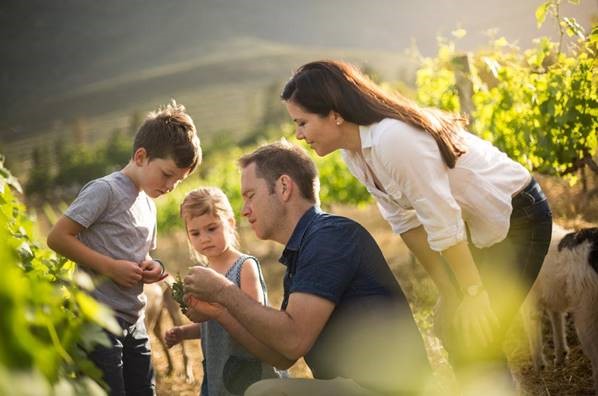
When we started the winery, it was just Andrea and me doing everything: all the viticulture, all the winemaking, all of it. Over time, as we’ve grown, we’ve had to specialize. Eventually, Andrea ran the winery and I ran the vineyards. More recently, Andrea has taken on all of production—she runs both the vineyards and the cellar—while I run the rest of the business: sales, finance, HR, and so on. But we both understand every role. During harvest, I’m very hands-on in the vineyards; Andrea is very involved in hosting tastings and visits. We can each step into any part of the operation, but we’ve definitely had to specialize to get things done.
How did you catch the wine bug?
Good question. I first studied something completely different at Stellenbosch, and I always tell people I was studying the wrong thing. But luckily, I was in Stellenbosch, so when I was 19 and having a very early midlife crisis, wondering what on earth I was doing, I discovered wine. I became obsessed with how a grape variety planted in one specific site could make an incredible wine, but planted somewhere else could make something completely different. I got more and more interested in that. One day, I was at a restaurant for lunch, and a man I’d never met was sitting at the table with us and mentioned he was studying winemaking. It blew my mind that you could actually study this. I’d always thought it was a family thing, that parents taught their children, and it was handed down through generations. The fact that you could study this thing I was so obsessed with. I just knew what I was going to do for the rest of my life.
Can you tell us a little about the evolution of winemaking in South Africa?
Vines were first planted in South Africa in the 1650s, about 370 years ago, so a very long time. Back then, there were just four grape varieties: Chenin Blanc, Semillon, Muscat, and Pontac. They were planted for sailors traveling from Europe to India in search of spices. Wine was, essentially, something to drink on the ships to prevent scurvy and for a bit of sustenance. The wines needed to be very stable to last on board, so they were mostly sweet, fortified wines. That’s how it stayed for several hundred years. It wasn’t really until the 1940s and ’50s, when refrigeration arrived in wineries, that South Africa could bottle wines that were neither fortified nor sweet. That really started to change the style of wine made there.
So wine has been grown and made in South Africa for hundreds of years, and we’re blessed to have a lot of very old vines. Old vines are an incredible resource. They’re adapted to climatic extremes. With their super-deep roots, they’re protected against heat waves or dry vintages. Old vines can weather the tough times and still produce wines with profound balance, purity, and intensity.
Our industry went through a period of isolation in the twentieth century during apartheid. It was difficult for winemakers to travel and taste the great wines of the world. But we always had amazing terroir and amazing old vines. When the country opened up in the ’90s after Nelson Mandela’s release, our industry opened up to the world. We gained experience, we understood what fine wine was, and everything was already in place to make it. Our winemakers just ran with it, and in a very short time, the narrative of South African wine began to change.
Then COVID came along, and there was a ban on all alcohol sales in South Africa.
Yes. Full-on prohibition. We’ve pretty much recovered by now. In a way, we were fortunate because South Africa is very far from most of our main markets, and our domestic market is relatively small, so most wineries here export a great deal. We sell wine in about 50 countries around the world. When COVID hit, and it became completely illegal to sell alcohol domestically, we redirected everything toward exports. Thanks to Skurnik, our importer here in the US, and our importers in England, Canada, and other countries, who all took on a bit more wine, we were able to survive. Once prohibition ended, things got back to normal, though it wasn’t easy that year.
Can you tell me about your vineyards, the grapes you grow, and the wines you make?
A big focus of ours in the Swartland is Chenin Blanc. As I mentioned, it was one of the very first varieties planted in South Africa, over 350 years ago. What happens over time is that when a grower wants to replant a vineyard, they go into their existing vineyard and identify the best vines—those that, no matter the weather, always produce beautifully balanced grapes. When replanting after 50 or 60 years, they take cuttings only from those special vines. That’s called a massal selection. You can imagine that after a few hundred years of doing this, you end up selecting Chenin Blanc genetic material that’s uniquely adapted to local conditions. So while they’re still genetically Chenin, Semillon, Cinsault, or Clairette Blanche, they’re now clones unique to South Africa, adapted to our dry weather and sunshine. The fruit they produce is so perfectly balanced that we don’t need to acidify or do bâtonnage in the winery. The vines themselves deliver intensity, uniqueness, character, and balance.
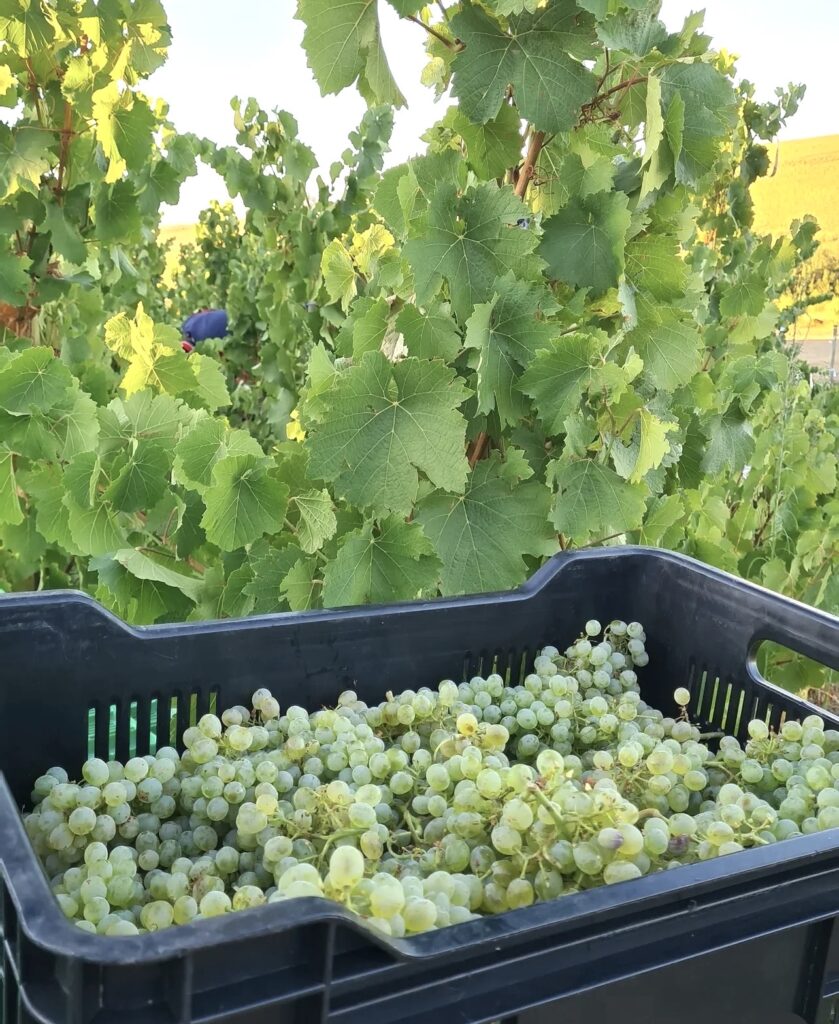
Swartland Chenin is marked particularly by its texture, a lovely mid-palate richness that comes from the vineyards themselves. Not from picking riper fruit, not from sugar, not from new oak or bâtonnage. It comes from the old vines, the dry climate, the clones, producing small clusters and berries with lovely concentration. That’s a huge focus for us. On the reds, it’s mostly Grenache, Syrah, and Cinsault, Mediterranean varieties again well-adapted to our climate.
You can travel just 30 or 40 miles in South Africa and be in an entirely different wine region with a completely different terroir. It’s like going from Alsace to Bordeaux in 20 miles. One maritime, one continental. So in Stellenbosch, you can plant Syrah and Grenache, but you’ll do better with Cabernet, Chardonnay, and other varieties suited to that climate. South African winemakers have learned what works where, and we’re focused on planting the right grape in the right place rather than just what we think the market wants.
As for the wines themselves, we have two wineries. Mullineux is our Swartland winery; that’s where we began in 2007. Our entry-level wine there is called Kloof Street, a wonderful wine for people new to South Africa or who want to try something without spending $50 or $100. Old vines, natural fermentation, unfiltered. It’s a beautiful wine with balance and texture that’s a great introduction to what South Africa is about.
Then we have the Mullineux range, which is a bit more powerful, complex, and intense, predominantly Chenin, but blended with a few other varieties. There’s also a Syrah in that tier. And then our top cuvées are all single-vineyard wines, from specific sites dominated by individual soil types. The three main soils in the Swartland are granite, schist, or slate and iron-rich clay, what we call “iron.” We bottle three Chenins and three Syrahs from those three different soil types.
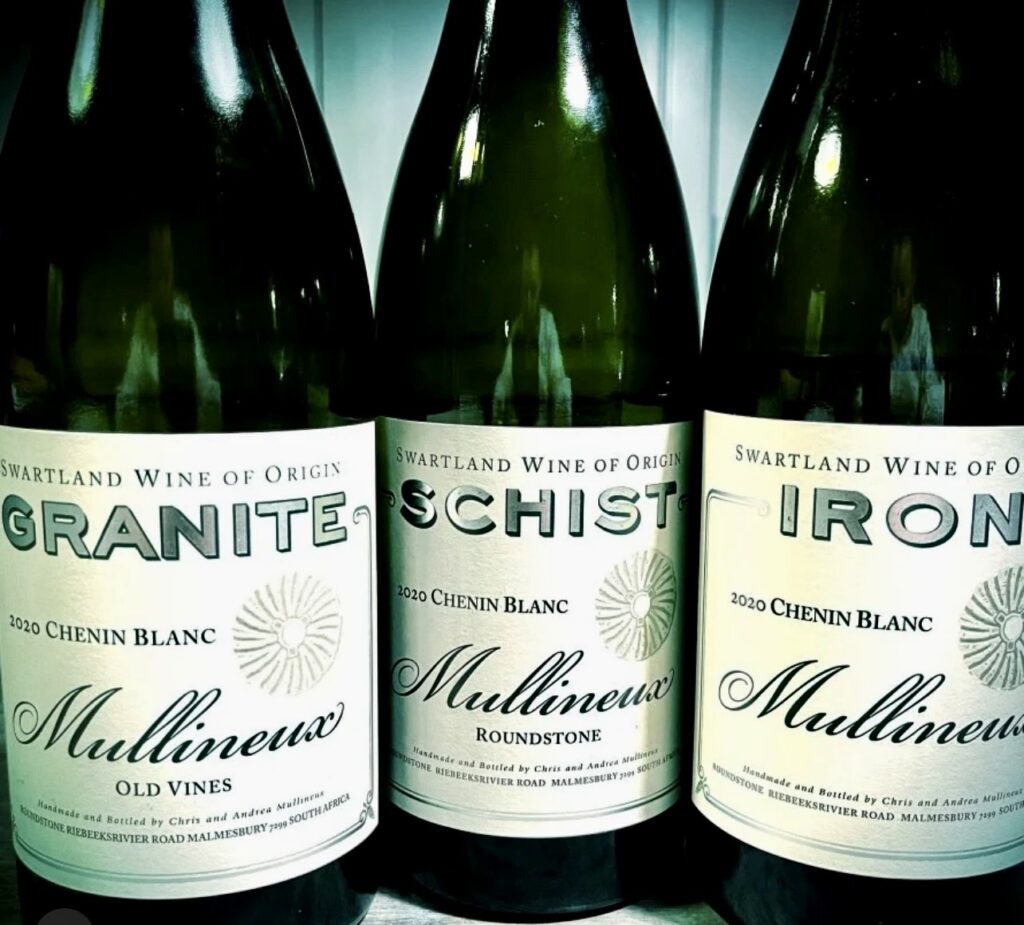
Our second winery is in Franschhoek, outside the Swartland. It’s called Leeu Passant, based at the beautiful Leeu Estates. There, we focus more on Cabernet, Chardonnay, and Cinsault, which is also a historically significant variety in South Africa.
Can you tell us your philosophy of viticulture and winemaking?
We think it’s very simple in principle, but it’s a lot of work. It really just comes down to planting the right grape variety in the right place. I truly believe that if you do that, you solve a lot of potential problems because the vines will be in balance. You won’t need to irrigate heavily or do a lot of aggressive canopy management. They’ll grow in a beautiful, natural way. That approach allows us to farm more sustainably without chemical inputs or heavy intervention. We try to let the vineyard grow in harmony with its site.
We do farm as naturally as possible. Our home vineyard, Roundstone Farm, is certified regenerative organic, actually the first and only vineyard in South Africa to hold that certification. That natural philosophy in the vineyard carries through to the winery. Everything is natural fermentation; we make no additions of enzymes or acids. We believe that if we have truly beautiful fruit, we can simply let it express itself. We do add a small amount of sulfur—that’s our only additive. The aim is to make wine that has a true expression of our remarkable terroirs.
How has climate change affected your viticulture?
We’re still figuring that out. We’ve only been going for 18 or 19 years, so we don’t have all the answers. What we’ve experienced over the last decade is less a steady shift than increasing unpredictability—more extreme and more chaotic. We’ve had some extremely dry years, but also some extremely wet years. We have to adapt our vineyards to cope with both drought and floods and erosion. It’s not just one or the other.
That’s where regenerative farming comes in beautifully, because it helps with both extremes. In dry vintages, the carbon in the soil from cover crops helps retain moisture; the cover crops and mulches covering the soil prevent evaporation, keep the soil cool, and preserve soil life. In wet years, where erosion is the risk, bare soils would simply wash away. But again, the carbon in the soil, the roots of the cover crops, and the mulch covering the ground all prevent erosion. It’s a system we feel genuinely helps us navigate both extremes of climate chaos.
In terms of workforce diversity, how do you see the progress of the South African wine industry?
That’s a huge question. South Africa has a massive unemployment problem. I think it’s around 35 percent at the moment. While many wine regions around the world are moving toward mechanization and streamlining their viticulture with as many implements as possible, we strongly believe in creating as many jobs as we can. We’re quite resistant to changes that would eliminate employment. We plant our vineyards very close together, which makes it impossible to get tractors in, so that forces us to do everything by hand. A lot of that is to prevent soil compaction so vine roots can spread, but it also means we need more people for weeding, planting cover crops, and so on.
But simply creating jobs isn’t enough. We also need to train people and invest in their development. In South Africa, that’s extremely important. So we try to maintain a consistent, year-round team rather than relying on seasonal workers we pick up when needed. In the quieter months, we find other work for them—chopping down invasive alien trees on the property and mulching them for compost, for example. And we try to provide education and training ourselves. Schooling in South Africa is a significant challenge. We can sit back and complain that it’s a problem, or we can take ownership of it and say, “This is our responsibility.” That’s our approach.
Do you find that’s the approach of many of your peers?
More and more, yes. Not everyone, but a lot of our friends and colleagues think that way. I think it’s one of the things that climate change and COVID taught us: you can complain about a problem and say, “I didn’t cause this.” If you don’t go out and address it, nothing will change. Over the last ten years, South Africans have learned to embrace our problems and find solutions. That spirit is increasingly common, yes.
Is there anything else you’d like to add that we haven’t covered?
Just that South African wine is honestly one of the most exciting things happening in the wine world right now. We have this remarkable heritage of old-vine vineyards and incredible terroirs. Our region, the Swartland, was one of the places that kick-started a new confidence in being ourselves. When we make Chenin, we’re not trying to copy the Loire—we’re not trying to make Vouvray or Montlouis. When we make Syrah, we’re not trying to make Côte-Rôtie or Hermitage. We’re trying to make Swartland Syrah, Swartland Chenin.
What’s great is that over the last decade, that confidence has spread to the rest of South African wine. Producers in Stellenbosch are proudly making Stellenbosch Cabernets. People in Hemel-en-Aarde are making incredible Chardonnays and Pinot Noirs, but they’re not trying to make Meursault or Chambolle-Musigny. They’re making authentic South African wines, world-class in quality, but with their own unique character.
And in terms of getting the word out about less-familiar regions, it’s happening slowly but surely. In the UK, there’s a long history with South Africa and a genuine understanding of the difference between Swartland and Stellenbosch and Hemel-en-Aarde and Elgin. In Singapore, people barely know South Africa makes wine at all, so it’s too early to talk about the eastern versus western slopes of Constantia. The American market is somewhere in the middle. A lot of people know the Swartland, a lot know Stellenbosch. My invitation to American wine lovers would be: geek out about the Swartland for six months. Buy as many wines as you can find from there and really get to understand the different sites. Then geek out about Stellenbosch for a while and understand that region. There’s a lot to discover. Just go and try proper, fine South African wine. It’s world-class, and it’s waiting for you.