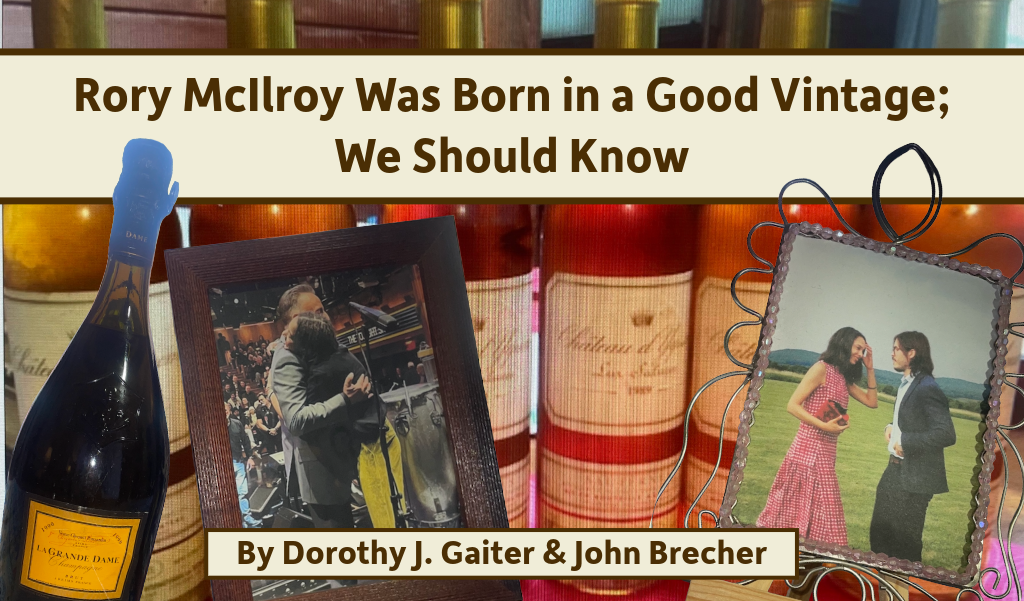
We have a great deal in common with Rory McIlroy.
Actually, we only have one thing in common with Rory McIlroy, but it was enough to have us rooting for him all week this year at the Masters, and we don’t even follow golf.
In our years of wine writing, one of the questions we’re asked most often is: What wine should I lay down for my newborn child? To begin with, any wine that might go the distance likely won’t be released until the baby is two or three years old, so there’s some time to think about this and consult with a reliable merchant. That also allows a little while to figure out what regions had a particularly good vintage in the baby’s birth year, which will matter over the long haul. We were both born in 1951, a notoriously bad year in Bordeaux — Michael Broadbent called it “one of the poorest ever” — so our parents would have needed to look elsewhere for a long-lived wine.
And storage is key. While we don’t think people should obsess about their storage situation for everyday wines, it’s a different matter for a bottle meant to age gently until a 21st birthday or a wedding. There are many small, affordable wine coolers on the market these days that would be useful for both long- and short-term storage.
Top-notch Bordeaux in a good year is always a pretty solid bet. So is a fine Napa Valley Cabernet Sauvignon. Barolo has always been one of our favorite lay-down wines. Port is delicious for a very long time; our only concern is that we’re not sure a young person would find it very celebratory when it’s finally popped open, though vintage Port is a wonder. The fifth generation of the Symington family just declared the 2024 Ports classic vintage wines, the first such declaration in seven years. Champagne with some age on it is a real treat and we’d recommend considering that.
Way back in 2001, we wrote about this subject for our column in The Wall Street Journal and included this advice: “Don’t feel you need to spend a fortune. We, and many of our readers, are constantly amazed at how well the inexpensive red wines of Louis M. Martini Winery age. As it happens, Louis P. Martini, son of Louis M. Martini, kept a cellar for each of his children beginning with wines from the year they were born. His daughter Carolyn, who heads the company now, brought a 1947 Barbera, from the year of her birth, to the Weekend Journal’s Open That Bottle Night party in Napa in November. It was still delicious.”
And this year, when we visited the Martini winery in Napa as part of the Wine Writers Symposium at Meadowood, the winery was kind enough to open a 1976 Cabernet Sauvignon for the attendees. We’d bought many bottles of this wine in the 1970s for about $5 each, but finished them long ago, opening our last two from 1974, a Pinot Noir and a Cabernet Sauvignon, in 1981 at a concert in Central Park. Now, 50 years later, the 1976 Cabernet was not only delicious but profound.
There’s another big hurdle to get over with laying down wines for children that we’ve heard about through the years. Just like your kids themselves, they are hard to part with — and there’s no telling if your children care about them. What do you do then? We’re amused and sometimes saddened a bit on Open That Bottle Night to learn how many people finally opened bottles they’d saved for children who have no interest in them.
Which brings us back to Rory McIlroy. At the Masters, there’s this thing called the Champions Dinner, where the previous year’s winner arranges a fancy meal for all of the past winners. McIlroy’s wine choices from the wine cellar of the Masters Tournament’s host, the Augusta National Golf Club, seemed to be ripped from the headlines of our life. One especially rang bells. For dessert, he chose 1989 Chateau d’Yquem, the great sweet wine from Sauternes, because it’s from his birth year.
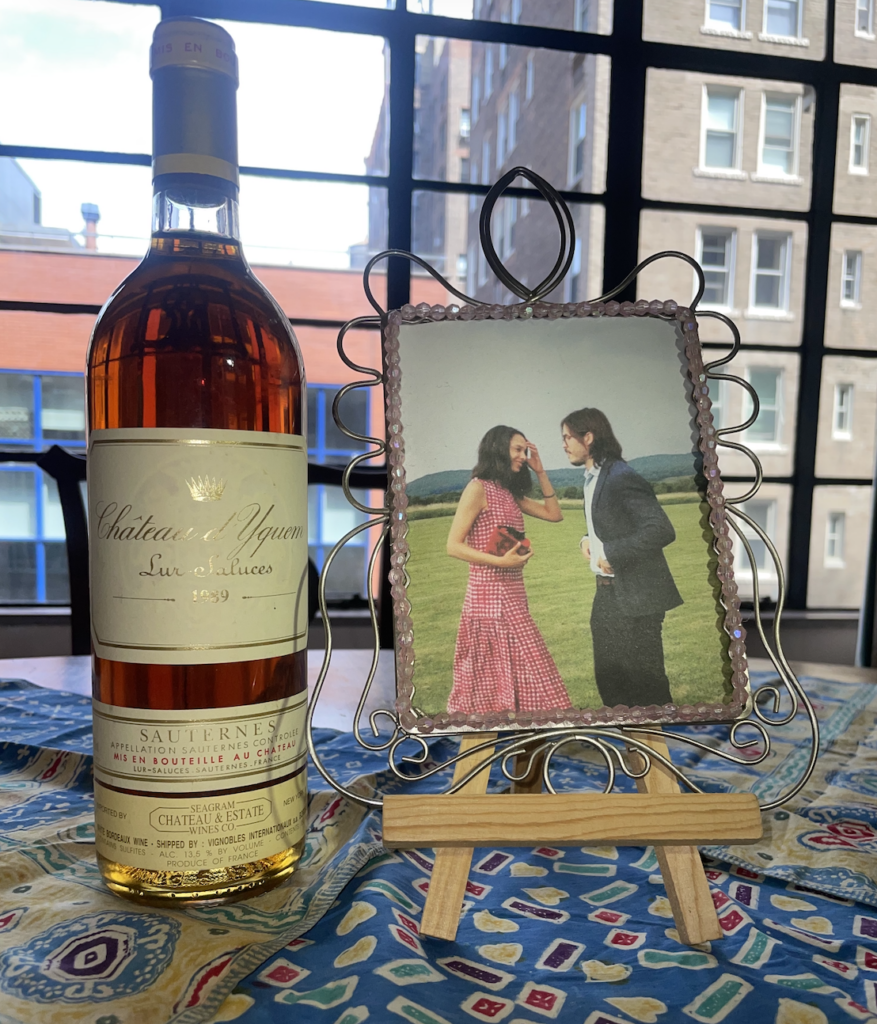
Heavens! That’s the very same wine we laid down for our first daughter, Media, after she was born. We have long felt that Yquem is the world’s greatest wine, and, of course, we’re not alone. In the famous Bordeaux Classification of 1855, it was placed in a category unto itself, Premier Cru Supérieur, a superior first growth. Its tastes can’t be adequately described, but we think of concentrated apricots, pineapple and honey over layers of the richest earth imaginable. Conjure sweet, liquid gold, with a consistency like heaven. Yes, we are firmly carried away. And it also gets better and better and darker and darker in its clear bottles over time, and has been known to age deliciously for more than a century. The wine is sweet because the grapes — Sémillon mostly and Sauvignon Blanc — have been attacked by botrytis cinerea or noble rot, which condenses the grape’s flesh, leaving the concentrated liquid sweeter. This does not occur every year, which means it’s pricey.
As it happens, 1989 was an outstanding vintage in Bordeaux, so we decided we’d lay down Yquem for Media. That sounds extravagant now, but back in the early 1990s it was ridiculously affordable because sweet wines were not in fashion. We bought one here and there and ultimately found six.
We had never opened one until Media and José’s wedding rehearsal dinner in 2019. The wines looked gorgeous in the bottle, like the most perfect sunset we’d ever seen. We took two bottles for the small group at the dinner and left them with the caterer.
When we arrived, the caterer met us outside. He said, “Just fyi, that old wine you brought looked kind of dark and I think it might have gone bad, so I poured it out and replaced it with something else.”
The look on each other’s face is seared in our memory.
Then he let out a big laugh and said, “Just kidding!”
If Dottie had had access to a sharp object at that moment, she would still be in prison.
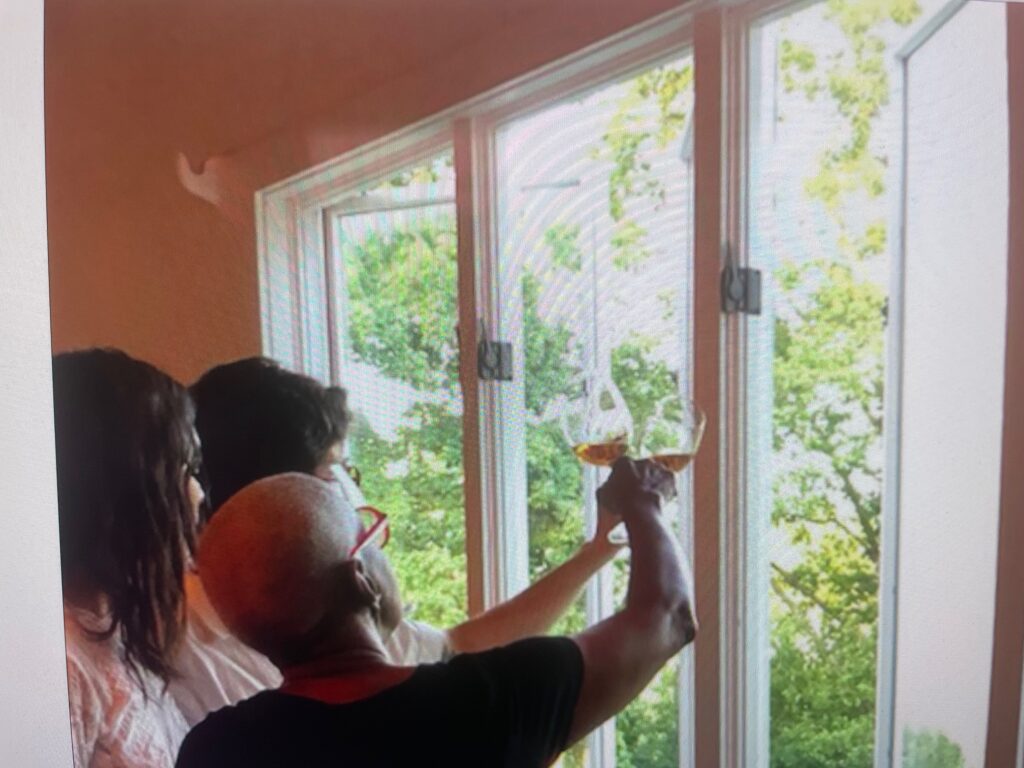
At the end of dinner, we poured a small amount of the Yquem for all of the guests as Dottie told them about Thomas Jefferson’s affection for it and that he’d gifted some bottles to George Washington. When we smelled Media’s wine, it seemed like time stopped because it was so perfect. We made toasts and then drank a small sip. Each taste was like a world. Even with everything going on around us, we still remember that glass.
We hope McIlroy and his buds enjoyed it nearly as much as we did. But wait…
It’s not just the Yquem. To start the dinner, McIlroy poured Salon les Mesnil 2015, a rare and spectacular Champagne. Just before Media was born, we’d heard that French people touch a drop of Champagne to babies’ lips to welcome them into the world; we never checked to see if that was true and just went with it. When we asked our great wine merchant and mentor, Chip Cassidy, what Champagne we should get, he disappeared for a while and came back with 1979 Salon. He explained that only two bottles were allocated for Florida and he gave us this one for Media. We did indeed touch it to her lips as she arrived.
For his white, McIlroy served Domaine Leflaive Batard-Montrachet 2022. When we were living in Miami in the 1980s, Leflaive was such an honored name in Burgundy that we’d never seen one, so we remember well the night our friend Bob brought one over to our house to share with our little wine group. It was indeed spectacular, worthy of its exalted status.
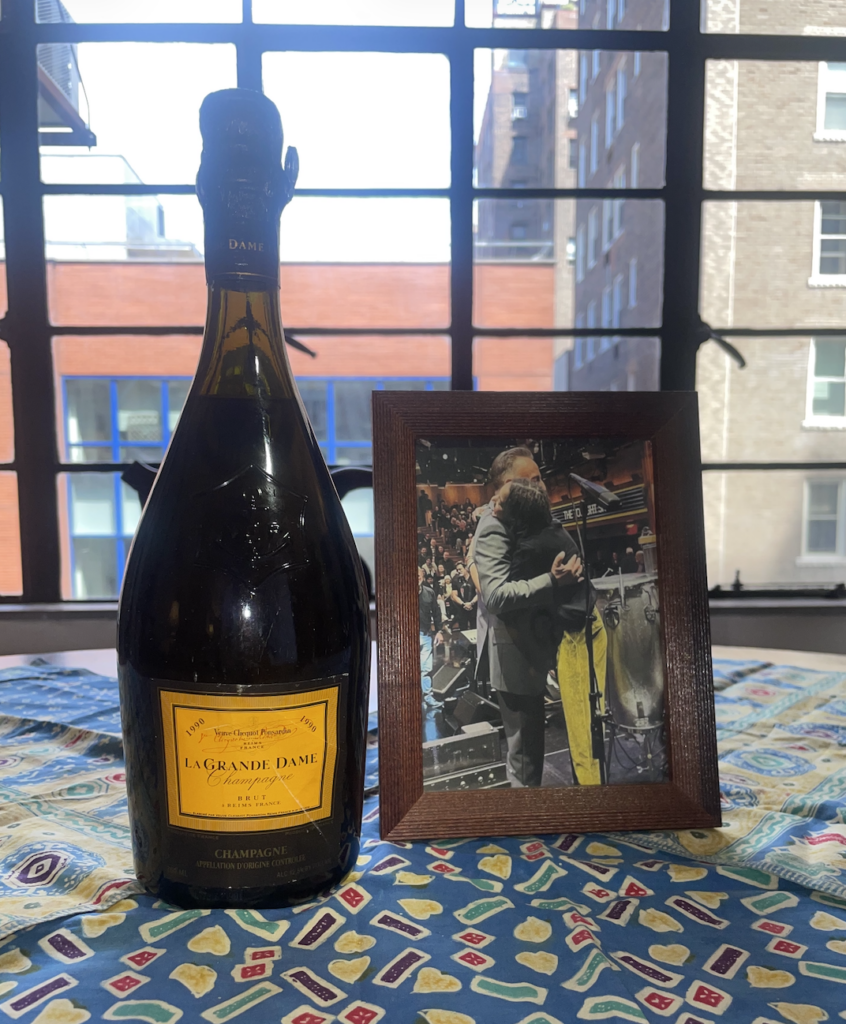
And for the red, a 1990 Château Lafite Rothschild. Guess what? 1990 is the birth year of our younger daughter, Zoë. It was another outstanding vintage in Bordeaux. But instead of Yquem, we decided to focus on a mixed group of Bordeaux and a bottle of Champagne that is appropriate to her and her name, which means Life: Veuve Clicquot “La Grande Dame.” We can’t even imagine how delicious that is now. One of these days, we are hoping Zoë will decide that now’s the time.
Readers who did not lay down bottles to mark a sweet milestone ask us how to get older bottles to celebrate the year. This can be challenging for a number of reasons. To begin with, good wines become harder to find and more expensive as time goes on. Even more important, if you are not buying the bottle directly from the winery, it’s difficult to know the provenance of the wine. Is it genuine? Was it well-kept?
In honor of this column, however, we decided to go for it. We looked around to find a 1989 and 1990 wine that weren’t too expensive and, if not abused, would still be delicious. We also wanted to get them from a New York City-area store so they wouldn’t have to be shipped. We were lucky to find two Barolos at a local store that we trust: a 1989 Barolo from Ceretto, one of our favorite Piedmont wineries, and a 1990 Barolo from Massolino, whose Barbera we’ve enjoyed. The Barolos cost $180 and $200, respectively, which is obviously a great deal of money, but there’s a lot of history there. The bottles look good. The fills are fine and the labels are in good shape. We hope to get Media and Zoë to let us open them soon.
And, Rory, here’s a pro tip: Don’t mess with success. Serve the ’89 again next year.
Dorothy J. Gaiter and John Brecher conceived and wrote The Wall Street Journal’s wine column, “Tastings,” from 1998 to 2010. Dorothy and John have been tasting and studying wine since 1973. In 2020, the University of California at Davis added their papers to the Warren Winiarski Wine Writers Collection in its library, which also includes the work of Hugh Johnson and Jancis Robinson. Dottie has had a distinguished career in journalism as a reporter, editor, columnist and editorial writer at The Miami Herald, The New York Times, and at The Journal. John was Page One Editor of The Journal, City Editor of The Miami Herald and a senior editor at Bloomberg News. They are well-known from their books and many television appearances, especially on Martha Stewart’s show, and as the creators of the annual, international “Open That Bottle Night” celebration of wine and friendship. The first bottle they shared was André Cold Duck. They have two daughters.