This is about pain and dashed hopes, things we all experience over time but seem hard-wired into the world of farming, and lately to devastating effect to winegrowing.
In August 2021, we started a column this way: “The wildfires, floods and heat waves that have killed people and wrecked communities and ecosystems across the globe seem biblical… There is much to mourn. Lives lost and upended, forests and vegetation, and water and wildlife — Nature’s great gifts — destroyed or gravely threatened.”
Two years later, in 2023, there were wildfires, droughts and freezing temperatures. Drought-stricken Chile was reeling from hundreds of fires that killed 24 people and destroyed more than a million acres, including homes and vineyards. The trade organization Wine Growers British Columbia was forecasting dire short-term and long-term damage from recent freeze events. Vineyards in New York’s Finger Lakes and parts of the Hudson Valley were damaged by frost in mid-May as were grape and other fruit growers in Massachusetts, Connecticut, and Maine.
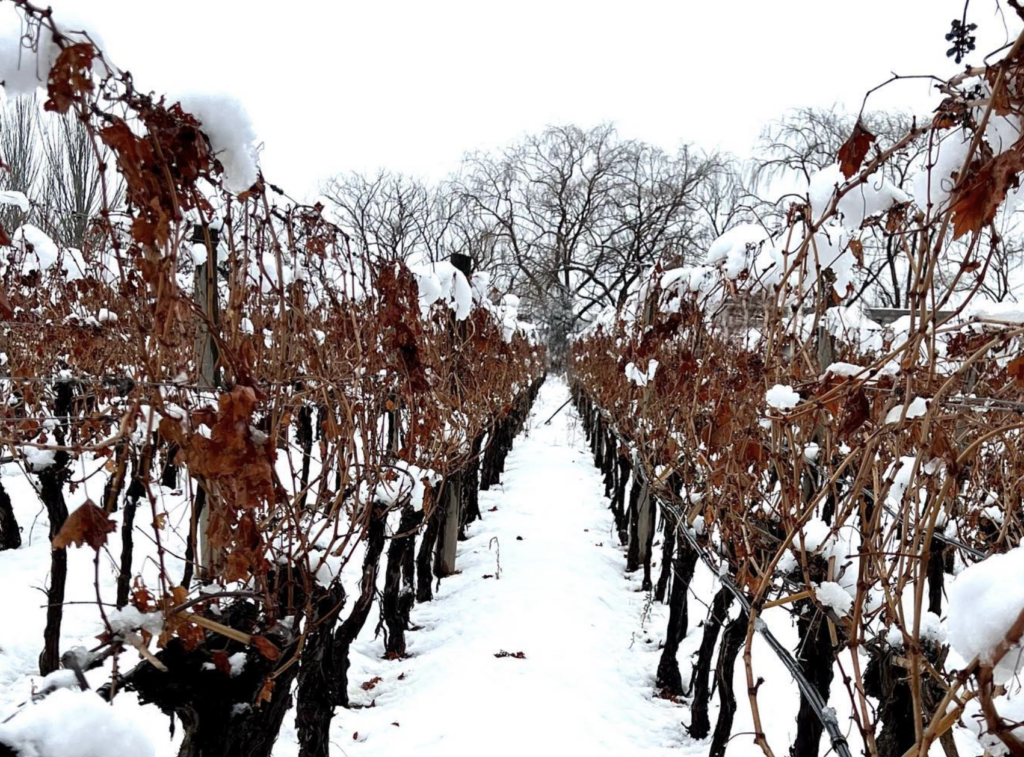
And then, just last month, after seductively warm weather coaxed grape vines to have budbreak, temperatures plunged the night of April 20 into Tuesday morning to 24 degrees for hours, with frost hitting East Coast vineyards from New York to Virginia, and possibly Georgia. The impact was uneven, as it always is with weather, and varies with grape varieties and vineyard location, but in some cases it was brutal.
In wine, there is so much discussion about tasting notes and the latest trends that it’s easy to forget this: Each bottle of wine from a small, personal winery, anywhere in the world, is a risky undertaking for real people who are trying to create their own kind of art in a battle with climate changes, market forces, politics and complex regulations. We don’t know many winemakers whose hearts have not been broken by a weather event over the years — and yet they keep coming back.
Our thoughts turned to Ed Boyce and Sarah O’Herron, who founded Black Ankle Vineyards in Mount Airy, Md., in 2002. We know them from the good times: For the past two years, they have held lovely celebrations of Open That Bottle Night with their team and customers and we have shared those happy stories. What happened on April 20 is the other side of the winemaking. They awoke to a depressing sight.
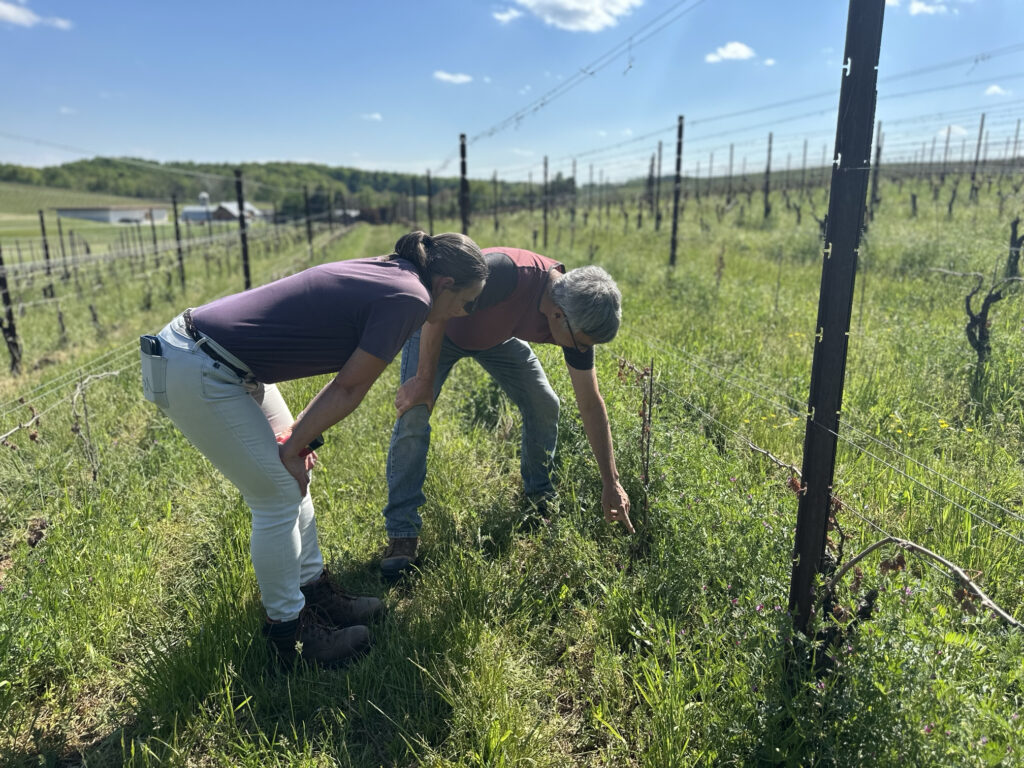
“Shoots that were standing up straight yesterday are now bowing down. They’re brown and falling. I talked to a friend in Oregon and he said the best thing to do after a frost is take a two-week vacation,” Boyce said when we called, with gallows humor. We had reached out to them after reading their social media post, which read in part:
“We’re heartbroken to share that on the night of April 20th–21st, we experienced a frost unlike anything we’ve seen before. After weeks of beautiful spring warmth, budbreak had already taken place across the entire vineyard. Tender green shoots had emerged, then, last night, temperatures dropped to 24 degrees here at the farm.
“Frost damage occurs when those young shoots freeze. Ice forms within the plant cells, causing them to rupture. Once that happens, the shoots cannot recover.
We did everything we could to prevent damage, including using frost drains and even lighting fires around one of the farms. We’re choosing to be optimistic before we make a final assessment, though we are dealing with the possibility that this year’s fruit is largely if not entirely lost.”
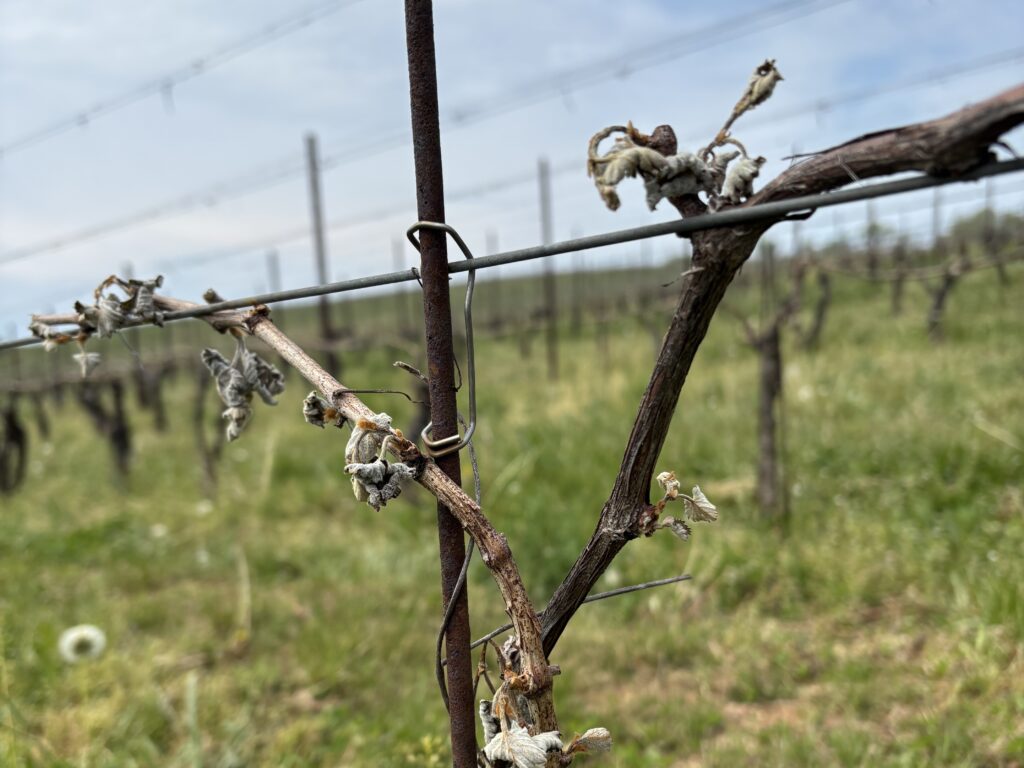
Boyce told us, “It takes a few weeks to fully assess the damage. But potentially, there’s no crop this year or there’s a 20 percent crop. We don’t know. If it’s less than 20 percent, my question is: Is it worth taking care of it?”
We asked him to walk us through what happened. “We were nervous about it for several days,” he said. “It got really cold, which it rarely does. The forecast was 30 degrees for an hour or two and it went to 24 and all night long. I got up in the middle of the night and I could feel it was colder than it should have been. That’s a huge miss of a forecast, 24. That was a bit of a shock. Frost protectors didn’t work. We’re warming so things are budding out sooner. Everything was out because we had 90-degree days.”
The 15,000-case estate winery, with its more than 200,000 vines on 146 acres, had defied the naysayers who didn’t believe the couple, former management consultants, could make noteworthy wine in central Maryland.
Not missing a beat, Boyce affirmed after the frost, “We can still do this.” In addition to Black Ankle Vineyards and its hospitality program, they have a second winery, Live Edge Vineyards, where they also hope to do tastings soon. They also have a warehouse that has reserve wines stored from Live Edge and Black Ankle vineyards, so named because it is located on Black Ankle Road. “We think we can bridge this gap, but we’re especially challenged on whites and rosés,” Boyce said because the grapes that go into those wines were among the hardest hit.
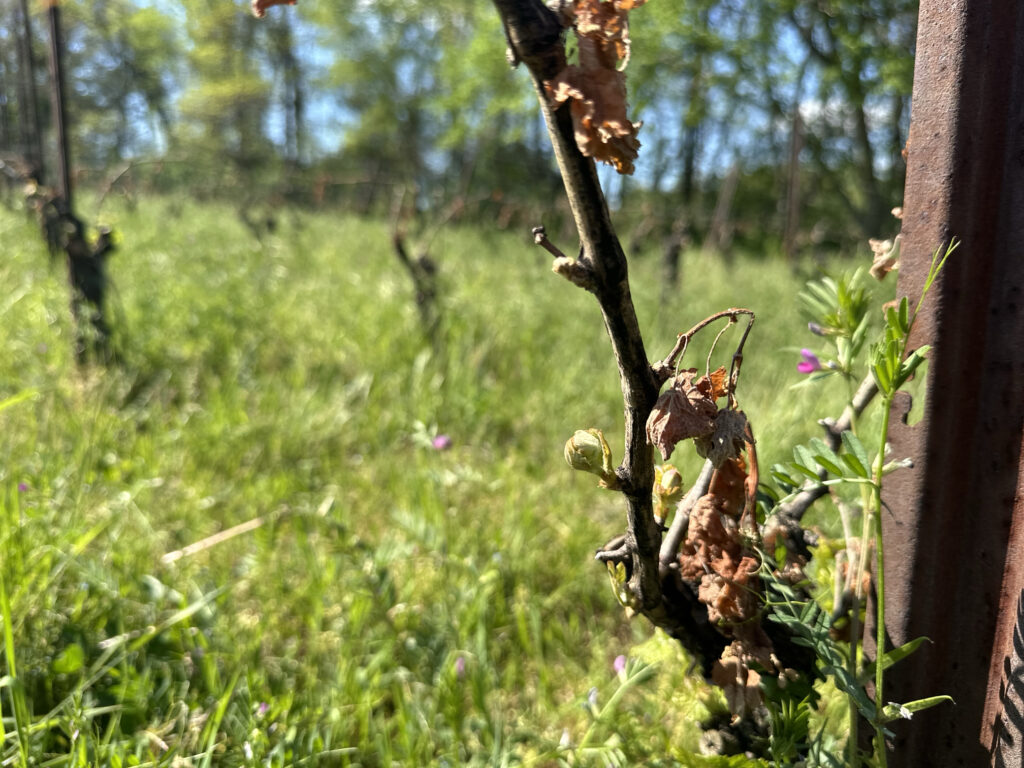
Of the damage he said, “It took a couple hours to see it brown. At Live Edge, we didn’t even get out of the car. We could see it.”
Boyce says going forward, they’re hoping that an experiment that Cornell University researchers are working on might help. “I’m holding out hope for a Cornell University research project that’s trying to take some compound that frogs and fish make when they’re in subfreezing water, synthesize it and spray it on grapes.” He’s also hopeful that there will be a secondary harvest, new buds that thrive. And, he said, there’s a possibility that next year’s harvest might be larger as Nature compensates.
The couple grows Albariño, Cabernet Sauvignon, Cabernet Franc, Chardonnay, Grenache, Grüner Veltliner, Viognier, Petit Verdot, Merlot, Tempranillo, Mourvèdre, Muscat, Sauvignon Blanc, and Malbec. Besides the dry wines, they also make dessert wines and at Black Ankle have tasting room munchies and a weekend food menu that includes gluten-free and vegetarian options, along with beef burgers, including an unseasoned one for dogs. They have live music on Fridays.
The couple is immensely proud of their properties, despite the current setback. Their philosophy is “Use what we have and keep it simple.” As it says on its website: “Need to frame a building to store barrels and host customers? Why not use our own trees and not bring in truckloads of boards? Need electricity? Why not generate it onsite from our own sunshine? Need to reduce the heating/cooling load on the buildings? Why not use our home-grown straw for insulation and build window overhangs to block the sun in the summer, but not in the winter? Want ripe, healthy grapes? Why not let wind and sun into the fruit zone by pulling leaves so we can minimize the need to spray?”
That its wines are all estate-grown is a huge point of pride. “It’s so depressing, but we’re farmers. We’ll survive somehow,” Boyce said.
In 2023, we spoke to Hans C. Walter-Peterson, senior viticulture extension specialist for the Cornell Cooperative Extension, who has done cooperative extension work for more than 20 years and has worked in the Finger Lakes region for about 19. We contacted him again after this freeze. “On an industry-wide basis, I don’t think this was as destructive as what happened in 2023,” he said. “We are sending out a survey to the growers this week to get their best estimates of damage in their blocks. My fingers are crossed that this will be the end of frost worries for this year,” but then he added:
“The 2023 frost happened on May 18, so we’re not out of the woods yet.”
Dorothy J. Gaiter and John Brecher conceived and wrote The Wall Street Journal’s wine column, “Tastings,” from 1998 to 2010. Dorothy and John have been tasting and studying wine since 1973. In 2020, the University of California at Davis added their papers to the Warren Winiarski Wine Writers Collection in its library, which also includes the work of Hugh Johnson and Jancis Robinson. Dottie has had a distinguished career in journalism as a reporter, editor, columnist and editorial writer at The Miami Herald, The New York Times, and at The Journal. John was Page One Editor of The Journal, City Editor of The Miami Herald and a senior editor at Bloomberg News. They are well-known from their books and many television appearances, especially on Martha Stewart’s show, and as the creators of the annual, international “Open That Bottle Night” celebration of wine and friendship. The first bottle they shared was André Cold Duck. They have two daughters.