It’s known as the Cradle of Wine, yet many Americans think of a U.S. state when they hear its name.
The country of Georgia, located in the South Caucasus between Europe and Asia, is home to the oldest known evidence of winemaking. Archaeologists discovered traces of grape residue in Stone Age clay vessels south of what is now Tbilisi, dating to 6,000 BCE. Despite that extraordinary history, Georgian wine remains unfamiliar to many wine drinkers.
Winemaking Heart
At the heart of Georgian winemaking is the qvevri, egg-shaped clay vessels buried in the earth that have been used for thousands of years for fermentation, aging, and storage. Whole grape clusters are placed inside, where wild yeasts begin fermentation and the porous clay provides gentle oxygen exchange. After five to six months, white grapes produce amber wines (better known outside Georgia as orange wines) with tannin and texture similar to red wine, while reds develop deep color and earthy character. In spring, the vessels are emptied, cleaned, and prepared for the next harvest.
“Georgia is the only country with a continuous winemaking tradition for 8,000 years,” says Iago Bitarishvili of Iago’s Wine, a small producer of qvevri wine. “If you ask someone when their family started making wine, they don’t really understand the question, because wine has always existed for them.”
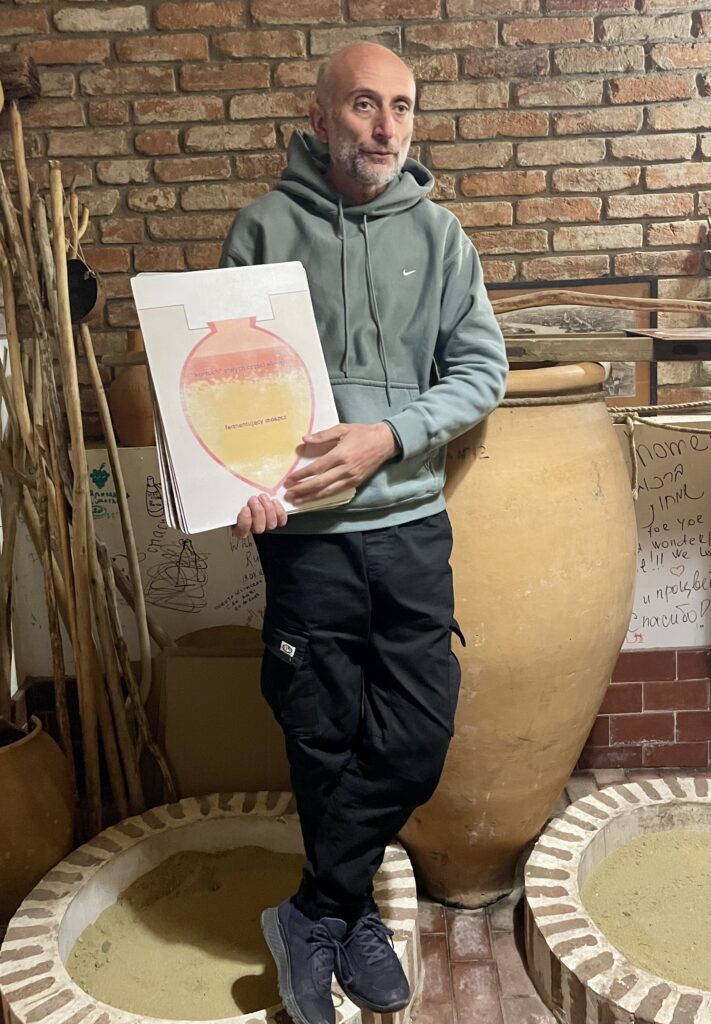
Many Georgian families still make qvevri wine at home in their marani (wine cellar), passing the knowledge down through the generations. The wine is consumed during religious holidays and family gatherings, during the traditional supra, a feast with a series of toasts led by a tamada (toastmaster). “A good tamada is something like a philosopher and a poet combined,” explains winemaker Patrick Honnef of Chateau Mukhrani. “Nobody drinks before he makes his toast.”
But the Georgian connection to wine goes beyond rituals. “What you’re drinking in a glass of Georgian qvevri wine is as close as you can get to what wine tasted like 8,000 years ago,” says Shota Natroshvili, Export Manager at Teliani Valley, one of Georgia’s largest wine producers. “In ancient times, nobody separated juice from the skins before fermentation. That technique came much later for white wines.”
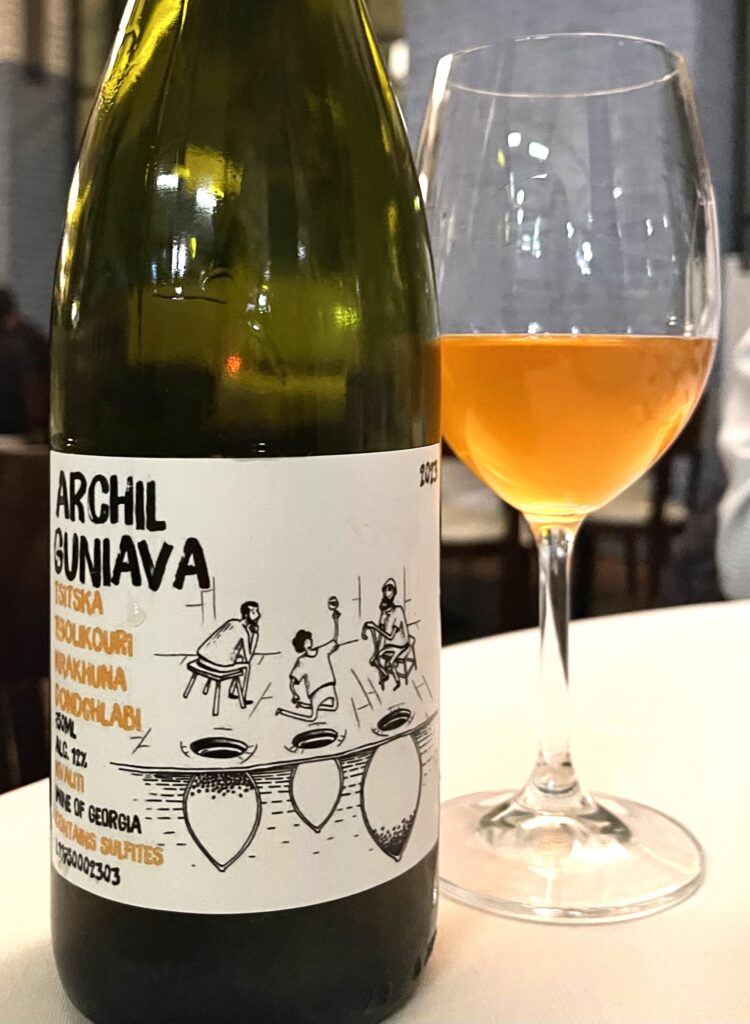
Natroshvili adds that describing amber wines to people who have never had them is challenging. “The vocabulary we use for white wines and red wines doesn’t quite fit,” he says. “For me, amber wines evoke autumn: dried hay, raisins, yellow and stone fruits, a savory quality, and a little smokiness. There’s also an umami dimension that makes them exceptional with food.”
In 2013, UNESCO recognized Georgia’s ancient qvevri winemaking method as part of the Intangible Cultural Heritage of Humanity. More than a decade later, the country celebrated its first National Wine Day in Tbilisi. Speaking at the event, Georgia’s President, Mikheil Kavelashvili, described wine as “an inseparable and continuous cycle of our national identity.”
Beyond the qvevri, Georgia’s wine landscape is extremely diverse. The country’s 525+ indigenous grape varieties are spread across ten wine regions, each with its own climate, soils, and traditions with Kakheti, in the east, accounting for about 75 percent of production. Saperavi is the country’s flagship red grape, producing deeply colored wines with dark berry flavors, vibrant acidity, and firm tannins, while Rkatsiteli, the most planted white variety, is prized for being crisp and fresh when made in stainless steel tanks, or full-bodied and savory when made in qvevri. However, there are also dozens of lesser-known varieties, including Shavkapito, Mtsvane, Kisi, and Chinuri.
Soviet Era Interruption
One of the main reasons Georgian wine is not as well known as, say, Italian or French wine is its political history. For much of the 20th century, the country was under Soviet rule, and quantity was more important than quality. Wineries were called ‘wine factories.’ Hundreds of native grapes came close to disappearing, replaced with high-yielding varieties that produced truckloads of standardized and mostly sweet wine for the Soviet market.
While Western Europe was rebuilding its wine presence after World War II, Georgia remained isolated within the Soviet system, with private enterprise prohibited. “The modern wine world was created after the Second World War,” says Patrick Honnef, “and Georgia was not there. We were absent because we were producing millions of bottles for the Soviet Union, and everyone looked to France, Italy, and others as the origin of wine culture.”
When the Soviet Union collapsed in 1991, civil unrest and economic hardship delayed the return of private wineries for nearly a decade. A turning point came in 2006, when Vladimir Putin imposed an embargo on Georgian wine. Overnight, the Russian market (about 90% of Georgia’s wine production) disappeared. The embargo was a major blow to the industry, but it also came with a silver lining. It forced producers to improve quality and seek new export markets. “When winemakers turned to other markets,” says Tamta Kvelaidze, Head of Marketing and PR at Georgia’s National Wine Agency, in an earlier interview with Grape Collective, “they discovered that Western consumers had a much drier palate and one more suited to classic Georgian wine.”
The embargo opened the door to new markets, but it did not permanently sever Georgia’s ties with Russia. Once imports resumed, many producers returned to their longtime customer base, and today roughly 65 percent of the country’s wine exports go to Russia.
Ancient Tradition, New Ambition
Georgia’s return to the international market coincided with the burgeoning interest in natural wine. Amber wine (often called orange wine), which is made from white grapes with skin contact in qvevri, began appearing on wine lists in cities like New York, London, and Tokyo. Qvevri gave journalists and sommeliers something new to talk about, introducing many consumers to Georgian wine for the first time.
Georgia’s influence extended far beyond its own borders. Winemakers around the world began experimenting with clay vessels and extended skin contact, drawing inspiration from traditions that had endured in Georgia for thousands of years. Among them was pioneering Friulian producer Joško Gravner. After studying Georgia’s ancient methods in the late 1990s, Gravner abandoned stainless steel tanks and barriques in favor of large clay vessels, helping bring renewed attention to techniques that Georgians had preserved for millennia.
Yet qvevri’s influence on the wine world has become much larger than its role in Georgia’s own production. Amber wines account for only about 5% of the country’s output. The labor-intensive process is difficult to scale. Unlike modern stainless steel tanks, which can handle large volumes, qvevri require extensive hands-on work and are better suited to smaller lots. The remaining 95 percent of Georgia’s wine is made using what producers refer to as “classic” methods, with stainless steel tanks and oak barrels instead of buried clay vessels. Increasingly, the focus is on quality rather than quantity,and for many producers, Georgia’s future depends on embracing both qvevri and modern techniques.
“Starting with qvevri was the right strategy 20 years ago,” says Chateau Mukhrani’s Honnef, who oversees the production of both qvevri and classic wines. “But now we have to take the next step. If Georgia is seen only as a niche natural wine story, and the fashion moves on, it will disappear back into a corner.” The deeper problem, he says, is one of identity. Georgia must establish itself as a fine wine producer built on indigenous varieties, terroir, and quality.
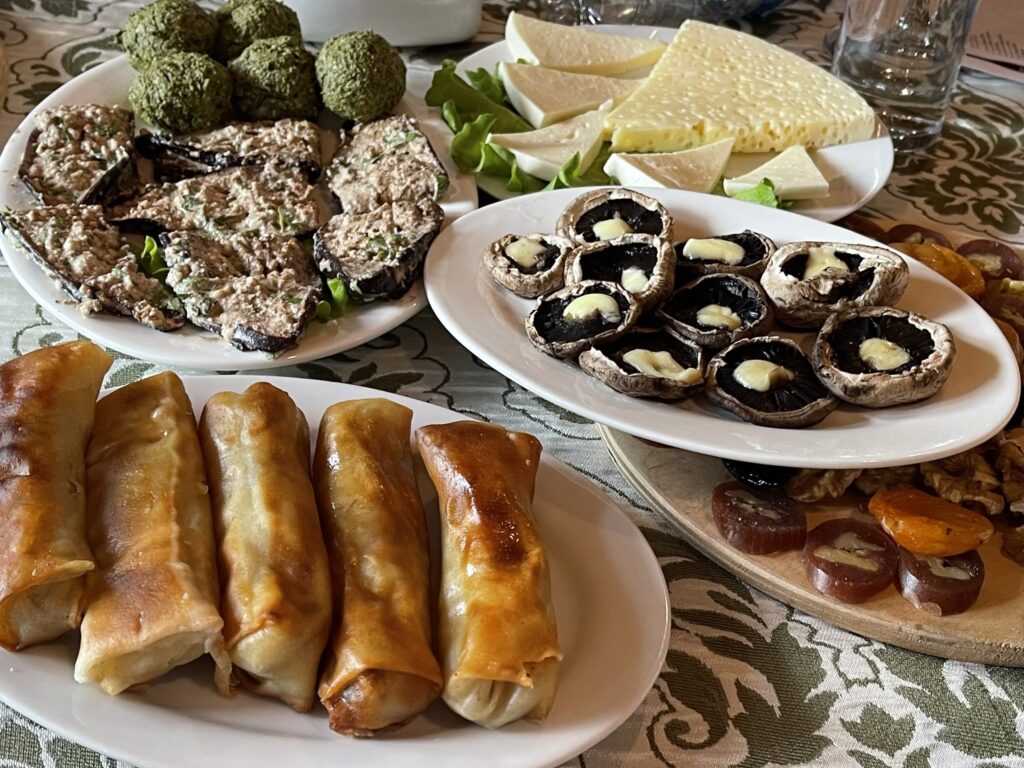
Teliani’s Shota Natroshvili believes the country has leaned too heavily on its ‘cradle of wine’ story. “The story alone is not enough,” he says. Consumers need to understand when to reach for Georgian wine and how it fits at the table. “Georgian wine is a dinner wine,” he says. “It’s built around food. When I talk to Americans about Tsolikouri, for example, I suggest seafood tacos. With Saperavi, I say pizza. You have to connect the wine to food they already know and love.”
The country also has to address quality issues. Lado Uzunashvili, head winemaker at Vazisubani Estate, notes the chaotic post-Soviet years, when the government encouraged anyone with a qvevri and some grapes to start producing, without winemaking education or quality controls. “Many of those wines were flawed, and they went out into the world and created an impression that we are now working against,” he says. “The educational infrastructure needs to develop faster,” he says. “A poor wine doesn’t only harm the producer who made it. It harms every Georgian producer in that market.”
Quality wasn’t the only casualty of the Soviet period. “The Soviet focus on high-yield production caused enormous damage,” says Ana Sheklashvili, Export Manager at Shumi, a winery in Kakheti. “It reduced our incredible diversity to just a handful of commercial varieties.” Desiring to save many of them from extinction, In 2003, Shumi established a private vineyard of Georgia’s indigenous grapes. Today, the collection includes roughly 2,000 varieties.
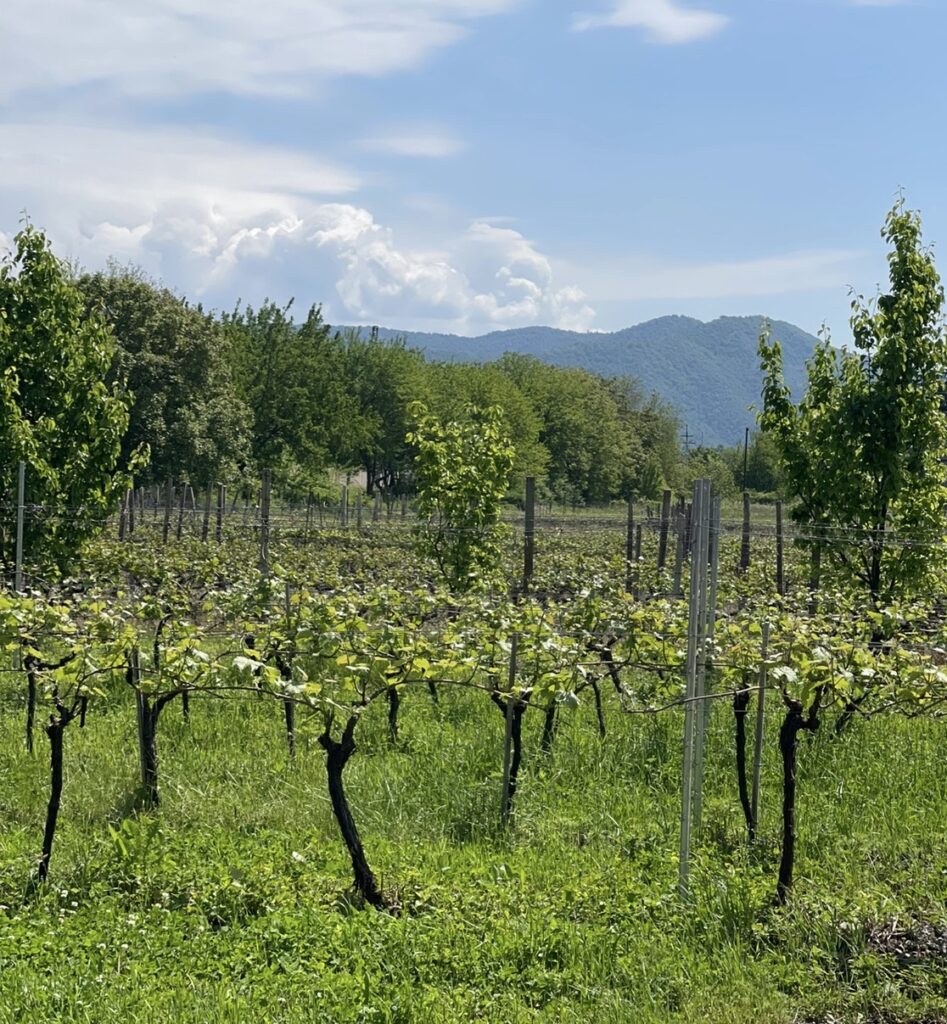
Shumi is not alone in trying to recover what was lost. At Tchotiashvili Family Vineyards, Albert Tchotiashvili grows 40 grape varieties, many of them rare indigenous selections. He describes himself as a “maturing winemaker,” saying that a lifetime is barely enough time to understand what Georgia’s native grapes are capable of.
The ancient qvevri tradition will always remain at the heart of the Georgian people, but whether the country’s winemaking, both qvevri and classic, becomes known and valued worldwide remains to be seen. After decades of upheaval and isolation, the country’s winemakers are once again focused on quality, terroir, and indigenous grapes, and the story is yet to be seen.
The world’s oldest wine culture may be best understood not by looking backward, but by paying attention to what its winemakers are doing today.