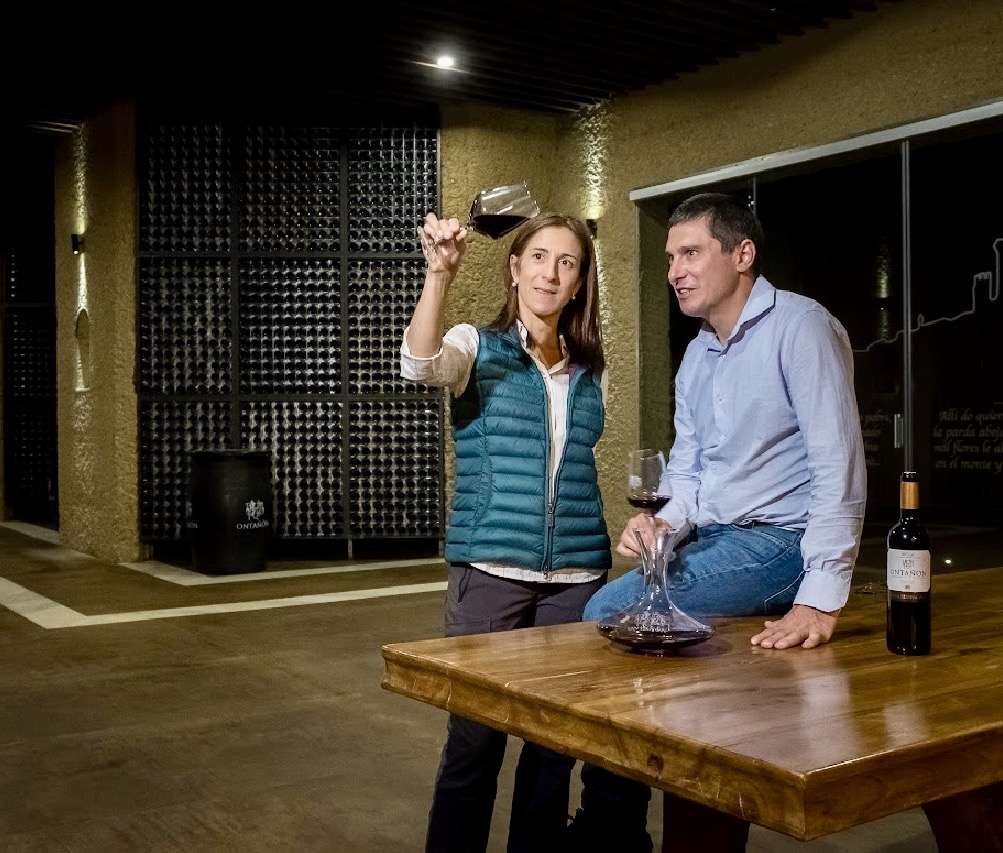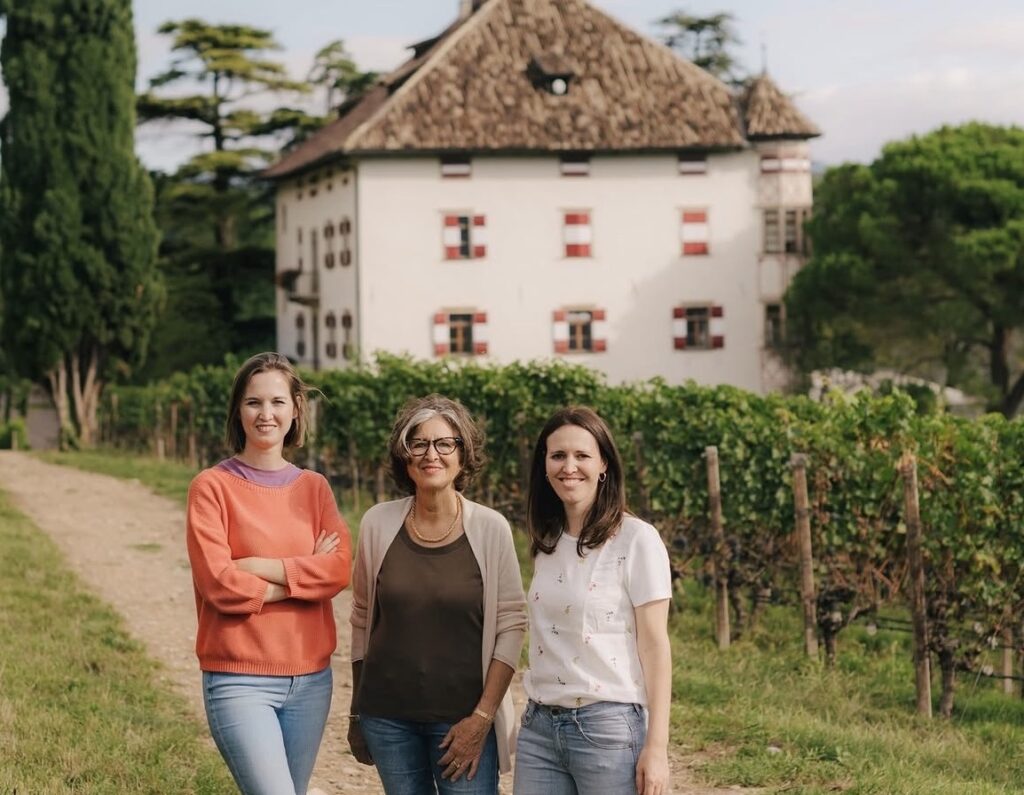
Some of the best wine stories begin with a leap of faith. Leticia Pérez Cuevas grew up among vines her parents planted in Rioja Oriental (then called Rioja Baja), on high-altitude hillsides few believed held much promise. That bet has paid off. Today, Leticia heads viticulture at Bodegas Ontañón, her family’s winery founded in the 1980s, working alongside her three siblings—the fourth generation of the Pérez Cuevas family to farm these vineyards. It was their father, Gabriel, who began making wine from the estate’s fruit rather than selling it.
In 2019, I visited the estate, hosted by Leticia’s sister Raquel, and was struck by how naturally art is integrated into the experience. The many sculptures, stained-glass windows, and paintings reflect how wine has been integrated into Rioja’s culture and history for centuries. What follows is a recent email exchange with Leticia about the land, her family’s legacy, and the evolving story of Rioja.
Lisa Denning: Ontañón has a strong identity as a family winery. How would you describe the philosophy that guides the estate today, and how has it evolved since your father founded it?
Leticia Pérez Cuevas: It all began with our family. For four generations, we have been deeply rooted in the vineyards of our village, Quel, nestled in the foothills of the Sierra de Yerga—one of the most hidden and stunning corners of Rioja. My parents, Mari Luz and Gabriel, founded Ontañón in the 1980s as a small, intimate project. Their vision was to give our land a voice and to put the exceptional quality and viticultural heritage of this Riojan enclave on the map.
Our current philosophy is to delve even deeper into the path they blazed: an absolute reverence for the land, a commitment to expanding our knowledge across all disciplines—from viticulture to enology—and the ability to translate that fundamental truth into every bottle.
My parents were visionaries ahead of their time. Decades ago, they already understood that great wine is made in the vineyard. Despite times of crisis and the widespread uprooting of vines, they chose to bet on their village, on high-altitude plots, and on preserving indigenous varieties, always prioritizing quality above all else.
The four of us siblings have grown up surrounded by that passion and conviction. We grew up witnessing their love for this land, and today we produce wonderful wines that speak of and describe every terroir, every vineyard, and every unique plot.
Rioja has undergone significant changes over the past decade. It’s not just classic Rioja anymore. There’s more creativity, a wider range of wine styles, and a stronger connection to place. How do you see Ontañón fitting into the modern conversation about Rioja and terroir?
Ontañón has always been part of that dialogue with the land. In fact, our winery is built upon a conviction solidified over years: that our sub-region, Rioja Oriental (formerly known as Rioja Baja), possesses a wealth of varieties, soils, exposures, and history sufficient to produce world-class wines with a distinct voice. In the 1980s, my father planted vineyards in what were then considered marginal areas—surprising altitudes where Tempranillo, for instance, ripens with incredible slowness, allowing its delicate tannins to reach a superb level of refinement. Or our Garnachas, which reach 650 meters and are exceptionally perfumed. We have also championed varieties like Graciano, which provides the extraordinary acidity necessary to grant our wines structure and longevity.
Rioja is both territory and style. While we have wines that search for the very soul of the vineyard, we do not renounce the classicism of our Reservas and Gran Reservas, immortal wines designed for aging that offer memorable sensory experiences. In our minds, both visions coexist; we believe as much in the art of the assemblage as we do in the singular expression of a lone vineyard.
Are there particular vineyard sites or practices you feel best express the identity of Ontañón? What makes them special?
We believe it is essential to explore one of Quel’s most overlooked viticultural treasures: its invaluable varietal repertoire and the biodiversity of its agricultural landscape. Our vines are interspersed with olive, almond, and fruit trees like cherry and plum, along with an incredible array of Mediterranean aromatics: rosemary, thyme, rockrose, gorse, and juniper. This mosaic creates a living ecosystem where our vineyards are simply one thread in a larger biological fabric. This has a direct aromatic impact on the grapes and, consequently, on the final profile of the wines.
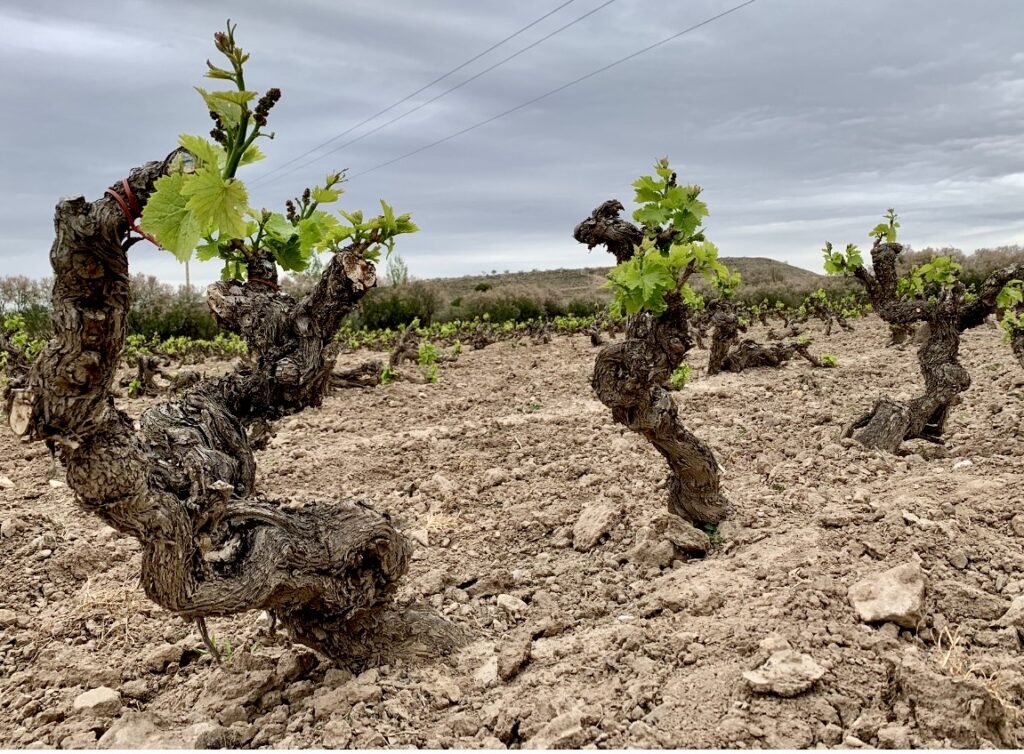
We are fortunate to work with very old vines, such as the Garnachas of El Arca—a 19th-century treasure that represents the ancestral viticulture of our region. For us, witnessing its cycle each vintage is a privilege; it is a small miracle that yields one of the most highly-regarded Viñedo Singular wines in Rioja.
How is climate change affecting your vineyards, and have you had to adapt your viticulture or winemaking as a result?
Climate change is a challenge for every winegrower worldwide. Seasonal transitions are far less gradual than they once were. Severe heatwaves, prolonged droughts, unpredictable storms… everything is shifting. Because we grew up here, we know this land intimately. Our approach is to marry the wisdom of our ancestors with modern scientific insight.
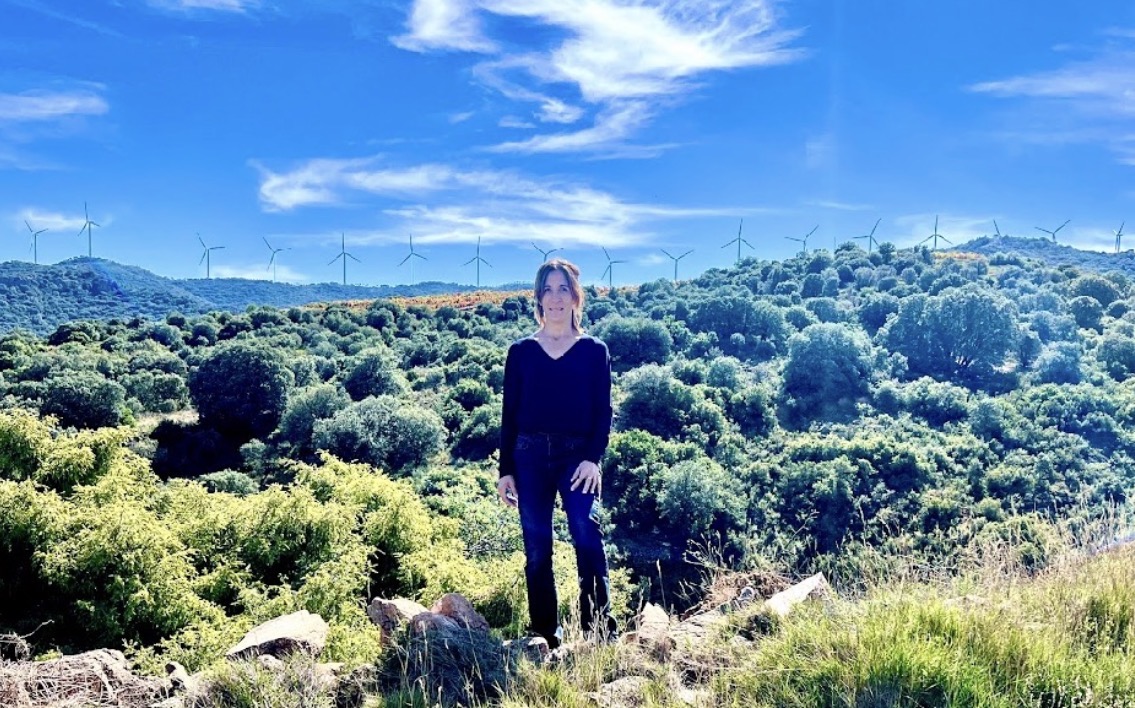
Being in the Sierra de Yerga allows us to utilize altitude to maintain a logical distribution of varieties. Quel sits at the valley floor at 500 meters, but within just eight kilometers, we ascend to 800 meters. This gradient provides us with an incredible wealth of soils, altitudes, and exposures.
We also view the soil and its biodiversity as the foundation of the pyramid of life. We care for it by analyzing its characteristics in depth, reducing tillage, and encouraging spontaneous cover crops and “Biodiversity Islands.” We farm as efficiently and as balanced as possible, using mushroom compost as mulch and limiting tractor passes to reduce emissions.
Furthermore, we utilize new technologies to study vineyard phenomena, such as satellite imagery to monitor vigor and vine health. We aren’t looking to reinvent the wheel; we believe in the traditional respect our local growers had for nature. Our goal is for our children to find these vineyards at least as healthy and beautiful as our ancestors left them to us.
How would you describe the style of Ontañón wines today, and what do you hope people notice when they taste them?
They are emotional wines. Each one carries a reason, an idea, or a dream behind it. We seek to be as faithful as possible to our region without falling into uniformity. That is why we embrace diversity in our oenological practices: some wines express the naked purity of the variety, others are a collection of small parcels, and some—like our Ensayos Capitales—explore more heterodox methods. Ultimately, we want them to be delicious and honest. Every wine has its moment and its place—whether at the wine bar or the dinner table—and we want our wines to spark a genuine curiosity about their origin.
The art at Ontañón is striking, especially the stained glass windows. How did this connection between art and wine develop, and what role does it play in the visitor experience?
It all stems from my parents’ love of art and their close friendship with Miguel Ángel Sáinz, one of La Rioja’s most important 20th-century artists. That bond inspired the creation of a “winery-museum” filled with sculptures, stained glass, and paintings dedicated to the cult of wine. Back then, when very few wineries were open to the public, this was quite visionary: a “signature winery” dedicated to a single artist, serving as a bridge between classical mythology, culture, and wine.
This is reflected in our tours, which are sensory and almost spiritual experiences rather than conventional tastings. The journey invites guests to discover the “art of drinking,” combining visual beauty with the mythological narrative of wine—its divine origins and its civilizing power. Many visitors describe it as unforgettable; they leave moved not just by the wine’s taste, but also by the magical atmosphere and the idea that wine is living history and art.
During my visit, we were shown the traditional Barrio de Bodegas, the historic network of underground wine caves carved into the hillside, once used for wine production, but now largely used for social gatherings. Could you tell us the history?
The Barrio de Bodegas of Quel, dating back to the 17th century, is a true gem. Historical records like the Catastro de Ensenada (1752) note the existence of over 350 caves or cellars carved into a small hill on the southern bank of the Cidacos River. All winemaking was done via gravity-flow, a system we have honored and implemented in our modern winery in Quel as the faithful guardians of our village’s identity.
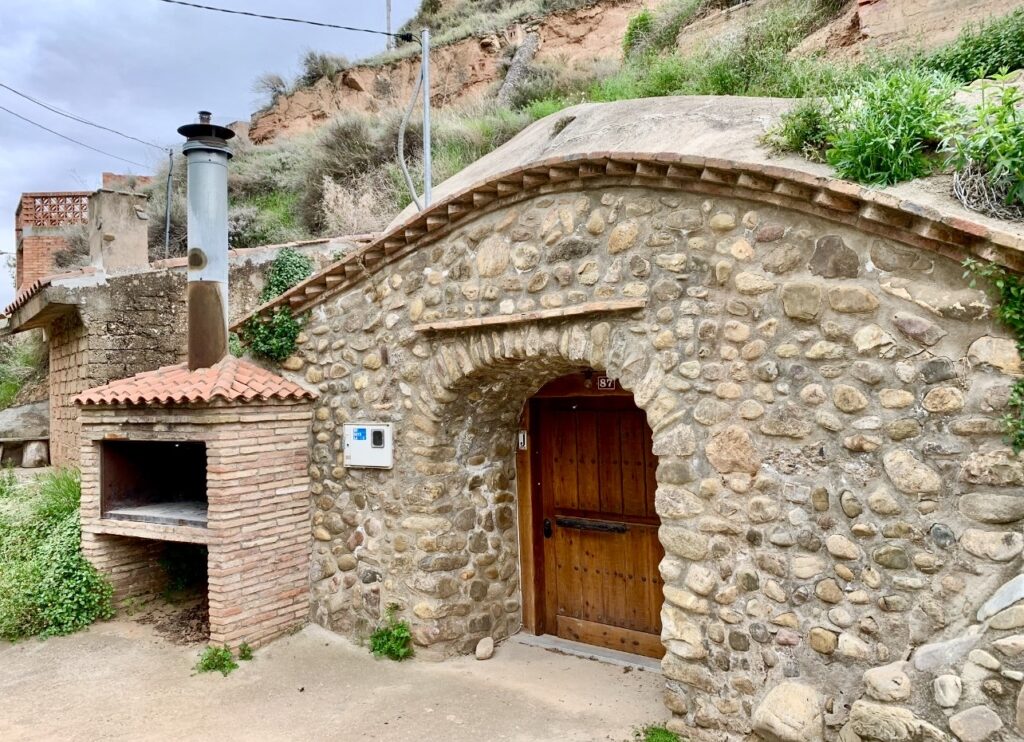
Historically, two types of vinification took place: 70% reds and the rest claretes. Grapes were brought to the cellars in comportillos (traditional baskets) and deposited into stone vats (lagares) without differentiating by variety. As techniques evolved, the cellars adapted, particularly with the installation of luceras—ingenious vertical shafts that allowed grapes to be fed directly from the top of the hill into the cellar using gravity. At our new Queirón winery, our philosophy is based on adapting that ancestral formula for the 21st century.
If someone wanted to understand Rioja through just a few wines, which Ontañón bottles would you choose and why?
That is an excellent and complex question. Rioja is incredibly diverse. One of the most rewarding ways to understand the region is through its aging classifications. Rioja is one of the few regions in the world where the label tells you the story directly; once you understand those categories, every bottle makes more sense. I would start with the balanced fruit of an Ontañón crianza, move to the depth and texture of an Ontañón Reserva, and conclude with the complexity of an Ontañón Gran Reserva from a memorable vintage. It is truly magical.
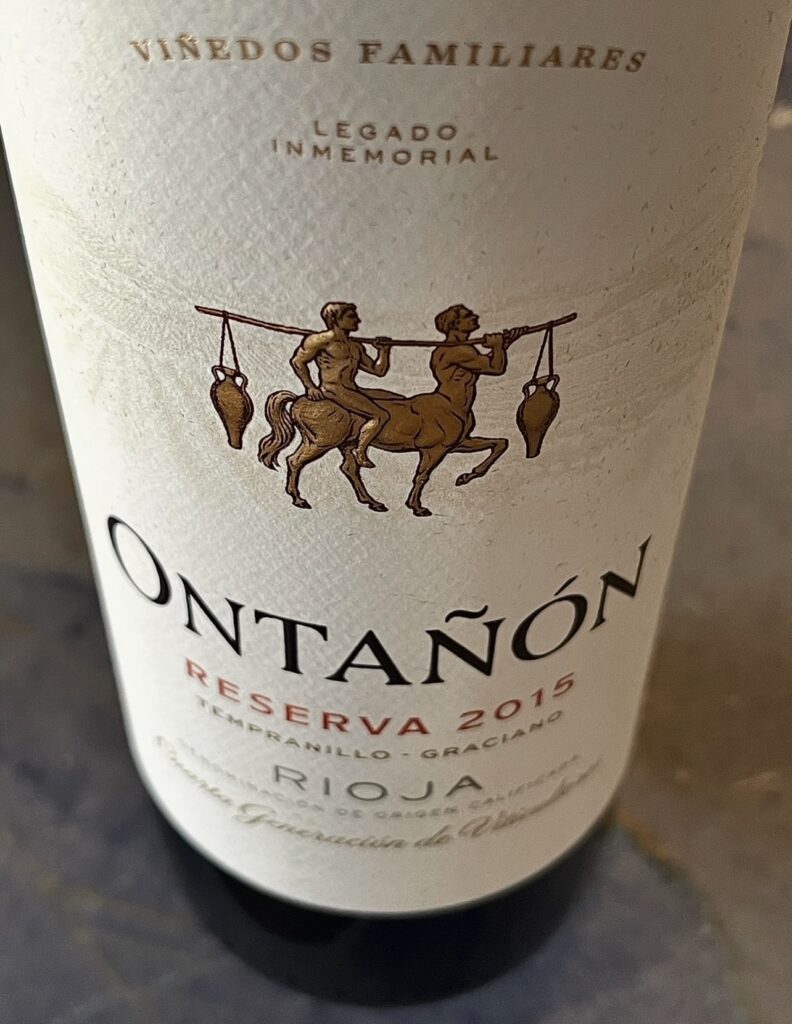
However, I wouldn’t leave out Mi Lugar, a wine from Quel that blends high-altitude Garnacha and Tempranillo, showcasing the biodiversity and fragrance of our terroir. Finally, I would suggest El Arca; we only produce about a thousand bottles from a tiny, ancient plot. It is the purest, most crystalline expression of a single vineyard.
What is the most rewarding part of running a family winery, and what is the most challenging?
Continuing my parents’ legacy side-by-side with them and my siblings is extraordinary. Every step we take is preceded by deep reflection because we love what we do. It is part of our identity. There are always challenges, but the most beautiful thing is the feeling of contributing to a project as meaningful as Ontañón Familia.