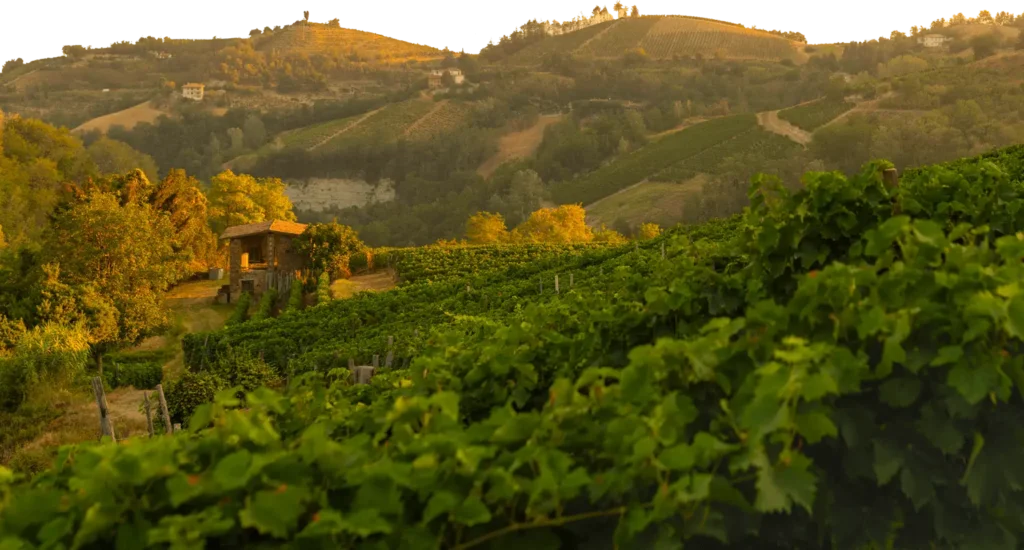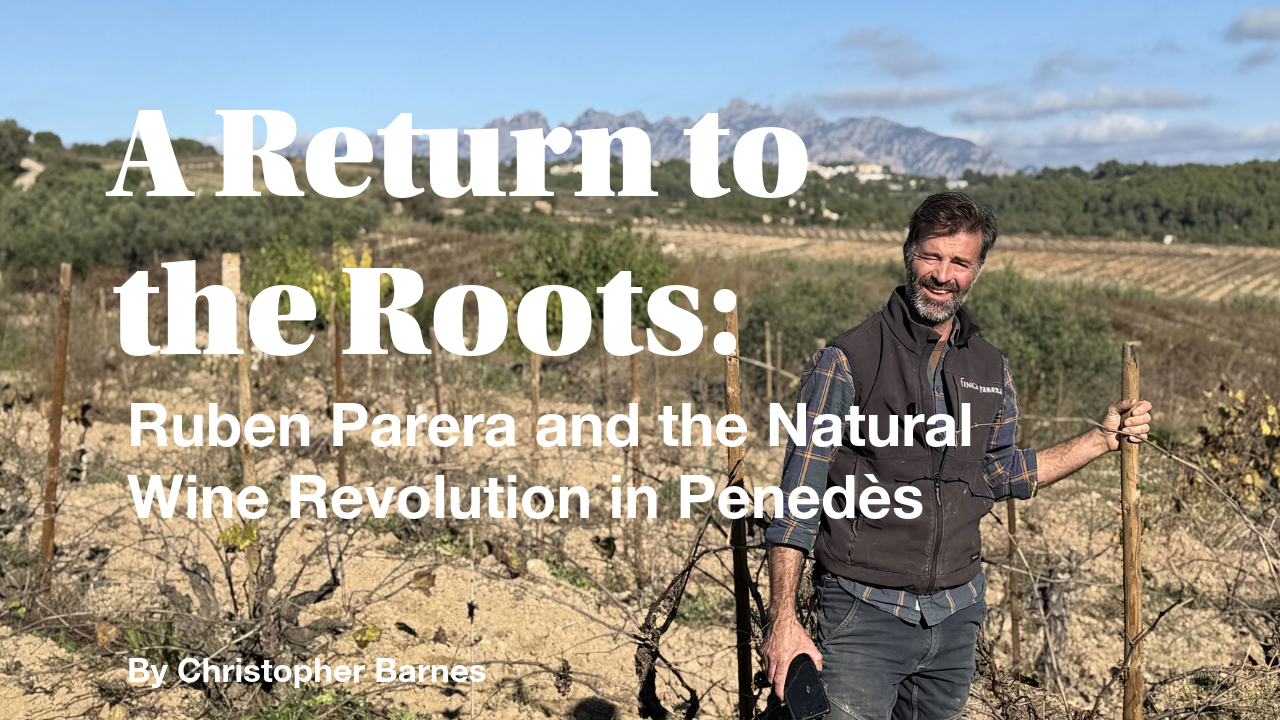
There is a quiet revolution taking place in the vineyards of Penedès, the sprawling wine region that stretches from the Mediterranean coast to the foothills of Montserrat, just southwest of Barcelona. It is a revolution that looks backward as much as it looks forward — a rejection of industrial logic in favor of ancestral instinct, a turn away from the laboratory and back toward the land. And among the figures leading this movement is Ruben Parera of Finca Parera.
To understand what Parera represents, it helps to understand what came before him. Penedès is the birthplace of Cava, Spain’s most celebrated sparkling wine, and for much of the twentieth century, Cava defined the region’s identity and its economy. When the category exploded in the postwar decades, driven by a handful of large houses with global ambitions, it transformed the landscape of Penedès in ways both good and bad. The good was that Cava gave Catalonia a brand of international stature, a product that could hold its own alongside Champagne on tables around the world and deliver a taste of celebration at a democratic price.
But the industrial machine that produced Cava at scale came at a cost. Small farmers who had for generations grown grapes, made wine, and sold it from their own cellars found themselves absorbed into a system that valued volume above all else. The calculus was simple and seductive: sell your grapes to the large Cava houses, earn a reliable income, and leave the complicated business of winemaking to someone else. The land, farmed increasingly for yield, began to lose the character that had made it special in the first place.
This is the world Ruben Parera was born into. His great-grandfather made wine. His grandfather made wine. But his father, a pragmatic and forward-thinking man, recognized which way the wind was blowing and made a different choice: he would grow grapes, not make wine, and he would do it better than almost anyone. He became a pioneer of organic certification in Catalonia, farming not only vines but almonds, olives, and cherries with a rigor and integrity that was unusual for its time. It was an act of intelligence and adaptation, but it also meant that the cellar — the place where the family’s agricultural story became something you could taste — fell quiet.
Ruben Parera relit it. Beginning with his first vintage in 1999, he set out on a journey that would take him from the technical wine he had learned at university, through a deep immersion in the natural wine culture of France — the Loire, the Jura, producers working without intervention in Andalusia and beyond — and ultimately to a philosophy that was entirely his own. Biodynamic farming, indigenous yeasts, skin contact, minimal intervention in the cellar: these became not fashionable choices but logical extensions of everything his father had taught him about respecting the land. If his father’s generation asked what organic farming could do for the earth, Parera’s question became what the earth, left more fully to its own intelligence, could do for the wine.
What makes Parera a leading light in this movement is not just the quality of what ends up in the bottle — though the wines, built on the exceptional raw material of Xarel·lo and Sumoll grown in the calcareous, high-altitude soils beneath the shadow of Montserrat, are remarkable.
Grape Collective spoke with Ruben Parera at Finca Parera, surrounded by his vineyards in Alta Penedès, about terroir, biodynamics, natural wine, and the meaning of putting your name on a bottle.
Christopher Barnes: Ruben, tell us a little bit about the history of the estate here.
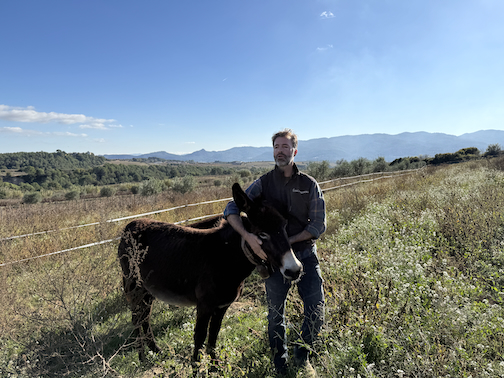
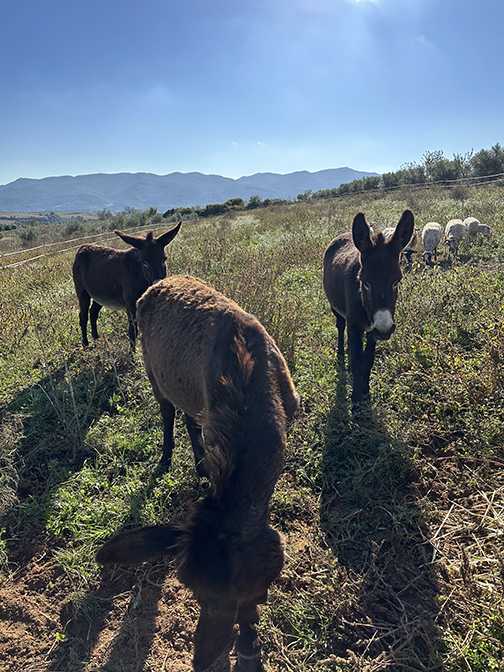
Ruben Parera: This estate has deep roots in this town, which was the last town after the appellation of Penedès. I am the fourth generation of farmers, and now my father and I are the first generation to make wines together. I have already seen this estate evolve through different ideas — regenerative and biodynamic — not only in vines, but in almonds, olives, cherries, beehives, and animals. And obviously, in the wines.
Talk a little bit about the philosophy of winemaking at Finca Parera and the philosophy of viticulture.
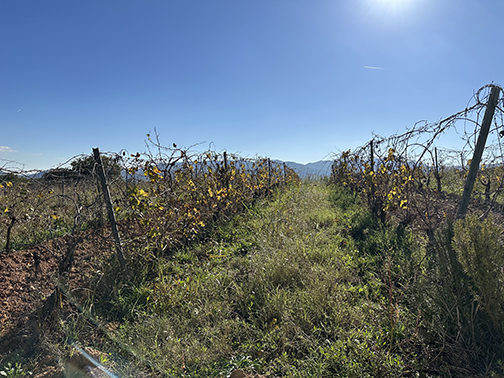
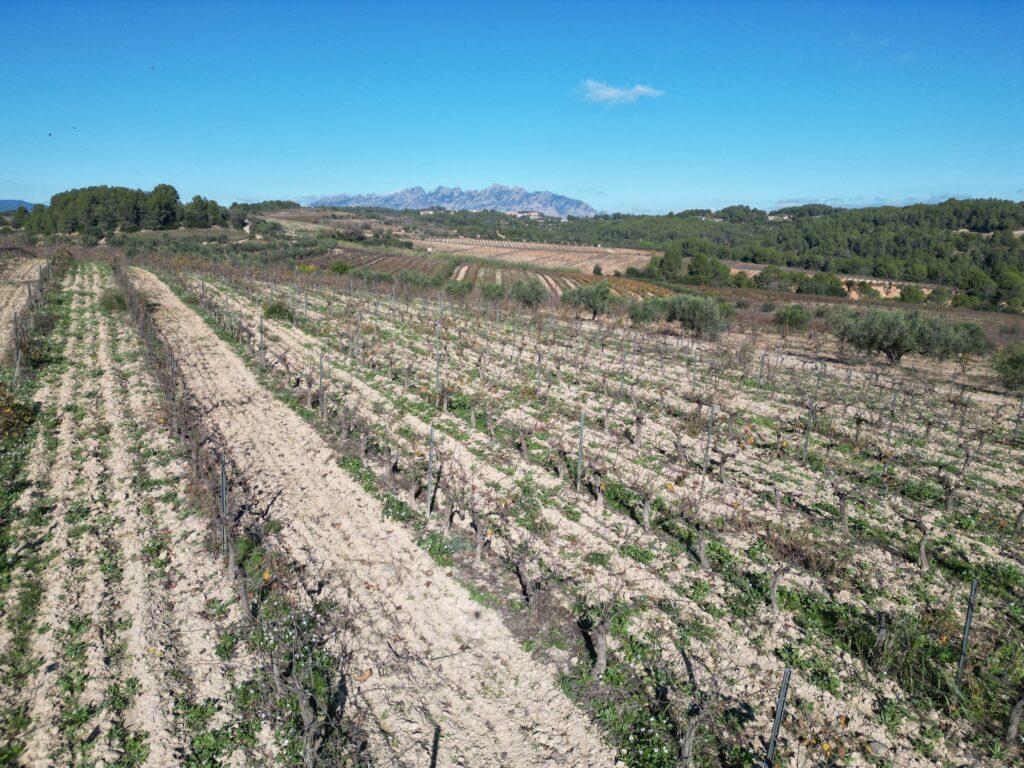
This piece of land is special because of the Montserrat landscape — the bedrock here is the same as the mountain itself. When you make wines here, the philosophy has always been about Xarel·lo and Sumoll, because the consequence of that mountain and its bedrock style gives this territory a clear, compact, Mediterranean character that produces good wines independent of our hands. The bedrock at high altitude gives us those defining characteristics. The stress the vines endure results in quality in the grapes — concentration, spirit, form, and harmony — all shaped by the influence of the climate. In the end, the Montserrat-style soil makes the real influence on the wine. That terroir is the philosophy of Finca Parera. Other hands, in other generations, will continue making wines in this part of the world. We try to continue that idea — to belong to that place, because that place is special with or without our hands. The most important tool helping us is biodynamic and regenerative agriculture, carried out in the ancestral style of my great-grandfather, my grandfather, and my father.
Talk a little bit about the journey you took to arrive at biodynamics.
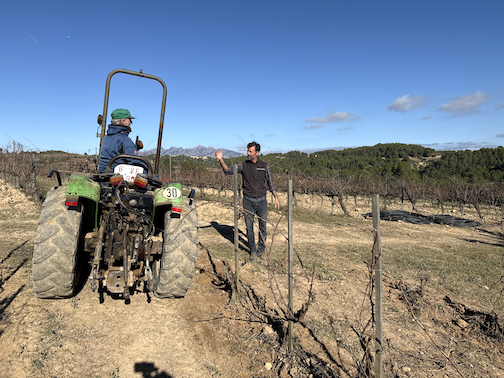
In the end, my father was a pioneer in growing fruit — not only grapes — with organic certification in this country. That feeling came from my childhood. He planted an organic sensibility in me from a very young age, through food, culture, and working alongside him. So the question became: what is the next generation’s footprint on the world? If my father was a pioneer of organic certification, my footprint as the next generation is trying to do even better. Biodynamics is a new way, a new approach to improving the same property — the same land and the same crops my father farmed under organic certification. I said to him, why not add more depth and intention to that old, deep feeling of agriculture? Biodynamics is remarkable because it works on two levels: the anthroposophical way — the philosophy of the spirit — and the practical tools of agriculture: the treatments, the compost, the manure, the animals, the organisms. Both paths are important for the next generation. This is a journey I am on now, and my father is with me — I’ll often find him on the tractor a few minutes away. It is a good journey, both humanly and agriculturally.
And talk a little bit about your journey to natural wine. What does natural wine mean to you?
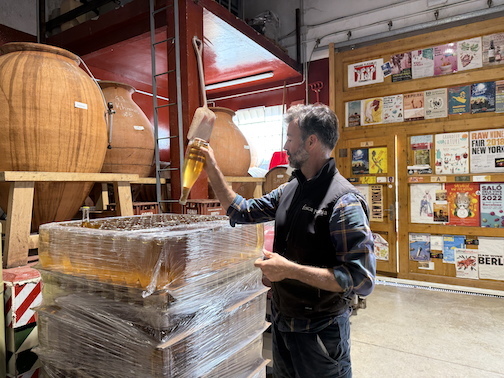
All of these things are always rooted in the farmer. But when we go to the cellar and talk about making wine — for me, natural wine was not something I arrived at from the beginning. When I started in 1999, I made wine the way the university taught me, because I had no winemaker as a mentor — not from university, and not from my father, who was only a farmer selling grapes. So my first vintage in 1999 was made in an academic style. My journey to natural wine moved from organic certification wines and analytical, technology-driven wines toward non-intervention. Along the way, I got to know many French producers and tasted wines from the Loire, from Jura, and from different parts of Spain, including Andalusia. I loved so many of those wines, and I felt a growing pull toward non-intervention — because it was closer to my agriculture, and closer to my spirit. Those two forces combined, and I said: no more concepts in the middle, no more grey areas. I decided to go to the dark side of wine.
And what does it mean technically to make a natural wine for you? Because oftentimes people have different definitions — some use some sulfur, some don’t. Indigenous yeast, skin contact — what are the components of natural wine if you break it down?
For me, the first principle of natural wine is using indigenous yeast with skin contact, because if you use indigenous yeast without skin contact, you need to add nitrogen for nutrition. But with indigenous yeast and skin contact, without excessive movement or manipulation — no fining, no filtration, no enzymes, none of the additions found in industrial wine — and with organic, ideally regenerative or biodynamic, healthy grapes, you can make wine without physical or chemical intervention in the cellar. That is what matters most.
Now, if you need to add a small amount of sulfite at bottling — because the wine is going into shipping, or because it needs protection against bacteria, volatility, or the risk of turning to vinegar — I absolutely agree with that. Similarly, if you need more time for aging and clarification, using barrels makes sense. Barrels bring new flavors to the wine, and why not? I fully support using barrels and time. If you need sulfites in your bottles, use them.
What I cannot accept is using commercial yeast, skipping the skins, and working with unhealthy grapes, then calling it natural wine. That is illogical to me. But if you need one milligram hectare to 10 mg/l of sulfite — I am fine with that. It is better to save wine than to lose it. In France, many producers hold certifications for zero-sulfite or low-sulfite wines — less than 20, less than 50 mg/l. Why not? The sulfite is not the law of natural wine. The most important things are healthy grapes, healthy organisms, indigenous yeast, and skin contact. Everything else flows from that.
And talk a little bit about the terroir in Penedès, and then maybe a little bit more specifically about your vineyard.
When you make natural wines, the first goal is to preserve the characteristics of your land. In our case Alta Penedès. At Finca Parera, the focus is on translating the character of this place into the glass — so the customer can feel what makes this place special. What is Alta Penedès? It is Mediterranean style, medium altitude, calcareous clay soils that feed the roots, with bedrock at depth. We grow local varieties: Xarel·lo, Malvasia, Macabeu, Parellada among the whites, and Sumoll, Grenache, Carignan, and a little Tempranillo among the reds.
The most important variety in our region is Xarel·lo and Sumoll. Our style is shaped by medium-high altitude, calcareous soils, bedrock, and the inland influence of the climate in high Penedès. But Penedès is not just one thing — it is vast, stretching from the sea to the mountains, from the south near Tarragona all the way up to close to Barcelona. It is enormous and enormously varied.
How is Alta Penedès different from the rest of Penedès?
Penedès is one of the largest appellations in Catalonia, and the differences within it are remarkable. If you go to the mountain areas of Penedès, it is high altitude — sometimes above 500 meters — with more forest, more morning humidity, and a cooler feel. If you go toward Garraf, close to the sea, you get more salt influence, a more maritime character, and less altitude. And then across the central areas, you have flat plots, larger and smaller parcels, different valleys, different orientations, different altitudes.
It is impossible to say that Penedès is only one thing. Within the appellation, there are at minimum seven distinct areas, all quite different. And the full appellation stretches from Tarragona to Barcelona, from the mountains to the sea — it is enormous, and the diversity inside it is extraordinary. It is not easy to summarize. Think of Penedès not as one appellation but as at least seven sub-appellations. That is how different it is within itself.
And let’s talk a little bit about the grapes — Xarel·lo and Sumoll — how you would describe what makes them unique?
In the case of Xarel·lo, it is the queen of local white grapes, and Cava owes much of its quality to it. The morphology of the Xarel·lo grape is compact, it has a heavy skin. Vines that are not over-cropped don’t produce excessive fruit, which means higher quality in both the grape and the farming. When you get that right, Xarel·lo always delivers good acidity and good balance with sugar concentration. That acidity is the key to its aging potential — it ages well in barrel, in tank, in anything — and it can easily reach 12 to 13 degrees of alcohol while maintaining freshness and life.
That is why so many great sparkling wines from Penedès are made from Xarel·lo, and why it works so well for still wines aged in barrels or in concrete tanks. The strong skin of the berry also protects against disease in the vineyard, keeping the fruit healthy. Xarel·lo is not the most aromatic or fruity grape in an exotic sense, but it has depth, character, and longevity. It is one of the best for deep, age-worthy wines.
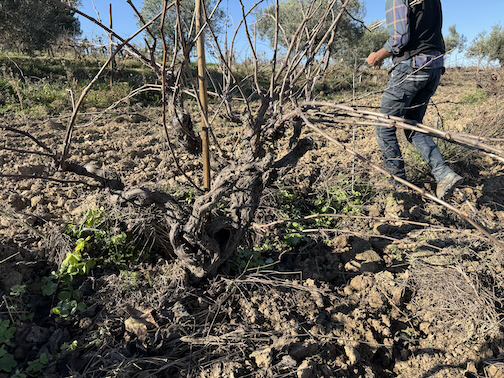
Sumoll is the Red King of the region, though perhaps undervalued today. It is the absolute opposite of Xarel·lo in morphology — large berries, compressed clusters, thin skin, highly susceptible to fungal disease. To make great Sumoll, you have to control the vigor of the vine completely. Without careful management through cover crops, planting density, or pruning, yields explode and quality collapses. But if you control the plant and manage it carefully, the result is smaller, more concentrated berries, stronger skins, and more aeration in the cluster — which means the fruit arrives in the cellar in remarkable condition. Sumoll has the lowest natural pH of any grape in Catalonia — normally around 3.0 — which means very high acidity and tremendous aging potential in barrel, in clay amphora underground.
The degree of alcohol is modest, usually no more than 11 to 11.5 percent, and that combination of high acidity and moderate alcohol makes it extraordinary for long aging. It is not Grenache, not Merlot, not a big, comfortable wine. It is the opposite — delicate in flavor, but elegant, with a deep, vibrant acidity in the mouth. Managed well by the farmer, it produces fluid, elegant, age-worthy red wines — never heavy, never extracted, never full-bodied. Sumoll is for elegant, fluid, soft red wines.
And talk a little bit about the evolution of winemaking in Penedès — how we’ve gone from the idea of large-scale Cava production to natural wine.
To properly answer that, I need to take a step back in time. Before Cava, the tradition here was for every small town to have its own little cellar, its own vigneron and winemaker — often the same person. Cava brought about a big revolution in this area, because for the first time, Catalonia had a brand powerful enough to compete with Champagne across the world.
Cava is one of the best things that ever happened for the brand of Catalonia. But that revolution also had a downside for the small farmers of the towns around Penedès. Once Cava was so successful, the appetite was for volume — produce as many grapes as possible, because selling bulk grapes was more reliable than selling wine from a small town. That transformation meant the cellar was abandoned, the winemaking tradition was set aside, and the focus shifted to grape production.
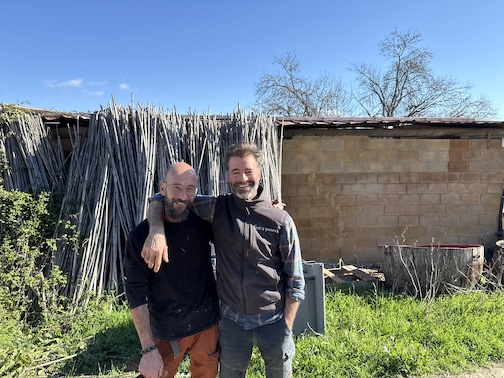
My grandfather made wine and sold it. My father sold the grapes instead — it was simply smarter economically. Then comes my generation, and the younger winemakers around me, who say: I will not put my good grapes in the hands of the industry. I will take control of my family’s story and make my own wines. This new generation is more connected to the spiritual side of the land — to the history, the ancestry, the plots — than to technology or engineering. It is not easy to explain, but it is a real movement. Many young winemakers around 25 years old are now making wines from their grandparents’ old vines, reloading the line of the farmer. They come with education, training, and knowledge — but they are reaching back to their grandfathers’ time, before the Cava revolution, and making wine again from healthy, natural grapes. It is one of the most exciting things happening in Penedès right now.