We’re only a few months away from the 50th anniversary of the Judgment of Paris, in which two Napa Valley wines outshone great wines produced in France and shook the wine world. But more than a century before that, in 1873, the Pleasant Valley Wine Company’s “Great Western Champagne,” from native Finger Lakes Catawba grapes, won first place, triumphing over real Champagnes at the World Exposition in Vienna. That winery in Hammondsport, N.Y., is the first bonded winery in the U.S. and is still in operation.
So as Nathan Lane prepares to take the stage on Broadway as Willie Loman in Death of a Salesman, let us say, “Attention must be paid” to the dedicated winemakers and winery owners in unexpected places who overcome skeptics, Byzantine bureaucracy and Nature-made difficulties to persevere.
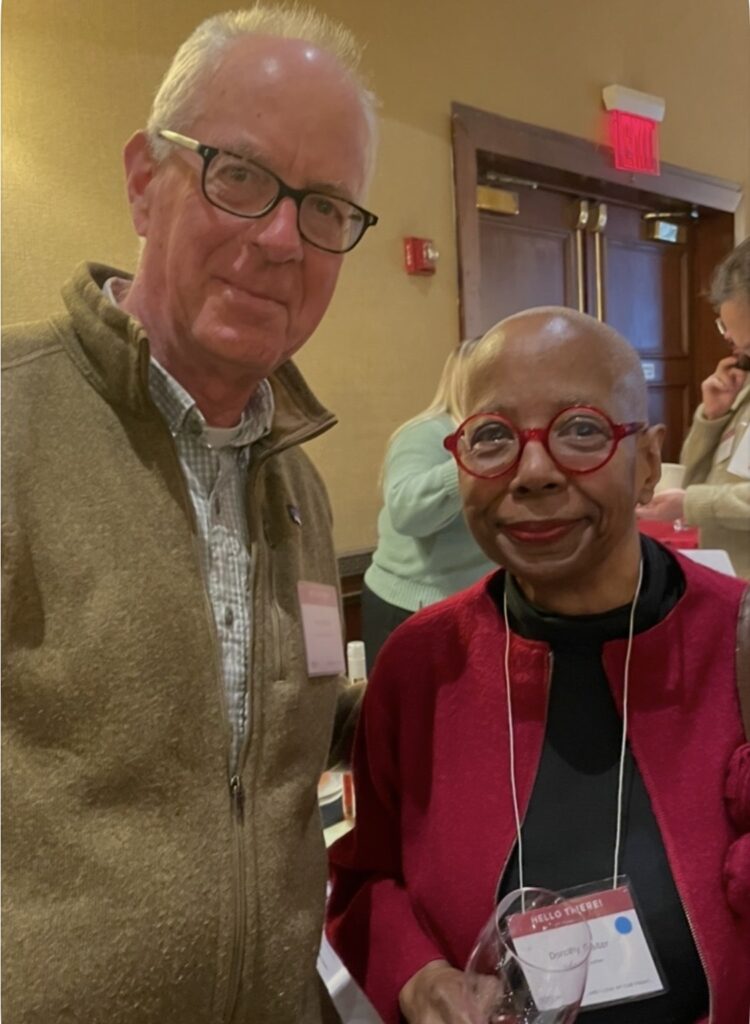
We thought about the challenges “other” regions face when we recently attended the second annual New York Cab Franc Grand Tasting sponsored by Cab Franc Forward NY, a coalition of wineries in the Finger Lakes, Hudson Valley and on Long Island with a goal of marking Cabernet Franc as the regional signature grape.
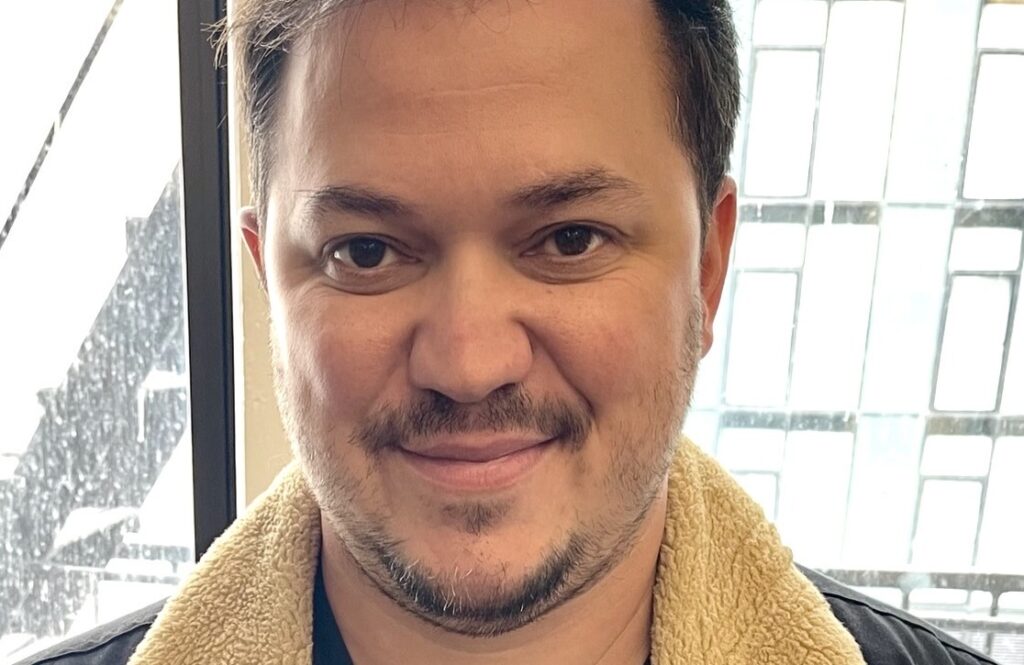
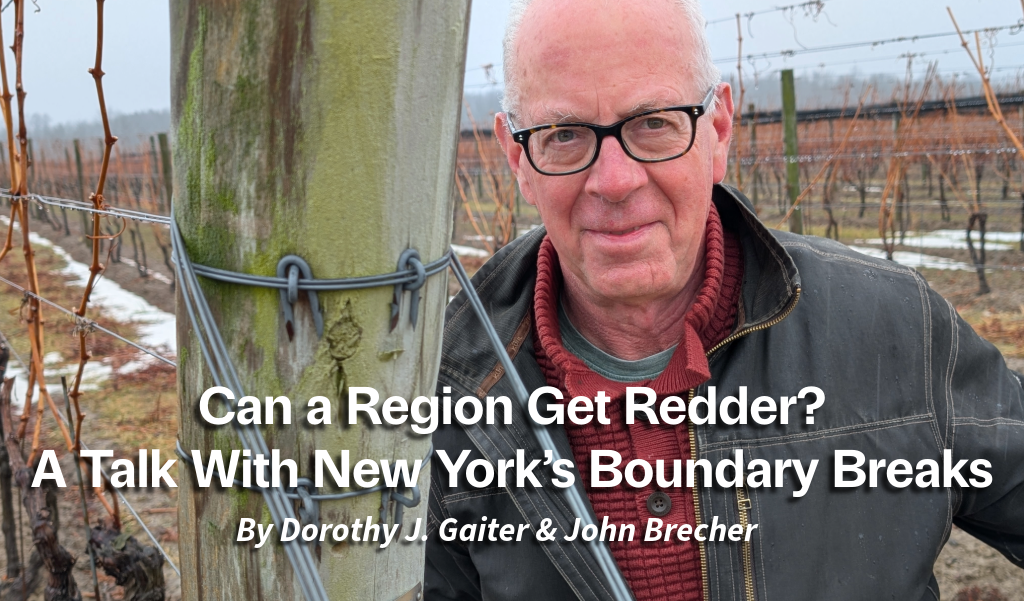
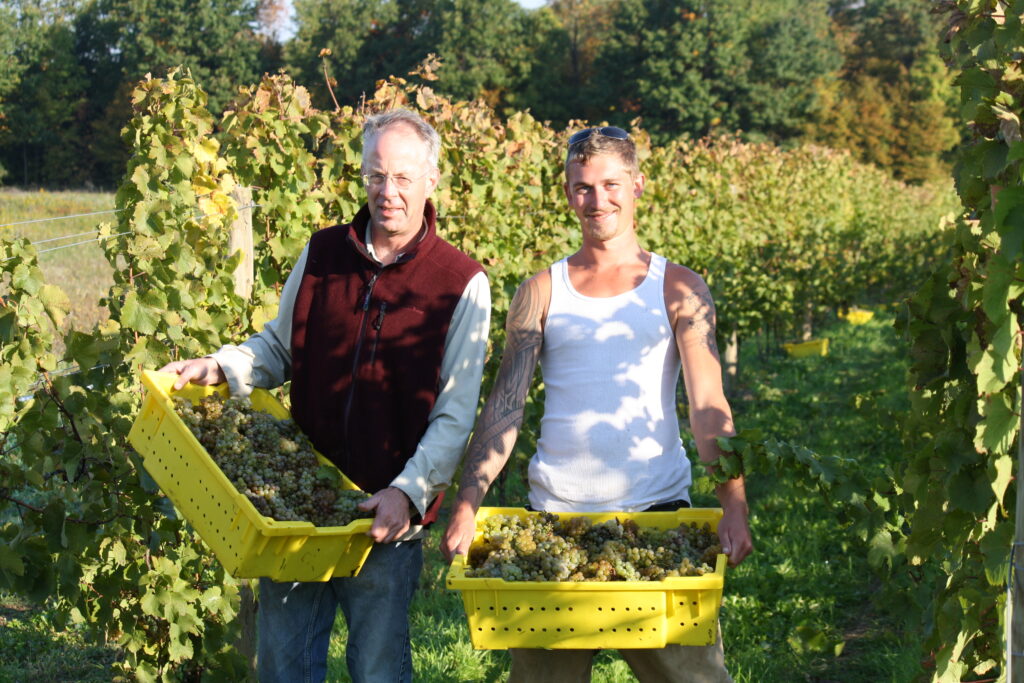
As we made our way around the event, we got to the Boundary Breaks Vineyard’s table, where Bruce Murray, a co-owner, stood. He released his first Cabernet Franc in 2017. Murray, a former publishing executive and tech entrepreneur, released his first wines, four 2011 Rieslings, in 2013. Riesling was the reason he wanted to make wine in Lodi, N.Y., not that far from where he and his wife and co-owner, Diana Lyttle, a plant scientist he knew in high school and married in 2017, had grown up. He purchased 120 acres of farmland in 2008 and now they own 191 acres, 55 planted to grapes. The wines, with an annual case production of around 10,000, are made by winemakers in the region. We had interviewed Murray and exchanged emails over the years but had never met him. His daughter Claire and our Media were classmates in high school.
Since Murray is known for his much-lauded Rieslings and Gewürztraminer, we were surprised and delighted to taste his soul-stirring, razor-edge, minerally Cabernet Franc. But we must have had quizzical looks on our faces because soon we were talking about him pivoting. As we moved on to other delicious Cabernet Francs — like the spicy one from Arrowhead Spring Vineyards, the surprising sparkling Cabernet Franc rosé from Clovis Point Vineyard & Winery and the astonishingly fresh minimal-intervention one from Paumanok Vineyards — we made a mental note to get back to Murray about his pivoting. So we called him this week. This interview is edited for clarity.
We kept thinking about your comment about pivoting. Tell us more.
The first time I pivoted was when I thought it would be possible to make really quality wines and be successful selling those wines through the traditional third-party distribution system. And that turned out not to be the case. Number one, the variety I had settled on, Riesling, is very popular within a small segment of the market, but it’s not popular in a large enough segment of the market to be successful through restaurants and wine shops and so forth. It just is too hard for people to get their heads around.
So that led me in 2016 to open up a traditional tasting room on the site here in Lodi. That pivot was to say, OK, I am going to be in the hospitality business in addition to being in the wine business. And that has been a good decision, but I’ve also come to realize that we need to establish a grape variety that we collectively can all support and promote successfully. And I already, some years ago, had decided Cabernet Franc was that grape variety. And now that I found others in the state feeling the same way, it means that we now have the support to have a large enough voice in the marketplace to kind of break through all the noise. And everything I’m talking about here now is purely business-oriented. Underneath it all is the quality of our wine and the experience people have when they come and visit. All that is still important. But until we had enough support for a single varietal, we were sort of really pushing a rock uphill. So one of my regrets is that we did not plant Cab Franc and Merlot sooner.
Some people don’t think regions need a signature wine.
We know Napa, California, is Cabernet Sauvignon, we know Burgundy is Pinot and so is Oregon. I think there’s something about the wine market that requires a region to establish itself around one or two varietals. I think that’s just the way it works.
It does seem to be the way it works, and part of that makes us sad. Many years ago, before people were willing to think about Cabernet Franc, we wrote that Merlot wasn’t Long Island’s grape. There were some very good Merlots made there but the Cabernet Francs often spoke to us more deeply.
In France, if you’re in Burgundy, you have to plant Pinot Noir, and if you want to plant something else, you can’t put Burgundy on it. That’s very top-down restrictive, but it’s based on the same concept. We don’t ever want to become France telling everybody what to plant. We surely don’t. We won’t. But there’s some truth in what is taking place there, I think. And so here we are now. And also I think red wine is more popular than white wine in the world, generally and in New York.
The other thing is, in New York, the tastes, the perceptions and the reactions of the wine community have a lot to do with success here. And I think they are more receptive to Cab Franc than anything else. It’s still a very big uphill battle with that community.
Is it just because of where it’s from?
Oh, it’s local. It’s where it’s from. Because of a bias; the history of inferior New York wine, second-tier grapes and that sort of thing. And we are going to have to fight that. The other thing, it just takes a long time to change perceptions in this way. I am not afraid to pivot. I’ve also come to realize that it’s a very crowded market, that there’s a lot of good wine, and because of that, we need to be realistic about how quickly we’re going to see real fundamental shifts in demand and tastes. I’m a lot more patient now than I was 30 years ago, and so I’m not under any illusions. I mean, we’ve tried to do everything we possibly can to make a living here. It’s still a kind of break-even proposition economically. I want to pay my people well. I want to not be that owner who says, you’re on a four-day work week during the winter [because] we don’t have any revenue. I don’t want to do any of that.
I think the Cab Francs are really good. And I think there will be more producers, certainly in the Finger Lakes that are making really fine quality Cab Francs. It’ll be 10 to 15, 20 years before it’s considered a staple on wine lists or on shelves in the New York metropolitan area, I would say. And I would count that a victory.
Your vineyard, thank goodness, is still predominately Riesling, right?
Yes. Of our 10,000 cases, 5,000 are Riesling and 1,500 are Cab Franc. And the Riesling market is still here for us in the region. It’s probably 40 to 50 percent of the wine sold by my peer group.
Dorothy J. Gaiter and John Brecher conceived and wrote The Wall Street Journal’s wine column, “Tastings,” from 1998 to 2010. Dorothy and John have been tasting and studying wine since 1973. In 2020, the University of California at Davis added their papers to the Warren Winiarski Wine Writers Collection in its library, which also includes the work of Hugh Johnson and Jancis Robinson. Dottie has had a distinguished career in journalism as a reporter, editor, columnist and editorial writer at The Miami Herald, The New York Times, and at The Journal. John was Page One Editor of The Journal, City Editor of The Miami Herald and a senior editor at Bloomberg News. They are well-known from their books and many television appearances, especially on Martha Stewart’s show, and as the creators of the annual, international “Open That Bottle Night” celebration of wine and friendship. The first bottle they shared was André Cold Duck. They have two daughters.