Spanish Foundations: The Birth of Mendoza’s Wine Industry
The story of Mendoza’s wine industry begins in 1562, when Spanish troops marched from Chile over the Andes Mountains to establish what would become the province of Mendoza. These early colonizers brought with them not only military ambitions but also viticultural traditions from the Old World. Upon arrival, they enslaved the indigenous Huarpe people and had them plant the first European vines in the region.
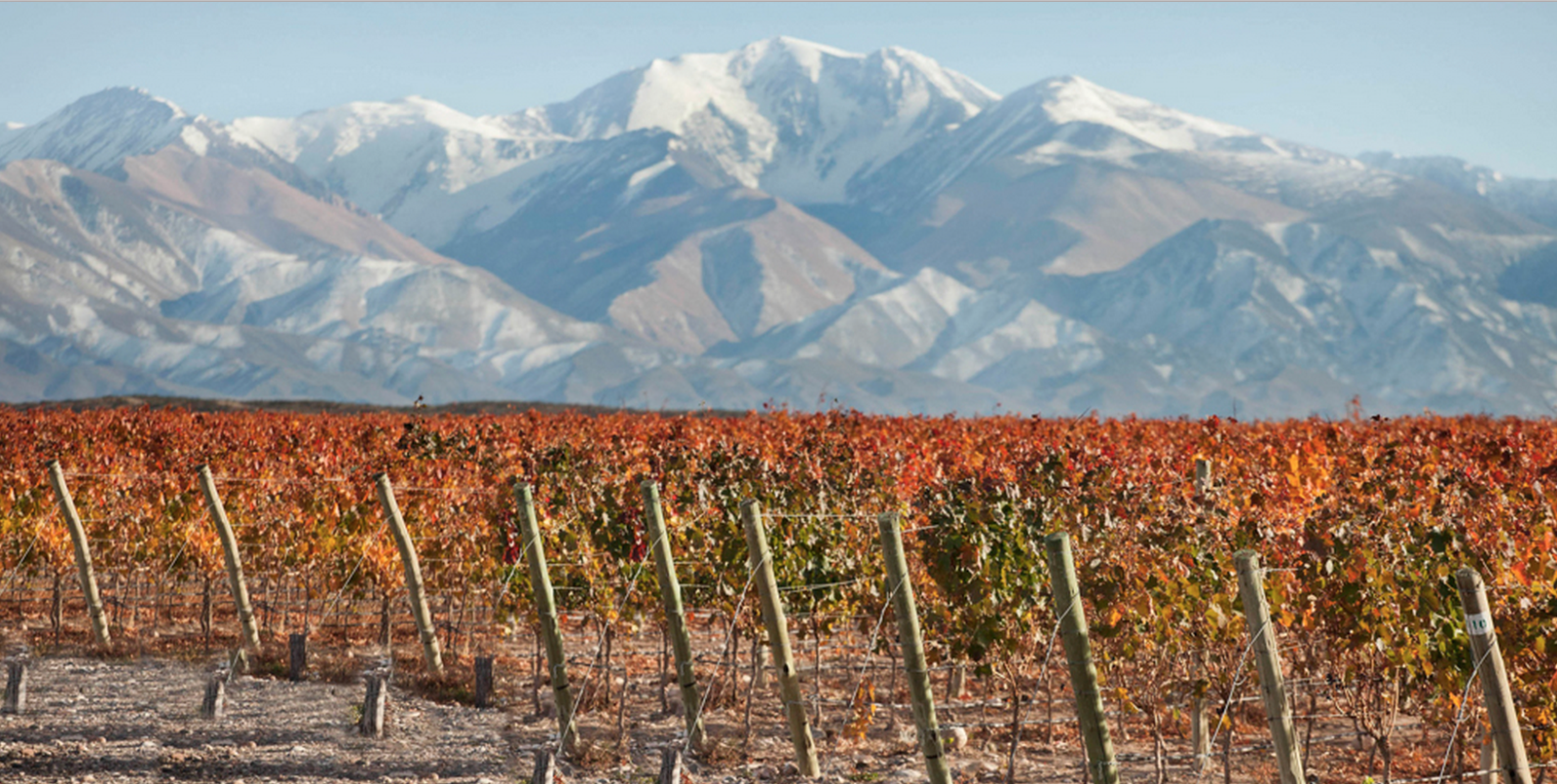
The Huarpes, who had previously been conquered by the Incas, already possessed sophisticated irrigation systems that channeled water from the mountains to the valley—a critical innovation in this semi-arid landscape that would later prove essential for viticulture. As José Alberto Zuccardi of Zuccardi winery explains, “Everything here is related to the mountains, because the mountains determine the weather here as they prevent the humid air coming from the Pacific Ocean. The mountains give us the soil, and alluvial movements made the soil. The mountain is the origin of the only water we have for irrigation.”
This existing infrastructure, combined with the region’s alluvial soils and climate, created surprisingly ideal conditions for growing wine grapes. José Alberto Zuccardi further elaborates on Mendoza’s dependence on the mountains: “In Mendoza, we irrigate 3 1/2% of the total surface of Mendoza, as 96.5% of Mendoza is desert and mountains. The only water we have comes from the melting of the snow on top of the Andes.”
Initially, these plantings were primarily intended for sacramental purposes, as Catholicism required wine for religious ceremonies. The first varieties planted were Criolla grapes, originally from the Canary Islands. However, in 1595, King Felipe II of Spain outlawed wine production in the colonies, hoping to create a captive market for Spanish wines. This prohibition inadvertently gave birth to an underground wine industry in Mendoza that continued to flourish despite royal decrees.
By 1757, despite official restrictions, Mendoza boasted 110 wineries producing approximately 2.9 million liters of wine annually. Alongside cattle ranching, viticulture had become one of the region’s most significant industries, demonstrating the early economic importance of wine to the province.
Independence and Innovation: Mendoza’s Wine Industry Evolves
Argentina gained independence from Spain in 1810, freeing the wine industry from colonial restrictions. This newfound freedom, combined with European expertise, would transform Mendoza’s winemaking in the coming decades.
A pivotal moment came in 1853 when the provincial government hired Michel Pouget, a French agronomist, to modernize Mendoza’s agricultural practices. Daniel Pi of Trapiche winery explains the significance: “One of them was the youthful agronomist, Miguel Pouget, who was highly influential in developing the wine industry in Mendoza. He thought that the best wines came from Bordeaux and he imported the first French Malbec varietals.”
Pouget introduced the first Bordeaux varieties to the region, including Malbec—a grape that would eventually become synonymous with Argentine wine. The quality of these European varieties grown in Mendoza’s unique terroir was quickly recognized internationally; in 1867, a Bordeaux-style blend from Mendoza earned a bronze medal at the Paris Exposition.
The arrival of the railway in 1885 further transformed the industry, connecting Mendoza to larger markets. As Daniel Pi notes, “When our wine industry got a boost, and the railway arrived, it only took two days to get to Buenos Aires. Sorry France, but we started to drink our own wines.”
The late 19th and early 20th centuries saw significant immigration to Argentina, primarily from wine-producing regions of Europe. Laura Catena of Bodega Catena Zapata describes this influx: “Six million Italian and Spanish immigrants came during this time. There were a lot of people to be fed and drunk. They needed their wine for their meals because they were used to it in Europe and so there was a very strong business.”
By 1910, immigrants owned approximately 80% of Mendoza’s vineyards. These newcomers brought viticultural knowledge from their homelands, increasing both the quantity and quality of wine production. Argentine wine consumption rose dramatically during this period, from 23 liters per capita in the 1870s to 63 liters by 1914. By 1915, an impressive 98% of wine consumed in Argentina was domestically produced, with Mendoza as the heart of this thriving industry.
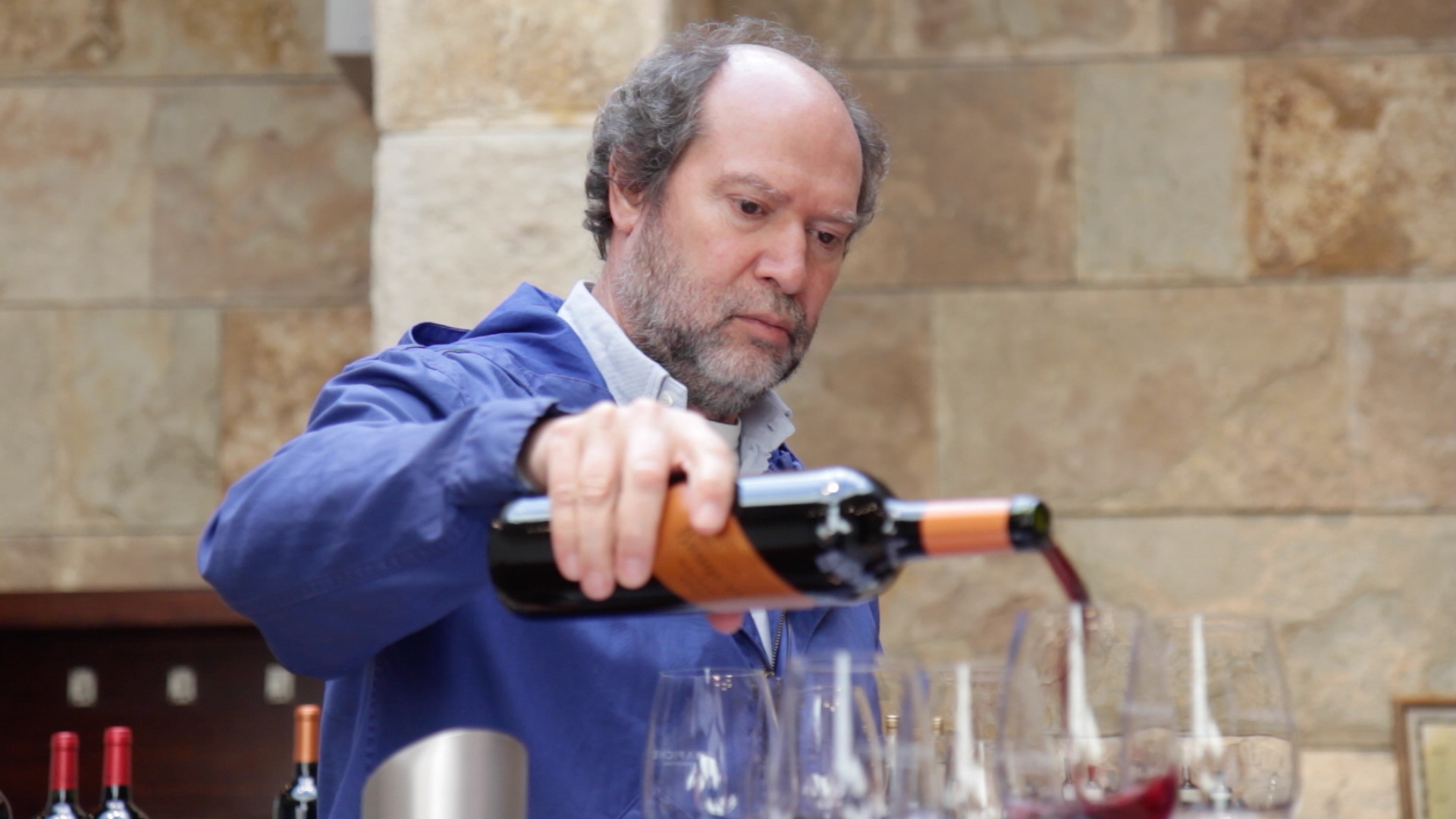
The vineyards of Mendoza grew tremendously during this period, from just 1,000 hectares in 1830 to 45,000 hectares by 1910, surpassing Chile and establishing Argentina as the region’s viticultural powerhouse. By this time, approximately 80% of Argentine vineyards were planted with French varieties, with Malbec gaining particular prominence.
Crisis and Rebirth: The Modern Era Takes Shape
The 1970s and early 1980s marked a turbulent period for Argentina’s wine industry. Two Sicilian immigrant brothers, Hector and Jose Greco, controlled Argentina’s largest wine business, commanding over half the market. During an era of deregulation, they expanded aggressively, acquiring a bank and several wineries, including Catena, a third-generation operation producing 220 million liters of wine.
Their empire collapsed in 1980 when a banking crisis led to their arrest by the military government, which subsequently mismanaged their businesses. The resulting economic chaos caused bulk wine prices to plummet 82% between 1979 and 1982. Hyperinflation and currency issues made Argentine wines increasingly expensive internationally, causing exports to plunge from 67 million liters in 1978 to just 7 million by 1980.
Nicolás Catena, whose family winery had been temporarily acquired by the Grecos, managed to regain control of his operation thanks to carefully structured sales contracts. This forethought allowed him to keep $116 million and regain his wineries, positioning him to lead Argentina’s wine renaissance.
The Catena family story epitomizes the immigrant-driven nature of Mendoza’s wine industry. Laura Catena recounts her family’s origins: “My grandfather, Nicolás Catena, came from Italy where they had vineyards at his house and they made wine at home. He had the idea that he wanted to have a winery and sell wine. He had heard that in Mendoza there was land and good wines could be made. He came to Argentina, and first worked a little bit, then moved to Mendoza and planted some vines in 1902 in the eastern part of Mendoza.”
The modern chapter of Mendoza’s wine story began with the third-generation Nicolás Catena, Catena, who was determined to elevate Argentine wine beyond bulk production. According to Laura Catena, her father “went to California as a visiting scholar. He was invited at U.C. Berkeley. There, in California, he would go to Napa. All of a sudden he said, ‘Hey, these guys think they can compete with the French.’ He heard about the Judgment of Paris. He said, ‘If they can do this in California, why not me in Argentina?'”
This exposure to international winemaking standards revealed significant gaps in Mendoza’s practices. Local wineries lacked modern sanitation techniques and temperature control during fermentation, often resorting to boiling wine to eliminate bacteria—a practice that stripped away character and complexity. Laura Catena explains that her father “realized that in order to make these wines of terroir, he had to have the right press that would be very gentle on the grapes. He brought this rather basic technology in Europe, which was not being used in Argentina.”

Upon returning to Argentina, Catena recruited Paul Hobbs, a U.C. Davis graduate, to evaluate Catena’s operations. Hobbs recalls, “In 1988, I went to Chile, not Argentina… Jorge [Catena, Nicolás’ brother] drove over the Andes to be with us. We drove over the Andes on Friday morning and I met his brother Nicolás that began our association for nine years.”
Together, they modernized equipment, introduced French oak barrels, and implemented temperature-controlled fermentation. Their early experiments with Chardonnay yielded promising results, with blind tastings placing their wines favorably alongside California and Burgundian counterparts. As Hobbs notes, “Nicolás had one thought and that was that Chardonnay would prove to the world that Argentina could make world class wines because he reasoned that white wines were more technically challenging to make than reds.”
While many Argentine wineries struggled with hyperinflation in the late 1980s, Catena was uniquely positioned to invest in equipment, consultants, and international distribution. Economic reforms in 1993, which pegged the Argentine peso to the U.S. dollar, created stability that attracted further investment. Between 1991 and 2001, approximately $1.5 billion flowed into Argentina’s wine sector, helping exports grow from $7.7 million in 1990 to $72.1 million by 1997.
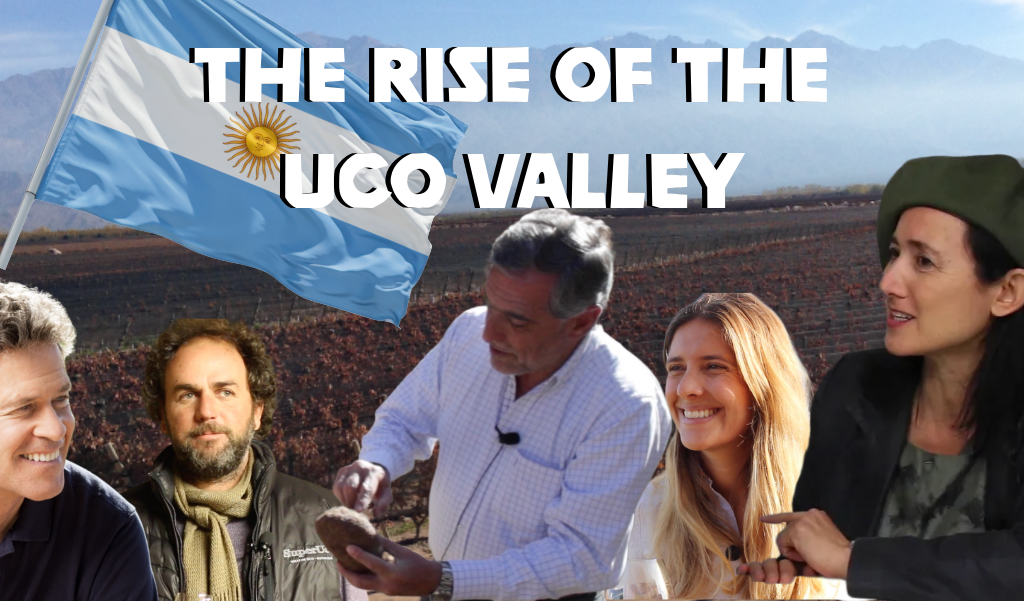
The Rise of the Uco Valley: Pioneering High-Altitude Viticulture
Despite significant improvements in winemaking techniques, Catena and Hobbs still faced challenges achieving the desired phenolic ripeness in their grapes. Mendoza’s heat often resulted in high sugar levels before full flavor development, leading to wines with high alcohol but underdeveloped character.
Their solution—moving to higher altitude vineyards—would revolutionize Argentine winemaking and give birth to what is now considered one of the world’s most exciting wine regions: the Uco Valley.
In 1992, Catena purchased land in the Uco Valley at 3,700 feet elevation for what would become the 85-acre Domingo Vineyard. In 1995, he acquired an additional 45 acres (later expanded to 300) at nearly 5,000 feet, establishing the Adrianna Vineyard. Laura Catena explains: “He found these high altitude regions where there were no vineyards, but where you could make this very concentrated wine with moderate alcohols, nice acidity, age worthy wines. A place like Gualtallary, where the Adrianna vineyard is planted in 1992. There were no vineyards there before”
When Catena planted his Adrianna Vineyard in the Gualtallary district in 1993, most believed the project would fail. Ernesto Bajda of Catena recalls, “Everyone said that he was crazy when he planted Adrianna, our highest altitude vineyard, which is 5,000 feet above sea level. They all said he was going to lose and that he would not get a single grape from there because it was too high.”
The gamble paid off spectacularly. Laura Catena describes how her father established the vineyard: “He set up weather stations throughout the region and discovered that while temperatures were similar to Champagne, the brightness and extra hours of the sunlight could result in the holy grail of winemaking: Grapes on the edge of ripeness with fully mature tannins, natural acidity, and only 13% alcohol.”
These high-altitude sites provided greater diurnal temperature variation—warm days for ripening followed by cool nights that preserved acidity—resulting in wines with more balanced structure and complex flavors. As Daniel Pi of Trapiche explains, “We moved up in the Andes for quality. Today we are in some places that also produce high-yield vines, specifically in the floor of the Uco Valley.”
While Catena initially focused on Chardonnay and Cabernet Sauvignon, his team eventually turned their attention to Malbec, a grape with a storied history. Originally from Cahors in southwestern France, Malbec had been popular in medieval times and was once widely planted in Bordeaux. However, it had fallen out of favor in its homeland after the phylloxera epidemic, as growers found it difficult to cultivate.
In Argentina, Malbec had been planted extensively but was not particularly respected. By 1990, Mendoza’s Malbec plantings had shrunk from 120,000 acres in the mid-twentieth century to just 25,000. Catena himself initially viewed it as a second-tier grape. Paul Hobbs recalls, “Nicolás did not want to make Malbec, but our importer wanted a red wine. Of course, the logical red wine was to make Cabernet Sauvignon… I, however, became infatuated with the Malbec grape, something I didn’t know or had familiarity with.”
Despite initial resistance from Catena, who said, “No, the French have already demonstrated. They did not replant after phylloxera,” Hobbs convinced him to experiment with Malbec. However, Laura Catena has a slightly different account: “Honestly, Paul was not a big believer in Malbec and that’s why the first couple of years, he said, ‘Chardonnay and Cabernet.’ We made 1990, ’91, ’92, ’93, ’94, ’95 Cabernet. ’96 was Malbec.”
Laura Catena credits Italian winemaker Attilio Pagli with recognizing Malbec’s potential: “When he came to our winery he was part of the Alto Las Hormigas project. My father said to him, ‘You guys work with Sangiovese in Italy. It’s your own different variety. Which is the variety that you will put your bet on for Argentina?’… He fell in love with the lot 18 of the Angelica Vineyard. The vineyard planted in the 1930s. In the ’90s, it would have been 60-something years old. He said, ‘This is gold.'”
This recognition led to scientific study and experimentation with Malbec, ultimately revealing its exceptional affinity for Mendoza’s high-altitude terroir. The grape’s popularity exploded in export markets, growing from 900,000 cases in the U.S. in 2006 to 2.1 million by 2008. Today, Argentine Malbec—particularly from high-altitude vineyards—is recognized worldwide for its distinctive character.
The Uco Valley Today: A World-Class Wine Region
In the decades since Catena’s pioneering plantings, the Uco Valley has emerged as Argentina’s most dynamic wine region and one of the most exciting viticultural areas in the Southern Hemisphere. It is not a small area either, at around 78 miles in length and over 25 miles in width, with many interesting, geologically and climatically diverse subregions. The elevation of vineyards can range from 2,100 to 6,000 feet. There is also extreme variation in the amount of rainfall with some regions such as San Pablo, which is closer to the Andes and known for white wines, getting 20 inches per year while other regions can average less than 8 inches per year. The Uco Valley has over 29,000 hectares now planted in the zone, which is more than double the amount that was cultivated in the late 1990s. Despite this, the Uco Valley is still only about 6% of Argentina’s wine production, whereas Mendoza in total represents about 75% of wine production. This production however, is at the premium end of the spectrum for Argentina.

José Galante of Bodegas Salentein explains the region’s appeal: “Uco Valley is a beautiful region in the west of Mendoza. It was the last region developed in Argentina, and began to produce high-quality wines in the last 20 years when grape irrigation arrived in Argentina. That was the main reason to develop this area. It’s a beautiful area because it’s in the slope of the mountain.”
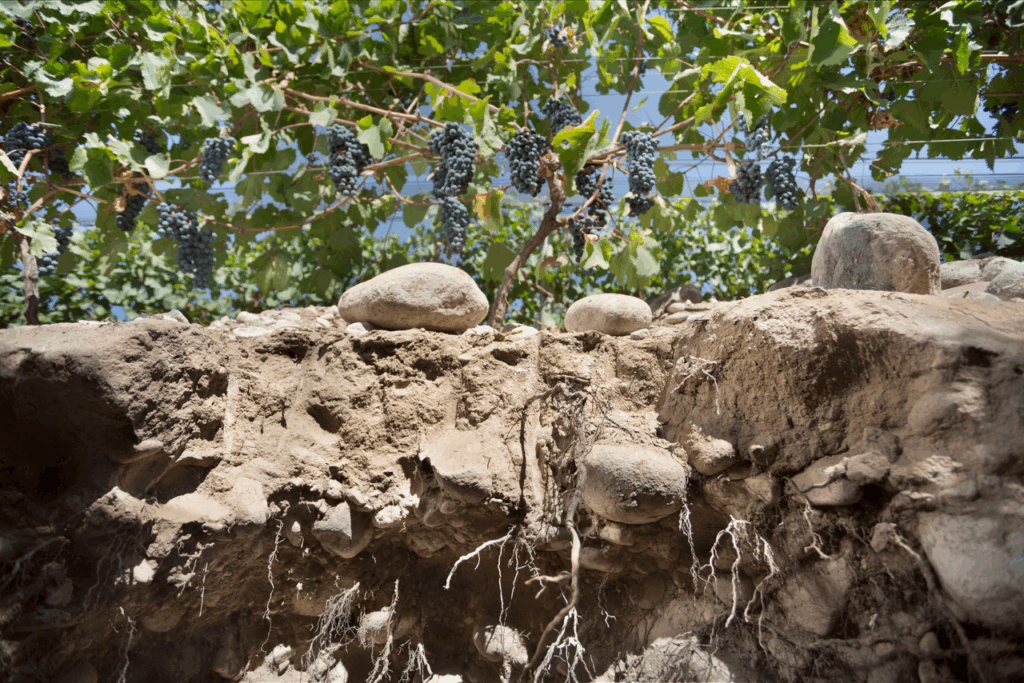
The valley’s unique geographical positioning creates ideal conditions for viticulture. José Alberto Zuccardi describes the soil: “Altamira is part of an alluvial cone. We did a very deep study together with the university and we have defined this area. The main characteristic of this area is the predominance of calcium carbonate, good chalk in the soil.”
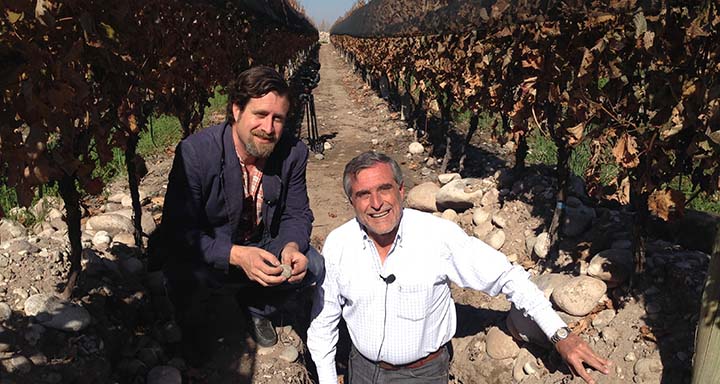
José Galante adds that the elevation provides remarkable diversity: “This is very difficult to explain because in a short distance, only 22 kilometers, the ripeness of the grape can be different. And the expression of the grape also is different from one place to another… We have Chardonnay at three different altitudes. And the Chardonnay at the low altitude usually has more tropical flavor. In the middle is more pears, apple, this kind of flavor. In the higher altitude, there’s the most exciting Chardonnay with citrus, a lot of minerals, good flavor, good acidity.”
The soils of the Uco Valley are primarily alluvial, consisting of sand, clay, and stones deposited by ancient glaciers and rivers flowing down from the Andes. This diversity of soil types is now recognized as one of the region’s defining features. As José Alberto Zuccardi explains, “When the glaciers melted, these big movements of water and stones came down and formed the soils where now we cultivate.”
As vineyards in the region mature, winemakers have shifted their focus from elevation alone to include detailed soil studies. José Alberto Zuccardi describes his approach: “We started to study and we wondered where the calcium carbonate, all this chalk, comes from. Normally, it comes from the bottom of the sea. Many, many years ago, more than 100 million years ago, this area was at the bottom of a sea. After that, two plates went against each other and the Andes emerged. What was the bottom of a sea is now the top of the Andes.”
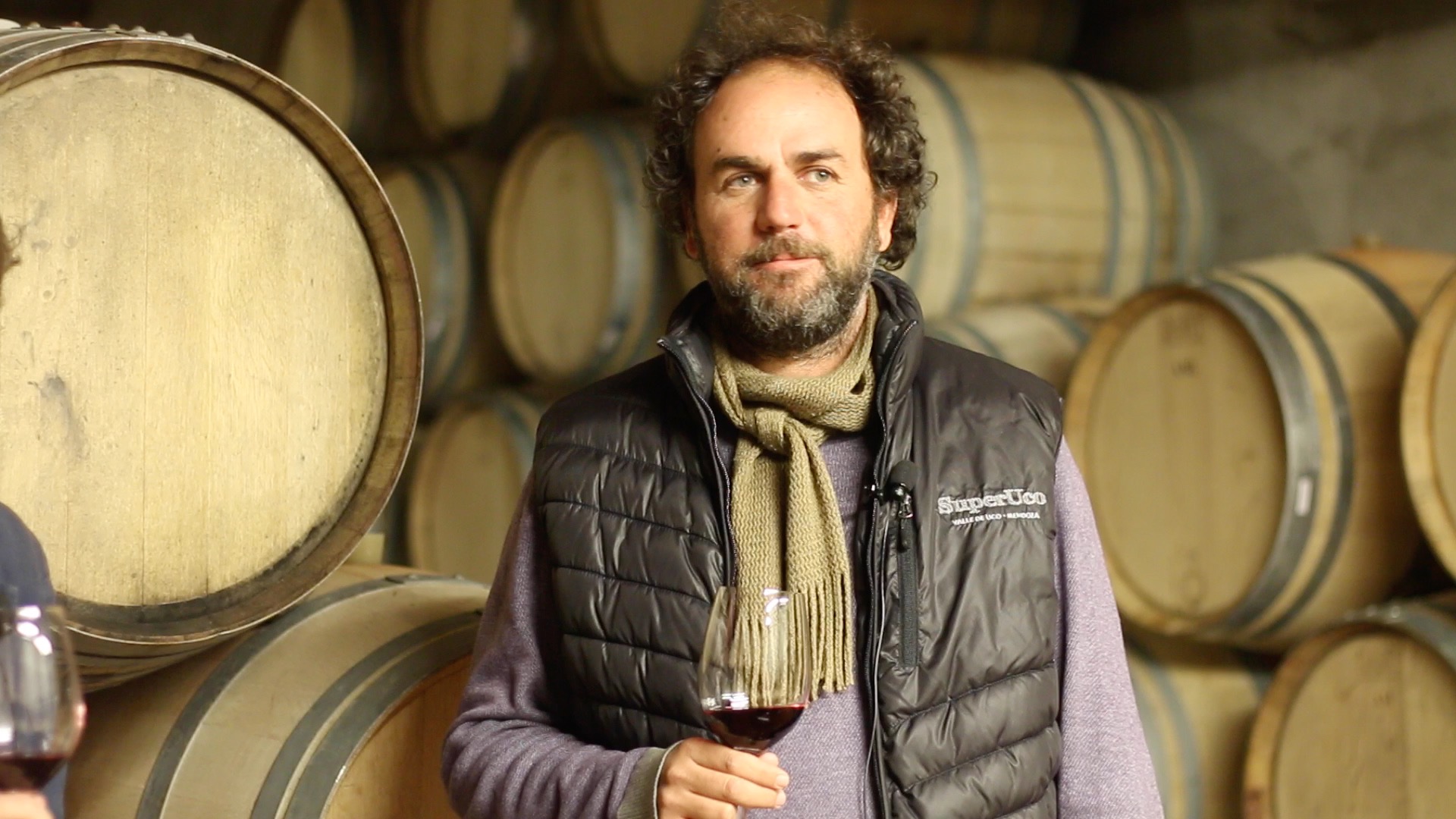
This terroir focus coincides with a stylistic evolution in Uco Valley wines. While earlier vintages often featured heavy oak influence and high extraction, today’s producers are increasingly seeking freshness and transparency. Gerardo Michelini of Zorzal explains this shift: “In Argentina, we have a different conception. For us, traditional wines are the kind that Argentina used to make, big Malbecs with body, jammy. For us, the modern wines are light, elegant, with acidity, easy to drink, easy to pair with food.”
Ana Balbo of Dominio del Plata confirms this trend: “I think Argentina wants to move away from really high concentrated wines, or really oaky wines, to wines that better express our terroir, and our sourcing, our land, and our country as a grape growing region. We are trying to produce wines that reflect the place we are coming from, and they express better, it’s more about the fruit. It’s more about what the soil can produce.”
The international wine community has taken notice of the Uco Valley’s exceptional potential. José Galante notes that when his employer, Bodegas Salentein, first arrived in the region, “Imagine when Mr. Pon arrived in the Uco Valley, there was nothing in this area. It had only the natural vegetation. Imagine our average rain in this area is 200 millimeters (7.87 inches). It’s a desert. He decided at the beginning to buy this land. Then, he decided to plant his vineyard and to build a beautiful restaurant, art gallery, and of course, a wonderful winery with all the new technology… I think it was a tremendous decision because I remember hearing that everybody thought, ‘This man is crazy.'”
Today, the Uco Valley produces a remarkable diversity of grape varieties. Max Toso of Huarpe Wines explains, “I think what we are doing right now is showing the world that we are much more than Malbec, and that Argentine winemaking is very diverse. Maybe we are not viewed that way in the world, so we need to communicate it. Now we are showing our diversity. We are also producing great Cabernet Sauvignon, Bonarda, white grapes, sparkling, so this is the most interesting part. Showing the world what we can produce. Diversity is the key.”
Conclusion: A Bright Future Built on Historical Foundations
The evolution of Mendoza’s wine industry from its colonial beginnings to the cutting-edge vineyards of the Uco Valley represents one of wine’s most compelling success stories. What began as religious necessity has transformed into an internationally recognized fine wine region through centuries of innovation, setbacks, and reinvention.
The spirit of the region’s immigrant pioneers lives on in today’s winemakers, who continue to push boundaries and challenge conventional wisdom. As José Galante observes, “Now, people like a wine that you can drink with food. People prefer a wine with more elegance, with finesse. This is the wine that we are producing in our winery.”
Laura Catena sees a bright future for Malbec and Mendoza: “To me, Malbec has so much more to give than what’s being given by it now or what people perceive it as. You wouldn’t ask somebody in Burgundy, ‘Hey, don’t you think you should try a different variety?’ There’s so much diversity, so much beauty. To me, we’ve just started to see the beauty of Malbec in Argentina. There’s so much more.”
By combining Old World knowledge with New World innovation and the unique attributes of Mendoza’s terroir, they have created a distinctive wine culture that honors its past while confidently facing the future. As José Alberto Zuccardi summarizes his winemaking philosophy: “In our point of view, the wine is made in the vineyard. What we have to do is show what the vines can produce in this environment, in this area.”
From the irrigation systems of the ancient Huarpes to the high-tech wineries of the Uco Valley, Mendoza’s wine story demonstrates how human ingenuity can harness natural potential to create something of lasting value. With its combination of unique growing conditions, technical expertise, and passionate producers, the region seems poised to continue its ascent in the world of fine wine for generations to come.