In the wine world, there is a special emphasis for wineries that remain family owned. Maybe it’s the romanticized notion, believing they put more attention and care into the vineyard rather than meeting production targets. Maybe it’s the freedom that comes with independence, allowing them to focus on quality instead of the bottom line. Or maybe, just maybe, it is the belief that these families actually love their vineyard, because it is quite literally their home.
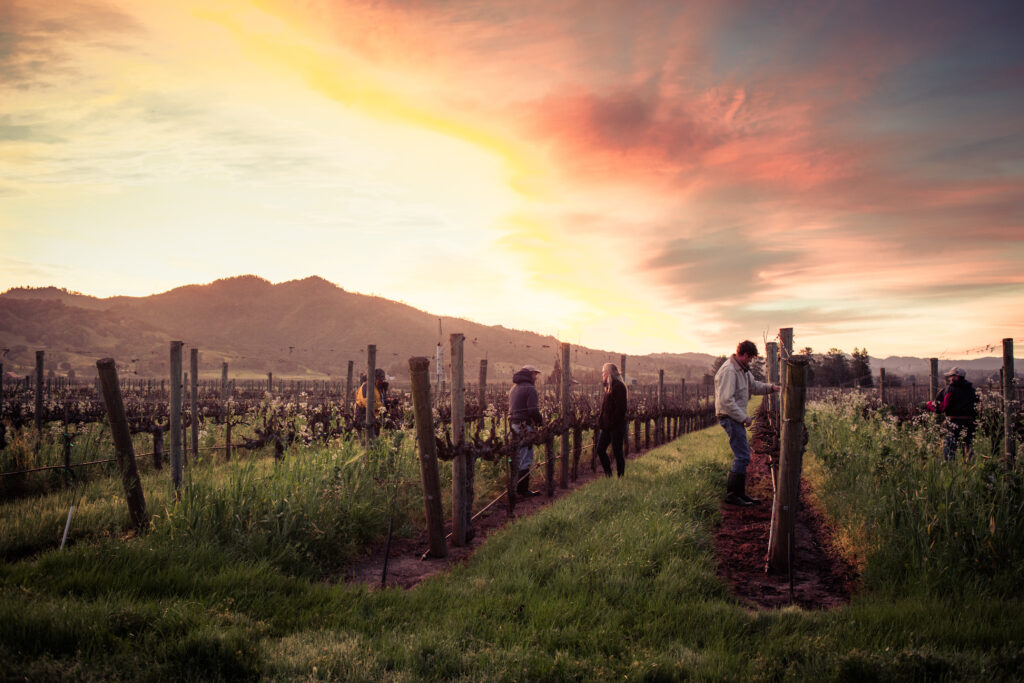
For Justin and Karin Warnelius-Miller, Garden Creek Vineyards became home in 1963, when Justin’s father (James Miller) purchased the property in Alexander Valley, Sonoma County, during an era when growing grapes and making wine was far from fashionable. Initially planned as a ranch, the family planted the first vines of Cabernet Sauvignon in 1969 after realizing how suitable the land was for wine grapes, and have since been growing and selling their grapes to local wineries ever since.
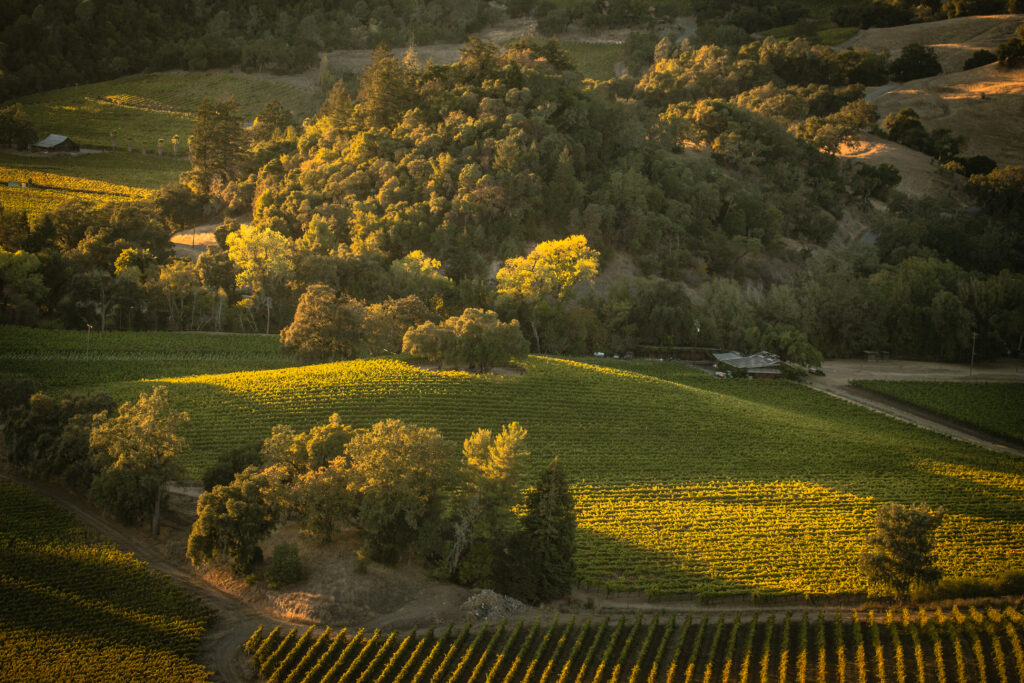
Justin took over from his father in 1995 at the age of 19, and has spent all of his adult life on the property caring for the 100 acres (72 under vine) of Cabernet Sauvignon, Chardonnay, Merlot, Cabernet Franc, Petit Verdot, a hybrid called Scheurebe, and much more. He transformed the vineyard, incorporating sustainable and regenerative farming practices, and implementing a tedious block-by-block management of vines to enhance the characters of the different clones. Then in 2001, he and his newlywed wife Karin took it a step further and began holding some of their grapes back to craft their own wines.
Karin wasn’t a stranger to Garden Creek either. A daughter to an entrepreneurial Swedish immigrant family, her mother was best friends with Justin’s mother (also a Swede) while her father apprenticed at Garden Creek Vineyard in the ‘70s; Karin basically grew up on the farm with Justin. Eventually, her family and career took her elsewhere, producing wine at her family’s own winery in Alexander valley, then producing table wine in Sweden, then marketing wine brands for Boisset Collection internationally. Then finally, in 1997, she returned home to Sonoma under Regal Wines, where she and Justin reconnected and fell in love.
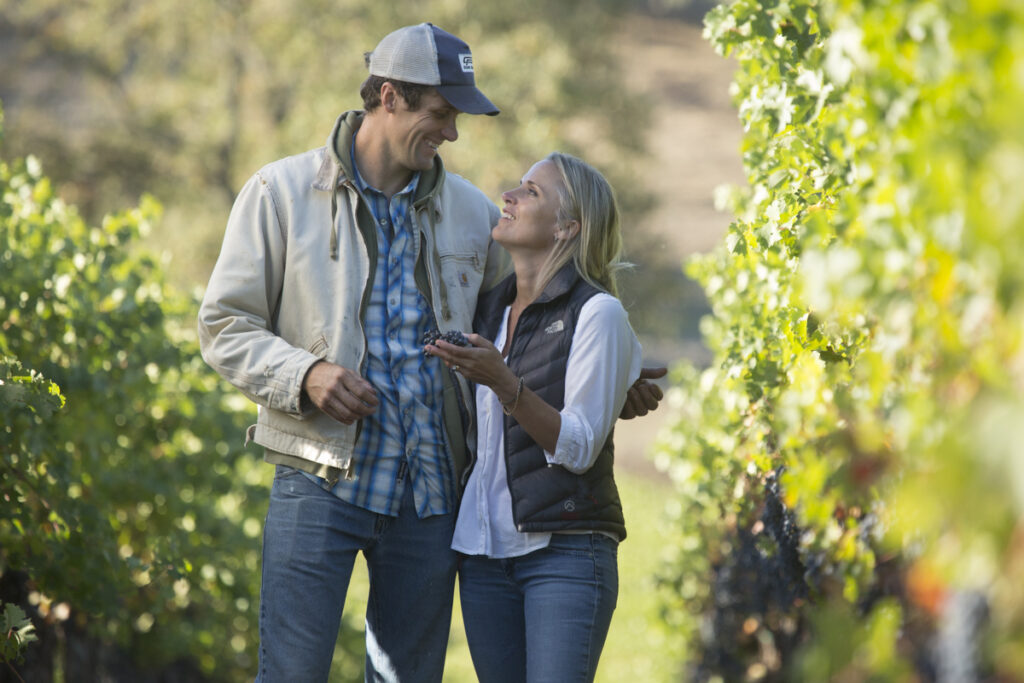
The Cabernet-based blend ‘Tesserae’ and their Chardonnay, are what Justin and Karin have created for their vision of Garden Creek. The wines, a blend of their different clones and blocks, and always aged extensively in bottle (5 years for Tesserae and 3 years for Chardonnay) before release, are an amalgamation of their knowledge and connection to the land. More importantly, there is a sense that each glass of their wines shares their connection to their home. “…We travel the world and we can go anywhere we want, but we choose to stay where we are because it’s so beautiful and it’s home. That’s where we have our roots.”
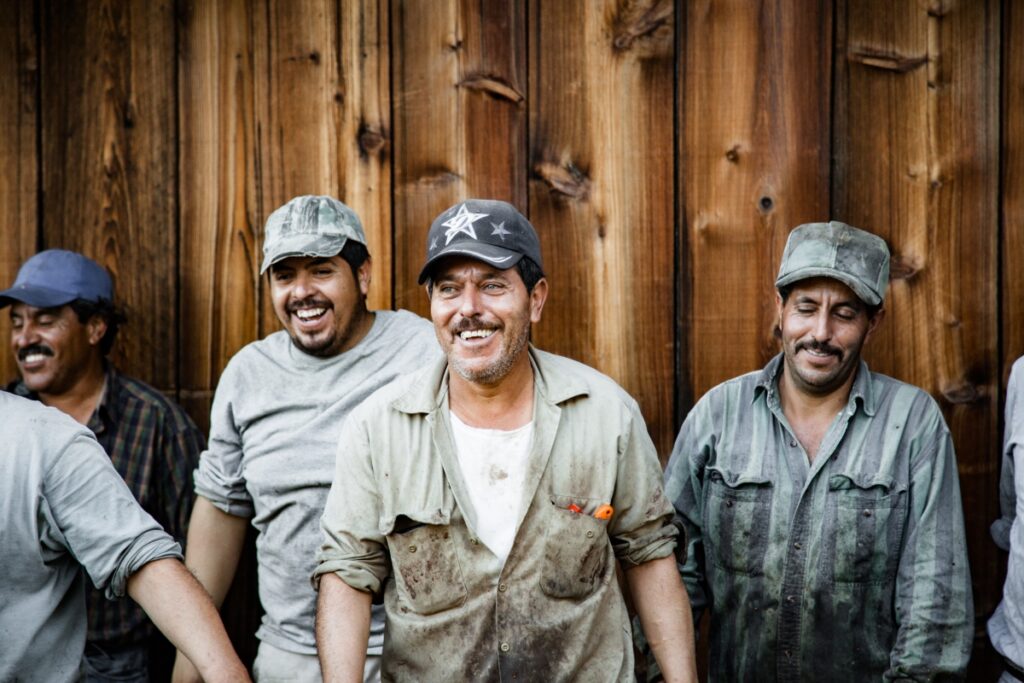
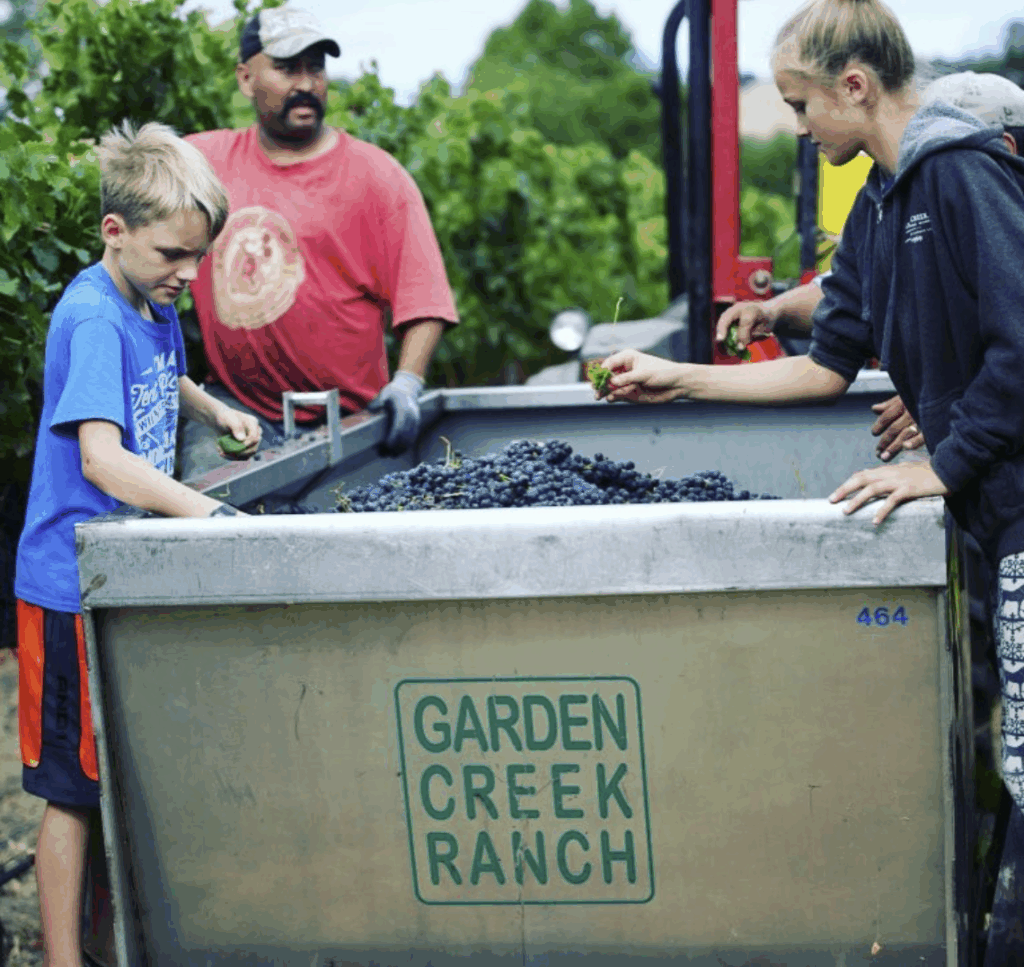
But the connection to Garden Creek doesn’t just belong to Justin and Karin. The Gonzalez family has called the same place home since 1964, when patriarch Fidel Gonzalez came up from Moreli, Mexico and asked James Miller for work. It started with Fidel himself, then came his eldest son Dagroberto, and now four generations of the Gonzalez family reside on the property, managing the vineyards full time. They are as much a part of Garden Creek and Justin and Karin’s family. “We would do anything for them and they would do anything for us.”
It is also this devotion to their home that Justin and Karin are already looking ahead for their next generation. While others around California and the world are slowly seeing families relinquish ownership of their wineries due to financial reasons or lack of interest from the children, Justin and Karin are hopeful that their children will carry on what they are building. “Elsa our daughter… she’s always been our farmer… She loves the dirt, loves the vineyard, loves the winemaking.”
This hope for family legacy has also driven them to expand to Anderson Valley, Mendocino County to grow and make wines from Pinot Noir. The new label, WarneliusMiller, brings the same rigorous and quality-driven vineyard practices. But working with a new variety meant leaning on their peers for insights on working with Pinot Noir, and taking time to fine tune the vineyard and winemaking practices; Justin and Karin released their first vintage, the 2018, in 2024 after nearly two decades of preparation. This practice of being patient, whether it’s vineyard work, winemaking, or bottle ageing, isn’t just a carryover from Garden Creek, but a belief of what is best suited to the land and the grapes.
Today, Justin and Karin, with their children Elsa and Leif, and the Gonzalez family, continue to share with us a piece of their love and devotion to their home. “There’s something really special about that, and there’s no giving it up. We’ll do anything we can to keep it.”
Lee Pai of Grape Collective talks to Justin and Karin Warnelius-Miller of Garden Creek Vineyards and WarneliusMiller, about their devotion to their home.
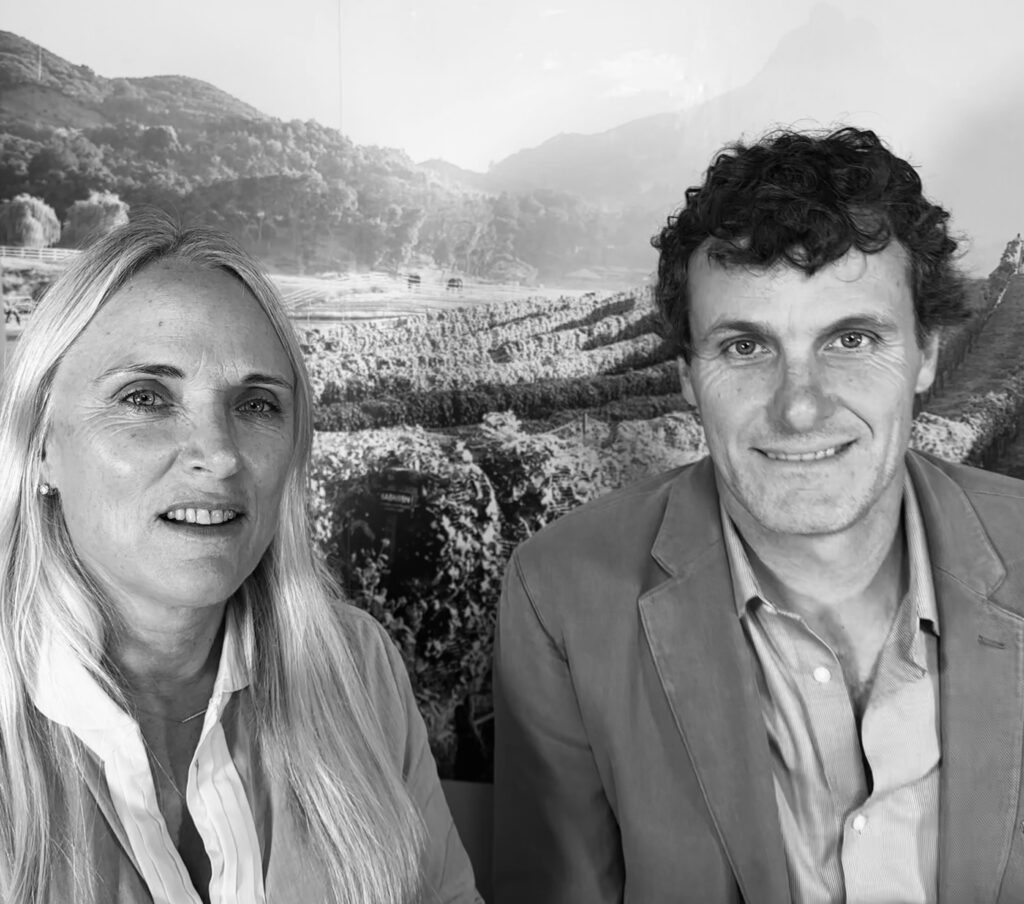
Lee Pai: Justin, Karin, very nice to have you here. Can you introduce yourselves and your winery?
Karin: My name is Karin Warnelius-Miller, and alongside my husband, Justin Warnelius-Miller, we are from Alexander Valley, in Sonoma County in Northern California. And together, we own, operate, run, and live on our property, Garden Creek Vineyards, producing wines and growing wine grapes.
What is the history of Garden Creek?
Justin: My father, James Miller, purchased the land back in 1963 as a young 27-year-old and fell in love with the property. This is before wine grapes were a thing in Alexander Valley. He met my mother, who was an immigrant from Sweden in the mid-60s. They started planting Cabernet Sauvignon at what we call our home ranch in 1969. That was the beginning of Garden Creek. And for over 50 years now, we’ve been wine growers. That’s kind of the beginning of our history.
Karin: I am an immigrant to the United States of America, and I came to this country in 1975. My dad had been an exchange student here when he was 18 as a farmer – six months in Iowa, six months in California. He was very attracted to California, and he knew he wanted to come back with his family. So in 1975 he returned to Lodi, California, with that dream, and serendipitously, we met the Millers through a job posting at the Swedish consulate. We got up to Sonoma County and we lived at Garden Creek Ranch. Our mothers became best friends as we grew up. And that’s how we met.
After we re-met later in our lives, I moved onto the ranch and moved in with Justin, and we began making wine on this property. We’ve been together for 27 years now, and we’ve been making wine for 27 vintages.
As a little girl, I knew I would not only marry a wine grape grower, but also a Swede. So my husband hit all the marks.
What is the focus of Garden Creek?
Justin: Garden Creek’s main focus is a Cabernet Sauvignon we call our Tesserae and a Chardonnay, which is composed of our clonal selection. Tesserae is more Bordeaux driven, while the Chardonnay is more Burgundian driven, with the intent to age for a very, very long time.
Karin: I think people refer to that because of the history and the classic character. But it’s also our upbringing. We’re firm believers in the tapestry of the varietal, and that means showcasing the characteristics as they are—not only of variety, but of place and the exquisite soils of our property.
Alexander Valley is a very large valley, and we are working now as a group of winegrowers to distinguish the different subregions because we have different microclimates, even on our property. We’re right on the Mayacamas eastern hillside slopes, and there are so many microclimates you can feel them as you walk our property. All of that indicates differences you’ll get within each of your different lots in your winemaking. Paying attention to that is crucial for us. I will say we’re making much different wines than our parents ever made.
You guys hold back your wines for a significant amount of time before releasing. That is rare, as winemaking is a challenging enough business already. What drove that decision for you?
Karin: Integrity to our craft. It’s just like how we believe we shouldn’t bring a two-year-old to a funeral, that’s how we feel with our wines. You have to wait and be patient.
The way we craft them is intentional, for them to be aged for a long time. For fine wines, it takes a long time for them to integrate and become seamless. Just like a famous musician playing for an orchestra, you cannot be playing on stage in your first year of playing, it takes 10,000 hours. It’s exactly the same with fine wine. We’re looked at as a little crazy, but it’s the crazy ones that have a little more fun.
The beauty in wine is when they enter your senses and you’re just so pulled to them, you cannot take your mind or your eyes or your mouth off of the wine because they’re so intriguing. That’s what we seek. We are certainly known as the crazy, hardworking couple that do not stop until the sun goes down because we love what we do and we push it.
Justin: It is also the thought of being able to sit with our children one day and drink a half-century-old wine that Karin and I made together off our land with vines that we and their grandparents planted. It is very special. The intention starts with the beginning of the craft and the beginning of the vintage. We’ve stood on that since day one, and I love it.
Karin: And it’s never just us. It’s who we work with. Justin’s dad hired Fidel Gonzalez from Morelia, Mexico, in 1964, before we even had wine grapes. He knew before he went into wine growing that relationship and treating people with care and giving them a safe place to live would bring commitment for generations. Today we have fourth-generations of the Gonzalez family with us. We would do anything for them and they would do anything for us; They are the ones that saved our property during the 2019 fires.
Justin: Exactly. We wouldn’t have a winery standing today if it wasn’t for them and their courage. While their own personal property burned to the ground, they stood alongside Karin and me and saved everything that’s involved with our business—all our case goods, our aging barrels, our whole facility.
You farm around 100 acres in the Alexander Valley, but you’re only producing two wines. Where do the rest of the grapes go?
Karin: We’ve always been selling grapes, and it was only 25 years ago that we began holding back grapes for our own winery. Today, we still sell a good 65% of our grapes. It’s great to be diversified, and within the winery, we’re able to be very selective with our choices of the different clones conducive to soil type within the vineyard for our wines.
Justin and I take great pride. We are the winemaking team, we are equal in our winemaking, and Justin leads the ship on the wine growing. He’s exceptional at it. I can say that not only as his wife, but also as a colleague. We’re business partners, but we’re very well respected for how we grow.
Where does your reference point for the wine come from?
Justin: When I took over Garden Creek, I was 19 years old. I grew up in the vineyards as a young child. When you’re young, you kind of take certain things for granted in life. But it was one of those things when I got of age, I just knew that’s where I wanted to be and what I wanted to do. I fell in love with this amazing woman, and next thing you know, we took the family business to the next level and start bottling some of this fruit and making some incredible wines.
Karin: We also wanted to stay focused. We make two wines a year, one is the Garden Creek Tesserae, which is very traditional left bank Bordeaux varietal blend. Then we’ve got our Chardonnay, which we’ve named our clonal selection. There’s something really important to us about focus. When we share our wines, we’ll share a couple vintages of the same wine, and it tells a story like no other. It tells a story not only of the vintage years, but it also of the capability of the varietal and our land, and the people.
So it may sound small, but in many ways we’re producing several wines every vintage. It takes a lot of meticulous attention to detail and decision-making and guidance, but also understanding. For us, crafting our wines is about going to the edge and pushing yourself, your knowledge, your comfort zone, knowing the beauty that’s on the other side. You have to know how far you can take it, and that takes knowledge, years of experience on your own land, which is one of our greatest asset. I don’t know anyone else besides Justin that has lived in one place for all his life (49 years), and that’s exquisite. That’s the knowledge that we have.
It’s not that there’s nothing simple about that. We travel the world and we can go anywhere we want, but we choose to stay where we are because it’s so beautiful and it’s home. That’s where we have our roots.
I want to ask you about the WarneliusMiller. How did this come about? You guys are obviously very dedicated Chardonnay and Cabernet farmers. But WarneliusMiller is very different.
Justin: I would say during the mid-early 2000s, we wanted to expand our little wine operation, vineyard operation, and buy some land in a completely different appellation, climate, and area, and experience something different, but also add to our legacy for our children and hopefully their grandchildren someday. So we started looking around up in Anderson Valley in Mendocino County, and came across a piece of land up there for not too much money. We purchased that in 2006. Shortly after that, we actually found another piece of property that came to us that had originally been planted in 1971, and we had the opportunity to redevelop that vineyard and lease it. That was kind of the inception of creating WarneliusMiller, which is Karin’s last name and my last name put together. But we knew that that brand was going to envelop the cooler climate varietals, and hopefully someday down the road will come to fruition.
Karin: The concept was that the people and our names needed to go on the label. Garden Creek, which is the name of the creek on our original property, is the location, and that’s very important to us.
But with this Pinot Noir from the new Golden Fleece vineyard, WarneliusMiller is the new world of our world. Today, all of our wine labels, each of them is numbered and signed by us. It just speaks to the authenticity behind what we’re creating and tying in our family’s name to the labels.
To go from planning Cabernet and Chardonnay to Pinot Noir, were there experiences you could translate over from Sonoma (Alexander Valley) to Mendocino (Anderson Valley)?
Justin: We’ve been growing grapes for a very long time, and grew up with a lot of colleagues in the Russian River area that basically only make Pinot. To me, making Pinot Noir is much more hands-off than a Bordeaux program. There is much more sensitivity to the winemaking and the delicate handling of the fruit and fermentations. It was a beautiful challenge for both Karin and me, but it’s also really letting the vineyard be what it is, whereas I feel like in Bordeaux and in Cabernet production, it’s a little more hands-on, a little more extraction. You can’t over-extract with Pinot at all, and it has everything to do with the vineyard.
Karin: I will say something that was very important to us as vintners was to create a Pinot Noir that had a reflection of what we had already created with Garden Creek. That, again, comes back to purity of place, and there’s a refinement in the muscularity of our wines. It is by no means a sweet ballerina on stage, it’s got some body to it, but also purity and gracefulness. We love the challenge and we are thrilled to share the second release of our Pinot.
And you also hold your Pinots back for a couple of years before releasing them?
Karin: Yes, we’re firm believers in holding back the wines, and we hold the Pinot back for a total of 6 years, a year in barrel (about 35% – 40% of which are in new barrels depending on the year), and 5 years in bottle.
Justin: We do gross lees stirring for the first six to seven months as well, it naturally fines the wine and creates a nice roundness. I would say the wines could actually use some more age before releasing.
We also sell some of the grapes to a few of the winemakers out there, and they’re all seeing the same thing as we are and are blown away at the fruit. In the beginning, they did not believe Karin and me that it would be as dark and big as it was until we talked them into buying some fruit. They’re absolutely turning heads with it. It’s fun to have a few colleagues out there working some of our Golden Fleece fruit alongside us.
What has changed for you these past 25 years since you started making wine?
Justin: A lot has changed. On the wine side the biggest change for Karin and me is our understanding of our soils and what we get out of each individual soil.
We’re unique in the fact that we sit between two not major faults, but pretty substantial fault lines. Within those two fault lines, we’ve got very, very old sedimentary seabed material that’s been subducted and pushed up. Then of course, we have very young volcanics all in the same area, in the same space.
So you can go from very white, chalky volcanic tuff (compressed volcanic ash) all the way to old seabed floor. You think of red shale, high iron, very red, to what we call sedimentary cobble alluvium, where you can crack these stones in half and find old seashells on the inside. I always try and explain to guests that come visit and take our wines home, the power in the wines that we deliver and the longevity that they can withstand, comes from the soil and the climate and location. That’s just something you can’t replace anywhere else. It’s unique to Garden Creek. It’s unique to Karin and me. That’s really where we stand.
How has the community, the farming community there, changed over the years now that wine has become this larger-than-life presence?
Karin: It’s certainly changed. Back in the seventies, we did ride in the back of pickup trucks with our heads out on the side, let our hair fly and no seatbelts. There was less social media and instantaneous gratification of anything. Today Healdsburg has become an amazing, beautiful food and wine mecca, which attracts investors and more money to the area. It has changed a lot. Perhaps we don’t like the fact that we can’t get a parking spot as easily as we could before, but it’s brought some amazing beauty to our area and incredibly talented people.
Your question is something we talk about all the time, where we realize change is really important. It also alludes to how we craft our wines, where the understanding of crafting our wines with great enthusiasm in our early twenties is different from as we approach or are in our fifties. You can’t ever sit still or think that things won’t change.
Justin: Another important piece of that perspective in your question too is, during the seventies and eighties, you could take a station wagon full of wine, drive to San Francisco and sell it all in a day. Restaurants and wine shops were happy to see you show up and say, “Oh yeah, give me a couple cases of that.”
Today it’s a very different business. It’s much more competitive. But with that competitiveness has also elevated the quality and what we know and understand about winemaking, grape growing in general (soil types, rootstocks, clonal selection, pruning, canopy style), the craft of winemaking, how we age, the cooperage, and really trying to drive wines in a direction that will truly stand the test of time and showcase Sonoma County, Alexander Valley for decades to come.
Karin: There is a precarious side to it as well, money can make things big and expensive and attract certain people. It’s important to have a balance, and it’s what we all work together within the community to try to maintain, some of the simplicity. A balanced wine will give you joy and a balanced life will give you joy. I would say we’re very thoughtful and cognizant of it as members of our community and certainly as parents for our children. It’s a beautiful place, but there’s definitely been change.
What is your vision for Garden Creek and for Wanelius Miller?
Justin: Go big or go home!
Karin: Our daughter Elsa is 19 right now and is studying winemaking and wine growing at university. And Justin says she’s our retirement package.
We’ve always been ones to be very straightforward with our kids, saying “one of you will be taking over. So you decide.” And she’s always been our farmer.
Justin: She loves the dirt, loves the vineyard, loves the winemaking. She’s been part of it all since she was a little child. So does our son. I hope to create a business with a really strong family legacy that future generations of our family can hopefully take over and keep the focus and passion going with the winery, while keeping it small and intimate.
Karin: The thing with properties, it’s like nothing else, you can feel as if Justin’s dad is still there, like he’s touching him on the shoulder at times, or scratching me with a bramble bush because his parents are there and memories of my parents are there. There’s something really special about that, and there’s no giving it up. We’ll do anything we can to keep it.