In the pantheon of Italian white wines, few have experienced as dramatic a renaissance as Gavi DOCG. This crystalline expression of Piedmont’s southeastern hills didn’t just win over critics—it fundamentally shifted their perception of what Italian white wine could achieve in an era dominated by international varieties and flashy oak treatments. By the 1980s and 1990s, when Chardonnay ruled supreme and many Italian whites struggled for recognition, Gavi emerged as a beacon of indigenous authenticity and mineral precision that made even the most jaded palates take notice.
Ancient Roots in Medieval Soil
The story of Gavi begins not with modern winemaking techniques, but with medieval monks who recognized something special in the rolling hills between the Ligurian Apennines and the Po Valley in northern Italy. Historical documents from the 12th century reference wine production in the comune of Gavi, though the systematic cultivation of what we now recognize as Gavi wine didn’t crystallize until much later.
The region’s viticultural identity became more defined during the Renaissance, when the strategic location of Gavi—positioned along ancient trade routes connecting Piedmont to the Ligurian coast—made its wines valuable commodities. Merchants traveling between Genoa and the inland territories would often pause in Gavi, and local wines became an essential part of regional commerce.
However, it wasn’t until the post-World War II era that Gavi truly began its ascent toward critical acclaim. The transformation accelerated in 1974 when the region received DOC status, and reached its pinnacle in 1998 with the coveted DOCG designation. This elevation wasn’t merely bureaucratic—it represented a fundamental recognition that Gavi had achieved a level of quality and consistency that placed it among Italy’s elite white wines.
The Cortese Connection
At the heart of Gavi’s success lies a single grape variety: Cortese. This indigenous Piedmontese cultivar, known locally as Cortese di Gavi, represents one of Italy’s most successful examples of varietal purity in white wine production. Unlike many Italian whites that blend multiple varieties, Gavi DOCG must be crafted entirely from Cortese grapes, creating an uncompromising expression of both variety and place.
Cortese brings distinctive characteristics that proved perfectly suited to critics seeking alternatives to the rich, oaky international style that dominated the 1980s and 1990s. The grape naturally produces wines with vibrant acidity, subtle aromatics, and a mineral backbone that reflects its terroir with remarkable transparency. Its relatively neutral character—initially seen as a limitation—became its greatest strength as winemakers learned to coax elegance and complexity from careful vineyard management and precise winemaking.
The variety’s thick skins provide natural protection against disease while contributing to the wine’s distinctive texture. Cortese’s moderate sugar accumulation ensures that finished wines typically maintain alcohol levels between 11-13%, preserving the freshness that became Gavi’s calling card. This restraint proved revolutionary in an era when many wines were racing toward higher alcohol and more pronounced flavors.
Terroir: Where Geology Meets Climate
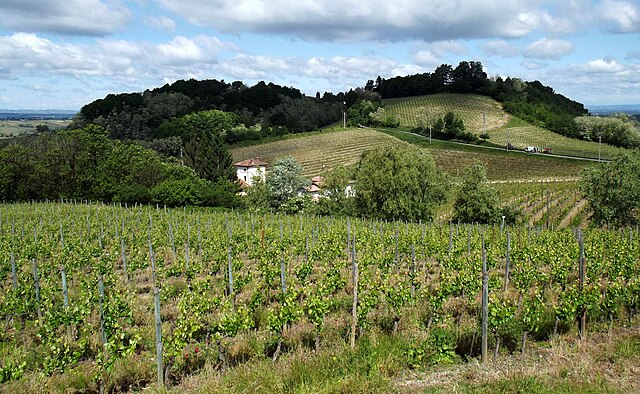
The magic of Gavi lies not just in its grape, but in the remarkable convergence of geological and climatic factors that define its terroir. The DOCG zone encompasses eleven communes in the province of Alessandria, with the historic center of Gavi providing the most celebrated vineyard sites. This relatively compact area—covering just over 1,500 hectares—contains an extraordinary diversity of soils that contribute to the wine’s complexity.
The dominant soil types consist of calcareous marl and limestone formations dating to the Miocene epoch, approximately 15-20 million years old. These marine sedimentary soils, rich in fossil deposits, provide excellent drainage while retaining sufficient moisture during dry periods. The calcium carbonate content contributes directly to Gavi’s characteristic mineral profile, creating the subtle salinity and chalky texture that critics found so compelling.
Altitude plays a crucial role, with vineyards planted between 120 and 400 meters above sea level. This elevation creates significant diurnal temperature variation—warm days for ripening followed by cool nights that preserve acidity and aromatic compounds. The proximity to both the Mediterranean-influenced Ligurian coast and the continental climate of the Po Valley creates a unique microclimate that extends the growing season while maintaining the freshness essential to Gavi’s style.
Modern Renaissance
Today’s Gavi DOCG represents the culmination of decades of refinement in both viticulture and winemaking. Producers have learned to maximize Cortese’s potential through careful canopy management, controlled yields, and precise harvest timing. Modern temperature-controlled fermentation preserves the delicate aromatics while extended lees contact adds texture without masking the wine’s essential character.
The best contemporary Gavis demonstrate remarkable aging potential, developing honeyed complexity while retaining their mineral core. Single-vineyard bottlings have emerged, showcasing specific terroir expressions within the broader DOCG. These developments have only strengthened critical appreciation, as writers recognize Gavi’s evolution from simple regional wine to sophisticated terroir expression.
A Lasting Legacy
Gavi DOCG’s triumph represents more than just one wine’s success—it exemplifies how indigenous varieties and traditional regions can reclaim critical attention through quality and authenticity. By refusing to chase international trends and instead perfecting their unique expression, Gavi’s producers created something genuinely distinctive that resonated with critics seeking alternatives to homogenized global wine styles.