The American wine retail scene is going through major changes driven by shifting tastes, economic challenges, new technology, and evolving cultural trends. This evolution is perhaps nowhere more evident than in New York City, long considered the epicenter of fine wine commerce in the United States. From the dramatic fall of storied institutions to the rise and subsequent struggles of digital innovators, the wine retail sector presents a case study of an industry in flux.
Falling Sales and Changing Consumer Preferences
Wine sales in the United States have experienced a notable decline in recent years. According to data from Wine & Spirits Wholesalers of America’s SipSource, wine sales dropped by nearly 8% in 2024 compared to 2023, with declines affecting both on-premise consumption at restaurants and retail purchases at wine stores. This decline is steeper than comparable decreases in beer, cider, and spirits sales, signaling particular challenges for the wine category.
This downward trend reflects a broader shift in American drinking habits, particularly among younger consumers. Industry expert Mike Veseth, publisher of The Wine Economist newsletter, observes this generational disconnect in an article on nbcnews.com: “The baby boom generation embraced wine. We imagined that the generations that followed would keep doing that, but they haven’t.”
As older wine enthusiasts age out of the market, younger consumers are not replacing them at the same rate.
Health concerns are playing a significant role in this shift. The drop in demand is noted in a 2023 Gallup poll, showing that more than 4 in 10 Americans now think alcohol is unhealthy. The U.S. Surgeon General’s recommendation for cancer warning labels on alcoholic beverages has also amplified these health concerns, driving consumers toward lower-alcohol alternatives or complete abstention.
The Tale of Two New York Institutions: Sherry-Lehmann and Chelsea Wine Storage
New York City’s wine retail scene has been rocked by high-profile business failures, none more dramatic than the collapse of Sherry-Lehmann. Once hailed as the “queen of wine shops” in America’s biggest wine market, the store had been a landmark on Madison Avenue since its founding in 1934. It helped pioneer the sale of wine futures in the 1950s and served generations of Manhattan’s elite for generations. Silent film star Greta Garbo was once a customer. According to Market Watch as recently as 2018, Sherry-Lehmann was generating $42 million in annual sales.
However, in recent years, Sherry-Lehmann’s fortunes declined sharply under the co-ownership of Shyda Gilmer and Kris Green. The store’s troubles came to a head in 2023 when the New York State Liquor Authority suspended its license over $2.8 million in unpaid sales taxes. Customers have since sued, claiming they paid millions for wines that were never delivered. Others say valuable collections they kept in the store’s off-site Wine Caves storage facility went missing.
The company had already been on shaky ground for years. Its 2007 decision to sell its Madison Avenue building and relocate to a rented Park Avenue space saddled it with nearly $2 million a year in rent, a burden that became unsustainable after corporate clients disappeared during the pandemic and never fully returned to Midtown. When the dust settled, Gilmer and Green had abandoned the business, leaving behind more than $3 million in unpaid rent and an even bigger mystery: What happened to all that missing wine?
“Sherry-Lehmann was once the Tiffany of wine retail—an institution,” says Hernando Courtright, former wine and spirits specialist at the store. “But after the founding Aaron family sold the business to the new partners, a slow but steady decline set in. They were not up to the task, and the end came fast. It was sad. It was a crime. We all await justice to be served.”
Chelsea Wine Storage, another once-trusted name in the industry, drew headlines of its own when customers discovered their collections had been moved without notice. The company came under investigation by the New York State Liquor Authority after reports surfaced of missing inventory, some of which involved rare Burgundies worth thousands of dollars per bottle.
Its troubles deepened after it relocated from Manhattan’s Meatpacking District to an unfinished basement beneath a shuttered T.G.I. Fridays in Times Square. Customers reported being unable to get responses to emails or calls, and some said prized bottles had vanished from their inventory records. Concerns about wines being mishandled, stored improperly, or even illicitly sold only added to the anxiety.
These high-profile failures have eroded trust in traditional wine retail and storage models, especially at the luxury end of the market. They also reflect broader financial pressures facing brick-and-mortar businesses in high-rent cities, where overhead costs can quickly become unsustainable.
The challenges facing New York City’s wine retail landscape became even more apparent with the recent departure of another longtime institution. Morrell Wine Group, a New York mainstay since 1947 that had operated from various Manhattan locations, including a flagship store and wine bar at Rockefeller Center, quietly relocated its entire operation to Briarcliff Manor in Westchester County. The move marked the end of an era for a company that had been instrumental in shaping the city’s wine culture, pioneering the first public fine wine auctions in 1994.
One wine sales rep stated off the record that Brooklyn and certain parts of Queens, particularly those closer to the city, were experiencing difficulties. “From what I’ve seen, after the pandemic, a lot of the people in Brooklyn moved to the Hudson Valley and upstate, and younger people, 25 and 30-year-olds who have taken their places are not drinking wine to the same extent.”
The rep painted a bleak picture of the area’s retail landscape. “In a six-block radius where there were 3 or 4 wine shops, some of these stores are really struggling. Some have closed, some are down up to 40% over the last two years, and others are trying to sell. I have customers who I have worked with for a long time who are now bouncing checks. It is a real problem.” He noted that his clients in northern New Jersey were not suffering the same struggles. “New Jersey wine stores are doing fine, some are up 5%, others flat. There is a limit to the number of retail stores allowed in New Jersey, and this has really helped them. This is really a New York City problem.”

The Challenges of Online Wine Retail
The online wine retail sector has faced its own wave of collapses, underscoring the challenges of the direct-to-consumer model. Winc, a subscription-based wine club that aimed to modernize wine shopping for millennials, is a case in point. Founded in 2011 as Club W, the Los Angeles-based company marketed itself as a tech-savvy disruptor, using algorithms to tailor wine recommendations and make the discovery process more accessible. The concept resonated, drawing significant venture capital and reaching a private valuation of $112.3 million by late 2019.
Winc’s growth accelerated during the pandemic, when e-commerce surged and homebound consumers stocked up on wine. The momentum led to a public offering in November 2021 that raised $22 million. But the company struggled in the post-pandemic economy, with third-quarter reports revealing a drop in total and direct-to-consumer revenue. Just over a year after its initial public offering (IPO), Winc filed for Chapter 11 bankruptcy in December 2022, reporting $50.3 million in assets and $36.8 million in liabilities, with creditors including Meta and Google.
Despite $72.1 million in revenue in 2021, Winc never turned a profit—a stark reminder of the tough economics behind wine subscriptions. Other players like Naked Wines have faced similar struggles as pandemic-era growth fades. Common hurdles include high customer acquisition costs, complex and costly delivery logistics, inconsistent post-pandemic consumer retention, and a tangle of state-by-state shipping regulations. The wine e-commerce sector remains a promising but precarious frontier, where scale alone hasn’t guaranteed survival.
Another company that admitted defeat in the US market is the Global Wine Company (GWC), which operated wine clubs in partnership with major U.K. and U.S. newspapers, including The Times of London, Daily Mail, and The New York Times. The company, owned by Luxembourg-based Astrum Holdings, previously collaborated with American newspaper publishers, offering exclusive wine deals to subscribers on a monthly basis. However, by late 2023, GWC ceased U.S. operations, leaving its website inactive and customer service unresponsive. Many customers reported unfulfilled orders and unresolved refund requests, while newspapers quietly removed GWC promotions from their sites.
Success Stories: Astor Wines & Spirits and the Employee Ownership Model
While much of the wine retail landscape faces significant challenges, there are notable success stories. One example is Astor Wines & Spirits, a New York retail institution that has successfully adapted to changing market conditions while maintaining its identity and commitment to quality.
Founded in 1946 and acquired by the Fisher family in 1968, Astor Wines has evolved from its original location in Greenwich Village to become one of New York City’s premier wine retailers. In 2006, the store relocated to the landmark De Vinne Press Building at 399 Lafayette Street, expanding its footprint and increasing its offerings. Today, the store boasts a collection of over 5,000 wines, spirits, and sakes, making it one of the largest and most comprehensive wine retailers in the city.
In September 2022, Astor Wines & Spirits made headlines with a groundbreaking business decision: the Fisher family sold the company to its approximately 75 employees through an Employee Stock Ownership Plan (ESOP). Company president Andy Fisher explained the rationale, “My brother Rob, Astor’s chief operating officer, and I believe the best succession plan is to entrust Astor to the people who have been so instrumental in building our enterprise.” This transition to employee ownership came at a time when another beloved New York wine retailer, Trader Joe’s Wine Store, had suddenly closed amid rumors of union-busting.
With an ESOP, workers get a stake in the company—usually tied to their salary—and those shares help build their retirement savings. In wine retail, this setup can be a big win: employees tend to care more, stick around longer, and really get to know both the wines and the customers. It also solves a common problem in family-run businesses—what happens when it’s time for the next generation to take over.
Astor Wines & Spirits stands out not only for being employee-owned but also for how it runs its business. It’s built a strong online shop, offers classes through its Astor Center, and brands itself as “the greenest wine shop in the world,” even generating and recycling its own electricity to keep wine storage cool. That kind of eco-focus really resonates with today’s consumers. Astor shows that with the right mix of smart adaptation, knowledgeable staff, and supplier trust, a brick-and-mortar wine store can still thrive—even as others struggle with debt, excess inventory, or shifting demographics.

Not Just Red or White Anymore
Wine isn’t just competing with beer or spirits anymore. It’s now up against a growing wave of alternatives—from cannabis and kombucha to canned cocktails and alcohol-free options—that are pulling drinkers, especially younger ones, in new directions.
“People have choices,” says Victor Schwartz, owner of V.O.S. Selections, a 39-year-old New York-based wine import and distribution business. “Young people are choosing things like White Claw. They’re choosing cannabis and kombucha tea. I’ve even heard that Ozempic is a reason for the downturn in wine sales because people taking it have a loss of appetite, and they’re not spending money at wine dinners. There are all kinds of different changes and shifts in the taste demographic.”
The impact of cannabis legalization on the wine retail industry remains a topic of debate. Harmon Skurnik, President of New York-based distributor Skurnik Wines & Spirits, acknowledges the uncertainty: “There have been many reports that the younger generation is slower to adopt wine, and legal cannabis could be one reason. That suggestion, however, is mostly based on anecdotal evidence, rather than hard facts.”
As more states legalize recreational use, cannabis is becoming a go-to for the same occasions that wine used to dominate. “Pot is taking a big chunk out of it because it’s just another part of the party puzzle,” says Gary Decker of Vinomania Wine Store in Syracuse, NY. From a price perspective, cannabis can also be a better deal, especially as competition has driven down prices in legal markets, while wine has only gotten more expensive.
The health and wellness conversation plays a role too: younger consumers often see cannabis as the more natural or safer choice, while wine now faces scrutiny over its alcohol content and health effects. One wine sales rep we spoke to told us off the record about a client who recently closed down his uptown Manhattan wine store and opened a pot dispensary in its place. “Pot,” he said the owner told him, was “just a better business.”
Meanwhile, the rise of ready-to-drink beverages—such as flavored seltzers, canned cocktails, and premixed drinks—is reshaping what convenience looks like. These options don’t need glassware or special knowledge, and that ease has major appeal. “It’s not that consumers don’t like wine,” says Christian Miller of the Wine Market Council. “It’s that they’re drinking a much wider variety of other things.”
Schwartz notes that the quality of some trendy wine categories may also be turning off potential new consumers. “I think natural wines have changed things a lot, too, and not in a good way, because a lot of it doesn’t taste good. I would not say all natural wines are bad—we have a lot of them in our portfolio, but a lot of them are not clean and they’re not well-made and they don’t taste good so I think that’s a turn off for young people to taste them for the first time.”
He adds that the traditional entry points into wine have largely disappeared. “There used to be a sense of an entry wine like Mouton Cadet, Beaujolais, and Beaujolais Nouveau. These were simple tasting wines. I don’t see young people getting into that in that sense. They’re into cool wines with the cool labels, and that’s not Mouton Cadet. But a lot of those cool wines don’t really taste good. They’ll think, ‘It’s kind of dirty and mousy, and is this what wine is supposed to be? Eh, I’ll get a chewable and drink a White Claw instead.'”
Croatian winemaker and distributor of Central and Eastern European wines Kreso Petrekovic offers a contrasting perspective on natural wines and their appeal to younger drinkers: “When you compare conventional wines made with chemicals, high yields, and excessive processing, is that really superior to an honest, simple wine? Winemaking in the natural wine world has evolved significantly, and people are rediscovering the craft of traditional methods—today’s natural wines can be truly spectacular.”
Natural wines resonate with younger consumers and urban culture through their counter-cultural appeal, featuring distinctive labels and lighter taste profiles. “Even my parents and their generation are embracing natural wines because they feel better drinking them,” says Petrekovic. “They can enjoy more without the heavy sugar and sulfite content. The appeal spans generations and has sparked a revolution in attracting new consumers. The organic farming component of natural winemaking is also transforming the physical wine landscape. Young people are finding inspiration to return to working the land again, which is tremendously positive for the world.”
The growing non-alcoholic beverage category presents exciting opportunities for wine retailers, though not equally across the board. As health consciousness rises and “sober curious” movements gain traction, no- and low-alcohol options continue to grow. But in states like New York, wine and spirits shops are legally prohibited from selling non-alcoholic wine and cocktails. That restriction makes it harder for them to tap into this booming segment, putting them at a disadvantage compared to grocery stores and specialty shops.
The IWSR projects the no- and low-alcohol category will see a compound annual growth rate of over 4% between 2024 and 2028. Non-alcoholic beer leads the way, but wine is catching up—albeit more slowly. That lag is largely due to the technical difficulty of removing alcohol without compromising flavor. “How do you replicate the taste?” asks industry professional Dale Stratton in an NBC News article. “I just haven’t seen a solution in the wine category that effectively does that.”
Still, winemakers see the gap as an opportunity. While sales of non-alcoholic wine remain relatively modest, they’re growing, and data shows most consumers who buy them also drink alcoholic wine, meaning expectations for quality are high. Meeting those expectations remains a challenge, but producers worldwide are experimenting with new methods to improve flavor and mouthfeel. If they succeed, the category could become a more serious competitor—and a bright spot for growth—in the evolving wine landscape, though it remains a missed opportunity for New York retailers. However, this may change as there is currently a bill, S3836, sponsored by New York State Senator Michelle Hinchey, whose objective is to allow licensed wine and spirits retailers to sell non-alcoholic versions of alcoholic beverages. The bill is currently in committee and has not been scheduled for a floor vote yet.
Experience Over Expense
Even as overall wine sales decline, retailers that succeed in today’s market are often those who shift the focus away from scores or prestige bottles toward unique, meaningful experiences. Storytelling has become a vital part of this strategy. They are using narratives—about producers, places, and production methods—to create emotional connections and deepen engagement. Many younger consumers are interested in value and variety. They are less brand-loyal, more drawn to authenticity, transparency, and the opportunity to experiment, whether shopping on a budget or willing to spend more.
“Wine can remain an enigma for most consumers, even people who have been drinking wine for many years,” says Jeremy Kaplan of Veritas Studio Wines in New York City. “So instead of talking about how a wine is made, or referring to ratings, we tell a story. The winemaker is a woman. Or, the region is known for a certain dish. Or, this winemaker was featured on Anthony Bourdain. Things they may relate to. We try to make the decision-making simple and memorable.”
Kaplan adds that they intentionally avoid the traditional cues of connoisseurship. “We don’t chase points—in fact, when a bottle shows up with a sticker suggesting a rating, we try to peel it off.” He says they want to deliver the right wine for the occasion and the budget.
In a competitive landscape, that human element—the ability to demystify wine and connect it to something personal—can set a store apart, especially for customers shopping with cost in mind.

The Influence of Political and Economic Factors
The wine retail landscape is also being shaped by broader political and economic forces. The recent reelection of Donald Trump had reignited concerns about tariffs and trade disputes, particularly those imposed during his first term on goods such as European wine. However, in a significant development on May 28th, a unanimous three-judge panel of the U.S. Court of International Trade ruled that those “Liberation Day” tariffs were unlawful, stating that the International Emergency Economic Powers Act (IEEPA) does not grant the president unchecked authority to impose tariffs unilaterally.
Victor Schwartz, the lead plaintiff in the case, felt vindicated by the ruling. “I felt elated when I heard the news. I feel validated that our case was spot on, and I also feel great that it was unanimous and that there was no question about it,” he said.
However, Schwartz cautions that the victory may be short-lived. “This fight is not at all over,” he says. “This is step one. There are going to be appeals. It’s already in front of the District Court in DC, and it’ll likely be appealed to the Supreme Court. Don’t forget that the administration and this trade advisor, Peter Navarro, are hell-bent on creating tariffs. There are other ways to impose tariffs, and our fight was against the way that they did it, which was completely illegal. They didn’t go to Congress and didn’t follow the right procedures.”
The ongoing uncertainty creates significant operational challenges for importers. Harmon Skurnik of Skurnik Wines & Spirits describes the difficulty of managing a business under such conditions: “It is incredibly difficult to manage a business with such uncertainty. One day, you’re adjusting to a 10% tax on all imported wines and spirits, the next day, there is a 50% (or even 200%) threat hanging over your head. It creates an environment where companies are circling the wagons, rather than investing and encouraging growth.”
The broader industry impact of potential tariffs extends far beyond importers themselves. “When a tariff is imposed on goods coming into the U.S. from a foreign country, it is essentially a tax that is levied on American businesses,” Skurnik explains. He notes the multiplier effect unique to the alcohol industry: “This means that for every $1 imported, American businesses earn $4.52. Tariffs will also be devastating to neighborhood restaurants that depend on the profits of imported wines for their very survival. Italian restaurants serving Italian wine, for example.” Skurnik says that even the possibility of tariffs can paralyze business operations, referencing the millions his company nearly had to pay on incoming shipments.
The challenge is compounded by the unique nature of wine as a product. Unlike manufactured goods, wine cannot simply be replaced by domestic alternatives. As Skurnik explains: “Because imported wines are mostly unique, and cannot be reproduced in America—Chablis is made from Chardonnay but has a distinctive and unique taste based on its particular soil and ‘terroir’—they cannot just be replaced by an American alternative, the way steel or aluminum can.”
This reality becomes clear when examining the impact of previous tariff implementations. “Our experience with tariffs in 2019 showed that sales were negatively impacted significantly, suggesting that people bought less,” Skurnik recalls. As prices increase and are passed on to consumers, he anticipates a continued reduction in wine purchases.
For those inspired to take action on the tariff issue, Skurnik suggests a direct approach: “They can call or write their representatives in Congress, and explain that tariffs on wine and spirits are especially damaging to American businesses, due to the regulatory nature of alcohol importation (namely a 3-tier system whereby all tiers—importers, wholesalers, retailers—must by law be American-owned).”
Schwartz emphasizes that opposition to tariffs cuts across party lines. “This is a bipartisan effort. Let us not forget that, and this is the key point,” he says. “Nobody likes tariffs. I don’t care who you voted for. A large number of conservative Republicans of all sorts are completely against the way the tariffs were imposed. They’ve written amicus briefs, and they are completely out in the open, and these are Republican conservatives. This is not about politics, this is about business.”
Broader economic pressures are adding to an already difficult business environment. Schwartz notes that retail conditions were already difficult before tariff concerns escalated. “The tariffs could not have come at a worse time. The first quarter was terrible before the tariffs hit. All of our customers were complaining how horrible the first quarter was—how they’d never seen a January that bad.”
At the same time, inflationary pressures and economic uncertainty continue to weigh on the wine market. “People’s budgets are just really tight these days,” said Veseth. “So wine is feeling the crunch.” As consumers become more value-conscious, wine faces increasing pressure to justify its premium price compared to competing alcoholic and non-alcoholic options.
When asked about the challenges facing quality wine retail in New York City, given recent high-profile closures and problems, Skurnik is candid: “There certainly are many challenges right now facing NYC retailers, including high rents, softening demand, threatened tariffs, and an uncertain economy.”
The Future of Wine Retail
Wine retail is at a crossroads. Some experts say the industry needs a major reset. “This is not business as usual,” said Mike Veseth. “It’s an existential problem.” Others are more optimistic, pointing to wine’s long track record of survival. “Wine has been here forever,” said analyst Dale Stratton. “It’s going to keep being here.”
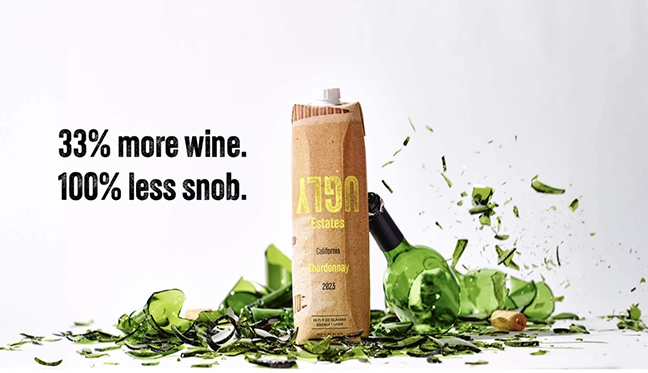
Still, big changes are happening. Retailers are getting more creative—experimenting with direct-to-consumer sales, hands-on store experiences, and fun on-premise programs to test new ideas. Lesser-known regions, such as the Finger Lakes, Idaho, and Arizona, are gaining attention. So are alternative formats like cans, single-serve tubes, and sustainable packaging, especially among younger, eco-conscious drinkers.
Perhaps the most important shift? Brands are loosening up. Gone is the stuffy, old-school vibe. In its place: humor, storytelling, and accessibility. Campaigns like Ryan Reynolds’ cheeky “Ugly Estates,” a boxed wine brand with the tagline “33% more wine, 100% less snob,” are proof that irreverence and authenticity can connect with new audiences.
The future of wine retail in New York—and beyond—will depend on how well the industry adapts. The next decade could reshape everything, from how wine is sold to how it’s perceived. Retailers who find the right balance between tradition and innovation will be the ones leading the way forward.