Two hours south of Barcelona, Priorat stands as one of Spain’s most spectacular wine regions. This small denominación de origen—covering just 1,800 hectares of vineyards—produces wines of great character and intensity, celebrated by critics and collectors worldwide. Yet for much of the 20th century, this dramatic landscape of steep slopes and slate-strewn terraces lay forgotten, its viticultural heritage nearly lost to time.
The history of winemaking in Priorat stretches back nearly a millennium. In the 12th century, Carthusian monks journeying from southern France established the monastery of Scala Dei—the Ladder of God—in a remote valley they believed divinely ordained. These monks recognized the region’s potential for viticulture and planted the first documented vineyards, cultivating the land and developing wine production techniques that would endure for centuries. The monastic influence remained strong until the 19th century, when the sale of church lands transferred vineyard ownership to local families. By the late 1800s, Priorat had become a thriving wine region, with production reaching heights that would not be seen again for over a century.
Then came disaster. The phylloxera epidemic that devastated European vineyards in the late 19th century hit Priorat with particular severity. The combination of agricultural collapse and rapid industrialization in nearby Barcelona triggered a mass exodus from the region. Young people abandoned their ancestral villages in search of economic opportunity in the cities, leaving behind terraced vineyards that had been cultivated for generations. Throughout most of the 20th century, Priorat remained a forgotten backwater where the few remaining farmers sold their grapes to cooperative wineries that produced bulk wine of little distinction.
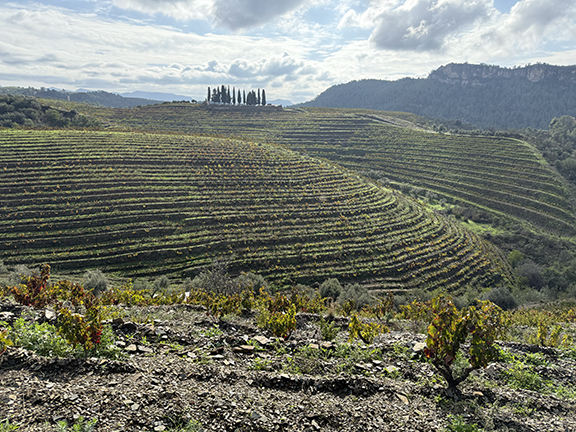
The geography that had contributed to Priorat’s isolation would prove to be its salvation. The region’s distinctive landscape is defined by dramatic elevation changes, with vineyards planted on steep slopes ranging from 300 to 700 meters in altitude. The terrain is unforgiving—a maze of narrow valleys carved between hills and small mountains, where every available patch of arable land has been transformed into terraced vineyards. Most remarkable is the soil itself: llicorella, a dark, glittery slate that fractures easily, allowing vine roots to penetrate deep into the earth in search of water and nutrients. This mineral-rich substrate, combined with a warm, dry Mediterranean climate moderated by cooling mountain breezes, creates growing conditions unlike those found anywhere else in the wine world.
In 1989, a small group of visionary winemakers arrived in Priorat with an audacious plan. They recognized that the region’s challenging terroir could produce wines of exceptional quality and complexity. Rather than selling bulk wine to other Spanish regions, they would craft premium bottled wines worthy of the world’s finest restaurants and wine shops. Their success was swift and remarkable. Within a few years, Priorat wines were garnering international acclaim, with critics praising their distinctive minerality, concentrated flavors, and remarkable balance between power and elegance.
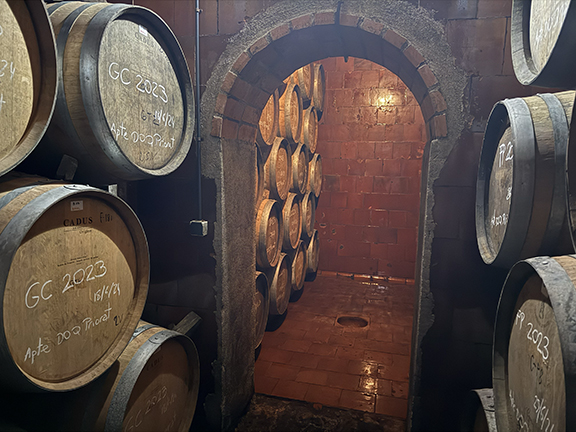
This “Priorat revolution” sparked a renaissance throughout the region. A second wave of producers, including Gran Clos in 1995, followed the pioneers’ example. Young Catalans who had left for Barcelona began returning home, seeing opportunity where their parents had seen only hardship. The region’s focus gradually shifted from international varieties like Cabernet Sauvignon and Merlot back to traditional grapes—Garnacha and Cariñena—that proved supremely well-adapted to the rocky, mineral soils. Today, Priorat stands alongside Rioja as one of only two Spanish wine regions holding the prestigious DOCa classification, and its wines command premium prices in markets around the world. The evolution continues as producers refine their understanding of how altitude, exposition, and soil composition influence their wines, while also developing wine tourism infrastructure to share their extraordinary landscape with visitors who come to experience the taste of llicorella. Grape Collective spoke to Gran Clos Priorat General Manager Xavier Peñas about the evolution of the region.
Christopher Barnes: Tell us a little bit about the history of the estate here.
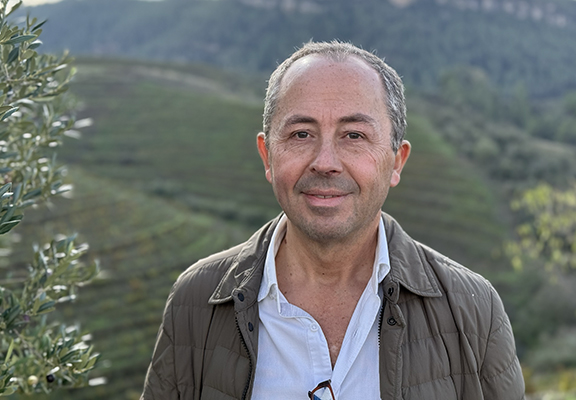
Xavier Peñas: We are located at Gran Clos Vineyards in Priorat. Our winery was founded in 1995, so we weren’t the first in the region during the Priorat revolution, but part of the second wave. Since then, we’ve been growing grapes and making wines in 100% Priorat style.
Tell us about your background as a winemaker.
I was born in Priorat many years ago. When I was young, there was virtually no wine activity here. Priorat was a very small, poor region with nothing much to do. All the young people from my generation—and those before and after—went to the city, usually Barcelona, to study at university or to work. I did the same. I went to Barcelona for university and after graduation worked at a large company.
But I always felt drawn to return to my home region to do something in Priorat, because I believed it was very beautiful with tremendous possibilities. However, without young people, there was no future. So I decided to come back many years ago. My parents were very disappointed at first, but slowly, as Priorat grew in terms of wine activity, wine business, and more recently wine tourism, everything changed. Now, fortunately, many in the new generation are choosing to stay and study in Priorat because there are more opportunities.
Talk about the terroir in Priorat—it’s very unique.
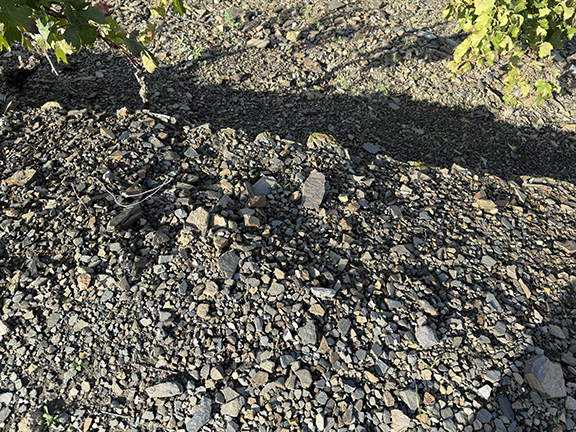
The terroir, landscape, and soils of Priorat are completely different from other regions. The landscape features many hills, mountains, and valleys. The soils are filled with rocks—specifically llicorella, which is dark slate. This type of soil, combined with our special climate that is warm and dry but with good Mediterranean influence since we’re not far from the coast, gives Priorat wines a truly special character that distinguishes them from wines anywhere else.
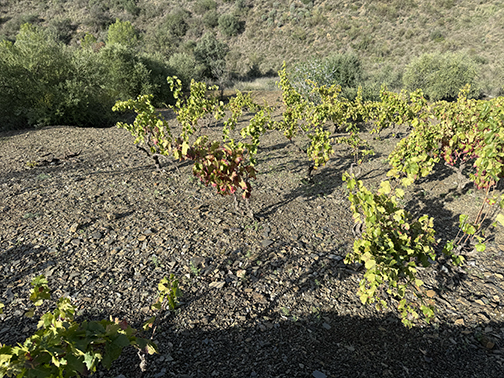
The slate from the llicorella is so omnipresent and has such a dominant impact on the wines. If you think about Châteauneuf-du-Pape and its round stones, the slate is that unique characteristic in Priorat.
The soils in Priorat are very poor with extensive rocks—slate and dark slate. In the local language, we call it llicorella. Depending on the plot, there is more or less density, but always many rocks. This means that for the vines to survive, the roots must go very, very deep—sometimes 10 or 12 meters deep. The llicorella is actually easy to break, so the roots push through the rocks, break them, and go deeper.
This gives a special character to the grapes. They have a very particular taste with significant minerality. The wines are highly concentrated but, due to the Mediterranean influence, maintain good freshness and acidity. It’s a great balance. The llicorella gives our wines exceptional minerality, consistency, body, and fullness.
I almost feel like when you taste Priorat, you taste the slate itself—it’s almost like licking a rock.
That’s exactly right. Here at Gran Clos especially, when you drink our wines, what we aim to achieve is for you to smell and taste the landscape and the weather we have. Our wines reflect the terroir—you truly feel the texture of the soil when you drink them, and there’s unmistakable significant minerality.
Tell us about the grapes you work with in Priorat.
The local, ancestral grape varieties are Garnacha—both white and red—and Cariñena. When we started our production many years ago during the Priorat revolution, everyone thought international grapes like Cabernet, Merlot, and Syrah looked interesting because they had good international reputations. But after years of growing grapes and making wines, everyone now understands that in Priorat, wines must be made with local grapes like Garnacha and Cariñena.
Previously, we had around 20% foreign varieties. We had two options: remove these vines and replant with Garnacha and Cariñena, which takes many years before you get really good grapes, or graft the vines to local varieties. We chose the second option. It takes time and is quite expensive, but each year we work on a small plot. We graft the vines to local varieties. For example, the vineyard behind me was originally planted in 1999 as a Cabernet vineyard.
To avoid phylloxera problems, we use American rootstock that isn’t affected by phylloxera. So we have American roots that were originally grafted with Cabernet. What we did was keep the American roots and a small piece of wood, then grafted again with Cariñena. After two years, we get regular production. The good thing is the plant is now 20 or 25 years old, so we maintain the age of the vine. It’s a very good solution.
Talk about climate change and how things are getting hotter. Also discuss the different altitudes you have in Priorat and how the grapes differ at various elevations.
In this region, we have a Mediterranean climate, which means it’s very irregular. Like most parts of the world, climate change affects us. In general, the trend over recent years is that it’s becoming increasingly warm and dry—very irregular, but the trend is clear. We had a perfect example in the last three years, which were extremely dry and significantly affected production.
However, it’s very unpredictable. In the last two months, we’ve had substantial rain, and everyone is so happy and excited because we have water everywhere again. But we never know what will happen in the next one, two, three, or four years. I hope it becomes a bit more rainy, but it’s impossible to predict with this Mediterranean climate.
You have vines at 300 meters and vines at 700 meters. How do they provide different profiles in terms of taste?
As you can see, the landscape has many hills and small valleys, which means we have a significant altitude gap from 300 meters up to 600 or 700 meters. This gives noticeably different styles in the grapes. But altitude isn’t the only factor—it’s one important parameter that affects the grapes.
Other parameters we consider include sun exposure. Given our landscape, we have north, south, east, and west exposures, which affect the grapes significantly. We also consider the type of soil—while we have llicorella throughout, each area has more or less density—and the age of the vines.
When we harvest, we do extensive selection, not only by variety but also within each variety. For Garnacha and Cariñena, our main production, we don’t pick all the Garnacha at the same time. We make many separate pickings based on altitude, sun exposure, and vine age. This means in the winery, we might have six, seven, or eight different tanks of Garnacha with different profiles, and the same with Cariñena.
When we blend, we have many options to achieve the best possible blend with more complexity. We can select plots that are fresher, others with less acidity or more maturity, and others with more concentration. It’s a very artisanal production.
Tell us about the cultural and historical significance of wine in this region.:
In Priorat, wine and viticulture have been significant for hundreds and hundreds of years. Everyone here is connected to this tradition in some way. The history of Priorat dates back to the 12th century, when Carthusian monks came to Priorat from the south of France and established a monastery in Escaladei in the 12th century. This marks the beginning of viticulture in Priorat.
Some people say viticulture existed before the monks arrived, which I can imagine, but the monks certainly pushed and promoted viticulture. For hundreds of years, the monks promoted viticulture, and the culture and business evolved so that farmers grew grapes and sold them to cooperative wineries that existed in each village. The cooperatives made bulk wine—very strong wine—that was sold to other regions of Spain to improve their blends. That was the history of Priorat for centuries.
In 1989, four pioneering winemakers came to Priorat and created a revolution in the region. They started producing and bottling truly fine wines with the ambition not just to sell in local markets like Barcelona or Madrid, but to sell in the best places in the world—Paris, London, New York. This created a revolution. At first, local people thought they were crazy, but then others began thinking, ‘Why not? Maybe my family has a small vineyard. Why not start making wine and try to sell it?’
This created a major revolution—or evolution—in the region, not only in wine production but also in social activity. Now many young people are involved in this business, and it has changed the situation in the Priorat region 100%.
Talk about the culture of Catalonia and where we are physically. There’s a very distinct culture in this region.
We’re near Barcelona in the Catalonia region, in the northeast of Spain. Catalonia has a different culture within Spain. We have our own language—Catalan—and our own culture and identity. In general, the profile of Catalonia is characterized by small businesses and artisanal production. Especially when you compare wine production to other parts of Spain like Rioja or La Mancha, everything is very interesting, but you cannot compare the scales. Catalonia has its own identity in terms of culture and food culture, which affects both food and wine. We are more connected to other parts of the Mediterranean area in many ways.
Priorat wine production started in earnest 25 to 30 years ago. In recent years, all the wineries—Gran Clos and others in the region—have been working extremely hard to make fine wines. But my feeling is that the current trend, and hopefully the future for the next years, is not only producing really good wines, which is essential, but also developing wine tourism.
People now expect not only to drink fine wine but also to enjoy a truly good experience around wine. Our landscape is so special that when people visit, they’re impressed—they’ve never seen anything like this. Now all producers are working to produce fine wines while also providing excellent experiences for visitors, creating beautiful spaces to receive guests. In the region, there are increasingly more fine, high-end hotels.
The combination of a beautiful landscape, truly fine wines, and good places that provide visitors with excellent experiences—I think this is the key for the coming years.
Tell me about your philosophy of viticulture and winemaking at the estate.
At Gran Clos winery and vineyards, our philosophy is very simple but executed very well. Our production is very close to organic farming. We don’t have certification because we want the freedom to do a slightly stronger treatment if necessary in a particular year. We try to avoid this, but the priority is not just having a stamp on the bottle—the priority is having the best grapes possible, with the best health and quality. So we prefer to be free to do what’s best each year, while staying very close to organic farming.
We work only with our own grapes and make our own wines. The reason isn’t that our grapes are better than others—that would be a crazy idea. The reason is that we want full control of the process. Most importantly, the grapes each year come from the same plots, the same vineyards. This means our followers and customers who like our style can find the same style in every bottle each year. We don’t change because if we bought wine or bought grapes, we could make good quality, but the style would vary more.
Talk about your size—you’re a very small, boutique winery, as are many in Priorat. It’s very artisanal.
Our production is very, very small. In Priorat, most producers have small production because of the size of the region. Our production varies by vintage but is around 50,000 bottles—not cases, bottles. So it’s truly a small production. But our idea is to try to make the best wine possible with the grapes we grow. This is our philosophy as a winery—not just to grow by buying grapes or buying more wine. Our philosophy is: What is the best we can do with our own grapes?