British economist E.F. Schumacher, in his 1973 book Small is Beautiful, wrote: “Any intelligent fool can make things bigger, more complex, and more violent. It takes a touch of genius — and a lot of courage — to move in the opposite direction.”
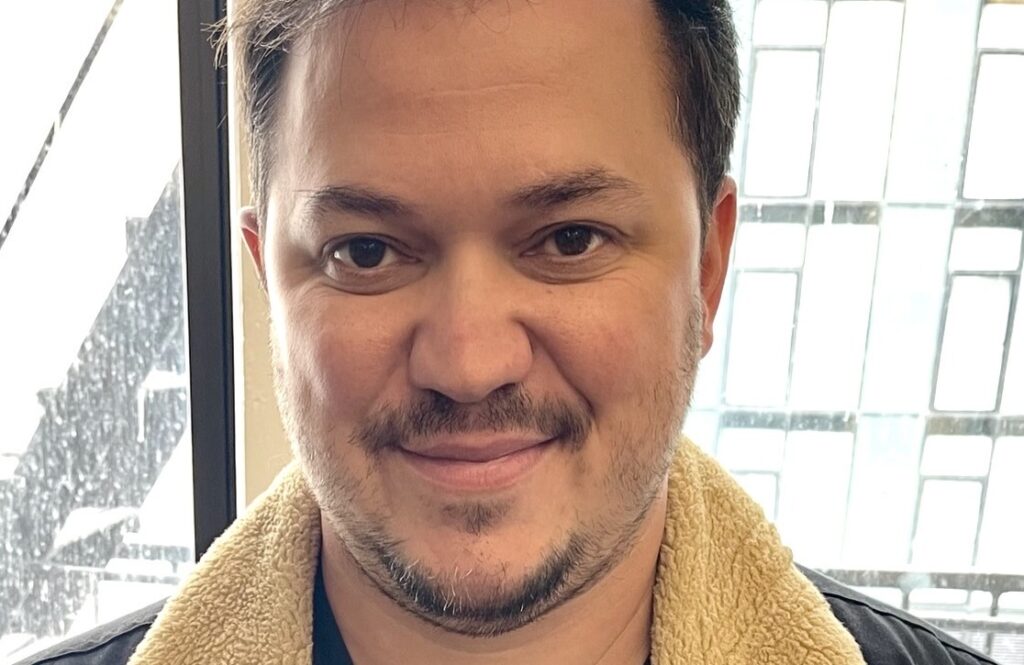
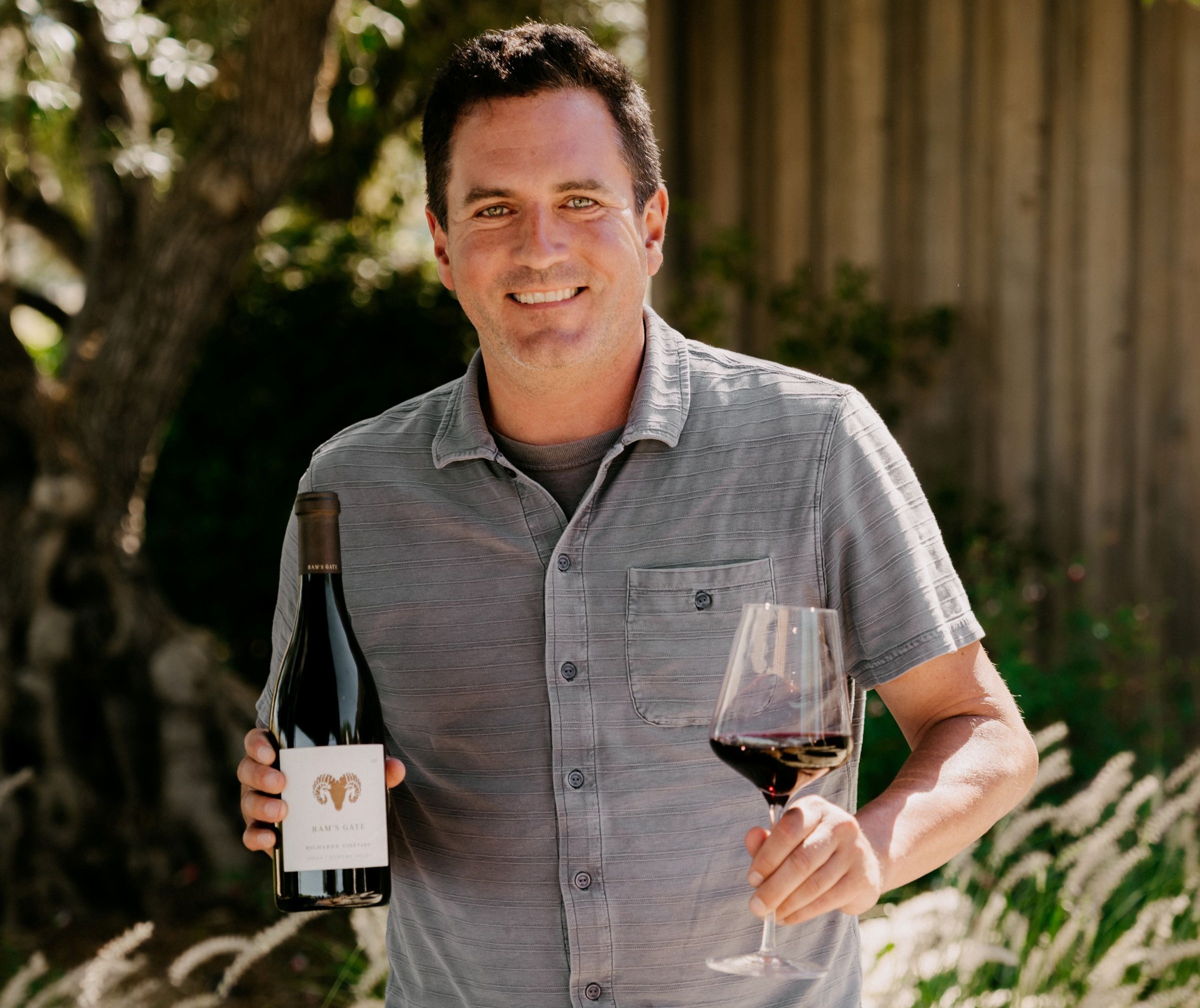
Of course, the topic of that book had absolutely nothing to do with wine. But in our crazy world that is obsessed with endless growth and efficiency, the wine world operates at a different pace. This pace is something Joe Nielsen embodies, believing in an approach of being studious, thoughtful, and light-handed, in order to make great wines at Ram’s Gate.
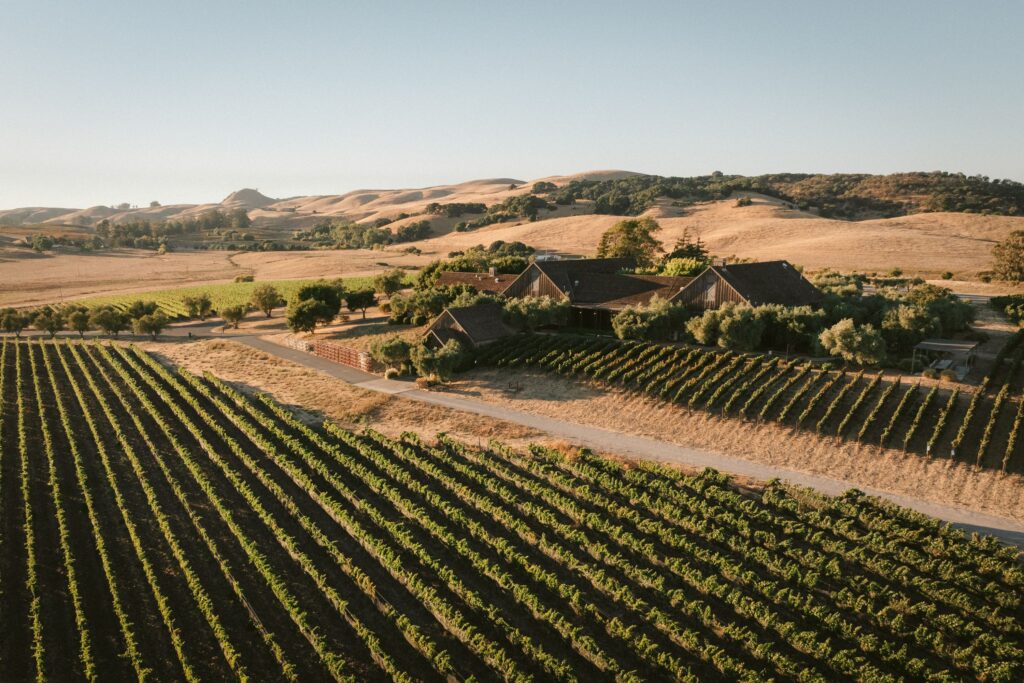
Located at the entrance of Sonoma County next to the Sonoma Speedway, Ram’s Gate is a relatively recent boutique winery (established in 2011) that produces 10,000 cases of wine a year. The wines are made from both estate and sourced fruit, and today they are able to work with some of the most unique vineyards across Sonoma and Napa thanks to Nielsen’s in-depth knowledge of the area.
Nielsen is a geek of many topics including the different oak barrels from around the world, and the characteristics of the different vineyards around Sonoma and Napa. Since joining Ram’s Gate in 2018, he has been instrumental in pushing the standards of their vineyards and winemaking, believing that growing vines and making wine is a balancing act between science and artistry.
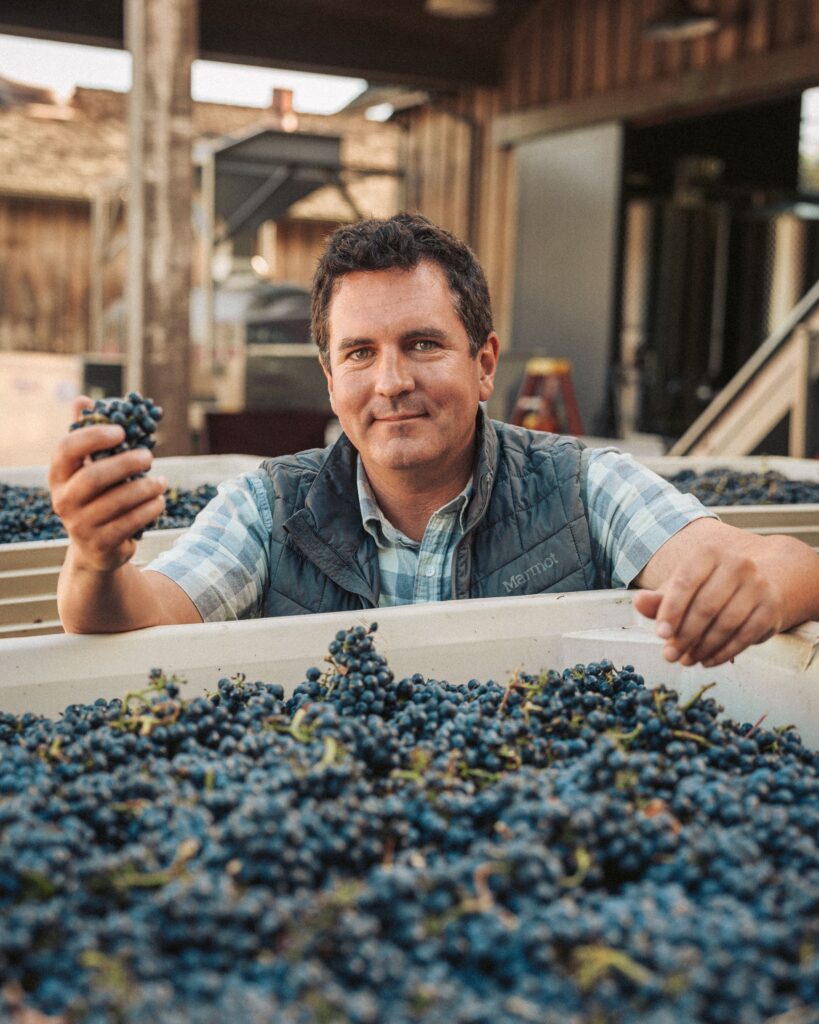
Grape Collective talks to Joe Nielsen about Ram’s Gate’s mission, his philosophy as winemaker, and the future of the winery.
Lee Pai: Could you introduce us to Ram’s Gate, and the focus of your wine? It’s quite a new winery, established in 2011.
Joe Nielsen: Ram’s Gate was originally started by Jeff O’Neill and a few partners, out of a love for wine and believing in Sonoma County as a great area for growing grapes and making wine. It also happened to be very close to Sonoma Raceway, which is a passion of Jeff O’Neill’s as well.
Our focus is to make great wine, period. That’s a cliché, but in our area what grows incredibly well is Chardonnay and Pinot Noir. We also enjoy making other varieties that do well in the cool climate of Sonoma County, so we also do Pinot Blanc, Sauvignon Blanc, and more recently we’re venturing out into Cabernet.
Are most of your wines from your own estates or do you have a portion from purchased fruits as well?
About a third in a normal vintage is grown on our estate, and then two-thirds is with mostly mom-and-pop operations around Sonoma and Napa County.
Regarding our estate, we have a total of around 120 acres but only 27 planted acres. I don’t like to think in terms of acreage, because the issue is it doesn’t really tell you how big things are because there’s a lot of varying spaces in terms of how vines are put together, so it’s a hard number to rely on.
Take for instance some of our contracts with outside vineyards. Some are acreage contracts, but those are becoming rarer, and most of the time people are buying in tonnage.
These vineyards that Ram’s Gate farms themselves, what would you say is the philosophy behind the practices of managing these vines and the land?
The philosophy is very simple. We’re making a luxury product, and doing that requires a desire and need for stewardship—a thoughtfulness that needs to go into producing that product. Wine is our passion, but it is not the most important thing in the world, so thinking about the future and the environment is number one.
So from being good stewards and good custodians of the land, that has morphed into practicing and farming organically, which led to us becoming CSWA (California Code of Sustainable Winegrowing) certified, and then organic certification that we just received in 2024, and now a new passion for regenerative organic farming.
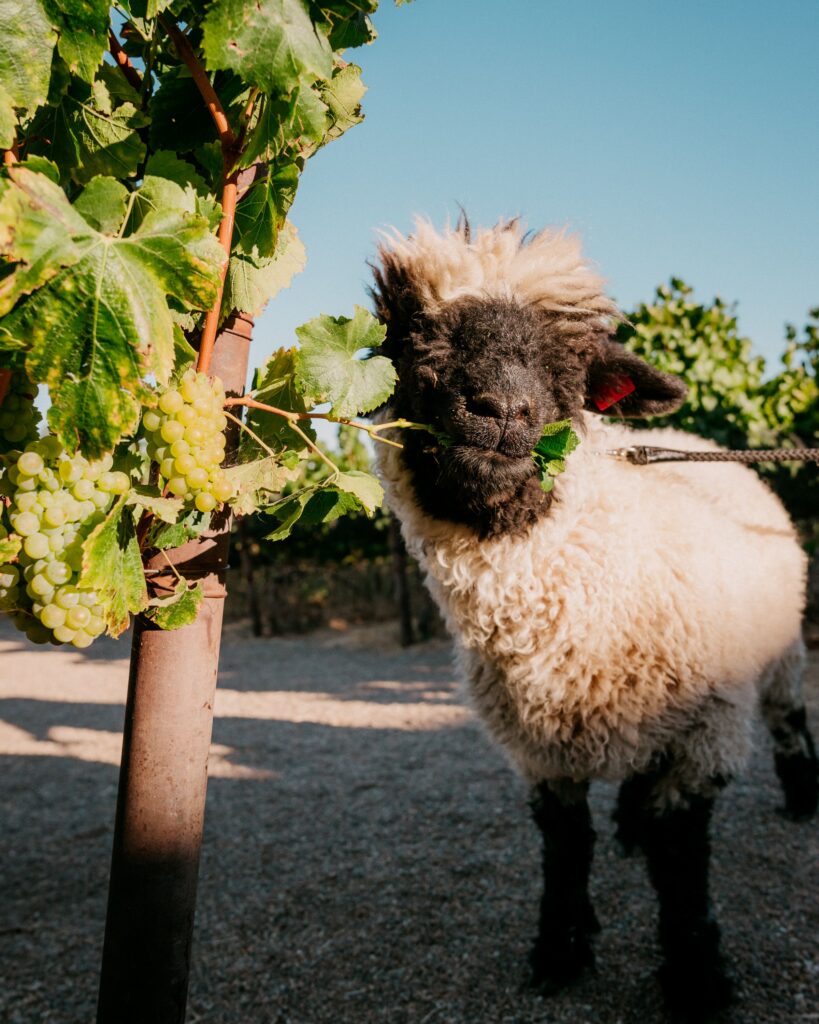
The philosophy is to always continue to do better and constantly challenge ourselves. Once you start farming that way, you realize there’s more that you can do. We’ve started working with sheep in the vineyards, and now we can explore what other interesting things can we incorporate into our vineyard that makes it not only a fun place to work, but a great place to host people, with this great feeling that you’re doing right by mother nature, which is compelling in itself.
Where do these ideas or this belief come from in your journey?
The beautiful thing about Ram’s Gate is it’s a passion that I brought to the brand, and I was met with that same passion. It’s not something that Jeff O’Neill and I necessarily sat down and discussed. It was something that I loved, something that I grew up with, and then meeting someone like Jeff, who’s equally passionate about it—it was sort of an unspoken conversation. It just made sense that this is the right thing to do. I think it was just fate that he and I got to work together.
You moved Michigan to California in 2008. How did you get introduced to Ram’s Gate? What were your experiences leading up to that point?
One of my early mentors said wine’s a journey, not a destination, and it’s a metaphor for life too. I’m really blessed with the journey that I’ve been on thus far.
I started making wine out of college in northern Michigan. A lot of the books in school were based on vineyards in France or practices in California, so what I read wasn’t exactly what I was seeing. The Michigan wine scene is great, I have some great friends there and I can’t speak highly enough about it. But I was curious and I wanted to do the best and be the best.
I didn’t speak French, so if I wasn’t going to be able to do that in France, California was the place to be, especially in 2008. I was fortunate enough to work at a place called Merryvale Vineyards in St. Helena, and kind of fell in love with Northern California. I realized that wine making means you are both a farmer and a creator of something, but you’re also a historian. You get to deal with things that have been around for sometimes decades, if not half a century.
At Merryvale, I was exposed to both Napa and Sonoma County, but that role was in the cellar, and my future there wasn’t totally certain. Afterwards I joined a really small winery called Donelan Family Wines in 2009, and worked from Cellar Master to Assistant Winemaker to Head Winemaker very quickly.
There, I fell in love with the style of wine that I still make today—one that is driven by being almost like an archaeologist, digging into the ground to find the answers, instead of coming to a vineyard with preconceived notions of what great wine is. Let’s find it in the vineyard and try to keep your ego out of that process. As a result, I was making many different styles of wine based on what we were seeing in the vineyard.
At Donelan, I evolved to really fall in love with the business of wine as well. So I got a master’s degree in wine business and helped the Donelans grow their brand, and then that kind of morphed into being hungry and curious for more. After that I joined Ram’s Gate in 2018, I’ve been with them ever since.
What was the transition like from Donelan to Ram’s Gate?
When I came to Ram’s Gate, I originally thought I might have to change how I make wine, or my philosophy with vineyard sourcing might have to change. We’re only talking about doubling production, from 5,000 to 10,000 cases, which is significant.
So I was challenging myself philosophically about whether I needed to adjust. The reality—and this has grown inside me as well—is that we can continue to grow while keeping that small wine producer mentality.
Even though we produce 10,000 cases a year, our average lot size is maybe four or five barrels. So in some ways, we’re just growing that artisan producer approach and doing a lot of it. We have maybe 100 wines in our cellar at any given time for blending, but that core belief hasn’t changed.
We talked a lot about your farming practices being regenerative and organic. But, what do you consider as your philosophy behind winemaking?
The philosophy starts with—and this is a carryover from the vineyard—a phrase I’ve used since an intern said it in 2014 – “remain a student of my palate.”
So we approach what we do as a student instead of assuming we’re the master. We constantly trial things on a small scale, being smart and prudent with business, but constantly challenging our preconceived notions. I always say to “question the unquestioned answer”—the things that people do just because that’s how they were told. Is there a better way? Is there a smarter way?
Then on top of that, when it gets to the wine itself, the philosophy is that less is more. The less I have to do in the cellar, the better. That’s why I focus on farming and work with partners who are focused on farming and working with them to really understand their sites, so that by the time the grapes come to our cellar, we don’t have to do as much.
It’s sort of like modern medicine, the more intervention you do, the more intervention you need to do. I think it gets you away from the original goal of making wines that are transparent, beautiful, pretty, all things that I would classify as great.
What would you say has been the biggest difference for you since you joined Ram’s Gate?
When I joined Ram’s Gate, I had already had about 12 vintages, and now I’m moving toward 19 vintages. That’s not important in itself, but what is important is that when I started, I quantified everything. I have spreadsheets for every possible thing that I could ever track. Data was my friend.
More recently, I’ve moved in a direction where those numbers are being felt, and I don’t necessarily need to look at them as often. Not that numbers were ever a crutch, but I’m getting to a point in my career where I can feel the chemistry, which is really interesting. It’s hard to explain, but it’s an awesome feeling to be able to move beyond what I thought was the best I could be.
Being able to feel the winemaking process versus just using the math and the science that I grew up with is a pretty exciting time for me personally.
From my perspective, you are in a unique position to have both the title of GM and Winemaker. With both of these roles, do you ever feel like there’s a tension in having to balance making decisions for the different responsibilities of each role?
Not really. What I like about being business-minded and the artist of being a winemaker is that there’s always going to be some restraint in someone’s career, or whatever you do, whatever your passion is. Even an artist has the size of their canvas as their border; with winemaking, having some sort of financial borders to work within.
Although Jeff and the team have given me tons of latitude to pursue passion and quality, we’re doing this so that we can share it with our friends, our customers, and our fans. To do that carelessly and not thinking about money at all or the impacts on the business, I think would be careless.
I’ve also love the troubleshooting aspect of business, just like there’s troubleshooting in winemaking. To me, a good winemaker is someone who’s really good at troubleshooting. And that has carried over to the business part as well.
Speaking of Jeff, last year, Ram’s Gate got incorporated into O’Neill Vintners and Distillery, and from an independent boutique producer you become a subsidiary of one of the largest wine producers in California. Even though it’s still under Jeff, who’s one of the co-founders of Ram’s Gate, has this transition brought any changes?
What’s been great about O’Neill being a bigger player is the opportunity for resources for Ram’s Gate. Being a small brand in the world of wine is a difficult proposition these days, especially right now. To be able to have someone that’s got your back is incredibly encouraging.
For me, to be able to continue to focus on wine quality when we’re always in that pursuit, but to really have someone championing you from behind and just saying, I trust you, is unique. This is especially true I think, in this day and age, when people are nervous about the world of wine and where it’s heading.
Although O’Neill is a corporation, it is also a family-owned operation, so it’s not a publicly traded business like Constellation. There’s still a person behind that name.
There are always going to be changes, and I think to assume life will never change is naive, but I think the future is really bright for O’Neill, and it’s super bright for Ram’s Gate. We’re here in New York, really excited about reintroducing our little brand to markets like New York, and hopefully someday to the world. I don’t think I would have been able to do that without O’Neill in this current form. So it’s exciting.
Personal question. Besides Ram’s Gate wines, what are some wines you like to drink on your own or with your friends or family?
I always say I’m a consumer as well. I have a pretty large wine cellar—a couple thousand bottles. People not on camera right now could probably laugh that it’s not a surprise. I have a knack for collecting things, whether it’s barrels or vineyards.
Personally, I really enjoy wines that have the capability of aging. Earlier in my career, I always tried to define what makes a great bottle of wine—not necessarily what’s the highest scoring, but what inherently makes a wine great. I’ve always been fascinated with that.
So I gravitate to areas of the world where wines can age well. Starting with Rieslings from Germany and Alsace, but then Burgundy, White Bordeaux, and then Brunello, Barbaresco, and Barolo. That would be the short list of wines that I like to drink.