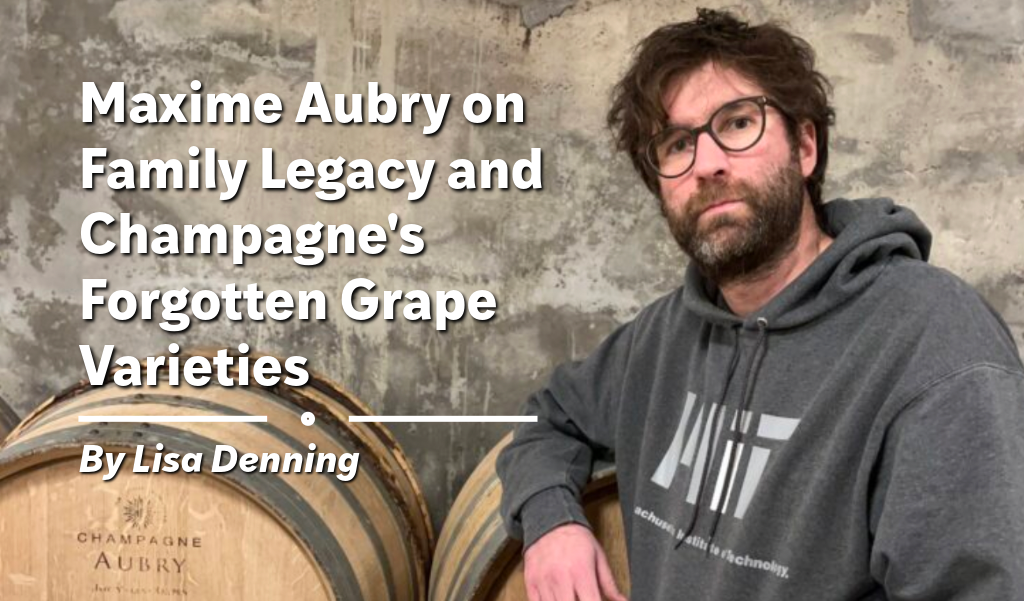
Champagne Aubry is a family-run grower estate with a winegrowing lineage dating back to 1790. Located in the Premier Cru village of Jouy-lès-Reims in the Petite Montagne de Reims, the domaine is among the few producers cultivating all seven grape varieties permitted in the Champagne AOC—the ancient, rare varieties of Arbane, Petit Meslier, Pinot Blanc, and Fromenteau alongside the traditional Pinot Noir, Pinot Meunier, and Chardonnay.
Shaped by varied soils and cooler exposures, Aubry’s wines are fresh and fruit-driven, with vibrant acidity balanced by full malolactic fermentation. I recently caught up via email with Maxime Aubry, the latest generation to lead the estate, to discuss its history, the realities of running a small Champagne house, and where it’s headed next.
Lisa Denning: Can you tell me the story behind your family’s estate?
Maxime Aubry: My family has been farming the land since the late 18th century. The grapes were sold to merchants, but in the 1950s, my great-grandfather, Léon, began producing his own bottles of Champagne and created the brand that still sells L. Aubry Fils Champagne today. His son, Claude Aubry, took over the estate and continued to develop the Aubry style, combining tradition and rigor in his work. Following his sudden death in the late 1970s, his twin sons, Pierre and Philippe (my father), undertook to continue the adventure begun by their grandfather. Pierre, trained as an agronomist, and Philippe, trained in biology and oenology, continued to develop the character of what would become their own cuvée. They were soon joined by their younger sister, Sylvie, and her husband.
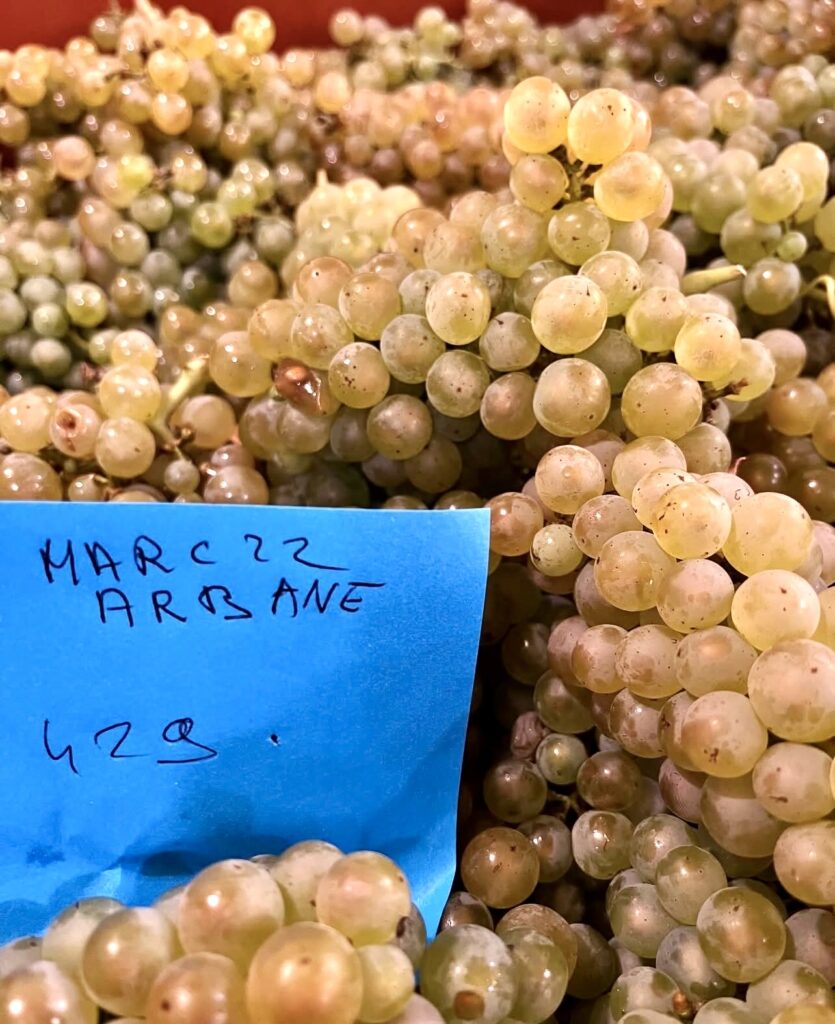
In 1986, as preparations began for the bicentennial of their family estate (celebrated in 1991), my father and uncle decided to create a special cuvée inspired by the character of 18th-century Champagne. Immersed in old wine manuals and texts, they discovered that to truly recreate the historic style, they would need grape varieties that had all but disappeared from Champagne vineyards, such as Arbane, Petit Meslier, Fromenteau (Pinot Gris), and Enfumé (Pinot Blanc).
These varieties were nearly extinct in Champagne, but the brothers set out to find, graft, and replant them. Between 1989 and 1994, they succeeded in bringing back these vines alongside the classic Champagne grapes (Pinot Noir, Pinot Meunier, and Chardonnay).
The result of this project was the creation of Le Nombre d’Or, a truly unique multi-varietal Champagne that incorporates all seven permitted grape varieties under the Champagne AOC. This cuvée evokes the diversity and complexity of wines from the region’s early days and remains a hallmark of the Aubry style.
At the beginning of the 2010s, the estate became increasingly recognized internationally, and its wines were exported to more and more countries, not only in Europe but also in America, Asia, Australia, and New Zealand.
You joined the winery in 2020. What were you doing before that, and why did you decide to join the family business?
From my earliest years, I grew up with a deeply ingrained idea: being a winemaker is a demanding profession, especially when it’s a family business (I could tell you tons of stories, some happy, some not so happy, on this subject, but that’s not what we’re here to talk about…)
Between the long hours, the unpredictable weather, and the pressure to uphold a legacy of expertise, every day requires immense effort and perseverance. While my parents respected this tradition, they always encouraged me to explore other paths. “Get an education, find your own way,” they often told me.
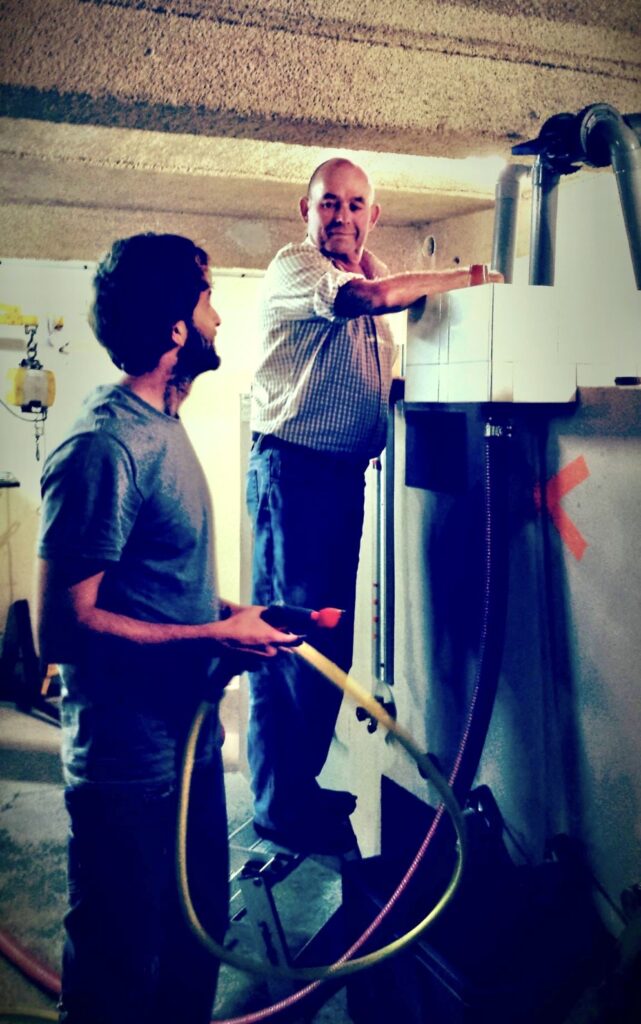
I’ve always loved understanding how things work and have always been eager to explore a wide range of fields. I initially studied humanities, economics, and management before breaking into the tech industry, where I worked for nearly 15 years. I wrapped up my career in 2020 as a consultant for major corporate clients in Paris. As I approached my 40s, I struggled to find meaning in my work, and the idea of returning to my family’s domain began to make sense. Naturally, I decided to join my family to apply my skills to the estate while rediscovering the art of winemaking. Therefore, I humbly try to ensure that our family adventure continues, adding my touch of modernism behind the scenes. Pierre’s sudden death in 2023 precipitated my transition at the head of the estate, where I became a partner and manager in mid-2025.
What makes the terroir of your vineyards distinctive for Champagne production?
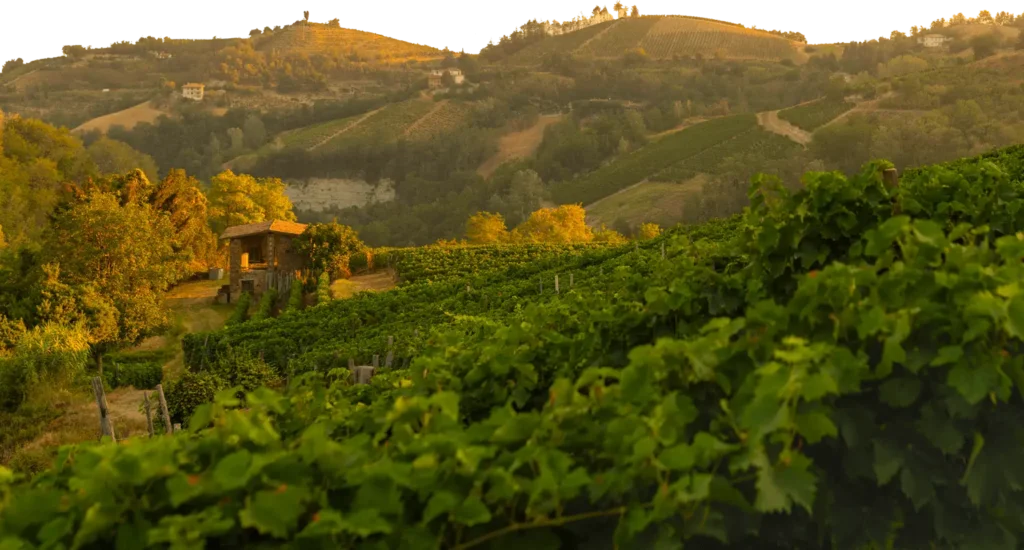
We grow grapes in vineyards located in the villages of Jouy-lès-Reims, Pargny-lès-Reims, and Coulommes-la-Montagne, situated in the Petite Montagne de Reims region. Our vineyards are planted on gently to moderately sloping terrain, mainly facing south and southeast. The Petite Montagne de Reims, like the entire Montagne de Reims, is characterized by complex sedimentary geology, with soils composed mainly of chalk, clay, sand, and limestone. This diversity allows for a wide variety of micro-terroirs, directly influencing the wines’ profiles. Chalk, in particular, promotes good drainage and a distinctive minerality in the grapes. The micro-terroirs produce fresh, fruit-focused Champagnes with vibrant acidity in part because of these variable soils and cooler exposures typical of the Petite Montagne.
How do the rare, forgotten grape varieties express your terroir differently from the classic Champagne trio?
The ancient grape varieties of Champagne have often been forgotten in favor of the classic trio (Chardonnay, Pinot Noir, Meunier). After the phylloxera crisis, Champagne winegrowers, who were almost ruined, had to replant the vast majority of their vines. They opted for grape varieties that were considered more robust, but above all, more productive. Now that this crisis is behind us, we began cultivating them again in the early 1990s and have rediscovered a very interesting aromatic universe. They tend to express the terroir in a more rustic, more aromatic, and sometimes wilder way than the dominant varieties.
- Arbane: This grape variety produces lively, aromatic wines with notes of white flowers, citrus fruits, and a very pronounced minerality. The finesse and olfactory complexity reflect the chalk and clay of our terroir.
- Petit Meslier: Very fresh and fruity, it brings aromas of green apple, pear, and honey, as well as lively acidity. It is particularly suited to our soils and our cooler microclimates, where it expresses a very local character.
- Pinot Blanc: Rounded, it offers notes of ripe white fruit, hazelnut, and sometimes brioche. It thrives on limestone soils and produces more full-bodied wines, while retaining a beautiful minerality.
- Fromenteau (Pinot Gris): It offers aromas of tropical fruits, sweet spices, and honey, with a creamy texture.
Can you tell me about the wines Champagne Aubry produces?
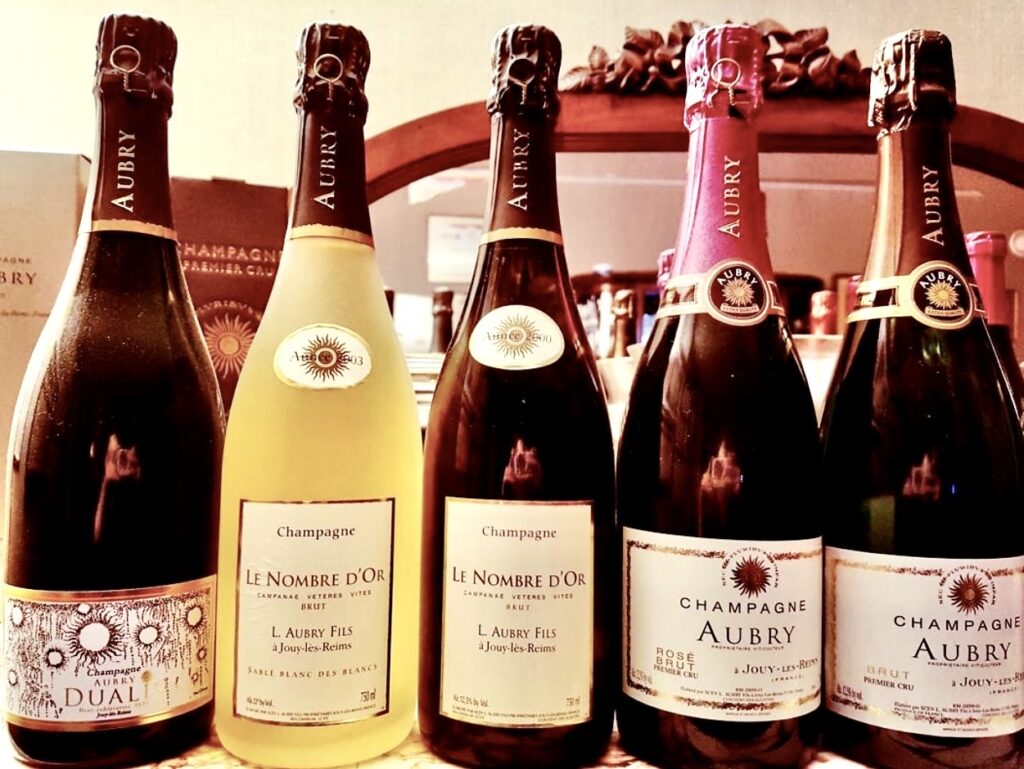
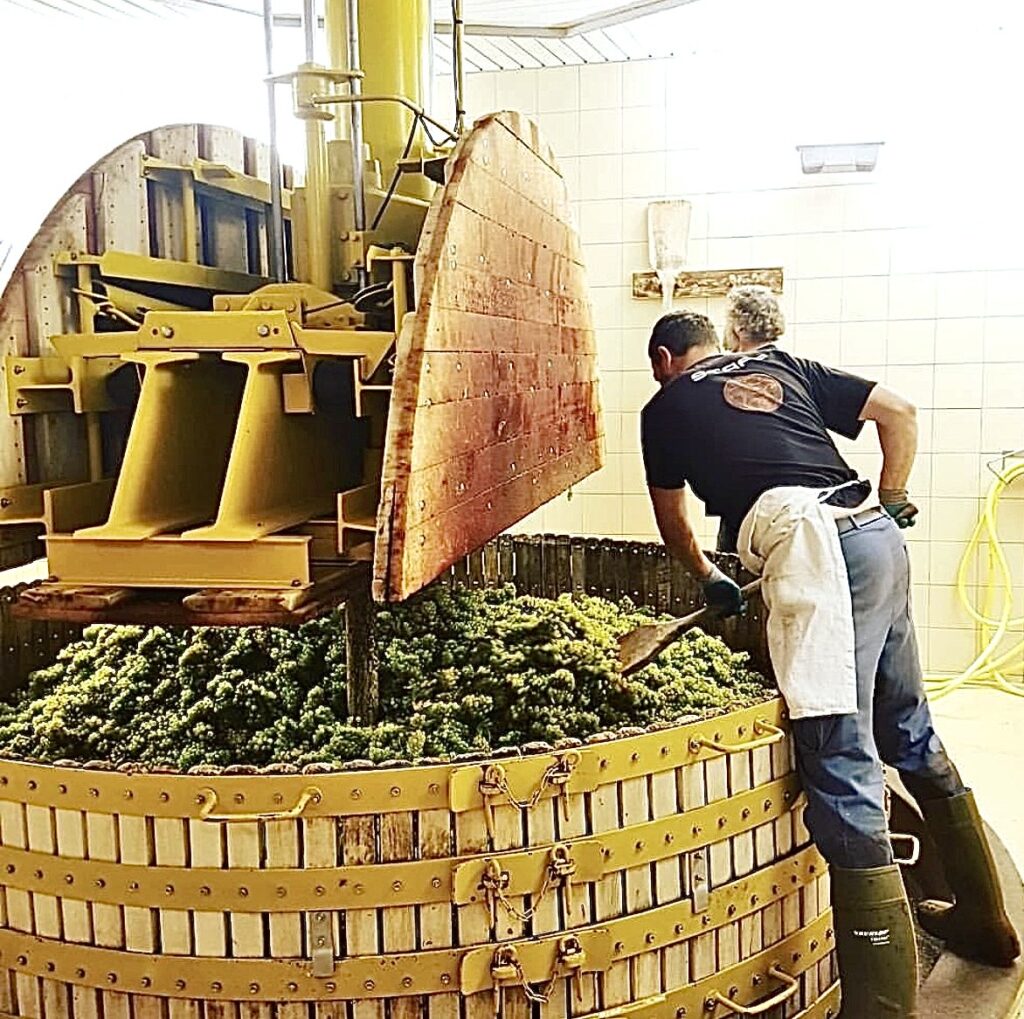
The wines we produce are the result of a heritage and traditional methods that have changed little over time. We focus on controlling the process: we select the yeasts (no spontaneous fermentation) and carry out malolactic fermentation. The wines are aged in stainless steel vats, except for the Chardonnay used in our vintages, which is aged in oak barrels. Our wines are notable for their low dosage and crisp acidity that highlight fruit and minerality, with a palate that is less conventional in Champagne, partly due to the inclusion of rare grape varieties. We also want our wines to age several years on the lees. Every year, we take the blending very seriously to emphasize depth, structure, and complexity.
Our wines can be divided into several categories:
The classic: Brut, Extra-Brut, and Rosé are blended Champagnes that vary from year to year, typically aged on the lees for at least 18 months, with reserve wines maintained in a perpetual blend (solera-like) to add complexity. Ripe fruit, firm structure, and a signature freshness. The Rosé shows aromas of strawberry and raspberry with a lively, fresh palate and subtle biscuit notes from aging.
The special cuvées: Le Nombre d’Or. One of our most distinctive wines, Le Nombre d’Or Sablé Blanc des Blancs, is a variation that emphasizes white grape varieties, particularly Petit Meslier, Arbane, and Pinot Blanc. “Sablé” refers to a softer pressure in the bottle (lower atmospheric pressure) and a lighter, more delicate mousse with zéro dosage.
As a small, family-run producer, what advantages and challenges do you face compared to the larger Champagne houses?
I would say that the main advantage is the freedom we have to do our work. We control the entire process, style, and decisions, from growing the grapes to bottling, including pressing and aging the wines. I also have the opportunity to represent a family history that continues to be written from generation to generation.
The main drawbacks lie in the multiplicity and complexity of the tasks. You have to be a winemaker, an accountant, a human resources manager, a community manager, and a salesperson, all at the same time. You have to take responsibility for your choices and for the uncertainties of the weather. Last but not least, the pressure on cash flow is relentless. Keep in mind that before a bottle of champagne can be released onto the market, you have to wait at least two years, from the ripening of the grapes to the aging of the wine. This comes at a cost that most people are unaware of.
How has your approach to vineyard management evolved, particularly regarding sustainability and organic practices?
Although I am in my forties, I think that people of my generation have a more up-to-date view of climate change than older generations. We know that, in particular, in vineyards, some bad habits were common, but fortunately, winegrowers have become aware of this and practices have changed. Quality certifications have emerged, and more and more winegrowers are committing to organic farming.
For the moment, we practice sustainable farming. We do not plow the soil and prefer to leave grass between the vines, which we mow regularly.
We are looking into the possibility of converting to organic viticulture, but the recent climate disasters of the last few years have left us with many questions about our future, but it is still under consideration.
Is climate change altering your approach in the vineyard?
Yes, climate change means we approach viticulture with much less confidence. We are seeing episodes of late frosts that can attack buds at a stage when they are sufficiently advanced to jeopardize the plant’s healthy development. We are also seeing more and more prolonged periods of rain or drought at times when the plant is vulnerable.
Higher temperatures also promote faster ripening of the grapes, with higher sugar levels and sometimes lower acidity. This can result in wines that are more powerful, higher in alcohol, and less fresh than in the past. Therefore, starting in August, we must closely monitor grape ripening to determine the harvest date as accurately as possible. Just a few days too late is enough to alter the profile of the future wines. We are fortunate here to be able to rely on several grape varieties (such as Arbane and Petit Meslier) that will provide the acidity sometimes lacking in our vintages.
How do you see the Champagne market evolving, particularly with younger consumers?
We are moving away from the consumption patterns of the past, when Champagne was reserved for weddings and celebrations. I have noticed an influx of young, knowledgeable Champagne enthusiasts who recognize it as a true wine in its own right, rather than just a sparkling wine that is more expensive than the competition.
Furthermore, we are seeing that the decline in purchasing power among younger generations is affecting how they consume: buying smaller quantities, seeking value for money, setting high product standards, prioritizing environmental concerns, and valuing craftsmanship.
How would you describe the taste and style of your wine to someone who’s never had it before?
I would say that our champagnes are both classic and daring. They respect the codes of Champagne (freshness, minerality, finesse) while incorporating rare and forgotten grape varieties, giving them an aromatic complexity and an extraordinary personality. In short, this is a champagne that will win over novices with its traditional production methods, but also satisfy the most demanding palates with its use of grape varieties rare in Champagne.
What’s your favorite wine splurge that isn’t Champagne?
I absolutely love Condrieu.
What’s a wine region that is on your bucket list?
As a matter of fact, I haven’t been to Burgundy yet. So, Burgundy, definitely, for the expression of the terroir in its purest form.
If you were only allowed to have one wine for the rest of your life, what would it be?
Tough one, it would be such a sad life, given the incredible number of wines and wonderful winemakers… I’ll have to pass.