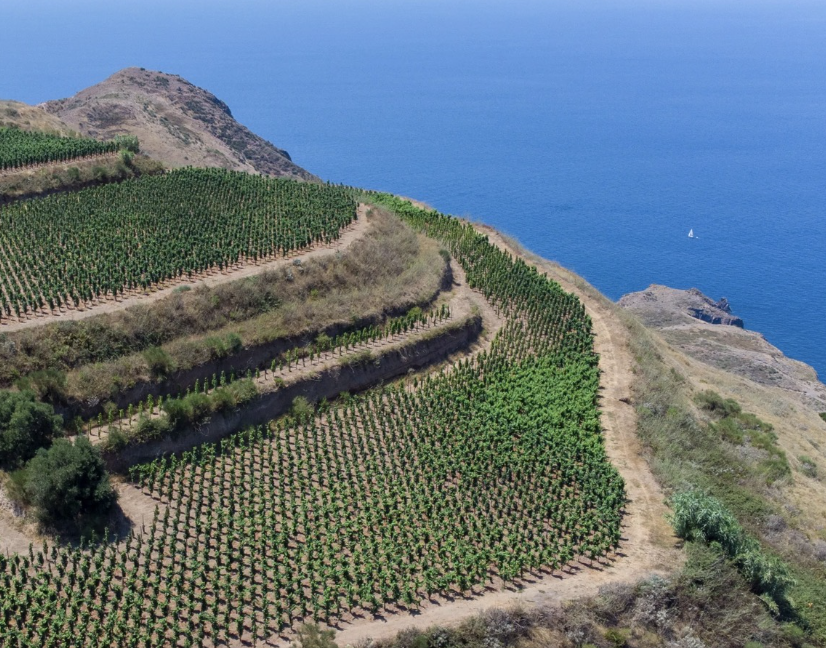
In the hills of Catalonia, just 40 miles west of Barcelona, lies one of Spain’s most storied winemaking estates. The Raventós family has been cultivating vines and crafting wines since 1497, making them one of the oldest continuous winemaking families in the world. At the helm of this historic estate today stands Pepe Raventós, who honors his family’s 21 generations of tradition while charting a new course for the wines of Penedès.
The Raventós name is synonymous with Spanish sparkling wine. In 1872, Pepe’s ancestor created the first Spanish méthode champenoise, laying the foundation for what would eventually become Cava, Spain’s renowned sparkling wine designation. Ironically, in 2012, it was Pepe who made the controversial decision to leave the Cava D.O. (Denomination of Origin), believing that mass production had diluted the true expression of the region’s terroir and indigenous grape varieties.
Penedès, with its Mediterranean climate tempered by continental influences, creates ideal conditions for winegrowing. The region benefits from fossilized limestone soils – remnants of an ancient seabed from 20 million years ago – and varying elevations that offer distinct microclimates. These natural advantages, according to Pepe, make Penedès “one of the most gifted wine regions in the world” and “still today, the land of opportunity.”
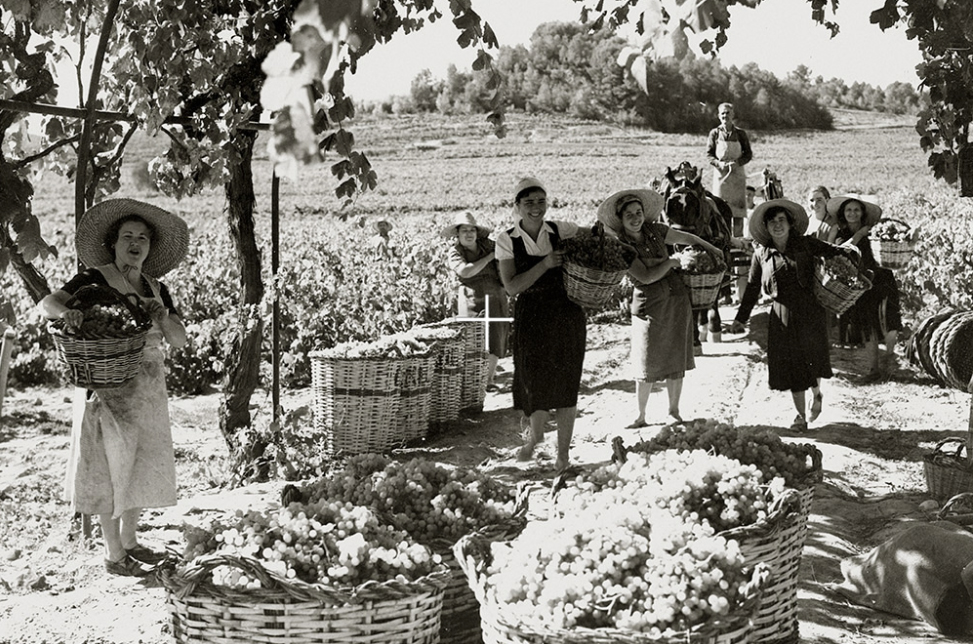
Central to Pepe’s winemaking philosophy is the celebration of indigenous varieties, particularly Xarel·lo, which he boldly claims belongs “on top of the white grape pyramid.” This local variety ripens perfectly in the Mediterranean climate while maintaining extraordinary freshness and acidity. Rich in resveratrol, Xarel·lo produces wines with aging potential and an ability to express the unique minerality of Penedès’ limestone soils. Similarly, Pepe champions the revival of Sumoll, a challenging but rewarding red variety he calls “the Catalan Nebbiolo.”
Pepe’s approach to viticulture reflects a profound respect for nature and tradition. After formal enology studies and formative internships in France, he returned to his family estate committed to recovering “the ancient farm” where “animal, man, and plant live together in a very respectful and cooperative way.” His biodynamic methods focus on fostering biodiversity, believing that “the more diversity there is in the system, the more resistance will be in these plants, the more unique will be the grapes.”
In this conversation with Grape Collective, Pepe Raventós shares his journey, philosophy, and passionate vision for the future of Penedès – a future deeply rooted in its past but boldly innovative in its forward looking approach.
Christopher Barnes: Tell us a little bit about the history of Raventós.
Pepe Raventós: The history of Raventós is a long history We are one of the most boring families in the wine world, documented since 1497. But I like to think that before that, because we are in the Mediterranean basin where everything started about 5,000 years ago, it actually started in Armenia, as you know very well. But later the Phoenicians spread it all over our coasts.
You have documentation of winemaking from 1497?
Documented, the first day that we started making grapes here was in 1497, probably before that, because we are in an area that already 2,000 years ago was making wine and cereal and olive and almond trees. However, what made the farm famous is that in 1872, Josep Raventós Fatjó, the grandfather of my great-great-grandfather, made the first Spanish méthode champenoise, or classic method, or second fermentation in the bottle.
Talk a little bit about your history as a winemaker.
I started making wines by accident, because my first original passion is linked to social work. But my father was having economic difficulties in the ‘90s, and I started to work with him and I suddenly became in love with wine. I studied as a master sommelier in Barcelona for two years. That was really like, I think, the keystone of becoming in love with wine. Then I did my enology studies in agronomy engineering in Madrid. And most importantly, my winemaking harvest internships in France, with Didier Dageneuau in 2004 being the most influential.
Talk a bit about the property here. Maybe you can just sort of frame it geographically about where we are at the moment.
We are in the historic estate that has belonged to my family for 21 generations. This is located in northern Penedès, about 40 miles west of the city of Barcelona, in northeast Spain. We have a Mediterranean climate with certain continental influence that gives us wonderful ripening seasons in the harvest and actually in all the summers.
Talk a little bit about Penedès as a wine region. How would you describe Penedès to somebody who’d never been here?
Well, this is still today the land of opportunity because it’s one of the most gifted wine regions in the world. The fact of being in the natural climate for winemaking, which is the Mediterranean, makes this territory one of the greatest.
I like to say to people, what do you think is the white grape that makes the best white wines in the world? Most people always say Chardonnay. Probably some people maybe say Riesling and a few confused maybe say Chenin Blanc, but nobody will say Xarel·lo. And in my opinion, on top of the white grape pyramid is the Xarel·lo. The Xarel·lo has been dragged by the inertia of cheap Cava, and that’s why people don’t recognize its power. But it’s right on the top. The fact of ripening at 12.5 [alcohol] with a pH of 3.0 in Mediterranean latitude in the natural climate for winemaking is a miracle.
Describe the characteristics of Xarel·lo.
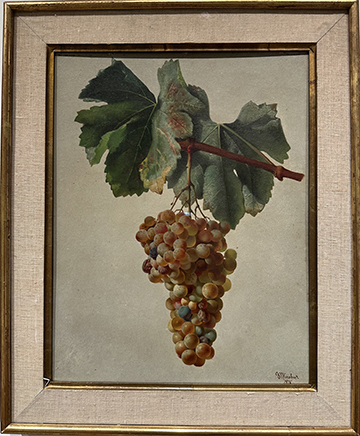
Not only is Xarel·lo so well adapted to Penedès that it is providing us with these extremely fresh wines, it’s also one of the grapes in the world that concentrates more resveratrol, which is responsible for anti-oxidation. So that means that this grape has an amazing aging potential. It is not a mistake that in 1870, Raventós realizes the potential of aging of Xarel·lo and seizes the opportunity of making one of the world’s best champagne-style wines.
Another greatest thing that characterizes it is that it’s quite austere in terms of terpenes, in terms of primary notes, fruit and flower notes. That means that it gives the protagonist to the roots, and it really lets the terroir speak in a very profound way.
Maybe just talk about the other grapes that you use in your blends.
Well, Josep Raventós Fatjó in 1890 developed the Macabeo trilogy. And, you know, sometimes when you are marketing the wines and you go traveling the world, people tell you what the Macabeo gives and what you use in the blend. They say Merlot gives this, Cabernet Franc or Chardonnay this, Pinot Noir this. But this is all marketing wine nonsense.
The real thing about having different grapes is that you have different vegetation cycles, and you are less exposed to weather inclement. So basically Parellada has a late bud break, so it’s well planted up in the mountains. So if you have April frost, it doesn’t affect that growing season. Xarel·lo is very early bud break, so it’s planted in lower altitudes here in Penedès. It also takes longer to go to full ripening, so that’s why it really needs that warmth and a certain temperate climate. And Macabeo is the earliest to come in harvesting. So this gives us the possibility to have six weeks of harvesting instead of having to do all the work in two weeks.
And talk about the terroir here on the property and also in general in Penedès.
To understand the potential of Xarel·lo and Sumoll and in general any wine in this territory, it is very important to understand its geology. This is something that was really inspiring when I was at Domaine Didier Dageneuau and seeing how Dageneuau, giving the protagonist to that silex stone, made his white Sauvignons rival the best white Burgundy at a time when they were untouchable.
So when I came back to Penedès, we worked with the University of Barcelona for geology to understand the landscape of the planet where we live. And we learned that the most important moment in history was 20 million years ago, when all of northern Penedès was covered by the ocean. Actually, almost all is, because it entered from Tarragona all the way to the Montserrat Mountain range, that is the mountain range that we see here just north of us.
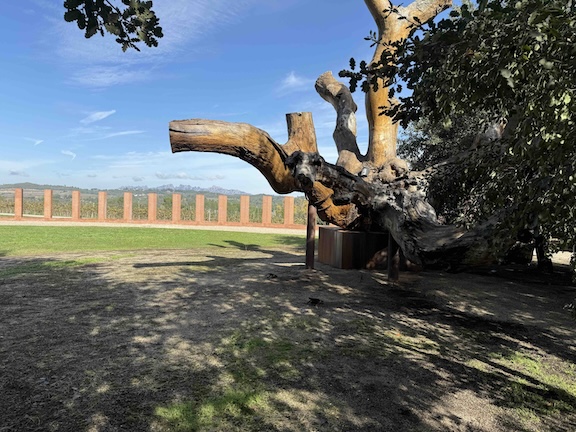
Talk about the different altitudes that you have here.
It’s very important also to realize that the fact of being covered by the ocean makes all our mother rock fossilized limestone. And then in this valley and the Penedès Valley, when the ocean, after 3 million years went back to the actual shore, was filled with eroded materials of the mountains surrounding us. Then the River Anoia carved and created the terraces, the different terraces and different altitudes where we’re making the wines or where we’re cultivating to make the grapes that will make the wines.
So understanding where you are is critical to understanding your job as a viticulturist and the potential that can arise. The lower altitude terraces close to the river express that more, that sense of salinity, because the river carved structures like the Grand Canyon did, smaller scale of course, and makes the older soils come to the surface. And the higher altitude has the younger soils with a little bit more rich clay and makes wines a little bit more in volume.
Talk about your philosophy of viticulture and winemaking.
My philosophy of viticulture in winemaking is… no philosophy. And the older I grow, the more I realize I need to stay apart or be hidden somewhere because I realize I don’t know anything. Maybe my responsibility is to try to let this nature be the true protagonist, the nature that is surrounding us in this moment, and let it speak.
And this is what I’ve been learning after ten years living in the estate, and trying to simply recuperate the ancient farm that has belonged to our dear Mediterranean farming, Penedès farming, cattle farming, where animal, man and plant live together in a very, I would say, respectful and cooperative way. Trying to understand every little detail of weather, every little detail of fauna, wild or domestic flora, wild or domestic, trying to understand how important is the life beneath us, the life in the soil.
So basically the idea is that the more diversity there is in the system, the more resistant these plants will be, the more unique will be the grapes of these plants. The more honest to the place will be the grapes that these plants are going to give us.
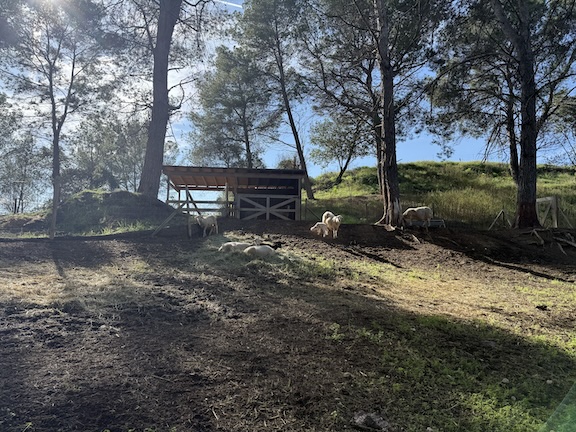
And can you talk about the family’s relationship with D.O. Cava, and then, eventually leaving the D.O., and the thoughts behind all of that?
My family relationship with Spanish sparkling wine, Catalan sparkling wine and Penedès sparkling wine is very deep. We are the family that brought the method into our country and the region. We are the family that created Cava, and we are the family that first declassified from Cava in 2012, in a very controversial move.
At that time, I was spending a lot of time in the United States, and I learned don’t hate the players, change the game. So we decided that we needed to start from scratch. Cava had become something that it was not meant to be, which is great value for money sparkling wine from Spain, but not really representative of the work in the viticulture, in the wines, and in the characteristics of northern Penedès.
So we’re working to create a new appellation, an appellation that really promotes that idea of nature, that idea of place, an appellation where the valleys, the villages and the vineyards are the protagonists, rather than the brands or the winemakers.
Talk about your D.O. here and what it represents.
We decided to work with and in the valley of the River Anoia and really put that as the protagonists. We decided to label our wines “Conca del Riu Anoia” – valley of the River Anoia. We are committed to work from this estate and the farmers around the valley. And I have to say that this is what gives me more energy – to work with these farmers, to learn from them, to try to pay the more fair price per kilo of these beautiful vines of Macabeo, cultivated with so much passion in an organic and biodynamic way.
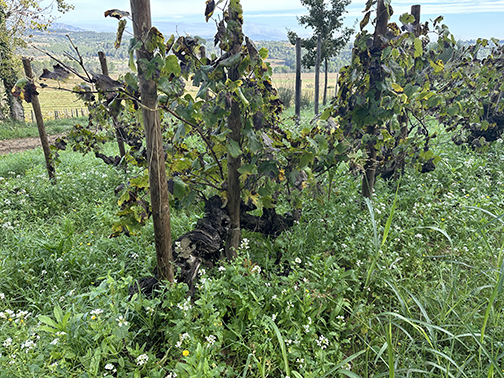
And trying to express this identity of the valley of the River Anoia in our sparkling wines. But that doesn’t mean that other valleys don’t have their own identity in Penedès and its potential. And this is a little bit the idea of the appellation to have a really inclusive name that can be common to all this region. Then the characteristics of every valley, every village, and finally, but more importantly, of the most singular vineyards – normally like where we are now, 80-plus-year-old vines of Xarel·lo, in this case, the north face on the slope.
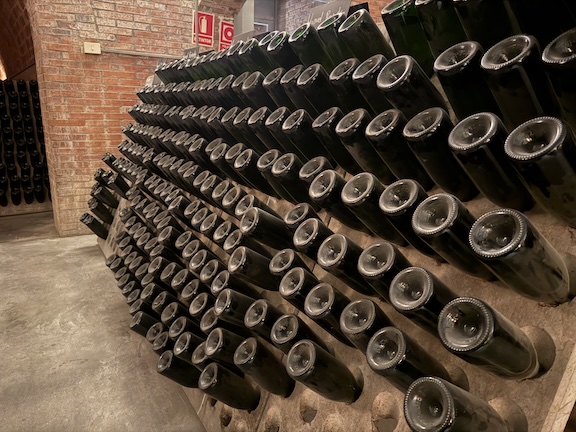
And talk a little bit about the cultural history of wine in Catalonia.
Catalonia, first of all, I am not the person to ask about history. What I can share is that I learned this is a territory very important for winemaking, such as all Spain after the discoveries of the Americas. Still today, Spain is a country with the highest surface of vineyards planted.
We are a country that used to produce a lot of mistela, which basically is fortified with alcohol grape juice in order to make it stable to travel to the Americas. So we would send a lot of wine to the Americas in exchange for all the gold that we would steal. After phylloxera, all the country was reinvented. We already could foresee, at least here in northern Penedès, that a crisis for them would be coming. And that’s when the territory reinvented itself towards what has become the future, and the future of high quality sparkling wine.
One other very important grape that used to be part of the mistelas in the past is going to be the future of winemaking – that’s Sumoll. So I dream of a Penedès of Xarel·lo and Sumoll where the valleys and the villages and the vineyards are going to be the true protagonists.
Can you describe Sumoll?
Sumoll is the red grape, indigenous or local to this territory such as Xarel·lo is our amazing white grape. Sumoll is an incredible qualitative red grape that has lost a lot of track because of two things, mainly because it’s very difficult to farm. It has a lot of tannins. It has a lot of sensitivity to rot. So you really need to be attentive in the farming. The window of picking is hours, not even days, but hours.
And this, together with the success of volume, made people decide to take that Sumoll away and replant with Garnacha. We are now in a moment of it coming back. So from the thousands of acres, only a few, 120 acres were left, mostly in the area of Puigmoltó, this more Sumoll area, near Can Sumoll.
And from those old vines, I see the triangle of the resistance of Sumoll, we’re now picking of the best individuals and re-grafting in Penedès. So Sumoll is coming back. Sumoll is the Catalan Nebbiolo – low color, high tannins, amazing aging potential grape.
And do you think you can say something about sort of being a winery in Catalonia and the identity of Catalonia, being this sort of very unique culture within Spain?
A lot of people travel to Barcelona lately, and Barcelona has become really an attraction now because of the beauty of the city, its history, its architecture, and what it represents. However, I always see that people miss out on the Catalan culture and the belt between one and two hours around Barcelona. And that’s where you really feel that in depth, the Catalan culture. Because it has been kept for generations. It’s not been diluted by the gentrified power of the city.
This is where you go to a restaurant and still the old people are having lunch with a bottle of a three-year-old brut nature sparkling wine from the territory. This is where the local gastronomy takes place. This is where people celebrate with human castles. This is where the sardanas dancing is still in the village celebration on a yearly basis. So it’s inside this type of Catalan culture I grew up where maybe the winemaking gets a certain sense in this link and in a way to share it with the world, these Catalan roots that are very deep inside the territory and inside the families that we have left in the territory.
And can you just tell us about your hopes for the future of wine in Penedès? How would you like to see it evolve over time?
In general, I think wine is living a fantastic moment. I think in the world, it is capturing more attention for this real thing, for its link to nature, for the story. And it’s moving away from a more marketing, more artificial sense, or a more snobby, ancient way that was only like a drink for certain classes. Now, I think wine is being more spread among everybody that wants to enjoy. And that also facilitates us to enjoy in a very human way, which is sharing, which is feeding, which is the table, which is the conversation and the base of the nature, the rhythm of the nature that is the rhythm that makes the best wine.
So I think this general move, at least in Spain, is very important today. We’re moving away again from that more traditional, snobby, uptight wine scenario to a more relaxed, natural, diverse mosaic. And that’s how I see the future of Penedès also – more linked into the villages, the communities, to give life back to these families that farm grapes and that are tired of farming grapes for very little money for mass production and sparkling wine, into more quality grapes.
Value the offer that they are making cultivating their grapes with such passion. Put into value the potential of plenty 80-year-old bush vines of Xarel·lo and Sumoll all over that territory. So I am super optimistic about the future of Penedès.
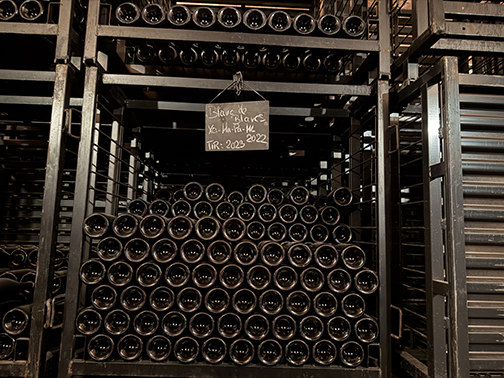
Can you compare the sparkling wine here to Champagne?
So to understand the potential of Penedès sparkling wines, northern Penedès sparkling wines especially, it is important to think about the combination of the grape and the terroir and see it in a wider perspective in the world. So if we look at the best regions of sparkling wines, or the wines of the most referenced sparkling wines in the world, we always have to look at Champagne. I don’t think it is the best region, but it’s certainly the region that has done the best homework.
Champagne has given us the use of enjoying the fruit taste of Chardonnay, the fruit taste of Pinot Noir, with an amazing aging capability and very technical and perfect product. So the potential of Penedès is really to move away from the taste of fruit and of perfection into a taste of minerality, nature expression and more artistic, if you will. And this is the combination, especially of the Xarel·lo in this fossilized limestone soil that gives us this certain idea of salinity