“That’s so awesome, are you going to Napa?” …is the response I got when I suggested I was visiting a wine region near San Francisco. It’s a shame, because the Santa Cruz Mountains (“SCM”) AVA, situated southwest of the Bay area, is actually much closer. It, however, remains largely unknown.
It’s not a small region either. SCM is a large appellation that spans over 200,000 hectares (~480,000 acres) of mountainous terrain that reaches over 1,100m (~3,600 ft) at its highest point. But unlike Napa’s tasting room-lined Highway 29 or Silverado Trail, most of SCM is covered in dense forests with steep and narrow roads, which makes it hard to associate the region with vineyards and wine. Tourists who visit the region are often there for hiking, mountain biking, or camping. The challenging terrain also means limited cultivable or suitable land for growing grapes, with no more than 650 hectares (~1,600 acres) planted under vine; that’s right, I didn’t miss a zero. Their size is dwarfed by Napa Valley, which spans only 100,000 hectares (~250,000 acres) but has 19,000 hectares (~47,000 acres) under vine.
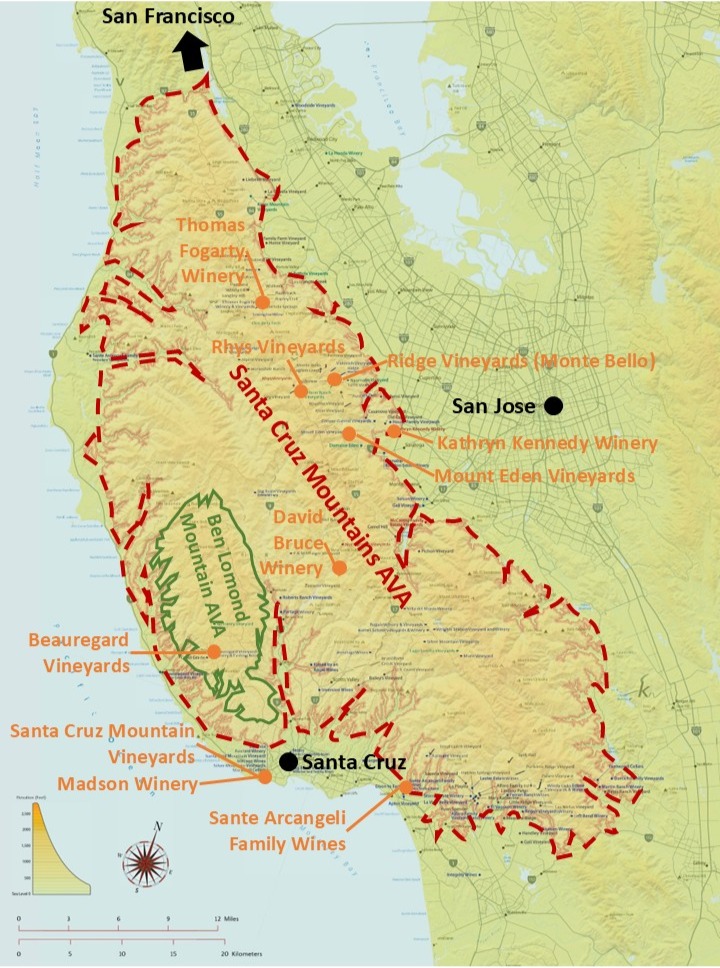
Image credit: Santa Cruz Mountain Winegrowers Association
But, if we’re able to make our way through the thick trees and dramatic landscape, we can find some fascinating wineries and vineyards tucked away in this corner of California.
What we know
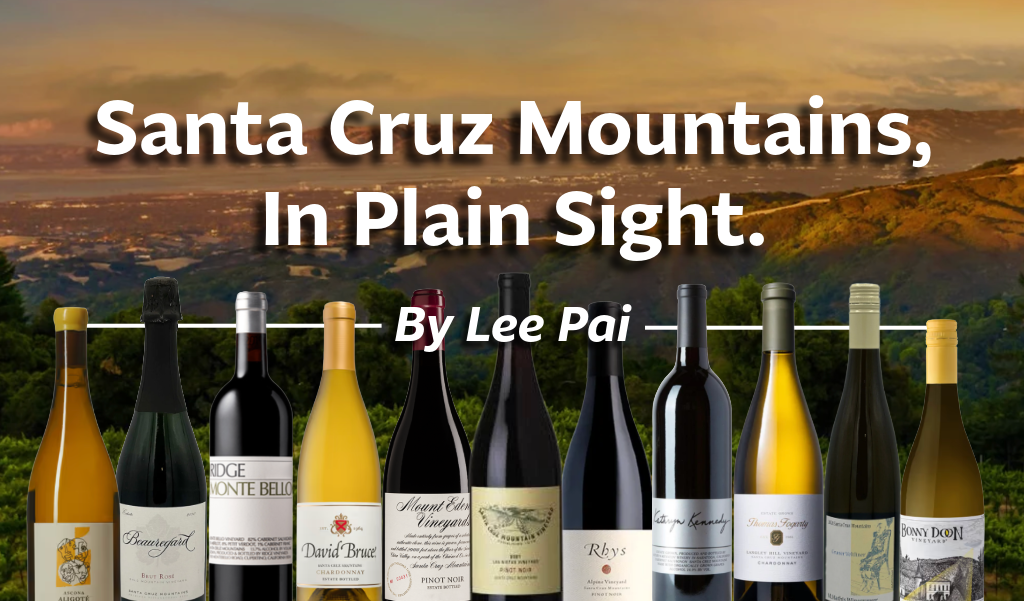
It’s not as if the wines of SCM are completely unknown. The wines of Ridge Vineyards (Monte Bello anyone?) and David Bruce Winery, pioneers of the region, were part of the Judgement of Paris in 1976. Bonny Doon Vineyard became a leading force for the Rhone Rangers because of its founder Randal Graham. Rhys Vineyards, a relative newcomer, has been producing wines that grabbed the attention of wine critics and fans almost immediately after its first commercial vintage in 2004. Mount Eden Vineyard, with its cult following, even has a Pinot Noir clone named after it (the Mount Eden clone).
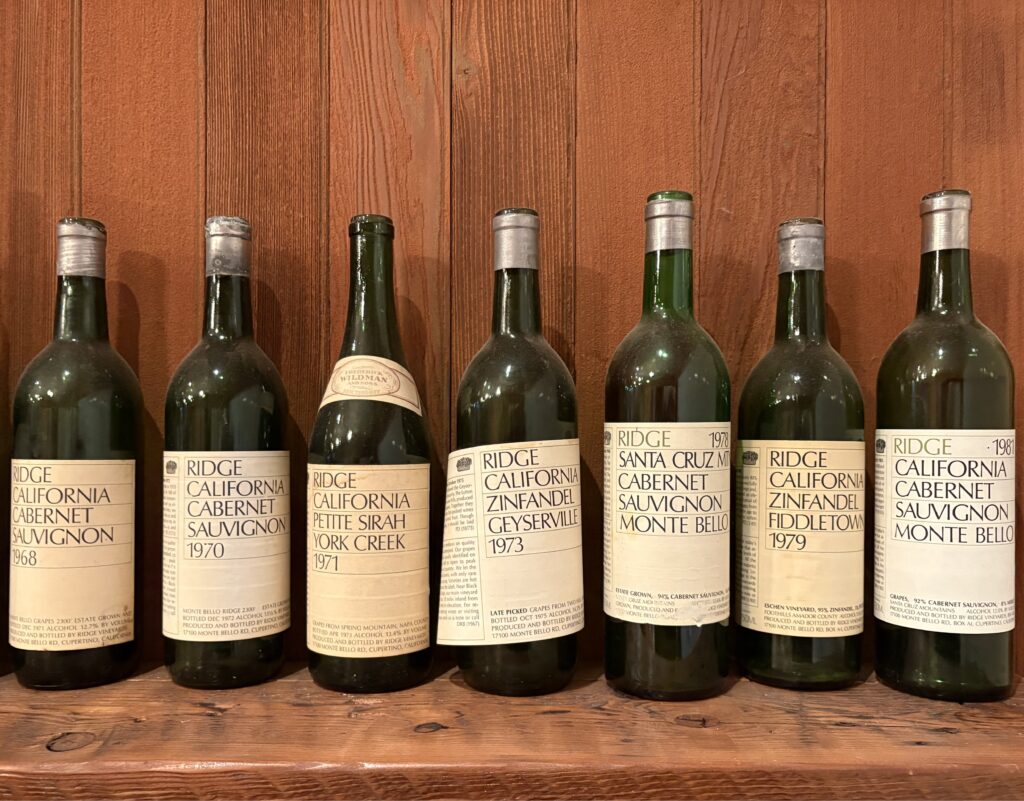
So, the name and recognition of some of the SCM wines is out there, and part of what has attracted that attention is its character. The SCM is, for lack of a better term, mountainous, and it is also coastal, with the entire west and south-facing side of the region lining the Pacific Coast. In fact, many people know the city of Santa Cruz as a world class surf town. This combination of high elevation and proximity to the ocean leads to extremely cool and long growing seasons; SCM may have some of the longest growing seasons in California, with harvest generally occurring around late September to October, and can sometimes get delayed till as late as Thanksgiving. Harvest season in warmer regions such as Napa Valley and Sonoma Valley generally occurs around August to September and late August to September, respectively.
The heart of the region is the mountain fruit that they produce. Lauren Lyall, Assistant Winemaker at Ridge Monte Bello, calls it SCM’s gift, since “…the cooler temperatures allow the fruit to ripen slowly and achieve full phenolic maturity (ripe skins, seeds, and tannins) without the sugar levels spiking… everything is ripe but the acidity is still intact, alcohol stays moderate, and the brix are in a reasonable range… You don’t have to choose between ripeness and freshness.”
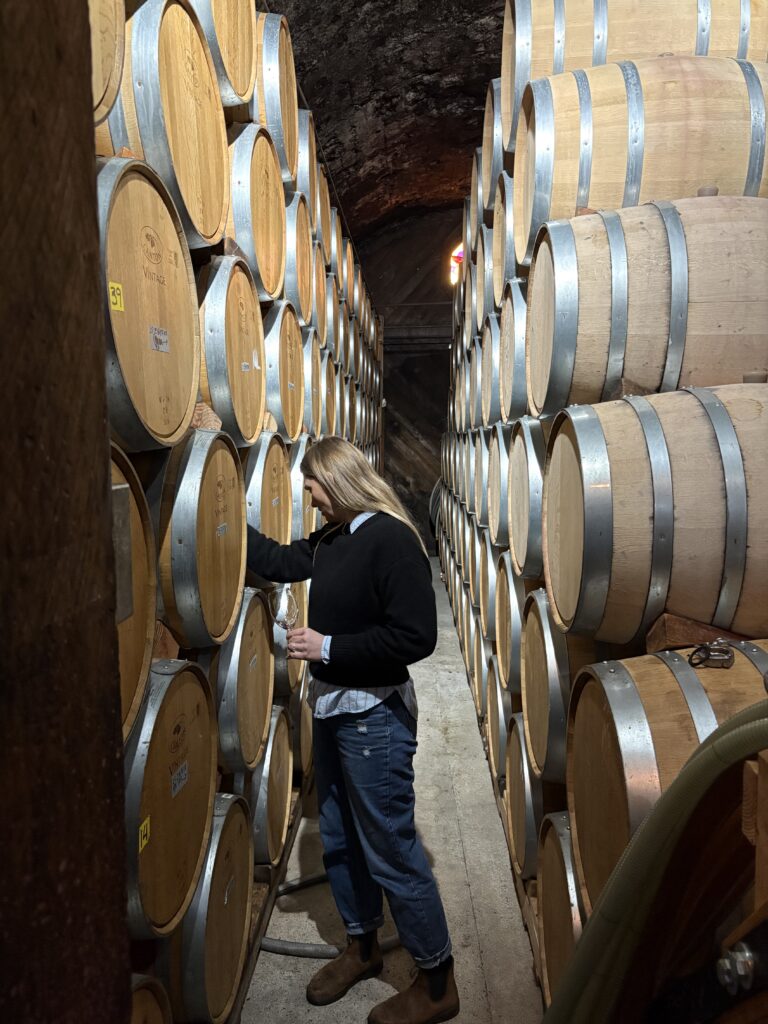
The early missionaries and settlers that began making wine in the SCM during the early 1800s may not have intended to seek out elevation, coastal influence, and moderate temperatures for viticulture. But the winemaking pioneers that followed in the 1850s eventually discovered how the region’s condition allowed a wide variety of grapes, each requiring different conditions, to flourish. Fuller bodied varietals such as Cabernet Sauvignon and Zinfandel can ripen despite the cooler climate and low diurnal temperature range due to the abundance of sunlight. The Burgundian varietals Chardonnay and Pinot Noir do not have to worry about over ripeness and losing acidity thanks to the moderating effect of the Pacific Ocean and the coastal fog. And the region is not limited to these flagship varietals either. Producers around the region have been making wines from other varietals such as Syrah, Aligote, Gamay, Grenache Blanc, Godello, and so much more.
So, where are these producers?
What we don’t know
The reality is that wineries of SCM, obstructed by the landscape of the mountain, are hard to locate. Only a small fraction of the large SCM region (~0.3%) is planted under vine, and these vineyards are widely dispersed across the entire region, mountainous as it can be. It is complicated further by only having around 75 or so wineries scattered in these different pockets, with some winemakers guessing that the actual number is even smaller, since some are just hobbyist experimentations.
This challenge of getting to the wineries is not limited to just visitors either. Nathan Kandler, General Manager and Winemaker of Thomas Fogarty Winery, describes that, “…the one remarkable thing about SCM is that it’s one of the few regions in the world where you can stand in a vineyard and not see another vineyard. Where are they? They’re out there, but hidden.”
Many wineries (some of which have been in operation for as long as, if not longer than, the SCM has been an official AVA) are forced to work in their corners in isolation, unable to collaborate with peers to compare winemaking or share best practices. These supposed limitations however, also create distinct sub-regional characteristics in their wine. Ken Swegles, founder of Rhizos Viticulture and co-founder of Madson Wines, describes that “…our individuality is shaped by the lack of a vineyard right next door… I can’t bounce ideas off my neighbors; I don’t have any.”
Thomas Fogarty Winery is one of these wineries, having been established in 1978. Located towards the north end on Skyline, it is within a wind gap at an elevation between 600m (2,000ft) to 730m (2,400ft) that overlooks Silicon Valley; you can literally see the buildings of Stanford University at the top of the winery. At the same time, they are also only 10 miles away from the Pacific Coast, creating an extremely windy condition very different from the gentler and sunnier parts of the mountain such as the Monte Bello estate. To Kandler, their interpretation of mountain fruit results in wine that contains “…a wildness, and if not carefully handled, can tip into something rugged. But with the right finessing, they have tremendous character and intensity… The challenge is integrating all of that… it’s a bit like riding a wild horse.”
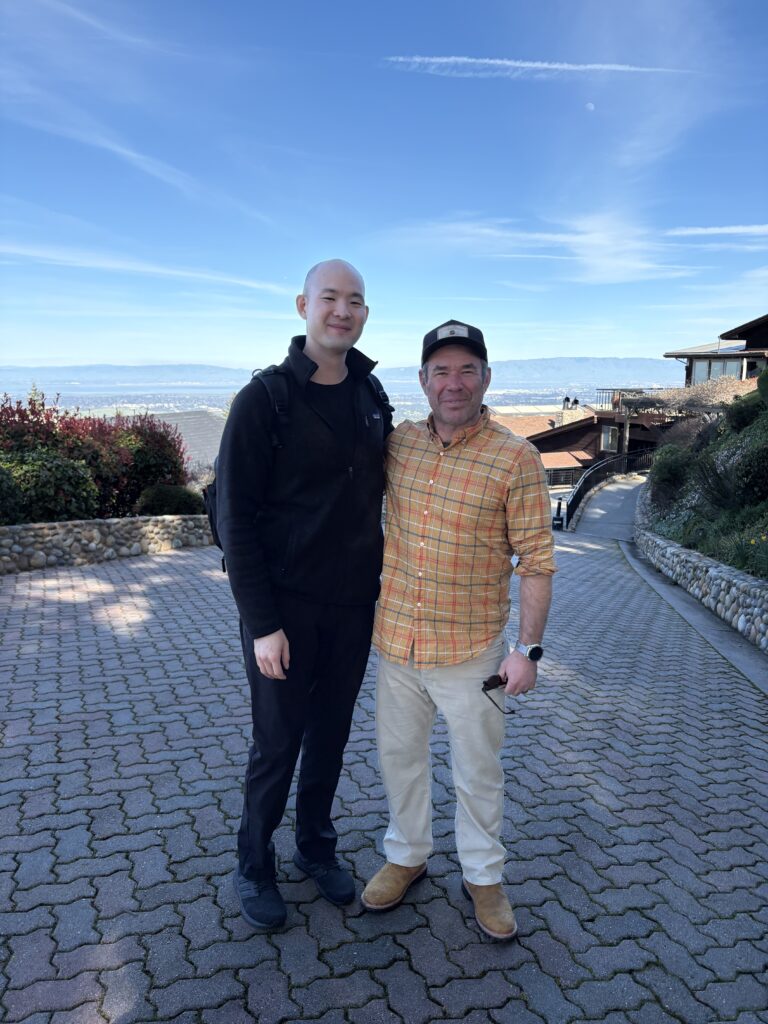
This isn’t somewhere to grow fuller bodied varieties, since the fruit can get pretty exaggerated. According to Kandler, the fruit “…contains high acidities, thick skins, low yields. For Chardonnay and Pinot Noir, that’s mostly a positive. For Cabernet it can be a real problem.”
On the other end of the spectrum, there is Kathryn Kennedy Winery, long considered to be one of SCM’s benchmark Cabernet Sauvignon producers alongside Ridge and Mount Eden. Located inland on the lower elevation and gentler suburban slopes of Saratoga, it was a tiny three-hectare (seven acre) estate established by Kathryn Kennedy in the early 1970s, focusing exclusively on Cabernet Sauvignon; today, the estate is reduced to only 0.4 hectare (one acre). Today, the winery is run by Kennedy’s son Marty Mathis, who has been the winemaker since 1985. Mathis is still crafting their elegant yet full bodied estate Cabernet Sauvignons that takes time to open up, but he also makes what he calls “frivolous” white wines from off the beaten path varietals (e.g. Godello, Sylvaner, Garganega, Friulano, Welschriesling, Gruner Veltliner, etc.) under his other label, M Mathis Winegrower.
Going southwest, much closer to the Pacific Coast on the Ben Lomond Mountain, there is Beauregard Vineyard. Established by the Beauregard family who settled in the region in 1889, they started the ranch in 1945, and produced their first commercial vintage in 2000. Ryan Beauregard has been the winemaker since 2002, but it was his father, Jim Beauregard, that is responsible for the planting or replanting most of their 25-hectare (62 acre) estate vines containing Chardonnay, Pinot Noir, Cabernet Sauvignon, and Zinfandel. Jim Beauregard was also the driving force behind Ben Lomond Mountain being recognized as a sub-AVA within SCM in 1987, believing that their unique pure sand soil creates wines with minerality that differs from the rest of SCM.
Then there’s the celebrated Santa Cruz Mountain Vineyard that was founded in 1975 by Ken Burnap. The winery used to be located at the historic Jarvis Brothers Vineyard (in Scotts Valley near Santa Cruz City) that was planted in 1886. Jeff Emery has been the proprietor and winemaker since 2004 (he worked for Burnap since 1979), and continues to make Pinot Noirs and Cabernet Sauvignons from some of the best vineyards in SCM. Emery also has a second label, Quinta Cruz, for wines made from Iberian varieties such as Albarino, Arinto, Tempranillo, and Graciano.
Being this big, it really isn’t a surprise to find such a wide range of wines coming from different pockets of SCM. One can even argue the need to further divide the different subregions within SCM to delineate their distinct characters.
But, is that something that helps SCM’s profile?
What’s next for SCM
It needs to be said that, despite the success for some of the wineries such as Ridge Vineyards, the SCM is nowhere near as developed as its more mature neighbours. Napa and Sonoma’s relatively open geography helps funnel visitors from one winery to the next, whereas SCM is a mountain that requires effort, skills behind the wheel, and good cellphone signal, in order to reach a destination. It lacks the network of hotels and restaurants to attract visitors to stay and dine at, and at a meager 250,000 cases of wine each vintage for the entire region (that’s around 3,000 to 5,000 cases per winery), most SCM wineries are also not able to distribute widely and gain familiarity with consumers; Caymus, every fine winemakers’ favorite whipping boy, produces over 200,000 cases of wine each year alone.
SCM is therefore still in the early stages as a wine region, more focused on attracting interest than building distinction. As Lyall sees it, “…SCM still doesn’t have widespread recognition, so if you put “Ben Lomond AVA” on a label, most people would have no idea what they’re looking at… We have historic producers here… but the region behind them is still underexplored. The more we get the SCM name in front of people in bold lettering on a recognizable label, the better.”
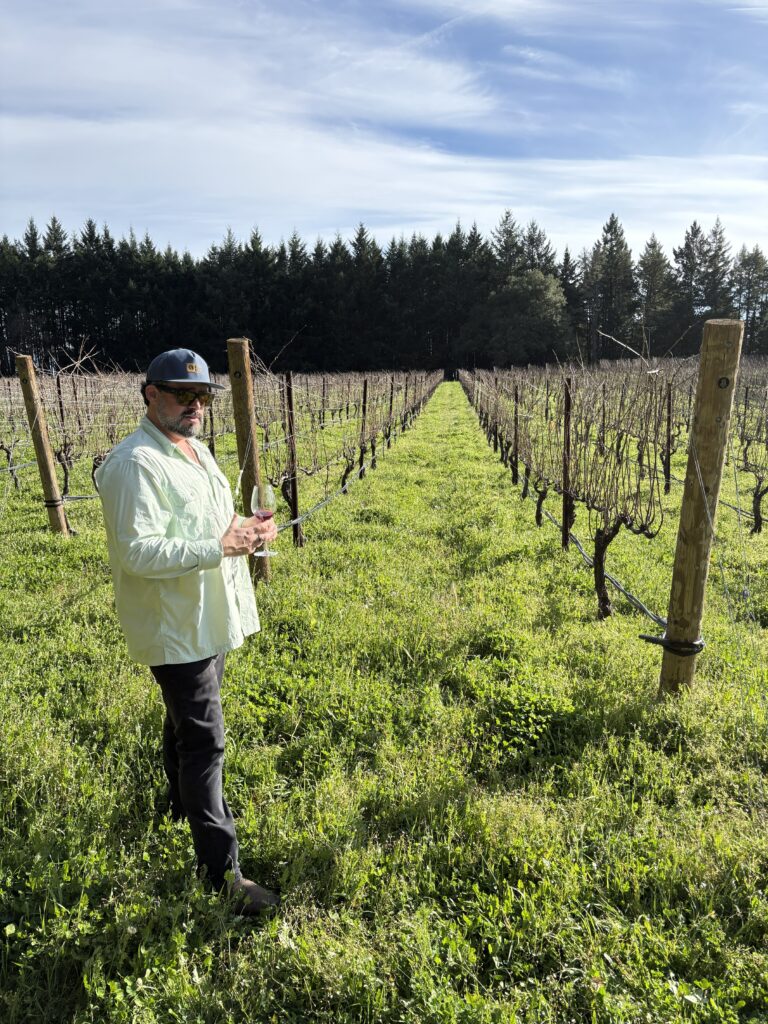
Despite these structural challenges, SCM continues to attract new winemakers to experiment with the different climates and growing conditions across the mountain range. Madson Wines is an example of such a newcomer. Established in 2018 by Cole Thomas, Swegles, and Abbey Christal, the winery sources fruit from vineyards across the SCM to create wine that showcase the different climates and growing conditions; Thomas and Swegles met while working for Emery at Santa Cruz Mountain Vineyard before starting Madson. Sante Arcangeli Family Wines, although not as young, was started in 2010 by John Benedetti, a SCM local with a background in the tech scene and beer brewing (he was also the founder of Sante Adairius Rustic Ales). Benedetti learnt how to make wine from Ryan Beauregard, focusing exclusively on single plot Chardonnays and Pinot Noirs (and one Syrah). SCM also attracts wineries from neighboring regions who are interested in the quality of the fruit, leading to single vineyard bottlings from producers such as Arnot-Roberts, Ceritas, Trail Marker, Lioco, and Leo Steen. Swegles is enthusiastic about SCM’s potential, “…A lot of people don’t know about it or understand [SCM] because the vineyards are in pockets and the acreage is small. But there’s so much enthusiasm from the people who do know it.”
Perhaps with the changing climate conditions in wine regions around the world, no less California, the advantages of SCM’s mountain viticulture can finally be recognized by wine lovers. While winemakers around the world battle against the challenges of heat stress or over ripeness (think Tuscany, Napa, Santorini, etc.), the wines of SCM continue to maintain lower alcohol levels with racy acidity and minerality. Yes, the mountain hides the wineries, but for those willing to navigate the roads and spotty signal, what’s tucked away in those trees is worth the effort.