Founded in the mid-19th century in the hill town of Montalcino, Biondi-Santi is considered the birthplace of Brunello di Montalcino. In 1888, the estate bottled the first Brunello, an ambitious, long-aged wine made entirely from Sangiovese at a time when most wines from the area were blends. More than a century later, the estate still follows that same philosophy: letting Sangiovese express the character of the place and its ability to age for decades.
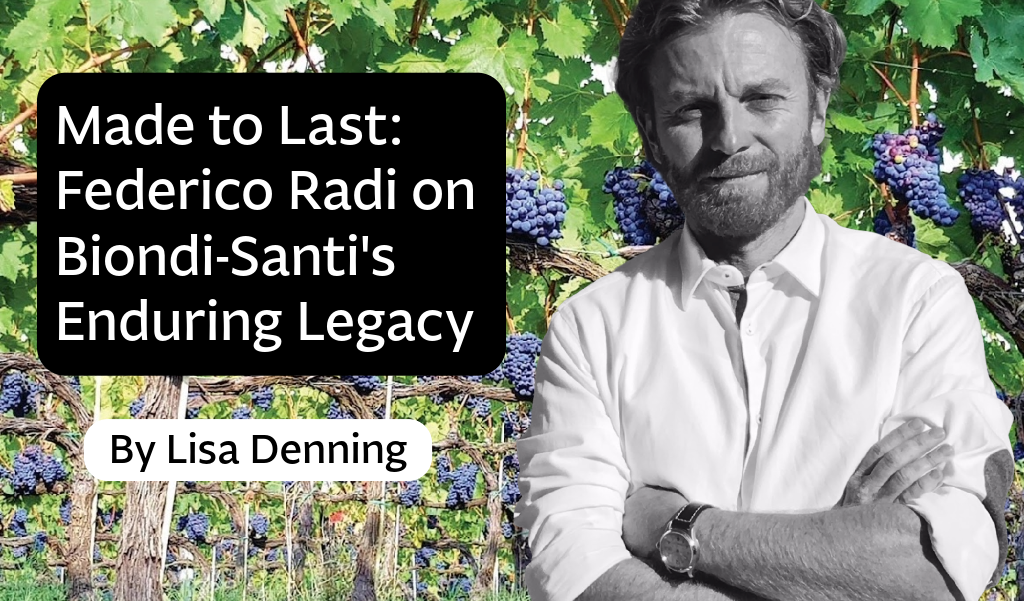
Federico Radi, Director of Viticulture and Winemaking, along with the rest of the Biondi-Santi team, is carrying the legacy forward, even though the estate is no longer family-owned. Radi, a Tuscan native who has spent his career working with Sangiovese, spoke with Lisa Denning at Grape Collective about the longevity of Brunello, the complex terroir of Biondi-Santi’s vineyards, and the estate’s commitment to preserving soil health and biodiversity. He also explains how careful adaptations, from massal selections of historic vines to new approaches in canopy management, are helping the winery remain resilient in the face of climate change.
Lisa Denning: Biondi-Santi has such a long, illustrious history. Can you tell us a little about that?
Federico Radi: It is a very beautiful history. Everything started more or less in the middle of the 19th century. We are in the southern part of Tuscany, in the inland. The place is named Montalcino. It’s a very little, beautiful classic Tuscan town. And in that place, the Biondi-Santi family began growing Sangiovese, our typical, autochthonous variety.
It was pretty unusual at the time to grow only Sangiovese. Because in the same moment, not very far from Montalcino, another important man in terms of viticulture—his name was Bettino Ricasoli—decided the recipe of Chianti Classico, blending different varieties: Sangiovese with other white and red autochthonous varieties like Malvasia, Canaiolo, and Colorina. My theory has always been that he did it to mitigate Sangiovese’s rusticity. In its early stages, Sangiovese is a little bit rustic with vibrant acidity and sometimes strong tannins. So that people could enjoy wine daily, he decided to craft a blend specifically for Sangiovese.
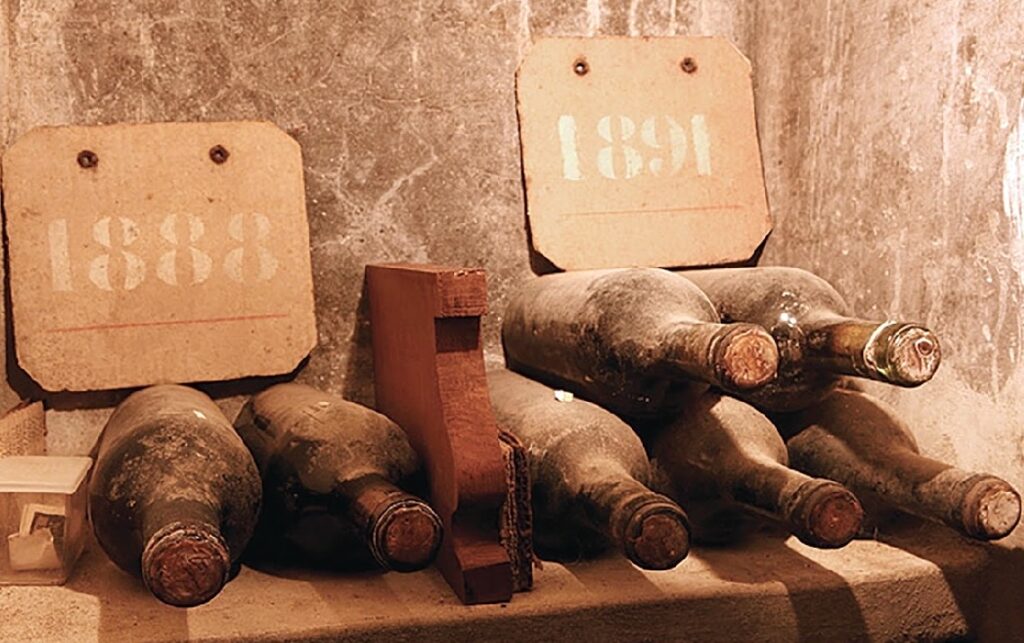
Instead, in Montalcino, the family decided to grow Sangiovese and to let it express its potential over time. They let it mature for a long time in big casks, crafting a wine that would age well. In our cellar, we still have bottles that come from 1888, 1891, 1925, 1945. It’s all part of the history, and when you hold a bottle of 1888 up to the light, it still has color and is still alive. Sangiovese has this natural characteristic to be very resilient over time. And so you can imagine how deeply this family is linked to that place, because it’s the birthplace of Brunello with the first bottling in 1888.
Today, the Biondi-Santi family no longer owns the estate because, in 2017, a French businessman acquired a majority stake. Now we are running it with the same philosophy and style we inherited from the family. This is so crucial for us. Our main goal is always to, obviously, craft amazing wines, fully respectful of the family name. This is our big pillar, and we must be very strong, especially in the face of climate change.
Can you tell me a little about your background, how you got into wine, and where you were before Biondi-Santi?
It is already, I would say, 25 years that I have been working in this beautiful world of wine. I always stayed in Tuscany to work, because I am passionate about the Sangiovese grape variety. I did my university studies and became an agricultural engineer in the early 2000s. Then I started working immediately for some small estates around Florence, in Chianti Classico, the black rooster wine. Then I moved to an important estate, Isole e Olena, with Paolo De Marchi. He was, and still is, one of the most important and skillful enologists that we have in Italy. After that beautiful three-year experience, I moved to another important family in wine, the Mazzei Marchesi family. I was estate director on one of their estates in the Maremma countryside, in Morellino di Scansano. Finally, in 2017, after a very long selection process, the EPI Group decided to hire me, and this has been a new journey. For a Tuscan-born like me—I grew up not very far from Montalcino, less than one hour by car—it is something I am really proud of.
How does the Sangiovese grown in Montalcino differ from other parts of Tuscany?
It’s a beautiful question because, in a way, Sangiovese has huge potential. It is very generous in terms of its DNA. Imagine that we have more than 130 registered clones, and you can buy up to 150 different clones. There is a huge variability. In Montalcino, Sangiovese expresses an amazing balance between acidity and tannins. Everything becomes more gentle, everything becomes more intense, and with an amazing texture and the amazing touch of sapidity that you get in the Brunello di Montalcino that you cannot find anywhere else.
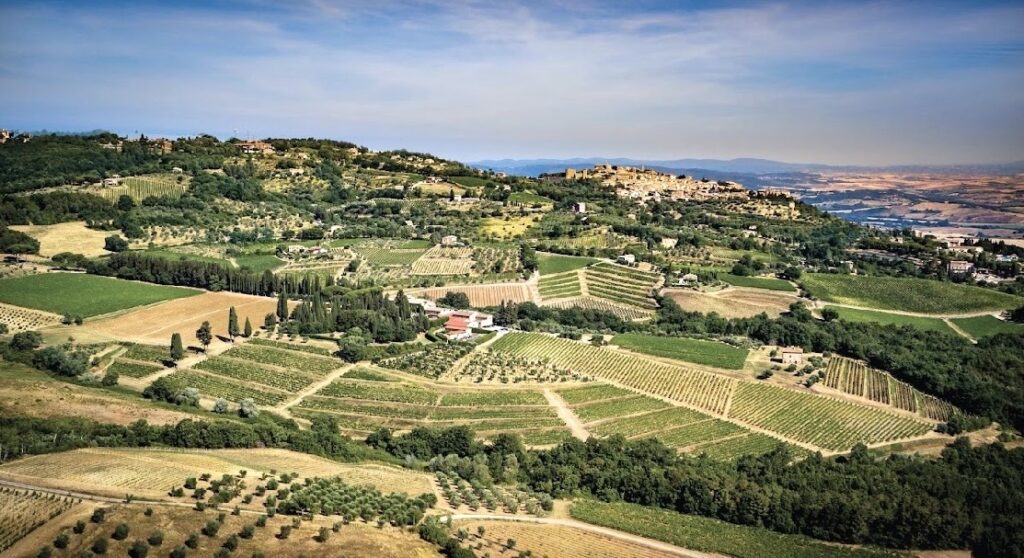
Obviously, it is not the only place where Sangiovese grows well. Chianti Classico is another amazing spot to grow Sangiovese. But it is different. We are inland, but the sea is not far away, so we benefit from good climatic conditions. The appellation is also very small, less than 30,000 hectares, and of that, only 15% is planted with vineyards. The rest is forest, meadows, and olive groves. It’s a perfectly natural condition, and we have to preserve that. We must be very attentive not only to our vineyards but also to everything that surrounds us.
Can you tell me about the terroir of your vineyards?
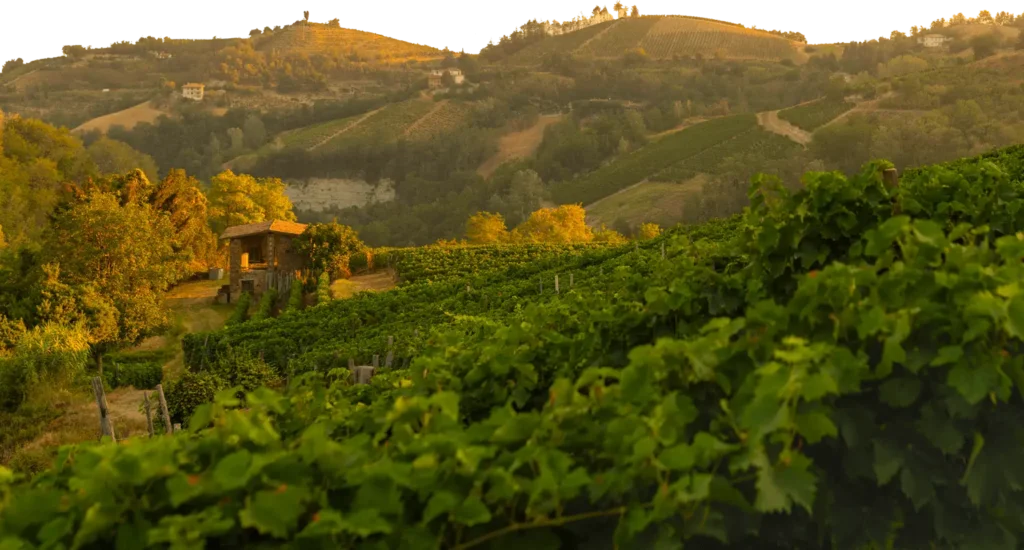
Well, how much time do we have here [laughs]? It’s crazy how heterogeneous it is. We are a small estate, less than 40 hectares of vineyard, but not only in one spot. We are split across five different sites on the northeast slope of the hill, at different altitudes.
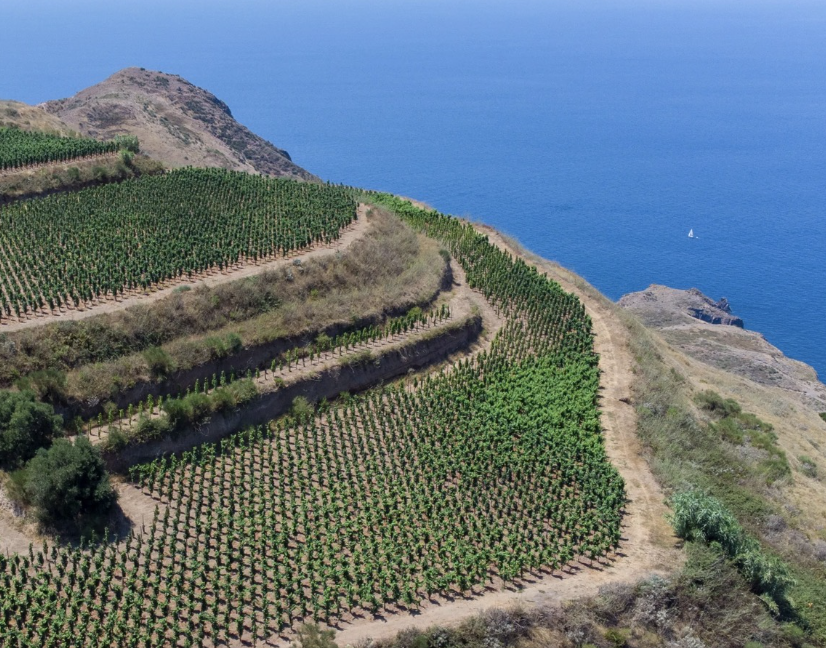
The lower part is around 250 meters, where the soil is more clay, and you get a rounder, richer, more fruity Sangiovese. Then the medium part of the hill, always on the northeast slope, has clay, shale, or conglomerates, and sometimes some beautiful spots with galestro, a type of schistous, rocky soil, a very heterogeneous point. Then the upper part is 500 meters above sea level, where the soil becomes even more rocky, and the slopes are very steep. And the word “Greppo,” as in our name, Tenuta di Greppo, and in the name of our Greppo plot, actually means steep slope.
Every plot delivers different characteristics to the same grape. So we are full of ingredients by the end of the harvest. We did a very in-depth study of the soils and we keep every single plot separate. We ferment and age them separately, and then it is simply a question of being patient and seeing what happens during the aging phase. There is always something new to discover, and it never gets boring.
You make three different wines each year. Can you tell us about each one?
We treat all the grapes so they can express their best potential. There is no “little wine” or “second wine.” Our youngest wine is the Rosso di Montalcino, which is a DOC. It’s important because it brings with it the name of the village. The word Montalcino is in all of our appellations, which is important because it’s the name of our land, our village. The Rosso is also the perfect gateway for a new generation to enter our world. The Sangiovese must be fruity, with the right juiciness, crunchy, but with a touch of delicacy. It must not be aggressive and have a beautiful length. So you have a very refreshing sip. It’s a medium to low-structured wine, with medium to low alcohol content, always dancing between 13 and 14% ABV. But it’s the expression of a young Sangiovese, and you can pair it with many different foods, even experimenting with exotic cuisine, and it works well. It is a very dynamic Sangiovese.
Then we have our flagship wine, which is Brunello di Montalcino. There, we express the classic part of our wine. It’s a wine with a huge spectrum of aromas, with the right intensity, and different feelings depending on the vintage. Like ’19 is more balsamic and /20 is more floral, but we must keep a huge spectrum of aromas. The sip is fresh and more structured, with reactive tannins compared to the Rosso di Montalcino, which is always a little softer and more delicate.
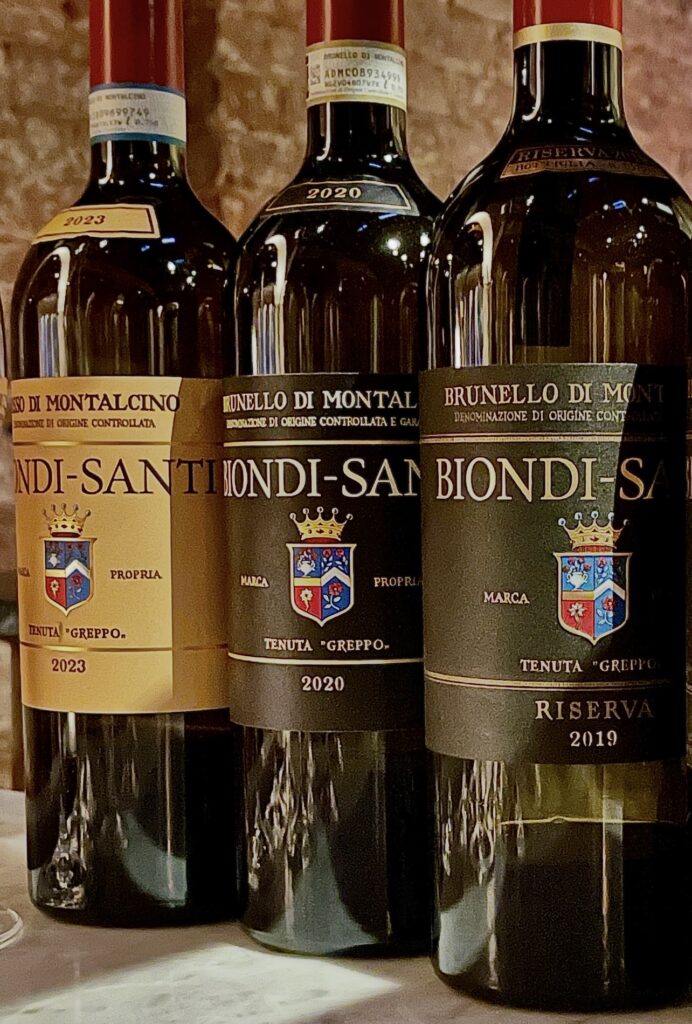
And finally, the most important and expensive wine we produce is the Brunello di Montalcino Riserva. Here, there are no excuses. You must craft a wine that will last a long time, but also one that is joyful when you release it. In the next days, we are releasing the 2019, which was an amazing vintage, and it’s a Brunello lifted up in every sense.
How do you keep the Biondi-Santi legacy alive while preparing for the future, particularly in the face of climate change?
That’s an amazing question. There are several ways we do that. We started from our main asset, and that is not the wine we have inherited, but our soils. The soil is the most important thing we have to preserve. Not only Biondi-Santi, but producers all around the world have had the same problem: we have spoiled our soils, so we must regenerate them. We are increasing organic matter, keeping the soil covered, and creating good life inside it. The soil biome — 90% of which is still unknown to science. The life of the soil contains so many connections between the root systems of the vines and the microbial world. We must increase biodiversity and the life within.
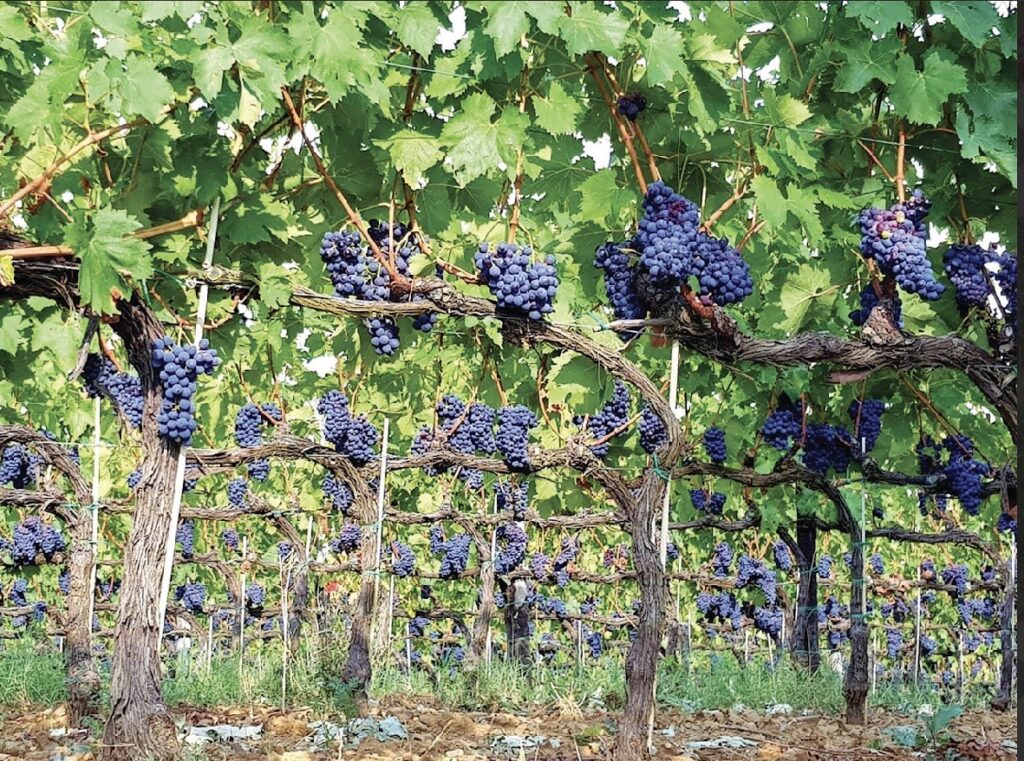
We do this in different ways. For example, we create our own compost here on the estate. Then, another way to preserve the heritage and the legacy is to do a massal selection of our very old vines we have in an amazing plot called Vigneto Storico. That vineyard was planted in the 1930s , so pretty old vines. We selected different mother vines, collect cuttings, and create new baby vines for our vineyards. This is DNA perfectly integrated into our soil and climatic conditions — 100 years of evolution of the vine.
With the climate chaos, because it is a chaos, everything is changing very fast — we are also changing our mindset in terms of canopy management. We are now managing volume, not just surface. We are moving away from the classic VSP, the vertical shoot positioning, where shoots grow straight up, like little soldiers one after the other. Instead, we want to create a Y-shaped canopy so the branches create more protection from the danger of the very heavy Tuscan sun during the summer. In this way, we keep a good and natural acidity and a good alcohol content, with the right aeration. We need dynamism in our minds to be more resilient against the challenges of climate chaos.
Are you doing anything differently in the cellar?
No. We are very traditional in the winemaking. We keep every parcel separate. Fermentation starts using our own indigenous yeasts, so there are no dry or selected commercial yeasts. Every single cask, every single parcel, has its own cocktail of native yeasts. So it’s a crazy job during harvest, but it is the best way to fully express each parcel’s potential.
Another important point is that in our cellar, we must stay in contact with the wine. Punching down and pumping over are done when we think it is the right moment, manually. We use pumps, but the punching down is done by hand because this way you can perceive the aromas that rise from and beneath the must cap. You understand better what is happening. If there are any reduction notes, you can adjust them. Being in contact and being sensitive is the best certification we can give our consumers. The only way is to keep the contact between the human being and the wine.
Biondi-Santi is now owned by a French businessman. In Montalcino, similar to what’s happening in Barolo, there has been a lot of foreign investment. Are you seeing any tension between the locals and the newcomers?
I will be very frank. In the beginning, yes, there was some tension. But Christopher Descours, our owner, made a very good decision immediately: to build a strong team that is all Italian. In this way, and with all the projects we are running, trying to preserve the style, people understood immediately that we are there to increase the perception not only of our brand, but of the entire appellation. It is a brand that is strongly rooted here, and we feel responsible for the appellation. So it is important to deliver this message clearly: we are not here to change something, but to evolve in a good way.
Note: Radi’s answers have been lightly edited for clarity and flow.
For more on Biondi-Santi, see Lisa Denning’s previous coverage: A New Team, A Timeless Elegance: Biondi-Santi’s Latest Release