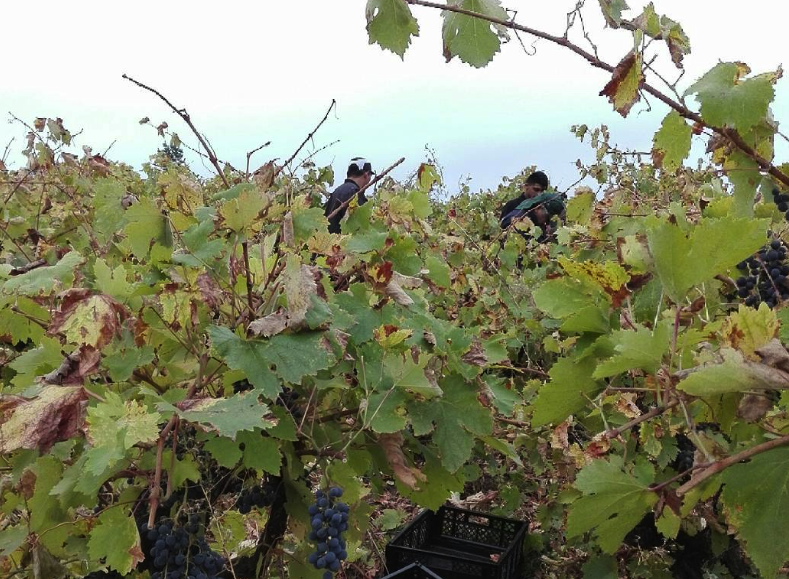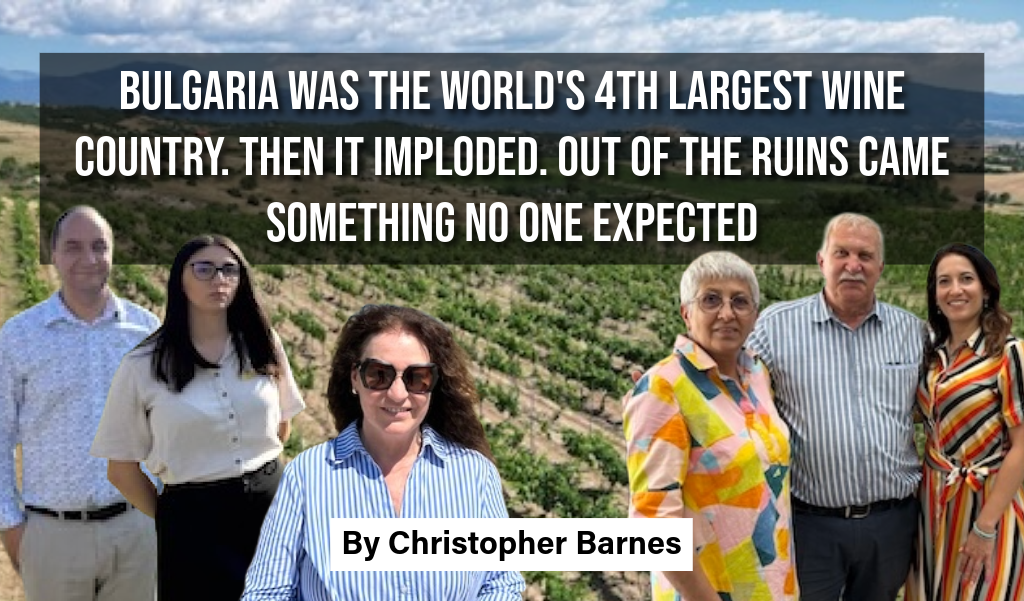
In the 1980s, Bulgaria was a wine superpower. The fourth-largest producer on the planet, its state-run wineries churned out rivers of Cabernet Sauvignon and Merlot that flowed primarily to the Soviet Union and beyond. Then, almost overnight, it all disappeared.
“From number four globally, Bulgaria is now number 30 or 31,” says Nikola Zikatanov, founder of Villa Melnik, one of Bulgaria’s premier wineries. The numbers are staggering: from producing millions of hectoliters annually to barely 700,000 today—a decline of more than 85%. Vineyard acreage collapsed to just 60,000. The industry didn’t just shrink; it nearly ceased to exist.
But something remarkable happened in those ruins. Something no one—least of all Bulgaria’s communist planners—could have predicted. The destruction of the old system created space for a revolution that would return Bulgarian wine to its ancient roots and establish it as one of Europe’s most exciting emerging wine regions.
The Communist Wine Machine
To understand what was lost—and what was found—you have to understand what Bulgaria became under communism. Starting in the 1950s, the socialist government systematically transformed Bulgarian wine from a traditional, family-based craft into an industrial export machine.
“During the Communist period, much more important was to produce big quantities than good quality, because Bulgaria was exporting to the Soviet Union and many other countries,” Nikola explains. “The small private vineyards were destroyed and big wineries popped up.”
The scale was extraordinary. “During the Communist times, Bulgaria grew to be the fourth largest producer of wine in the world,” confirms Dilyana Vassileva, co-owner at Aya Estate. “The wine industry was mainly focused on quantity and not that much on quality because there was demand and everything was state-owned.”
Yavor Kirov, the general manager of Zornitza Family Estate Relais & Châteaux, who lived through the transition, remembers the system: “During the Communist period, the small private vineyards were destroyed and big wineries popped up.” The focus was relentless: “Bulgaria was exporting to the Soviet Union and many other countries. Great Britain was one of the major markets for Bulgarian wine consumption.”
Nikola provides the structural details: “In communist times, there were 14 companies which were producing and just one government body which was organizing foreign trade.” The result was wines like “Sofia Wine”—generic white and red blends mixed from all 14 production facilities with no geographical designation, no terroir expression, no individual character.
To meet export quotas, the state systematically replanted Bulgarian vineyards. Out went indigenous varieties with names like Mavrud and Melnik that had been cultivated for thousands of years. In went international varieties—Cabernet Sauvignon, Merlot, Chardonnay—chosen for their global recognition and mass-production potential.
It worked, at least by communist measures. By the 1980s, Bulgaria was exporting 90% of its wine production. The industry employed thousands. Foreign currency flowed into state coffers. On paper, Bulgarian wine was a socialist success story.
The Implosion
Then the Berlin Wall fell, and everything collapsed with terrifying speed.
“After the political changes in 1989, when the communist regime was replaced by Western democratic political governance, this transformation from socialism to capitalism cannot be balanced in a fair way to everybody,” Nikola recalls. “Unfortunately, due to not very well-measured political decisions after the political transformation, the agricultural sector was practically destroyed.”
The privatization was chaotic. “The land and vineyards were returned to the previous owners from the 1950s and 1960s when the communists collectivized everything,” Nikola explains, “but the people who were working on that land in the 1950s were already gone. Their children were all over the country, all over the globe already. They did not know how to cultivate the land and did not want to work on vineyards.”
Dilyana Vassileva witnessed the devastation: “After the end of communism, everything in the country collapsed because before that, everything was state-owned. The vineyards were in big plots and parcels, and then everything was given back to the previous owners, which 40 years later were not one owner, but several more. Some of the people had emigrated. So it was quite a difficult time for the vineyards and wine industry, and it shrank significantly.”
The Soviet market disappeared overnight. The 14 massive production facilities sat idle or were dismantled. Vineyards were abandoned, overgrown, eventually destroyed. An entire generation of viticulture knowledge—the techniques for cultivating indigenous varieties, the understanding of local terroir—was on the verge of being lost forever.
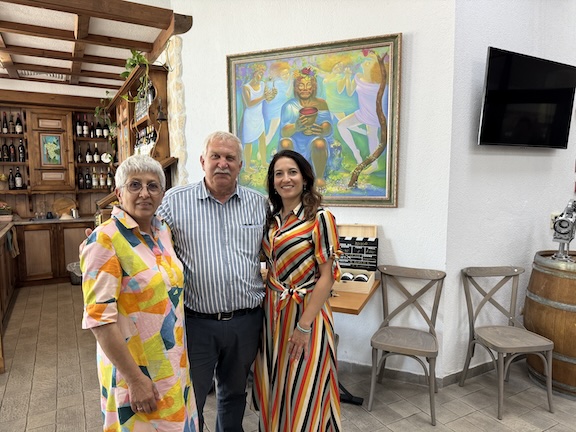
“When Bulgaria was preparing to enter the European Union in the early 2000s,” Nikola notes, “Bulgarian negotiators agreed that Bulgaria would enter with 150,000 hectares of vineyards. Unfortunately, now about 18 years after Bulgaria’s admittance to the European Union, the area planted to vineyards in Bulgaria is only 60,000 hectares, which is less than half of the negotiated area.”
The decline was total. From the world’s 4th largest wine producer to somewhere around 30th. Production dropped by 85%. The infrastructure was gone. The markets were gone. The knowledge was evaporating.
For anyone looking at Bulgarian wine in the mid-1990s, the story was over.
Out of the Ruins: The Unexpected Revolution
But in that total destruction lay an opportunity that would have been impossible under the old system. Without the state dictating what to plant, without export quotas demanding international varieties, without the pressure to produce quantity over quality—a new generation could ask a radical question:
What if we went back to the beginning?
“In the early 2000s, it started slowly reviving with the first new plantations,” Dilyana explains. But something was different this time: “Now it’s a different story. People and times change. We are not focusing on mass production, on producing easy wines. We are looking back to our roots, trying to understand who we are and what our identity is through our local, our autochthonous, our indigenous varieties.”
This is what no one expected: that the collapse of the export machine would create space for a return to authenticity, to terroir, to grapes that grow nowhere else on Earth.
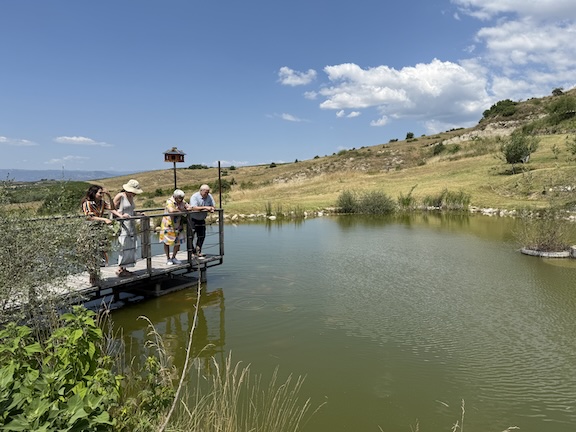
Militza Zikatanova, who now runs Villa Melnik with her family, tells the story of her father’s radical decision: “My parents started planting the vineyards in 2004. Back then, they decided to plant 50% international grapes and 50% indigenous grapes. When they started planting the Broadleaf Melnik, their neighbors were shocked. They said, ‘Don’t plant that. You should plant Merlot or Cabernet because this is what sells.'”
Her father’s response captured the spirit of the new movement: “My father said, ‘No, I’m local and I’m going to plant Broadleaf Melnik and I’m going to make it famous worldwide.'”
The neighbors thought he was crazy. The communist-era wisdom said international varieties were the future. Why would anyone plant grapes that most of the world had never heard of?
But Nikola Zikatanov understood something his neighbors didn’t: “In the wine business, people buy from people. You have to be authentic to your roots, to your land, to your climate, to your culture. You have to be passionate about what you do.”
The vindication came quickly. “Nowadays, we see that he was right,” Militza says. “We’ve received many medals during international competitions for the local grapes. This is exactly what our customers want when they come and visit our winery—they want to try something unique in terms of flavor profiles.”
Discovering What Was Always There
The indigenous grape varieties that the communist system had nearly eradicated turned out to be extraordinary. Many of them grow nowhere else on Earth, shaped by millennia of adaptation to Bulgarian terroir.
Take Broadleaf Melnik, the signature grape of the Melnik region in southwestern Bulgaria. “The Broadleaf Melnik vine grows only in the Melnik region and nowhere else in the world,” Militza explains. “There have been trials to plant it in other regions, but they have failed.”
The grape produces wines unlike anything in the global market. “It has a very elegant color—more brick-like, lightly tinted, similar to Pinot Noir in this sense,” Militza describes. “It has very wild aromas—not garden cultivated cherries, but wild sour cherries. Then there’s earth, leaves, some truffle, and some Mediterranean herbs and spices. It’s a very unique flavor profile.”
Dilyana Vassileva, trained in modern oenology, confirms the quality: “Some expert wine tasters say that it reminds them of Nebbiolo and Pinot Noir. It is quite elegant, and it has very delicate red fruits in the aroma and taste. But also it has some tobacco flavors and leaves, and it has quite high potential for aging due to the good tannin structure.”
Then there’s Mavrud, another indigenous variety nearly lost during the communist era. “Mavrud is typical for Bulgaria,” Nikola explains. “It’s a red grape that produces deep, robust wines with aging potential.”
Yavor Kirov, general manager of Zornitza Estate, describes Broadleaf Melnik from a consumer perspective: “It’s not very tannic, not very alcoholic, so you could start drinking Broadleaf Melnik at 11 o’clock in the morning and you could drink it the whole day. So that’s why this is Churchill’s favorite. This was the first vine that the Crusaders, according to the legend, stole from the Melnik region and they brought to France and they created Pinot Noir.”
Nadezhda Dobrevska, Assistant Winemaker at Zornitza Family Estate Relais & Châteaux, provides technical comparison: “Broadleaf Melnik has really thin skin, so as wine we don’t have so much color, we don’t have so much tannins. We just have an easygoing wine.”
Even some communist-era experiments are being reconsidered. Nikola explains: “During the socialist regime, Bulgarian agronomists were creating crossings based on the Broadleaf Melnik because they wanted to improve on what they thought were its disadvantages.” The result was an entire “family” of Melnik grapes: “We call the Broadleaf Melnik ‘the mother,’ and all of the newer varieties ‘its children.’ The entire family comprises Broadleaf Melnik, Melnik 55, Ruen, Melnik 1300 Jubilee, Melnik 82, Melnik Ruby, and one white child called Sandanski Misket.”
Winemakers today are discovering that these socialist-era crossings, created for practical reasons, actually have merit when approached with a quality-first mindset.
A Quality Revolution
The transformation extends beyond grape varieties to every aspect of winemaking. Where the communist system prioritized volume and efficiency, the new Bulgarian wine culture emphasizes sustainability, minimal intervention, and expression of place.
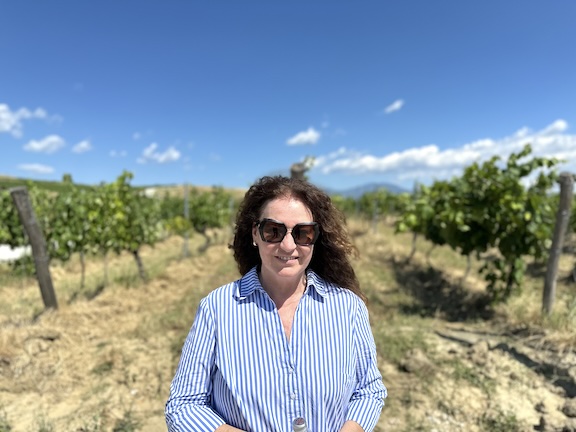
“Here at Aya, we grow our vineyards organically,” Dilyana explains. “We are certified since last year, 2024. And the same principles we try to implement in the winemaking process. That means minimal intervention. We use wild yeast, we ferment spontaneously, but we do control the temperature and we do control how long the process should go and how fast.”
She describes their biodynamic practices: “We do practice biodynamic principles in the vineyard. We apply manure—that’s how we put nutrition in the vineyards, and we do work with biodynamic preparations.”
Even barrel choices reflect this commitment to authenticity. Militza Zikatanova explains Villa Melnik’s philosophy: “In our winery we use all Bulgarian suppliers. We are very fortunate that we have very high quality material for oak barrels in Bulgaria. The oak trees are very high up in the mountains. They are wild oak trees that grow in forests where the conditions are very harsh and cold. So they grow very slowly, which means the material is high quality and the pores are very close to each other.”
The contrast with French oak is deliberate: “Oak trees in France grow in valleys and are cultivated. The material is of slightly inferior quality because it grows faster and the pores are wider, so they release more oxygen. We believe that our oak is very high quality and it’s in perfect balance with Bulgarian indigenous grapes. When we make wine from a Bulgarian variety, we always age it in Bulgarian oak. When we make wine from international varieties, we always use either French or American oak.”
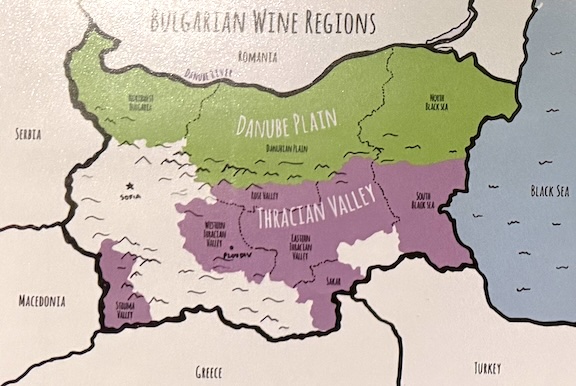
The numbers tell the story of transformation. “In communist times, there were 14 companies,” Nikola recalls. Now? “Currently in Bulgaria we have more than 280 producers who want to have a specific designation of their region, of their village, of their plot of land.”
The scale has changed fundamentally: “The difference between production of 100 million bottles from big scale and production of 10,000 bottles from one plot is absolutely different. Nowadays we are going forward to show the origin, the source of the grapes, the winemaker, the healthy product.”
The Long Shadow of the Past
Despite the quality revolution, Bulgarian winemakers still struggle against the reputation created by communist-era mass production. The image problem is real and persistent.
“The fact that Bulgaria was a large mass producer of wine actually influences quite a lot the image that we have now,” Dilyana admits. “It’s quite difficult to change this perception that especially foreign countries have for Bulgaria and the wines that we produce.”
The challenge extends beyond simple marketing. “Maybe ten years ago, it was almost impossible to say that Bulgaria and quality wine could be in one sentence,” she says. The association of Bulgarian wine with cheap, mass-produced plonk runs deep in international markets.
But the tide is turning, slowly. “Now it’s not the case, and I think we could face a good future,” Dilyana continues. The evidence accumulates: international competition medals, growing export markets, wine tourists traveling to Bulgaria specifically to taste indigenous varieties.
Villa Melnik’s recognition is particularly significant. The winery now ranks among the World’s Best Vineyards—an achievement that would have seemed impossible during the communist era or the chaotic 1990s.
“Nowadays, people come and visit us every single day,” Militza reports. “About 30% of our production is exported, and when we work with buyers and importers, they look for indigenous varieties because that’s their unique selling point. Everybody has Merlot and Cabernet, but not everybody has Mavrud or Broadleaf Melnik.”
Ancient Roots, Modern Expression
What makes the Bulgarian wine revolution so compelling is that it isn’t really new at all. The indigenous varieties being “discovered” by international wine lovers have been growing in these soils for millennia.
“Winemaking in Bulgaria is quite ancient,” Dilyana notes. “Maybe not as ancient as in Georgia—they claim to have it for the past 8,000 years—but here it’s like 4,000 years since the time of the Thracians.”
Nikola Zikatanov connects contemporary winemaking to this deep history: “According to Thracian beliefs, wine was a drink given by the gods to people in order to establish communication with them. They believed that the person who gets drunk first in a party is the one whom the gods believe is the dearest and smartest, and through this person, the gods would communicate with the people.”
The Thracians scandalized their Greek and Roman contemporaries by drinking wine undiluted—a practice that reflected their fundamental belief in wine’s sacred power. “There are some evidences from Greek authors that they admired the Thracians with their wine because they didn’t drink it diluted with water, which they considered very special,” Dilyana explains.
Even through five centuries of Ottoman rule, Bulgarians maintained their wine culture. “During the Ottoman Empire, wine production was not so well accepted,” says Yavor Kirov. “Everybody was producing wine behind the fence of his house somehow. It continued through the Communist period till our days. Almost every second family produces its own wine.”
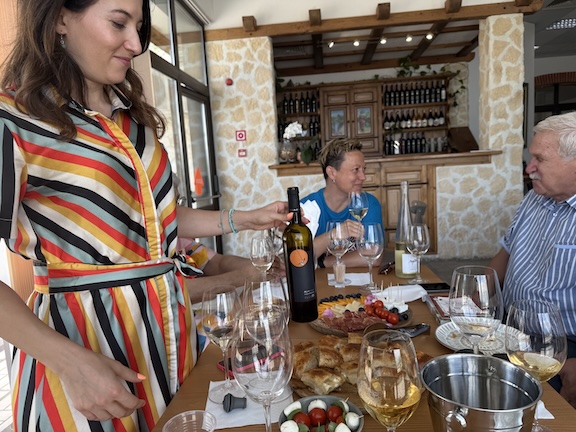
This domestic wine tradition—families maintaining small vineyards for home consumption—survived empires, ideologies, and economic systems. It’s what kept indigenous varieties alive even when state planners were uprooting them from commercial vineyards
“Wine is deeply rooted in Bulgarian culture,” Militza observes, “and this is evident by the fact that every single family in the Melnik region has a small plot of vineyards and makes some wine for their home consumption. This dates back many generations.”
Yavor Kirov confirms this cultural depth: “If you ask somebody to sell his small vineyard, most probably the reply will be no, because this was the vineyard of his grandfather and his great-grandfather. So this is one of the most precious activities in the family.”
Women Leading the Revolution
One unexpected aspect of Bulgaria’s wine renaissance is the prominence of women in professional winemaking roles. Bulgaria may be the only European country where women make up roughly half or more of all professional oenologists.
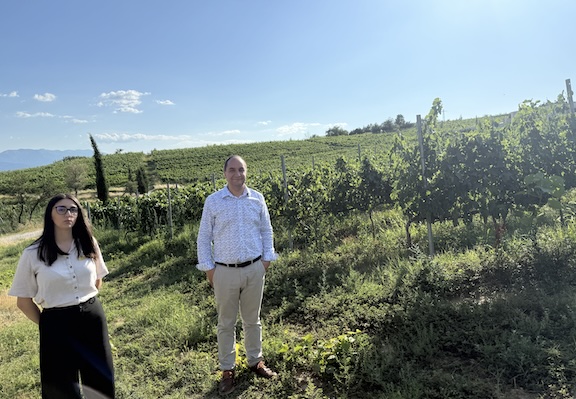
Nadezhda Dobrevska, Assistant Winemaker at Zornitza Family Estate Relais & Châteaux, addresses this directly: “In Bulgaria, we have a tendency that 50 or more percent—even more—the winemakers are women, which is really strange because the work is heavy, it’s not easy to do, but it’s really nice. If you compare it to France or Italy or other regions, I think it says a lot about the progressive nature of the wine industry in Bulgaria that half of the winemakers are women.”
This gender balance traces back partly to the communist era, which—despite its many flaws—promoted women in technical and scientific fields. But it also reflects something deeper about contemporary Bulgarian wine culture: a willingness to value competence over tradition, to embrace change while respecting heritage.
The women shaping Bulgaria’s wine future bring both technical expertise and emotional connection to the work. Nadezhda’s passion is evident: “Winemaking is not just something that we decided to do someday, but we did it years, years ago. So it’s part of our living, not just something to do as a hobby.”
The Future Vintage
As Bulgaria continues rebuilding its wine industry, the vision is deliberately different from what came before. Quality over quantity. Authenticity over mass appeal. Terroir expression over homogenization.
“What we can say about the future always has two parts,” Nikola reflects. “One is what we dream of, and the other is what we really expect to happen. In my dreams, wine production in Bulgaria should be moving toward a product which is honest for the consumer. If we have honest product and follow the taste of the specific moments and times, then this product will have market and be successful.”
The scale has fundamentally changed: “Smaller quantities, but high quality wines which are distributed to the best locations all over the world.”
Militza envisions wine tourism as crucial: “My hopes for the future of Bulgarian wine is that we develop as a wine tourism destination because Bulgaria has beautiful nature, history, archaeology, culture, food and wine. In terms of wine, I hope that Bulgaria will continue to produce extremely high quality wines which earn international recognition—wines that combine indigenous grape varieties and also some international grapes.”
Dilyana’s hope is both personal and national: “I hope that in ten years time, the bad image of Bulgaria would be erased and we will be a symbol of quality wine made from predominantly indigenous grape varieties that we have in abundance. I admire Italy and Spain that they never lost their identity, and I hope that Bulgaria and Bulgarian wine will find its identity as well.”
Yavor Kirov sees convergence between wine and tourism: “More and more high profile guests are visiting Bulgaria, looking for specific experiences. And wine is exactly this type of experience. So tourism and wine, they go together very well. The future of Bulgaria with high level of experiences could be wine tourism with good quality wine and amazing places like our estate hosting guests from abroad.”
What No One Expected
The story of Bulgarian wine is ultimately a story about what happens when systems collapse and people are forced to start over. The communist planners who replanted Bulgaria’s vineyards with international varieties intended to create an efficient, profitable, globally competitive industry. They succeeded—until the system that supported it disappeared.

But in destroying the old monoculture, the collapse created space for diversity. In eliminating the export quotas, it enabled quality focus. In breaking up the massive state facilities, it allowed for individual expression and local terroir. In removing the pressure to conform to global tastes, it freed winemakers to explore indigenous varieties that make Bulgarian wine unique.
From 280 producers where once there were 14. From mass-produced “Sofia Wine” to single-vineyard indigenous varieties. From fourth in the world by volume to somewhere around thirtieth—but producing wines that actually matter.
“Now it’s changing,” Dilyana observes about international perceptions. The medals accumulate. The recognition grows. Wine writers discover grapes they’ve never heard of. Tourists specifically seek out Bulgarian wineries to taste Mavrud and Melnik.
What emerged from the ruins isn’t what anyone expected because it isn’t what anyone planned. It’s what happens when winemakers are finally free to follow their own vision, to trust their terroir, to believe that authenticity might be more valuable than conformity.
“You have to be authentic to your roots, to your land, to your climate, to your culture,” Nikola advises. “You have to be passionate about what you do.”
In 1989, Bulgarian wine looked finished. The industry that had made it the world’s fourth-largest producer was collapsing in real-time. Vineyards were abandoned. Knowledge was being lost. The future seemed bleak.
Thirty-five years later, Bulgarian wine has been reborn—smaller, but infinitely more interesting. The revolution that emerged from the ruins wasn’t about rebuilding what was lost. It was about discovering what had been there all along, buried under decades of industrial production: extraordinary indigenous grapes, distinctive terroirs, ancient winemaking knowledge, and a culture that has understood wine’s sacred and social significance for thousands of years.
That’s what no one expected: that total collapse could lead not just to recovery, but to renaissance.