Wine can be a challenging gift. If the recipients are knowledgeable about wine, you don’t want to feel you’re giving them something obvious. But if the recipients are fresh on their journey, you don’t want to feel that you’re a wine jerk who’s patronizing the newcomer. For the past several months, as we have tasted wine — some samples, some we’ve purchased — we’ve thought about wines that, for various reasons, would be welcome by anyone along the wine road. Here are a few. We have named specific wines, but in each case they are also examples of something broader, as we will explain. All prices are approximate.
Theopolis Vineyards Petite Sirah 2022 (Yorkville Highlands, Mendocino County). $42. Many wine curious people may not have tried a Petite Sirah because it’s hardly the most obvious label on shelves and it does have an unusual name. At the same time, we’d guess that many old hands, like us, don’t pick up Petite Sirah very often because it can be ponderous, which makes it less than charming and difficult to pair with food. This one, from pioneering winery owner Theodora Lee, will show people at all points on the journey what Petite Sirah can be: It’s elegant, with raspberries, black cherries, great structure and lovely perfume. Pumped and put back in the wine fridge, it was even better the next day with a smoothness that made it excellent with salmon.
San Felice Campogiovanni Brunello di Montalcino 2020. $75. Brunello was on the lips of every wine geek a decade or so ago. It’s made from Sangiovese, like Chianti, but can have a complexity and depth that make it special. Then, of course, prices went up and it was hard for us to find Brunello that we thought was a good value at any price. This, from winemaker Leonardo Bellaccini, who we met earlier this year, would introduce a newcomer to a whole different angle of a popular grape and it would remind people like us how special Brunello can be. The first Brunello we had that we really loved was a Campogiovanni 1978 that we drank in 1986. “Delicious,” we wrote back then. “Incredible nose of pure chocolate. Gorgeous red-gold color. Old on front of mouth. Dry. Rich. Huge. Austere. Drying, long finish. A truly special wine that is both chocolatey and austere at the same time.” The 2020 is also impressive and has beautiful structure. This is a wine for the finest meals or would make any meal fine.
Ludovic Charvet Chiroubles 2020 ($20) and Domaine Mont Bessay “En Bessay” Juliénas 2023 ($55). Beaujolais is one of the wine world’s wonders — versatile, affordable and friendly. Even Nouveau is great fun when drunk immediately upon release. But a great deal of insipid Beaujolais and even some industry-shaking scandals have sullied the name. The Gamay-based wines of the Beaujolais region adhere to a classification system based on quality and in the very top tier are the wines from the 10 crus of Beaujolais, which might not even have the word Beaujolais on their labels. These are both from cru villages, which are more complex and age-worthy. The Juliénas from Domaine Mont Bessay, a joint venture of Philippe Pascal, founder of Burgundy’s Domaine du Cellier aux Moines, and his winemaker, Guillaume Marko, combines fresh fruit with an almost velvet-like texture. The Chiroubles, which has become our house red, is nicely earthy, made by a family that’s been growing grapes since 1911. Newcomers will be amazed at how good Beaujolais can be, while more-experienced wine lovers might need to be reminded that these remain some of the tastiest wines on the shelf, dollar for dollar. It would be like reintroducing someone to an old friend.

Smith-Madrone Vineyard and Winery Riesling 2021 (Napa Valley, Spring Mountain District) $40 and Appassionata Vineyards “GG” Riesling 2018 (Chehalem Mountains, Oregon) $50. We understand that Riesling is a hard sell to people at all ends of the wine spectrum — “It’s too sweet!” — but there are beautiful dry Rieslings out there with a delicacy that everyone really needs to experience more often. The always impressive Smith-Madrone Riesling — its inaugural vintage was 1977 — is beautiful and quite ephemeral, with a touch of herbs and waxy carambola peel and some salinity. Dottie compared it to a sea breeze. It would be great with pork or chicken, and very romantic on its own, too. The Appassionata, a project of the famous German winemaker Ernst Loosen, shows its age in a good way, with luscious honeysuckle and white peaches, with a welcoming texture and weight and lovely green-apple acidity. We imagined it with schnitzel. The GG stands for Grosses Gewächs or Great Growth, sort of like a Grand Cru. It is not an official designation in the U.S. but it’s a dry style in Germany that Loosen’s great-grandfather made. Only 250 cases were made of this wine, but it’s out there. In general, the U.S. is making some outstanding Rieslings, from New York to Michigan to Washington and Virginia. The winemakers tend to do this out of passion, not profit, so they are a good bet.
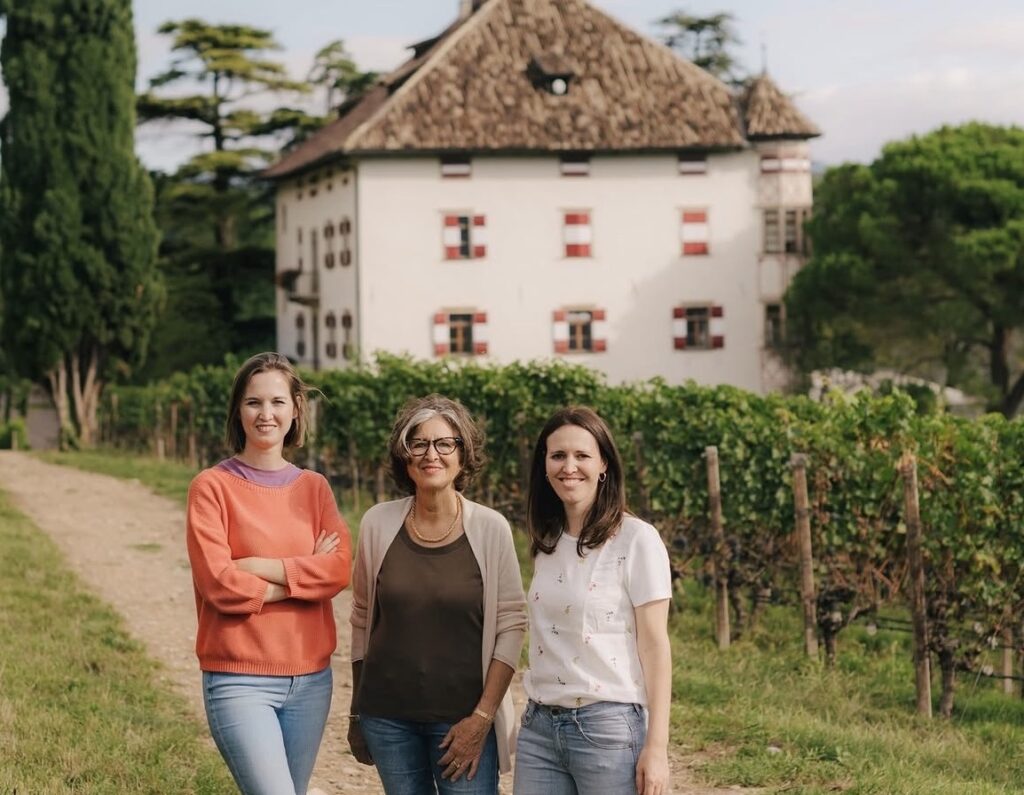
Cantina Tramin Gewürztraminer “Nussbaumer” 2023 (Süditrol, Alto Adige) $42 and Navarro Vineyards Dry Gewürztraminer 2023 (Anderson Valley, Mendocino). $28. Gewürz has a wonderful and complex mélange of tastes, with white pepper, peaches, lychee, minerals and maybe a hint of almonds. But it is often blasted with sweetness, which can turn off consumers at all levels if that’s not what they are looking for. (As with Riesling, there are some intentionally sweet Gewürztraminers that are gorgeous.) The Cantina Tramin, which we have found to be a reliable name for a number of wines, has a richness that we compared to a peach soufflé, with the kind of precision and focus that makes us feel the winemaker’s vision. We were fortunate to talk with the winemaker, Willi Stürz, and Wolfgang Klotz, the marketing and sales director of Cantina Tramin, one of Alto Adige’s oldest cooperatives, at an eye-opening tasting recently. We were once again so taken with the wines that when we got home, we ordered this one. We had it with pork roasted with apples and raisins and it was excellent. It also would have been wonderful with biscotti after dinner. For more about Cantina Tramin, check out this piece from our colleague, Lisa Denning. The Navarro, another long-time favorite, was shyer, more of a come-hither kind of wine. All of the classic tastes are there, but in a delicate package that would be an excellent complement to dinner.

Domaine du Castel “Grand Vin” 2021 (Jerusalem, Haute Judée). $127. Since we’re talking here about types of wines that don’t get their due, how could we not mention kosher wines? We understand that most people, including us, grew up thinking kosher meant sweet wines on special occasions. But there’s a whole world of excellent kosher wines now. We think wine newcomers would be surprised by this and experienced drinkers might need to be reminded — and this would be some reminder. Made from classic Bordeaux varieties, it’s profound, with layers of rich fruit and an almost regal finish. It is kosher for Passover, not mevushal. While this is expensive, we have been fans of Domaine du Castel for a long time and its less-costly wines are also reliable.
Dorothy J. Gaiter and John Brecher conceived and wrote The Wall Street Journal’s wine column, “Tastings,” from 1998 to 2010. Dorothy and John have been tasting and studying wine since 1973. In 2020, the University of California at Davis added their papers to the Warren Winiarski Wine Writers Collection in its library, which also includes the work of Hugh Johnson and Jancis Robinson. Dottie has had a distinguished career in journalism as a reporter, editor, columnist and editorial writer at The Miami Herald, The New York Times, and at The Journal. John was Page One Editor of The Journal, City Editor of The Miami Herald and a senior editor at Bloomberg News. They are well-known from their books and many television appearances, especially on Martha Stewart’s show, and as the creators of the annual, international “Open That Bottle Night” celebration of wine and friendship. The first bottle they shared was André Cold Duck. They have two daughters.