a
a
a
Lee Pai of Grape Collective talks to Sami Ghosn of Massaya about the origin of wine in Lebanon, and his hope for a peaceful future.
Lee Pai: We interviewed you around seven or eight years ago, and today Massaya is almost 30 years old. What were your hopes when you initially first started Massaya?
Sami Ghosn: I guess I’m not getting any younger! My hopes were to portray the image of true Lebanon that we grew up with and what we know it to be, despite the 30 years of bad press—not only for Lebanon, but for the region.
Yesterday, walking into a restaurant in Hoboken, New Jersey, a young lady that I had never met before but had tasted the wines, says to me, “We admire what you do. Thank you very much for delivering such quality.”
I don’t think I would have hoped for that. It’s beyond my hoping.
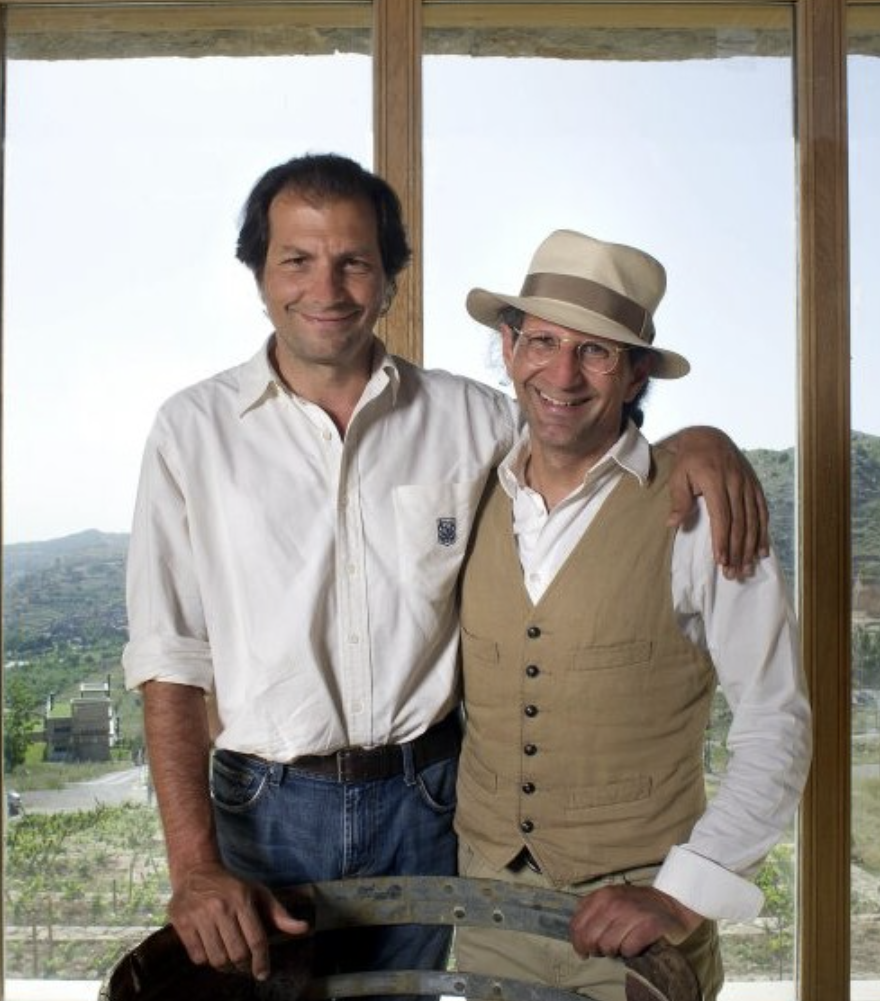
(Left to right: Sami Ghosn, Ramzi Ghosn)
Can you talk about the origin of Massaya, and how you were able to reclaim your family’s land and plant your vineyards?
In the early ’70s, my parents acquired the land in the Beqaa Valley, where our Colombier Red comes from and where we produce our rosé and the other wines. We got displaced with the start of the troubles in Lebanon – Our Christian Maronite family had all sorts of issues with our loving neighbors—firstly the Palestinians, then the Syrians. It all piled up.
We were fortunate as a family to be sent out to France for studies. This is where we got our university education. At the time, I admired the US and always wanted to come, so I made it to California, where I worked as an architect. But despite this glamorous life – I had a convertible at the time, good job, a couple of girlfriends (I was in my twenties) – Lebanon never really left me.
During the Gulf War, the Syrian army of Hafez al-Assad (Father of Bashar al-Assad, ousted President of Syria) invaded what was left of Lebanon. Since Syria was allied against ousting Saddam of Iraq, Lebanon was given on a silver platter for Syria to be with the allies against Saddam.
So what was left of the country that was free got trapped. I have friends that gave their lives. Everything was looted. The families close to us that were in politics were massacred. I couldn’t take my easy life in the sun anymore.
So I went back to Lebanon in the early ’90s. When I went back to Beqaa, our land had been squatted on for 17 years. Eventually, I got the squatters off the land after staying a few months on the rooftop of our own house while the squatters were in the house. Luckily, this didn’t happen over my dead body.
In the beginning, I just made arak. There was this gentleman who gave me the idea of making arak, but what I did not know is that I made arak in a very authentic way using copper pot stills.
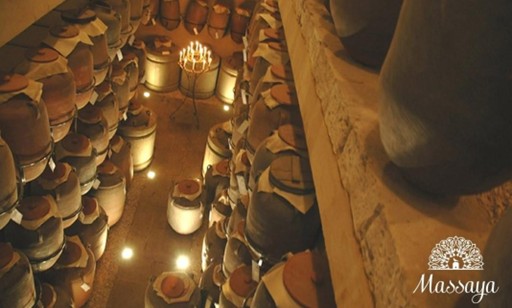
(Clay pots for arak)
I still remember. For our first batches of arak, we would wait by the still, and this lady would cook for us what you are all used to in terms of flavor now—hummus and tabbouleh, baba ghanoush and Kibbeh. It was the fall, the first drops of rain were falling on the Beqaa, and I was smelling the earth. This really got my senses alive, and I felt so connected and rooted. I figured this is where I belonged. I poured our first batches of arak in jars with crafted labels at my parents’ pharmacy in the corner, and started selling.
Then people came for more, and we started thinking of the packaging. I went to France where Ramzi, my brother, was still working, and I figured the blue was more reminiscent of our ancestors the Phoenicians, the purple people. Then the blue bottle came to life.
Then through a gentleman that first came to me to sell corks (his name was Jean Marie ‘Fresh Sex’), I was introduced to my partners Dominique Hébrard from Château Cheval Blanc and the Brunier family, and eventually started making wine. That was the beginning of the winemaking. Now, we’re into almost 30 years of partnership. The rest is history.
Can you tell us about the historical importance and legacy of wine in Lebanon?
That might take just more than one interview together.
Our Phoenician ancestors started shipping wines about 5,000 years ago in amphora from Byblos to the pharaohs of Egypt and to the Greeks. The Grand Cru of wine at the time was called “Byblian”, from Byblos. Byblos was the most ancient inhabited port city in the world. It’s a natural harbor. They used to chop the cedar trees, roll them down the mountain, cart them into those Phoenician boats. In amphora, they would ship olive oil and wine and brought the spices and the silk all the way from India, from Asia on the Silk Route, and mastered dyeing the silk purple, the color of royalty. They were known by the Greeks as the Phoenicians—the purple people.
Those purple people also planted and settled in Carthage, in Sicily. They founded Marseille. Those steps of history I did not know, and it came after, of course, the Romans that took winemaking to an industrial scale at the time. Wherever the Romans set foot, they made wine. They built the Temple of Bacchus in the Beqaa Valley, in Baalbek, the city of the sun god.
With our relatively short time spent making wine, we realized that the closer we got to the Temple of Bacchus, the better the vines. So we have three single vineyards at Massaya. The first one, Colombier, is around our original property that my parents acquired, where we have the vineyard. We have two other vineyards around the city of Baalbek: one is the Terrace of Baalbek, where we planted Grenache, Syrah, Mourvèdre. The second vineyard, Cap Est, is in northeast of the Beqaa Valley, but less than about 45 minutes from the Temple of Bacchus, north on the second mountain range that separates us from Syria.
We now produce three reds, a rosé, a white wine, and arak.
We started producing white wine with grapes from Mount Lebanon. Lebanon is home to the highest altitude vineyards of the northern hemisphere, and we are at 1,700 meters above sea level, which is close to 5,500 feet. This is where we produce our white wine.
Talking about your wines today, we have to mention the modern wine industry in Lebanon. You are part of the newer generation. Can you of tell us how the modern wine industry in Lebanon came about and the influence of the winemakers that came before you?
Firstly, let me give a huge salute to Serge Hochar of Musar. Bless his soul. His children and friends, close friends. Serge kept Lebanon on the map, at the time when Lebanon needed it most in winemaking.
Lebanon is the only wine region mentioned in the Bible in the Old Testament. So to tell you how important this is to our DNA and how much history there is around wine in Lebanon—it’s part of our culture. Serge kept this legacy going while the troubles were hitting this region.
I started Massaya honestly not knowing all that. I just wanted to recuperate the property while I was living in California and saw the image of Lebanon, our memories of our youth, and our ancestry disrupted. I wanted to bring this back to life in a civilized manner, then came arak and then the wine. What better messenger than this beautiful elixir of life, which is wine?
So it just so happened that I was at the crossroads of igniting the new generation of winemaking during the 1990s when Lebanon finally came into a sort of stability at the time. After the Syrian invasion, we were out for 30 years under Syrian ruling, in a way. Then many talents came—certainly my brother Ramzi, who started making wine on his own. He kicked out the last winemaker we had from France. He was upset with him putting too much sulfites in 2005. He did it because he mastered the winemaking. He said to our partners and me, “I’m calling the shots here at the winery,” and Ramzi had the inner talent to do that.
In 2006, we got the first war between Israel and Hezbollah, and Anthony Bourdain got trapped when he was coming to see us. No one would have stayed in Beqaa to make wine, but Ramzi was here to salvage the vintage and kept on making the wines.
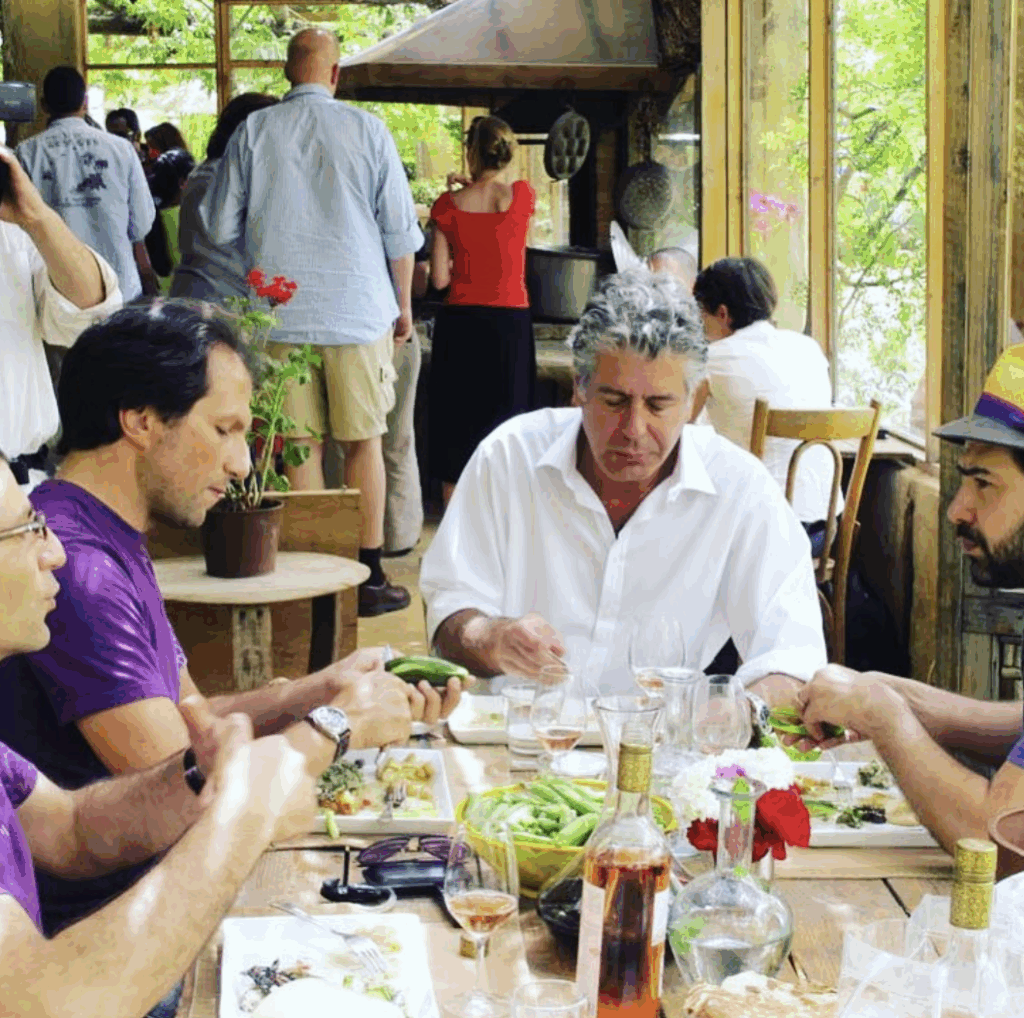
(Anthony Bourdain at Massaya in 2010)
Although I like to think I’m of the new generation because it makes me feel young, there are lots of younger talents that came into winemaking, and there are now about 60 wineries I think in Lebanon, which is great. Our second generation, I would like to think, would want to be in the winemaking, and this will give us more expressions of the potentials and the terroirs of Lebanon.
Lebanon is very unique. You have such high altitudes as you mentioned, the Barouk Mountains, and you’re so close to the coastline. How does that kind of terroir influence the wines you make, and how does it give wines from Lebanon a unique identity?
The climate in Lebanon is the winemaker’s best ally. Broadly speaking, the wines are organic by default, I would say, and that explains why about 7,000 years ago, the first Vitis vinifera emanated from this area.
Firstly, you have an average of 300 days of sunshine, which matures the grapes. But, we also get a couple of months of snow. So those dynamics of altitude and dry weather, there is no room for fungus, bugs, predators to the grapes, worms. Whatever escapes the sun and the dryness is trapped by the freezing temperature in winter. So you don’t have to force nature in any way to mature grapes in Lebanon.
So you have those dynamics whereby the fruit is exceptional in Lebanon. All you have to do is to listen to nature. For instance, we don’t bottle our rosé and white till after snow melt. Trust me, this is not easy with the pressure of having your next rosé out in the market asap. So we don’t make rosés on steroids. We make rosés respecting nature.
We don’t filter our wines at Massaya, so we wait till after the snow melts, for the sediments to settle naturally, and bottle. We listen to every season. We listen to the wind. We listen to the earth. We listen to the vines. I would say 98% of our work is done in the vineyards, and the winery is where we collect those sounds and those fragrances of earth.
We leave the vine to find, to dig in deep, to survive the heat and find the moisture and the freshness and the nutrients in the soil. That’s the expression—the best expression of terroir. So there is little, very little oak in our winemaking. When there is oak, it’s usually large vats and a lot of respect to nature.
Do you find these organic or biodynamic practices common in Lebanon, or is it more unique approach that you have?
To Massaya, I would not claim that it’s unique. I think there are a lot of modern and young people that have this feel. It’s certainly within our family’s DNA since our grandmothers from both sides have always had gardens and grown vegetables and fruits organically. We’ve also always worked with the lunar calendar before knowing what biodynamic practices was. So we’ve always listened to nature and to the lunar calendar and lunar cycle.
At Massaya, the practices are organic, sustainable as well as biodynamic. Lebanon’s climate helps a lot, so we don’t even spray things that are organically acceptable or certified. We just don’t spray the vines; a bit of sulfur sometimes, but those are all degradable naturally.
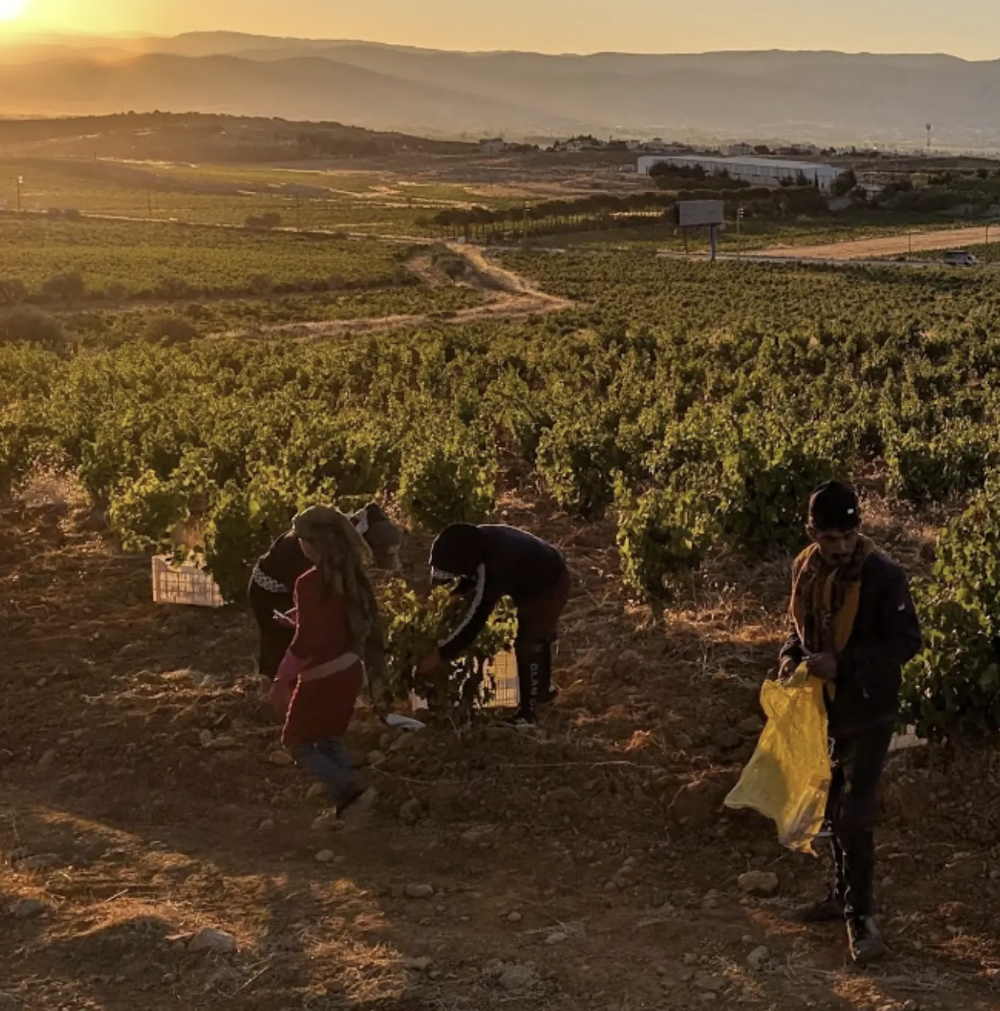
(Massaya’s vineyard crew)
With Massaya and Lebanon being this unique juncture between different cultures and different religions as well, the region reflects a rich and complex heritage. Do you find these different influences affect winemaking or the wine industry in Lebanon?
This is the richness of Lebanon. Lebanon, this tiny country, a couple hundred kilometers in length, 50km (approx. 30mi) in width, is the melting pot of all those minorities that have been persecuted in the area. Thanks to our hard-to-access mountains, the Christian community thrived as being Maronites and all Christians. You have all different denominations, be you Kurdish, Armenian, Druze, Shiite Muslim, Jewish, what have you. Those who have been persecuted found safe haven in Lebanon.
That brought richness to Lebanon. But unfortunately, the world has gone bonkers, and this resonates no more as strong as in Lebanon because of the closeness. But go to Lebanon, you find people, wherever they are, they love foreigners. They always think it’s a blessing when they have foreigners within them. They’re always hospitable, they always receive you with open arms.
Bless him, Anthony Bourdain, when we were sharing our food on his show No Reservations. The cuisine is so rich in Lebanon and so diverse not because we are geniuses, but because everyone brought his little spices to the table. Influences from Turkish cuisine and French cuisine and Armenian cuisine and Kurdish cuisine and North African cuisine are all here.
There is a little story I learned about kibbeh. Our Christian ancestors resisted the Mamluks, invaders from the east, for many years in the Kadisha Valley. For the fighters that were hiding in the caves, not to light fire, not to reveal their hideouts, they would slaughter goats, find whatever herbs, some za’atar and some mint, and would grind the raw meat with it and cracked wheat, and this is how kibbeh came about. Now it’s everywhere.
Those little stories are so reminiscent of our life, and nothing expresses this better than having a glass of wine or arak and sharing meals. This is what Lebanon is about.
We haven’t really touched on your indigenous varieties yet. Massaya is really known for your international varieties, but you also cultivate Obeidi and Merwah. Do you see a connection between these ancient indigenous varieties and your international varieties that you cultivate?
To tell you frankly, we started working with so-called international varieties because this was what was proposed. But we morphed into Mediterranean varietals, which are more of an expression of our understanding of wines from the French. So when you see Grenache and Cinsaut and Mourvèdre on our labels, it’s not because we wanted to be international. It’s because we went into the old monasteries and the old vineyards and tried to research the names. We would see Grenache vines in one village, and then it would be a different name in another village. So it was difficult to map, but what’s for sure, the French kept the records.
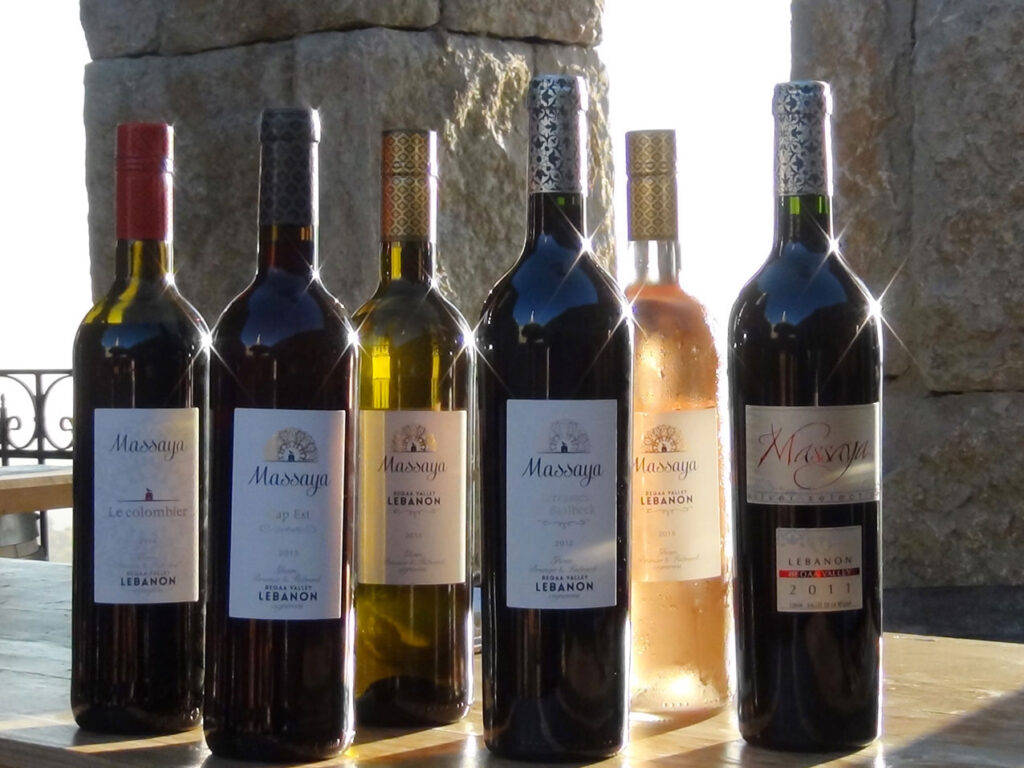
(Massaya’s wine)
After the fall of the Ottoman Empire and the arrival of the Allies, I think an average of four liters of wine was allowed for French soldiers. So a lot of wine was needed, and a lot of Cinsaut had been planted, a lot of Carignan, those varietals that have big yields.
So we work with what was available, and then whatever we developed was around more of, I would say, Southern Rhône or Mediterranean varietals like Mourvèdre, Grenache and what have you. In terms of white wine, Merwah and Obeidi was widely planted to make arak, so it survived both the Ottomans and phylloxera.
Now we produce an orange wine in jars from our Merwah, very little quantities, and of course we have the Obeidi for our arak and for a bit of it in our white wine blend.
Making wine itself as a business is hard enough, but there are so many other challenges you face. What were some that you faced when you tried to build up Massaya?
I can tell you who has been my best ally, and this is nature. Nature in Lebanon is your best ally. The rest is passion, I think. I happen to have a bit of a selective memory. Difficulties build you to be a better person, and I tend to forget those difficult memories.
I was fortunate to be born in this part of the world, fortunate to have had parents that brought us up to be very attached to our roots, to our values and to our origins. Fortunate to have been able to have a good education, I would say, that brought in culture. Once you have those, you should be able to navigate the waves of the world, and nothing brings more satisfaction.
I’ll bring you back to the woman yesterday that told me she admired what I did. A total stranger said this to me on the sidewalk of the street in New Jersey, how many miles away from my home. I think she had more sensitivity than a lot of people nowadays. I don’t qualify success with necessarily physical value or piling up banknotes, but I certainly am touched when I come into Grape Collective and see my photo next to a bottle and a bottle from Serge that has been doing this for many years.
Maybe we will have our little history of bringing more people together around good times and good memories from our part of the world through a bottle of Massaya wine.
How about the challenges around Lebanon, how do they affect Massaya?
Had I not dissociated mentally from those conflicts in a way and those situations, I would have stayed in California, and I don’t look at life with any of these hurdles in mind. Winemaking—the vine brings in the fruit year on year, and the fruit matures, and what you have cultivated, that is there for a generation or two, and it will mature, and you have to be there to cater for it. This is my drive.
What humans mess up is their own issues and their own demons, and they sleep and live with it. We live with beauty, with nature, and with bringing civility to humanity, not harsh moments of despair.
Where does your resilience for all this come from?
My grandmother was killed when we were young in ’73, a sniper shot my uncle’s car. It was the first troubles between the Lebanese and the Palestinians. We were kids, just watching TV, and this is a moment that I think marked me a lot without knowing.
My mom came into the TV room, we were watching “Rin Tin Tin”, and she had to go to the hospital to give blood. My grandma hardly made it. So maybe those moments, or my time training with youth to protect Lebanon – two of them gave their life. So I don’t know. That’s my drive.
From where you started and where you are now, is your vision for Massaya still the same, and is progress being made?
We started doing the arak in a little still in a village in the Beqaa, selling arak in a few batches in jars at my parents’ pharmacy, into a proper winery and distillery on our property, into acquiring more land, planting more grapes, and developing a second winery in altitude for our white wine.
We are now in about, I think, 30 countries rather than the small pharmacy only. We have friends all over the world. We are here at Grape Collective, thank you for supporting us, and we are fortunate to have many other supporters, be it in the UK, be it in the US, be it in Canada, be it in Switzerland, Luxembourg, the UAE, Australia, you name it. We are spreading the word and continuing the legacy of our Phoenician ancestry into a beautiful prism.
I wouldn’t call it success, but I would call it a step forward from where we started.
With the ongoing conflict in Lebanon, what does this mean for you and for Massaya?
It’s not the first conflict since we started Massaya. I would think that there is no conflict that a good bottle of wine cannot resolve. Sometimes people, if they don’t drink, have issues. I think a good bottle of wine can have people talk what they have on their mind and maybe resolve it in a more peaceful way. So I just look beyond all that conflict and only hope there will be peace soon. I am a peace seeker, I don’t understand people who destroy in order to prove a point. We plant and we build forward.
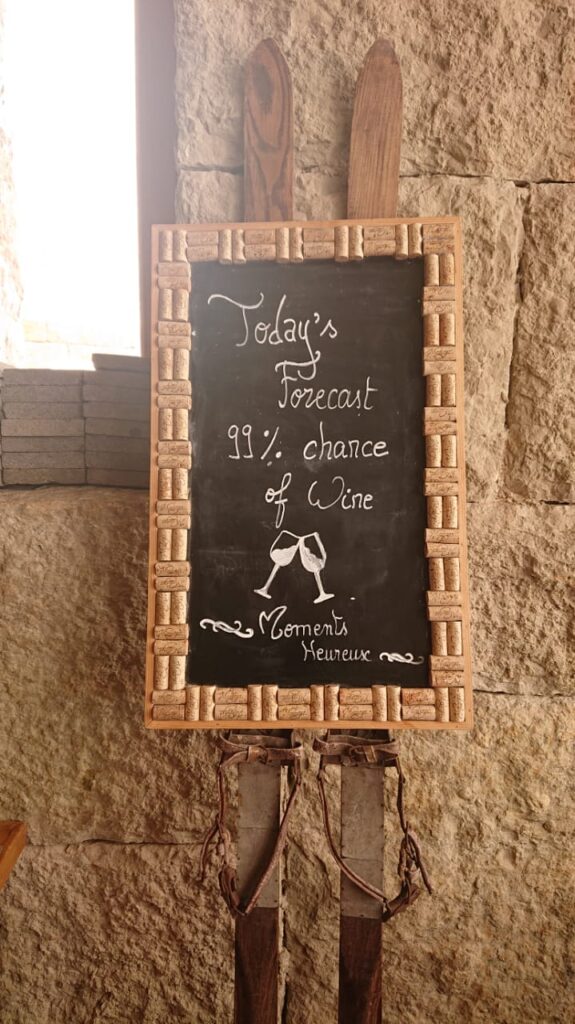
(Hospitality at Massaya)
Read the feature piece of Sami here.
Read Grape Collective’s first interview with Sami here.